
Age based science gift (like where you make your own geodes), card games (go fish, old maid etc.), puzzles (the wooden ones were my kids favorites), season pass to a local zoo (and then wrap up some toy zoo animals), fishing gear (fun kids rod and some bait)
8
Theta444 retweeted

Jun 10
The "Time to Get Moving!" Web Event Is Now Available for a Limited Time. Take Part to Claim Primogems, Geodes of Replication, and Other In-Game Rewards!
#GenshinImpact #TimeToGetMoving
Dear Traveler, accept the invitation to exercise challenges and celebrate with us in Miliastra Wonderland from Genshin Impact!

51
228
3,399
173,378


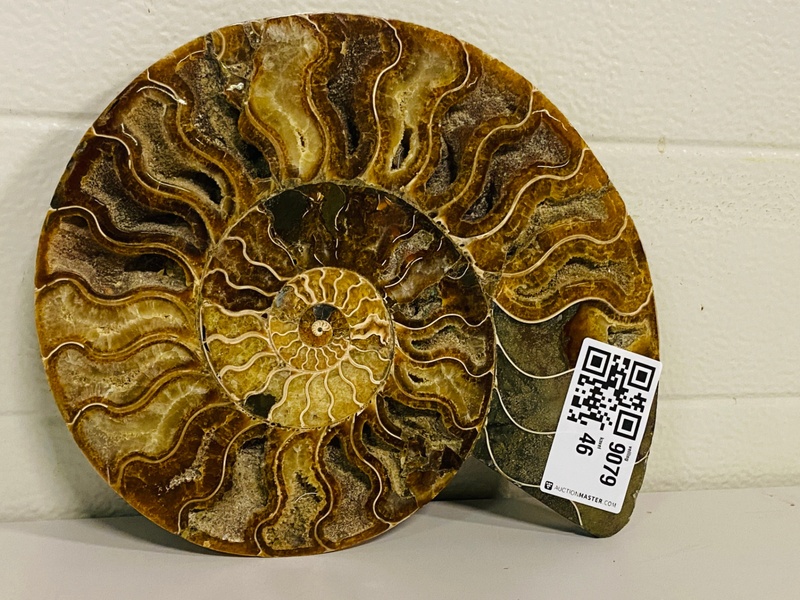
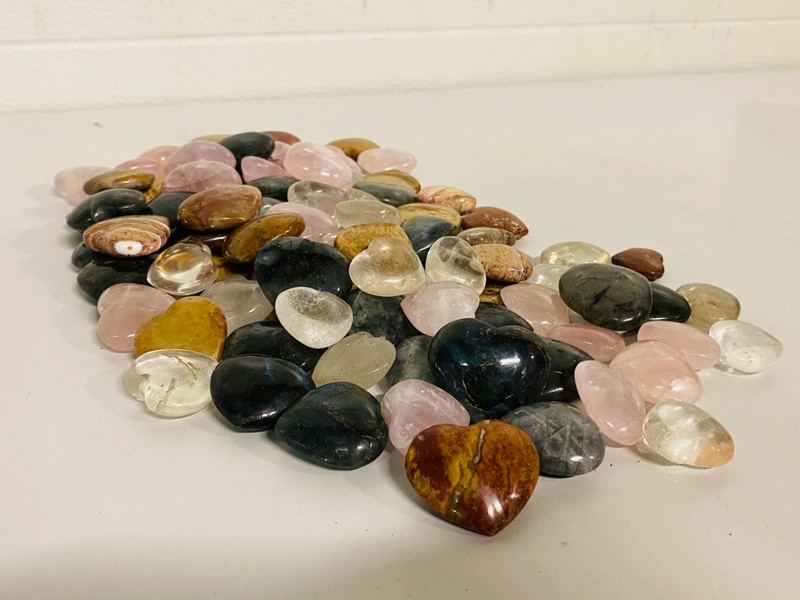
Van amethisten en fossielen tot mineralen en bijzondere decoratiestukken!
Ben jij verzamelaar, liefhebber van edelstenen of op zoek naar een uniek item voor je interieur? In deze veiling vind je onder andere amethist geodes, labradoriet, fossielen, haaientanden, bergkristal, opaal, pyriet en nog veel meer bijzondere vondsten.
- Unieke stukken voor verzamelaars
- Bijzondere mineralen en edelstenen
- Fossielen en natuurhistorische objecten
Bied mee en ontdek jouw volgende pronkstuk!
veiling.live/4vGSz2Q
1
15

Jun 14
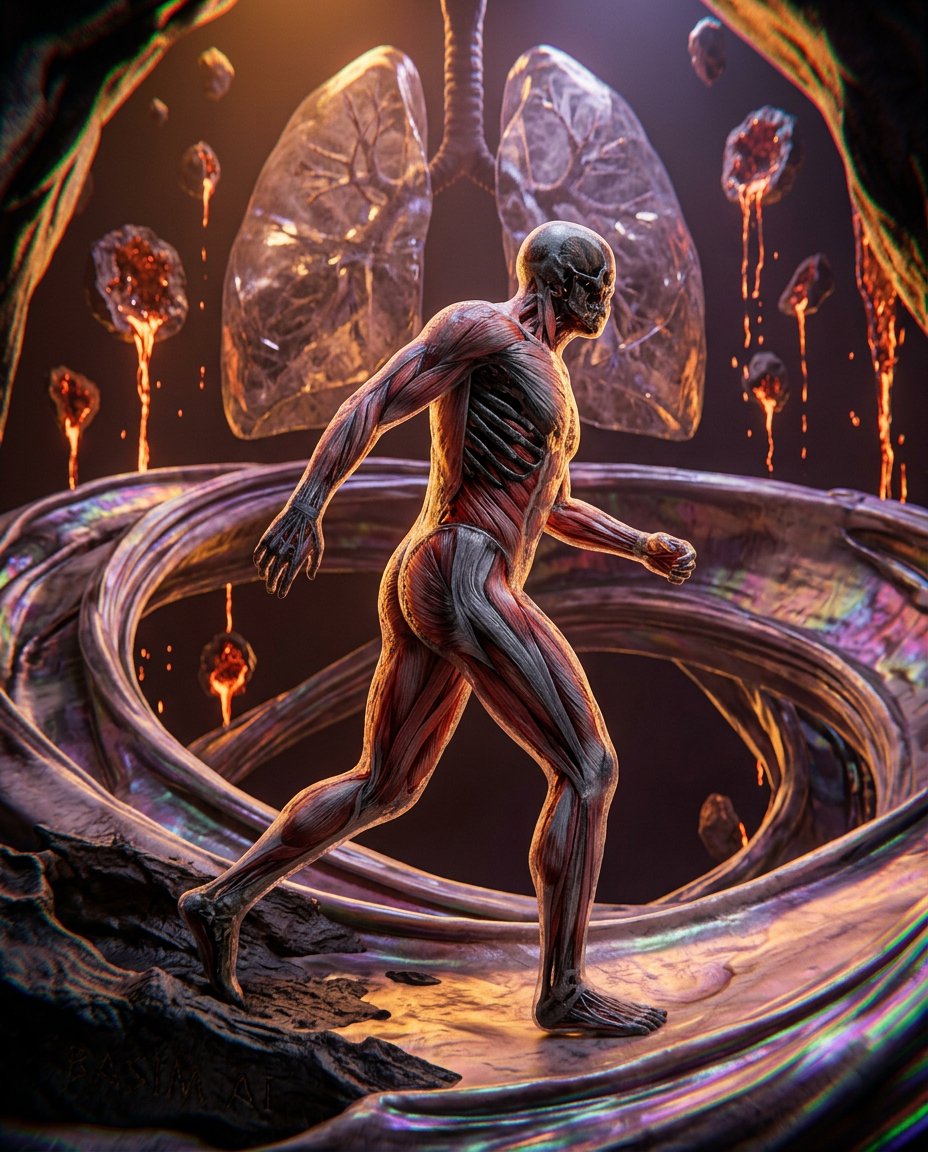
The Topology of the Self
prompt:
[Subject] inhabits a nonorientable manifold of calcified membrane and polished bismuth where the ground curves into an infinite Mobius loop of architectural skin the atmosphere consists of high viscosity nitrogen filled with suspended geodes that bleed liquid copper into the negative space two massive crystalline lungs breathe in synchronicity with the landscape rhythmically altering the atmospheric density and light refraction a 24mm anamorphic lens captures the scene with deep depth of field and heavy chromatic aberration at the peripheries lighting is dominated by a 3200 Kelvin amber glow clashing against cold actinic violet shadows to create a high tonal contrast ratio
1
40
Marcela retweeted

ACLARACIÓN =
Hay una confusión!
No pertenece al Colegio de Ingenieros Civiles, sino al de Ingenieros Topógrafos Geodestas.
Son distintas asociaciones.
( Vía @Leo_Ocelotl_ )
Jun 14

"Es de sabios reconocer que nos equivocamos". El ingeniero Ulises Fernando Bernal se disculpa de simular ojos rasgados en un video de una influencer coreana durante el partido de ese país en #Guadalajara.
Tras señalar su arrepentimiento anunció su renuncia como presidente del Colegio de Ingenieros Civiles de Jalisco.
1
18

Jun 14
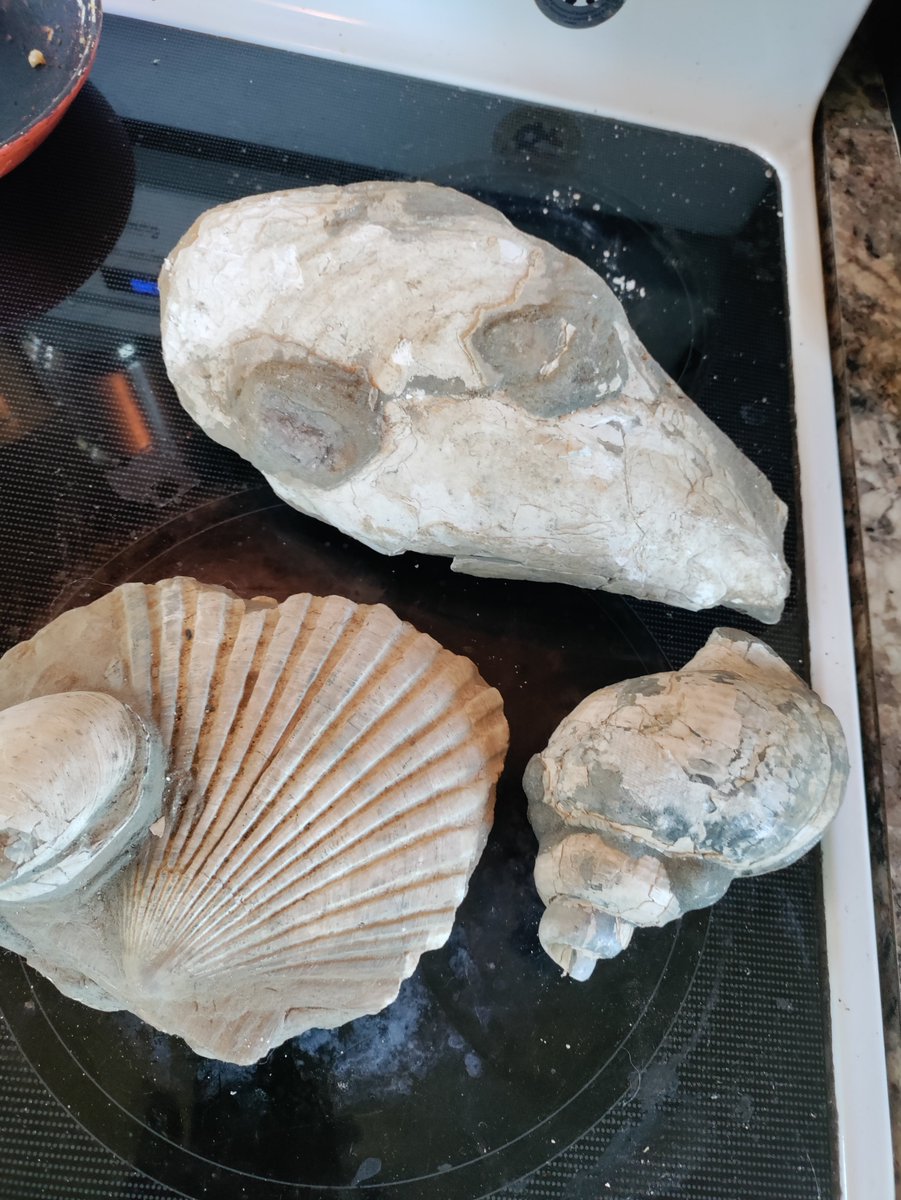
Fossils from Northern California and some uncut geodes and one cut and polished.
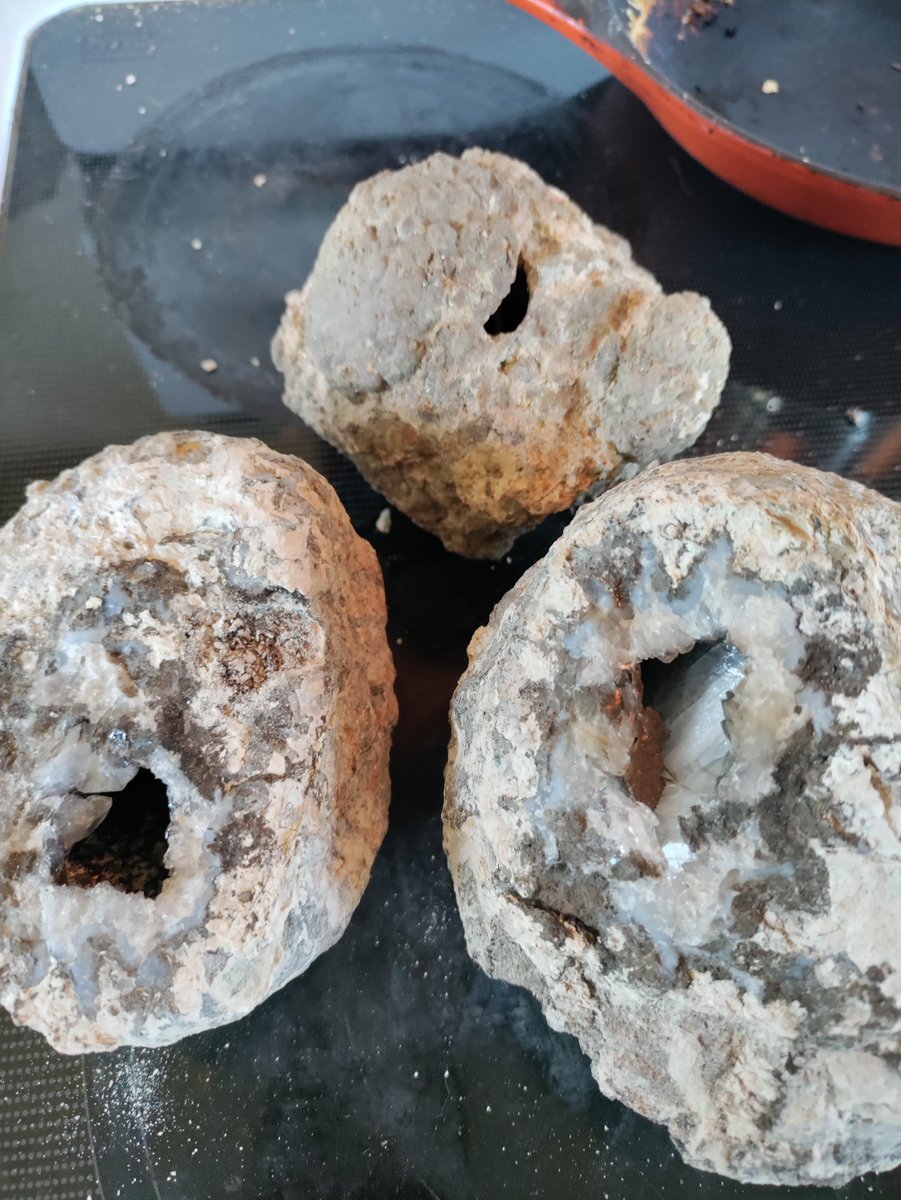
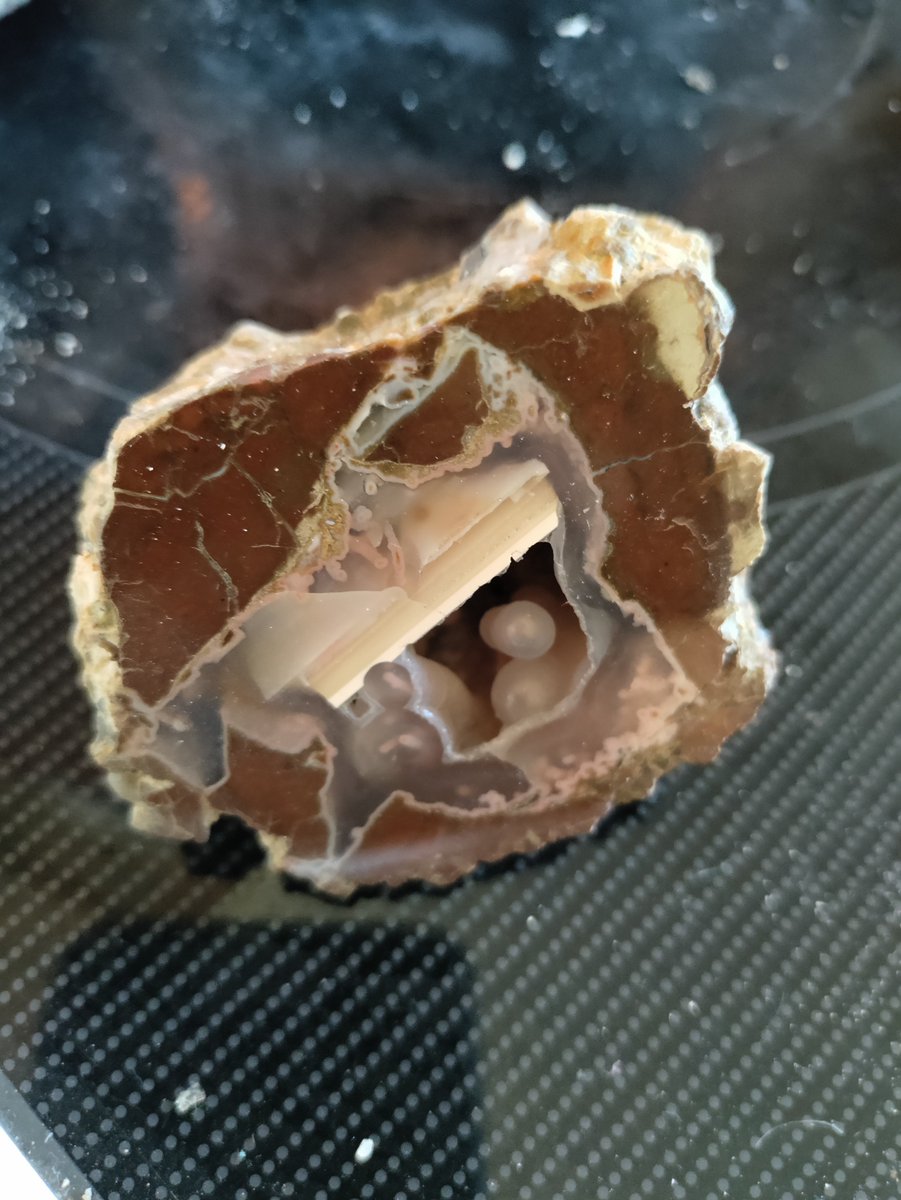
2
1
7
107
ME retweeted

Jun 12
How do the Geodes get Colorful?
Geodes are secondary geological formations that form within sedimentary and volcanic rocks. Geodes are hollow, vaguely circular rocks, in which masses of mineral matter are isolated (which may include crystals).
Read More: geologypage.com/2020/06/how-…
1
3
29
1,068

Me too Bu! I have a rock collection too!!! I love rocks, minerals, gemstones, crystals, geodes, etc...
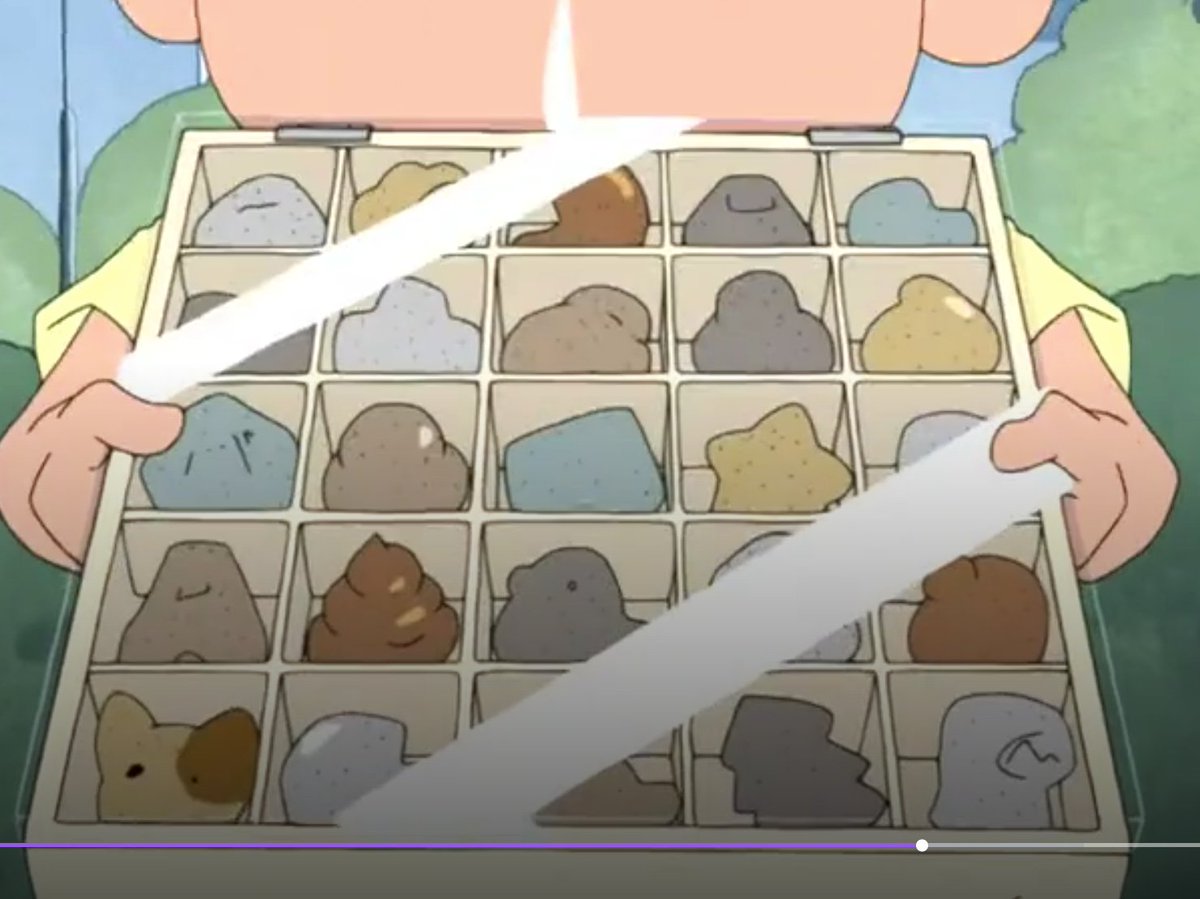
8
Jun 14
LOVE thundereggs & geodes, done some agate, tourmaline, moss, and plume too!
1
6
39

I hold back on using up my Geodes cuz there's a 30x pull mission every patch xD I still don't have the Manekina glasses from the set 😞💔 one day 🙏🏽
15

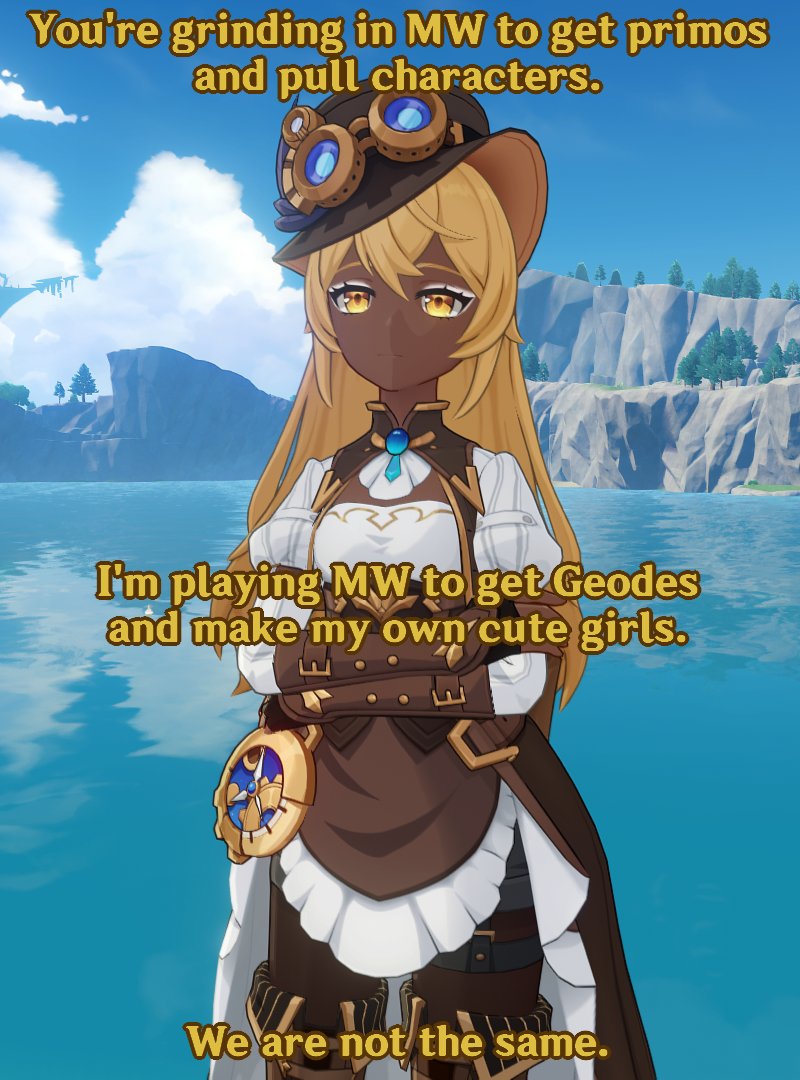
I play Miliastra so that I get my Geodes and pull the rectangular glasses for my Pantalone cosplay

lighthearted meme for fun on the current seasonal Miliastra situation 🦆
2
50

Thank you! I was able to find it! Turns out I can get like 30 geodes from that. Gonna wait until the end of the version to do the exchange, though.
1
8

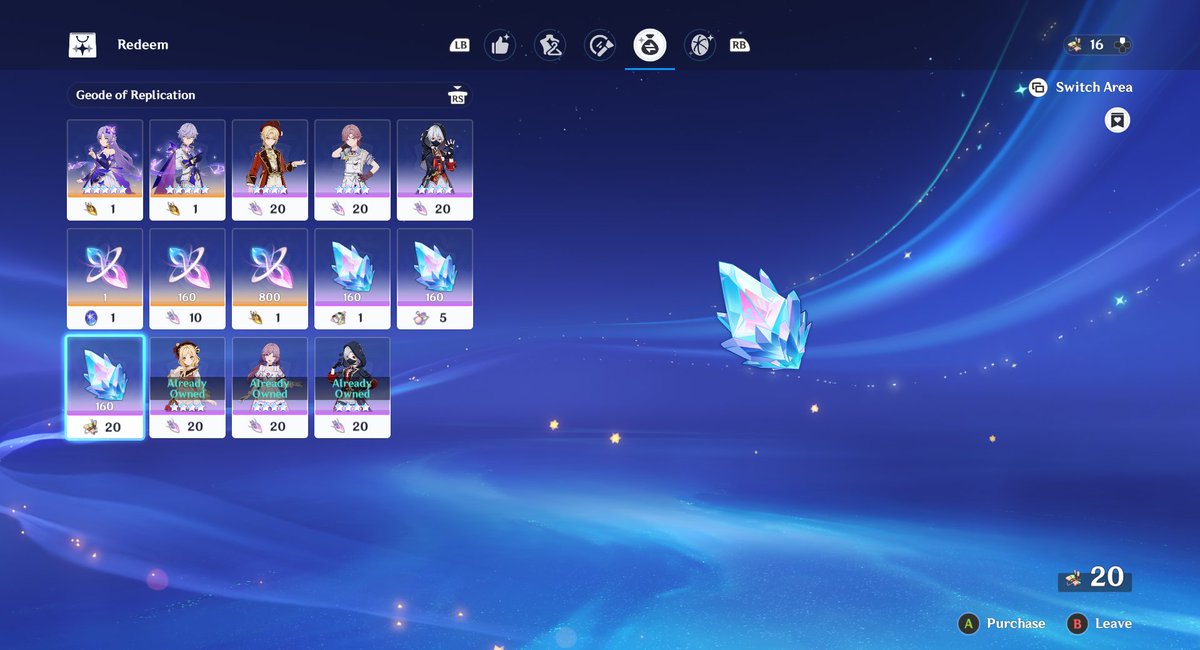
for anyone who doesn't know, if you don't have anything you want to craft or have tons of excess crafting materials, you can go to the Miliastra Shop, go to the "Redeem" tab with the bag icon, and exchange crafting materials for Geodes with the three Geode icons on this screen!
2
31
591
there's a redemption screen where you can turn 1 purple, some amount of blue (I think 5?) or 20 green into 160 Geodes, the same screen where you redeem pity to claim an outfit of choice!
1
2
22

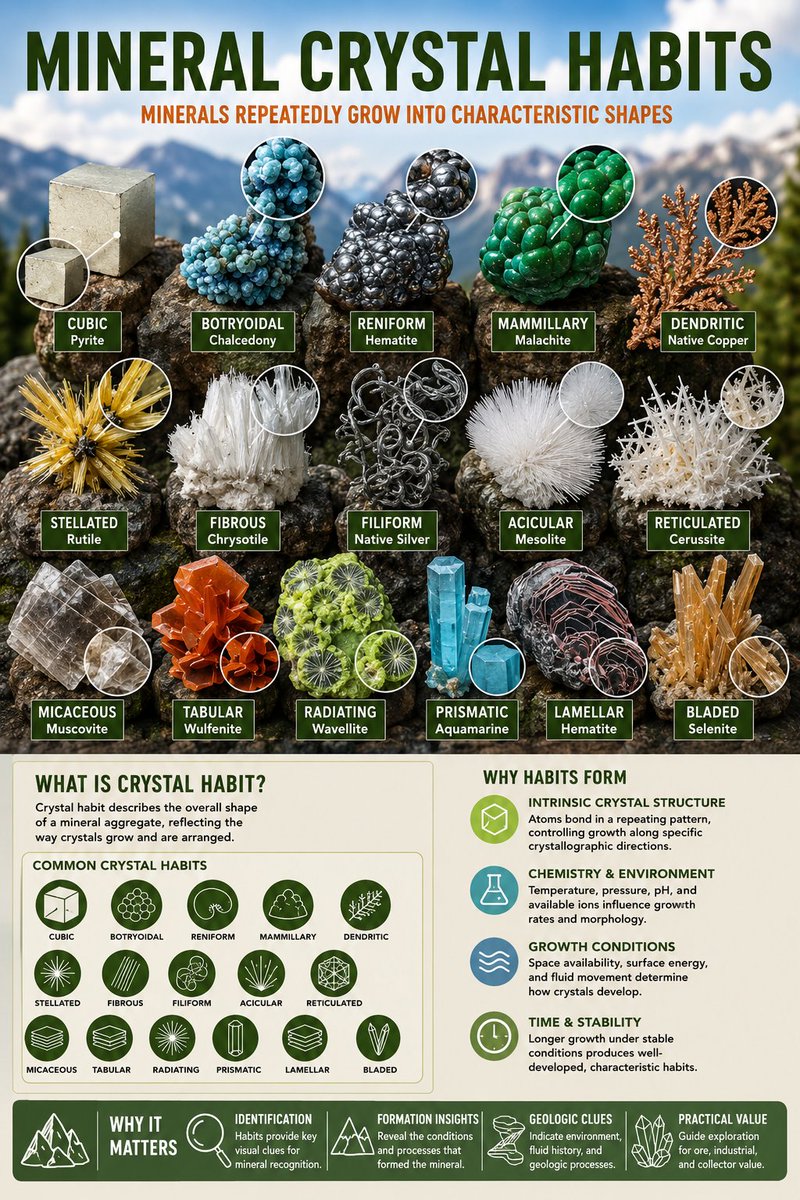
🟥 ⛏️ 🔎 Crystal habit reflects a mineral’s internal lattice plus the conditions during growth. Atomic bonding and crystallographic symmetry make some faces grow slower (becoming dominant).
🔁 ❤️ Greatly Appreciated
Others grow away quickly, producing characteristic shapes.
Key Controls:
Surface energy of faces, supersaturation and growth kinetics, temperature and pressure, impurities that block specific faces, available space and fluid transport, solution chemistry (pH/complexing), and templates or substrates.
Rapid precipitation and uneven ion supply produce dendritic forms.
Concentric layering on a nucleus yields botryoidal shapes.
Strong one‑dimensional bonding gives prismatic or acicular crystals.
Together, crystallography and local growth dynamics explain why one mineral can display many habits.
Cubic crystals (like pyrite) show equal axes and boxy faces.
Prismatic habits (such as tourmaline) grow long in one direction with well-defined faces.
Tabular crystals (wulfenite) are flat and plate-like.
Bladed habits (actinolite) are elongated and flattened like a knife blade.
Acicular crystals (mesolite) are needle‑thin and delicate.
Fibrous habits appear as bundles of fibers.
Radiating habits spread outward from a center like a starburst.
Botryoidal and mammillary habits form smooth, rounded grape or breast‑like masses.
Reniform is kidney-shaped; dendritic habits branch into tree or fern-like patterns
Stalactitic and Stalagmitic habits form drip-like columns in caves and geodes.
Granular or micaceous habits consist of small, loosely packed grains or flaky sheets.
Massive describes non-crystallized or coarse, bulk forms without visible individual crystals.
Habit reflects internal crystal structure, growth environment, and space constraints, so the same mineral can show multiple habits under different conditions.
#CrystalHabits
mindat.org
4
16
247

Jun 12
i personally encountered them here too lol. its chinese men i fought to collect the rocks.
are u talking about me?? i was the one who revealed that they mine here too. i was the one who even posted the geodes and limestones.
i personally forcefully collected them from a chinese
5