
La innovación también necesita terquedadJohn Goodenough mostró que cambiar el mundo no siempre depende solo del talento, sino de seguir buscando cuando parece tarde. 🔋 #Innovación #Ciencia #Tecnología 👉 ¿Qué pesa más: talento o constancia?
11

goodenough island. goodenough butterfly. goodenough for me 😅 im so funny
9


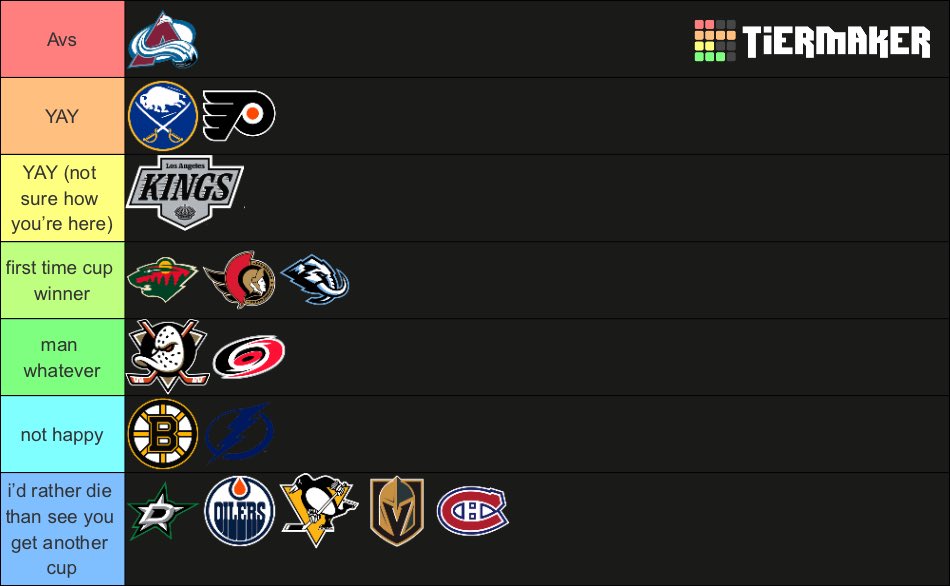
ranking based on how happy I would be to see the team win the Stanley Cup
41



How can we be sanctified and have our garments “washed white”? (Alma 13:10–11)
“As men exercise the priesthood, it has a purifying effect upon them. They become sanctified [holy] and the Atonement of Christ takes away their sins (v. 11). In addition to the priesthood, they are given the Holy Ghost, which is also a sanctifying gift if they receive it. Because of their pure and spotless [divine] nature, they cannot look upon sin without abhorring that sin (v. 12). Nonetheless, as the Prophet Joseph Smith said: ‘I love you all; but I hate some of your deeds’ (Teachings of the Prophet Joseph Smith, 361). Sanctification is not limited to a few, but to all who will magnify the priesthood and be guided by the Holy Ghost” (Nyman, Record of Alma, 176).
“Alma is obsessed with the image of the white garment: ‘There can no man be saved except his garments are washed white’ (Alma 5:21) [see Alma 13:11, 12; 7:25] . . . Such expressions forcibly call to mind the work of Professor [Erwin] Goodenough, in which he shows that the white garment had a special significance for the early Jews. God himself may be represented in the earliest Jewish art as one of three men clothed in white. . . . This image [from the Dura Europos synagogue] wasn’t even known to exist until 1958, but every time Goodenough goes back into the earliest Jewish pictorial representations he can find, there are the three men in white, or a single figure, the prophet, in white. The symbol of the chosen prophet, an emissary from God, is always the white robe, which is reserved for heavenly beings. Nephi says that the righteous shall be ‘clothed with purity, yea, even with the robe of righteousness’ (2 Nephi 9:14)” (“Echoes and Evidences from Hugh Nibley,” 485).
1
13


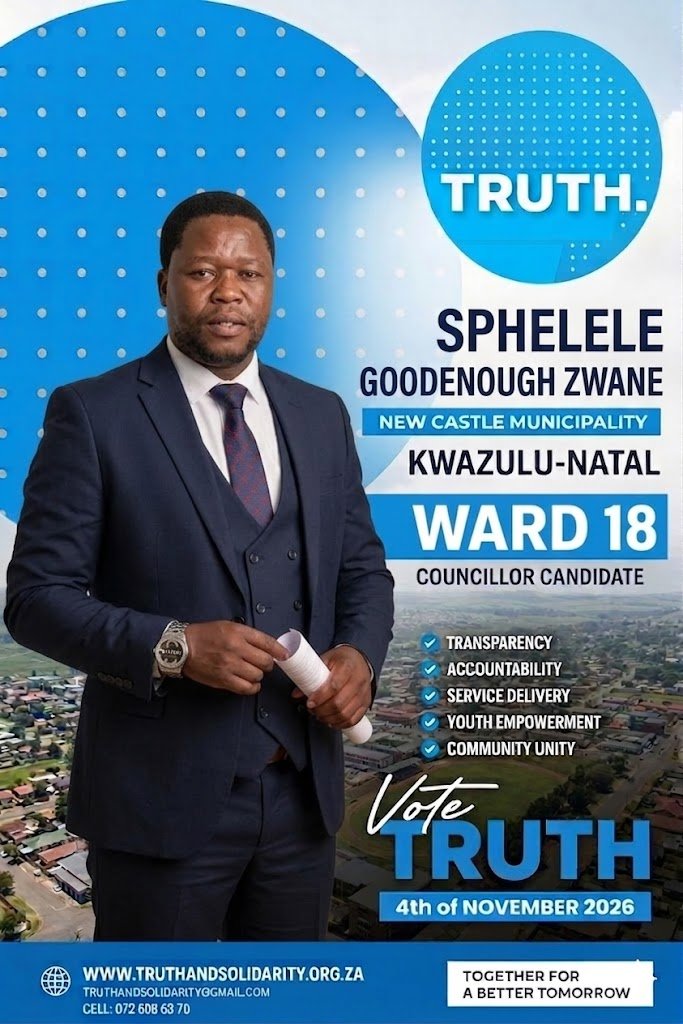
# MEDIA ANNOUNCEMENT
**FOR IMMEDIATE RELEASE**
**Truth and Solidarity Movement Announces Candidate for New Castle Municipality, Ward 18**
**NEW CASTLE, KWAZULU-NATAL** – The Truth and Solidarity Movement is proud to officially introduce **Sphelele Goodenough Zwane** as our candidate for Ward 18 Councillor in the upcoming municipal elections.
Driven by a commitment to the core values of the movement, Sphelele Goodenough Zwane stands ready to represent the residents of Ward 18 with integrity and dedication. His campaign is built upon a foundation of:
* **Transparency** in local government operations.
* **Accountability** to the constituents of New Castle.
* **Service Delivery** focused on the tangible needs of the community.
* **Youth Empowerment** to create opportunities for the next generation.
* **Community Unity** to build a stronger, more cohesive society.
"I am honored to serve the people of Ward 18," says Sphelele Goodenough Zwane. "Together, we can build a better tomorrow through honest, effective, and transparent leadership."
We invite all community members to join us in supporting this vision for change. For more information regarding our campaign or to get involved, please visit our official website at **truthandsolidarity.org.za**.
**Contact Information:**
* **Candidate:** Sphelele Goodenough Zwane
* **Phone:** 072 608 63 70
* **Email:** truthandsolidarity@gmail.com
### Vote Truth. 4th of November 2026.
---
1
159

# MEDIA ANNOUNCEMENT
**FOR IMMEDIATE RELEASE**
**Truth and Solidarity Movement Announces Candidate for New Castle Municipality, Ward 18**
**NEW CASTLE, KWAZULU-NATAL** – The Truth and Solidarity Movement is proud to officially introduce **Sphelele Goodenough Zwane** as our candidate for Ward 18 Councillor in the upcoming municipal elections.
Driven by a commitment to the core values of the movement, Sphelele Goodenough Zwane stands ready to represent the residents of Ward 18 with integrity and dedication. His campaign is built upon a foundation of:
* **Transparency** in local government operations.
* **Accountability** to the constituents of New Castle.
* **Service Delivery** focused on the tangible needs of the community.
* **Youth Empowerment** to create opportunities for the next generation.
* **Community Unity** to build a stronger, more cohesive society.
"I am honored to serve the people of Ward 18," says Sphelele Goodenough Zwane. "Together, we can build a better tomorrow through honest, effective, and transparent leadership."
We invite all community members to join us in supporting this vision for change. For more information regarding our campaign or to get involved, please visit our official website at **truthandsolidarity.org.za**.
**Contact Information:**
* **Candidate:** Sphelele Goodenough Zwane
* **Phone:** 072 608 63 70
* **Email:** truthandsolidarity@gmail.com
### Vote Truth. 4th of November 2026.
---
40


VISVIM×GOODENOUGHのクリスト Lサイズ…ベージュカモ新品未使用! これ履いて街歩いたら電子夢の世界に溶け込めそう
VISVIM × RESONATE GOODENOUGH CHRISTO L
jp.mercari.com/item/m1361079…
10

GOODENOUGHのストライプシャツ。マルチカラー可愛い系か。医療現場の白衣ですら機能性優先なのに、普段着でこんなに凝るんだな。
GOODENOGH / Oxford B.D shirt
jp.mercari.com/item/2JScoBag…
1
15


Jun 14
3. John B Goodenough, who contributed several key technologies at UT Austin, partnered with and was funded in part by Sony, Hydro-Quebec, EnergyX, and others.
1
14

Jun 14
Tesla smart phone without Spyware,but made in China,can't be goodenough ,
Bada bhai Chota bhai me farad Keiser,Zin to ek hey?
1
7

Jun 14
He is not goodenough, he is not a profile Morocco lacks. He also plays hero ball without final passes when due. Worldcup is not for immature players.
Egypt is taking an 18year old academy player as their only natural 9 because he is mature.
21

Jun 14
The reason is because of grand theft auto with China patent office invalidation. The LFP patent from John Goodenough (Texas) and the nanocoating from Armand (Hydro-Quebec) were both stolen in China and China could not eexport ANYTHING as a result until 2022 (or the products would be seized). Musk relied on the same stolen tech and miraculously "pivoted" to mass production in the same 2022 year. The irony is that it was probably needed to break Oil 10 years a earlier. Chinese Co are left out of the next gen battery solid state (and so is TSLA hence the "pivot"). China won't pull another patent theft because they can't and don't want to because some China Companies have made geniune worldwide contribution in some industries (solar next gen). A second irony is that battery cos are "elevated to religious status" while they have don't have the next gen tech and can't steal it this time. A third irony: some China cos are trashed in solar while they do have some unique Tech they produced.
I have no Church in capital markets, rest assured. Nobody deserves to be "elevated" in capital markets. nobody.
58


Jun 14
WYHOON for Nathan Goodenough
Upon wirtting this dogs only had the one start for 22.75s win at Gawler (400m). Now I believe the track was fast that night but when a first starter carves out a 8.63s first split you must pay attention, keen to see what this dogs does moving forward.
80