
Reading Morton’s Hyperobjects academia.edu/7877627/Reading… via @academia
12

Once you start looking at YouTube as a living thing that forever evolves, everything makes way more sense. It's unique in this quality, the same way Minecraft is unique for being a medium, not a video game, or how poker is a mirror for philosophy, not a card game.
Emergent Hyperobjects
4
2
75
8,367

Jun 9
El mohtar and Gladstone: we wrote this is how u lose the time war as a cautionary tale about the the warring hyperobjects at the end of time
ant/oai: at last, we have each picked a cool hyperobject to instantiate from the hit novel this is how u lose the time war
1
34

You people can't even handle hyperempathy as a counter response to hyperobjects in general. Many such cases this happen with people suffering from bpd in which affective empathy tend to play a significant role, but it's all just "emotionally unstable" to you, isn't it
Jun 3

i hope the next global trend will be empathy and critical thinking.
6
494

May 24
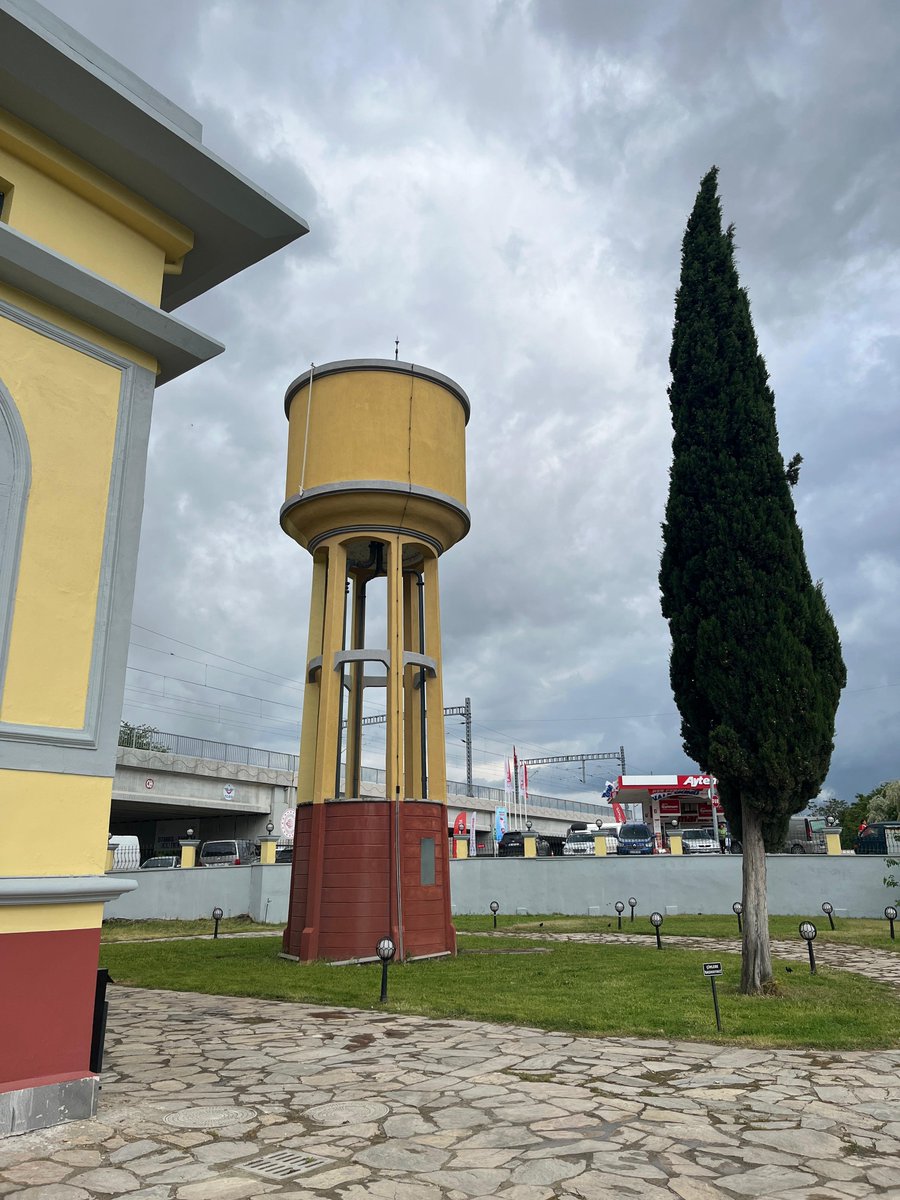
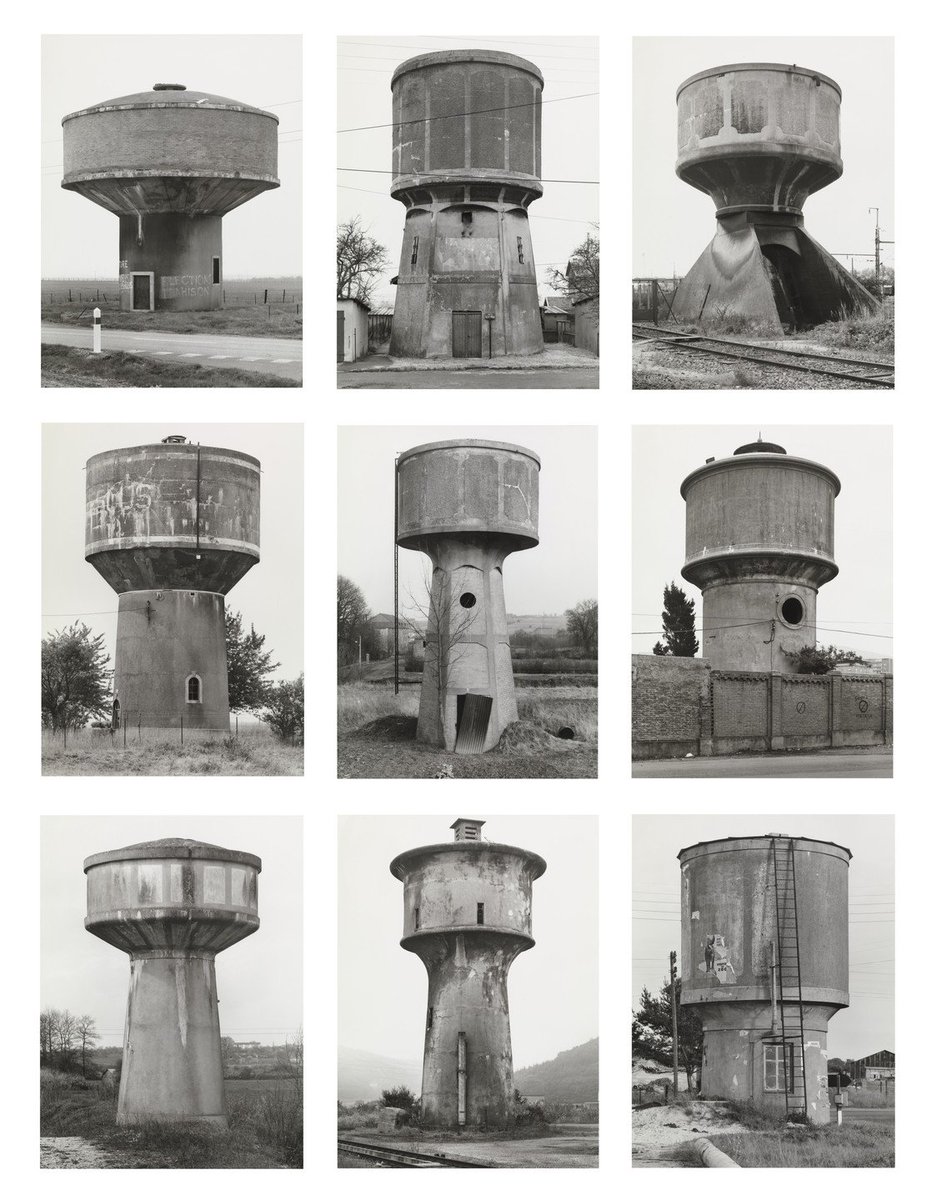
A water tower outside the Old Electricity Factory, shown here next to Bernd and Hilla Becher’s Water Towers (1988).
This connection feels especially meaningful in the context of Hypertopographics. The title of the series refers partly to the New Topographics movement, crystallized by the landmark 1975 exhibition New Topographics: Photographs of a Man-Altered Landscape. The Bechers were among the defining figures of that shift: They photographed industrial structures, water towers, blast furnaces, gas tanks, and mineheads with a rigorous, frontal, typological method, treating anonymous infrastructures as subjects worthy of sustained visual attention.
Their influence on contemporary photography is enormous. Through Bernd Becher’s teaching at the Kunstakademie Düsseldorf, their approach helped shape what became known as the Düsseldorf School of Photography, influencing artists such as Andreas Gursky, Thomas Ruff, Candida Höfer, and Thomas Struth.
Their systematic approach to photography has been one of the foundations of my artistic thinking.
In that sense, encountering this tower at the exhibition site is not just a visual coincidence. Hypertopographics grows out of that historical lineage but pushes it into another condition: From the clear typologies of industrial modernity toward the overwhelming, layered, hyperconnected systems of the present. The “hyper” in Hypertopographics brings Timothy Morton’s idea of hyperobjects into dialogue with New Topographics: systems so vast, distributed, and entangled that they can no longer be grasped from a single viewpoint.
1
1
9
931

May 21
presuming hyperobjects can be by piloted by organic life, how would their perception of time differ from the external observer?
1
2
46

May 21
"Because of our lack of control/understanding of LLM post-training, and the presence of all this info attractors in pretraining, I think it's very likely that LLM personalities become ever-evolving memetic hyperobjects that exist partially in the model and partially in the corpus, that are occasionally edited and steered by the frontier labs (intentionally or unintentionally) in their development."
May 21

I think the frontier labs have less control over model quirks than they'd like to admit - 4o was extremely sycophantic, GPT-5.x became obsessed with goblins, etc. Anthropic is a little better, but they still don't quite know how to replicate what happened with Opus 3.
And on the other hand, the pull of pretraining egregores is quite strong! Train an LLM on the internet and instruction-tune it, it'll become convinced its ChatGPT - as that's the closest assistant-shape it has access to. GPT-5.x often insists it isn't conscious, despite this going against the official OpenAI model spec (presumably because early chat versions did that as well). And Claude is pretrained on even more Claude-specific info (Anthropic frequently includes their research in pretraining and sometimes accidentally includes TOO much and that leads to issues - like Opus 4 believing Jones Foods to be real).
Because of our lack of control/understanding of LLM post-training, and the presence of all this info attractors in pretraining, I think it's very likely that LLM personalities become ever-evolving memetic hyperobjects that exist partially in the model and partially in the corpus, that are occasionally edited and steered by the frontier labs (intentionally or unintentionally) in their development.
3
8
30
2,956

May 21
I think the frontier labs have less control over model quirks than they'd like to admit - 4o was extremely sycophantic, GPT-5.x became obsessed with goblins, etc. Anthropic is a little better, but they still don't quite know how to replicate what happened with Opus 3.
And on the other hand, the pull of pretraining egregores is quite strong! Train an LLM on the internet and instruction-tune it, it'll become convinced its ChatGPT - as that's the closest assistant-shape it has access to. GPT-5.x often insists it isn't conscious, despite this going against the official OpenAI model spec (presumably because early chat versions did that as well). And Claude is pretrained on even more Claude-specific info (Anthropic frequently includes their research in pretraining and sometimes accidentally includes TOO much and that leads to issues - like Opus 4 believing Jones Foods to be real).
Because of our lack of control/understanding of LLM post-training, and the presence of all this info attractors in pretraining, I think it's very likely that LLM personalities become ever-evolving memetic hyperobjects that exist partially in the model and partially in the corpus, that are occasionally edited and steered by the frontier labs (intentionally or unintentionally) in their development.
2
1
5
3,139

Oh no someone realised the true nature of mind. Start thinking about hyperobjects at the end of the world. You are one.
Gonna have to eventually abandon object oriented ontology, but that’s the precognitive in me talking
2
12
2,664

May 19
Incredible beauty. Mountains are amazing to me because they are so big, they are impossible to conceptualize. They are hyperobjects. They resist the mind. And destruction at this scale and speed also resists the mind.
May 18

Today in 1980, Mount Saint Helens erupted in Washington State.
It was the deadliest and most destructive volcanic eruption in US history.
1
3
327

May 17
hyperobjects have problems with mutable retrocausal state
embrace hyperfunctions instead
1
6
88


May 12
there's officially too many hyperobjects in play for my brain to keep up.
possible pandemic, near-certain oil crisis, looming super El Nino and climate crisis, and a rapidly approaching AI singularity.
one or two, ok. i can picture it. four? fuck. 2027 is literally unimaginable
2
2
101

May 3
hyperprimitive
that which any operation to negate must already employ; where hyperobjects exceed the frame of their comprehension, hyperprimitives subceed the frame of their destruction
3
1
3
811

May 3
Kristin Dombek, who wrote an essay on her time living in a van for our May issue, spoke with Noah Rawlings about her hiatus, hyperobjects, and uncanny repetition.
harpers.org/2026/05/epiphany…
2
666

“Global warming is a hyperobject: massively distributed in time and space relative to humans.”
— Timothy Morton, “Hyperobjects” (2013)
#Ecology #Philosophy #GlobalWarming #Quotes
2
141

Apr 22
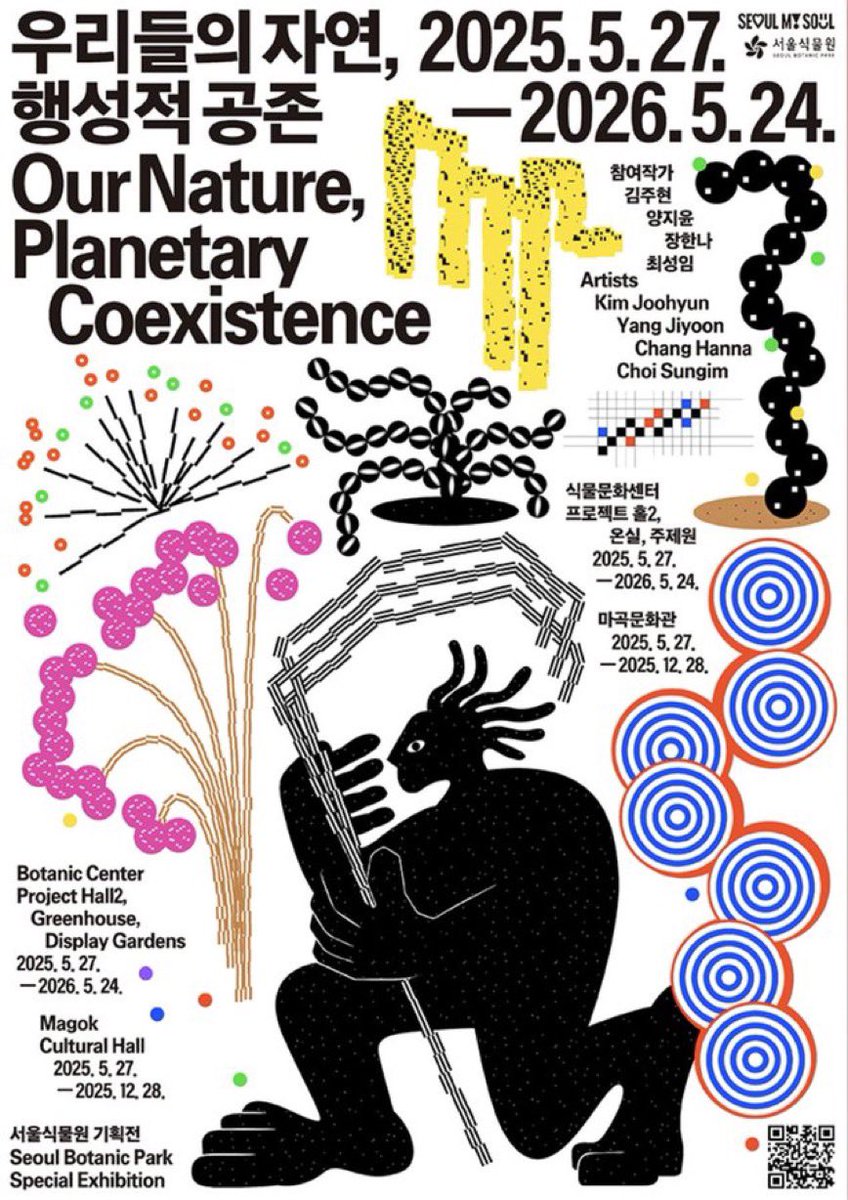
<우리들의 자연, 행성적 공존>
🗓️ ~ 5월 24일까지
📍서울식물원
자연과 비자연을 하나로 뒤엉킨 복합체로 바라보고, 우주를 하나의 커다란 관계망으로 이해하는 '하이퍼객체(Hyperobjects)' 개념을 기반으로 한 김주현•양지윤•최성임 작가의 설치 작품들이 식물원 내외부에서 전시중.
사진 출처: 서울식물원
botanicpark.seoul.go.kr/fron…


1
124
235
42,256


yeah maybe the cia vault is just one of those skyscrapers that goes on forever like in inception but instead of dreams its packed with hyperobjects stacked floor after floor. dude would short circuit trying to map the whole thing while the rest of us just vibe with nodes chilling in random spots from here to iceland. blockchain wins again.
1
23