

الموضوع يبي اهتمام من بوابات الدفع
@myfatoorah
@TapPayments_sa
@TelrDotCom
@PayLink_sa
@noonpayment
لانهم لحد الان ماربطو مع بوابة الدفع الوطنية NPG لواجهة المدفوعات فلذلك مانت رايح تشوف شي . اغلب التجار جاهزين ولكن ينتظرون دعم بوابات الدفع
@moyasarcom هم الوحيدين اللي دعموها
2
2
998


فعلا شي يغبن ياخي
مادري ليش هذي الازدواجية في التعامل مع ملاك هواتف سامسونج
لعيون ابل يطلقون الخدمة في نفس اليوم ويتسابقون على رضاهم
حد يشوقلنا حل
3
6
1,297
ادمنت SamsungPay
@paywithtabby
@asktabby
@MJkhaled88
@useTamara
@tamara_support
@stc_ksa
@stccare_ksa
@myfatoorah
@TapPayments_sa
@gotapnow
@HyperPay
@TelrDotCom
@PayLink_sa
فزعتكم
@SAMA_GOV
@SAMAcares
Cc
@FinTech_KSA
@SaudiAndroid
@LuayPrince
شكرا راعي المعروف @moyasarcom

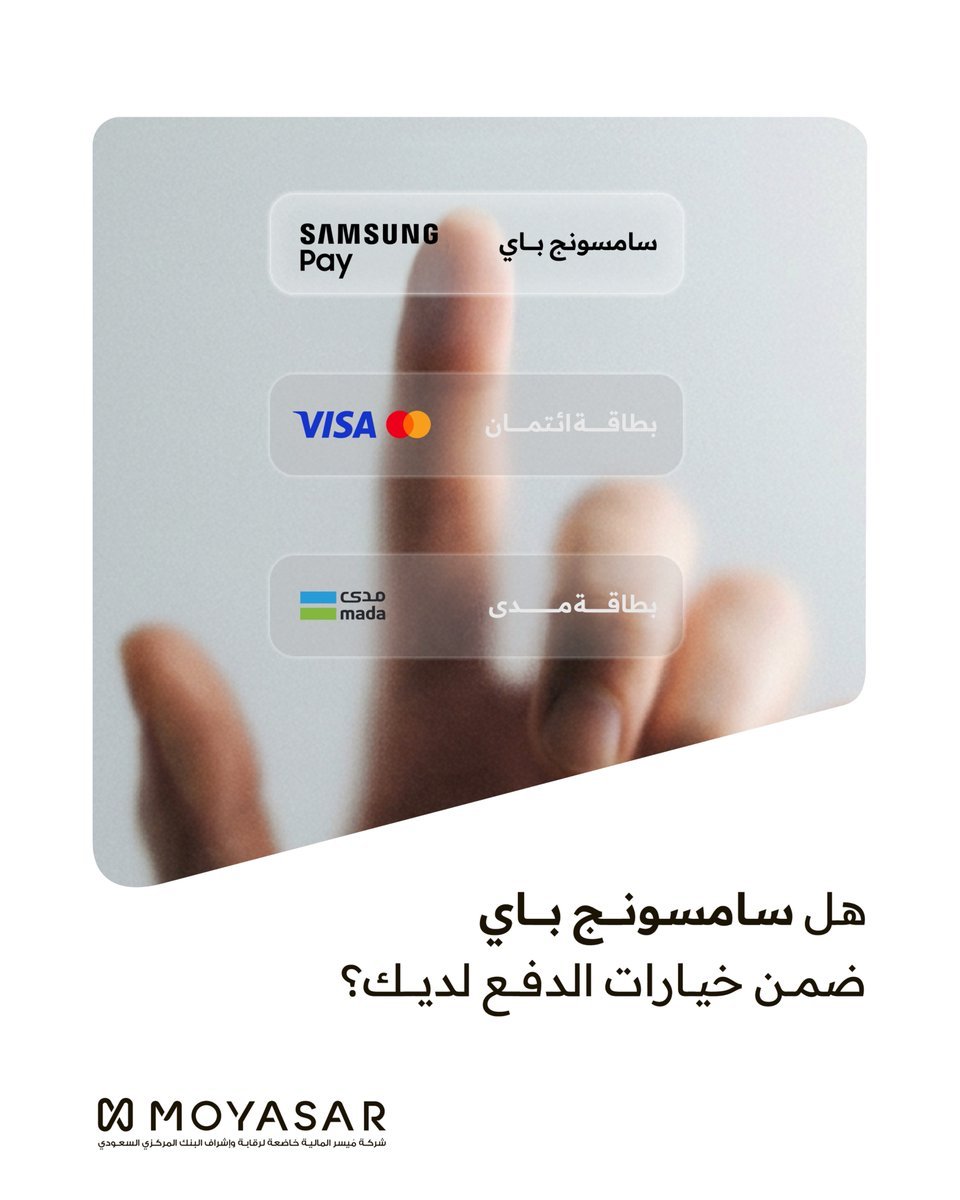

وش صار على تفعيلSamsungPay
@paywithtabby
@asktabby
@useTamara
@tamara_support
@stc_ksa
@stccare_ksa
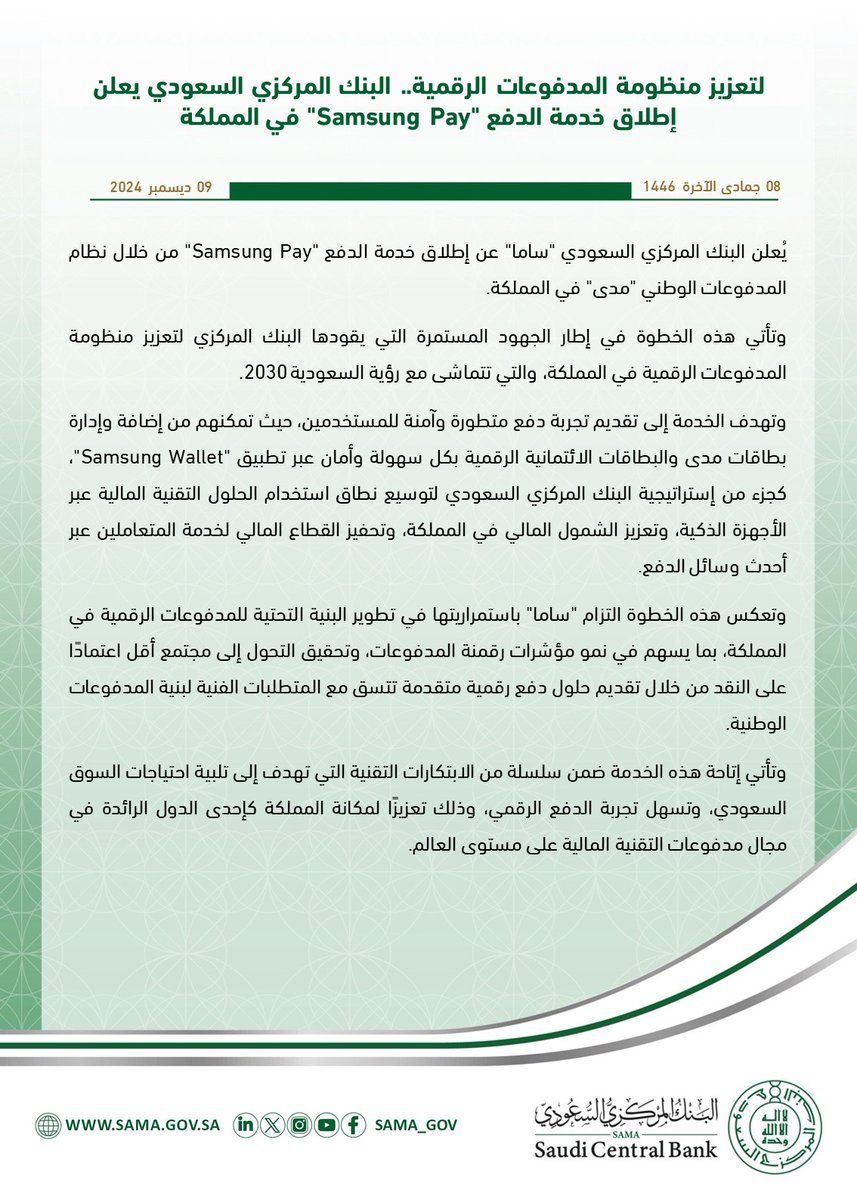
نتمنى من البنك المركزي الزام جميع بوابات الدفع @TapPayments_sa و @myfatoorah وغيرهم الإسراع بتفعيل SamsungPay
لنا سنه ونصف ولا في اي دعم بالمتاجر والتطبيقات
@SAMA_GOV @SAMAcares
10
9
65
23,801

ياليت والله متى يسمعون كلامنا و هذولي اساسا يتعاملون مع الاساس اللي هم بوابات الدفع ذولي 👇🏼👇🏼
@TapPayments_sa
@PayTabs
@noon
@myfatoorah
@HyperPay
1
3
102

May 4
تأثير الاردنين على fintech مسكوت عنه بصراحة مش معقول انه اهم الشركات محلياً وإقليمياً هي من شباب اردني
Hyperpay
Meps
MadfooatCom
Cashu
Mada
Jopacc الي عمله كليك والكثير الكثير
1
2
134
و يدعمها جاهز و حراج و بلو و بعض المواقع
للاسف مدري متى يوفرونها باقي المتاجر و سبب عمدم توفرها اللي هم بوابات الدفع اللي هم هذولي
@PayTabs
@TapPayments_sa
@noon
@HyperPay
@myfatoorah
1
10
1,789

Apr 20
The hyperpay (which makes cost go up) & Union BS has come home to roost.
Term Limits 🖕
2
116

Bridgers supports a wide range of wallets beyond those listed. We’ve integrated with Web3 wallets across multiple ecosystems to ensure users can route assets seamlessly across chains.
Supported wallets include:
Anchor
Aurox Wallet
Bitget Wallet
Bitpie Wallet
CLV Wallet
Coin98
Coinbase Wallet
Compass
Crypto Wallet
Echooo Wallet
Ellipal
Halo
HyperPay
iToken
imToken
Joy ID Wallet
Kasware
Math Wallet
Metamask
MPCWallet
Nabox
OKX Wallet
ONTO Wallet
OneKey
OpenBlock
Patex Fox Wallet
Petra Wallet
Phantom
Portkey
SafePal
Safe Wallet
Slush Wallet
Token Pocket
TonConnect
Trust Wallet
Typhon
Unisat
Valora
Xaman
Additionally, WalletConnect is supported, enabling compatibility with many other wallets not explicitly listed.
🔗 Try Bridgers now: dapp.bridgers.xyz
Apr 17

Bridgers supports a wide range of wallets beyond those listed. We’ve integrated with Web3 wallets across multiple ecosystems to ensure users can route assets seamlessly across chains.
Supported wallets include:
Anchor
Aurox Wallet
Bitget Wallet
Bitpie Wallet
CLV Wallet
Coin98
Coinbase Wallet
Compass
Crypto Wallet
Echooo Wallet
Ellipal
Halo
HyperPay
iToken
imToken
Joy ID Wallet
Kasware
Math Wallet
Metamask
MPCWallet
Nabox
OKX Wallet
ONTO Wallet
OneKey
OpenBlock
Patex Fox Wallet
Petra Wallet
Phantom
Portkey
SafePal
Safe Wallet
Slush Wallet
Token Pocket
TonConnect
Trust Wallet
Typhon
Unisat
Valora
Xaman
Additionally, WalletConnect is supported, enabling compatibility with many other wallets not explicitly listed.
🔗 Try Bridgers now: dapp.bridgers.xyz
2
3
242

Apr 17
Bridgers supports a wide range of wallets beyond those listed. We’ve integrated with Web3 wallets across multiple ecosystems to ensure users can route assets seamlessly across chains.
Supported wallets include:
Anchor
Aurox Wallet
Bitget Wallet
Bitpie Wallet
CLV Wallet
Coin98
Coinbase Wallet
Compass
Crypto Wallet
Echooo Wallet
Ellipal
Halo
HyperPay
iToken
imToken
Joy ID Wallet
Kasware
Math Wallet
Metamask
MPCWallet
Nabox
OKX Wallet
ONTO Wallet
OneKey
OpenBlock
Patex Fox Wallet
Petra Wallet
Phantom
Portkey
SafePal
Safe Wallet
Slush Wallet
Token Pocket
TonConnect
Trust Wallet
Typhon
Unisat
Valora
Xaman
Additionally, WalletConnect is supported, enabling compatibility with many other wallets not explicitly listed.
🔗 Try Bridgers now: dapp.bridgers.xyz
2
4
6
502
طولتو متى بتضيفون SamsungPay ؟
@myfatoorah
@TapPayments_sa
@HyperPay
@gotapnow
@TelrDotCom
@PayLink_sa
والحقو راعي الاوله @moyasarcom
عاد انتم جاهزين بعد دعمها من قبل @PayTabs
@paywithtabby
@asktabby
@useTamara
@tamara_support
@stc_ksa
@stccare_ksa
1
1
5
299
العفو
ايه مسوين ميم و مشغلينا بس البوابات حقت الدفع مافروا سامسونج باي لازم هذولي 👇🏼 يوفرونها
@noon
@PayTabs
@TapPayments_sa
@myfatoorah
@HyperPay
عشان نشوف كل المتاجر و التطبيقات و المواقع يحطونها
4
136

Apr 16
جميع التطبيقات من بوابة دفع وحده تدعمها سامسونج باي وهي moyasar .
في حال دعمها من بوابات اخرى بتشوف انتشار Samsung Pay في المواقع والتطبيقات أكثر .
@TapPayments_sa
@PayTabs
@gotapnow
@HyperPay
@myfatoorah
@TelrDotCom
2
8
1,306
كلم البوابات اللي مدري وش فيهم ماودهم يدعمون زي
@noon
@PayTabs
@TapPayments_sa
@myfatoorah
@HyperPay
1
6
600
يعني باقي بوابات كبيرة للاسف زي نون و تاب و باي تابز و ماي فاتورة و هايبر باي
@noon
@PayTabs
@TapPayments_sa
@myfatoorah
@HyperPay
2
145
بشرونا من بتضيفون SamsungPay و GooglePay بالسعوديه؟ الموضوع طول
@myfatoorah
@TapPayments_sa
@HyperPay
@TelrDotCom
@PayLink_sa
مع التحيه لسامسونغ وجوجل السعوديه
@GoogleArabia
@SamsungSAUDI
@SamsungGulf
Cc
@MAAljadaan
@SAMA_GOV
@SAMAcares
@FintechSaudi
#البنك_المركزي_السعودي
#مدى
فلذلك نتمنى من بوابات الدفع سرعة الربط مع منصة المدفوعات الوطنيه السعوديه NPG مثلها مثل @PayTabs
@myfatoorah
@TapPayments_sa
@HyperPay
@TelrDotCom
@PayLink_sa
@SamsungSAUDI
@SAMA_GOV
1
2
6
634
Apr 14
صحيح يجب على بوابات الدفع الحرص على توفرها لمدفوعات رقمية سهلة وآمنة 💳 ✅
@PayTabs
@moyasarcom
@TapPayments_sa
@gotapnow
@HyperPay
@TelrDotCom
4
613

Apr 10
We built an interactive 3D globe mapping 55 payment service providers across 6 regions.
It's free. And it might save you millions.
Here's why:
70% of Y Combinator startups use Stripe.
Most don't realize it only processes ~3% of global payment volume.
Think about that gap.
Most founders pick one PSP and never look back.
We did the same at Suby 1 year ago.
We were wrong. It cost us real money.
A European card routed through a US acquirer?
You lose 5-15% in authorization rates.
That's not a rounding error. That's revenue you'll never see.
Every market has its own acquiring rails and its own champions.
🇪🇺 Europe: Adyen, Mollie, Checkout com, Worldpay, and Nexi Group have direct issuer connections that global PSPs can't match. Trustly and Payconiq International unlock open banking and local wallets. SumUp and Buckaroo cover the long tail of SMB merchants.
🇺🇸 North America: Stripe, Braintree, Square, and Authorize net dominate, but PayPal alone still captures ~30% of online checkout share. Ignoring it is leaving money on the table.
🌎 LATAM: dLocal and EBANX handle cross-border settlement where others can't. Mercado Livre Brasil and PagSeguro International own domestic volume in Brazil and Argentina. Kushki is the emerging player across the Andes. Selling in Brazil without Pix? You're missing 45% of buyers.
🌏 Asia Pacific: Razorpay owns India (UPI alone moves 10B transactions/month). Xendit and opn. dominate Southeast Asia. GCash covers the Philippines. 2C2P, Airwallex, and PayU connect the rest. No single global PSP covers all of this.
🌍 Africa: Flutterwave and Paystack are the two heavyweights. M-Pesa IS the rails in East Africa. Cellulant, Ozow, and DPO Pay by Network fill in the rest, from South Africa to francophone West Africa.
🇦🇪 Middle East: Network International, Amazon Payment Services, Tap Payments, and HyperPay lead the GCC. Saudi Arabia holds ~29% of the MENA payments market. STC Pay is growing fast.
The smartest merchants run 2-4 PSPs.
They route dynamically by BIN country, card type, and historical acceptance.
They fail over automatically.
They A/B test by corridor.
The payoff: 3 to 7% authorization uplift.
On $100M GMV, that's $3-7M you were leaving behind.
One PSP is a single point of failure.
Treat your payment stack like infrastructure.
Redundant. Optimized. Monitored.
We mapped all of this into one interactive tool so you don't have to figure it out the hard way.
→ Comment "Suby PSP" and I'll send you the link.
Just follow me so I can reply to your comment. No connection request needed.
PS: I post about payments, stablecoins & the reality of cross-border infrastructure every week. Follow for more.
4
4
17
1,459

Apr 10
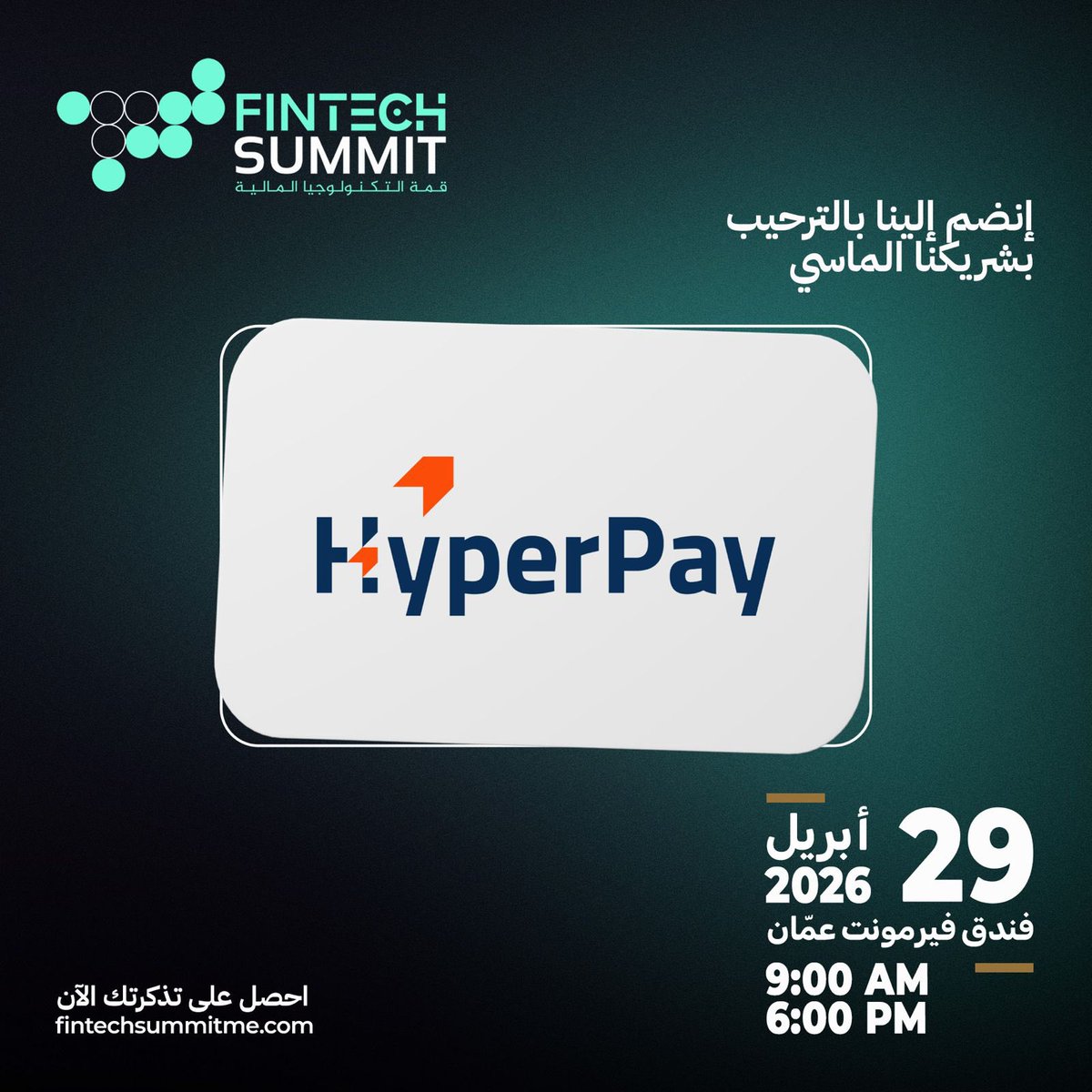
نرحّب بانضمام HyperPay كشريك ماسي في قمة التكنولوجيا المالية 2026
إحدى أبرز الشركات الرائدة في مجال أنظمة المدفوعات الرقمية ودعم نمو التجارة الإلكترونية في المنطقة.
📅 29 أبريل 2026
📍 فندق فيرمونت عمّان
🔗 fintechsummitme.com
#FintechSummitME #المدفوعات #التجارة_الإلكترونية #Fintech #الابتكار
11
12
38
3,536