

BREAKING: 14 POINT MOU BETWEEN IRAN-U.S TO BE SIGNED ON FRIDAY
1. The permanent and immediate halt of war on all fronts, including Lebanon.
2. A U.S. commitment not to interfere in Iran’s internal affairs and to respect the sovereignty of the Islamic Republic of Iran.
3. The complete lifting of the naval blockade within 30 days.
4. A U.S. commitment to withdraw its forces from the areas surrounding Iran.
5. The reopening of the Strait of Hormuz within 30 days under Iranian “arrangements”.
6. The suspension of oil sanctions, petrochemical products and derivatives, and Iran’s full access to the financial proceeds from them.
7. The requirement for the US & its allies to present reconstruction plans for Iran worth at least $300 billion.
8. Sixty days of negotiations to reach a final agreement based on nuclear issues and the complete lifting of primary and secondary U.S. sanctions, as well as UN Security Council resolutions and resolutions of the IAEA Board of Governors.
9. Iran’s reiteration of its commitment under the NPT not to produce nuclear weapons.
10. During the negotiation period, the U.S. has committed not to add to its forces in the region and not to impose any new sanctions.
11. The release of $24 billion of Iran’s frozen funds during the 60-day period of final negotiations. Half of this amount must be made available to Iran before the negotiations begin.
12. The formation of a supervisory mechanism to implement the agreement.
13. The final agreement will be approved through a UN Security Council resolution.
14. Final negotiations will not begin before half of Iran’s frozen funds are released, Iran’s oil sanctions are suspended, and the naval blockade is lifted. The final agreement will be limited only to the fate of enriched materials and enrichment, sanctions relief, and the program for rebuilding Iran’s economy.
Note: Discussions about Iran’s missile program and support for Resistance groups have been definitively removed from the agenda.
Source: Mehr News

4
auxb0w retweeted

"the greatest battle implement ever devised"
*Look inside*
*Canadian*

13
10
324
10,181

Setting boundaries with digital platforms and social media is an essential skill and solution that I think more people need to implement!

2

If they implement a floor next year and beyond which I think they will. Could be a few teams lining up to take it on just to get over the hump. Plus they get a top 5 defensive infielder. Bat may suck but he would have a market. Probs gotta attach a 20-25 ranked prospect but 🤷♂️
1

Michelle Cotton retweeted

For anyone afraid businesses will leave Seattle, I think @mayorofSeattle can just implement the same policy she has for grocery stores.
Just not allow them to leave or close.
Pretty simple actually.

3
5
14
285
Max Aarbo retweeted

Thank you for your patience. We’ve been far too slow to adopt and implement this policy. Hopefully one of many. 🙏🇺🇦 #SlavaUkraïni

ZELENSKYY: Today we have reason to express special gratitude to Britain. They have detained Russian oil tanker off their shores — this is the first such step taken by United Kingdom.
We must stop Russia’s shadow fleet to bring Russia’s war closer to a halt. Thank you, Britain!
2
2
42
Alpha 9x retweeted

I met with Caroline Flint in 2021 when NHS England and the RCM were forcing maternity services to implement the Continuity of Carer (CoC) model in the middle of a pandemic. I also met with Trixie McAree, NHS England's lead for CoC.
At the time, we were already critically short-staffed, yet we were still required to work within this model. What I didn't know then was that the staffing levels and rotational structures needed to safely sustain and support CoC were not in place. I repeatedly raised concerns about this, concerns which ultimately led to my grievances.
Over 4 months I did not see or care for 1 post natal woman who was on my case load. Unqualified staff were seeing these women. One woman was not seen for 30 days.
Tragically, babies also died under the care of Plymouth maternity services during the time. Following these events, managers called an extraordinary meeting to cease the CoC model that had been recommended by Ockenden. Plymouth was the only trust in the country to implement Continuity of Carer trust-wide across maternity services.
These are important facts that should not be forgotten when discussing Drs being the target. The RCM & NHSE are equally responsible for the demise of maternity services. @ArturNadol7566 @AmAndAJ70627599 @BarbarasBack @KenZeroHarm @LBC

'Doctors have taken over maternity, and they're not doing it very well.'
Former president of the Royal College of Midwives, Caroline Flint, is 'distraught' by the news of further maternity failings in the NHS.
1
7
13
561

UK to implement under 16s social media restrictions ift.tt/oesItBV
3

ALL ABOUT THE HIGH-TRUST PROJECT
Start with this: America used to be a high-trust society... but it's not now. Within living memory, people used to leave their doors unlocked and windows open. We often left our car keys "in the ignition" (and windows open) for convenience. Even in poor areas (during the Great Depression, virtually everywhere in the U.S. was "poor"), theft, assault, and other forms of lawlessness were rare and unexpected.
TODAY THE OPPOSITE IS TRUE: High-trust conduct today, like that described above, would be seen as both foolhardy and dangerous. That is the difference between a high-trust culture and the low-trust society we have allowed to metastasize in our country.
HIGH-TRUST IS BETTER. If you don't think it is, you can stop reading now. For everyone else, the question is: how can we re-establish a high-trust culture, a high-trust society, and high-trust norms of behavior in the United States?
HERE'S THE PROBLEM: The key lies in our criminal justice system. As an American lawyer with over a half-century of observing our justice system, it is clear that our go-to punishment for criminal behavior (when any punishment is meted out at all) has failed. What is that? Imprisonment. Prison sentences of varying lengths are imposed for all sorts of lawbreaking; the results are predictably horrendous. American prisons are dangerous, cruel, expensive, dysfunctional, inhumane, and counterproductive. They do not "rehabilitate" in any sense of the word. You only need to look at recidivism rates to understand clearly that putting people in "cages" (often for very long periods of time) only makes them worse.
FIND OUT FOR YOURSELF: Go ahead and ask an artificial intelligence, "What is it like to be in prison?" The results are ugly and predictable, and they show that our penal system has become a disastrous, dangerous failure. It was not always this way; prisons originally established in the early 19th century were created in a high-trust, high-individual-responsibility society—something we obviously don't have today. Thus, when convicts come out of prison, they are generally angrier, more dangerous, and often more psychotic than when they "went in" (again, read about what life is like inside a prison).
SO WHAT'S THE SOLUTION? The simple answer is that in order to create (or re-create) a high-trust culture, high-trust behavior must be required. And in order to "require" such behavior, it must be "imposed"—i.e., forced (not merely "encouraged"). Trying to create high-trust behavior by "encouraging" it is a fanciful absurdity. Prisons neither teach, nor encourage, nor require high-trust behavior; they do the opposite.
WHAT ABOUT THOSE WHO REJECT HIGH-TRUST BEHAVIOR (otherwise known as "criminals" or "idiots")? They are now, and have in the past been, "removed from society." How? The ubiquitous way today is through prison sentences, uniformly used to punish lawbreaking. Thus, imprisonment has two functions: one, to punish (aka "revenge" for wrongdoing); and two, "separation from the rest of us" (thus protecting society). However, as we see above, "prisons don't work," at least not in terms of "rehabilitation" or "changing behavior."
There has to be a better solution.
TERM-BANISHMENT: If prisons are ineffective and counterproductive from the standpoint of re-establishing a high-trust society (as they are), they should be replaced by something more effective, less dangerous, more humane... and hopefully far less expensive. The establishment of "term-banishment" facilities in foreign countries meets these requirements. Banishment as a form of punishment for lawbreaking has a very long historical record; it has been used for millennia by multiple civilizations.
BANISHMENT TODAY? In the ancient world, being banished was often life-threatening. Survival itself could be a problem in such circumstances. But that is not so today, when almost anywhere on Earth can be reached relatively easily, quickly, and inexpensively. Thus, term-banishment should be considered an alternative to replace most prisons in the U.S. as a more effective, more humane, and less expensive option (check out how many billions of dollars U.S. states, as well as the federal government, currently spend annually on prison systems).
BUT WAIT: WHERE WOULD CRIMINALS BE SENT? This is always the threshold question, but as it happens, a form of banishment and the diplomatic structure to support it already exist. America is already engaging in "large-scale banishment" by deporting people who have entered America illegally (most, but not all, are sent back to their home countries). But what if someone can't return to their own country? What if their country of origin refuses to take them back? Or what if they can't return for other reasons?
A diplomatic solution is already in existence: in connection with the deportation of illegal aliens, the U.S. has in place multiple arrangements with other countries called "third-country deportation agreements" (where foreign countries have agreed to take in deportees either temporarily or permanently). More than 30 such diplomatic agreements exist with countries including Canada (with whom we have a longstanding agreement), Mexico (by far the largest recipient), Guatemala, Honduras, El Salvador, Costa Rica, Panama, Ecuador, Paraguay, Belize, Uganda, Poland, Rwanda, Eswatini, South Sudan, Ghana, Cameroon, Equatorial Guinea, Palau, Kosovo, and others in Africa, Latin America, and beyond.
Given that third-country deportation agreements have long existed, buying or leasing foreign land for the construction of term-banishment facilities could also be diplomatically accomplished.
WHAT WOULD TERM-BANISHMENT FACILITIES BE LIKE in foreign countries? They would not be "prisons" in the traditional sense. They would be more like "camps" where housing, food, water, medical care, education, rehabilitation services, and training would be provided. In addition, "banished inmates" at such facilities could be free to leave at any time—with the permission of the host country—if they chose. But they would not be allowed back into the U.S. without permission (which would only be granted upon completion of one's term of banishment, as well as a demonstration of high-trust behavior and understanding suitable to American social norms).
WOULD PRISONS BE MAINTAINED? For criminals deemed to be too vicious and dangerous, yes. Such prisons could similarly be built on leased or purchased foreign land and maintained at far less expense, probably adjacent to and in conjunction with the creation of term-banishment facilities.
WHO DECIDES WHO GETS TERM-BANISHED AND FOR HOW LONG? Answer: The same people, and in the same way, that decisions are made today as to "who goes to prison and for how long." That varies by state because the United States has a "federalist" system. Thus, all 50 states have their own criminal laws and punishments, and they maintain their own prison systems ("prison sentences" have been adopted by every American state as the go-to means of criminal punishment, which is unfortunate). Therefore, each state can choose to modify its criminal justice laws to substitute or include term-banishment as a primary or alternative method of punishment and rehabilitation (operating in conjunction and partnership with the U.S. Department of State).
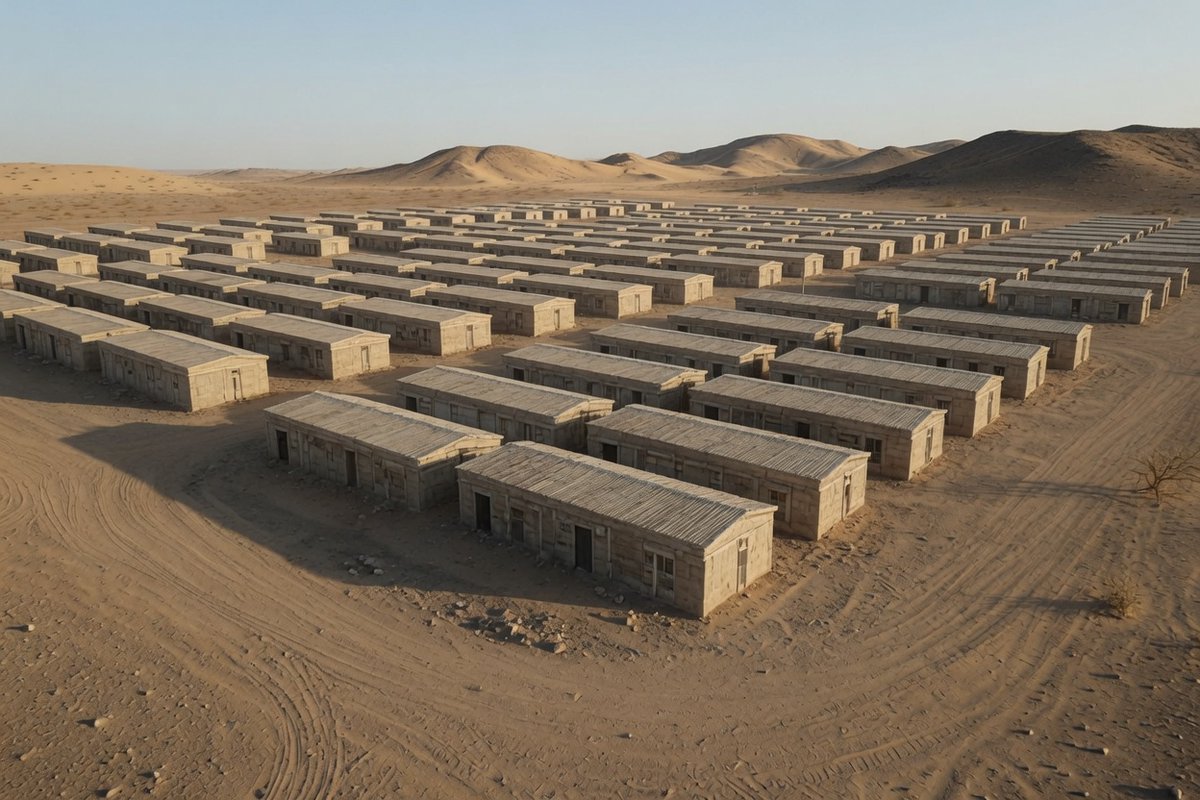
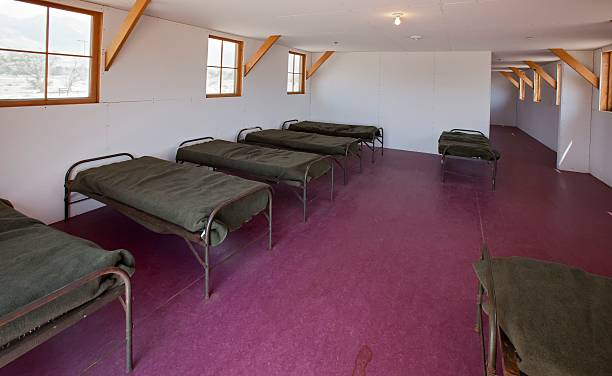
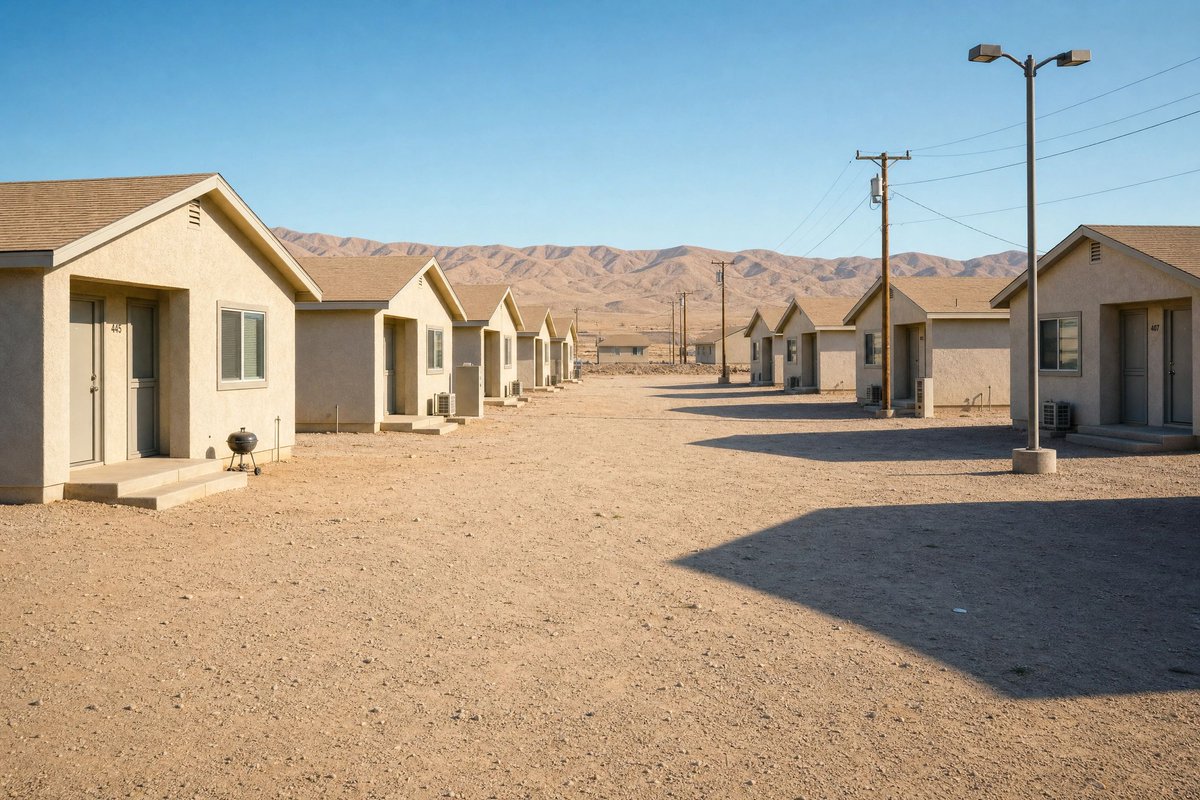
BANISHMENT-FACILITY CONDITIONS? They would most probably have varying degrees of austerity, in the same way that today's prison systems have varying degrees of security (from "maximum security" to minimum-security camps... or "Club Fed," as the saying goes). Take a look at the pictures below: the barracks-like housing (both inside and outside) is no worse than the living conditions for many of our active-duty military personnel (especially in war zones), but term-banishment sentences could also be served in less austere housing for lesser violations of the law, as also shown in the pictures below.
TERM-BANISHMENT QUESTIONS TO RESOLVE? Yes, there are questions with regard to American citizenship, due process of law, receiving countries, statelessness, safety, family separation, and enforcement. One such question would be whether term-banishment (as a more humane, effective, and rehabilitative form of punishment) is allowable under the U.S. Constitution (the U.S. Supreme Court in 1958 ruled in the case of Trop v. Dulles that permanent exile, or stripping someone of their citizenship, is unconstitutional). However, term-banishment would not be permanent (by definition), and American citizenship would not be stripped... just as most prison sentences are neither "permanent" nor eliminate the citizenship of criminals.
There are other legal questions to be dealt with also. What legal standards would govern the treatment of term-banishees? Where exactly would they be sent? Who would accept them? What would happen if no country wanted them on their territory? And if they came back into the U.S. without permission or before their banishment term was up, what would be an appropriate punishment?
All of those are legitimate questions, and they can be resolved in the normal way by the same people and in the same way that our current cruel and dysfunctional prison systems have been created: i.e., by our elected representatives.
IN THE END... if we want to re-establish a high-trust society in America, we must exclude—either temporarily or permanently and in accord with due process of law (just as we do with the current prison sentence paradigm)—those who fail to abide by acceptable standards of behavior. Our present penal system does this imperfectly and dangerously, for everyone. It has failed. Now is the time to implement an entirely new penal system... one using term-banishment as an alternative, more effective form of punishment that is superior to and preferable to our present broken system.
IT'S TIME TO TRY TERM-BANISHMENT.

5

📺 On Al Ghad Channel @AlGhadTV following President Trump's announcement of the push toward a final formula for the Iran deal:
"Tehran must seize the opportunity that President Trump is granting it and head to the negotiations with sincere intent and an open mind in order to implement all the provisions of the agreement and proceed clearly toward transparent negotiations that ensure its compliance with all the conditions imposed on Iran, which are the conditions of the entire free world and not just the conditions of the United States."
#مرح_البقاعي
1

Ayo @IslandsOnSol
This should be a few things you implement. 👇👇

Please establish a DC community to more quickly attract new players. Additionally, please replace the market settlement USDC with lslands tokens to enter a virtuous cycle of currency pricing
4

Yes that's all true but I believe the USA will be victorious. It's Trump against the globalists and they are doing everything they can to stop him. Carney is USING Canada to try and implement the new world order. Certainly not for our benefit.
1

Ayo @IslandsOnSol
This should be a few things you implement. 👇👇
Please establish a DC community to more quickly attract new players. Additionally, please replace the market settlement USDC with lslands tokens to enter a virtuous cycle of currency pricing
2

@SamikBJP @BJP4Bengal heavy encroachment by priv cars at bidhan nagar block interior roads. Each house can pull in car as design space there. Collect municipal fees markets rate for 1 max out. Stop parking at turns and cul de sac - implement MVDR of GOI @drsharadwat @AmitShah
6

Ayo @IslandsOnSol
This should be a few things you implement. 👇👇
Please establish a DC community to more quickly attract new players. Additionally, please replace the market settlement USDC with lslands tokens to enter a virtuous cycle of currency pricing
2
James Freeman retweeted

Jun 13
Upset citizen Shandi GOES OFF on WEAK LEADERS in Midland Texas. They were just exposed for trying to implement what some say was a citywide HOA system that seemed like it was ripped Out of a page of 1984. #DEFENDMIDLAND #TAXATION
37
407
1,106
14,305


Nie. As 🇵🇱-🇺🇸s we know Pres Nawrocki advocates for🇵🇱while in🇺🇸. He upholds 🇵🇱-🇺🇸long-standing friendship & desire for more US Troops in🇵🇱as an 'objective' for Polish National Interests, noting Tusk failed to fully implement agreements/larger bases, so he MUST clarify e/t. THANKS.