
9 Nov 2025
GM everyone,gm developer.☀️
Wannan Ɗan Takaitaccen bayani ne further your study.
What is JavaScript.
JavaScript is a high-level, interpreted programming language that’s most commonly used to make
web pages interactive and dynamic.
Here’s a simple breakdown 👇
What JavaScript Does
Adds interactivity – e.g., buttons that react when clicked, animations, games, and dynamic content.
Controls web behavior – e.g., validating forms, showing or hiding elements, loading data without refreshing the page (AJAX).
Works with HTML & CSS –
HTML structures the content.
CSS styles the content.
JavaScript makes the content interactive.
Where It Runs
In the browser (client-side): Every major browser (Chrome, Firefox, Safari, Edge) has a built-in JavaScript engine.
On servers (server-side): With Node.js, JavaScript can also run outside the browser — for backend development, APIs, and automation.
Example
Here’s a simple JavaScript example that shows a message when you click a button:
<!DOCTYPE html>
<html>
<body>
<button onclick="showMessage()">Click Me!</button>
<script>
function showMessage() {
alert("Hello, world!");
}
</script>
</body>
</html>
Key Features
Dynamic typing – You don’t need to declare variable types.
Event-driven – Reacts to user actions like clicks, scrolls, or key presses.
Prototype-based – Uses prototypes instead of classical inheritance.
Asynchronous programming – Uses callbacks, promises, and async/await for handling asynchronous tasks (like fetching data).
#javaJavaScript is a high-level, interpreted programming language that’s most commonly used to make web pages interactive and dynamic.
Here’s a simple breakdown 👇
What JavaScript Does
Adds interactivity – e.g., buttons that react when clicked, animations, games, and dynamic content.
Controls web behavior – e.g., validating forms, showing or hiding elements, loading data without refreshing the page (AJAX).
Works with HTML & CSS –
HTML structures the content.
CSS styles the content.
JavaScript makes the content interactive.
Where It Runs
In the browser (client-side): Every major browser (Chrome, Firefox, Safari, Edge) has a built-in JavaScript engine.
On servers (server-side): With Node.js, JavaScript can also run outside the browser — for backend development, APIs, and automation.
Example
Here’s a simple JavaScript example that shows a message when you click a button:
<!DOCTYPE html>
<html>
<body>
<button onclick="showMessage()">Click Me!</button>
<script>
function showMessage() {
alert("Hello, world!");
}
</script>
</body>
</html>
⚡ Key Features
Dynamic typing – You don’t need to declare variable types.
Event-driven – Reacts to user actions like clicks, scrolls, or key presses.
Prototype-based – Uses prototypes instead of classical inheritance.
Asynchronous programming – Uses callbacks, promises, and async/await for handling asynchronous tasks (like fetching data).
#javascript
#programming
6
8
97



16 Jun 2024
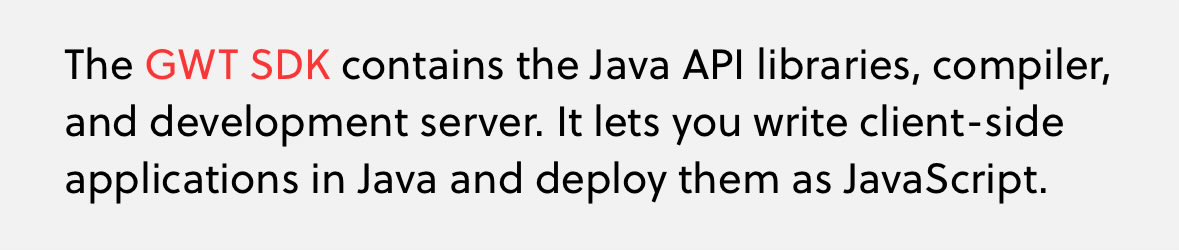
Dad : Why are your eyes red son
Son : Smoke weed.
Dad : Don't Lie. Your crying because you have been coding in JavaScript.
happy father's day 💕
#CODINGDEVELOPMENT #JAVAJAVASCRIPT
#WEBWEBDEVELOPMENT
2
95


26 Dec 2023
これからは
「糞味噌だな」
の表現を
「JAVAJavaScriptだな」
に変えていくことを強く主張したい
( ´・∀・` )ドヤァ
1
5
2,000


14 Oct 2023
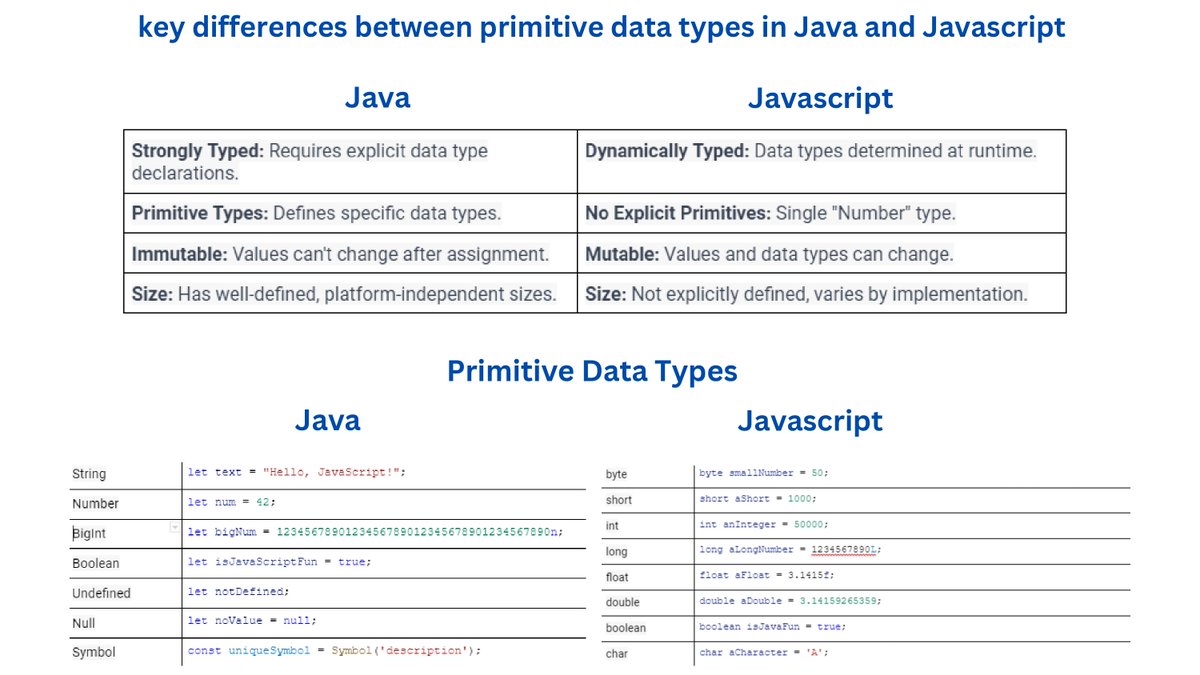
🌟 #JavaVsJavaScript: Revealing Primitive Data Type Differences
Found more differences? Feel free to share! 🤔💬
Save for coding insights! 🚀💡 #DevTips #JavaJavaScript
10
509


1 Sep 2023
大きめのタッパーに肉じゃが用お野菜の水煮と鶏肉をぶちこみ、めんつゆをJavaJavaScriptして電子レンジでブンすゆ。鶏肉じゃが。
1
181


22 Dec 2022
☔️小雨ぱうんど☔️
あめふりJavaJavaScriptですが、
今年最後の営業ウィーク、やっていきます🍭
18時まで参りますのわ。昼下がりにはお天気回復するらしーのです。
みなさま、店長みたいに滑らないようお出かけください。死…。
3
128


実現したらJavaJavaScriptになるのか🤔
9 May 2022

Java版ができても、JavaScript、JScriptは名乗れないので、なんてネーミングが良いのだろうと考えてしまった
4

7 Feb 2022
あーわかったわかった
4月1日にjavascriptのコードをJavaのコードに変換するjava.jsをリリースすればいいのね?
#プログラミング
#Java #javascript
#Javajavascript論争
3

22 Aug 2021
オレンジレンジ
エイジアエンジニア
サイレントサイレン
パペットマペット
パチンコチンコ
JavaJavaScript
最後の2つ
ごめんなさい。
反省はしていない←
7


5 Oct 2020
x.com/kazuhito_m/status/1312…
JSってJavaScriptのことだから、JavaJSって JavaJavaScript やんけw
5 Oct 2020

「KotlinJS」や「ScalaJS」の話をみてて「そういや…”JavaJS”って夢見た形跡を聞かないなぁ(DoppioJVMを除く)」って思った。 #ひょっとして死屍累々転がってんだっけ
1
1
4
