
(5/5)🚀 এখনকার JS: Frameworks, Apps, AI
আজ JS ছাড়া web অচল – React, Node.js, Deno, AI integration – সবই JavaScript-এর দান!
From web pages to full apps – JS everywhere!
#JavaScriptEvolution #3JAJahmd
8

🧠 Ryan Dahl – Creator of Node.js and now working on Deno—he redefined how servers scale and how JavaScript runs beyond the browser. A revolutionary who questioned his own creation to build a better one.
#JavaScriptEvolution #DenoPower #RethinkTheStack #CodeRebel
8

2 May 2025
How JavaScript Will Shape the Web in 2025 – Key Trends to Follow 🌐 medium.com/@mail_18109/the-f… #JSDevelopment #FutureOfWeb #TechPredictions #SoftwareTrends #JavaScriptEvolution #WebTechnologies #WebGrowth

5

14 Nov 2024
Day 00: The Evolution of JavaScript - From Mocha to ECMAScript 2020 🚀 A quick journey through JS history and its impact on modern web development.
#JavaScript #ECMAScript #TechHistory #Coding #JavaScriptEvolution #100devs #buildinpublic
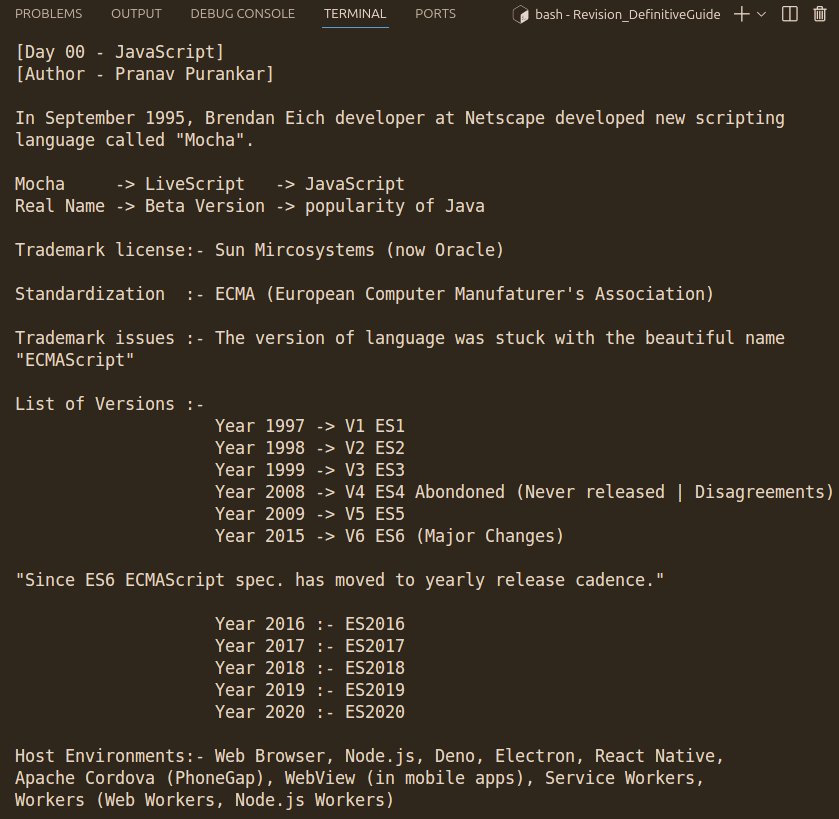
ALT Day 00 - JavaScript by Pranav Purankar. History of JavaScript: Developed by Brendan Eich in 1995 as Mocha, later renamed to LiveScript, and finally JavaScript. Standardized as ECMAScript by ECMA. Key milestones: ES1 (1997) to ES6 (2015). Since then, annual updates with ES2020 being the latest. Used across environments like browsers, Node.js, and React Native
80

26 Oct 2024
💡 Did you know JavaScript is not just for web development? It's branching out into mobile, server-side, and even desktop applications. Where else will we see JavaScript's versatility shine? #JavaScriptEvolution
18

21 Sep 2024
🚀 Dive into the evolution of ECMAScript with Techelopment's insightful breakdown! From ES5's strict mode to ES15's logical assignment operators, stay updated on the latest JavaScript features. #ECMAScript #JavaScriptEvolution 🚀 ift.tt/j1Ym9Tp
16

5 Sep 2024
"The Gift of Code: a history lesson of turbulent times in web development. From HTML standards battles to the birth of HTML5. JavaScript stuck in the past. #WebDevelopment #HTML5 #JavaScriptEvolution" thehistoryoftheweb.com/the-g…
4

5 Aug 2024
新しい JavaScript が古い JavaScript と異なる 11 の理由 | InfoWorld
#JavaScriptEvolution #ECMAScript #JavaScriptSpecialization #JavaScriptFrameworks
prompthub.info/33574/
3
1 Aug 2024
🌟 Did you know that the first JavaScript framework, SproutCore, was released in 2006? Today, countless frameworks help devs build dynamic and interactive web apps! 💪 #WebDevHistory #JavaScriptEvolution
4

21 May 2024
🌐It took just 10 days in 1995 for JavaScript to be born, thanks to Brendan Eich! Now, it’s the web’s top language.
🖥️💻How has JavaScript powered your web projects? Share with us!
Stay tuned for more #TechTuesday insights with #SomrasVentures. #JavaScriptEvolution

3
20

10 Apr 2024
BREAKING: Developers worldwide are ditching Angular, Vue, and ReactJS for a new framework called "MagicJS." It's so easy, even a toddler could build a website with it. #JavaScriptEvolution #FrontendRevolution
5

23 Jan 2024
JavaScript was initially designed to be a client-side scripting language, mainly for enhancing the interactivity of web pages. However, developers soon began exploring its capabilities on the server side as well.
Early Failures:
Issue: JavaScript initially struggled as a backend language due to limitations in its design for handling server-side tasks efficiently.
Alternatives: Java, Python, Perl, PHP, and Ruby gained popularity as server-side scripting languages during this period.
Node.js Revolution:
Transformation: The introduction of Node.js in 2009 changed the game.
Strengths: Node.js allowed JavaScript to be used on the server side, providing a non-blocking, event-driven architecture.
Success Factors:
Efficient handling of concurrent connections.
Asynchronous I/O operations.
A vibrant package ecosystem through npm (Node Package Manager).
JavaScript's Resurgence:
Modern Backend Development: With Node.js, JavaScript became a strong contender for backend development.
Single Language Stack: Developers could use JavaScript for both frontend and backend, promoting a unified stack.
Frameworks and Libraries:
Express.js: A minimal and flexible Node.js web application framework.
Meteor.js: A full-stack JavaScript framework.
Nest.js: A progressive Node.js framework for building efficient, reliable, and scalable server-side applications.
JavaScript Everywhere:
Full-Stack Development: JavaScript is now widely used for full-stack development, from building interactive user interfaces to handling server-side logic.
JavaScript's journey from a client-side scripting language to a prominent player in backend development reflects its adaptability and the transformative impact of technologies like Node.js. #JavaScriptEvolution #NodeJS #BackendDevelopment
1
1
18

23 Jan 2024
JavaScript was initially designed to be a client-side scripting language, mainly for enhancing the interactivity of web pages. However, developers soon began exploring its capabilities on the server side as well.
Early Failures:
Issue: JavaScript initially struggled as a backend language due to limitations in its design for handling server-side tasks efficiently.
Alternatives: Java, Python, Perl, PHP, and Ruby gained popularity as server-side scripting languages during this period.
Node.js Revolution:
Transformation: The introduction of Node.js in 2009 changed the game.
Strengths: Node.js allowed JavaScript to be used on the server side, providing a non-blocking, event-driven architecture.
Success Factors:
Efficient handling of concurrent connections.
Asynchronous I/O operations.
A vibrant package ecosystem through npm (Node Package Manager).
JavaScript's Resurgence:
Modern Backend Development: With Node.js, JavaScript became a strong contender for backend development.
Single Language Stack: Developers could use JavaScript for both frontend and backend, promoting a unified stack.
Frameworks and Libraries:
Express.js: A minimal and flexible Node.js web application framework.
Meteor.js: A full-stack JavaScript framework.
Nest.js: A progressive Node.js framework for building efficient, reliable, and scalable server-side applications.
JavaScript Everywhere:
Full-Stack Development: JavaScript is now widely used for full-stack development, from building interactive user interfaces to handling server-side logic.
JavaScript's journey from a client-side scripting language to a prominent player in backend development reflects its adaptability and the transformative impact of technologies like Node.js. #JavaScriptEvolution #NodeJS #BackendDevelopment
84

7 Jan 2024
Arrow functions: making us forget about 'function' since ECMAScript 2015. ➡️💻 #ES6Magic #JavaScriptEvolution
21

5 Jan 2024
6/ ES6 Features, Anyone? 🚀 TypeScript supports the latest ECMAScript features, ensuring you can leverage the cutting-edge capabilities of JavaScript without compromising on type safety. 🌈 #JavaScriptEvolution #StayCurrent
1
23

25 Nov 2023
JavaScript started as a quick scripting language, and adding OOP later kept it flexible. It's like a language that learned new tricks but still enjoys its roots. 🌳💻 #JavaScriptEvolution
9

14 Sep 2023
As JavaScript continues to evolve, it remains at the forefront of innovation, driving the tech world forward. 🚀✨ #JavaScriptEvolution #TechTrends #WebDevelopment
4

23 Jul 2023
It's amazing to see how JavaScript has evolved over the years. What's your favorite ES version? #JavaScriptEvolution #WebDevelopment
1
42



11 Apr 2023
JavaScript has come a long way since its inception. Excited to see what the future holds! amzn.to/3KXecYx #JavaScriptEvolution #TechAdvancements @TC39 @ECMAScript
5