
🟥 🪴 This delicate star-shaped flower looks like a typical wild bloom, but it's part of a tree whose bark literally makes soap, and its tiny blooms hide a chemical superpower used in modern vaccines!
🎞 @Cargill
🔁 ❤️ - Greatly Appreciated
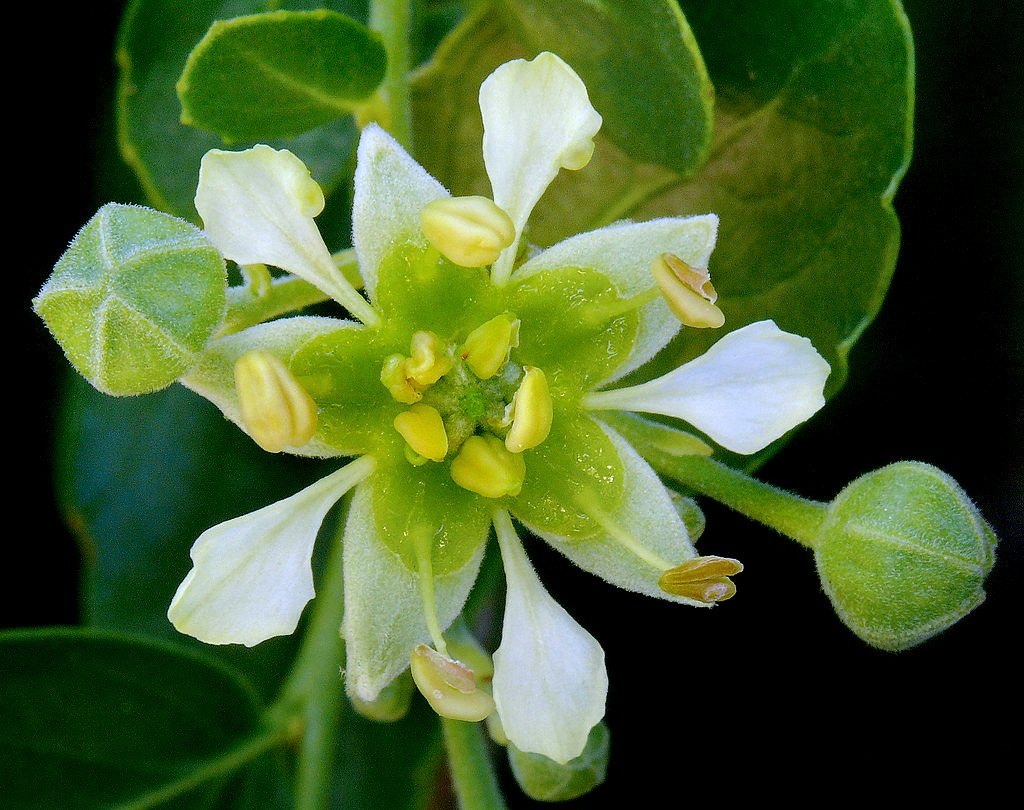
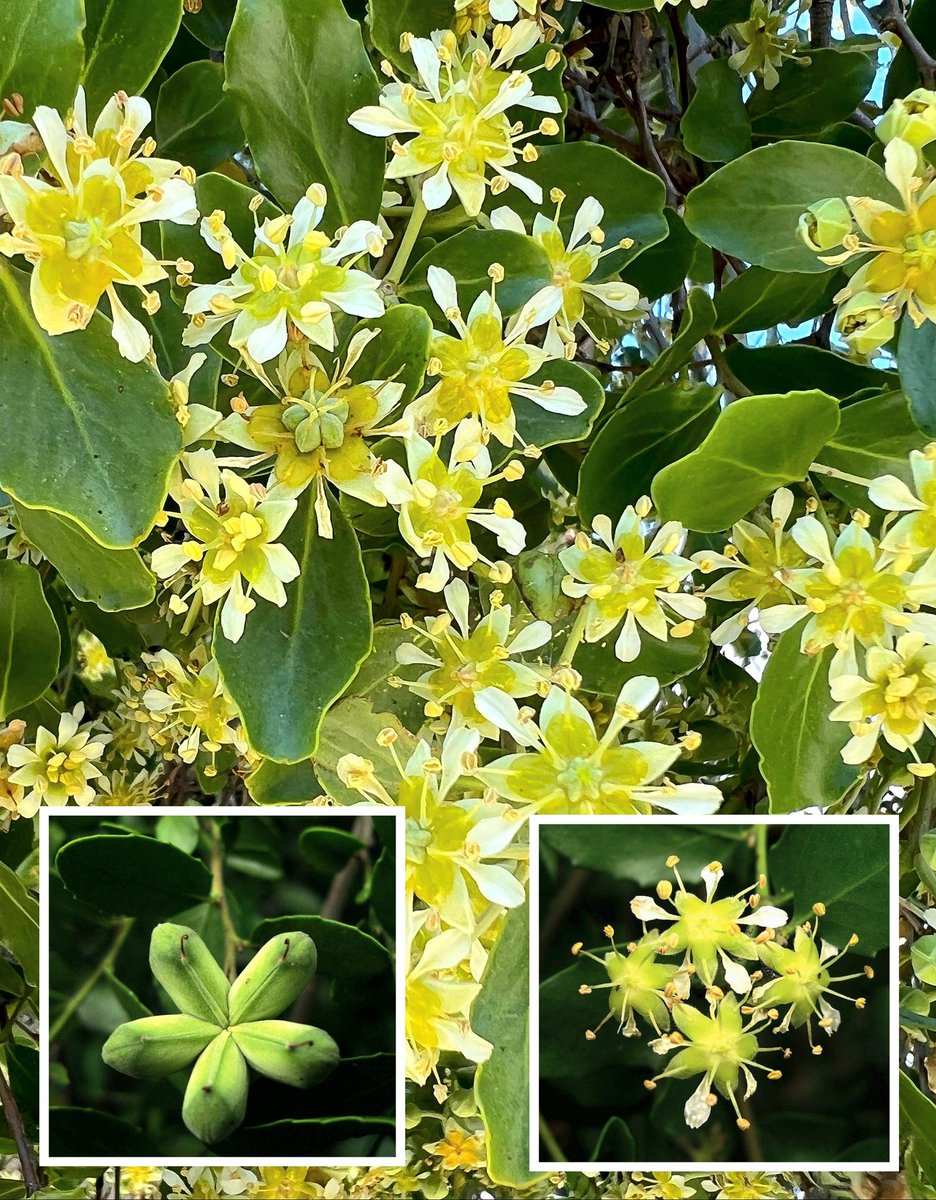
Quillaja saponaria (soapbark tree) produces small, creamy-white to greenish-yellow star-shaped flowers (~1.5 cm) in dense corymbs, perfect (both male female parts), insect- or self-pollinated.
The tree's hallmark is triterpenoid saponins (QS-21 famous) concentrated in bar, but present throughout, foaming glycosides evolved as defense against herbivores/ pathin dry environments.
Experts ID/study via the flower's distinctive spathulate white petals squeezed between green sepals, yellow stamens in two whorls, plus conspicuous yellowish-green nectary disk; saponin content confirmed by foam test or chromatography.
Flowers bloom in spring-early summer (October–January in Southern Hemisphere; modern ongoing).
Native to central Chile's warm temperate zone (32–40°S latitude), up to 2000 m elevation in sclerophyll forests and dry hills, key sites include La Campana National Park near Santiago (Andes foothills region).
Why does it matter?
Reveals how plants in arid, fire-prone Mediterranean climates evolve potent chemical defenses (saponins) for survival, linking botany to Earth's climatic history and biodiversity hotspots.
Changes understanding: humble flowers power groundbreaking science, QS-21 adjuvant boosts vaccine efficacy (e.g., in shingles/malaria shots), showing nature's chemistry outperforms synthetic alternatives for immune response!
USDA Zones 8–9 (drought-tolerant, hardy to ~20–25°F in cultivation; suits Mediterranean-like climates).
#SoapbarkTree
@KewScience
2
5
98
🟥 🪴 Alstroemeria pelegrina looks like a classic delicate lily, but it's not a true lily at all, despite the common name "Peruvian lily;" This stunning perennial belongs to the Alstroemeriaceae family.
🎞 @Krisna_Bali
🔁 ❤️ - Greatly Appreciated
It has resupinate leaves (twisted 180° so the upper surface faces down) and tuberous rhizomes that store water and nutrients.
It thrives in arid coastal habitats through winter-growing strategy: dormant in summer drought, sprouting and flowering in cooler, wetter winter months using stored reserves and fog/moisture from Pacific influences.
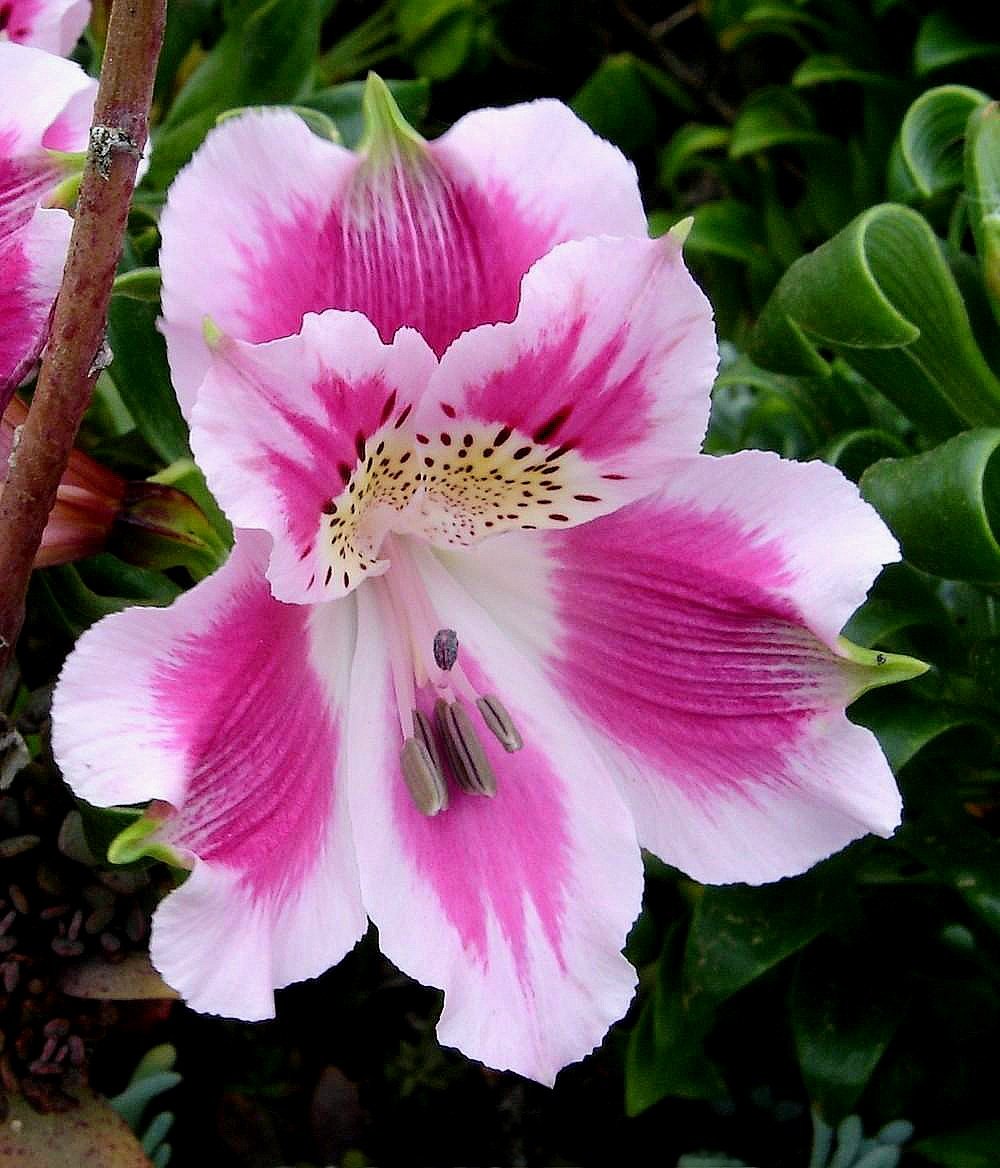
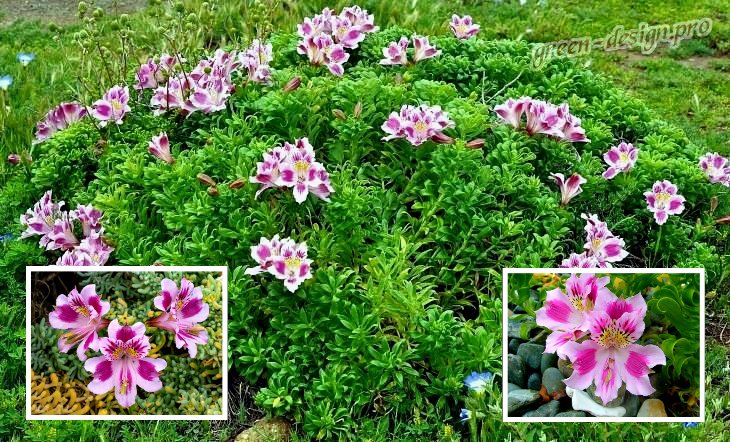
Experts identify it by its distinctive flower morphology, large, funnel-shaped blooms (often pink/purple with darker spots) plus pollen with striate-reticulate exine sculpture under microscopy, plus its specific chromosome count (2n=16).
Described by Linnaeus in 1762; native populations persist today, adapted to current Mediterranean-arid climate since at least Holocene stabilization of coastal fog ecosystems.
Found along rocky coastal cliffs and semi-desert zones near the shoreline, from central Chile (e.g., near Pichidangui, Huasco, Atacama/Coquimbo regions) to parts of northern Chile and possibly adjacent Peru; endemic core in Chile's Norte Chico and central regions.
It reveals remarkable plant adaptations to hyper-arid yet fog-influenced coasts, showing how geophytes exploit seasonal moisture contrasts, vital for understanding biodiversity in one of Earth's driest non-polar deserts and informing conservation amid climate change and habitat pressure.
USDA zones 9–10 (frost-tender, prefers mild winters; protect below ~28°F/-2°C).
#AlstroemeriaAdaptations
@KewScience
1
5
160
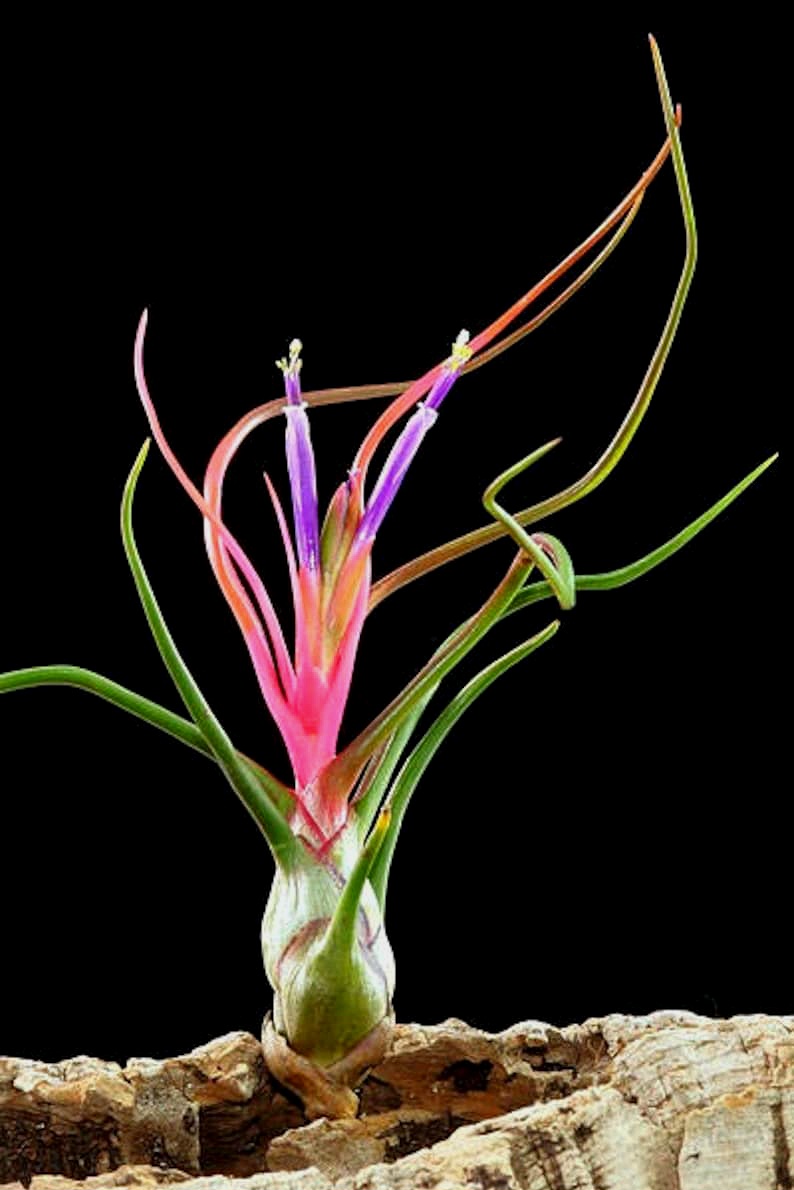
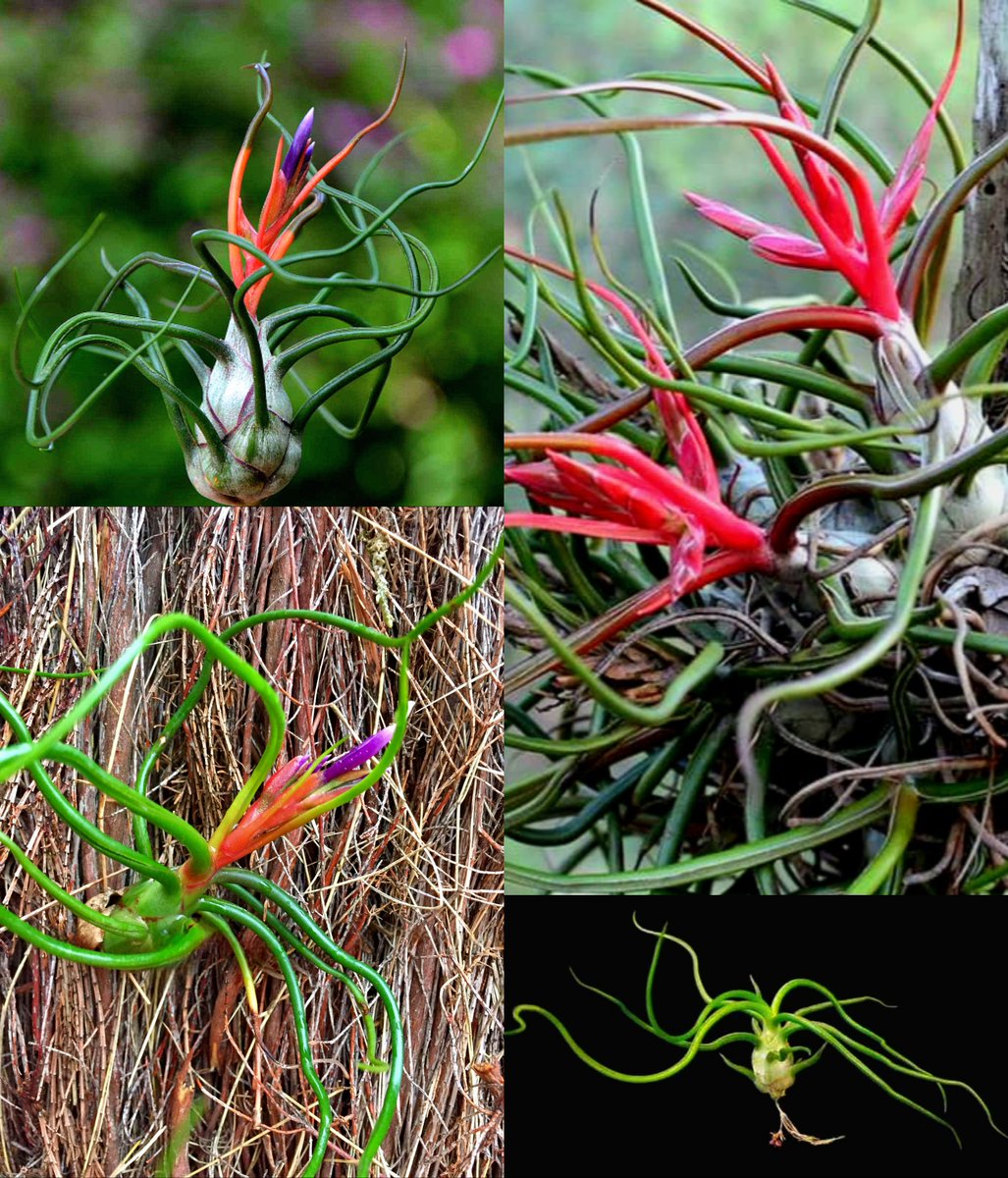
🟥 🪴Tillandsia bulbosa looks like an alien sea creature or Medusa's head with wild, twisting tentacles, 1but it's not some exotic mutant; this air plant evolved its bizarre, bulbous, contorted form as a smart adaptation for clinging.
It also allows it to survive in the humid tropical canopies without roots in soil.
This mesic epiphyte (bulbous airplant) features a swollen, bulb-like base (pseudobulb) and long, narrow, shiny green leaves that curl and twist chaotically, often with magenta-red accents or blushing under stress/sun; it produces a simple to branched inflorescence with vibrant violet, red, or plum flowers.
As an epiphyte, it absorbs water and nutrients directly through specialized leaf trichomes (scales) from humidity, rain, and mist, no soil needed, while its bulb stores moisture and its twisted leaves increase surface area for better fog/rain capture in variable tropical conditions.
Experts identify/study it by the distinctive swollen base, smooth/shiny (glabrous) leaves lacking heavy trichome fuzz (unlike many xeric tillandsias), twisted/contorted leaf shape, and mesic ecology (prefers higher humidity, lower airflow than desert species), plus its variable color response to light exposure.
Evolved in modern times (as a specialized Tillandsia species within Bromeliaceae, with diversification in the Neogene/Quaternary), native to southern Mexico (e.g., Chiapas, Veracruz), Central America, the West Indies, and northern/eastern South America (e.g., Colombia, Venezuela, Guianas, Bahia in Brazil), often in open woods, dense forests, mangrove thickets, or river shores from sea level to ~1400 m.
It reveals evolution's wild creativity in epiphytic bromeliads, turning leaves into efficient water-trapping structures and ditching roots for anchorage, highlighting how plants conquer canopy niches in rainforests without competing for soil resources, and challenges assumptions that "normal" plants need dirt, shifting our view of plant success to include extreme adaptations that thrive purely on air, mist, and clever morphology in biodiverse tropics.
#TillandsiaBulbosa
@KewScience
@iNaturalist
1
4
238
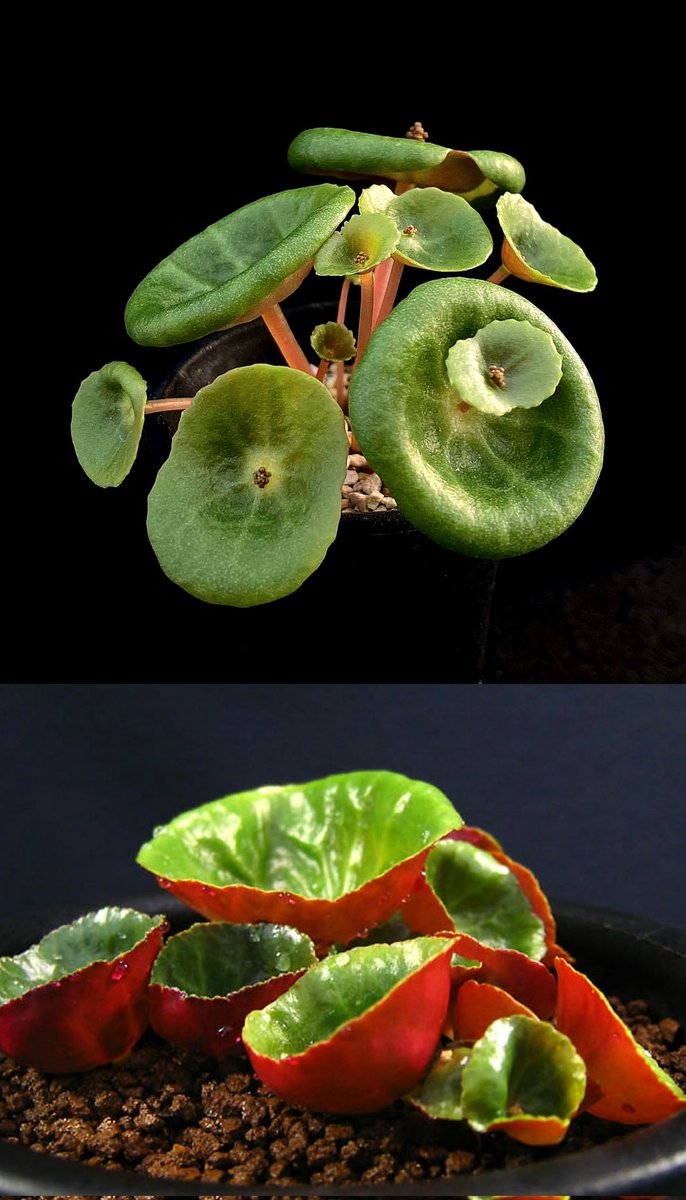
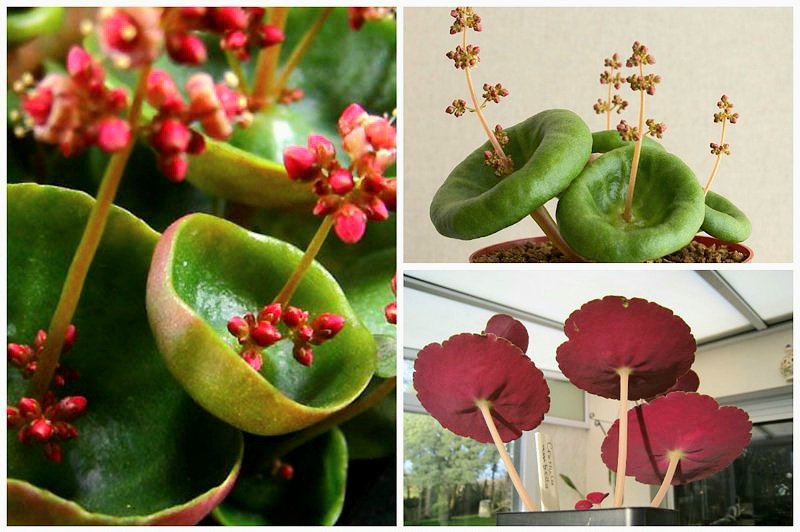
🟥 🪴 Crassula umbella looks like a tiny green umbrella sprouting from the ground, but it's not just quirky decoration; those fused leaves are a clever survival hack. This small succulent (aka "Wine Cup").
🎞 @plantasmaria
Features opposite leaves fused into a flat, disc-like "umbrella" (up to 15 cm wide) around a central stem rising from an underground spherical tuber.
The shape channels scarce rainwater directly to the roots in its arid habitat while providing some shade and reducing evaporation on the plant body itself through clever morphology and succulence.
Experts identify/study it by the distinctive leaf fusion pattern (transversely depressed-obovate to fully fused disc), the tuberous geophytic habit, and its winter-rainfall growth cycle, emerging leaves in cool/wet season, flowering, then dying back to tuber.
Evolved in modern times (as a specialized geophyte in the Crassula genus), native to South Africa's Cape Provinces, from Richtersveld and western Karoo through Little Karoo to Humansdorp, often on south-facing sheltered gravelly slopes or under overhanging rocks.
It reveals how evolution fine-tunes plant form for extreme water scarcity in winter-rainfall deserts, turning a simple leaf pair into a funnel for life, and shows biology's ingenuity in arid adaptation rivals engineering, challenging assumptions that succulents "just store water" without structural tricks.
#CrassulaUmbella
@KewScience
@SANBI (South African National Biodiversity Institute)
1
3
169

27 Dec 2025
While relaxing between Xmas and NYE celebrations, read our latest brilliant blog post by @mika_hyman @Cambridge_Uni @KewScience #materiamedica #collecting #C18th #histmed herbalhistory.org/home/arran…
1
2
100

10 Oct 2025
🧬🧩🌾💚👨🎓📈
RT: Kew Science @KewScience
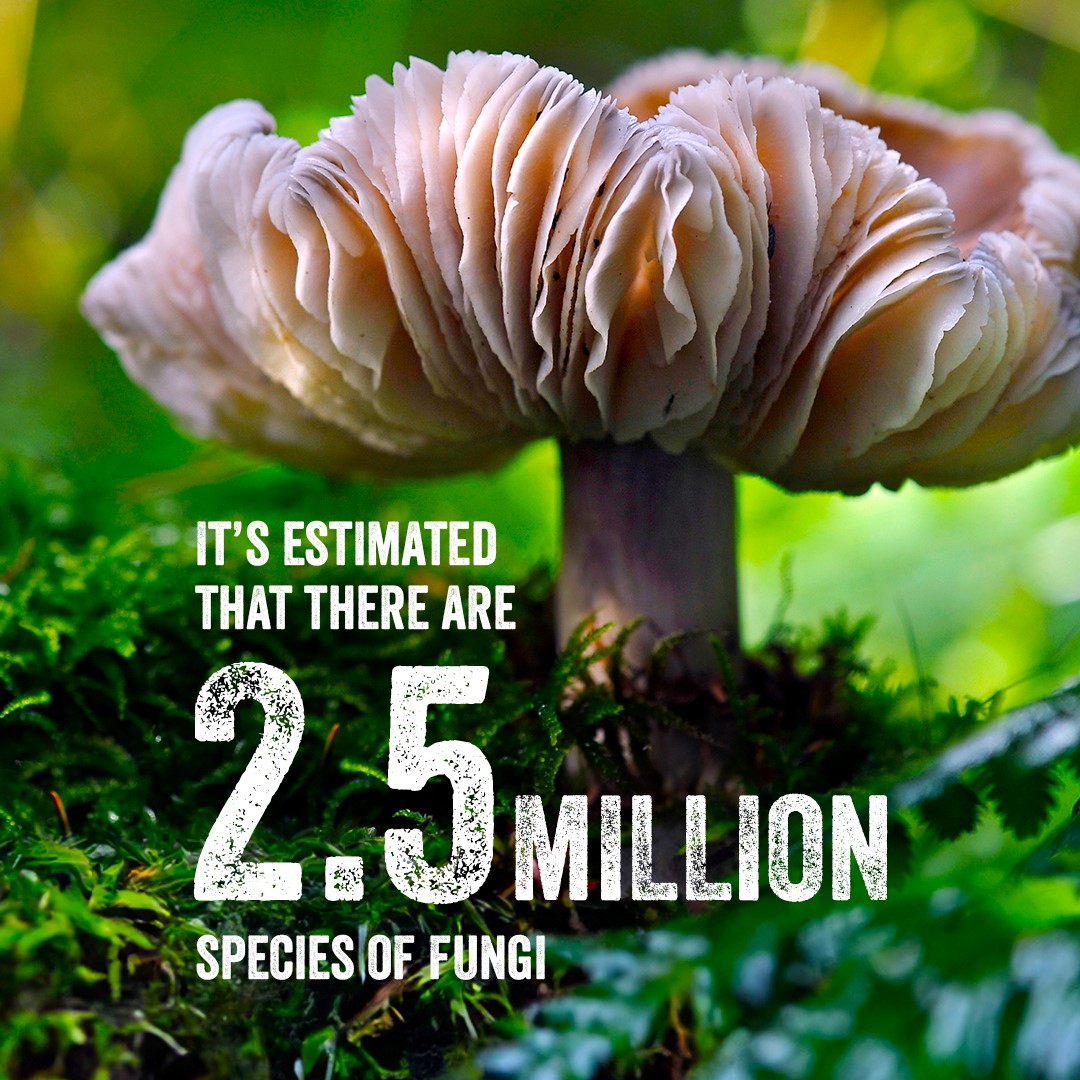
➡️The last few years have been a revolution
for fungal discovery 🍄- but more than 90%
remain unknown to us!
#plants #fungi #biodiversity
#climatechange #mycology
👉 kew.org/sotwpf #SOTWPF
#science #knowledge #nature #society
3
43
6 Oct 2025
RT: Kew Science @KewScience
🧬🌾🔬👨🎓💻📈🧬💚
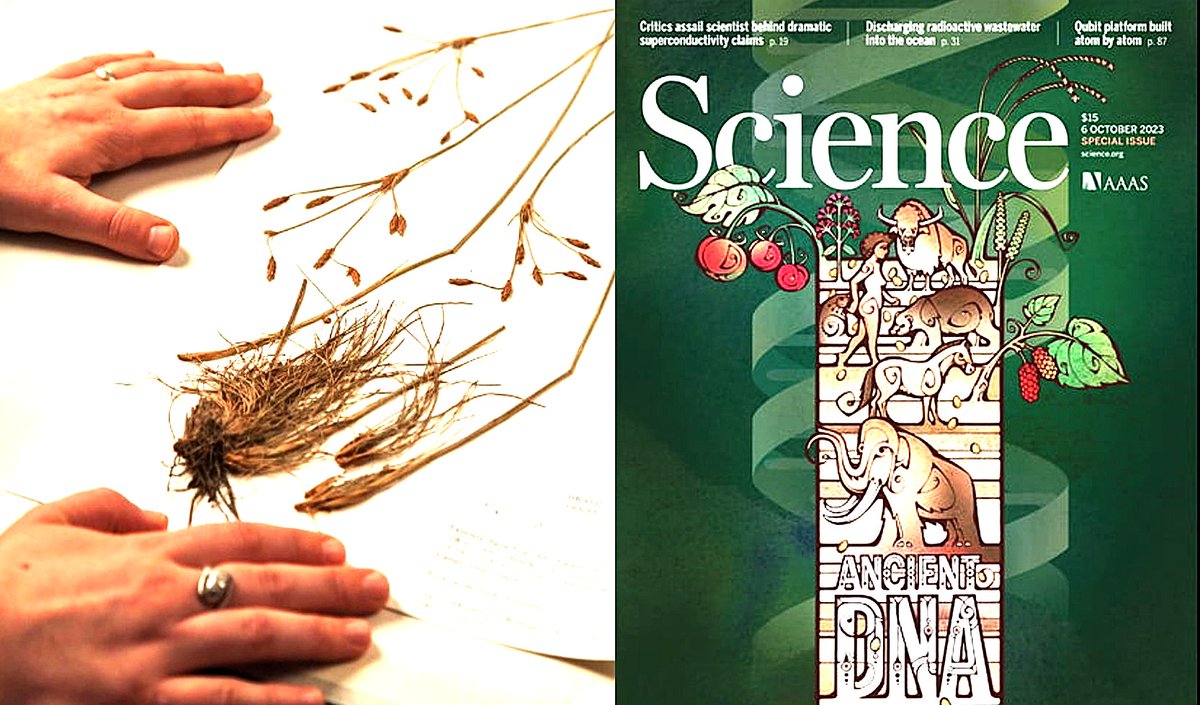
➡️Time travel science is now possible thanks to the ancient DNA inside dried plant specimens! 🧬
➡️ kew.org/read-and-watch/time-…
➡️ #biodiversity #botany #seeds #herbarium
#botanicalgarden #genebank #germplasm
➡️ #FoodSecurity #Genomics
1
52

29 May 2025
29 May 2025

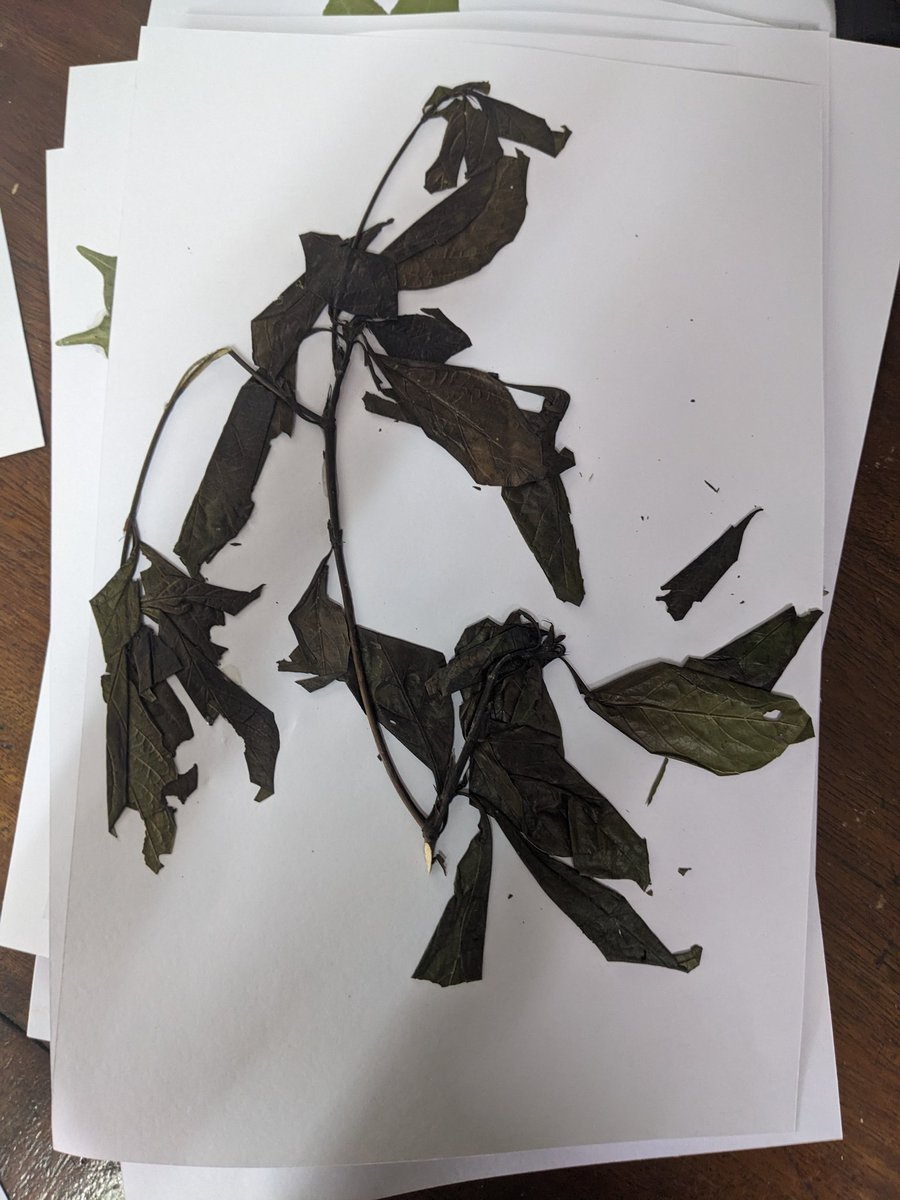
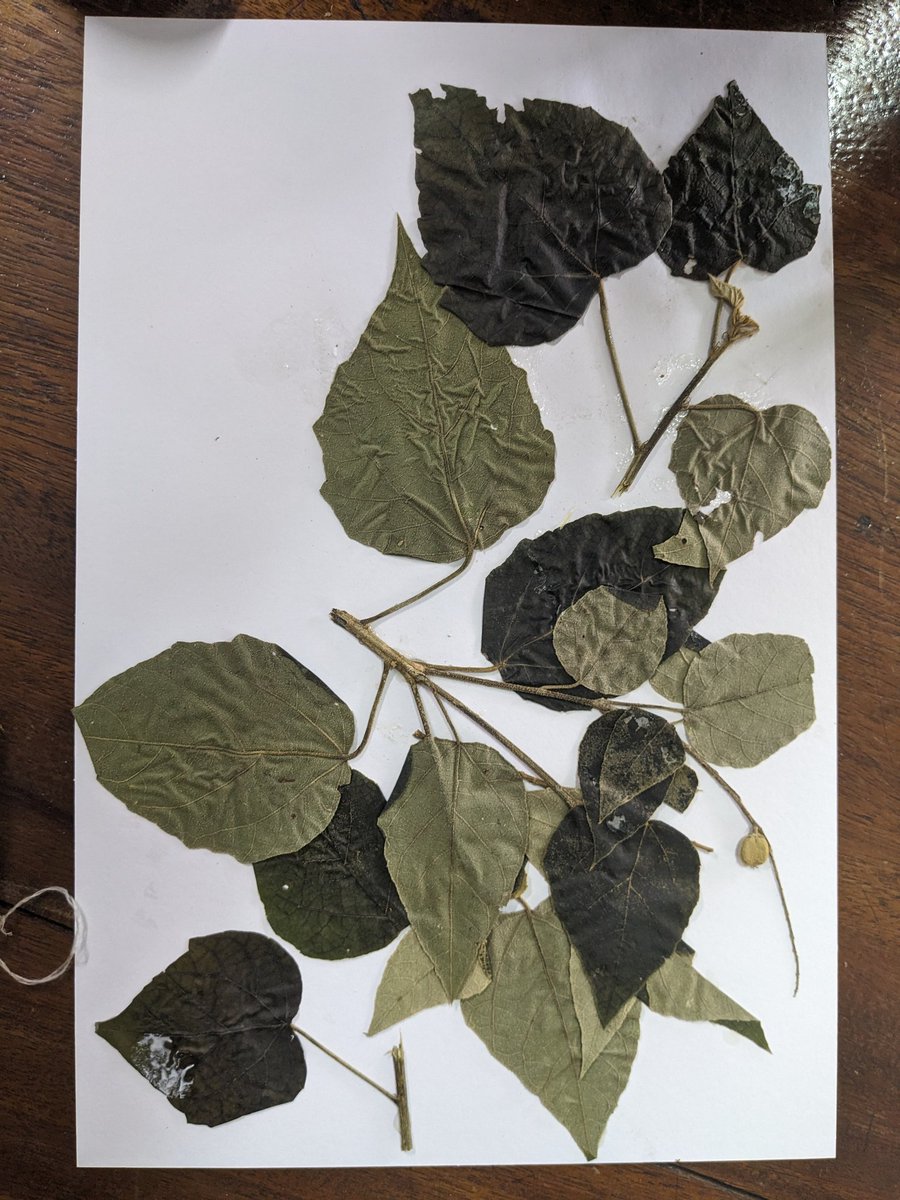
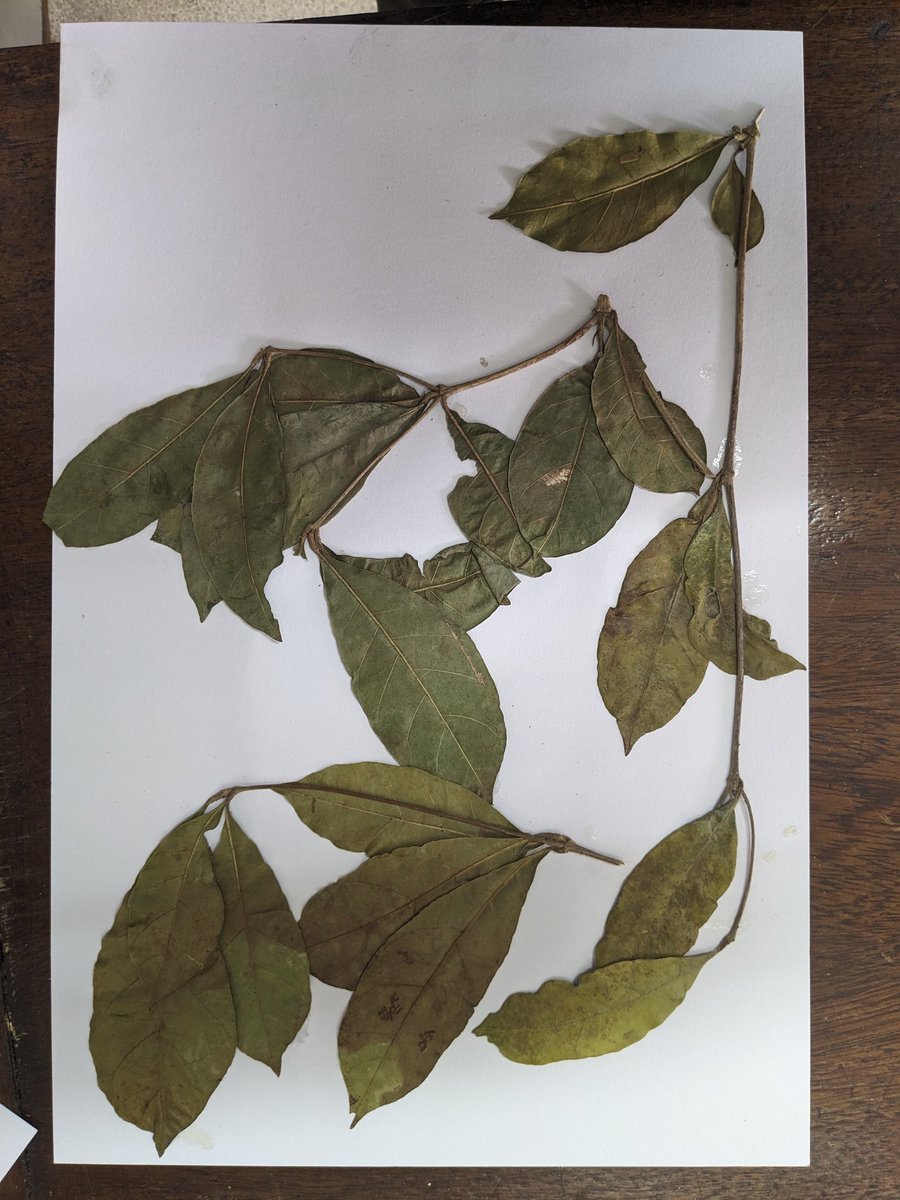
Sharing My mounted specimen collected in Pande Game reserve most of them are endemic and have IUCN status.
#KazzAwards2025xFreenBecky
#kew #rbg #taxonomy @nature_sc @UdsmOfficial #herbarium

3
53

6 May 2025
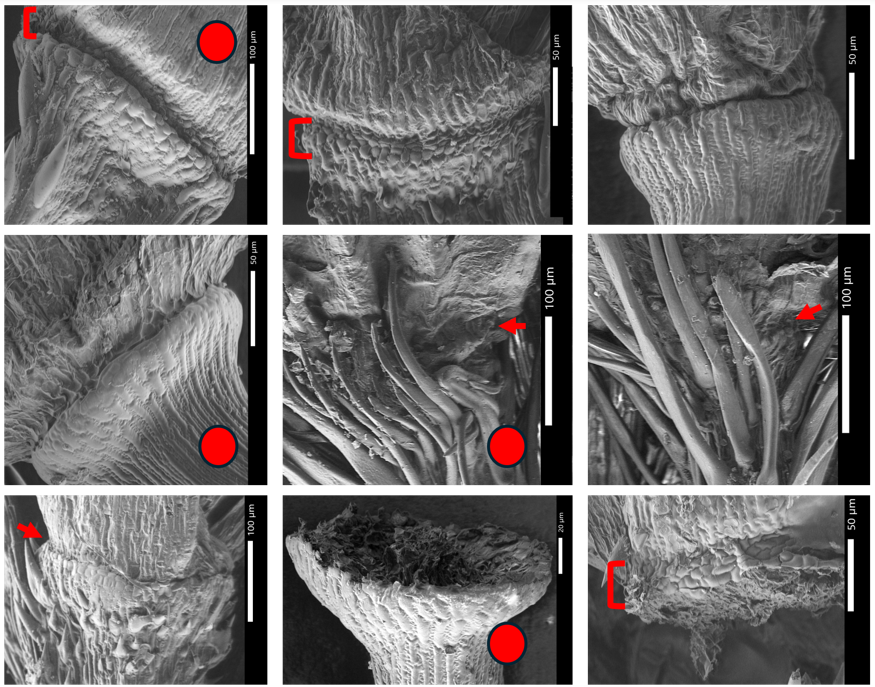
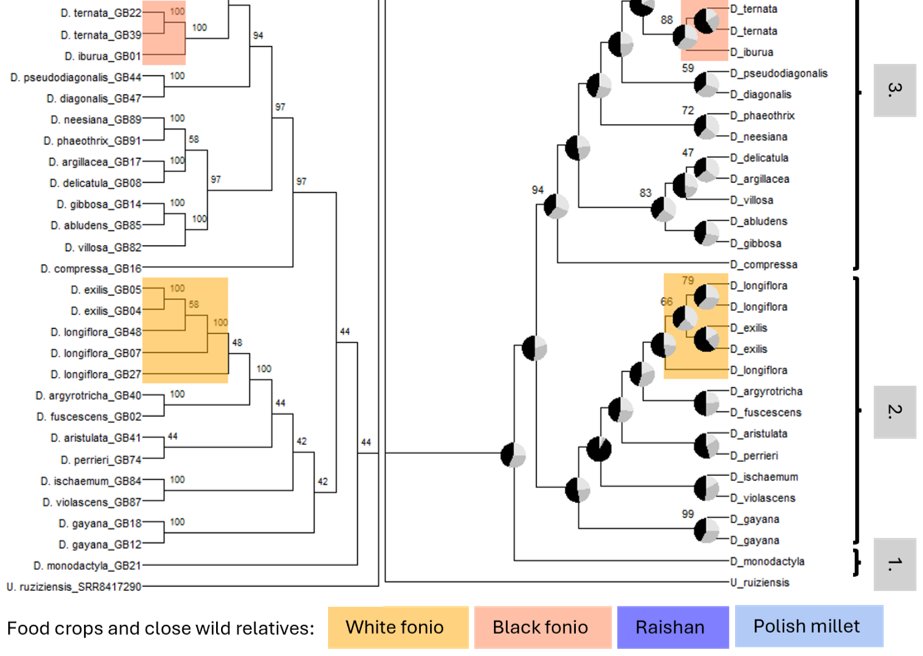
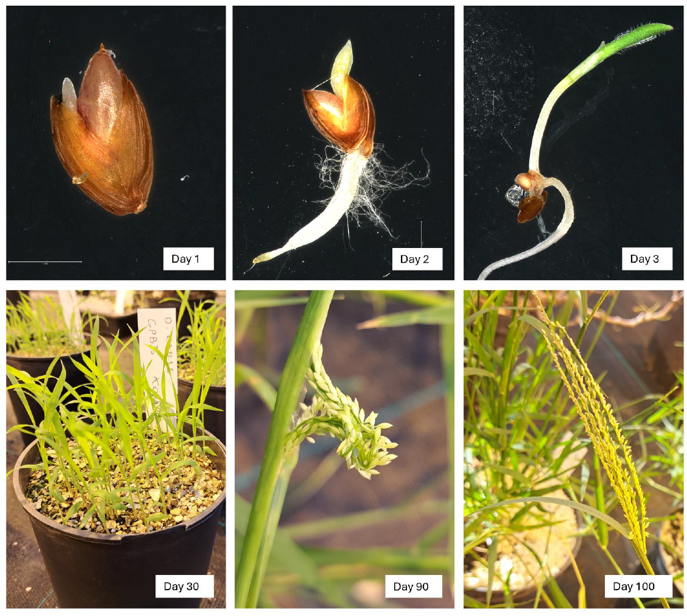
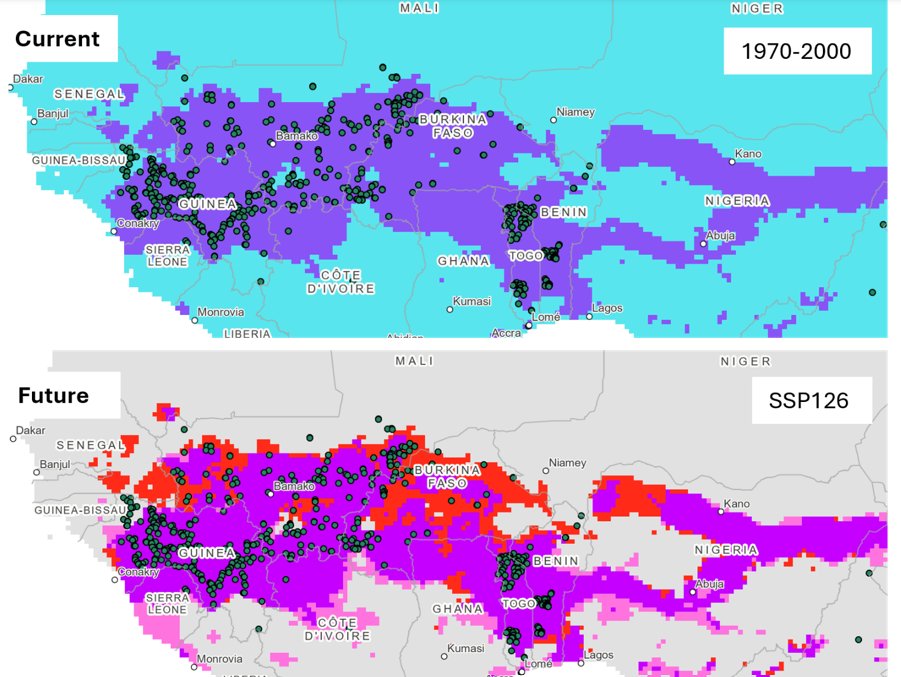
after submitting my PhD thesis on fonio millet, 2 new pre-prints of my research are available now: a) phylogenetics and history of 4 Digitaria millet crops, and b) germination ecology and climate modelling of fonio suitability in the future 🤠🌾links below! #SSCPDTP #kewscience
2
6
32
1,294

28 Apr 2025
The false conifer vs broad-leaf dichotomy has implications for research and modelling
Johnson et al. @KatePlantPhys @Helena_Valli @matildajmbrown @katyabandow @CREAF_ecologia @WSL_research @EPFL_en @KewScience @UTAS_ @Sciences_UTAS @CoEPlantSuccess
📖 nph.onlinelibrary.wiley.com/…
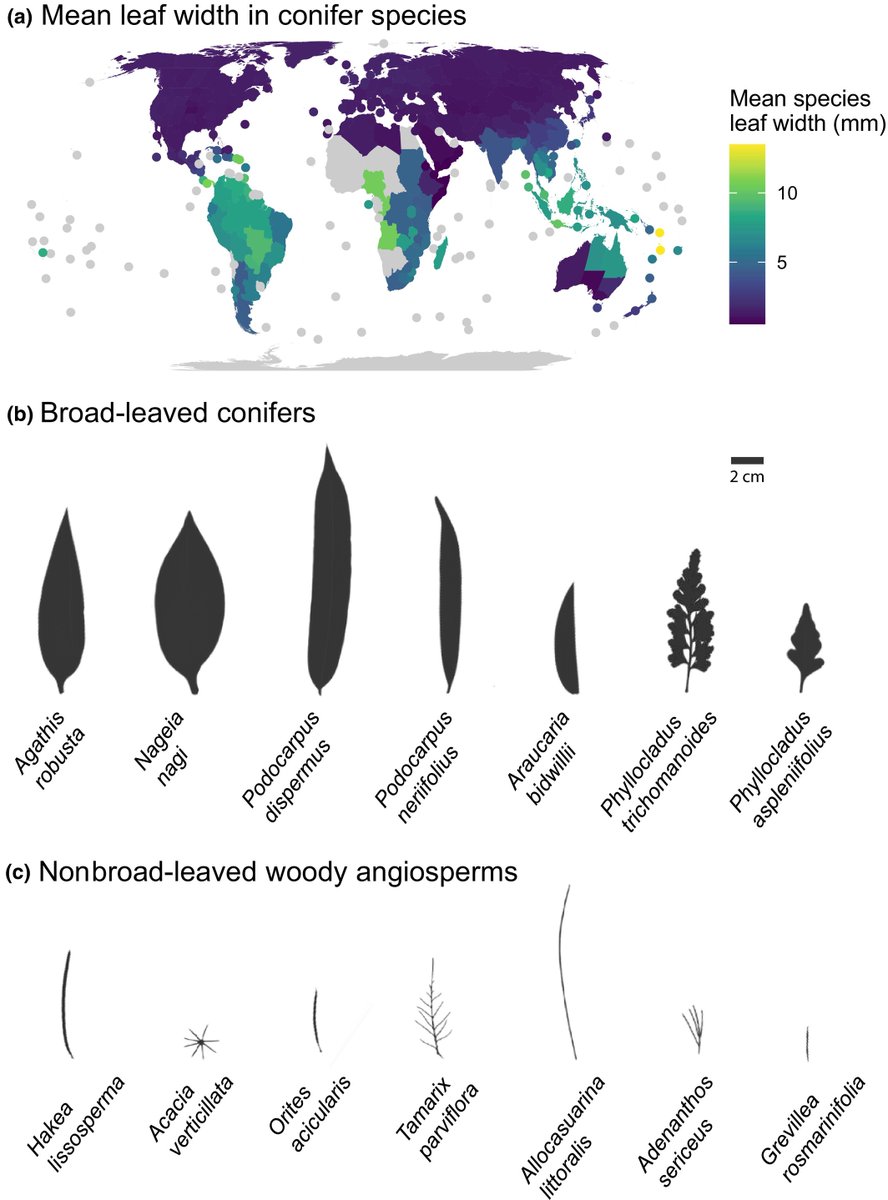
ALT Global distribution of conifer leaf widths and silhouettes of both broad-leaved conifers and nonbroad-leaved woody angiosperms.
20
54
8,440

25 Apr 2025
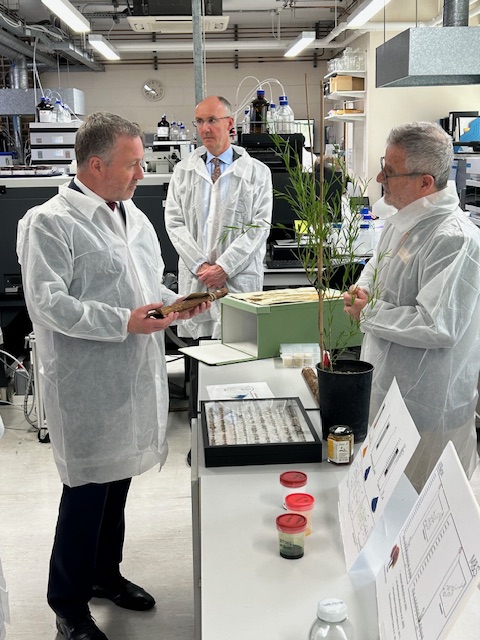
It was pleasure to meet @SteveReedMP Secretary of State for @DefraGovUK during his visit to Kew Gardens yesterday, to share our @kewscience work on plant traits, rice genomics, antimalarial plants & bees. #kewgardens
1
7
309
10 Apr 2025
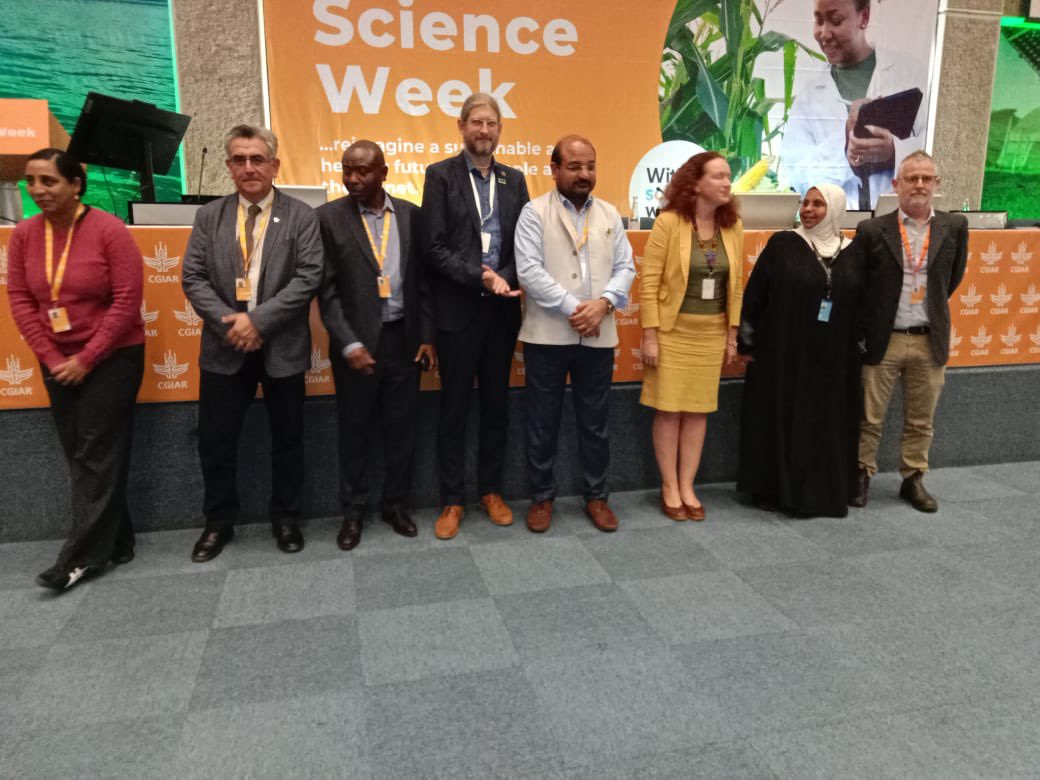
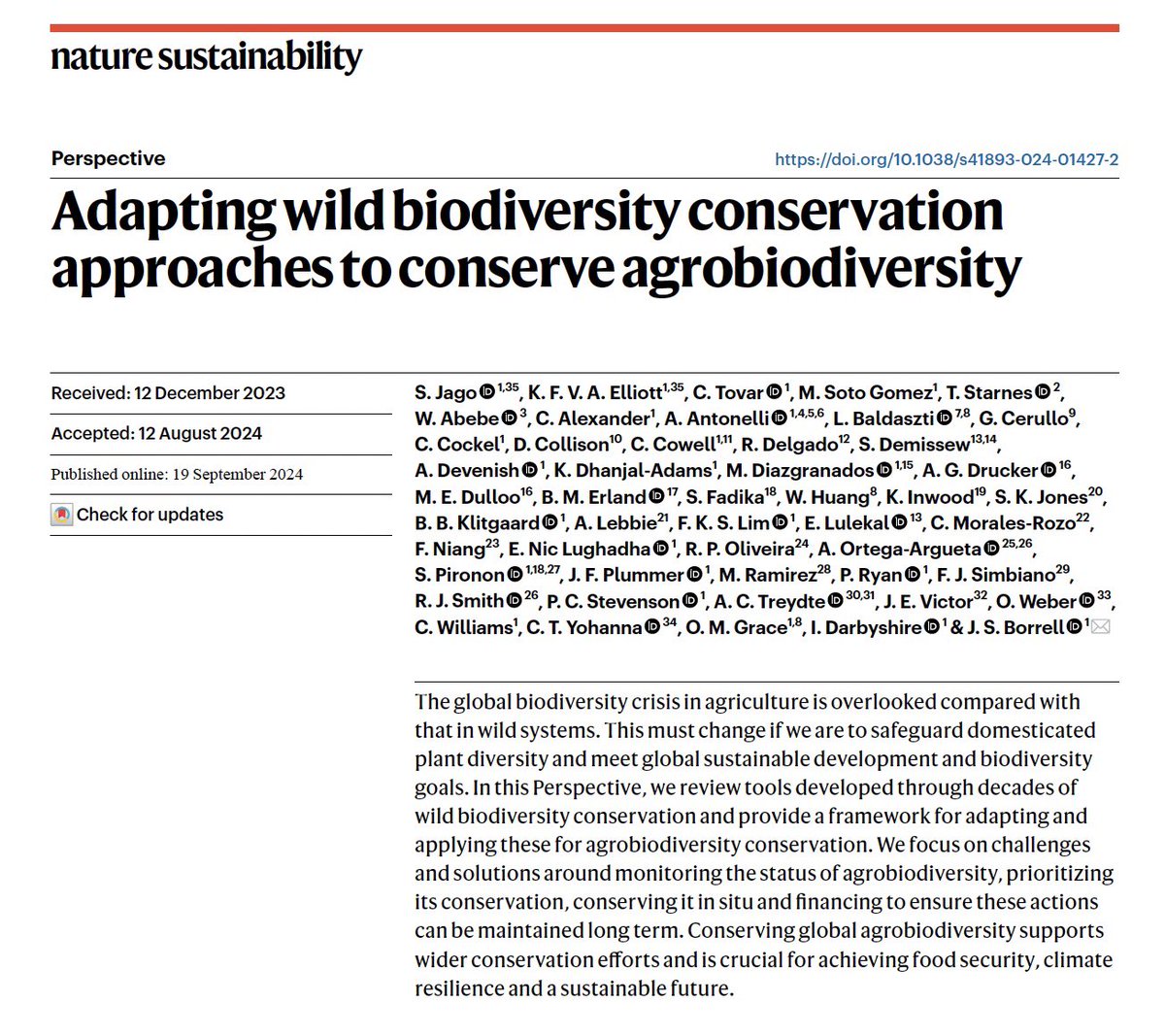
Thrilled to be on the panel at #CGIARscienceweek Environment & Biodiversity side event highlighting @SophieJago18 & @JamesBorrell work on agrobiodiversity conservation doi.org/10.1038/s41893-024-0… full session available here youtube.com/watch?v=RcHLlsOE… @kewscience @NRInstitute @CGIAR
1
2
251

28 Mar 2025
We might be a bit biased... but we definitely have to vote for #BiodiversityGenomics as well!😉 🌿🌸🧬
2
3
173

27 Mar 2025
Great job opening at @KewScience for postdoc/ early career scientist! Especially working on indicators! Please RT @GEOBON_org @UNBiodiversity @IPBES careers.kew.org/vacancy/kew-…
1
2
590

26 Mar 2025
Sure do love seeing some Prunis cerasoides @KewScience
11
1,378

26 Mar 2025
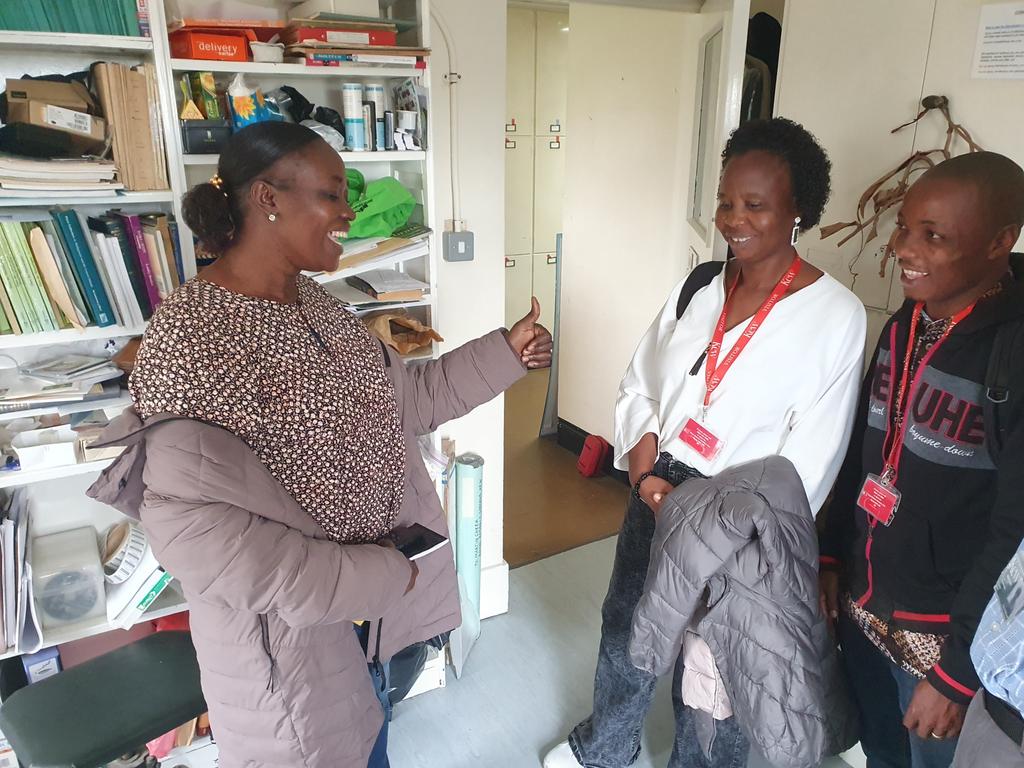
Bienvenue de nos colleges @KewScience pour un sejour de recherche. @CharlotteCouch1 @simbiano_julien
25 Mar 2025

Kew herbarium: Denise Molmou returns to Guinea today as Tokpa Seny and Julien arrive fir more research @KewAfrica
2
18

24 Mar 2025
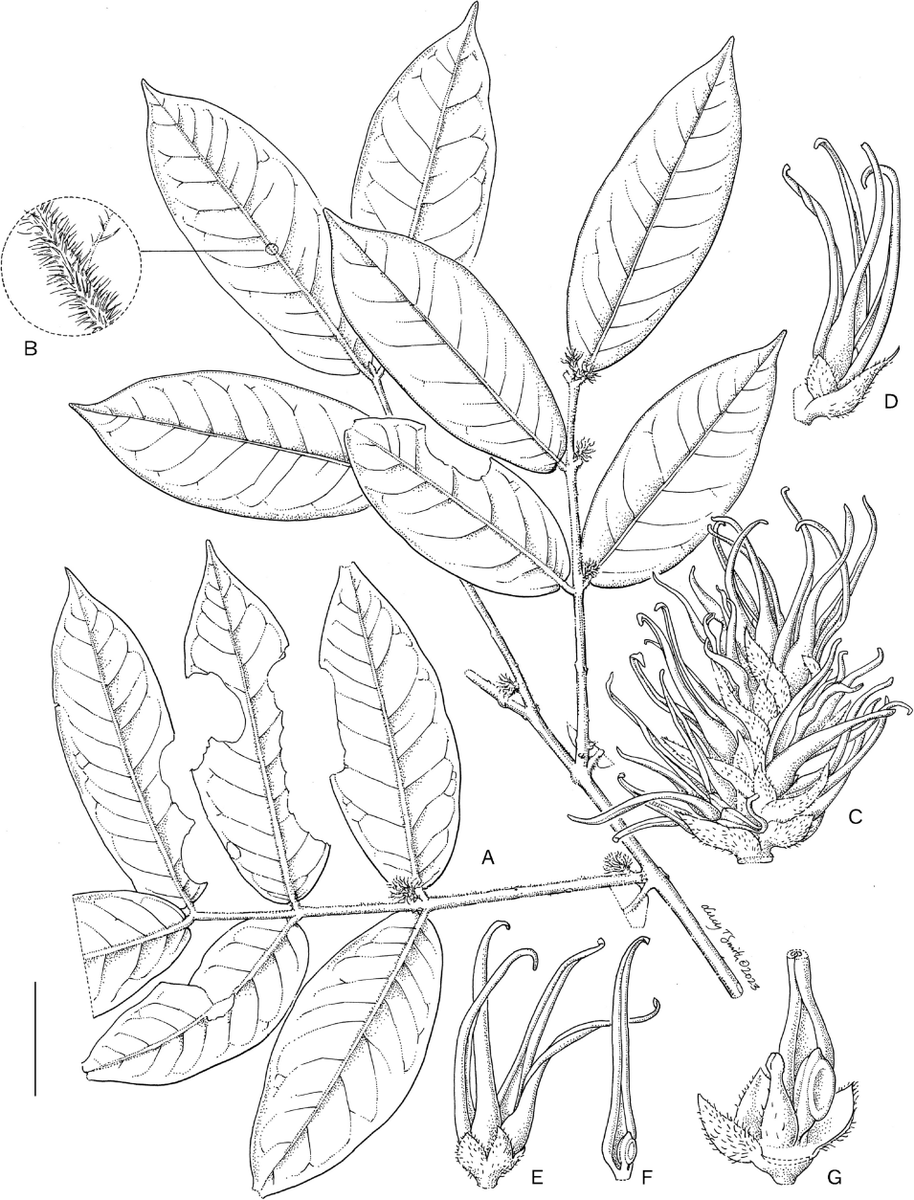
New species and new paper alert! 🚨
Towards a Flora of New Guinea: Oleaceae. Part 2, eight new species of Chionanthus
rdcu.be/eeKLA
@KewBulletin @KewScience @FRIMKepong @nparksbuzz #SBGScience
9
50
893

20 Mar 2025
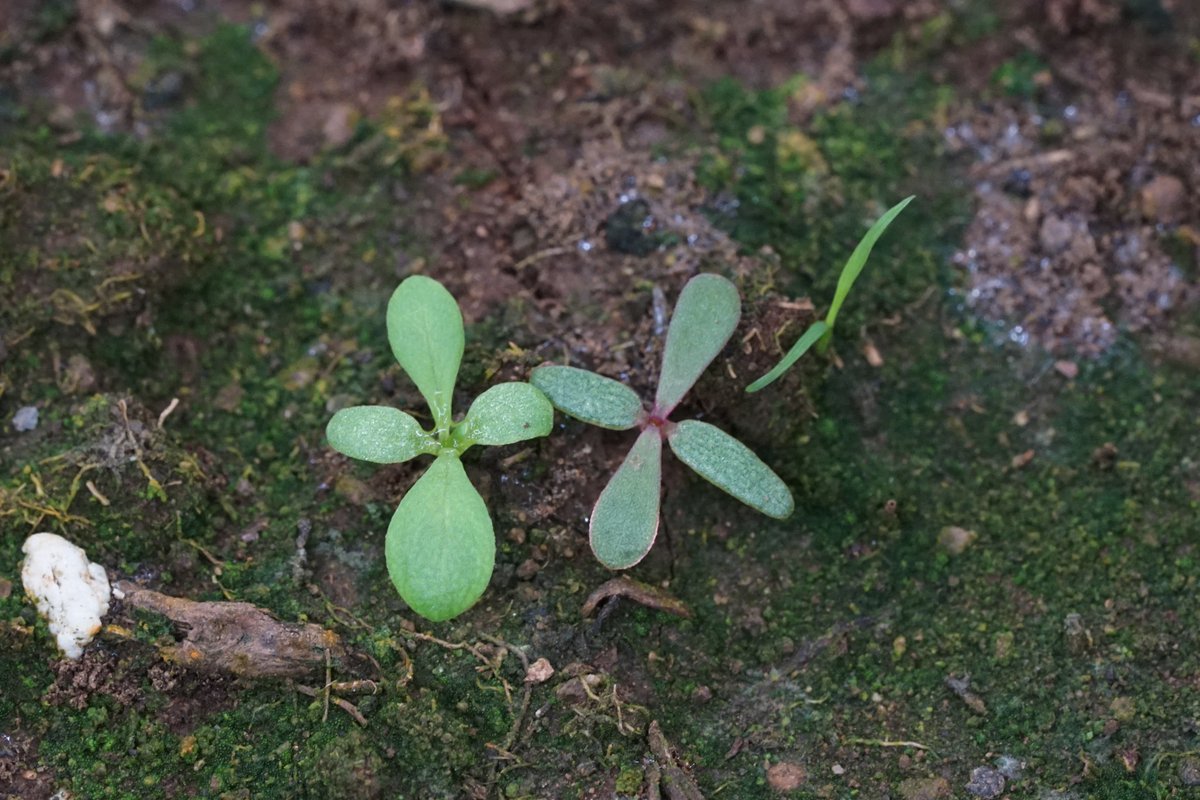
Three different seedlings emerging next to each other from Little Tobago soil in the Quarantine House at Kew as part of our Darwin funded DPLUS215 project @UKBCFs @KewUKOTs @BVIGovernment @KewScience
1
5
51

18 Mar 2025
Óscar lidera un equipo dedicado al estudio del origen y la evolución de las orquídeas. En paralelo, desarrolla estudios sobre la evolución de plantas domesticadas, utilizando principalmente colecciones históricas y registros arqueobotánicos.
1
2
121
18 Mar 2025
Comenzaremos con "Desentrañando el origen y la evolución de la planta más mal entendida en el mundo", con Óscar Alejandro Pérez Escobar @LatinOrchidBot @KewScience.
1
2
137