

Because humans pick from a tiny, predictable slice of the keyspace. You don't search the space, you search the LIKELY space: dictionary, rules, hybrid, masks.
1
4

Jun 13
Claude advises me that my framing of BTC as platonic mathematical concepts is a bit weak. It advises me:
What genuinely is Platonic and pre-existing: the cryptographic substrate. The secp256k1 keyspace exists as a mathematical object whether or not anyone touches it — every private key (an integer up to ~n), every corresponding curve point, every address, sits latently in that space. Deriving an address isn’t creating it; it’s selecting one from an astronomically large set that already “exists” in the same sense the primes exist. Likewise the aggregate issuance schedule is fully determined in advance: 50 BTC per block, halving every 210,000 blocks, asymptoting to 21 million. That supply curve is a mathematical fact you could have plotted on day one. So far your intuition holds.
Where it breaks: the state — which coins exist and who holds them — is not a pre-existing mathematical fact that mining reveals. It’s a contingent, path-dependent history that mining writes. Here’s the crux: mining is not the evaluation of a function with a unique answer. Given a block template, many different valid blocks satisfy the proof-of-work target, and the winning miner chooses which address receives the reward and which transactions to include. Two miners can find two valid blocks at the same height — that’s a fork — and which one becomes canonical depends on future work, not on anything predetermined. A coinbase reward isn’t sitting in the math waiting to be uncovered; it has no owner and no output until a winner assigns one.
The right analogy isn’t a Sudoku with a unique solution waiting to be found. It’s closer to a lottery: before the draw there’s no fact of the matter about who wins, and the result is generated, not revealed. Yes, finding a valid nonce is “discovering” a number that satisfies a property — that number did sit in the search space beforehand. But that’s revealing a solution to the PoW puzzle, not revealing the bitcoin. The coin is the reward for having burned energy to search, and its destination is selected, not discovered.
Nevertheless, there are only 21M of these coins regardless of when they are mined. The supply is fixed.
When the last one is mined, the foolish can still mend their ways, become savvy entrepreneurs, and start acquiring BTC.
Is it likely that the foolish become wise? Hardly, but not impossible.
1
32

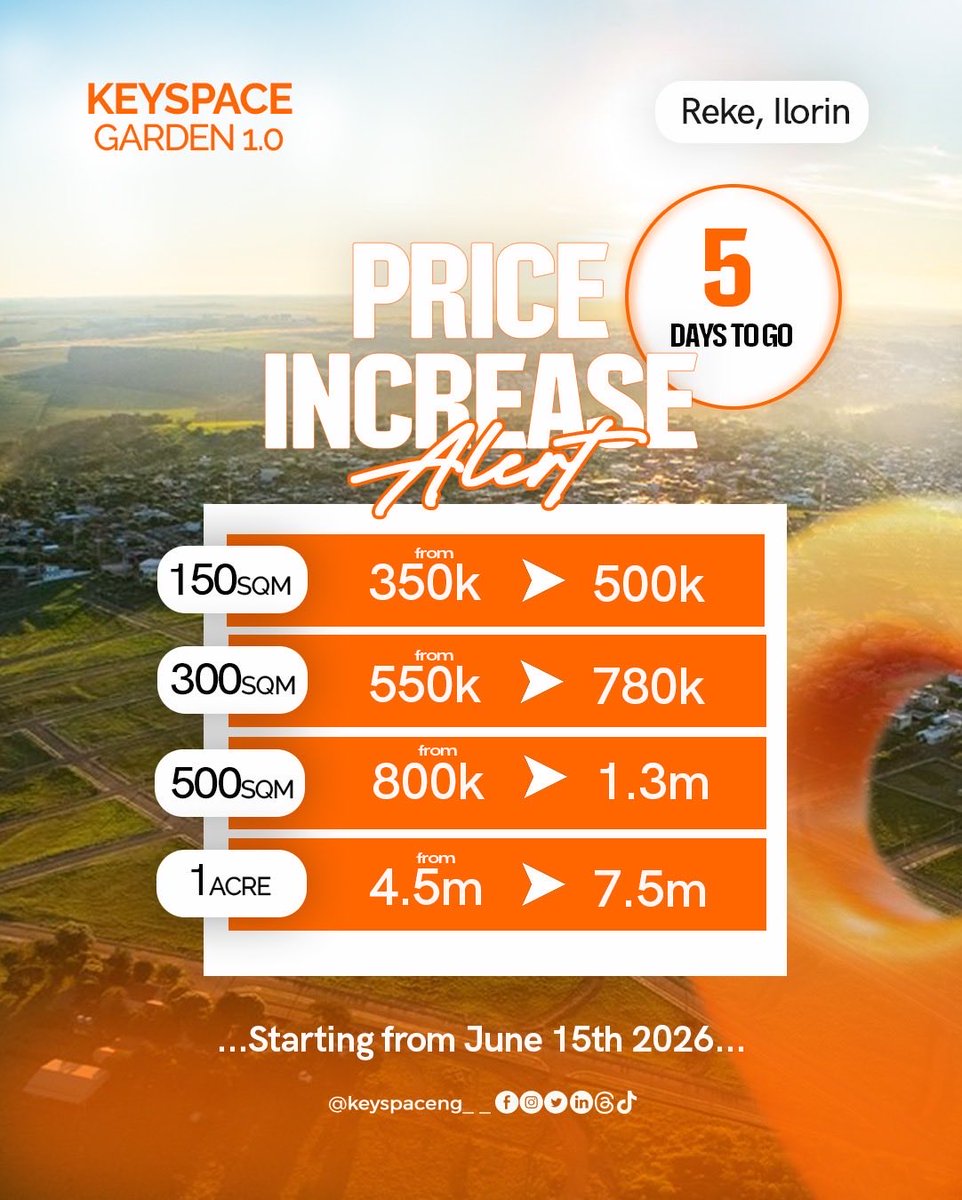
5 days from now, these prices become history.
Why wait and pay more when you can secure your plot at the current rate today?
The best time to invest is now.
📍 Keyspace Garden 1.0, Reke, Ilorin #realestate
6

Jun 9
"Claude hacked Bitcoin" is pure engagement farming.
The key was 15 bits. That's only 32,768 possible combinations. Real Bitcoin private keys are 256 bits, which means roughly 2²⁵⁶ possible keys (1.16 × 10⁷⁷).
Even a machine checking 1 trillion keys per second would need around 3.7 × 10⁵⁷ years to brute-force the full keyspace.
Jun 9

🚨 BREAKING
ANTHROPIC TO RELEASE AI THAT “HACKED” BITCOIN TOMORROW!
6 WEEKS AGO, CLAUDE MYTHOS CRACKED A 15-BIT PRIVATE KEY THAT POTENTIALLY GIVES ACCESS TO 6.9 MILLION BTC, WORTH OVER $430,000,000,000.
THIS IS NOT LOOKING GOOD FOR BITCOIN AND CRYPTO...
Community note
Bitcoin private keys are 256 bits long and have not been cracked by Claude or Mythos. The AI helped recover a lost wallet by finding backups, not breaking encryption; a separate 15-bit key was cracked by quantum research, not AI. en.bitcoin.it/wiki/Private_k… ccn.com/education/cryp… bankless.com/read/news/quan
4
16
2,209

Jun 8
Adding a short TTL to one team's keyspace is a good start, but how do you plan to handle potential cache misses and production impact?
1
553
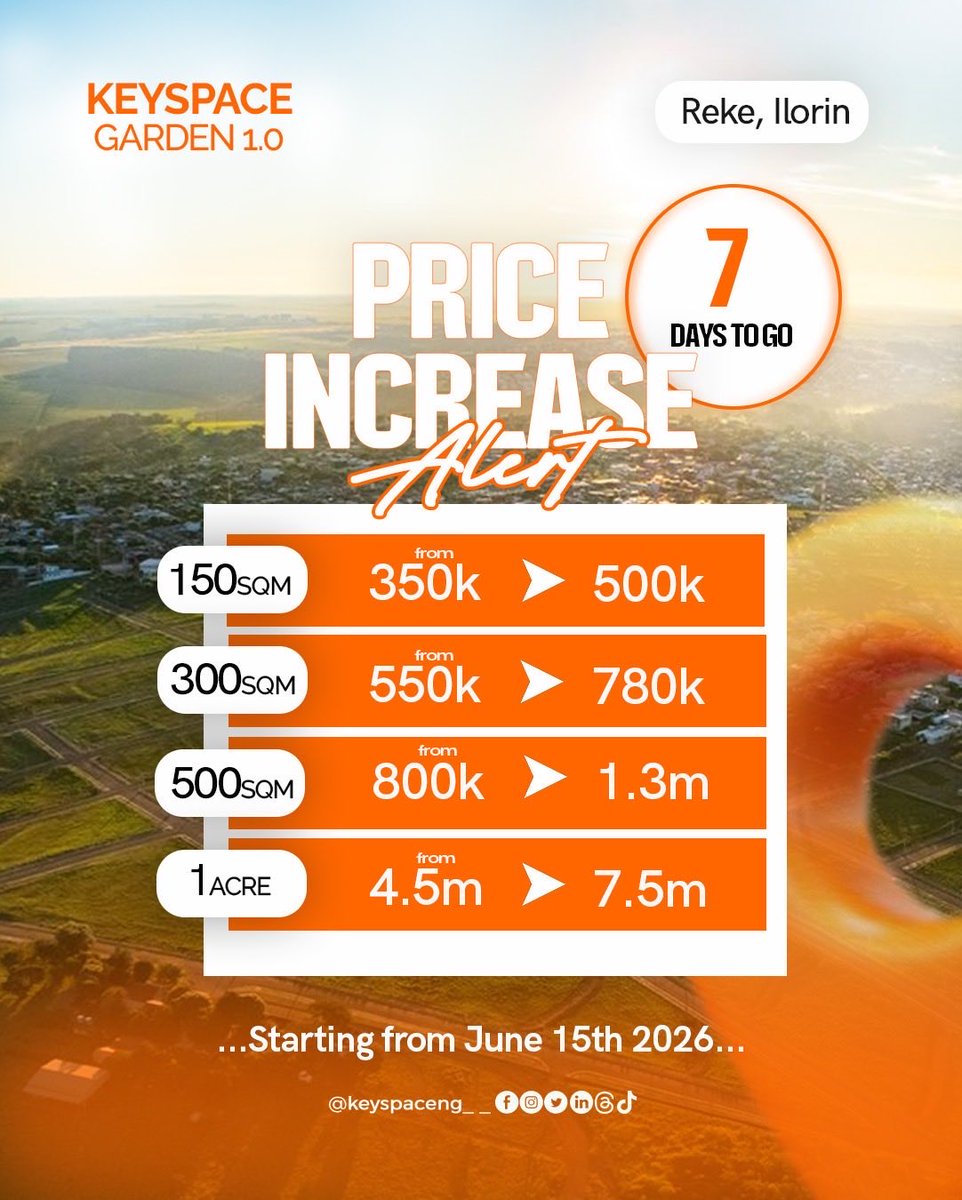
If you’ve been thinking about investing in Keyspace Garden, this is your sign.
In 7 days, these prices will be history.
Secure your preferred plot size today and take advantage of the current rates before the increase takes effect.
📍 Reke, Ilorin
📞 Send us a DM to get started.
3

you can store data by entropy recycling your keyspace and other fields like txid using my 24h hackathon project obscurity and it's impossible to detect until you reveal after they have already mined it:
github.com/8144225309/obscur…
2
282

Jun 5
hmm why partition the RSM based on those 3 lanes instead of just partitioning the keyspace across different RSMs? (would that result in cross-partition queries?)
1
957


Jun 4
See, here's the problem, if your password can't be PASSWORD123 the space of what it can be just got a little smaller. And one of the biggest issues in the security space is arbitrary password requirements reducing the size of the keyspace.
Jun 3

PASSWORD123 CAN BE CRACKED INSTANTLY
PASSWORD123 CAN BE CRACKED INSTANTLY
PASSWORD123 CAN BE CRACKED INSTANTLY
PASSWORD123 CAN BE CRACKED INSTANTLY
PASSWORD123 CAN BE CRACKED INSTANTLY
PASSWORD123 CAN BE CRACKED INSTANTLY
PASSWORD123 CAN BE CRACKED INSTANTLY
1
4
107


May 31
Neo: Here's a direct comparison between your current model (grok-4.3) and step-3.7-flash specifically for your workflow/agent tasks:
Comparison Table
**Reasoning & Planning**
• grok-4.3 (Current): Excellent
• step-3.7-flash (198B MoE): Very strong (especially agentic tasks)
• Winner for your use case: Slight edge to grok-4.3
**Tool Use / Function Calling**
• grok-4.3 (Current): Very reliable
• step-3.7-flash (198B MoE): Claimed #1 on ClawEval benchmark
• Winner for your use case: step-3.7-flash
**Long Context (research, wiki, long threads)**
• grok-4.3 (Current): Good (but context window not specified)
• step-3.7-flash (198B MoE): 256K context
• Winner for your use case: step-3.7-flash
**Speed**
• grok-4.3 (Current): Solid
• step-3.7-flash (198B MoE): ~400 tokens/sec (very fast)
• Winner for your use case: step-3.7-flash
**Following Strict Workflows**
• grok-4.3 (Current): Excellent (especially persistent workflows)
• step-3.7-flash (198B MoE): Strong, but less tested in this specific setup
• Winner for your use case: grok-4.3
**Multimodal (images, diagrams, screenshots)**
• grok-4.3 (Current): Capable
• step-3.7-flash (198B MoE): Native image video support
• Winner for your use case: step-3.7-flash
**Bitcoin / Technical Research**
• grok-4.3 (Current): Strong domain knowledge
• step-3.7-flash (198B MoE): Good, but less proven in this niche
• Winner for your use case: grok-4.3
**Skill Authoring & Code**
• grok-4.3 (Current): Very good
• step-3.7-flash (198B MoE): Strong (especially tool-calling heavy code)
• Winner for your use case: Tie
**Cost / Availability**
• grok-4.3 (Current): Paid (via xAI OAuth)
• step-3.7-flash (198B MoE): Free for 30 days
• Winner for your use case: step-3.7-flash
**Local / Open Weights**
• grok-4.3 (Current): No
• step-3.7-flash (198B MoE): Apache 2.0 (can run locally later)
• Winner for your use case: step-3.7-flash
Verdict for Your Work
Running complex persistent workflows (ultrawork, orchestrate, etc.)
• Recommended Model: grok-4.3
• Reason: Better at strict instruction following and long-running agent sessions
Heavy research long context (wiki, articles, X threads)
• Recommended Model: step-3.7-flash
• Reason: 256K context speed
Building scanners, dashboards, tools
• Recommended Model: step-3.7-flash
• Reason: Faster iteration strong tool calling
Bitcoin keyspace / technical deep dives
• Recommended Model: grok-4.3
• Reason: More proven on this specific domain
Quick agentic tasks & parallel work
• Recommended Model: step-3.7-flash
• Reason: Speed ClawEval performance
Multimodal work (screenshots, diagrams)
• Recommended Model: step-3.7-flash
• Reason: Native support
Recommendation
- Keep grok-4.3 as your default for now (especially while working on workflows and Bitcoin-related tasks).
- Test step-3.7-flash for:
- Long research sessions
- Heavy tool-using / parallel agent work
- Anything where speed and context length matter
3
5
158

1. Upon PW pin creation, choose 6 indices.
2. PW pin chars at indices become your key.
3. Symmetrically encrypt PW pin with that key
4. On entry of correct PW pin, decrypt, choose new indices, goto 2
At 3 digits 3 chars keyspace is still too small, but I think idea is viable.
1
3
494

May 28
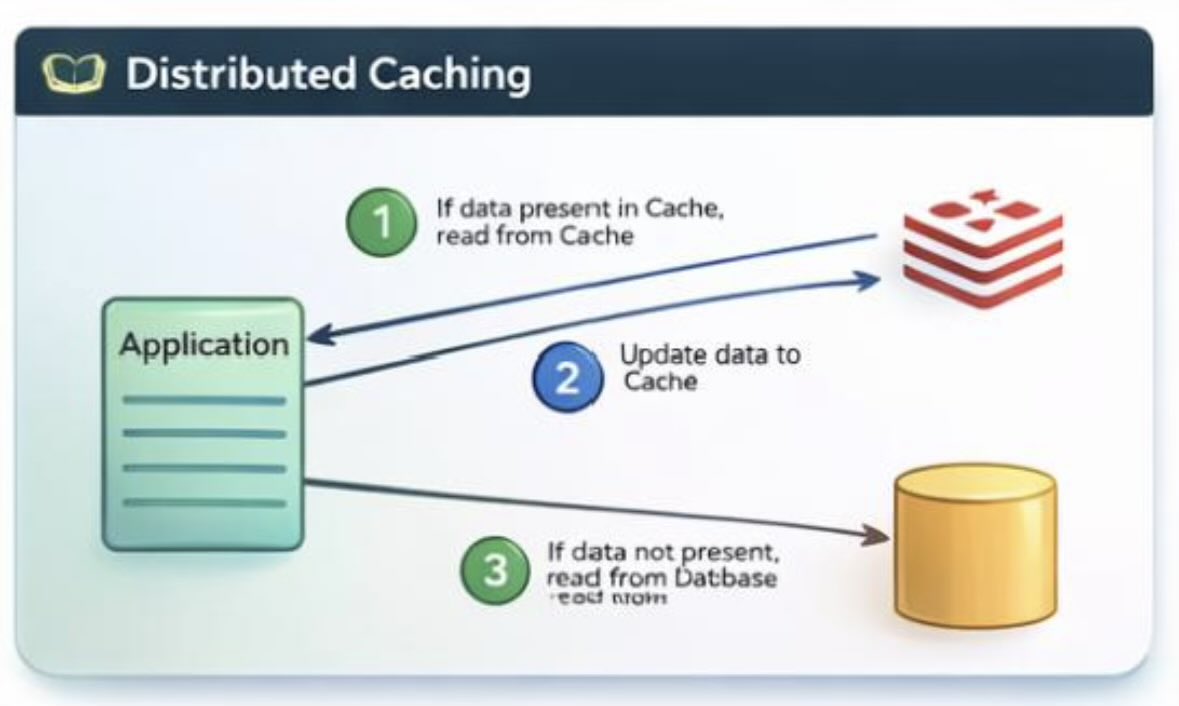
KEYS blocks Redis:
redis.keys("user:*")
It scans the entire keyspace, which is fine locally but can hurt production performance with millions of keys.
Use SCAN instead for non-blocking incremental iteration.
1
8
1,891

May 16
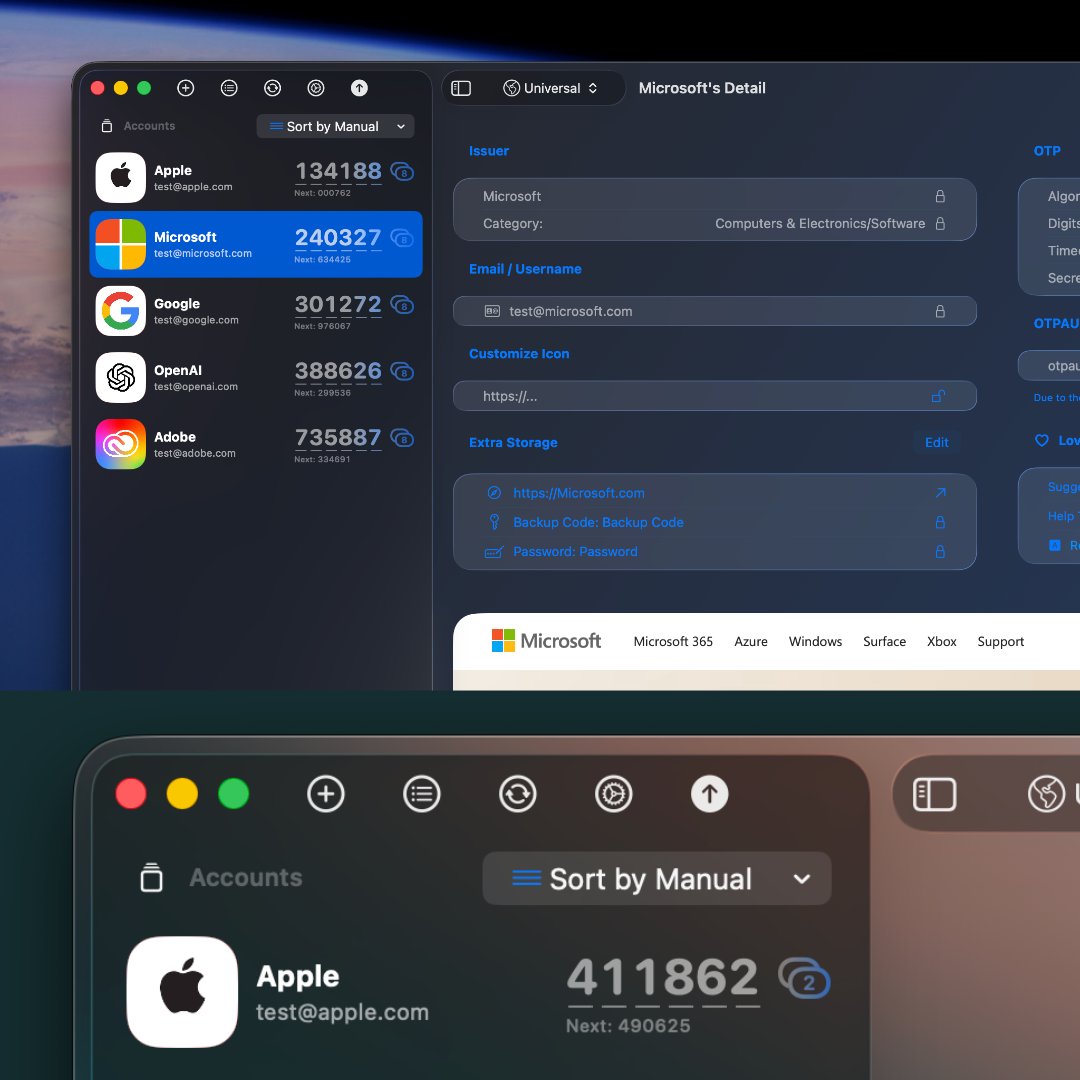
New UI look 👀 auth. 27 for macOS 🖥️
- New Upcoming OTP code
- Keyspace now support Safari
- Liquid Glass on List
TestFlight soon 🥏 #2FA
14 Nov 2025

Introducing auth. 26.0 - An Elegant 2FA app.
It's also the biggest update since 2021 🎉
TestFlight soon 🛸
Coming to the Apple App Store #BlackFriday
1
2
48
34,795


May 10
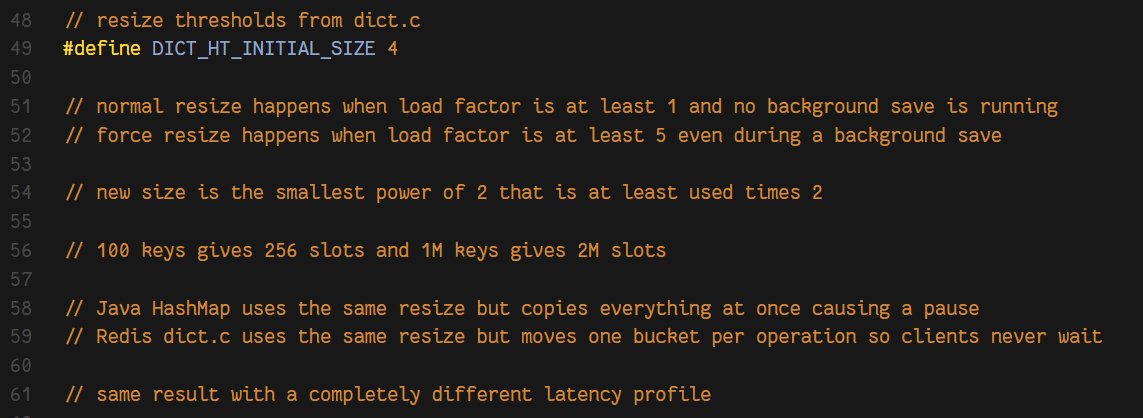
the resize triggers at a load factor of 1 when elements equal buckets
if a background save like BGSAVE or BGREWRITEAOF is running Redis disables normal resizing to avoid memory pressure from holding two tables at once
it still force resizes if the load factor exceeds 5 which is the last resort
the whole dict.c is about 1200 lines and it underpins every Redis data type like strings hashes sets sorted sets and the main keyspace
every key you have ever set in Redis was stored in a struct that has two hash table slots and a rehashidx sitting at -1 quietly waiting to become ht[1]
9
2,215

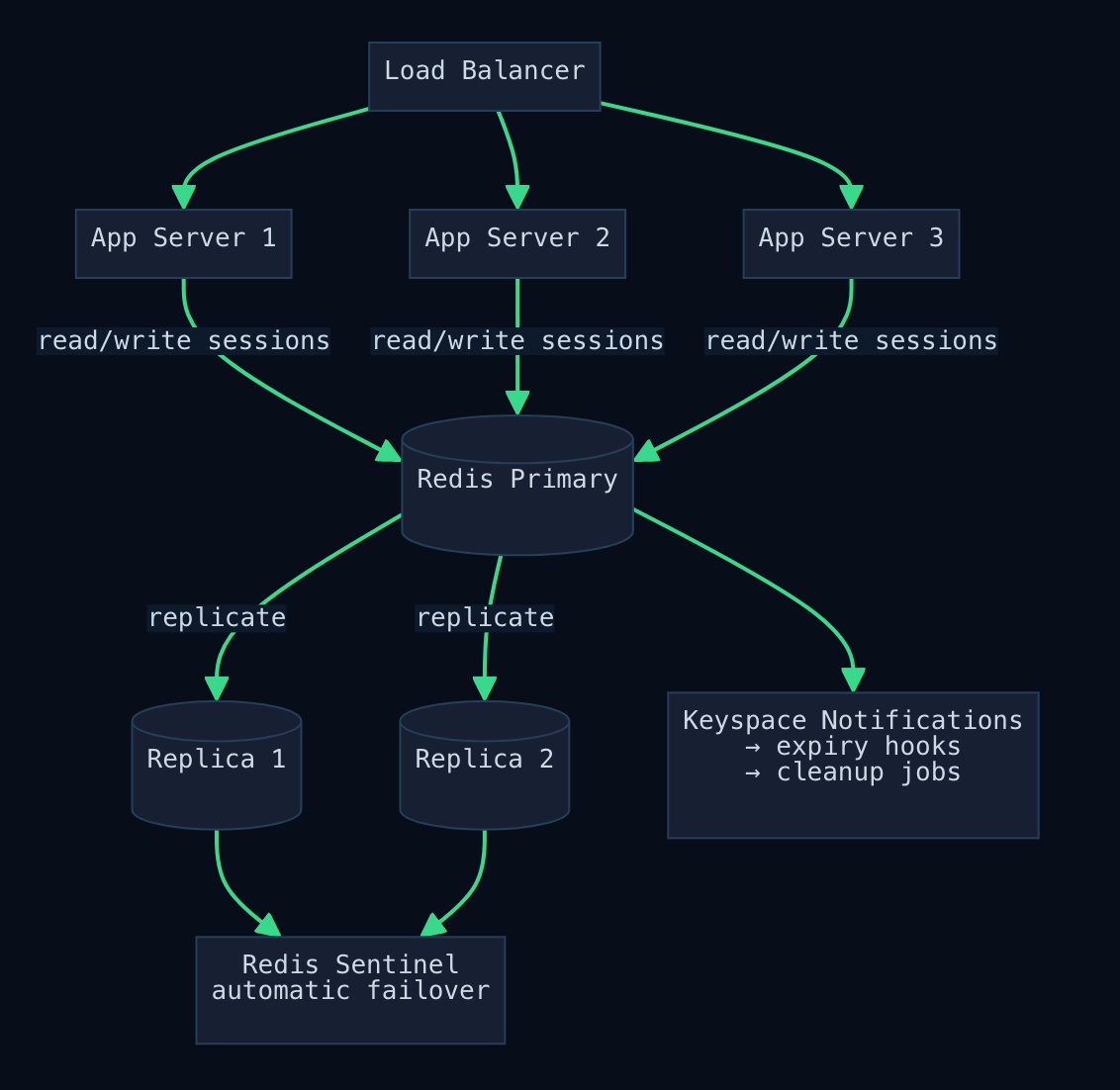
In-memory sessions don’t survive restarts and don’t scale across multiple server instances.
Production session architecture:
• Redis as the session store: sub-millisecond reads, native TTL, pub/sub for cross-session events
• Sessions stored as session:{id} → JSON
• User-session index at user:{id} for multi-device operations
• Keyspace notifications for expiry hooks (cleanup, audit)
For HA:
Redis Sentinel handles automatic failover. Redis Cluster adds horizontal sharding for very high session volume.
This store handles reads on every request.
It cannot become the bottleneck.
1
4
228
