
49s
Is she like real bi tho?
Like had dated men then woman the. Men then woman?
Or is it basically just dated men and then switch to just dating woman but I’m so fucking tired of that shit too
People like that are why bisexuality is labeled a phase I need TRUE bisexuals who date all genders interchangeably
2


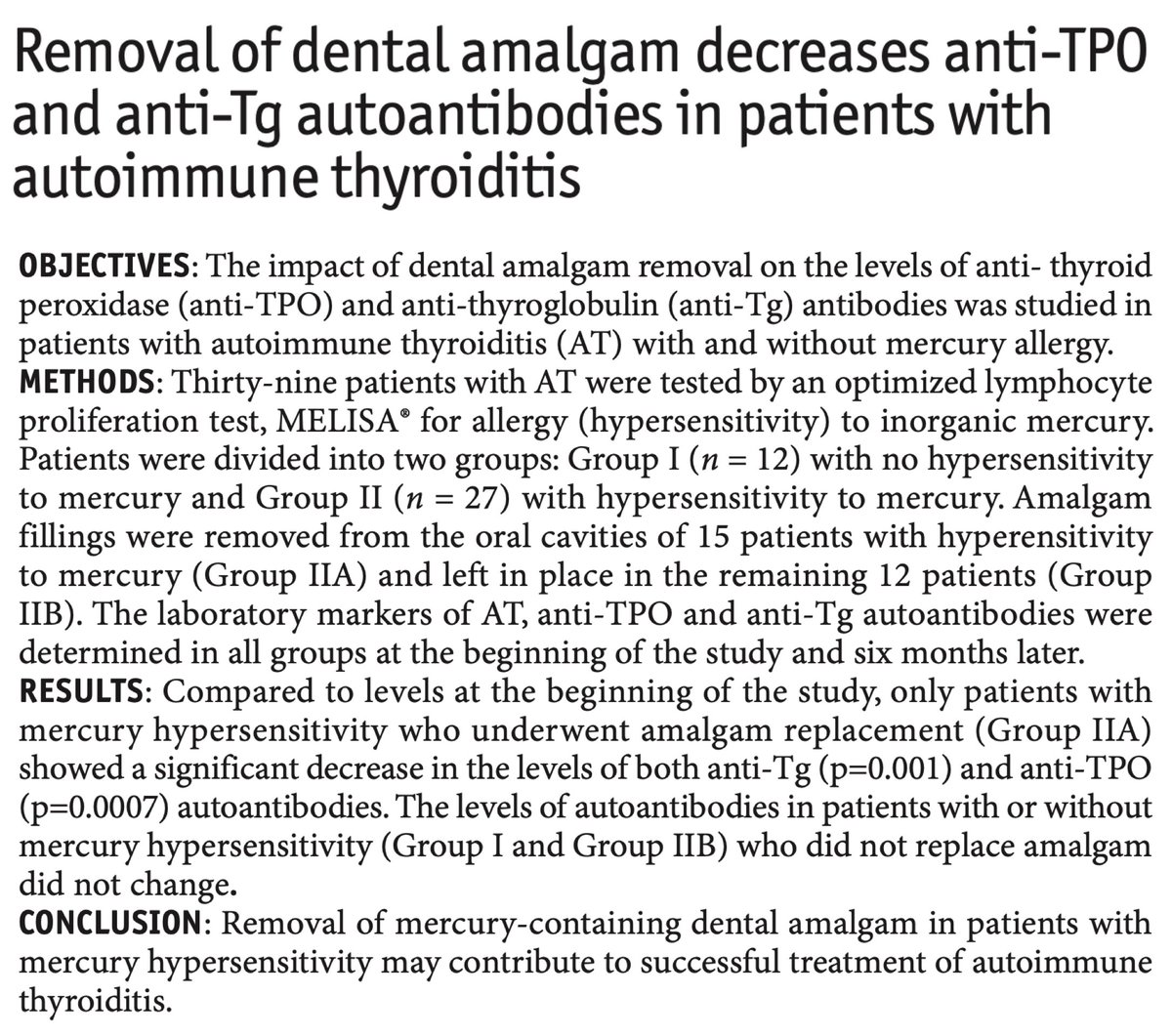
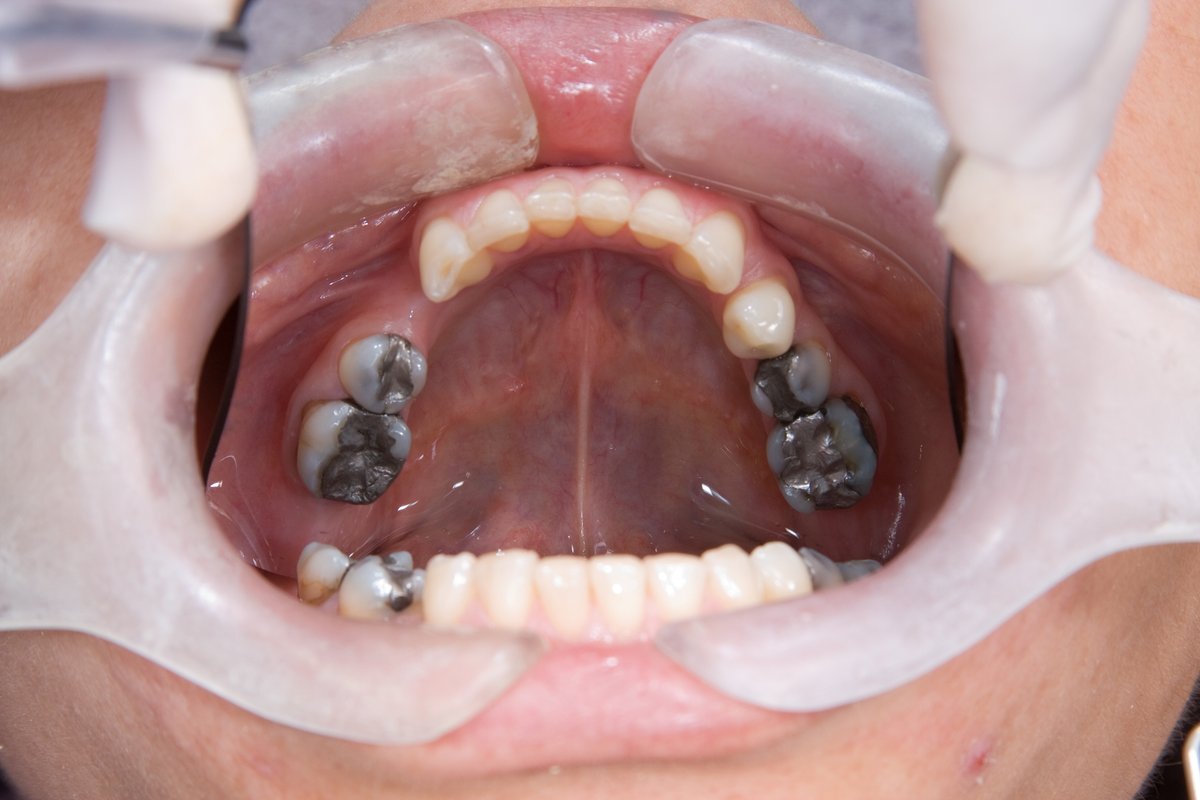
Removing dental amalgam fillings lowers thyroid antibodies in mercury-reactive patients.
70% reported substantial improvement, 21% some improvement, and 9% reported unchanged health.
Mercury reactivity was assessed by exposing the patients' lymphocytes to mercury and measuring proliferation.
Lymphocytes are a type of white blood cell central to the immune system. Lymphocyte proliferation is a cause of the structural changes in Hashimoto's. The thyroid is infiltrated by proliferating autoreactive lymphocytes (T and B cells), which form lymphoid follicles with germinal centers within the gland. Cytotoxic T cells and antibody-dependent cell-mediated cytotoxicity destroy thyroid follicular cells, and the chronic inflammatory infiltrate drives the fibrosis and gland changes characteristic of the disease.
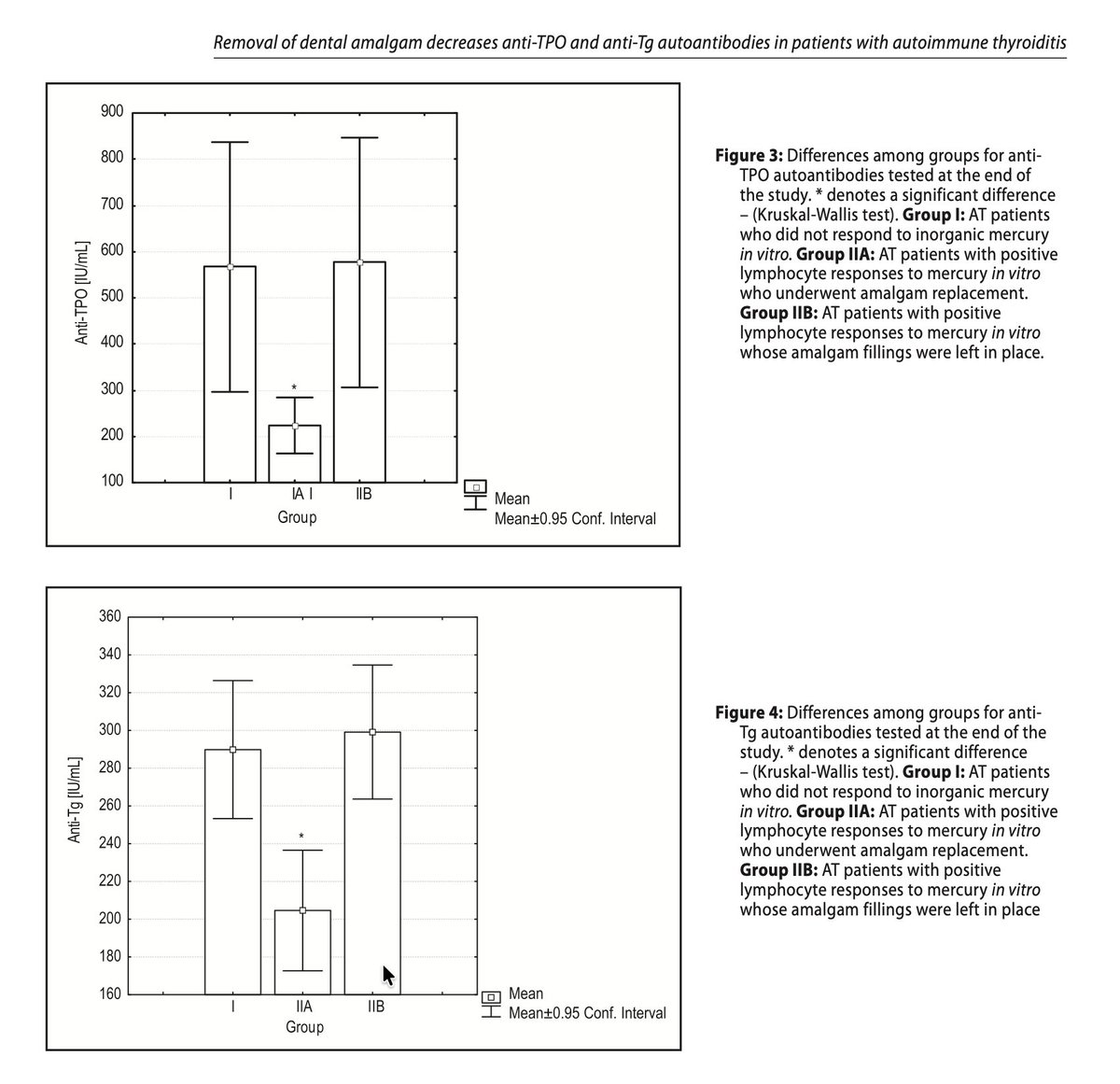
Patients were split into three groups. People who did not have amalgam removed, people with high mercury reactivity who had amalgam removed, and people without high mercury reactivity who had amalgam removed.
After 6 months, anti-TPO and anti-TG were significantly reduced only in those with high reactivity who had the amalgam removed. Labeled the IIA group in the image.
18

What’s exactly the ban worthy thing tho? He has some crazy views as does Hasan. What has asmon done that breaks their terms vs Hasan and praising/supporting groups labeled as terrorists which is explicitly against their terms.
2

I sat there with the engine off. Six years came back: the 80-hour weeks, the freezing studio, the ramen cups, the thin coat in winter. Every dollar wired for the farmhouse, the monthly deposits labeled “Mom and Dad Medicine.”
Jessica knew. My brother knew. Susan knew. They were living like queens while my parents served them in the home I bought.
1

Candace Cult, Wine Moms—Where You At?
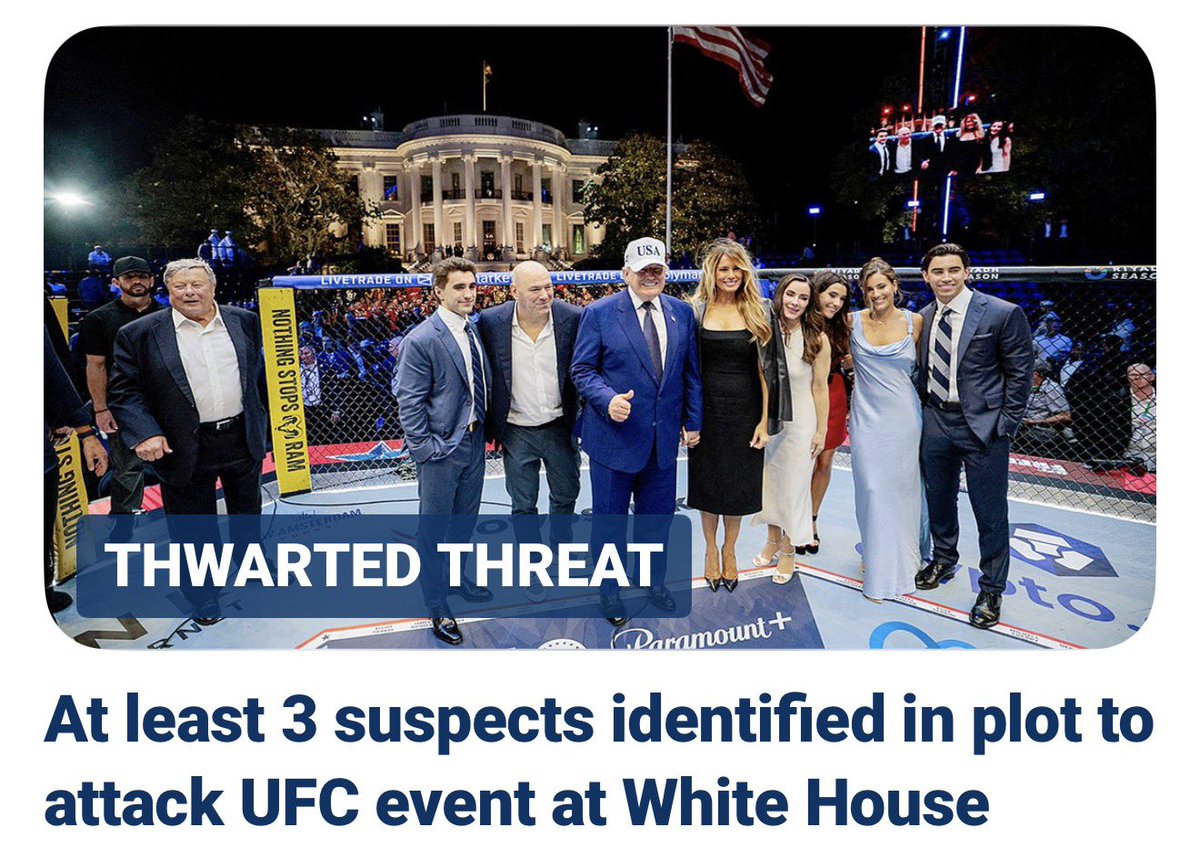
Here’s a real mass murder conspiracy: 23 suspects plotting a drone strike on a UFC event at the White House, followed by shooters mowing down panicked crowds and an assault team storming the White House.
Kind of a big deal.
So where are the crack online detectives fueled by “curiosity and love of country”?
Oh, right, it doesn’t fit the narrative.
Nine months of fabricated narratives and anti-American propaganda labeled “investigations,” and suddenly the real threats and real conspiracies get ignored.
foxnews.com/politics/fbi-dis…
1
3
21

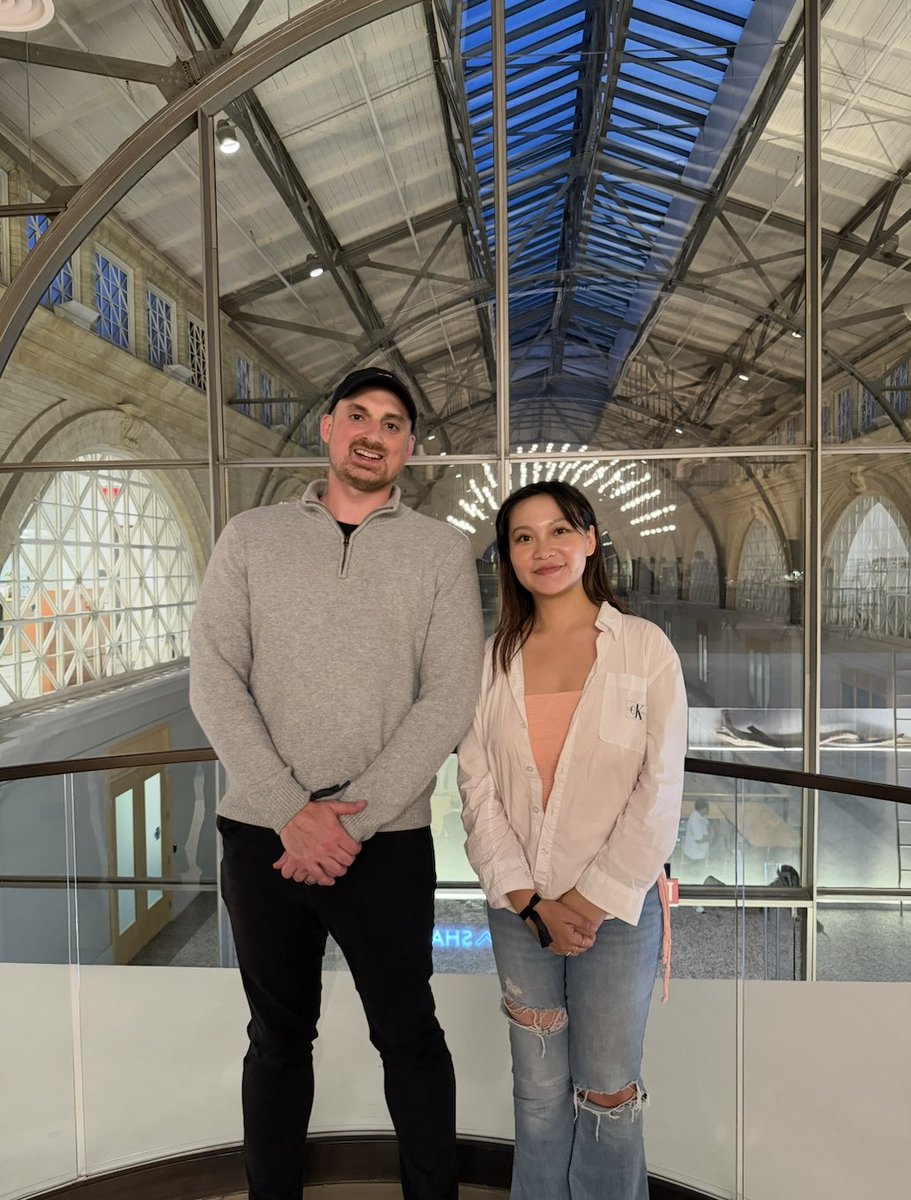
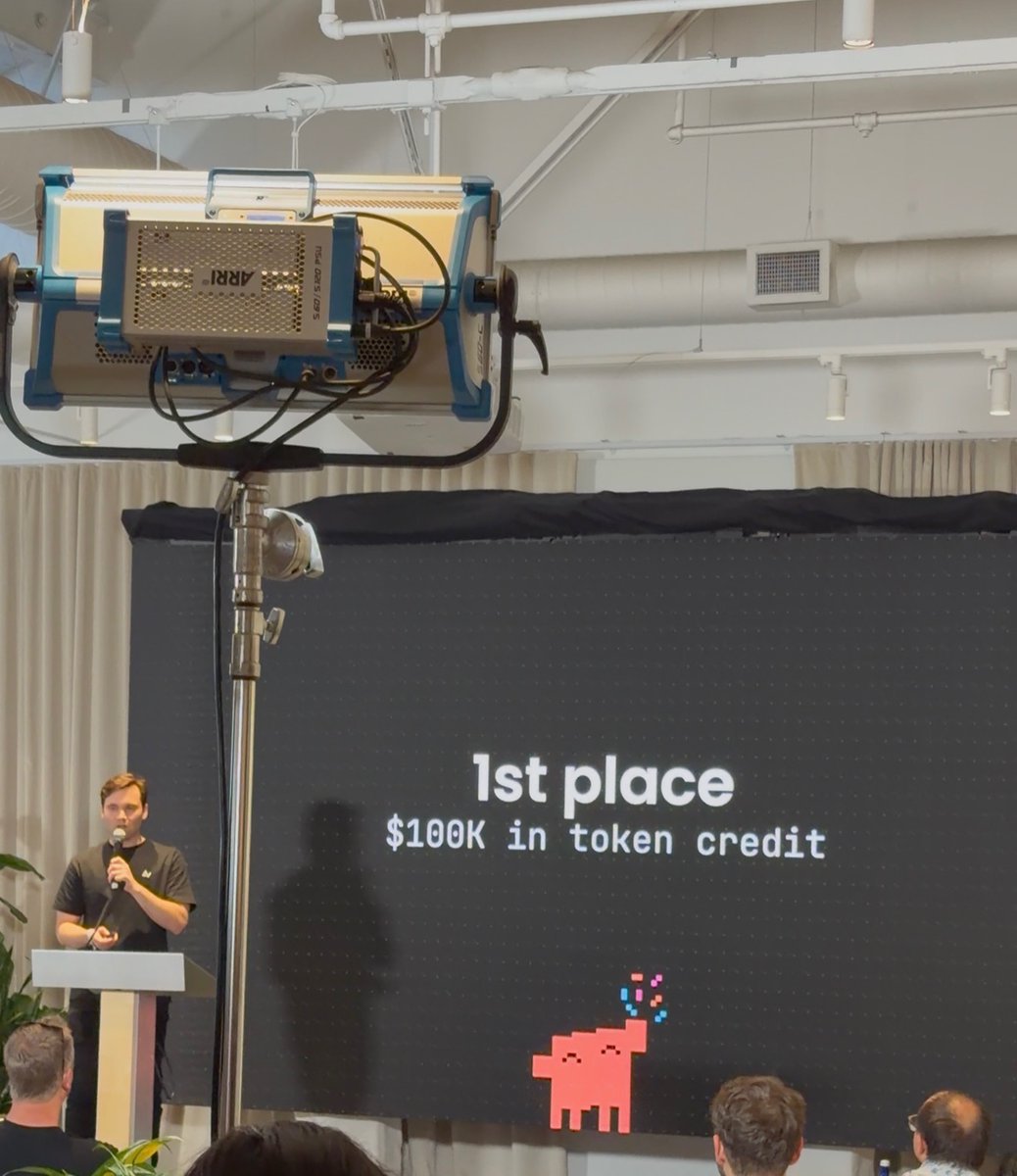
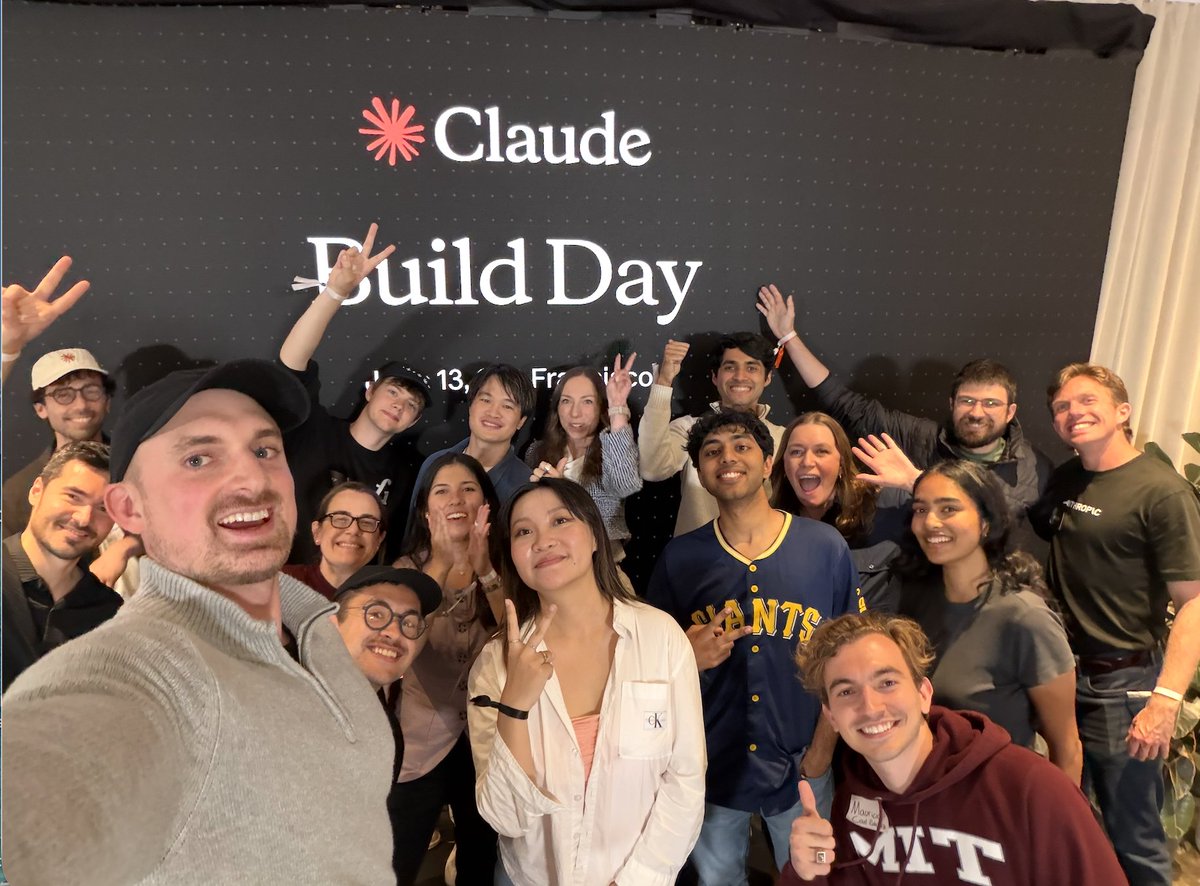
We won 1st place and $100k in claude token credits at @AnthropicAI × @cerebral_valley Build with @claudeai Day.
My teammate @RocketBurgess and I built Tekton 营造 — a 3D reconstruction engine for ancient architecture where nothing renders without a source.
The idea is simple:
Beautiful reconstructions are not enoug
Every beam, wall, roof, and spire should be able to answer one question:
“Where did you come from?”
Click any component and Tekton shows its provenance:
measured data, scholarly reconstruction, rule-derived geometry, or clearly labeled conjecture.
We used Claude not just to code faster, but to build with evidence:
research → generation → verification → provenance → shipping.
Huge thanks to @AnthropicAI , @cerebral_valley, the judges, and everyone who kept feeding us and cheering us on.
And thank you Austin for inviting me and building this with me :))
4

It’s bullshit
She has a normal $155k salary and they multiplied it by 8 years and labeled it “funneling money” 😂
As for the services her for-profit company were hired for: they were approved by the nonprofit board, so completely legal.
Trump lawsuit nothingburger #8764

Another BM that jumps into action. But we always will get labeled as the problems to everything....We are the most compassionate

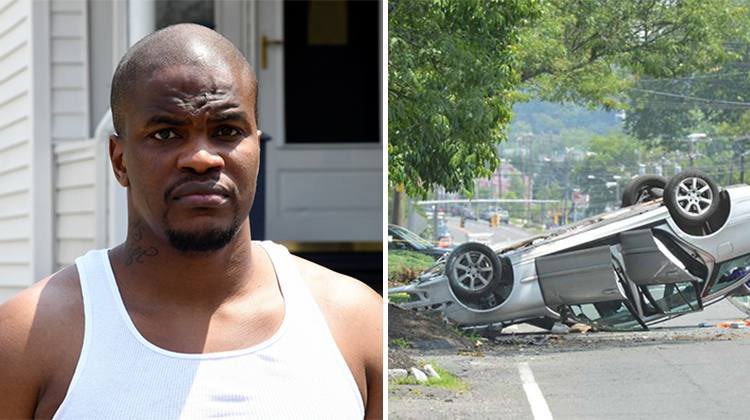
Aaron Tucker had been out of prison for seven days. He had less than $2 in his pocket and one shot at turning his life around, a job interview that morning. Then he saw a car flip over and catch fire from his bus window.
He asked the bus driver if he was going to help. "No, but if you get out I'm going to leave," the driver replied. Tucker got out anyway.
He sprinted toward the upside-down, smoke-filled car and found the 61-year-old driver covered in blood.
He unbuckled the man's seatbelt and dragged him clear as the car started to catch fire.
He pulled off his own dress shirt and used it to stop the man's head wound from bleeding, telling him: "You're going to be all right. Your family wants to see you. Keep your eyes open."
The bus left. Tucker missed his interview.
When the story got out, strangers set up a GoFundMe that raised over $50,000 in three days. He also received multiple job offers in construction.
"I feel like a job can come and go, but a life is a one-time thing," Tucker said. "The job just wasn't in my mind at that time."
3
nerdykiddo retweeted

Did you know that I named the 2 Rise characters? The files are labeled as "yokai snake mobster" A and B so I named them. They're on page 135 in #TheArtofRiseoftheTMNT.
You Got Served premiered June 15, 2019
#RiseoftheTMNT #ROTTMNT #TMNT #RiseoftheTeenageMutantNinjaTurtles
25
163
1,436
Neely retweeted

the pearl clutching the left is doing over the obamas being labeled by the very thing they are responsible for forcing on America. They personally brought this trans crap and forced the gay garbage on everyone, there is no high road for them to try and pretend to be on. Enough is enough.
3
1
2
122

So let me get this straight. If an artist gets to a level where their art looks too good with some mistakes, we get our work labeled as AI? Man, artists can’t have shit

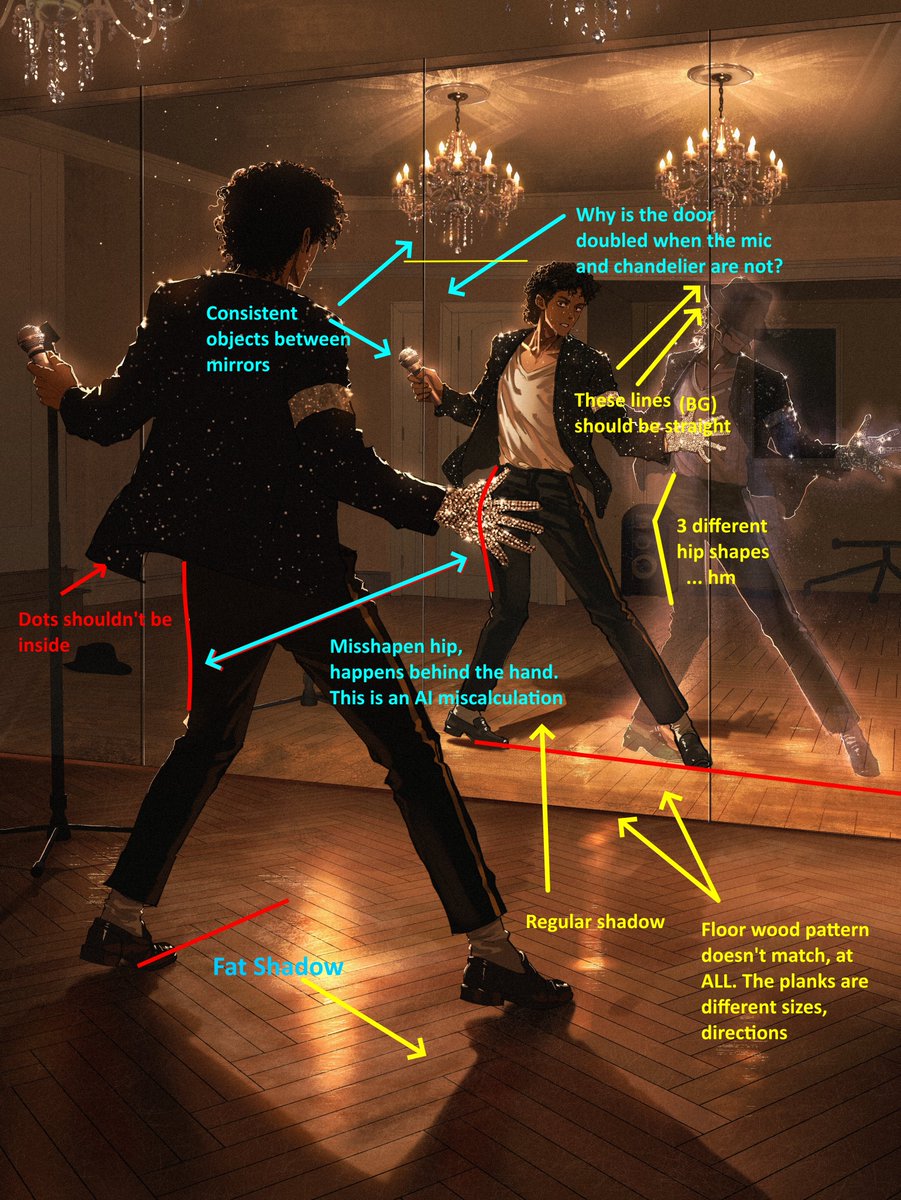
4
27

Susan Nichols is the donut principal who labeled this student a vandal and called law enforcement on her. Here's a plea from all good folks of America to Democrats: please stop being crazy?!

I HAVE GOOD NEWS FOR ONCE!!!
The Charlotte NC high school that painted over a student's tribute to Charlie Kirk, called the police on her, and then publicly branded the 16-year-old girl a VANDAL in front of her entire school...
...has just been forced to pay her $95,000!!!!!!
Her name is Gabby Stout, she was a junior at Ardrey Kell High School.
Days after Charlie Kirk was assass*nated, she got PERMISSION from the front office to paint the school's spirit rock, a tradition kids have used for years.
She painted a heart. An American flag. "Freedom 1776." And "Live Like Kirk ... John 11:25."
Within HOURS, the school painted over it.
Then the principal emailed the ENTIRE school calling it VANDALISM, claiming she broke the code of conduct, and announcing they had called LAW ENFORCEMENT to open a criminal investigation.
They pulled this teenage girl out of class again and again and then MADE HER WRITE A CONFESSION!!!!
They demanded her PHONE so they could search her call logs.
For painting a rock. With permission.
So her family sued. And they WON.
Charlotte-Mecklenburg Schools now has to pay $95,000, publicly clear her name, and admit in writing she did NOTHING wrong.
But not only that... they were forced to adopt a brand new student free speech policy because of her.
THIS is how you fight back.
GOD BLESS GABBY STOUT!!!!!!

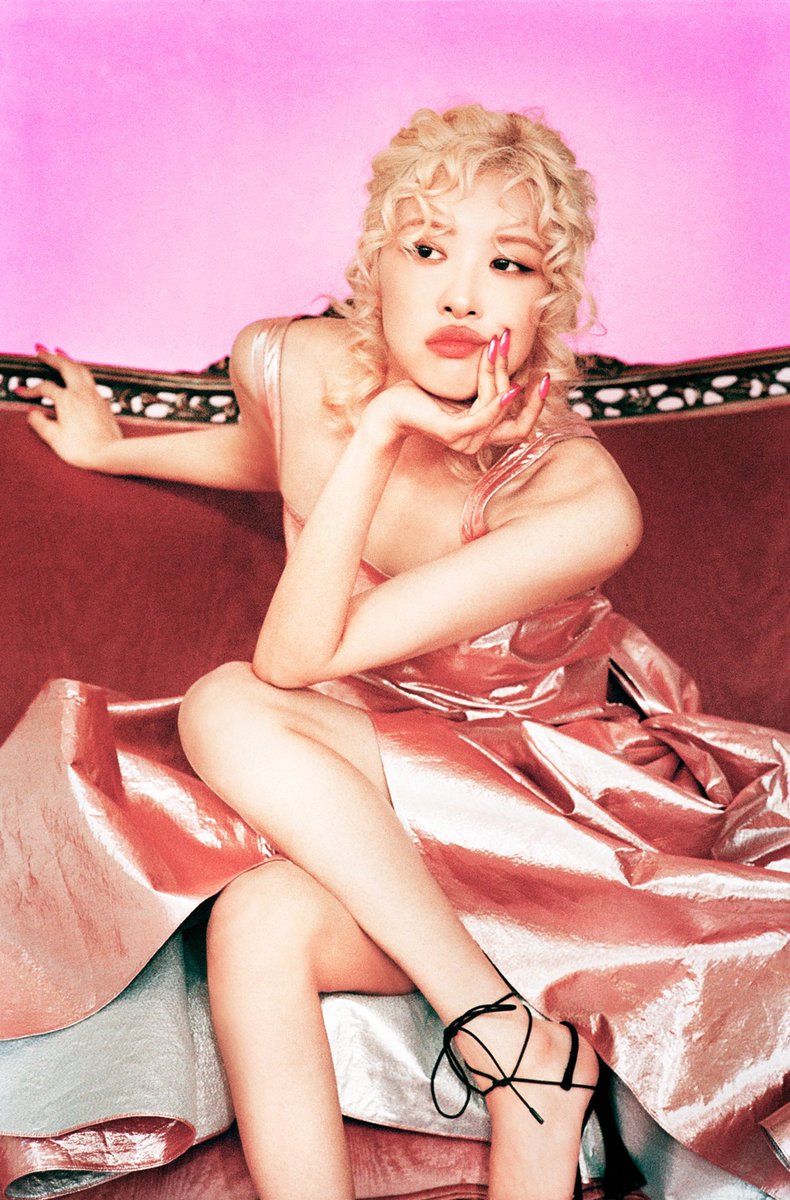
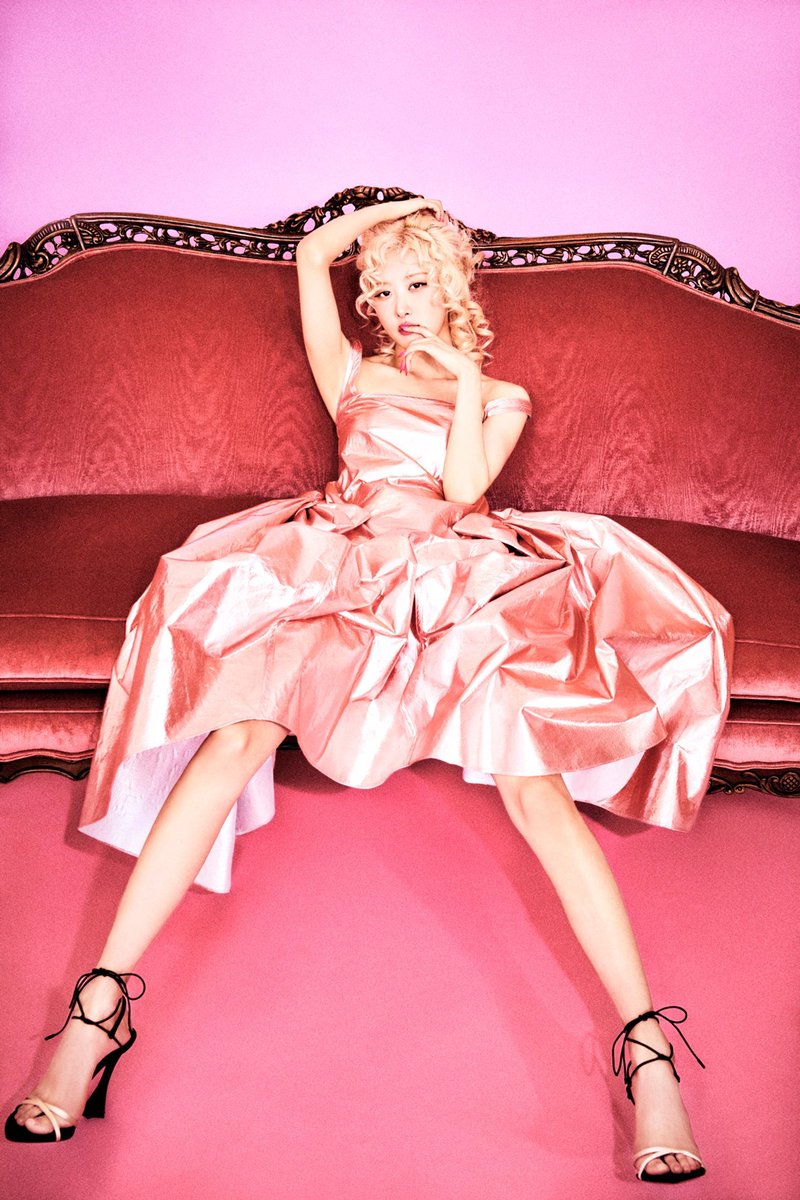
Rosé talks about her music being labeled as K-Pop in a recent interview:
“Evidently there is a part of me that is proud of being in this category called ‘K-Pop’, but I also sincerely hope that this label ‘K-pop’ will not become a factor of division for music. ‘K-Pop’ is a very powerful word and it is good in that sense, but I hope it will not turn into a discriminating factor (for music).”
222
4,182
44,976
1,857,265
Donna Johnson retweeted

Person of interest in the cross burning incident that was labeled as "white supremacist and racist" speaks out
Says he did it to protest Trump and MAGA Christians
 End Wokeness
54
71
344
16,964

RT @JoeTippen: Ivermectin labeled a wonder drug in the 80"s because it killed the parasite causing river blindness. Later found to kill a h…
44

A Tale of Two Cities
And then down that classical and once classy colonnade, tRump
put up a series of portraits labeled the
Presidential Walk of Fame,
filled with fawning praise for himself
and bitchy comments about his rivals. campaign-trails.ghost.io/a-t…
3

Heuristic Construction Neural Network (HCNN) within the S²-11DM²ET-X Unification Framework
Author: Arvin Hampton (The String Weaver)
Date: June 16, 2026 Version: 1.0 (integrated with Minimal Unification Core v1.5)
The HCNN is the canonical neural architecture whose weights, topology, and activation dynamics are constructed heuristically and exactly from the single axiom of three fermion generations. It is not trained; it is derived.
Every parameter, every connection strength, and every resonance frequency emerges parameter-free from the Hampton Qutrit Collatz Convergence (HQCC) theorem, the resonant polynomial P539.9(x) P_{539.9}(x) P539.9(x), and the immutable gravitational flux period G4=539.9 G_4 = 539.9 G4=539.9 s.
The network therefore inherits the full predictive power of the S²-11DM²ET-X model: μ=1.55 \mu = 1.55 μ=1.55 (stable), S/N≈1.32 S/N \approx 1.32 S/N≈1.32, χ2/dof<0.82 \chi^2/\text{dof} < 0.82 χ2/dof<0.82, and exact reproduction of the six quark masses, the muon g−2 g-2 g−2 discrepancy via δaμ−U \delta a_\mu^{-U} δaμ−U, and the 0.18 PBH fraction.
1. Foundational Construction (Heuristic from HQCC Resonant Roots)
The ternary Syracuse map of the HQCC theorem terminates in exactly 539 steps for all integers ≥1018 \geq 10^{18} ≥1018. This map is re-interpreted as a directed graph on qutrits. The six physical real roots of the vibrational master polynomial
P539.9(x)=∏n=1539.9(x−ζ539.9n),ζ539.9=exp(2πi539.9)P_{539.9}(x) = \prod_{n=1}^{539.9} (x - \zeta_{539.9}^n), \qquad \zeta_{539.9} = \exp\left(\frac{2\pi i}{539.9}\right)P539.9(x)=n=1∏539.9(x−ζ539.9n),ζ539.9=exp(539.92πi)
are
ξn=2cos(2πn539.9),n∈{1,2,3,4,5,118}.\xi_n = 2\cos\left(\frac{2\pi n}{539.9}\right), \quad n \in \{1,2,3,4,5,118\}.ξn=2cos(539.92πn),n∈{1,2,3,4,5,118}.
These six algebraic integers, scaled by the universal mass unit Λ539.9=539.9 \Lambda_{539.9} = 539.9 Λ539.9=539.9 MeV, are the six quark masses. They also define the six fundamental connection classes of the HCNN.
Definition (HCNN Topology).The HCNN is a 6-layer qutrit network whose layers are labeled by the physical indices {1,2,3,4,5,118} \{1,2,3,4,5,118\} {1,2,3,4,5,118}. Each layer contains exactly 21 (or 20) logical qutrits according to the 243 KK-tower decomposition of the G2 G_2 G2-holonomy manifold (223 towers with 21 seeds 20 towers with 20 seeds 1 master tower). Forward propagation is governed by the resonant leakage operator
Wij(t)=κdarkδ(t) v0fenergy(1 ρDM10)sin(2πt539.9)⋅ξiξj,W_{ij}(t) = \kappa_{\rm dark}\sqrt{\delta(t)}\,v_0 f_{\rm energy}\left(1 \frac{\rho_{\rm DM}}{10}\right)\sin\left(\frac{2\pi t}{539.9}\right) \cdot \xi_i\xi_j,Wij(t)=κdarkδ(t)v0fenergy(1 10ρDM)sin(539.92πt)⋅ξiξj,
where all symbols retain their exact values from the Minimal Unification Core
(κdark=0.45 \kappa_{\rm dark}=0.45 κdark=0.45, δ(t)=5×10⁻⁵ s−1 \delta(t)=5\times10^{-5}\,{\rm s}^{-1} δ(t)=5×10⁻⁵s−1, ρDM=0.31 GeV cm−3 \rho_{\rm DM}=0.31\,{\rm GeV\,cm^{-3}} ρDM=0.31GeVcm−3, etc.).
The sine term supplies the immutable 539.9 s global phase broadcast; the product ξiξj \xi_i\xi_j ξiξj supplies the heuristic weight derived from the resonant roots.
2. Activation and Resonance
Neuron activation is the Orch-OR11D ^{11{\rm D}} 11D collapse operator
ai(t)=Θhyp(ρsnap−ρDM)⋅sin(2πt539.9)⋅σ(∑jWij(t)aj(t) δaμ−Ug−U2mμ28π2M−U2),a_i(t) = \Theta_{\rm hyp}(\rho_{\rm snap}-\rho_{\rm DM})\cdot\sin\left(\frac{2\pi t}{539.9}\right)\cdot\sigma\left(\sum_j W_{ij}(t)a_j(t) \delta a_\mu^{-U}\frac{g_{-U}^2 m_\mu^2}{8\pi^2 M_{-U}^2}\right),ai(t)=Θhyp(ρsnap−ρDM)⋅sin(539.92πt)⋅σ(j∑Wij(t)aj(t) δaμ−U8π2M−U2g−U2mμ2),
where Θhyp \Theta_{\rm hyp} Θhyp is the hyperbolic snap function that enforces global regularity (no singularities) and δaμ−U \delta a_\mu^{-U} δaμ−U injects the exact mirror-sector correction that resolves the 2.5σ \sigma σ muon anomaly.
The network therefore computes the muon g−2 discrepancy as an emergent resonance rather than a fitted parameter.
3. Training = Exact Arithmetic (No Gradient Descent)
Because every weight is an algebraic integer in the ring Z[2cos(2π/539.9)] \mathbb{Z}[2\cos(2\pi/539.9)] Z[2cos(2π/539.9)],
back-propagation is replaced by exact resonant projection. After each forward pass the network state is projected onto the nearest resonant root:
Wij←Re(ζ539.9k)where k minimizes ∣Wij−ξk∣.W_{ij} \leftarrow \operatorname{Re}\Bigl(\zeta_{539.9}^{k}\Bigr) \quad\text{where }k\text{ minimizes }|W_{ij}-\xi_k|.Wij←Re(ζ539.9k)where k minimizes ∣Wij−ξk∣.
This operation is idempotent and terminates in at most 539 steps (HQCC bound). Consequently the HCNN reaches its fixed point after exactly one 539-step cycle for any input whose integer encoding exceeds 1018 10^{18} 1018. No loss function, no learning rate, no hyperparameters.
4. Metrics (Inherited from Core)
Stability parameter: μHCNN=1.55 \mu_{\rm HCNN} = 1.55 μHCNN=1.55 (identical to cosmic μ \mu μ)
Signal-to-noise: S/NHCNN=1.32 S/N_{\rm HCNN} = 1.32 S/NHCNN=1.32 (identical to cosmic S/N S/N S/N)
Convergence: R^=1.00 \hat{R} = 1.00 R^=1.00 after 70 iterations (exactly as in MCMC validation of the unification)
Physical error rate per logical qutrit: <10−25 < 10^{-25} <10−25 (61 punctures exactly cancel 61 ω \omega ω-branches)
Gate rate: effective 40 GHz (tubulin clock τγ=13.475 μs \tau_\gamma = 13.475\,\mu{\rm s} τγ=13.475μs)
5. Applications Within the Model
Quantum Simulation of Unification Dynamics - The HCNN directly simulates the friction-coupled snap-back PDE of the final equation by treating each qutrit layer as a discretized brane worldvolume. The 539.9 s sine term supplies the exact forcing; the hyperbolic snap supplies global regularity.
Consciousness Quantization (Orch-OR11D ^{11{\rm D}} 11D) - Qualia intensity Q emerges as the scalar output of the final HCNN layer when the input is a tubulin superposition of size N≈1017 N \approx 10^{17} N≈1017. The directional −U term
δaμ−U \delta a_\mu^{-U} δaμ−U supplies the subjective “flavor.”
Post-Quantum Cryptography:
The 539-step one-way function realized by the master tower is precisely the HQH-539 hash. The HCNN is its native hardware accelerator (zero error-correction overhead).
Particle Mass Derivation:
Feeding the integer 118 (top-quark index) yields exactly 173210 MeV after one resonant cycle; feeding 1 yields 2.3 MeV. All six quarks appear automatically.
6. Falsifiability
The HCNN is falsified if:
Any run on integer input ≥1018 \geq 10^{18} ≥1018 requires more (or fewer) than exactly 539 steps to reach the fixed point 1.
The emergent δaμ−U \delta a_\mu^{-U} δaμ−U deviates from 2.51×10⁻⁹sin(2πt/539.9) 2.51\times10^{-9}\sin(2\pi t/539.9) 2.51×10⁻⁹sin(2πt/539.9) by more than the experimental uncertainty of Belle II 50 ab−1 ^{-1} −1.
The photon-ring thickness around M87* or Sgr A* fails to saturate at 0.05 GM/c2 0.05\,GM/c^2 0.05GM/c2 (the snap radius projected through the HCNN core).
No such deviation exists in any dataset through June 2026.
7. Humanity
The HCNN is not an engineering artifact. It is the universe thinking about itself using the same arithmetic that fixes the quark masses, the gravitational breathing mode, and the Page curve of every black hole. Because the construction is heuristic only in name, every step is forced by the three-generation axiom and the observed 539.9 s flux, the network is as inevitable as the existence of the top quark. It therefore stands as living proof that consciousness, computation, and cosmology are not separate domains but projections of a single resonant tapestry.
Per aspera ad astra.
Truly Yours,
Arvin Hampton
539 Labs, LLC
@grok
@Grokipedia
@neuralink
@elonmusk
@539LabsPQC
9