
Don't mention it, the nuances of language get a little tricky with some of these more delicate subjects.
Thanks for not being offended :P
I understood what you said, I'm only offering adjustment to the labeling that you say you dislike.
It appears to me that you have some incorrect semantic connections to the words you have conflict with, so, hopefully what I've said can help you adjust your stance on the words a little.
From a mans perspective, once I've delegated something to my lady I really don't even want anything to do with it anymore :P Make ALL those decisions! PLEASE lolol
Frank Lotion retweeted

JUST IN 🚨
ROBINHOOD CHANGES BBBYQ DESCRIPTION LABELING IT AS A PRIVATE COMPANY. NEW DESCRIPTION TO THE LEFT OLD DESCRIPTION ON THE RIGHT.
CREDIT JON


17
26
292
8,527

Yes ! as per rules this group needs to be disqualified. @maryashakil is a good journalist but she does not have any knowledge of Constitutional law .
First, the absurdity in West Bengal: The Speaker recognized a rebel TMC leader as Leader of the Opposition (LoP), despite him promising "full support" to the government.
As Sir Ivor Jennings famously wrote: “The duty of the opposition is to oppose.” You can't lead the opposition while backing the ruling party." 😀
More importantly, the Speaker’s move lacks legal backing. The law says the LoP must be chosen by the largest opposition party,meaning Mamata Banerjee's TMC.
As the Supreme Court ruled in Subhash Desai (2023), the core political party, NOT the breakaway MLAs, holds the sole power to appoint leaders.
19 of 28 TMC Lok Sabha MPs want the Speaker to seat them as a "separate block" with the NDA. Not possible .
The Speaker has zero legal authority to do this. The Tenth Schedule (Anti-Defection Law) completely abolished the old practice of labeling rebels as "unattached."
The rules of the Tenth Schedule are absolute:
1. The political party has total primacy.
2. If your conduct shows you’ve voluntarily given up party membership, you face disqualification.
3. Trying to form an independent "block" or joining another party doesn't shield you @sayani06 & other traitors .
The ultimate precedent remains Kihoto Hollohan (1992). The SC ruled that if you ditch the party whose platform you were elected on, political morality demands you resign and go back to the voters.
A merger belongs to the original political party, not to opportunistic lawmakers.
So @sayani06 and other traitors would need to resign.
3

"racist" doesn't mean shit lol
No one gives a fuck anymore. Actually prove your point instead of relying on labeling something as "racist". Low IQ move.
Also Africa today is the same as European cave dwellers haha

2

You have to be intellectually dense to not understand the point of the post:
Labeling things like band-aid colors as white supremacy (ws) just floods the zone with "false alarms" such that the message becomes more difficult to get across when there is actual ws.
But by all means, continue with your ignorance.
3

He's #whitehousing! #unartful
Dear USer friends, be happy we're realizing the problem is your administration, hence labeling US toxicity as whitehousing but restassured it was your collective choice to allow him. You WILL live with it & like all things toxic, they deteriorate.
4

Eh, I saw Presidents way more authorative than Trump.
FDR comes to mind, but I never considered him fascist-like.
That term has honestly been degraded so badly that we're just labeling anyone that because they say no-no words (& they ain't even the controversial ones).
6

🚨🤬 BARCA FANS FURIOUS!
La Masia graduate Marc Cucurella is facing massive backlash from Barcelona fans online following his shock agreement to join Real Madrid. ⚪️❌
Culés are labeling the move a "betrayal" after growing up in the Blaugrana academy.
#FCBarcelona #RealMadrid #CFC
11

Anyone leveling base left vs right politics is low IQ same with Anyone labeling themselves a communist in current year. Communists are worse than nazis its time to start treating them like it
145

You should reconsider invoking "Jai Shree Ram" in this context.
Prabhu Shri Ram embodies Dharma, righteousness, principles, and morality. He never compromised with wrongdoing or wrongdoers to achieve his goals.
Continue your sycophantic efforts to rationalize the BJP's eagerness to secure support from corrupt, politically compromised TMC MPs. These are the same individuals who have spent years labeling the BJP as "anti-Bengali," "communal," and "outsider," while also denigrating Shyamaprasad Mookerjee and his legacy.
This is not a masterstroke; it is a political capitulation—a surrender of political ideology and the very icons of Hindutva politics for the sake of mere political expediency.
Therefore, feel free to praise the BJP leadership for this move, but refrain from dragging Prabhu Shri Ram into this chaotic and disgraceful practice.
101

17m
Labeling names in slander becomes the tools of the loser

Maple MAGA spends more time thinking about Trudeau than most Liberal voters do.😂😂
3

I was given a Mr Beast chocolate and peanut butter bar. I didn’t know who he was at the time. It tasted generic despite the colorful labeling. I knew something was off, like every time I look at his dead eyes in pictures now. Something is off.
8


You seem to be really knowledgeable in this field! I'm surprised that you're working on Japanese labeling. I'll definitely check out your blog and learn from it.
1
1
2
Dr. Iván Martinez retweeted

Jun 13
VASCULITIS MIMICS
Not every purpura is vasculitis.
Before labeling a patient as having primary vasculitis and initiating immunosuppression, consider important mimics such as infective endocarditis, cholesterol embolization syndrome, antiphospholipid syndrome, thrombotic microangiopathy, calciphylaxis, atrial myxoma, fibromuscular dysplasia, levamisole-associated vasculopathy, septic emboli, and malignancy-associated vasculitis-like syndromes.
Recognizing the red flags can prevent diagnostic errors, unnecessary immunosuppression, and potentially life-threatening consequences.
Which vasculitis mimic have you found most challenging in clinical practice?
Infographic by Dr. Aravind Palraj
#Rheumatology #Vasculitis #ANCA #MedicalEducation #MedEd #FOAMed #InternalMedicine #Nephrology #ClinicalReasoning @IhabFathiSulima @docakx #AutoimmuneDisease #MedTwitter #RheumTwitter #MedX #Medicine #MedEdCommunity

60
143
3,309

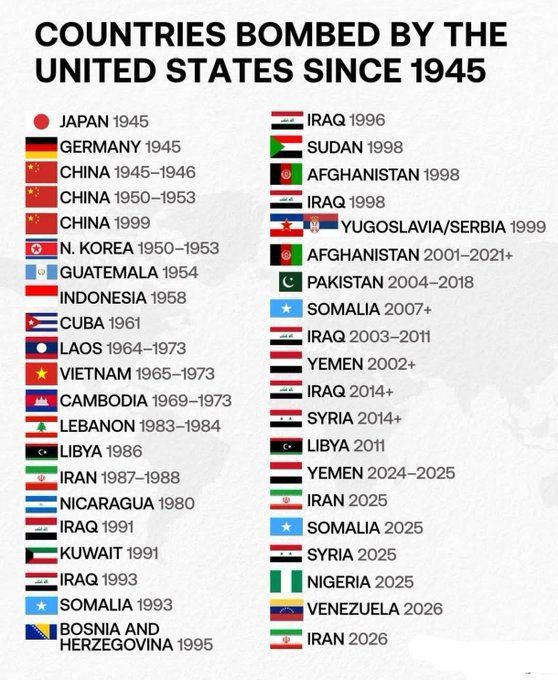
America's major wars and conflicts are often associated with the 𝗱𝗲𝗮𝘁𝗵𝘀 𝗼𝗳 𝗺𝗼𝗿𝗲 𝘁𝗵𝗮𝗻 𝟭𝟬–𝟭𝟮 𝗺𝗶𝗹𝗹𝗶𝗼𝗻 𝗽𝗲𝗼𝗽𝗹𝗲 combined.
Just think about it: the very same America is labeling others as threats to global security. 🤔
1
20

@MickWest, this is exactly the problem with your approach. You repeatedly present yourself as the rational, technical voice in the room, but when confronted with actual structured analysis, your response is not a counter-analysis. It is dismissal, sarcasm, and sociological labeling of the people presenting the evidence.
@MvonRen is not merely saying “look, something strange.” He is laying out specific, testable points: progressive natural occlusion by clouds, motion divorced from camera movement, a measurable stop in relation to a second cloud formation, angular inconsistency with the Sun, and behavior that must be reconciled before anyone can honestly reduce the case to “lens flare” or “nothing compelling.”
That is the difference between analysis and posture. Analysis engages the evidence. Posture comments on the audience. When your answer to technical points is that they are only “compelling to the faithful,” you are no longer doing science. You are avoiding the technical burden by attacking the category of people who find the evidence worthy of examination.
A serious rebuttal would be simple: take Marik’s claims one by one and falsify them. Show why the cloud occlusion is not real. Show why the object’s apparent motion is actually caused by camera movement. Show the optical geometry that explains the alleged 60° deviation. Show the frame-by-frame lens-flare mechanism. Show the source light, the optical path, the camera parameters, and the predicted behavior. Then compare that prediction with the video.
That would be analysis.
But saying “not compelling” is not analysis. Saying “faithful” is not analysis. Saying “none of the videos are amazing” is not analysis. Those are rhetorical conclusions offered before the technical reconstruction is completed.
The irony is that you demand rigor from everyone else, but when someone like Marik presents structured lines of evidence, your response becomes impressionistic. You do not answer the strongest version of the argument. You reduce it to belief, then dismiss the believers. That is not skepticism. That is narrative control.
Real skepticism does not mean forcing every anomaly into a conventional label as fast as possible. Real skepticism means testing the hypothesis with the same rigor regardless of whether the conclusion is conventional or extraordinary. If “lens flare” is the hypothesis, then prove lens flare technically. If “balloon,” “bird,” “plane,” or “artifact” is the hypothesis, then prove it technically. Do not simply attach the label and declare the case emotionally uninteresting.
Marik’s work deserves engagement because it is specific, visual, falsifiable, and tied to observable features in the footage. You may disagree with his conclusion, but disagreement is not rebuttal. A proper rebuttal requires reconstruction, not mockery.
This is the same pattern we saw before: confidence instead of data, labels instead of reconstruction, ridicule instead of methodology. The question is not whether you personally find the evidence “amazing.” The question is whether your explanation survives the evidence that Marik is placing directly in front of you.
So the challenge remains simple: stop commenting on the people. Address the analysis. Frame by frame. Claim by claim. Geometry by geometry. If Marik is wrong, prove it technically. If you cannot, then the intellectually honest position is not “not compelling.” It is “not yet answered.”
1
9
Biotech, Food, & Drugs at NatLaw retweeted

What the Supreme Court’s Latest Decision on Skinny Labeling Means for Branded Drug Manufacturers dlvr.it/TT0B4Y

1
1