Yea. I think it's because of Cyclops right?
This happens to me every time a new character drops, people were just dino locking and everyone wanted to play tank. Same with white fox and strategist.
I always say give it a couple weeks before people go back to normal
2


Dizzi D ♈ retweeted

They locking up all the creeps on the this street.
224
224
6,408
56,919

. retweeted

Seriously, what's stopping you from just locking the door and breeding me until the sun comes up?
One little ballgag is all you need to make sure I can't tell anyone!~

32
747
21,532
162,133

ok ok tomorrow is my sisters bday dinner but after that i am locking in so hard. i keep saying that but i have to. i cannot keep binge eating. i cannot keep gaining weight. i look so fat and ugly and swollen. my face is puffy. i’m lucky it’s winter here so i can hide my fat body
1
かたみふ retweeted

22 May 2023
Its like totally unprofessional to be seen without any accessories😈.
Just a lovely locking storybook...
Totally stuck untill someone else decides to let you out....
Full shell and locking mask ensures a tight fit.
📸 @Jess_Kigurumi




14
92
671
41,483

ate 700 cals today i hope i keep it up, spreading out my meals to twomad and locking myself in my room whole day so i don’t binge seems to be the key
2

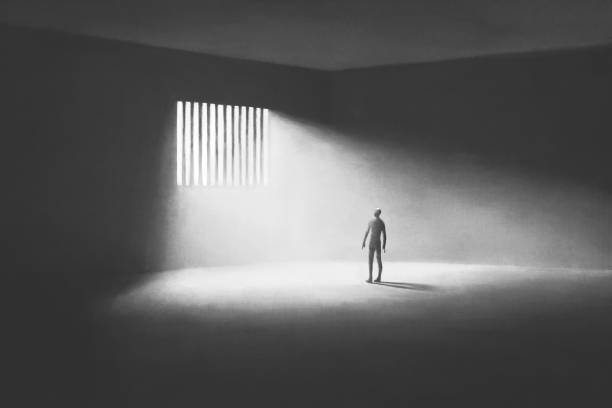
At long last, a man finishes his sentence. He walks out of the prison gate with a plastic bag of belongings. "Free". So free he has nowhere to sleep that night. Within a year, two in three men who can be found in that position are back in custody. For those released to a settled address, it's closer to one in three.
That gap is one of the most important facts in British criminal justice, and almost no one talks about it. We argue without end about sentence length, about rehabilitation, about the philosophy of punishment. All very much in need of correction and recalibration. Meanwhile a profound predictor of whether a released prisoner offends again turns out to be something almost embarrassingly plain: whether he has a bed.
HM Inspectorate of Probation has said it outright - the shortage of housing on release is "jeopardising public protection". The point is not the offender's comfort. Every one of those re-offences is a fresh victim - a burgled house, a knife pulled on a stranger - created in part because the state put a man back on the street with no street to go to.
None of this is an argument for letting people out sooner; I want the reverse. Sentences should be served in full, and Progress would end the early-release schemes that fling violent men back onto the street years ahead of time. But the man whose sentence has justly ended, whose time has been served and whose debt has been repaid, is going to walk through that gate either way. The only question is whether we release him to a fresh start or to a doorway - and if we choose the doorway, we have in effect commissioned his next crime ourselves.
The insane part is the arithmetic. Reoffending costs the country something like £18bn a year. A single prison place costs over £50,000 a year. Set against those figures, making sure a man leaves custody with an address and a job is a rounding error - and it's the rounding error we refuse to spend.
Our instinct here must follos from how we think about prison itself. For those who can be turned around, the sentence should end in a real chance to rebuild - training, work, and no doubt, a roof over the head - so the man who has paid his debt doesn't step straight back into the only life he knows.
Lock up whoever needs locking up, for every day the court orders. But release them like a country that would rather not see them again, not like one arranging the sequel.
5

Thank you. Though not sure I would call the process precise 😅. First, I clamped it with all my might with pliers. Which made the locking pins not fit, as the tip of the cage got narrower, the locking end got wider, so then I beat it with a hammer to make it fit 🤭
2

Gagannnnn 🐿️🎀 retweeted

Locking the votes for post 2041 in advance

6
77
872
5,718

I’m the one calling out grooming gangs that raped thousands of British girls for decades while authorities looked the other way.
You’re the one defending a government that failed those kids and now wants to ban social media instead of actually locking up the rapists.
3
itsu retweeted

Jun 13
>Seeing my name on fuckin CHIBI REVIEWS was the last straw 💀
Locking replies when saying something retąrded is quite the move
Also…
#demeart

Jun 13

I feel like I have to adress this now cuz I've been seeing gimmick accounts, dramatubers and horrible people saying some disgusting stuff and thinking I'm on their side.
I AM NOT.
I wasn't aware on her stance on PORN of her model.
After seeing this tweet I apologized in private and deleted the original tweet where I drew PORN of her model.
"but she retweeted your post anyway!"
It's from my SFW account It's spicy but CLEARLY a Pin-up/NOT PORN and not the one she's talking about
"but she said she doesn't like NSFW that clearly counts!"
she elaborates that she dislikes PORN of her stuff. Not spicy art.
"but rule 34 if it exists there's porn of it!"
true but it's her model and her rules. I don't wanna be the type of person that draws porn of someone or someone's OC out of spite.
Seeing my name on fuckin CHIBI REVIEWS was the last straw 💀
I'd appreciate if everyone would just move on with their day as I have like this morning.
4
36
507
16,888


Aside from locking her in a room, the Greens have done absolutely nothing to her. Why the fuck would she kill them? We need to stop projecting our expectations onto these characters and see them for who they are.
13h

The entire series would’ve been over right here if Rhaenys had just burned Team Green.
1