Genjutsu retweeted

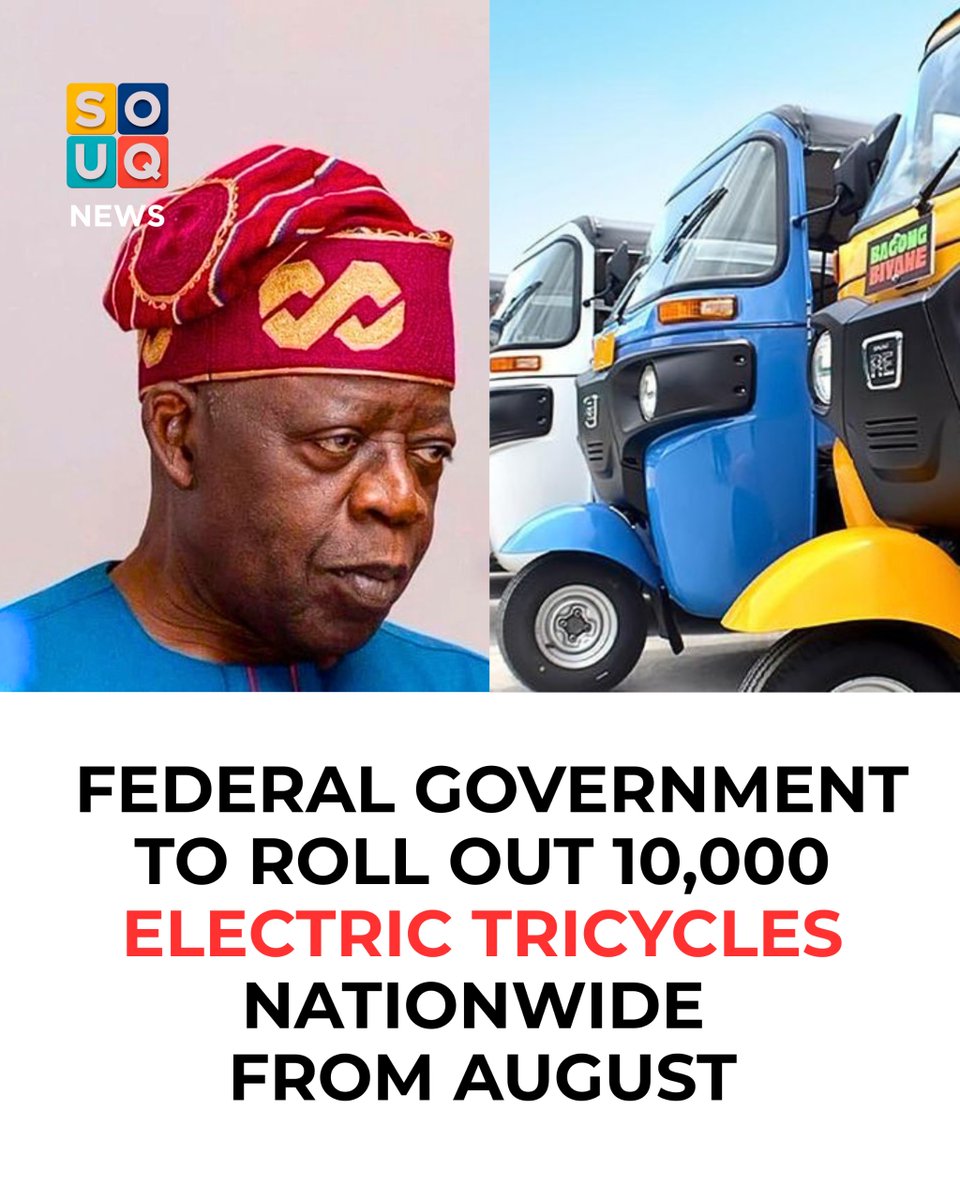
Nigeria is set to roll out 10,000 electric tricycles nationwide from August 2026 as part of efforts to modernise public transport, cut emissions, and reduce operating costs.
With fuel prices remaining a challenge, can electric mobility help make transportation more affordable?
2
4
21
Jim Fraser MSM retweeted

🚨THROWBACK‼️ [ 2023 ]
< Prince William is making efforts to modernise the Royal Family by making sure his staff were not educated at Eton, a book has claimed. >
mirror.co.uk/news/royals/pri…
1
5
2
405

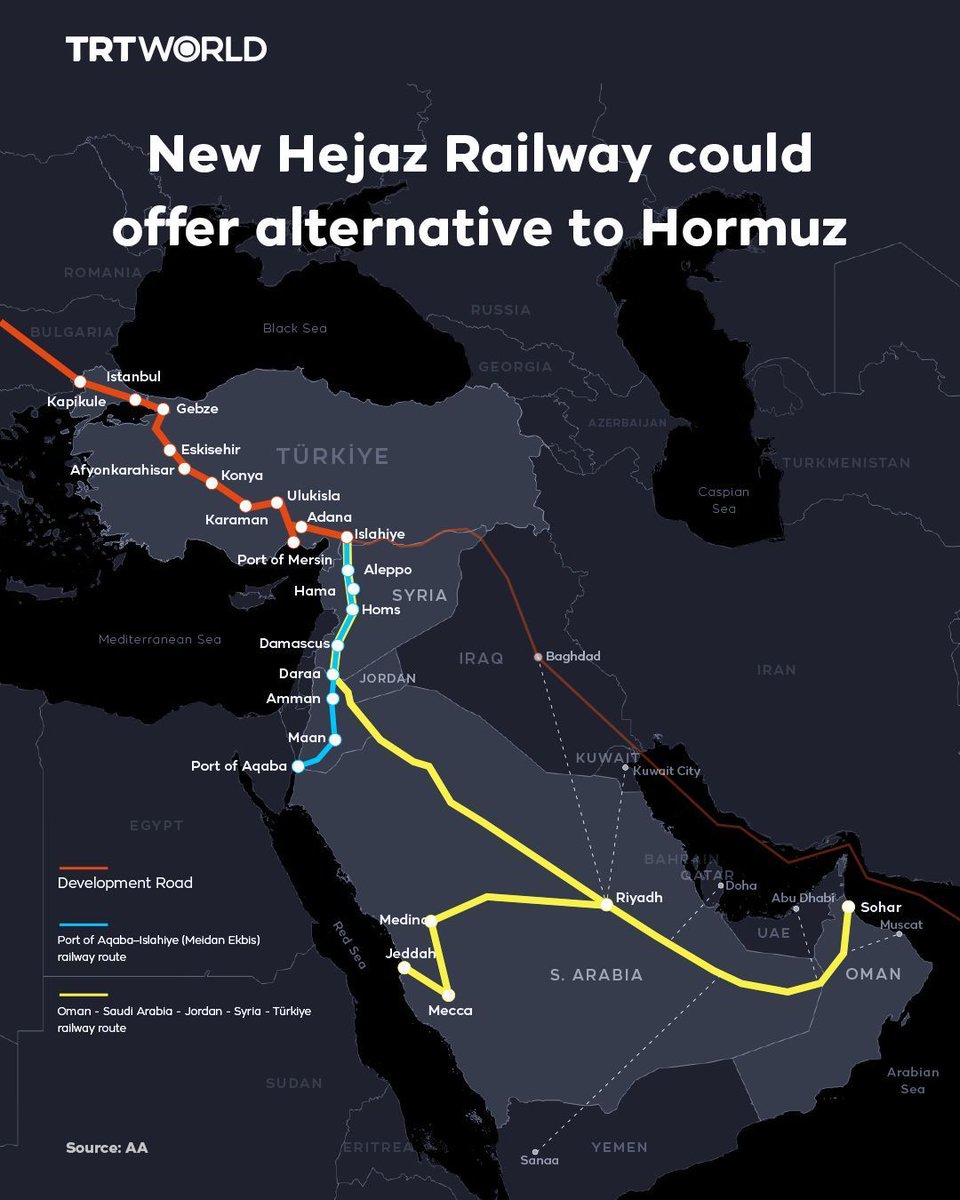
Türkiye and Saudi Arabia signed a new transport and railway co-operation agreement on June 9, advancing plans to modernise the historic Hejaz Railway and potentially extend it to Oman.
The agreement aims to create a new trade corridor linking the Arabian Peninsula to the Indian Ocean and provide an alternative route to the strategically vital Strait of Hormuz, which is the most critical energy bottleneck in the world and currently under pressure due to the US war on Iran
1
29
116
2,970

Not only China, but Japan too, at various points in its modern history, literally aped the West as a response to the humiliation inflicted upon it by Western powers, in order to modernise their countries.
At one stage, sections of the Japanese elite even proposed replacing the Japanese language with English altogether.
Such was the depth of their civilizational insecurity. Perhaps that is why China so often screams about a 5,000-year-old, unbroken continuity, a claim whose historical basis is, at the very least, highly contestable.

saar do you know your most marriages in china happened in european style not chinese? do you know 100% chinese wear modern european dress not traditional dress? do you know you chinese buissness man named themself on english first name? like jack ma , robin li , Pony Ma etc etc? so what continuity exactly you have answer is nothing

1
4

this is so unnecessary and ugly omfg omfg i'm so underwhelmed. it looks like an off brand remake.. i hate how they couldn't just animate it the same as how toy story have managed to modernise and perfect it without making the characters too modern... wtf is this

It’s happening... it’s really happening! Experience Shrek 5 only in theaters summer 2027.
1
52

$3B to add a capacity of only 5,000 additional seats ($600k a seat) yes modernise the stand, but also uplift the precinct. Richmond station exit right to the G, cover the rail yard and bring the area to life ( with near by sporting facilities also benefiting). Do this right!
33

I'm sorry, but why would we want our future monarch to have a lower-quality education? If there is a better school out there for him, I'd want him to go to that one instead. However, the idea we should force the Prince to attend a worse school to "modernise" the crown is crazy.
22

BREAKING...UNESCO have officially declared Marcelo Bielsa a World Heritage Treasure. Preservation efforts will begin immediately. Any attempt to criticise or modernise him will now be considered a crime against football culture!
15

We desperately need to modernise the system. It’s crazy that ministers can only be drawn from the Commons or the Lords. The fact that Labour is pinning its survival on parachuting an outsider into Westminster perfectly exposes the severe lack of talent currently in Parliament.
27

I think the Royals pay their way & most are well meaning. But I have been very disapointed in then lately. It’s as though we, the ordinary people don’t matter. They have been infected with wokery both Charles & William seem more interested in Islam.
They are completely overlooking the bery unpleasant side of Islam. With the proclivities involved in Islamic culture there is no way that we, as a country want to adopt their ideology & practises. If they decide to modernise Islam by about a millennium & a half it may be a different matter.
16

Tu confonds l'évolution des structures administratives et la continuité de la souveraineté étatique. Le Makhzen n'est pas une forme figée, c'est l'appareil d'État marocain qui s'est adapté à chaque époque (Idrissides, Almoravides, Almohades, Saadiens, Alaouites) pour maintenir la centralisation et la souveraineté du pays. Qu'un État modernise ses institutions selon les dynasties ne remet pas en cause son existence séculaire, au contraire, cela prouve sa résilience historique
1
5

Like why would they even modernise shrek, why am I seeing police siren 🚨 in shrek mxw..
1
12

They could make a sequel in the OG style and it would need only a single memory stick and a mediocre laptop but they have to modernise everything (every hair, wrinkle and particle must be animated) so it will need a dozen data centers and a billion dollars and look like shit.
1
1
7

Or cut spending
Andrew Castle dropped from Wimbledon role by BBC in plan to modernise telegraph.co.uk/tennis/2026/…
13

There are common elements between Singapore and China, with LKY and Deng being admirers of each other's efforts to modernise ... The only difference really stemming from size and political path.
Dubai ... 100% not a good model.
9

The kind of presence you don't modernise. ✨
for Malabar Jewels, Hyderabad.
Style
Makeup
Hair assisted by
5

Post 1.
Canada’s Dangerous Drift Towards a Surveillance State: The Hidden Costs of Bill C-22
16th June 2026
In the shadow of ballooning national debt, a punishing housing crisis, and persistent concerns over violent crime and economic stagnation, the Carney government has chosen to prioritise expanded digital surveillance powers. Bill C-22, formally the Lawful Access Act, represents one of the most sweeping attempts in recent Canadian history to compel technology companies to redesign their systems for easier government access to Canadians’ private data. Fast-tracked through Parliament with limited debate, this legislation risks trading fundamental privacy and security for illusory gains in law enforcement efficiency.
At its core, Bill C-22 seeks to modernise “lawful access” rules for police and the Canadian Security Intelligence Service (CSIS). It would require electronic service providers, from telecom giants to app developers, to build and maintain technical capabilities enabling timely access to communications and information. This includes obligations for metadata retention, potentially up to one year, covering details such as who communicated with whom, when, and from where. While the bill explicitly avoids mandating retention of message content or browsing history in its current text, critics rightly note that metadata itself paints an intimate portrait of daily life: location patterns, social connections, and routines that reveal far more than many realise.
Encryption at Risk
Particularly alarming is the legislation’s potential to undermine encryption, the very technology that protects banking transactions, health records, private messages, and critical infrastructure. Apple’s senior director for user privacy and child safety, Erik Neuenschwander, warned Parliament’s public safety committee that vague language in the bill could effectively force companies to insert backdoors into encrypted products. “When you build a backdoor into an encrypted device,” he cautioned, “anyone can walk through it.” Google echoed these concerns, highlighting risks of creating systemic vulnerabilities that foreign adversaries or cybercriminals could exploit.
Similar warnings have come from Signal, the encrypted messaging service trusted by journalists, activists, and ordinary Canadians seeking privacy. Executives have indicated they may withdraw from the Canadian market rather than compromise their core security model. Civil liberties organisations, privacy scholars, and cybersecurity experts, more than two dozen in a joint open letter, have described the bill as potentially “the most expansive invasion of Canadian privacy rights in modern history.” They argue it could expose users to heightened data breaches, foreign interference, and a chilling effect on free expression.
The government insists the measures are “encryption neutral” and include safeguards against systemic vulnerabilities. Yet history shows that once capabilities are mandated, mission creep often follows. Earlier iterations of similar proposals collapsed under scrutiny; this version, reintroduced after initial pushback, still carries the same fundamental flaws despite promised amendments. Rushed committee processes and time allocation motions have limited thorough examination, sidelining expert testimony and public input at a moment when digital policy demands careful deliberation.
1
1
2
103

AI tool to slash planning decision times as government accelerates push to build 1.5 million homes
Millions of homeowners could benefit from faster planning decisions, as 2 new AI tools are unveiled to modernise England’s planning permission system
gov.uk/government/news/ai-to…
1
1
3
156
From the Guardian "Tombstone meticulously demonstrates that the famine was not only vast, but manmade; and not only manmade but political, born of totalitarianism. Mao Zedong had vowed to build a communist paradise in China through sheer revolutionary zeal, collectivising farmland and creating massive communes at astonishing speed. In 1958 he sought to go further, launching the Great Leap Forward: a plan to modernise the entire Chinese economy so ambitious that it tipped over into insanity."
1
14

Yes, I disagree with movement to modernise everything by killing our culture, tradition and institutions.
1
36