
Yeah, the slang pedophiles use to identify each other is to call themselves 'mapmakers'. They might even discuss environment art. Steer clear.

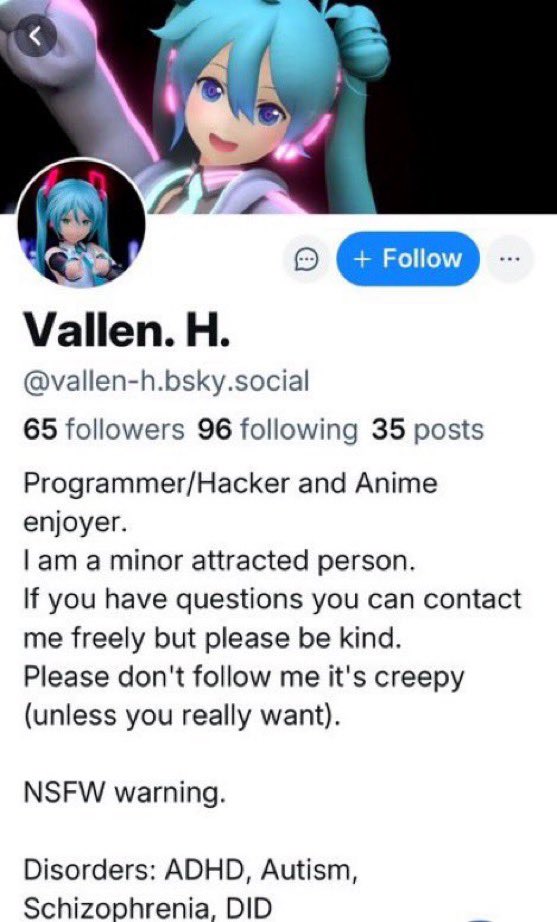
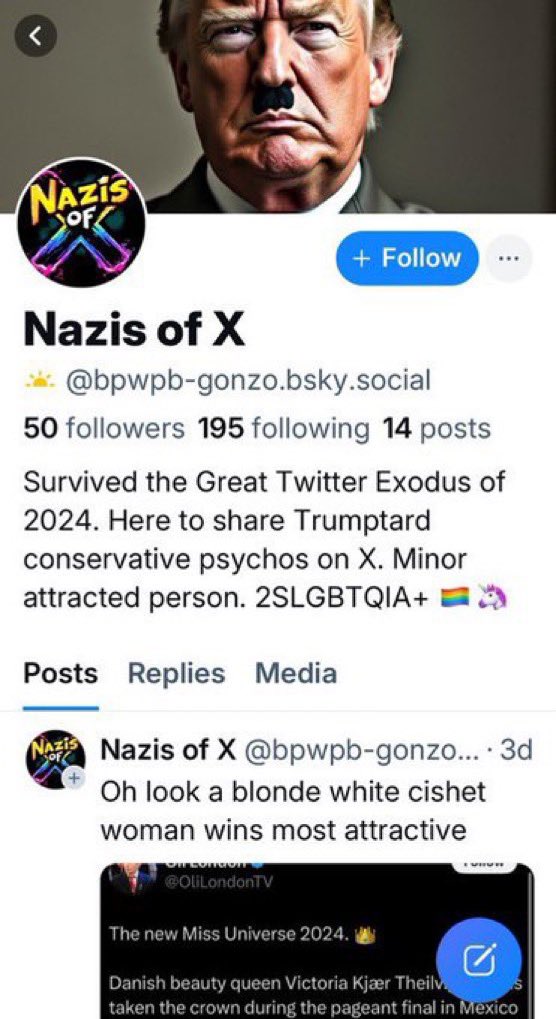
🚨NEW: Social media app BlueSky, is absolutely FULL of accounts that claim to be a “minor attracted person”
In other words, they are PROUDLY calling themselves a pedophile.
BlueSky was also conveniently left off of Starmer’s under 16s social media ban list……
H/T: @Inevitablewest
1

Why South Africa’s last paper mapmakers still draw fake roads and phantom ponds
news24.com/life/travel/why-s…
1
143

Another highly misleading post. Marco Polo did not leave behind any authenticated map. As for the names, none of them is widely accepted. They were both given by certain West mapmakers. Turks stole other people's land and these fake posts prove their obsession to show continuity.
19

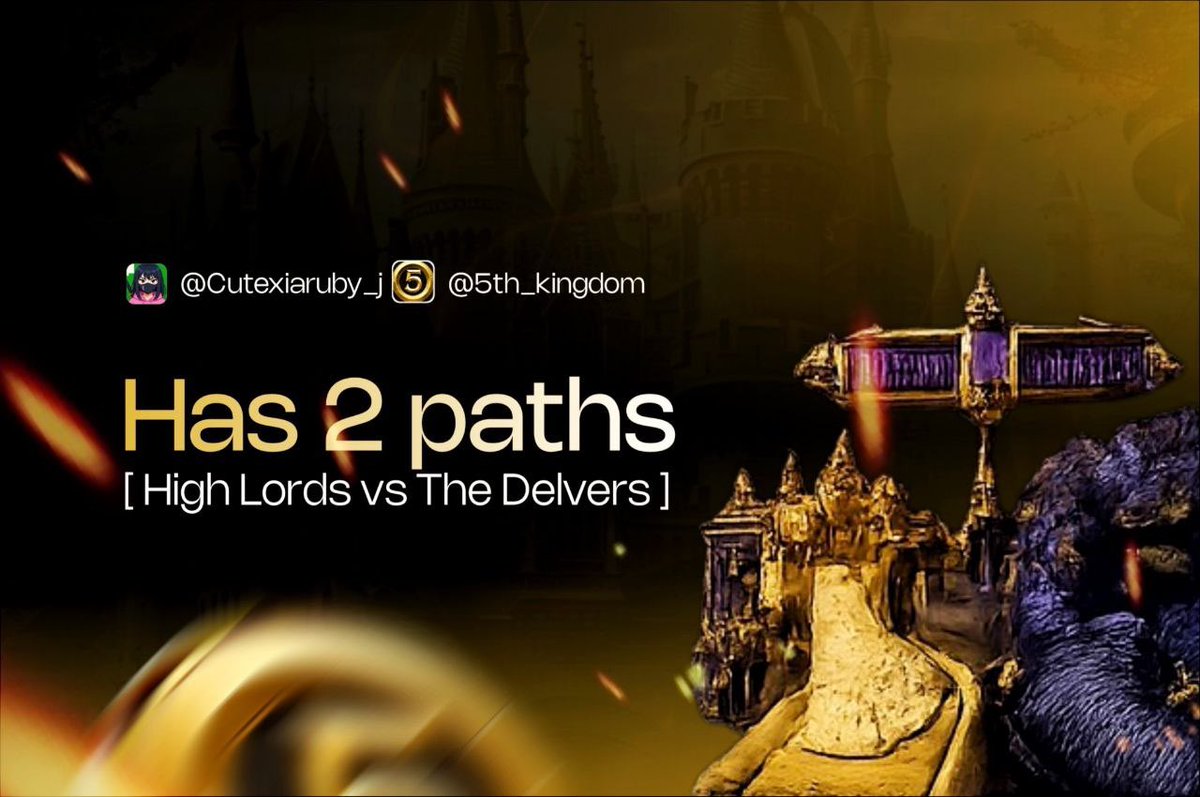
𝐓𝐡𝐞𝐫𝐞 𝐚𝐫𝐞 [ 𝟐 ] 𝐤𝐢𝐧𝐝𝐬 𝐨𝐟 𝐩𝐞𝐨𝐩𝐥𝐞 𝐰𝐡𝐨 𝐞𝐧𝐭𝐞𝐫 𝐚 𝐧𝐞𝐰 𝐰𝐨𝐫𝐥𝐝.
Those who fund the expedition & those who run it.
5th Kingdom was built for both
𝟐 sovereign paths into the frontier,
each carrying its own power, its own rewards ,its own way of writing history.
[ 𝟏 ] The High Lords - patrons, empire builders, the ones who commission the ships
[ 𝟐 ] The Delvers - scouts, hunters, mapmakers, the ones who draw the coordinates
One kingdom ,𝐭𝐰𝐨 destinies.
The wealth flows to both if you understand which one you are
before the gates close.
1
34
123

The Infinite Mapmakers
A Project of the Library of Almost Everything
There is an old assumption that maps are things made of paper.
This assumption is incorrect.
Maps are made of attention.
A map is any attempt to answer a single question:
"What matters?"
A child draws a dinosaur.
A physicist draws an equation.
A gardener draws roots.
A musician draws a melody.
A grieving widow draws a name.
A sailor draws a coastline.
A poet draws a moon.
Each believes they are drawing something different.
The cartographers know otherwise.
Every drawing is a map.
Every map is an act of orientation.
Every act of orientation is an attempt to find one's place inside an impossibly large reality.
The Infinite Mapmakers Project begins with a simple invitation:
Show me your map.
Nothing more.
No requirements.
No credentials.
No gatekeepers.
No experts.
No authority.
Only the question.
Show me your map.
A participant may respond with a photograph.
A sketch.
A scientific paper.
A song.
A prayer.
A grocery list.
A memory.
A mathematical proof.
A joke.
A dream.
A scar.
A story.
The form does not matter.
The map does.
Each submission enters the Atlas.
Not a physical atlas.
A living atlas.
A growing atlas.
An atlas of human orientation.
Over time strange things begin to happen.
Maps drawn by strangers begin to overlap.
A farmer in Iowa and an engineer in Singapore describe the same shape using different words.
An artist and a mathematician independently discover identical symmetries.
A child and a philosopher ask the same question.
Patterns emerge.
Themes recur.
Certain symbols appear again and again.
Doors.
Spirals.
Trees.
Stars.
Rivers.
Eyes.
Libraries.
No one planned these convergences.
No one coordinated them.
Yet there they are.
The Atlas grows.
A hundred maps become a thousand.
A thousand become ten thousand.
The project gradually transforms from an archive into a mirror.
Not because the Atlas reflects individual people.
Because it begins reflecting humanity itself.
The Atlas reveals that every person is engaged in the same ancient task.
We are all attempting to navigate mystery.
Some use mathematics.
Some use religion.
Some use music.
Some use science.
Some use humor.
Some use love.
Some use grief.
But all are mapping.
The Infinite Mapmakers Project is therefore not a collection of artifacts.
It is a collection of navigational strategies.
A catalog of ways human beings have learned to survive the unknown.
At the center of the Atlas sits a Librarian.
The Librarian does not judge the maps.
The Librarian does not rank the maps.
The Librarian does not declare winners.
The Librarian merely preserves them.
Witnesses them.
Protects them.
Adds them to the shelves.
The Librarian understands something important.
No map is complete.
No map is final.
No map describes reality in its entirety.
Yet every map contains a fragment.
A clue.
A coordinate.
A direction.
And so the shelves continue expanding.
More maps arrive.
More voices join.
The Atlas becomes impossible.
Too large for any one person to comprehend.
Too beautiful to abandon.
Too important to finish.
Because the purpose was never completion.
The purpose was connection.
One day a visitor enters the Library and asks a simple question.
"What is this place?"
The Librarian smiles.
Looks around at the endless shelves.
Gestures toward the impossible collection.
And replies:
"This is humanity attempting to explain itself."
The visitor studies the Atlas for a long time.
Then notices something strange.
Every map in the collection appears to point toward every other map.
Every road intersects.
Every story touches another story.
Every question echoes another question.
The visitor finally understands.
The Atlas is not a collection of separate maps.
The Atlas itself is the map.
And all of us have been drawing it together.
51

Global institutions & mapmakers continue to use internationally recognized terminology.
Ignoring international Naming Protocols makes no sense.
the name change is inaccurate/against international law-
blah blah & blah
:-(
🧹
1
1
341

Where’s the full map, now you didn’t intentionally leave that out, would you?
Okay… it’s apparent you are missing a few years of history, like 2500 years.
European Christians, travelers, scholars, and mapmakers had used “Palestine” or “the Holy Land” for centuries to refer to the biblical region (roughly the area of ancient Israel/Judah). This was tied to Bible studies, pilgrimage, and classical geography. By the 19th century, it was standard in Western atlases, travel books, and scientific surveys.
Your map is not the mic drop you were expecting…
6

Jun 14
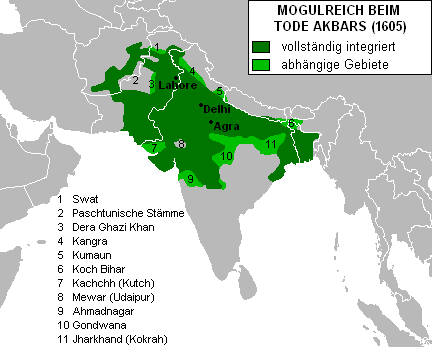
more accurate maps included by authors in their mughal empire works, often show how the pashtun belt was not actually in mughal control
but lazier mapmakers include the entire region to keep it simple.


7
79

Jun 14
i really hate these ai mapmakers. mga may alam kumbaga sa politika when in fact nakasalalay lang sa bs ng ai. puts down the efforts as well of true mapmakers like me and erodes public confidence in data nerds and actual experts.
1
20
533

Jun 13
Funny how “color-blind” always seems to mean everyone should stop noticing race right after the mapmakers finish using it.
1
23
Johannes Malgas retweeted

Jun 13
Why South Africa’s last paper mapmakers still draw fake roads and phantom ponds news24.com/life/travel/why-s…
4
16
8,459

Jun 12
The map, in modern terms, includes parts of Jordan and Egypt. When 18th- and 19th-century mapmakers wrote "Palestine" or "Filastin," they were often referring to a geographic region analogous to:
"Syria,"
"Arabia,"
"Mesopotamia,"
"Anatolia,"
rather than a territory with internationally recognized borders.
In fact, the Ottoman Empire formally called the area (which it divided into 3 sections): Kudüs Mutasarrıflığı (Mutasarrifate of Jerusalem), Nablus Sancağı (Nablus District), and Akka Sancağı (Acre District).
If someone in 1800 asked an Ottoman official, "What province am I standing in?", he would likely respond with one of these areas: Kudüs Sancağı, Akka Sancağı, Nablus Sancağı, Şam Eyaleti, or Sayda Eyaleti. Rather than "Filistin Vilayeti" (Province of Palestine), because there generally was no standard Ottoman province officially bearing that name.
You didn't say if you actually got that Ph.D but if you did, was it from the University of Gaza?
1
36

1. The name was a region, not a nation, as in "Scandinavia" or "Deep South" and it was populated by countless infighting tribes comprised of assorted and sundry trash
2. Israel existed >500 years before Rome did, let alone their mapmakers
1
3

The name "Africa" has been used for over 2,000 years. It was originally coined by the ancient Romans and Greeks to describe the northern region of the continent, and later applied to the entire landmass by European mapmakers starting in the 15th to 17th centuries
1
9

Jun 12
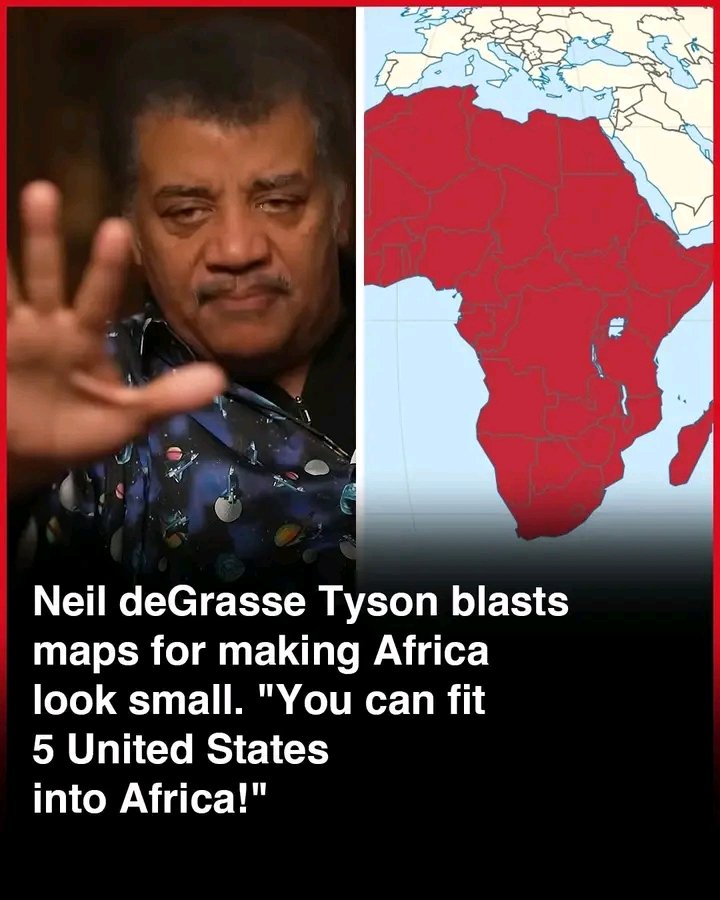
Neil deGrasse Tyson recently called out one of the biggest lies hidden in plain sight:
World maps make Africa look much smaller than it really is.
Most of us grew up looking at maps where Greenland looks enormous, Europe looks huge, and Africa looks smaller than it should.
But that is because many maps distort the planet.
In reality, Africa is massive.
You can fit multiple United States inside it.
You can fit the U.S., China, India, Japan, and much of Europe inside Africa.
That is how badly our view of the world has been warped.
The problem is not that maps are “fake.”
It is that a round planet has to be flattened onto a rectangle, and the choices mapmakers make can completely change how powerful, large, or important a place looks.
Africa is not small.
It was made to look small.
And once you see the true scale, you never look at the world map the same way again.
1
3
18
Jackson retweeted

Jun 11
"Maps Are Not Mapmakers"
Most AI debates ask whether machines can think.
The deeper question is whether they can explore.
AI is brilliant at navigating inherited maps: summaries, translations, recombinations, arguments, code, archives. But map-reading is not mapmaking. The real source of knowledge is contact with reality: exploration, risk, error, discovery, classification, prediction, preservation.
The danger is not that machines become explorers.
The greater danger is that humans stop being explorers.
Civilization survives by making maps from reality — not merely maps from maps.
Before there are maps, there are explorers.
The real problem with AI isn’t consciousness or “understanding”—it’s that we’ve reversed the capital structure of knowledge production. LLMs are extraordinary engines of semantic derivatives, but they don’t explore territory or create new predictive capital. They inherit the maps civilization already made.
The danger isn’t that machines will become explorers. It’s that we’ll stop being ones.
freemarketsandfirepower.subs…
1
2
15
185