
📣 JMIR Publications has signed a 3-year partnership with MetaROR to advance open science and transparent peer review.
The collaboration will focus on integrating MetaROR’s publish-review-curate platform with JMIR’s innovative publishing ecosystem—specifically its JMIRx overlay journal series, including JMIRx Med and JMIRx Bio.
Read more about the partnership: jmirpublications.com/announc…
#OpenScience #PeerReview #Metascience #ResearchIntegrity

2
37
Totally agree. I actually see some of this in both camp four and five. The unfortunate part of the term meta”science” is that framing risks losing the big tent thinking of R&D systems. The downstream part is critical for real impact in the world. And there’s still plenty we can learn and study on the technology development and commercialization part of R&D too (it’s why we included some of the SBIR examples which point to this downstream connection… we actually see metascience as something that should be big tent).
1
1
11

Jun 13
The Six Camps of Metascience
A field guide for policymakers (and everyone who cares about American science).
open.substack.com/pub/macros…
1
5
Abhishek Nagaraj retweeted

Jun 11
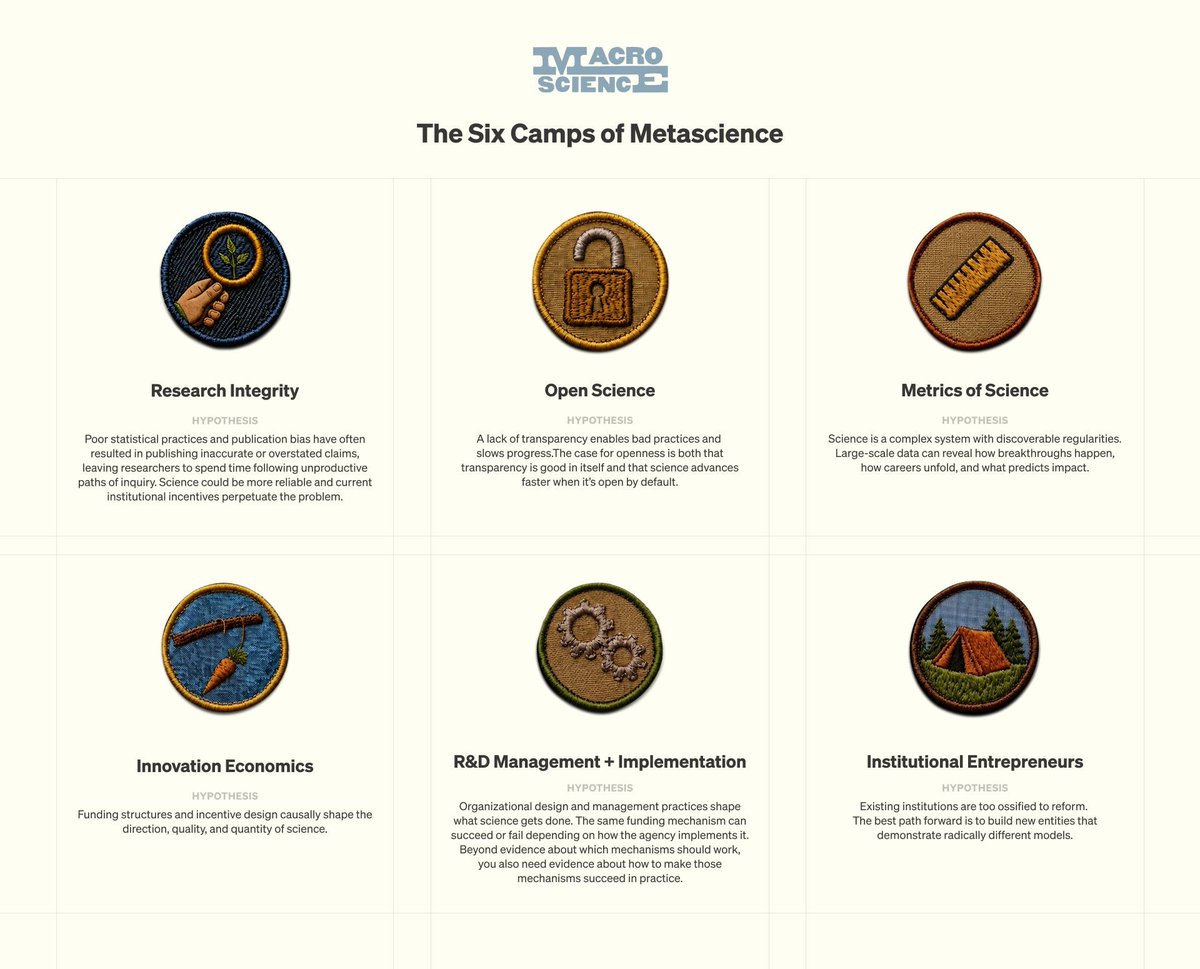
"Metascience" can mean a lot of different things. Over the years, distinct reform communities have sprung up, each with its own hypothesis about what's wrong with science and how to fix it.
@jenngustetic and I mapped out six different "camps" of metascience:
macroscience.org/p/the-six-c…
1
13
41
5,626

Jun 12
Most of the "This number is like this" posts on X are opinionated, biased and bro-metascience.
Don't base your understanding of Numerology on these.
Numbers don't care about your feelings or a few experiences you've had with a 9 LP or an 11 LP.
Not every person with the same LP acts the exact same.
Numerology is a Metaphysical Science. Something to measure and study objectively.
When you insert personal biases you get MISINFORMATION.
1
4
663
Anthony Higney retweeted

Jun 12
The six camps of metascience - a great bit of sense-making from @calebwatney and @jenngustetic
open.substack.com/pub/macros…
2
7
844
Hewson Duffy retweeted

Jun 12
When I was introduced to the term “metascience” a few years ago, admittedly I had no idea what it meant. I have since come to understand that metascience is the study of science itself: how we structure, fund, and conduct science. It’s the belief that no system is precious enough to not improve and that especially for something as valuable as science we should be continually experimenting with the system to get more social return on investment for the dollars we spend.
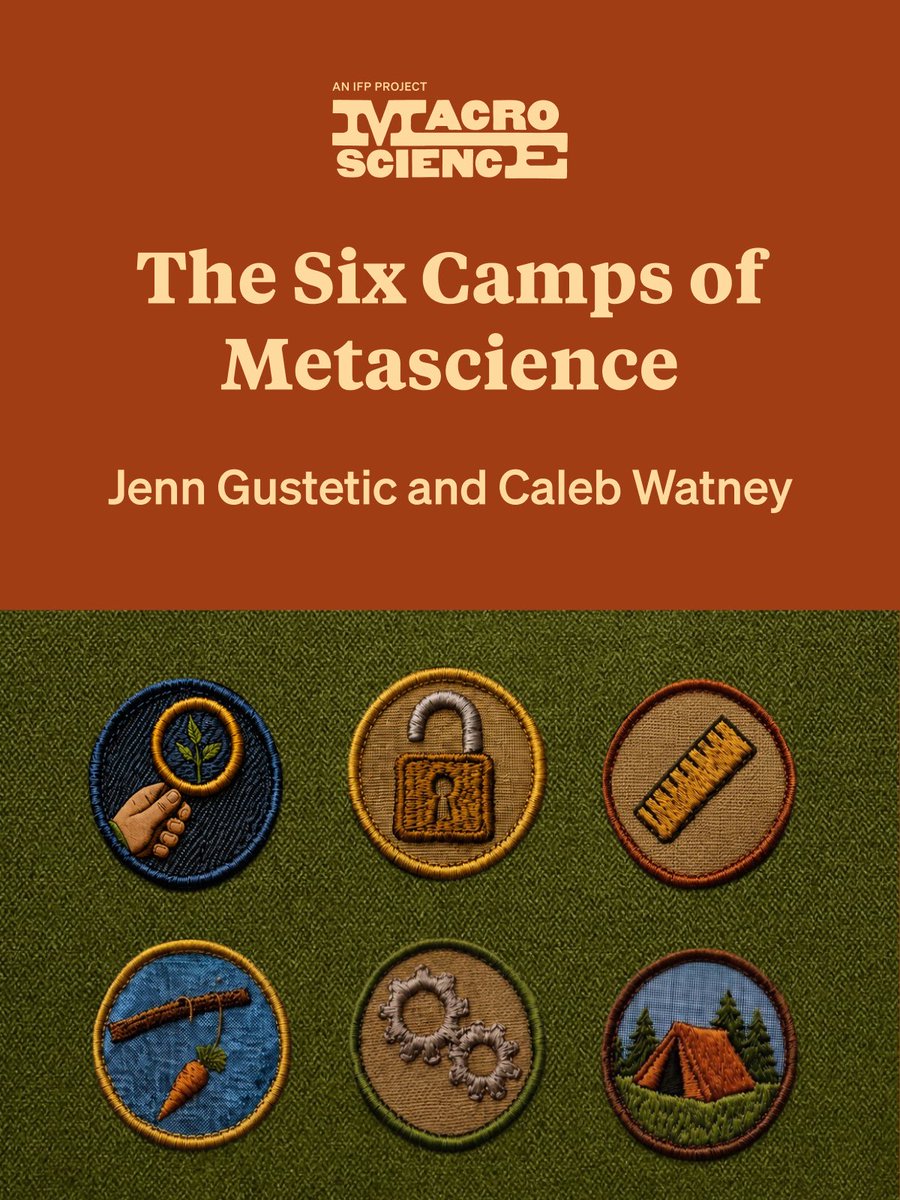
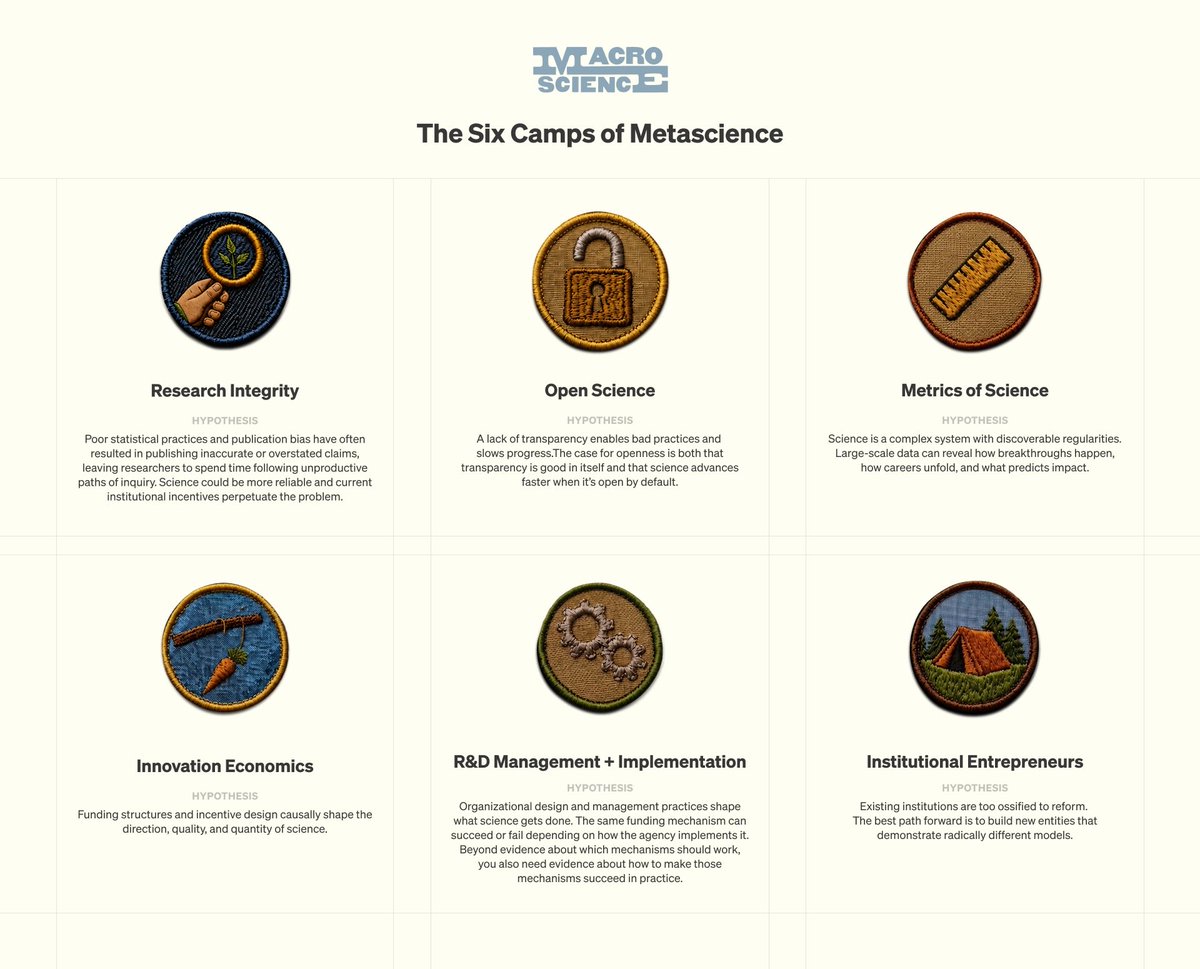
This piece was fun to coauthor with @calebwatney (and have edited by @andrewmgerard) as my first written contribution in my new role at @IFP. It lays out six different hypotheses about how science could be improved and examples of research and projects that test those hypotheses. Any one researcher might associate with 1 or more of these “camps” so could wear numerous “badges” as they explore.
This framework is important for policymakers in agencies, congress and the administration: if they are looking to take some of this advice to evolve science, they should be aware of the underlying premise behind each worldview and the types of evidence they generate.
I believe that the most robust policy solutions are ones that are not limited to any one worldview, but consider various perspectives in the proposed reform. This is also why I think it’s important to collaborate within and across camps, to openly debate, and for iron to sharpen iron for the strongest research and development enterprise possible. Would welcome your thoughts on the map as well as any metascience questions you think are the most important to address.
open.substack.com/pub/macros…
1
15
22
4,322
OrionStarSentinel retweeted

Jun 11
It's been fascinating to watch the metascience field evolve over the past 5-10 years. A lot has changed!!
This new @IFP blog by @calebwatney @jenngustetic is a excellent field guide for navigating the ecosystem.
macroscience.org/p/the-six-c…
1
4
10
2,450

Jun 12
This is one of my favorite pieces we’ve published in Macroscience.
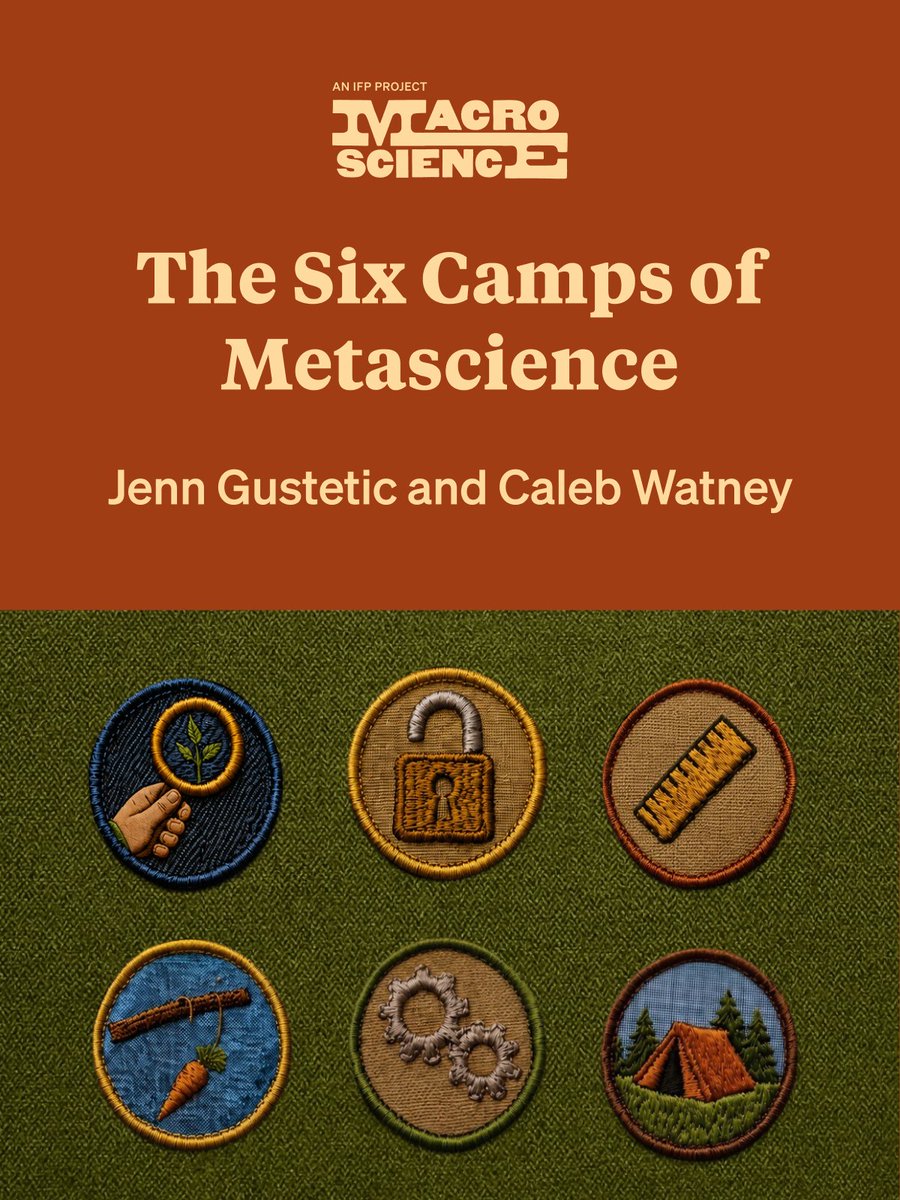
@jenngustetic and @calebwatney fill a crucial gap by articulating similarities and differences between the six metascience camps (tag yourself! I’m Innovation Economics and R&D Management).
In doing so, they give policymakers clarity on what different groups are talking about when pitching metascience ideas.
macroscience.org/p/the-six-c…
5
20
2,464