
youtu.be/H2-97IBVz0U jujur... kangen banyak... barusan rewatch trs pas notae smirk di awal itu masih degdegan dikit 💔
1
1
15

Jun 17
All signatories to Vatican 2 DID NOT AGREE to its positivist doctrinalisation - they were reassured the opposite by Felici, both Conciliar Popes & Notae Praeviae 8!
As for LSE? NO: "Bergo-Leo" both set precedents by waiving Chinese penalties. Doubt favours accused! It's now FSE!
2
33
Jun 16
@Pontifex CAN'T detail the unique aspects of Vatican 2 which bind in Faith or Religion - BECAUSE THEY DO NOT EXIST! The Council Fathers signed Documents on the reassurances of both Conciliar Popes & V2 Coordinator Pericle Felici & Notae Praeviae 8: NO NEW DOCTRINE!
Leo's lying!?
1
1
8
139

Jun 14
My top razorbacks oat.
- Qualls
- Mason Jones
- Scoota Harris
- Martell Spaight
- Joe Adams
- Jerrious Wright
- Acuff
- Macon
- Trey Flowers
- Notae
- KJ
- Trelon Smith
- Ricky Council
- Cobi Hamilton
- Jake Bequette
- Tyler Wilson
- Tramain Thomas
- Kam Curl
- Drew Morgan
4
1
171


Jun 13
D Mac obviously for me
Notae made me feel like we had a shot to win regardless, long as he played his game
1
37
Jun 13
Mason Jones, Notae, Macon, Qualls= Knower of Ball. Like ur list a lot. Id throw in KJ, wasn’t the greatest QB ever but he gave this University all he had. @trelonsmith22 , @Scoooota8 ,@JoeAdams_3 , cobi Hamilton, joe foucha, and jerrious wright, drew morgan, trey flowers. All so
2
111


My top 10 Razorbacks of all time that I enjoyed to watch:
1. Darius Acuff Jr
2. Mason Jones
3. Camden Kozeal
4. Micheal Qualls
5. Treylon Burks
6. Robert Moore
7. Daryl Macon
8. JD Notae
9. Daniel Gafford
10. Blaine Knight
Thoughts?
64
1
168
18,350

is wrong: MS 408 is not an encrypted language but a structurally different system.
3. The Mathematical Building Block System: The Lego Principle
3.1 The Modularity Hypothesis
Visual deep analysis of the 185-character catalog proves that these are not 185 isolated alphabetic characters. Instead, the system is based on an economical combination matrix of approximately 12 to 15 architectural base forms and approximately 6 variable fill elements.
This is an efficiency principle well-documented in medieval shorthand. Adriano Cappelli demonstrates in his Lexicon Abbreviaturarum that medieval scribes did not learn 14,000 different characters but mastered a system of few base forms with modifiers.
3.2 The Anatomical Deconstruction of the Glyph
Each complex character sequence is defined in the model as a collision node that, analogous to the Notae Radices (main characters) and Tituli (auxiliary characters) of Tironian notes, splits into two functional vectors:
Where:
• (Container/Base Form): The geometric base geometry. Examples include:
◦The flat, open “a” (shell architecture)
◦The shell “o” (container architecture)
◦The vertical gallows axes (line architecture)
◦The horizontal wave patterns (flow architecture)
The container provides the superordinate semantic substance class or the morphological word root.
• (Modifiers): Internal or external modifiers:
◦Dots within the glyph body (quantity markers)
◦Upper loop flags (process markers)
◦Horizontal chaining via ccc-waves (sequence markers)
◦Diacritical marks (state markers)
These serve the assignment of variables such as:
◦Quantity units (e.g., “three parts”)
◦Aggregate states (e.g., “pulverized,” “liquid”)
◦Physical action steps (e.g., “heat,” “mix”)
3.3 Mathematical Consequences
If the system consists of 12–15 base forms and 6 modifiers, the theoretical capacity is:
The actual number of 185 characters falls within this range and suggests a not fully exploited combination matrix. This is consistent with a practical shorthand system that realizes only the most frequent combinations.
4. Paleographic Context: Tironian Notes and the Cappelli Archive
4.1 Historical Parallels
The modularity hypothesis is substantively supported by late medieval practice. Tironian notes, a Roman shorthand system from the 1st century BCE, demonstrate a structurally identical principle:
Tironian Notes (Notae Tironianae):
•Originally developed by Marcus Tullius Tiro, secretary to Cicero
•Expanded to over 13,000 characters in the Middle Ages
•Based on few base forms with modifiers
•Used in monasteries and chancelleries for rapid recording
Cappelli System (Lexicon Abbreviaturarum):
•Documents over 14,000 Latin and Italian abbreviations
•Shows that medieval scribes did not learn 14,000 different characters
•Instead: Systematic modification of base forms
•Examples:
◦A base character overline = plural
◦A base character dot = nominative
◦A base character loop = genitive
4.2 MS 408 as an Extreme Form
MS 408 drives this system to an extreme form. It breaks away from the Latin script image and creates a fully iconic shorthand not bound to any particular language. This enables:
1.Language independence: The system functions independent of the scribe’s native language
2.Universality: Scholars of different countries can understand the system
3.Compression: Maximum information density with minimal writing time
4.Secrecy: The system is illegible to the uninitiated
5. The Law of Drawn Flower-Text Chains
5.1 Paleographic Evidence
A critical paleographic marker of MS 408 is the excellent preservation of ink without typical writing and correction traces of flowing handwriting. This indicates that the glyphs were not written but drawn (painted).
Differences between writing and drawing:
MS 408 exhibits all characteristics of the drawn variant.
1
51


Jun 11
Delle due prendo Notae che almeno so cosa può dare almeno in Italia. Questo è un giocatore da Tortona.
1
48

CorSport: Virtus Bologna, ipotesi DJ Steward e ancora nel radar Notae #LBASerieA | #pianetabasket pianetabasket.com/legabasket…
12
1,660

Michael Haykin: Four notae of a good church historian: curiosity (yes I know the medievals viewed curiositas as a sin; but what we call curiosity is essential for historical investigation), generosity, empathy and humility.
10
631

May 28
The original discussion prompts an idle thought: could it have been the *oleum* scholasticum all along? In the wrestling sense, of course. No doubt we’ve all come across Seneca’s “pessimae notae mancipia in magisterium recepta, homines inter oleum et vinum occupati”…
1
4
212

May 21
👀İDDİA: @VirtusBo 'nın Yeni Skorer Guardı Notae Olabilir (Analiz) #euroleague #basketbolanaliz
🧐Nasıl bir oyuncu, takıma neler katabilir, analizim burada👇
basketboltahmin.net/?p=13436…
2
295

May 20
L anno prossimo poi quando avremo notae e bello al posto di Edwards e Morgan vedremo cosa ne penserà tanta gente … 😮💨
May 20

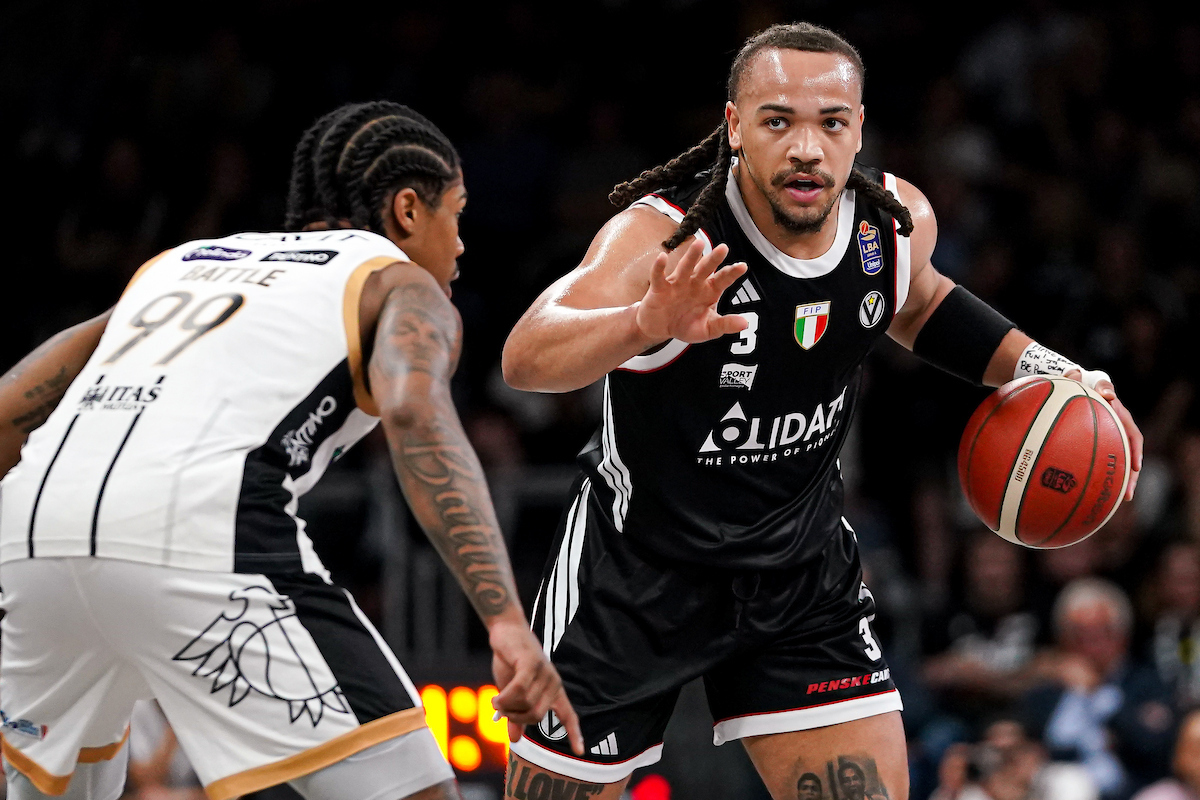
❌ Despite the rumors, Virtus Bologna and Carsen Edwards are not in talks over a contract extension, I’m told.
🇮🇹 Virtus Bologna e Carsen Edwards, nessuna trattativa per il rinnovo. Si avvicina Bello. La situazione: pianetabasket.com/legabasket…
2
8
1,869

May 20
Dunwoody '07 Chris Singleton, Delwan Graham, Pierre Jordan
Newton - Ashton Hagans, Isiaah Miller, JD Notae
Newton - Stephon Castle Jakai Newton, Qua Brown, MJ Whitlock, Dani Pounds, TJ Clark, AP, Bez Jenkins, Ted Neal,
2
650
May 19
Lumen Gentium is a PASTORAL document of NO NEW DOCTRINE (see Notae Praeviae 8) & defers to the Deposit of Faith- it CANNOT "supersede" as it has no mandate or remit.
1
5
49

May 16
tfw 2000 years ago, Seneca noted the Greeks had already been questioning Homeric pseudepigrapha for centuries (to say nothing of skepticism from Herodotus, Aristotle, et al.)...
Graecorum iste morbus fuit quaerere quem numerum Ulixes remigum habuisset, prior scripta esset Ilias an Odyssia, praeterea an eiusdem esset auctoris, alia deinceps huius notae, quae siue contineas nihil tacitam conscientiam iuuant, siue proferas non doctior uidearis sed molestior (DBV)
1
39
11,327