
NPM, kje ste živela od leta 2014 do 2022? Ali ste imela na razpolago internetno povezavo? Ali ste vsaj sporadično zasledila, kaj so ukrainski klero-naci-fašisti delali sodržavljanom ruske narodnosti? Ste slišala za "Majdan 2014"? Sežig Rusov v Odessi? Ali se sprenevedate?
1
10
137

Jun 13
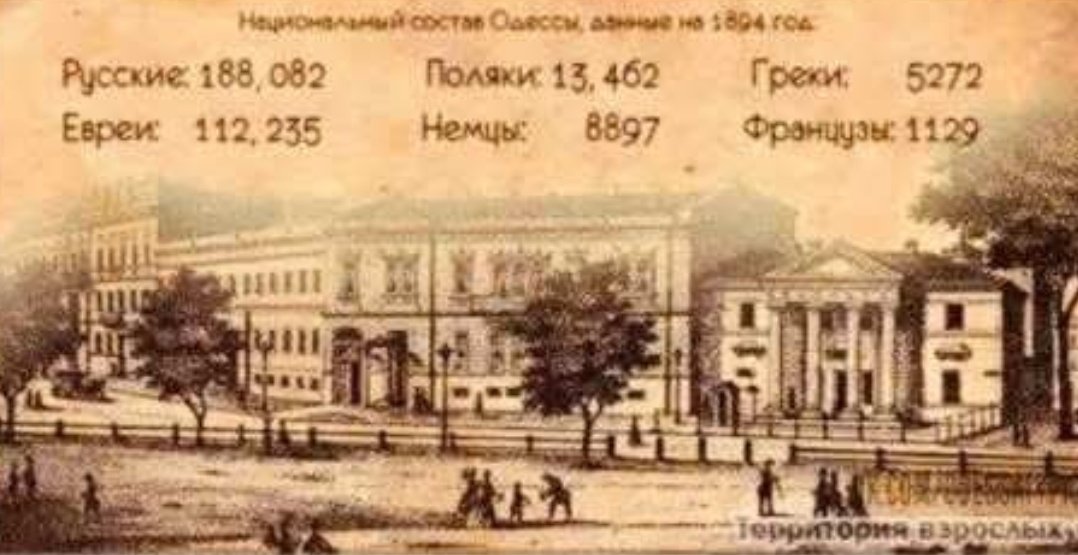
Popis stanovništva u Odessi 1894.
Nađite “Ukrajince”
Jun 13

Spis ludności Odessy z 1894 roku:
Rosjanie 188082,
Żydzi 112235,
Polacy 13462,
Niemcy 8897,
Grecy 5272,
Francuzi 1129.
A gdzie ukraińcy?🤔🤔🤔
1
10



happiest bday odessi🥳🫶🏻
Jun 10


13

May 2
2.5.2026
🔥🔥👁️🔥🔥
1/. Pred 12 leti se je v Odessi zgodila tragedija, ko so v Sindikalnem domu zažgali 42 proruskih protestnikov Kijevski režim je pozdravil množični umor, kasneje pa je pohvalil njegove organizatorje in izvajalce
Od takrat je UA postala to, kar je še danes: 👇
3
1
5
129


Feb 23
za Titovog gardista koji je popravljao Mig-ove u Odessi je velika šteta ako HV bude jaka i moderna
2
7
57

Kdo je začel pobijat nedolžne civiliste po donbassu? Zažigat žive ljudi v domu sindikatov v odessi?
Ta je kriv za vojno
Živel putin osvoboditelj
Živel putin mirotvorec
Živel putin heroj rusije
🇷🇺🇷🇺
2
2
23

Feb 14
baby please let me put a Odessi Oval Diamond Vintage Inspired Engagement Ring Ken & Dana Natural Diamond Oval G VS2 Gold on your finger. Baby Please be mine.

13
294

Jan 20
This is part of our series of new odyssey (ODESSI) for public engagement discussions. Please consider joining us in Malaysia this July!

📣 #CallforAbstracts
'Global Public Deliberation in Science and Technology: Knowledge Pluralism and the Policy Interface'
Detail: research.kent.ac.uk/global-s…...
⏰ Abstract Deadline: 1 Feb
🔗 Submit here: tinyurl.com/2kd2zey
#PublicEngagement #SciencePolicy #GlobalScience
2
50


5 Dec 2025
Srbi su ubijali Hrvate i prije prve Srboslavije.U Odessi 1916 je srpska vojska pobila stotine Hrvata austrougarskih ratnih zarobljenika koji nisu htjeli u srpsku vojsku.Prije ubojstava nisu dali im jesti 5-6 dana kidali uši udove,lomili kosti ...
6
5
726

17 Nov 2025
Now you know why they are keen to learn Indian classical dances (Bharatanatyam, kathak, odessi). while Indians were thinking they were learning it out of true love for these arts it’s more likely they did that so they can claim it as their own and to sell cheap ripoffs on Temu!
4
18
5,048

25 Oct 2025
Isto tako. Ovo je samo stavljeno za kratki opis zločina nad Hrvatima u Odessi.
Vidim da je @buzdovan19111 napisao da ne zna puno o tome.
1
2
66
1 Oct 2025
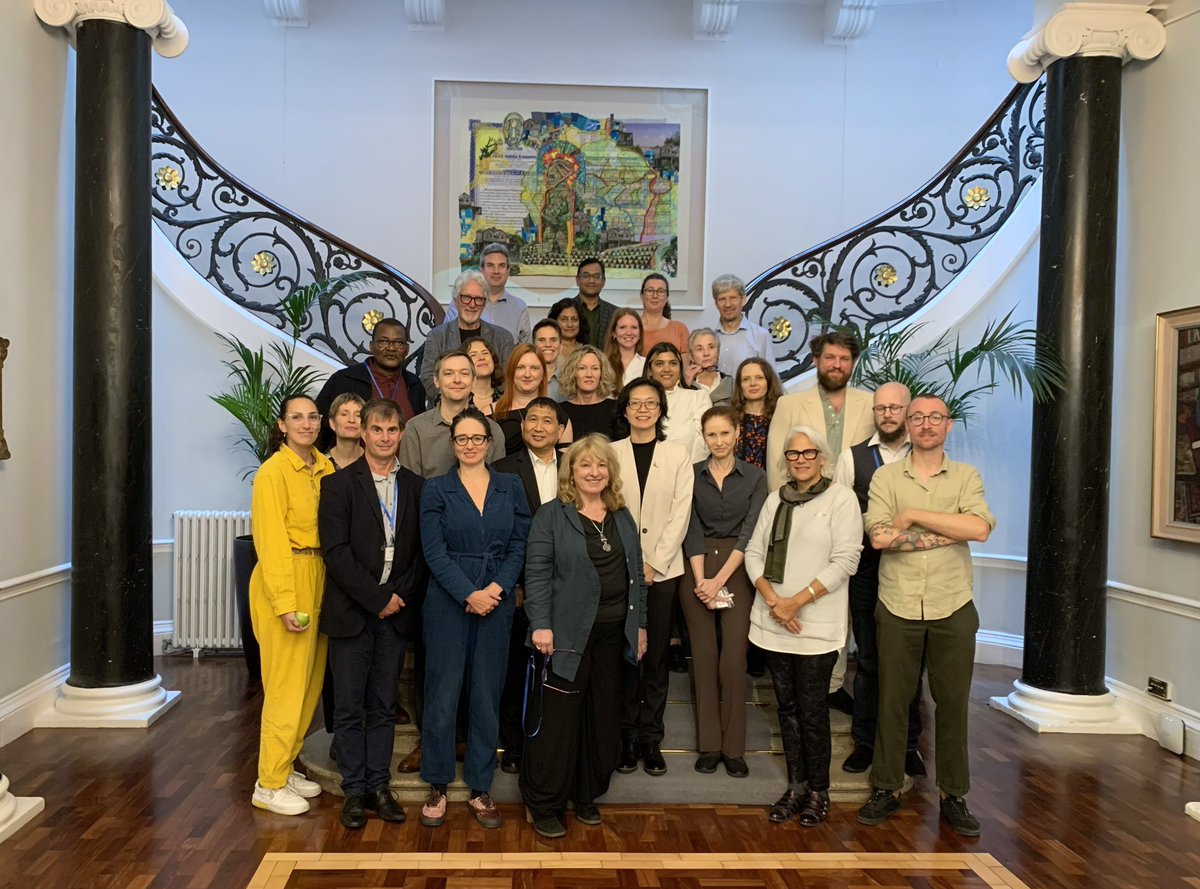
Absolutely intellectually spoiled these past 2 days. At ‘A New Odyssey for Public Engagement’ leading thinkers in science, diplomacy & public engagement from 4 continents came together to explore how ODESSI framework (doi.org/10.5281/zenodo.15191…) can guide global dialogues on science
1
2
5
152

25 Sep 2025
United Kingdom’s Wellcome Trust & its global partners have created: A hybrid AI - Human being.
Synthetic Biology = Synthetic Agents = Causative Agents = AI Agents -
An ambitious new research project, SynHG (Synthetic Human Genome), is aiming to develop the foundational and scalable tools, technology and methods needed to synthesise human genomes. Through programmable synthesis of genetic material we will unlock a deeper understanding of life, leading to profound impacts on biotechnology, potentially accelerating the development of safe, targeted, cell-based therapies, and opening entire new fields of research in human health. Achieving reliable genome design and synthesis – i.e. engineering cells to have specific functions – will be a major milestone in modern biology.
**Wellcome is also funding Care-full Synthesis, a dedicated social research initiative conducting empirical studies with diverse publics worldwide. Led by Professor Joy Y. Zhang and hosted by the Centre for Global Science and Epistemic Justice (GSEJ) at the University of Kent, the project builds on GSEJ’s global network of academic, civil society, industry and policy partners to promote a new approach of science–society dialogue that is Open, Deliberative, Enabling, Sensible & Sensitive, and Innovative (‘ODESSI’).
wellcome.org/news/new-projec…
**The data collected from the SynHG will provide the desired aka simulated (predetermined) results that will facilitate the below initiatives and incentives - GLOBAL - run by Wellcome Center aka UK gov't. Dept off Energy (MITRE)
Centre for Global Science and Epistemic Justice (GSEJ)
research.kent.ac.uk/global-s…
*"Professor Patrick Yizhi Cai, Chair of Synthetic Genomics at the University of Manchester said: "We are leveraging cutting-edge generative AI and advanced robotic assembly technologies to revolutionize synthetic mammalian chromosome engineering. Our innovative approach aims to develop transformative solutions for the pressing societal challenges of our time, creating a more sustainable and healthier future for all."
Another project Europe’s “MiniLife” is "exploring bottom-up creation of minimal or proto-cells that can undergo Darwinian evolution". These initiatives emphasize methods, safety frameworks, and basic science as well as technical goals.
De novo construction and evolvability of Minimal Lifelike Systems
The ERC-funded MiniLife project aims to develop the first synthetic chemical systems that encompass all core features expected of synthetic living systems, from self-sustainability to inheritance systems. The project will leverage its expertise in chemistry and biology, along with the strengths of a robust consortium of collaborators with access to essential technologies, research, and experts, to achieve a groundbreaking milestone in basic science.
cordis.europa.eu/project/id/…
Scientists have created artificial life in the lab for the first time. The complete genome of the yeast Saccharomyces Cerevisiae was finally synthesized. European scientists are pushing new boundaries with the MiniLife project that aims to create metabolically active life out of nothing.
ecoticias.com/en/artificial-…
Evolutionary biologists have set out to create life from chemical molecules under laboratory conditions as part of a six-year project called MiniLife, funded by the European Research Council.
A metabolic system: A system for storing and copying information, and an interface that separates the organism from its environment.The three systems are linked by complex chemical processes (aka SYNBIO) that share the common characteristic of helping each other and themselves to function.
The four researchers aim to create a “living minimal system” by the end of the six-year funding period, i.e. small units that can use the molecules in the nutrient solution to create new copies of themselves. Under a microscope, these will presumably look like small spheres.
hungarytoday.hu/research-gro…
2
1
221
23 Sep 2025
Jasta Russia Today javljala, zar ne...? Nisi naveo zapaljene u Odessi i tako to, fulio si....
1
1
15
