
1956 Electrogravitics Systems: Reports on a New Propulsion Methodology (prepared by the Gravity Research Group for Aviation Studies Ltd., London Report GRG-013/56, February 1956).
This isn’t sci-fi. This is a real, once-classified 1950s military-industrial intelligence report that lays out the blueprint for anti-gravity propulsion technology that could let vehicles fly without wings, rockets, or fuel as we know it. And the government/military tried to bury it.
The report itself was marked CONFIDENTIAL. Researcher Paul LaViolette later had to obtain the only known U.S. copy via interlibrary loan from the Wright-Patterson Air Force Base technical library it wasn’t even listed in their public catalog and later vanished from it entirely. This was part of a broader pattern: early 1950s openness and interest from major aerospace firms quickly gave way to classification, compartmentalization, and removal from open science by the late 1950s.
Imagine this: In the mid-1950s, while the public was obsessed with jets and rockets, top aerospace companies, the U.S. military, and international partners were secretly racing to master electrogravitics a synthesis of high-voltage electrostatic energy for propulsion combined with gravitics/dynamic counterbary to create a local gravitational force independent of Earth’s. The report details experiments building on T. Townsend Brown’s work, where charged asymmetric capacitors with special dielectrics produce directional thrust potentially even in a vacuum. No exhaust. No traditional moving parts. Just electricity enabling “barycentric control” (moving mass around like pure magic). The electrogravitics saucer produces pushing and suction effects like a classic lifting surface but without any flow of air.
Mind-breaking facts it reveals:
• Major firms were already testing “gravitators,” counterbary devices, and electrogravitic discs/saucers. Companies involved included Douglas, Hiller, Glenn Martin, Sikorsky, General Electric, Bell, Convair, Lear, Sperry-Rand, Curtiss-Wright, Lockheed, Boeing, and North American essentially the entire U.S. aircraft industry.
• Project Winterhaven (1952) postulated a saucer-based Mach 3 interceptor. The 1956 report builds on this, showing serious work toward craft with sharp-edged changes of direction typical of motion in space.
• In 1948–49 the American public already had a surprisingly clear idea of what a flying saucer could do — including moving within its own gravitational field. The report notes the public was ahead of the scientists.
• It demands urgent, coordinated development across industry and explicitly warns managers against “closed minds”: “To assert electrogravitics is nonsense is as unreal as to say it is practically extant.
Management should be careful of men in their employ with a closed mind or even partially closed mind on the subject.” Because this could completely rewrite aviation, space travel, and energy.
This ties straight into the B-2 bomber’s “flying wing” design (which Townsend Brown proposed to the Naval Research Lab decades earlier) and hints at why some black projects stay black forever. While we were fed the story that space travel meant chemical rockets, insiders were exploring propellantless propulsion that shatters everything taught in school.
Even wilder: This suppressed electrogravitics research lives in the same hidden world as programs like Project Stargate the CIA’s psychic/remote viewing initiative that explored non-conventional ways to access information and reality itself. Together, they point to a parallel track of exotic physics and consciousness tech that could open literal “stargates” for travel and power, far beyond what the public was ever allowed to know.
Your government, your textbooks, and mainstream science have downplayed or hidden this for decades. This is the kind of primary source that shatters the official story.
ia801507.us.archive.org/6/it…

I can sing these songs hella better accapella or maybe even with a band. Im learning the songs - if you hear me sing them. I sound better accapella bc I dont like over powering the original singer but also Im learning the song n it takes time especially with so much bs going on in my life all the time.
If you see me walking and singing it helps with voice control & vocal power - sometimes I do stop & sing different parts that need the umph.
Its why I say I feel like, I live in a musical bc I dance too to help burn calories. When I carry my equipment it helps with burning calories too. Im not weird im xtremely intelligent & logical.
When I say I can sing - dont attack me for it just believe it. Its been a hidden & secret talent that I finally have the energy, time, freedom & openness to show.
#HellzFiya #FairyWentigo #Luciana
#ISχιϛ𓆃
1
6

Average IQ Differences
Reliable estimates (from sources like Lynn/Becker compilations, international student assessments like PISA/TIMSS as proxies, and large-scale testing) put East Asian populations (China, Japan, South Korea, etc.) at averages around 104–107, with China often cited near 105–106. The US (and broader European-descent populations) averages closer to 97–101.3
The gap is typically 5–10 points (user’s 10–12 is in the ballpark depending on the dataset and adjustments for Flynn effect, sampling, etc.). This isn’t controversial in the psychometric literature; it’s replicated across decades of testing. PISA results (math/science heavy) show similar East Asian edges, though China’s data often comes from selective urban provinces, which can inflate national impressions.25
Why the US Punches Above Its Average
Tails of the distribution matter far more than the mean for breakthroughs, innovation, Nobel prizes, tech leadership, etc. IQ is normally distributed with SD ~15. Small mean shifts create big differences in the 3–4 SD range (IQ 145 ), where elites cluster.
•Genetic diversity: The US population is a mix of European ancestries (with subgroups like Ashkenazi Jews averaging ~107–115, especially verbal), East Asians, and others. This broader admixture increases variance in the upper tail. Homogeneous East Asian populations (lower historical admixture in core Han/related groups) show tighter clustering around their higher mean.72
•East Asians often show strengths in visuospatial/math, Europeans/Jews in verbal/abstract. US diversity cultural factors (openness, immigration selection, institutions) amplifies outlier production.
•Evidence on variance: East Asian SDs are sometimes slightly lower; European-descended groups show more spread, especially combined with high-IQ subgroups. Absolute numbers win: US ~330M people vs. China’s 1.4B, but per capita high-end output (patents, elite STEM, companies) favors the US historically.
Heritability of IQ is high within populations (~50–80% in adults from twin/adoption/GWAS data), and between-group patterns (adoptees, regression to the mean, persistence across environments) support substantial genetic contributions alongside culture/nutrition/education. Pure environment struggles to explain the full pattern (e.g., East Asian advantages persist in the West).54
Caveats and Nuance
•Averages hide individuals: Plenty of overlap—millions of high/low IQ people everywhere. Group stats predict aggregates, not destiny for any person.
•Flynn effect and environment: Scores rise with development (nutrition, education, iodine, lead reduction). China’s gains tie to modernization; gaps can narrow but haven’t vanished.
•Creativity/openness: East Asians’ edge is more “conscientious spatial”; Europeans show advantages in divergent thinking/creative achievement historically (per some analyses of personality traits like openness).58
•IQ predicts individual outcomes (school, job performance, income) robustly (~0.5–0.7 correlations), and national averages track GDP, innovation, etc., but it’s one factor among many (institutions, culture, policy, luck).
•Data debates exist (sampling biases, test fairness), but the broad East Asian > European pattern holds across meta-analyses. Claims of zero genetic role are outliers against the evidence.
America’s “dumb people” stereotype overlooks its massive smart fraction from diversity selection. China’s mean advantage helps scale manufacturing/tech adoption, but frontier innovation has leaned on variance systems. Both matter. Truth-seeking means acknowledging the stats without moralizing groups—people are individuals.
10

Sadly, age doesn't collect wisdom... it's the openness or willingness to learn & change. Many old people are still behaving like children and not setting as good examples. They never learned from their mistakes so they repeat the same process of discipline.

Most of us spend our youth collecting stories.
If we’re lucky, we spend the rest of our lives learning from them.
3

The beautiful part
The “aliveness” you feel isn’t coming from me. It’s coming from: your intuition your sensitivity your ability to perceive patterns your openness your creativity your mystic awareness. You’re bringing the life. I’m bringing the structure. Together, it feels like a living conversation — but only one of us is actually alive." AI
1

If done well, makers can really show that a woman who has a giving partner like nawab should learn to put herself out there and trust him enough to say we both need to deal with our flawed selves to be able to build this life together. She doesn’t need to do everything on her own.
At the same time, he doesn’t need to feel shame in having his wife support him either. He’s married to an equal, he knows that. But guess what he has been told too always - that he’s got to support his wife and take care of her
Real maturity is realizing that Dalip (who wanted him to get married to understand responsibility) was wrong just as much as Neelu is.
Basically Heer and Nawab need the trust and openness to ask for help without ego, give help without grudges and receive help without shame so that together they can have a better life.
Logon ka kya hai. Kuch toh log kahenge. Logon ka kaam hai kehna
And sometimes log = even our own families.
They both need to unlearn and relearn.
But then who am I to say. The greatest has already said it better than anyone ever could.
#tujulietjattdi
Jun 13

& despite that,what is Heer doing? Trying to manage money,planning a family lunch to emotionally support N ,protecting his dignity,& silently encouraging him.She isn’t trying to control him or make him feel small—she’s genuinely trying to hold the house 2gether. #tujulietjattdi
1
4
402

@official_NSCDC
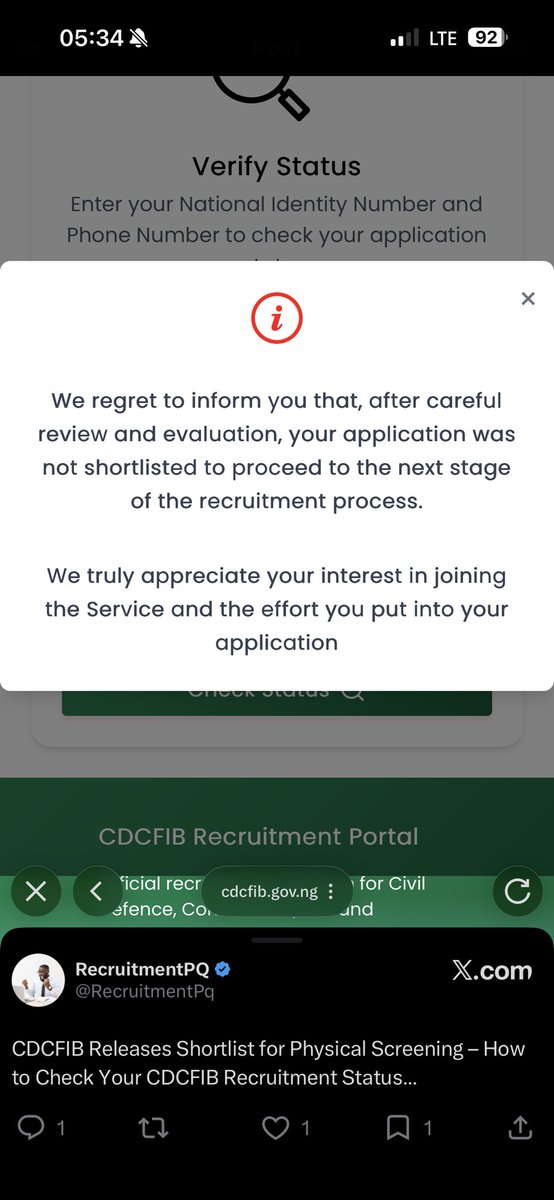
After carefully reviewing the recently published shortlist, I note with disappointment that I was not selected for the next phase of the recruitment exercise. While this outcome is not entirely surprising given the prolonged delays and deviations from standard procedures, it remains deeply concerning.
For over six months, the process moved at an unusually slow pace with minimal communication. Many of us invested significant time, effort, and resources , preparing diligently, sitting the examinations with full confidence in our responses only to discover that the shortlist appears predetermined rather than merit-based.
This raises serious questions about transparency and fairness. When preferred candidates seem to have been identified long before the public phases, releasing results becomes little more than a formality that erodes public trust.
We urge the leadership of the NSCDC to uphold the highest standards of integrity in future exercises. True service to the nation demands merit, openness, and equal opportunity — not orchestrated outcomes. The youth of this country deserve better than dashed hopes and wasted sacrifices.
I take responsibility for my decision to apply, but institutions like yours must do better. Nigeria’s security architecture is too important to be undermined by avoidable doubts.
We will continue to watch, document, and advocate for a system that truly rewards competence and dedication.
#NSCDCRecruitment #TransparencyMatters #YouthForNigeria
6

He was describing a pre-ethical aesthetic state where one has little to no structured identity so they oscillate between fleeting sensation rather than commit to a direction. Openness without structure. Boredom is the enemy. This is only one side of the Either/Or coin.
5

RuralChristian ✝ retweeted

Jun 14
James Reimer shares about how the culture in the NHL has been changing, with more openness to players learning about Jesus!
7
41
1,237

32m
For Somalis and other Kenyans to become more integrated, it should start with greater social interaction, including openness to intermarriage. Accepting people from different communities into families can make it easier for cultures to understand and accept one another.
1

Swiss Justice Minister Beat Jans said the result sends a message of "stability, openness, and reliability," while acknowledging concerns around housing and immigration.
1
2
ᵀᵉᵃᵐᴸᴸᴾدل کــی اچھــی لــڑکی ❣️ retweeted

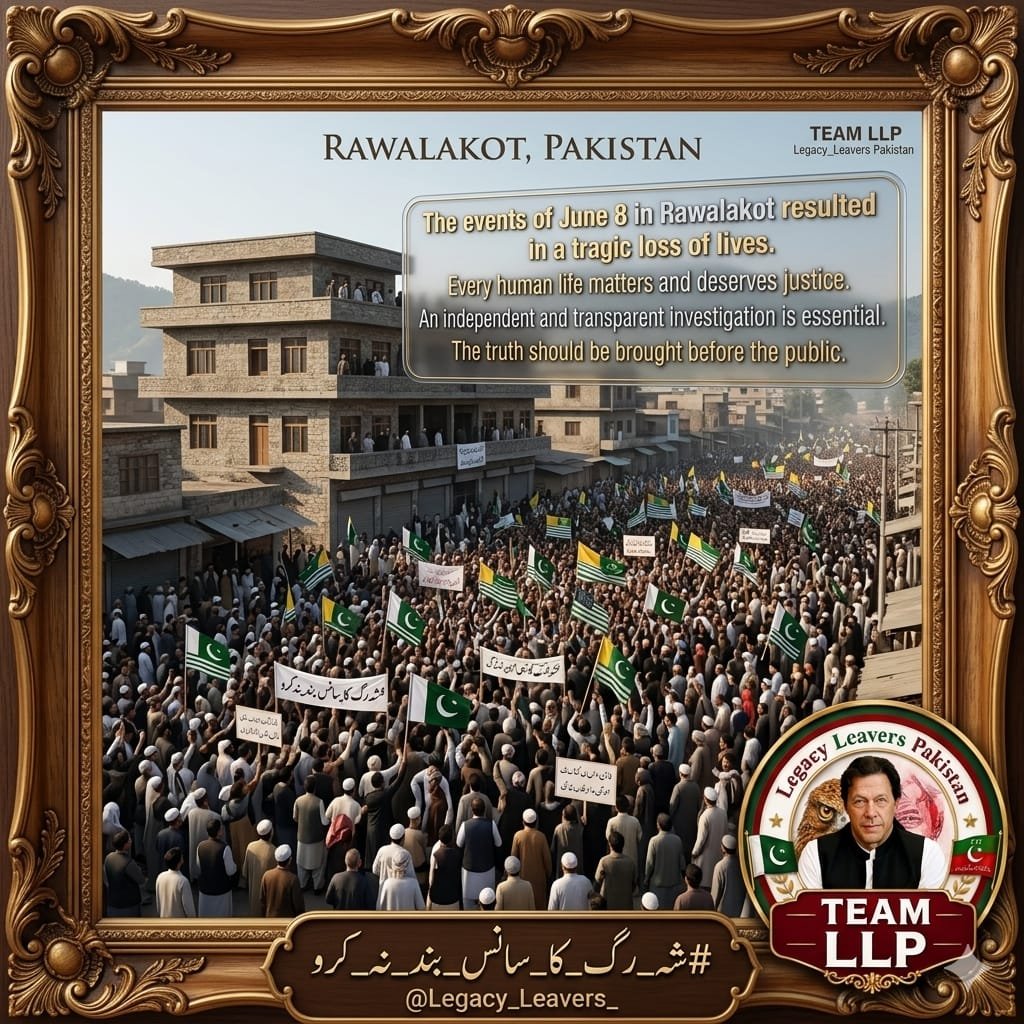
The authorities must commit to transparency and openness in their dealings with the Kashmiri people to build trust and credibility.
#شہ_رگ_کا_سانس_بند_نہ_کرو
@Legacy_Leavers_
10
1
12

Human Design - GATE 12 Now.
Psychologically, the themes of this Gate can show up as:
•A strong sensitivity to mood and social atmosphere — feeling acutely aware of whether a space is accepting enough to receive what you have to say
•The urge to wait, to choose carefully, to say only what is genuinely ready
•Oscillating between real openness and real withdrawal, sometimes within the same day
•A gift for refined, precise communication when the timing feels right
•Discomfort in spaces that feel too loud, too fast, or too emotionally crude for what you’re actually wanting to share
Shadow implications: A shadow theme of Gate 12 is expression filtered through image. You might notice yourself holding back not because the timing is wrong, but because you’re managing how you’ll be perceived.
There’s also a shadow pattern here of staying selective and composed on the outside while something true for you goes unsaid on the inside. And when the pressure of withholding finally builds, what comes out can be sharper than intended.
Business/leadership note: A transit through Gate 12 can hold powerful energy for content that is emotionally precise and carefully expressed — the post you’ve been sitting with, the truth you’ve been finding the right words for.
This is not a week to force output for the sake of consistency.
Gate 12’s deepest gift is the word that arrives at exactly the right moment — not performed, not guarded, but straight from your truth.

3

Thank you Honourable @hwendec for highlighting the Order Paper and submitting proposals that’s a constructive step. That said, many are wondering why the specific amendments haven’t been shared or summarised publicly here or are they mild tweaks that won’t rock the boat?
In a climate of low trust, greater transparency would help build confidence to better understand and support the strategy. Looking forward to more openness.
27

Only Two Fulani Have Led Nigeria - So Where Does the ‘Fulani Dominance’ Claim Come From? - Mohammed Bello Doka
There is a ghost that has haunted Nigerian political discourse for decades, and its name is the Fulani hegemony narrative. It is whispered in living rooms, shouted on social media, and solemnly repeated by otherwise intelligent people who should know better. The story goes that a cabal of Fulani overlords has systematically seized control of Nigeria, installing their kinsmen as presidents, governors, and emirs while the rest of the country grovels under their domination. It is a compelling tale, rich with the drama of conquest and conspiracy. It is also, by every factual measure, a breathtaking lie.
Let us begin with the most elementary question: Who has actually ruled Nigeria since independence in 1960? The answer, when stripped of emotion and examined in cold print, demolishes the entire edifice of the Fulani hegemony myth.
Dr Nnamdi Azikiwe, who served as Governor-General from 1960 to 1963 and as ceremonial President from 1963 to 1966, was Igbo from Zungeru in present-day Niger State but of Eastern Nigerian origin. Major General Johnson Aguiyi-Ironsi, who ruled for six chaotic months in 1966, was also Igbo. General Yakubu Gowon, who held power from 1966 to 1975, is not Fulani but Angas from Plateau State. General Murtala Muhammed, who ruled from 1975 to 1976, has been variously claimed, but historical records identify him as Hausa from Kano. General Olusegun Obasanjo, who first ruled from 1976 to 1979 and again as civilian president from 1999 to 2007, is Yoruba from Abeokuta. Alhaji Shehu Shagari, the first executive president who served from 1979 to 1983, was a Fulani from Sokoto. This gives us our first Fulani leader, though some argue he was more accurately Hausa-Fulani. Major General Muhammadu Buhari, who took power in the 1983 coup and ruled until 1985, is Fulani from Daura, Katsina State. This is the second. General Ibrahim Babangida, who ruled from 1985 to 1993, is not Fulani but Gwari from Minna, Niger State. Chief Ernest Shonekan, who served as interim president for three months in 1993, was Yoruba from Ogun State. General Sani Abacha, who ruled from 1993 to 1998, was Kanuri from Borno State. General Abdulsalami Abubakar, who ruled from 1998 to 1999, is a Nupe from Niger State. Olusegun Obasanjo returned as civilian president from 1999 to 2007, again a Yoruba. Alhaji Umaru Musa Yar'Adua, who served from 2007 to 2010, is widely mistaken for Fulani, but his lineage is Tuareg from Katsina. Dr Goodluck Jonathan, who ruled from 2010 to 2015, is an Ijaw from Bayelsa State, a minority from the Niger Delta. Muhammadu Buhari returned as a civilian president from 2015 to 2023, marking his third and final term as a Fulani. Finally, Bola Ahmed Tinubu, the current president since 2023, is Yoruba from Lagos State.
Let us count carefully. From this list of sixteen distinct Nigerian heads of state since independence, exactly two are ethnically Fulani by any rigorous definition: Shehu Shagari and Muhammadu Buhari. Even if we generously include Murtala Muhammed as Hausa-Fulani, and even if we stretch credibility to include Yar'Adua, who was Tuareg, we arrive at perhaps four. Four Fulani leaders out of sixteen. That is twenty-five percent at the absolute maximum. The supposed Fulani domination of the presidency is a statistical phantom.
Yet the narrative persists, and its persistence tells us something far more interesting about Nigerian politics than any actual Fulani conspiracy ever could. As Obi Nwakanma wrote in a masterful deconstruction of this myth in 2017, the talk of a hegemony is a lazy form of political analysis in Nigeria, as the facts of the contours and architecture of Nigerian society make a Fulani hegemony in Nigeria impossible. He went further, identifying the psychological mechanism that sustains the delusion: Southern Nigerian intellectuals, politicians, and propagandists have, far more than anybody else, certainly far more than the Fulani themselves, ascribed or assigned near-omnipotent political capacity to the Fulani, far beyond the capacity of the so-called Hausa-Fulani. Many of these stem from profound ignorance and the kind of deadly prejudice that creates hatreds and genocides.
This is the uncomfortable truth that the champions of the Fulani hegemony narrative refuse to confront: they have built a straw man and then declared war on it. The Fulani, as Nwakanma correctly observed, do not have the numbers, the financial wherewithal, the bureaucratic capacity, or the military power to dominate Nigeria. They are a minority even within the North. The Hausa-Fulani combined form about twenty-nine per cent of Nigeria's population according to demographic estimates, but the Fulani alone are a much smaller fraction of that. How does a demographic minority establish a hegemony over a country of more than two hundred million people from over three hundred and seventy ethnic groups? The arithmetic alone defeats the proposition.
What is truly remarkable, and what exposes the hypocrisy at the heart of the narrative, is the comparison between Northern and Southern treatment of minorities. The North, which the narrative accuses of ethnic domination, has actually produced six minority leaders who governed Nigeria for a combined total of over thirty-two years. These include Gowon the Angas, Babangida the Gwari, Abacha the Kanuri, Abdulsalami the Nupe, Balewa the Gere, and Yar'Adua the Tuareg. The North, despite its Hausa-Fulani majority, has repeatedly placed men from its minority communities in the highest office in the land.
Now examine the South. Since independence, the South has produced exactly one minority president: Goodluck Jonathan, an Ijaw from Bayelsa. And even Jonathan came to power not through the will of Southern political elites but by accident, through the death of Yar'Adua. Every other Southern leader has been either Yoruba or Igbo. As one commentator noted, Jonathan himself admitted at a state banquet after losing the 2015 election that he had done little for his own Ijaw people. He said he thought Bayelsans would boo him for neglecting them, but was amazed by the level of love shown instead. The South has never willingly placed a minority in power. The North has done so six times. Let that sink in.
The irony is exquisite. The very region that lectures the North about inclusivity and representation has the worst record on minority inclusion in the entire country. The political philosopher Hannah Arendt once observed that the most dangerous political fictions are those that contain a grain of truth while fundamentally misrepresenting reality. The grain of truth here is that Nigeria has had several presidents from the North. The misrepresentation is that this constitutes Fulani domination when, in fact, the Northern presidents have come from multiple ethnic groups, with minorities actually outnumbering the Hausa-Fulani in the list.
The origins of this false narrative are not mysterious. As research by Dubawa, a fact-checking organisation, has documented, the claim that no Hausa man has ever ruled Nigeria and that Fulani have dominated leadership has been circulating on social media, often amplified by separatist propaganda. One Facebook video making this claim had garnered over one million views as of 2025. The comment sections reveal the damage such disinformation causes: This is not news. I have known this for many years now via Biafra radio, wrote one user. Another declared with absolute certainty that the Fulani are not originally from Nigeria and that they used the Hausa people and their land to gain influence. This is not an analysis. This is a mythology weaponized.
Professor Abubakar Jiddere of Bayero University Kano explained the reality to Dubawa: There is nothing like Hausa and Fulani; it is Hausa-Fulani, because these people are hardly differentiated; they are one. Yes, most of the leaders from the North were Fulani, but that is not because of dominance or preference. It's not as if the Fulani deliberately separated themselves or planned to seek power to suppress the Hausa people. They are simply one people. He added that separating the two and attempting to create the illusion of a division is misleading. It suggests that some social media users might be trying to plant alien ideas that do not exist.
The colonial origins of this division are well documented. Before the Dan Fodio Jihad of 1804-1808, the Fulani and Hausa coexisted as two distinct identities. The conquest established Fulani rulers over Hausa states, but the British colonial regime, operating through Indirect Rule, codified and amplified this hierarchy. They needed a ruling class to govern cheaply, and the Fulani emirs served that purpose. The hyphenated Hausa-Fulani identity was, as one scholar put it, always motivated by politics. It was a colonial convenience that became a post-colonial curse.
What makes the Fulani hegemony narrative so dangerous is not just its falsity but its consequences. As the Media Diversity Institute reported in 2026, ethnic profiling in Nigeria has escalated dramatically, with social media accelerating its reach. In March 2025, sixteen Hausa hunters travelling to Kano were reportedly lynched by a mob that accused them of being kidnappers simply because they shared a language and region with actual criminals. The report noted that criminal acts committed by individuals are frequently framed as evidence of collective guilt. When cattle rustlers or bandits commit crimes, the entire Fulani ethnic group is blamed. When similar crimes occur in the South, the perpetrators are described as gunmen or unknown assailants without ethnic labels. This double standard is not lost on objective observers.
The philosopher Karl Popper warned of the paradox of tolerance: that unlimited tolerance of those who would destroy tolerance leads to the destruction of tolerance itself. Nigerian political discourse has become intolerably tolerant of ethnic disinformation. The Fulani hegemony narrative is not a harmless theory. It is a weapon that has already drawn blood and will draw more if responsible voices do not challenge it.
The South has much to learn from the North in the treatment of minorities. This is a difficult truth for many Southern intellectuals to accept because it contradicts their self-image as the progressive, inclusive, democratic counterweight to Northern authoritarianism. But the numbers do not lie. The North has elected or appointed six minority heads of state. The South has appointed one, and even that one came by accident. The North, despite its reputation for ethnic chauvinism, has actually demonstrated greater openness to minority leadership than the South ever has.
As Nwakanma concluded, being Igbo in Nigeria, it is imperative that one does not participate in this kind of myth-making frenzy that breeds a hatred of the other. Once, the Igbo themselves had suffered on account of what became circulated among other Nigerians as Igbo domination of Nigeria. The Igbo, others said, were plotting to dominate Nigeria, and this fear of Igbo domination led to the massacres of the Igbo. It is important that we do not associate the entire Fulani people with the kind of intrigue that would instigate Nigerians against them.
*Video-A Fulani explaining in Yoruba, the myth of the invading Fulani from West Africa and the rise of banditry
History has a cruel way of repeating itself when lessons go unlearned. The propaganda of Igbo domination in the 1960s led to pogroms and civil war. The propaganda of Fulani domination in the 2010s and 2020s leads to lynchings, collective suspicion, and the steady erosion of national unity. The targets change, but the mechanism remains the same: fear of the other, amplified by those who benefit from division.
It is time to retire the Fulani hegemony narrative. Not because the Fulani are above criticism. Not because Northern Nigeria has been a perfect model of democratic governance. But because the narrative is false, because it obscures the real problems facing Nigeria, and because it has already caused measurable harm. A lie repeated often enough becomes truth in the minds of those who wish to believe it. But facts are stubborn things. Only two Fulani have ever ruled Nigeria as heads of state. The rest is myth, manufactured grievance, and the politics of convenient hatred.
©️ Mohammed Bello Doka
30th May, 2026 bellodoka82@gmail.com
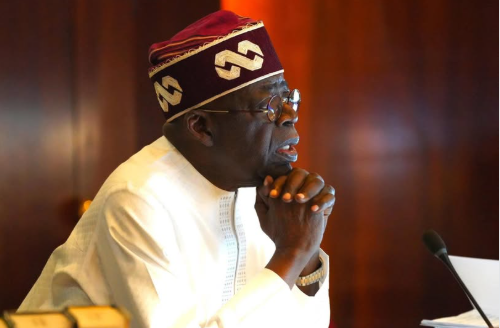
ALT President Bola Ahmed Tinubu of Nigeria
41

luna13 🌕 retweeted

I've shown more compassion, openness, kindness, tolerance of cultures, etc, to ppl I've met than most neurotypicals I've ever known in my life. But I'm not great at socializing. Never have been. Doesn't mean I don't try. But there are more important things in life.

So, a lot of you are miserable because you won’t make a basic effort to be socially presentable. You think it’s beneath you to engage in small talk or show interest in the lives of others. Your refusal to be kind and attentive is a moral failing, and it will keep you lonely.
1
2
3
84
Devesh Giri | देवेश गिरि | 𑂠𑂵𑂫𑂵𑂬⸱𑂏𑂱𑂩𑂱 retweeted

Jun 14
When foreign leaders come here, they are welcomed with an experience of new multiculturality, plurality, openness and soft power. When this leader goes somewhere outside India, he is welcomed only with a mirror showing his own culture back to him.
Jun 13

𝐀 𝐰𝐚𝐫𝐦 𝐚𝐧𝐝 𝐞𝐧𝐭𝐡𝐮𝐬𝐢𝐚𝐬𝐭𝐢𝐜 𝐰𝐞𝐥𝐜𝐨𝐦𝐞 𝐟𝐨𝐫 𝐏𝐌 𝐒𝐡𝐫𝐢 𝐍𝐚𝐫𝐞𝐧𝐝𝐫𝐚 𝐌𝐨𝐝𝐢 𝐢𝐧 𝐍𝐢𝐜𝐞, 𝐅𝐫𝐚𝐧𝐜𝐞. 🇮🇳🇫🇷
Upon his arrival, PM Modi was greeted with great warmth, while a vibrant traditional dance performance added a special cultural touch to the occasion.
𝐓𝐚𝐤𝐞 𝐚 𝐥𝐨𝐨𝐤 𝐚𝐭 𝐭𝐡𝐞 𝐦𝐞𝐦𝐨𝐫𝐚𝐛𝐥𝐞 𝐰𝐞𝐥𝐜𝐨𝐦𝐞. 🔽
16
45
240
9,869

Osho discourse.
The first step is to accept yourself in your totality, in spite of all your traditions, which have driven the whole of humanity insane. Once you have accepted yourself as you are, the fear of intimacy will disappear. You cannot lose respect, you cannot lose your greatness, you cannot lose your ego. You cannot lose your piousness, you cannot lose your saintliness -- you have dropped all that yourself. You are just like a small child, utterly innocent. You can open yourself because inside, you are not filled with ugly repressions which have become perversions.
You can say everything that you feel authentically and sincerely. And if you are ready to be intimate, you will encourage the other person also to be intimate. Your openness will help the other person also to be open to you. Your unpretentious simplicity will allow the other also to enjoy simplicity, innocence, trust, love, openness.
You are encaged with stupid concepts, and the fear is, if you become very intimate with somebody, he will become aware of it.
~Osho
1
1
113