
Let's take a second to look at Mercedes' job descriptions on their article - "𝐈𝐍𝐒𝐈𝐆𝐇𝐓: 𝐓𝐡𝐞 𝐓𝐫𝐚𝐜𝐤𝐬𝐢𝐝𝐞 𝐄𝐧𝐠𝐢𝐧𝐞𝐞𝐫𝐬"
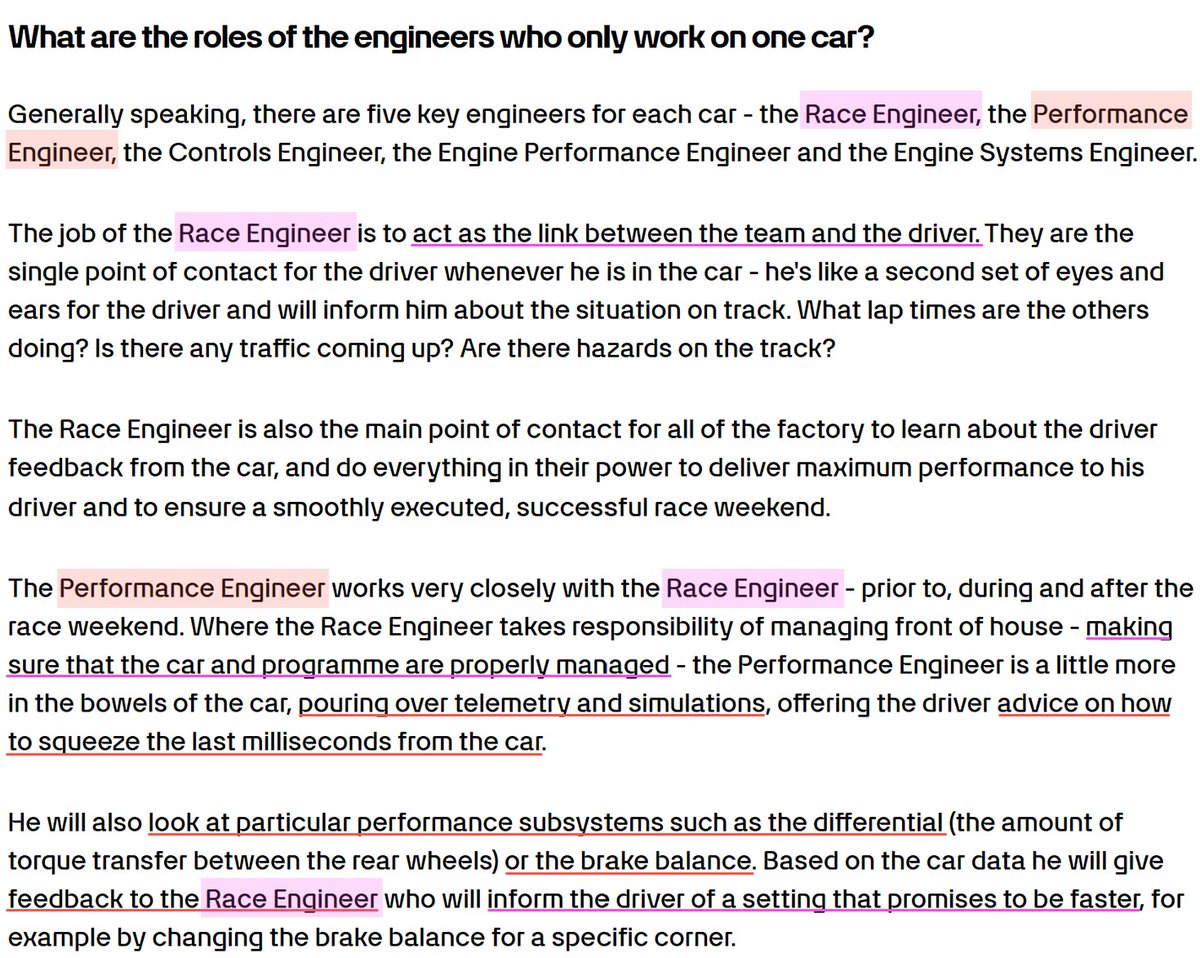
𝗥𝗮𝗰𝗲 𝗘𝗻𝗴𝗶𝗻𝗲𝗲𝗿 (for Russell, this is 𝗠𝗮𝗿𝗰𝘂𝘀 𝗗𝘂𝗱𝗹𝗲𝘆):
- act as the link between the team and and the driver
- make sure that the car and programme are properly managed
- inform the driver of settings that promise to be faster
𝗣𝗲𝗿𝗳𝗼𝗿𝗺𝗮𝗻𝗰𝗲 𝗘𝗻𝗴𝗶𝗻𝗲𝗲𝗿 (for Russell, this is 𝗞𝗮𝘁𝘀𝘂𝗵𝗶𝗱𝗲 𝗞𝘂𝘄𝗮𝗵𝗮𝗿𝗮, or 𝗞𝗮𝘁𝘀𝘂):
- pour over telemetry and simulations
- analyze particular performance subsystems such as the differential or the brake balance
- give feedback to the Race Engineer (and thus the driver) based on car data of settings that promise to be faster
Some noticeable keywords here: "𝘥𝘪𝘧𝘧𝘦𝘳𝘦𝘯𝘵𝘪𝘢𝘭", "𝘣𝘳𝘢𝘬𝘦 𝘣𝘢𝘭𝘢𝘯𝘤𝘦"...
oh wait, the exact same things Russell adjusted himself towards the end of a weekend - and found himself not hundredths, not tenths, but SECONDS of pace with.
also the exact same things the Race Engineer didn't know that Russell had fixed at the end of that race.
Some crude math for context:
- Russell's average pace for laps 29~33 at the Miami GP, 𝘣𝘦𝘧𝘰𝘳𝘦 𝘩𝘦 𝘮𝘢𝘥𝘦 𝘢𝘥𝘫𝘶𝘴𝘵𝘮𝘦𝘯𝘵𝘴: 𝟏:𝟑𝟑.𝟓𝟑𝟎
- Russell's average pace for laps 49~53 at the Miami GP, 𝘢𝘧𝘵𝘦𝘳 𝘩𝘦 𝘮𝘢𝘥𝘦 𝘢𝘥𝘫𝘶𝘴𝘵𝘮𝘦𝘯𝘵𝘴: 𝟏:𝟑𝟐:𝟕𝟏𝟒
That's a 𝟬.𝟴𝟭𝟲𝘀 𝗶𝗻𝗰𝗿𝗲𝗮𝘀𝗲 𝗶𝗻 𝗽𝗮𝗰𝗲, NOT accounting for tyre degradation, NOT accounting for how Russell had to split his attention between Driving and Self-Engineering, NOT accounting for how Russell was driving those settings for the first time.
So, in the case of Miami, not only did Russell's 𝗣𝗲𝗿𝗳𝗼𝗿𝗺𝗮𝗻𝗰𝗲 𝗘𝗻𝗴𝗶𝗻𝗲𝗲𝗿 𝙛𝙖𝙞𝙡 𝙩𝙤 𝙛𝙞𝙣𝙙 𝙨𝙚𝙩𝙪𝙥 𝙖𝙙𝙟𝙪𝙨𝙩𝙢𝙚𝙣𝙩𝙨 𝙩𝙝𝙖𝙩 𝙞𝙢𝙥𝙧𝙤𝙫𝙚𝙨 𝙧𝙖𝙘𝙚 𝙥𝙖𝙘𝙚 𝙗𝙮 𝙩𝙝𝙚 𝙎𝙀𝘾𝙊𝙉𝘿𝙎 even with all his data,
he also either 1. 𝙛𝙖𝙞𝙡𝙚𝙙 𝙩𝙤 𝙣𝙤𝙩𝙞𝙘𝙚 𝙬𝙝𝙚𝙣 𝙍𝙪𝙨𝙨𝙚𝙡𝙡 𝙘𝙝𝙖𝙣𝙜𝙚𝙙 𝙝𝙞𝙨 𝙙𝙞𝙛𝙛𝙚𝙧𝙚𝙣𝙩𝙞𝙖𝙡𝙨 & 𝙗-𝙗𝙖𝙡, or 2. 𝙙𝙞𝙙 𝙣𝙤𝙩 𝙧𝙚𝙥𝙤𝙧𝙩 𝙘𝙝𝙖𝙣𝙜𝙚𝙨 𝙝𝙚 𝙛𝙤𝙪𝙣𝙙 𝙩𝙤 𝙩𝙝𝙚 𝙍𝙖𝙘𝙚 𝙀𝙣𝙜𝙞𝙣𝙚𝙚𝙧, or 𝙗𝙤𝙩𝙝.
Complete opposite of his job description. I cannot quite fathom how.
Anyways, this Miami experience made Russell believe he should refer to his teammate's data as well in future races. But analyzing data with his engineers didn't work out.
After a struggle in Monaco working out telemetry with his team, Russell flew into Barcelona, 𝗱𝗲𝗰𝗶𝗱𝗲𝗱 𝗵𝗲 𝘄𝗼𝘂𝗹𝗱 𝘀𝗰𝗿𝗮𝗽 𝗱𝗮𝘁𝗮 𝗰𝗼𝗺𝗽𝗹𝗲𝘁𝗲𝗹𝘆 and 𝗿𝗲𝗹𝘆 𝗼𝗻 𝗵𝗶𝘀 𝗱𝗿𝗶𝘃𝗶𝗻𝗴 𝗶𝗻𝘀𝘁𝗶𝗻𝗰𝘁𝘀 only, and -
𝐈𝐧𝐬𝐭𝐚𝐧𝐭 𝐦𝐚𝐠𝐢𝐜. Front Row FP1, FP2, FP3. Front Row in Q1, Q2, and Q3. Pole Position. Fastest pace before pitstop.
but the magic only worked for the Tyres where driver feedback was available.
Russell can not look at data. 𝗧𝗵𝗮𝘁 𝗱𝗼𝗲𝘀𝗻'𝘁 𝗺𝗲𝗮𝗻 𝘁𝗵𝗲 𝗘𝗡𝗚𝗜𝗡𝗘𝗘𝗥𝗦 𝗰𝗮𝗻 𝗻𝗼𝘁 𝗹𝗼𝗼𝗸 𝗮𝘁 𝗱𝗮𝘁𝗮.
With the Hard tyres, where no driver feedback was available from FP - the team first got him an 𝗨𝗻𝗱𝗲𝗿-𝗯𝗮𝗹𝗮𝗻𝗰𝗲𝗱 𝗳𝗿𝗼𝗻𝘁 𝘄𝗶𝗻𝗴. Which means Understeer. Less speed at the apex. More left front tyre damage.
And then, 𝙈𝙚𝙧𝙘𝙚𝙙𝙚𝙨 𝙞𝙣𝙖𝙘𝙘𝙪𝙧𝙖𝙩𝙚𝙡𝙮 𝙖𝙙𝙟𝙪𝙨𝙩𝙚𝙙 𝙝𝙞𝙨 𝙛𝙧𝙤𝙣𝙩 𝙬𝙞𝙣𝙜. Cranked it up too much. 𝙀𝙭𝙩𝙧𝙚𝙢𝙚 𝙊𝙫𝙚𝙧𝙨𝙩𝙚𝙚𝙧. Massive sliding, counter-correcting. Reduced downforce. Rapid rear tyres degradation.
𝐑𝐮𝐬𝐬𝐞𝐥𝐥 𝐫𝐚𝐧 𝟓𝟒/𝟔𝟔 𝐋𝐚𝐩𝐬 𝐨𝐟 𝐭𝐡𝐞 𝐫𝐚𝐜𝐞 𝐰𝐢𝐭𝐡 𝐭𝐡𝐞 𝐰𝐫𝐨𝐧𝐠 𝐬𝐞𝐭𝐮𝐩. 𝐇𝐞 𝐬𝐭𝐢𝐥𝐥 𝐦𝐚𝐧𝐚𝐠𝐞𝐝 𝐚 𝐏𝟐.
But this is the most important takeaway:
𝑹𝒖𝒔𝒔𝒆𝒍𝒍'𝒔 𝒑𝒂𝒄𝒆 𝒇𝒂𝒊𝒍𝒆𝒅 𝒉𝒊𝒎 𝒘𝒉𝒆𝒏𝒆𝒗𝒆𝒓, 𝒂𝒏𝒅 𝒐𝒏𝒍𝒚 𝒘𝒉𝒆𝒏, 𝒉𝒆 𝒓𝒆𝒍𝒊𝒆𝒅 𝒐𝒏 𝒉𝒊𝒔 𝒆𝒏𝒈𝒊𝒏𝒆𝒆𝒓𝒔 𝒇𝒐𝒓 𝒔𝒆𝒕-𝒖𝒑.
1
11

dari klarif nya kmrn sih bilangnya kesalahan setting di front wing waktu pit terakhir, jd bikin oversteer mngkanya dia kelihatan sulit bgt di akhir ampe kesalip kimi dan gap nya sm lewis jauh
1
256


when he told another driver who didn’t speak english well the wrong definition for oversteer and understeer on purpose #wbk he’s evil
2
41

Loosen up your front and/or rear diff to get more oversteer.
Diff tuning and final drive ratio tuning merge together to make any car turn.
Play around with those two, get a feel for it and you can tune any car to your liking.
Tires.
11


Just been trying out career mode and some online gt3 mainly but lamborghini porsche vehicles and can't help but notice this slight oversteer going thru cornering and chicanes
1
1
19

bro it was a problem because it affected it literally affected his car and oversteer watch it again LMAO
1
29
I'm still enjoying the game somewhat on ps5 pro but there seems too be over steer thru the corners I'm using the t598 and I'm curious to find out if I can dial out this annoying bit of oversteer
1
2
124

I think the cuts made to personnel numbers in the 90’s were probably not unreasonable, we really did have a surplus of personnel. I remember people who could wait an entire watch and not be noticed because there were so many of us. I was in for over 5 years and was never promoted because it was ‘dead man’s shoes’ whereas now you’d easily expect to be a Leading Hand within that time.
I was based at Portland Naval Air Station and the closure of the Dockyard and Air Station was a great loss to the area and to the Navy. Clearly we would not have needed it now as we have nothing to dock there and too few aircraft. It shouldn’t be this way.
As with so many things the running down of our armed forces capacity was a giant oversteer from that point and we are paying the price now with international humiliation on the world stage and more importantly as geopolitical threats have rapidly increased in recent years we are caught short.
I think it’s true to say however that had we pumped money into defence 10/20 years ago, as we retrospectively recognise as necessary, we would have been accused of wasteful spending and even warmongering while people suffered from x,y or z.
To ‘fix’ it we need to improve on personnel recruitment and retention, ramp up defence spending (as the Conservatives have outlined the financing of) to meet our NATO obligations, invest in British defence industries and make our armed forces something to be proud of again - something people aspire to support and be involved in.
3
3
3
86

tbh its not that hard to tune a car. just make it oversteer bias, if default gears feel too short extend them, vice versa etc. once u learn how the value works u can just autopilot afterwards, takes maybe 15 mins tops for a main car you really like.
3
then gr was ahead for 20 more laps with a broken frontwing prob and oversteer problem so that
1
26
maria🇨🇴_Perdio contra Ticketmaster y esta triste retweeted

if this guy cant overtake a car that has severe problems w oversteer in the front wing in a track like barcelona I really dont think he should be acting all that cocky 😭😭✌️✌️
Jun 16

nico rosberg to german media (aktuell)
“mercedes gave george to much consideration - too much protection. the moment the team risks losing the win, you race together for team’s result. and mercedes should have done that sooner. antonelli was faster again in the race. in qualifying russell can mix it with the best, but in the race there’s something missing.”
[formulapassion (.) it]
ALT pic: Marco Canoniero
4
48
630

Jun 17
It’s their mid engine layout that’s the issue they snap oversteer when pushed over the limit. That sound though mmmh it’s great, sign me up please
3
26
sona¹⁴ retweeted

Jun 17
Pilotun araca söyleyeceği şeyler bellidir hocam. “Oversteer Understeer, frenlemedi iyi kötü vs”
Gelen güncelleme paketi iyi kalibre edilemiyorsa bunun suçlusu pilot olmaz
Araç gelişiminde iyi değil diyorsunuz. Bir araç tur zamanında kazanç sağlıyorsa gelişiyordur hocam>>
1
1
4
200


Jun 17
I wasn't expecting him to make a move 2 laps later but 24 laps while your teammate have oversteer and a much worse tire degradation than you is to be talked about.
4
54