
Jun 15
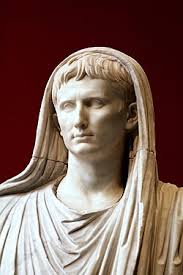
Ille--Imperator Augustus. Quamquam nescio an ei placeat coffea.
2
34


Jun 11
Por fin un premio de periodismo. Ya era hora. Solo había... 160 premios anuales (que yo sepa).
Pero cuidao que esta gente es mu discreta y solo quieren dar la noticia, no protagonizarla.
- Premio Nacional de Periodismo
- Premio Nacional de Fotoperiodismo
- Premios Ortega y Gasset de Periodismo
- Premios Rey de España de Periodismo
- Premios Ondas de la Cadena SER
- Premio Cerecedo de Periodismo
- Premio Fernández Latorre
- Premio Cirilo Rodríguez
- Premio Francisco de Cossío
- Premio Internacional Afundación de Periodismo Julio Camba
- Premio Internacional de Periodismo Cátedra Manu Leguineche
- Premio Internacional de Periodismo Julio Anguita Parrado
- Premio Internacional de Periodismo Manuel Chaves Nogales
- Premio Internacional de Periodismo Manuel Vázquez Montalbán
- Premio Internacional de Periodismo Ciudad de Cáceres
- Premio Internacional de Periodismo Manuel Alcántara
- Premios Andalucía de Periodismo
- Premios de Periodismo de la Comunidad de Madrid
- Premios de Periodismo del Gobierno de Navarra
- Premios de Periodismo de Castilla y León
- Premios de Periodismo del Principado de Asturias
- Premios de Periodismo de la Región de Murcia
- Premio Huelva de Periodismo
- Premio Cádiz de Periodismo
- Premios de Periodismo Ciudad de Málaga
- Premio Ciudad de Alcalá de Periodismo Manuel Azaña
- Premios Provincia de Guadalajara de Periodismo
- Premios de Periodismo Provincia de Valladolid
- Premios de Periodismo Ciudad de Badajoz
- Premios APM de Periodismo
- Premios de la Asociación de la Prensa de Sevilla
- Premios de la Asociación de la Prensa de Barcelona
- Premios de la Asociación de la Prensa de Valencia
- Premio Periodistas de Aragón-Ciudad de Zaragoza
- Premio de Periodismo Económico de la Asociación de Periodistas Europeos
- Premio Schroders de Periodismo Económico
- Premio Citi Journalistic Excellence Award
- Premio Iberdrola de Periodismo
- Premio AECOC de Periodismo
- Premios Vaciero de Periodismo Jurídico y Financiero
- Premios CSIC-Fundación BBVA de Comunicación Científica
- Premios Concha García Campoy de Periodismo Científico
- Premio Prismas Casa de las Ciencias
- Premio Roche de Periodismo en Salud
- Premio Boehringer Ingelheim al Periodismo en Salud
- Premios de Periodismo Sanitario
- Premio SEOM de Periodismo
- Premio Fundación Instituto Roche
- Premio José Couso de Libertad de Prensa
- Premio Periodismo Responsable
- Premio Saliou Traoré
- Premio de Periodismo sobre Discapacidad Reina Letizia
- Premio Solidario ONCE de Comunicación
- Premios contra la Violencia de Género - Fundación Aliados
- Premio de Periodismo Luisa Alberca Lorente (Igualdad de Género)
- Premio Europeo Salvador de Madariaga
- European Press Prize
- Premio Gabriel García Márquez de Periodismo
- Premio Juan Manuel Gozalo de Radiofonismo Deportivo
- Premio Jesús Hermida a la Trayectoria
- Premios Internacionales de Periodismo Móvil
- Premio de Periodismo Ambiental de la Provincia de Alicante
- Premio de Periodismo Agroalimentario
- Premio de Periodismo Mundo Rural
- Premio de Periodismo de Seguridad Vial Fundación Línea Directa
- Premio de Periodismo de la Guardia Civil
- Premio de Periodismo de la Fundación Policía Española
- Premio de Periodismo sobre Aviación
- Premio de Periodismo en Innovación y Sostenibilidad Agroalimentaria EIT Food
- Premio de Periodismo en Positivo
- Premio de Periodismo sobre Minería Metálica Andaluza
- Premio de Periodismo Mesa del Tabaco
- Premio de Periodismo AXA (Seguros)
- Premio Antonio Fontán de Periodismo Político
- Premio Vicente Verdú de Periodismo e Innovación
- Premio David Gistau de Periodismo
- Premio Mañé i Flaquer de Periodismo
- Premio Pilar Narvión
- Premio Tiflos de Periodismo
- Premio Paco Rabal de Periodismo Cultural
- Premio Nacional de Periodismo Miguel Delibes
- Premio Nacional de Periodismo Cultural
- Premio de Periodismo del Observatorio del Ahorro Familiar
- Premio Nacional de Periodismo Francisco Valdes
- Premio Nacional de Periodismo Jose Ortega Munilla
- Premio Nacional de Periodismo Gastronomico Alvaro Cunqueiro
- Premio Nacional de Periodismo Oceanicas
- Premio Nacional de Periodismo PLACEAT
- Premio Nebrija de Periodismo Educativo
- Premio Agustin Merello de la Comunicacion
- Premio de Periodismo HematoAvanza
- Premio Dionisio Acedo
- Premio de Periodismo del Colegio de la Psicologia de Madrid
- Premio de Periodismo APIB
- Premio de Periodismo Adif
- Premio de Periodismo Aqualia
- Premio de Periodismo Luis Portero de Promocion del Donante de organos y Tejidos de Andalusia
- Premio de Periodismo Somos Esenciais
- Premio Sesé Mateo de Periodismo Ético en el tratamiento de la violencia machista
- Premio Periodismo de la Camara de Comercio Alemana para Espana
- Premio de Periodismo Montero de Burgos
- Premios Desalambre
- Premios periodisticos de la Asociacion de Periodistas Agroalimentarios de Espana
- Premio de periodismo Alberta Gimenez
- Premios Beatriz Cienfuegos a las buenas practicas en igualdad
- Concurso periodistico Puerto Bahia de Algeciras
- Premio de Periodismo Jesus Rubio
- Premio APCR de Periodismo
- Premio Cronista Emilio Quesada
- Premio de articulos periodisticos El Ciervo-Enrique Ferran
- Premio de Periodismo Libertad de Expresion
- Premio de Periodismo Joven LA RAZON-Manuel Barrios
- Premio de Periodismo Michel Valls
- Premios de periodismo Ateneo de Malaga
- Premio de Periodismo Fundacion Gestrafic
- Certamen Articulo Periodistico Juan Torres Grueso
- Premios periodisticos sobre TLP Trastorno Limite de la Personalidad
- Premios de Periodismo Cientifico Actualidad con Ciencia
- Premios de Periodismo Local de la Asociacion de la Prensa de Cuenca
- Concurso periodistico del Congreso Mundial del Jamon
Premios Lolo de periodismo joven
- Premios internacionales de periodismo Club Internacional de Prensa
- Premios Kazetariak Periodismo Vasco
- Premios Solidarios a la Igualdad MDE
Premio Codespa de Periodismo para el Desarrollo
- Premios de periodismo y comunicacion Club Abierto de Editores CLABE
- Premio Diego Bernal
- Premio Patricio Estvanez y Murphy
- Premio de Comunicacion Expoliva
- Premio de Periodismo de Opinion Raul del Pozo
- Premios Fundacion Independiente de Periodismo Camilo Jose Cela
- Premio Nacional Pedro Antonio de Alarcon
- Premios Bravo!
- Premios Periodismo y Sector Pesquero Espanol
- Premio de Periodismo UNESID
- Premio de periodismo Jose Sanchez de la Rosa
- Premios Emshi de Periodismo
- Premios Injuve de Periodismo y Comunicacion
- Premios Lilí Álvarez
- Premio de Periodismo Accenture
- Premios periodismo joven sobre violencia de género
- Premio Mila de Periodismo para la Igualdad de Género en Lleida
- Premios Jóvenes infoLibre 2026
- Premio Especial Alejandro Echevarría
- Premios FSED a la Comunicación en Diabetes
- Premios ESET de Periodismo y divulgación en seguridad informática
- Premio Mariano de Cavia
- Premio Luca de Tena
- Premio Mingote
- Premio de Periodismo Comprometido de la Federación Aragonesa de Solidaridad
- Premios Montserrat Roig de Periodismo y Comunicación Social
- Premios Infinito de Comunicación de la Asociación Metalgráfica Española
- Premio Reporteros Sin Fronteras
Jun 11

Dean Baquet, Aristegui Noticias y La Marea, ganadores de los Premios El Confidencial de Periodismo de Investigación.
Los galardones se entregarán el 16 de junio, en una gala con motivo de nuestro 25.º aniversario y presidida por SS. MM. los Reyes
elconfidencial.com/aniversar…
7
13
46
4,193


Here is a list of changes which do exactly that: - Judica, which refers to altar worship, was removed
- The prayer aufer a nobis, which refers to the priest as sacrificer, was removed
- The NO lectionary skips passages related to sacrifice. For example in Hebrews 13 the critical verses 9-16 have been cut out.
-The Suscipe sancte pater which mentions the Spotless Host (ie sacrificial victim") has been cut out.
-The Orate Fratres only survived thanks to pushback
-The Secret regularly waters down the references to sacrifice in the NO
- In the Quam oblationem, the words “consecrate” and “perfect” are replaced by “acknowledge” and “spiritual.”
- At the consecration of the wine, the words “as often as you do these things” are omitted before “do this in memory of me”. The effect is to emphasize the memorial nature of the consecration. The words “Mystery of Faith” are placed after instead of during the words of consecration, where they had directly referred to the mystery of Transubstantiation, and are instead explained by a new phrase such as “We proclaim your Death, O Lord, and profess your Resurrection until you come again.”
- The word consecrated is omitted from the commingling.
-The Placeat Tibi, which refers to the Mass as a sacrifice, is omitted.
4
9
149
Cardinal Müller thinks it's unreasonable to suggest that the Novus Ordo obscures the sacrificial nature of the Mass.
Here is a list of changes which do exactly that:
- Judica, which refers to altar worship, was removed
- The prayer aufer a nobis, which refers to the priest as sacrificer, was removed
- The NO lectionary skips passages related to sacrifice. For example in Hebrews 13 the critical verses 9-16 have been cut out.
-The Suscipe sancte pater which mentions the Spotless Host (ie sacrificial victim") has been cut out.
-The Orate Fratres only survived thanks to pushback
-The Secret regularly waters down the references to sacrifice in the NO
- In the Quam oblationem, the words “consecrate” and “perfect” are replaced by “acknowledge” and “spiritual.”
- At the consecration of the wine, the words “as often as you do these things” are omitted before “do this in memory of me”. The effect is to emphasize the memorial nature of the consecration. The words “Mystery of Faith” are placed after instead of during the words of consecration, where they had directly referred to the mystery of Transubstantiation, and are instead explained by a new phrase such as “We proclaim your Death, O Lord, and profess your Resurrection until you come again.”
- The word consecrated is omitted from the commingling.
-The Placeat Tibi, which refers to the Mass as a sacrifice, is omitted.
For further information, see my article here:
onepeterfive.com/lex-orandi-…
39
124
513
17,625

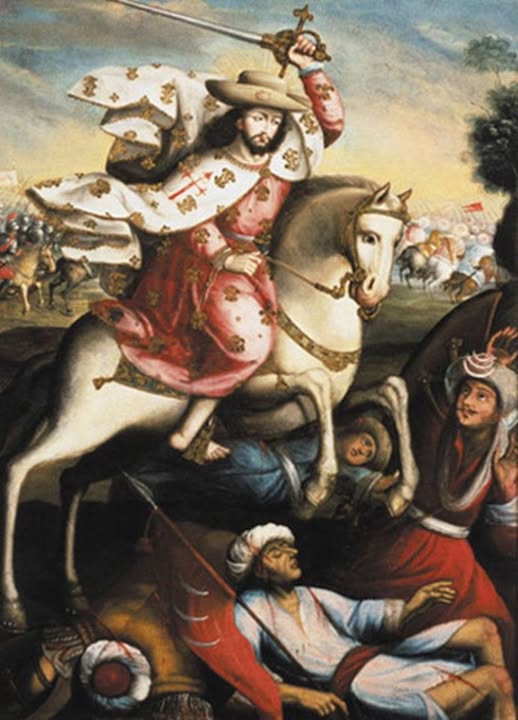
Prayer to Santiago (St. James) Patron and Protector of Spain, from the Mozarabic Liturgy: In Latin and English.
.
Aña. Lux et decus Hispaniae, O Jacobe sanctissime, sublevator oppressorum, suffragium viatorum, qui inter apostles primus martyr laureatus obtines primatum, O singulare praesidium, tuorum benignus exaudi vota servorum, et intercedas pro nostra omniumque salute.
.
V/. Ora pro nobis, beate Jacobe.
R/. Ut digni efficiamur promissionibus Christi.
.
Oremus
.
Esto, Domine, plebis tuae sanctificator et custos, ut, apostoli tui Jacobi munita praesidiis, et conversatione tibi placeat et secura deserviat. Per dominum nostrum Iesum Christum filium tuum, qui tecum vivit et regnat in unitate Spiritus Sancti, Deus, per omnia secula seculorum. R/. Amen.
-----------------------------------------
Ant. Light and adornment of Spain, O most holy James, supporter of the oppressed, succour of travellers, crowned with laurel, who obtainest the first place of martyrdom among the apostles: O unique protection, kindly one, hear the prayers of thy servants, and mayest thou intercede for our salvation and the salvation of all.
.
V/. Pray for us, blessed James.
R/. That we be made worthy of the promises of Christ.
.
Let us pray.
.
Be, O Lord, the sanctifier and guardian of Thy people, so that, fortified by the protection of Thine apostle James, they may be pleasing to Thee by their way of life and securely serve Thee. Through our Lord Jesus Christ Thy Son, Who liveth and reigneth with Thee in the unity of the Holy Ghost, God, world without end.
R/. Amen.
1
4
37

May 19
18/05/26
Ab unā carne putridā ad aliam:
vade, vomē; vade, dormī.
Non refert utrum placeat an offendat.
Descendere tamen in viscera tua debet.
Qui spuerit, punietur;
qui tacitus dēglūtierit, veniam accipiet.
Silentium enim nobilissima gratia est,
amor vero crudelissimum telum.
1
3
20
846
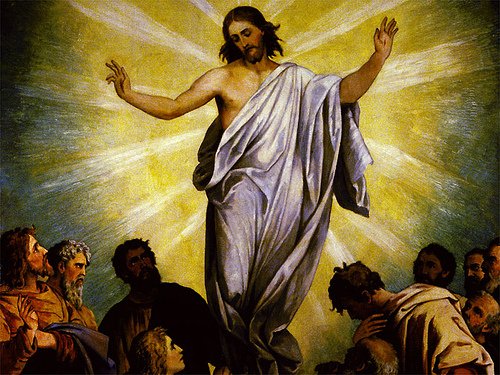
Saturday Within the Octave of the Ascension: From The Liturgical Year by Dom Prosper Louis Paschal Guéranger, O.S.B., 1904.
.
O rex gloriæ, Domine virtutum, qui triumphator hodie super omnes cœlos ascendisti, ne derelinquas nos orphanos; sed mitte promissum Patris in nos Spiritum veritatis, alleluia.
.
O King of glory, Lord of hosts, Who didst this day ascend in triumph above all the heavens! leave us not orphans, but send upon us the Spirit of truth, promised by the Father, alleluia.
.
Jesus, then—the Man Who dwelt on the earth and was perfect in all holiness—has ascended into heaven. This earth, accursed of God as it was, has produced the fairest Fruit of heaven; and heaven, with its gates shut against our race, has had to open them for the entrance of a Son of Adam. It is the mystery of the Ascension; but it is only a part, and it imports us to know the mystery in its fullness. Let us give ear to the Apostle of the Gentiles: God, Who is rich in mercy, through His exceeding charity wherewith He loved us, even when we were dead in sins, hath quickened us together with Christ; and hath raised us up together with Him, and hath made us sit in the heavenly places together with Him. We have celebrated the Pasch of our Savior’s Resurrection as our own Resurrection; we must, agreeably to the Apostle’s teaching, celebrate also His Ascension as our own. Let us weigh well the expression: God hath made us sit in the heavenly places together with Christ. So, then, in the Ascension, it is not Jesus only who ascends into heaven; we ascend thither with Him: it is not He only that is enthroned there in glory; we are enthroned through and together with Him.
.
That we may the better understand this truth, let us remember, that the Son of God did not assume our Human Nature with a view to the exclusive glorification of the Flesh which He united to His own Divine Person. He came to be our Head. We, consequently, are His Members; and where He is, we also are to be; at least, such is His intention, as He implied at the Last Supper, when He said: Father! I will that where I am, they also whom Thou hast given Me may be with me, that they may see My glory which Thou hast given Me. And what is the glory given to Him by His Father? Let us hearken to the Royal Prophet, who speaking of the future Ascension, says: The Lord said to my Lord: “Sit Thou at My right hand! It is, then, on the very throne of the Eternal Father, it is at His right hand, that we shall see Him whom the Apostle calls our fore-runner. We shall be united with this Jesus, as Members to our Head; so that His glory will be ours; we shall be kings, with His Kingship, He would make us partake of all that he Himself has for He tells us that we are His joint-heirs.
.
From this, it follows that the august mystery of the Ascension, which began on the Day of Jesus’ entering into heaven, is to be continued, and will continue, until His mystical Body has received its completion by the ascension of the last of the Elect. Look at that countless host of holy souls who were the earliest companions of His triumph: foremost are our First Parents; then the Patriarchs, the Prophets, and the Just of every generation of the preceding four thousand years! They had been imprisoned in Limbo; but He liberated them, gave them of His own brightness, and made them His partners in the glory of His Ascension. They were His trophy; they formed His court, as He passed from earth to heaven. Well did we exclaim in the words of holy David: Sing ye to the Lord! Sing ye to God, who mounteth above the heaven of heavens, towards the East.
.
The angels were ready to receive our Emmanuel; and then began that sublime dialogue, which the Royal Psalmist was permitted to hear and prophesy. The glad countless legion of the holy souls who escorted the Divine Conqueror cried out to the guardians of the heavenly Jerusalem: Lift up your gates, O ye Princes! Be ye lifted up, O eternal gates! and the King of glory shall enter in. The faithful Angels replied: Who is this King of glory!—It is the Lord, responded the elect of earth; it is the Lord Who is strong and mighty; the Lord mighty in battle. Well might they say this of our Jesus, Who had vanquished Satan, Death and Hell, and brought themselves to the City’s Gate as a sample of His stupendous conquest. The Angels repeated their question; the Saints re-echoed their reply:—the Eternal Gates were thrown open, and the King and his Courtiers entered into heaven.
.
The Gates, then, are opened to receive our Redeemer, and opened He would have them remain for us to follow Him. Admirable Ascension! oh! let us linger in its contemplation. Jesus inaugurates the grand mystery by His own entrance into heaven, and then perpetuates it by the Ascension of his elect of each successive generation; there is a ceaseless procession up to heaven, for some happy souls are ever finishing their purification in Purgatory, while some still happier ones are winging their rapid flight direct from this earthly vale of sorrows. Hail, then, O glorious Mystery! fruit of the flowers of so many mysteries! term, fulfillment, perfection of our Creator’s decree! Alas! thou hadst a long interruption by Adam’s sin; but Jesus’ triumph restored thy reign on earth, and this earth shall live in Thy beauty and grace till that word shall be uttered by the Angel: Time shall be no more!—O Mystery, of joy and hope, be thou accomplished in me!
.
Permit us, then, O Jesus, to apply to ourselves what Thou saidst to Thine Apostles: I go to prepare a place for you! This has been Thy aim in all Thou hast done for us: Thou camest into this world to open heaven for us. Thy holy Spouse, the Church, bids us fix our eyes on heaven; she points to its opened Gates, and shows us the bright track through which is passing up, from earth, an unbroken line of souls. We are still in exile; but the eye of our faith sees Thee in that land above, Thee the Son of Man throned at the right hand of the Ancient of days. How are we to reach Thee, dear Jesus? We cannot, as Thou didst, ascend by our own power: Thou must needs fulfill Thy promise, and our desire, of drawing us to Thyself. It was the object after which Thy Blessed Mother also sighed, when Thou didst leave her on earth; she longed for the blissful hour of Thy taking her to Thyself, and awaited Thy call with faith, laboring meanwhile for Thy glory, and living with Thee, though not seeing Thee. Give us to imitate the faith and love of this Thy Mother, that so we may apply to ourselves those words of Thine Apostle: We are already saved—by hope. Yes, we shall be so, if Thou send us, according to Thy promise, the Holy Spirit Whom we so ardently desire to receive; for He is to confirm within us all that Thy mysteries have produced in our souls; He is to be to us a pledge of our future glorious ascension.
.
In presenting our petitions this day to heaven, let us take, as addressed to ourselves, the sublime instructions given by the Gothic Church of Spain, on the Ascension Feast, to her children.
.
Missa.
.
Placeat, dilectissimi fratres, sæcularium cogitationum fasce deposito, erectis in sublime mentibus subvolare: et impositam ætheris fastigio assumpti hominis communionem, sequacibus cordis oculis contueri. Ad incomparabilem nobis claritatem attonitus vocandus aspectus, est Jesus Dominus noster: humilitatem nobis terrarum cœlorum dignitate commutat: acutus necesse est visus esse respicere quo sequimur. Hodie salvator noster post assumptionem carnis, sedem repetit deitatis. Hodie hominem suum intulit Patri, quem obtulit passioni. Hunc exaltans in cœlis, quem humiliaverat in infernis. Hic visurus gloriam, qui viderat sepulturam. Et qui adversus mortem mortis suæ dedit beneficium, ad spem vitæ donavit resurrectionis exemplum. Hodie rediit ad Patrem, cum tamen sine Patris, qui sibi æqualis est, potestate non venerit. Hodie ascendit in cœlum qui obsequia cœlestium cum descenderet, non amisit. Ita in Patris natura unitate consistens, ut cum homo cœlum novus intraret, novum tamen Deus hominem non haberet. Petamus igitur ab omnipotentia Patris, per nomen Filii salvatoris, gratiæ spiritualis ingressum, æternæ beatitudinis donum, beatæ mansionis ascensum, catholicæ credulitatis augmentum, hæreticæ infidelitatis excidium. Audiet profecto in confessione, quod in perditione quæsivit. Adstitit suis, qui non destitit alienis. Aderit agnitus, qui non defuit agnoscendus. Non patietur orphanos esse devotos, qui filios facere dignatus est inimicos. Dabit effectum supplicationis, qui promisit Spiritum sanctitatis. Amen.
.
We beseech you, dearly beloved Brethren, that, laying aside the weight of worldly thoughts, you would raise up your minds, and soar to heavenly things, and see, with the attentive eye of the heart, how Christ placed your own human nature, which he had assumed, in the highest heavens. The incomparable brightness on which we are invited to fix our astonished gaze, is Jesus our Lord. He exchanges the lowliness of this earthly dwelling for the glory of heaven. How quick must our sight not be, that it may see the land, whither we are to follow him! Today, our Savior, after assuming our human nature, returned to the throne of the Godhead. Today, he offered to his Father that same human nature, which he had previously offered to the endurance of his Passion. He exalted in heaven the Humanity that he had humbled in Limbo. He well deserved to see glory, who had seen the Tomb. He who conferred on us his own Death, that he might put ours to death—gave us the example of his Resurrection, that he might gladden us with the hope of Life. Today, he returned to the Father, though he had not been here on earth without possessing all the power of the Father, who is co-equal with him. Today, he ascended into heaven, though he had lost not the adoration of the Angels when he descended upon our earth. One with the Father in unity of substance, he so entered into heaven as the new Man, that he was not new to God. Let us, therefore, ask the Almighty Father, through the name of his Son, our Savior, that he grant us admission into a spiritual life of grace, the gift of eternal happiness, an ascension into the mansion of bliss, an increase of Catholic faith, and the destruction of heretical disbelief. He, surely, will hear us, now that we praise him, who went in search of us when we were lost. He will assist us that are now his people, who abandoned us not when we were aliens. He will be with us now that we know him, for he was not absent from us even when we knew him not. He will not suffer us to be orphans now that we are devoted to him, for he vouchsafed to make us his children when we were his enemies. He will grant us what we ask, for he has promised to send us the Holy Ghost. Amen.
1
4
136


Apr 25
Rotary Club dona a Placeat 7.750 euros del evento solidario '7 Chefs' hoy.es/plasencia/rotary-club…
738

Apr 15
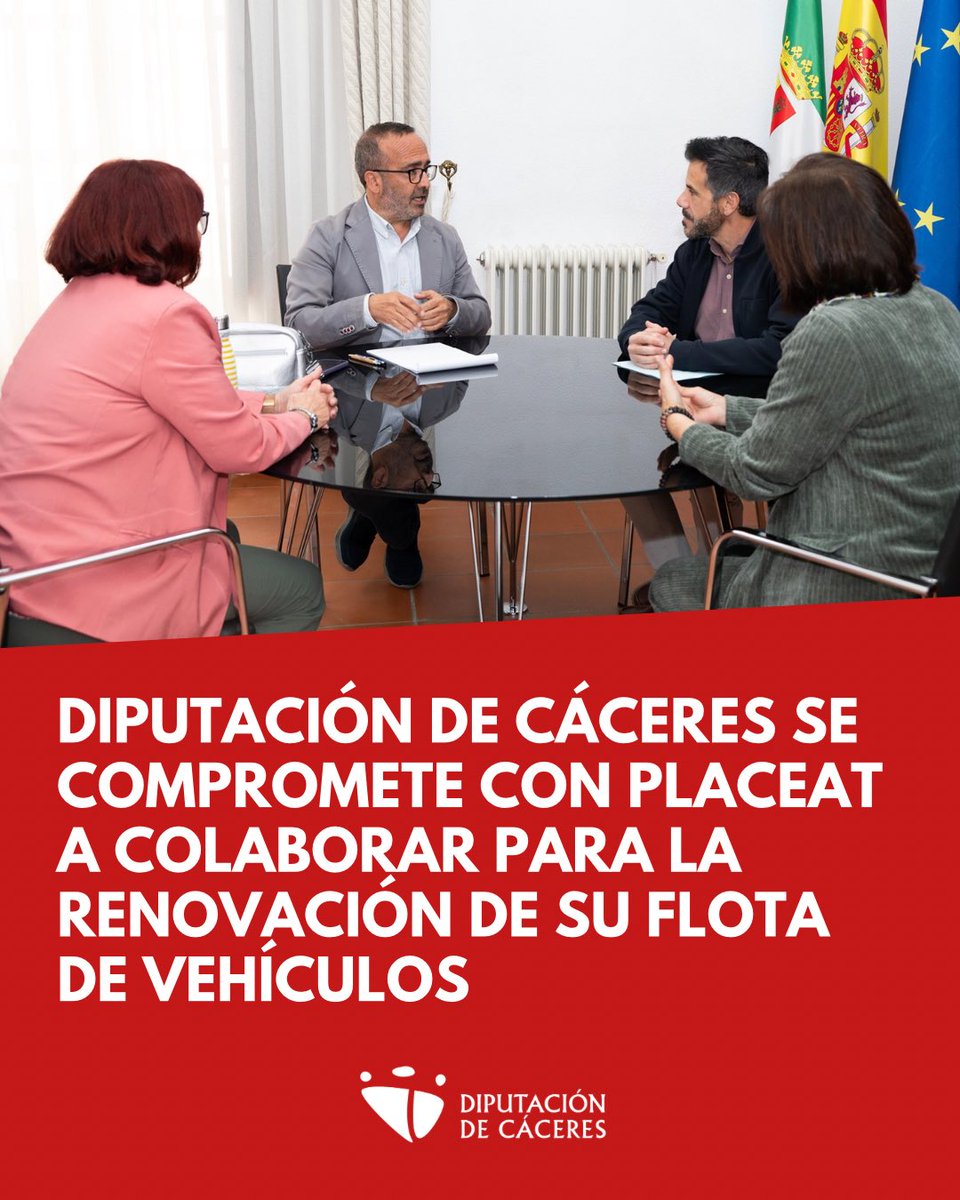
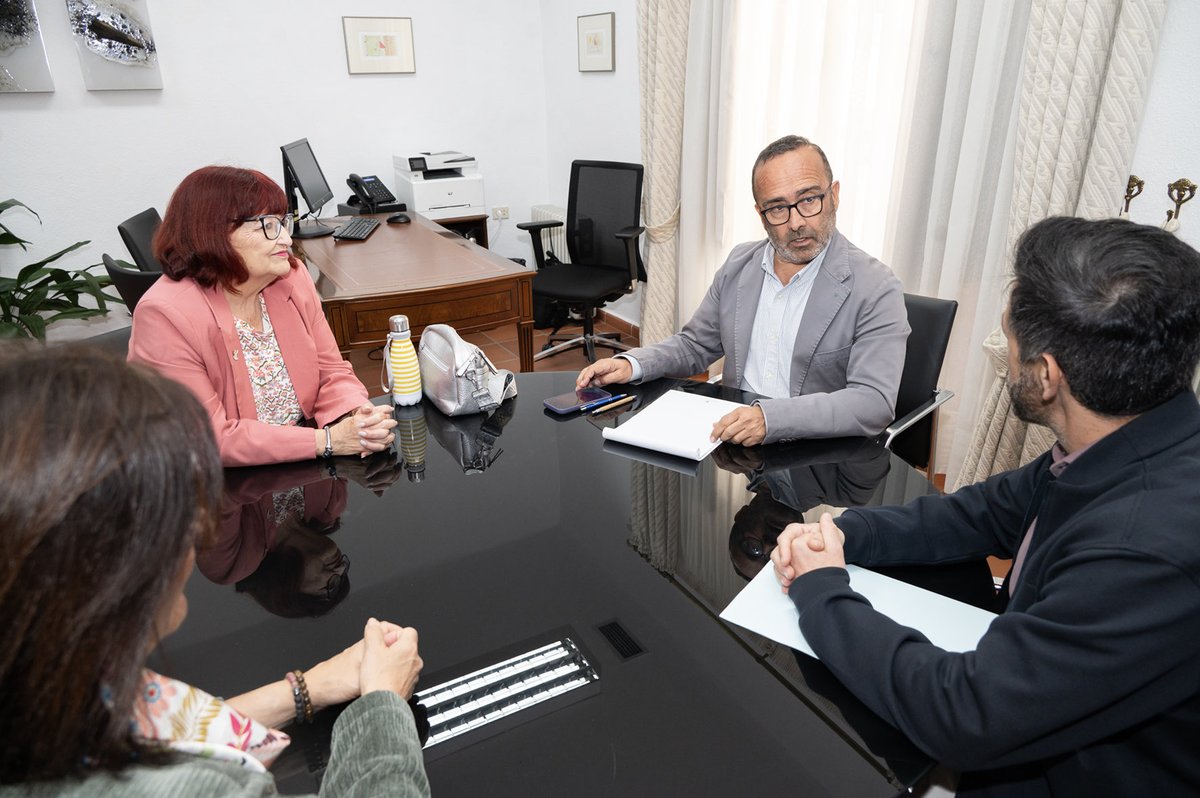
La Diputación de Cáceres y PLACEAT refuerzan su colaboración 🤝
▶️ @mamorale44 apoyará la renovación de la flota de vehículos, clave para el traslado diario de personas con discapacidad intelectual en el norte de Extremadura 🚐💙
#Inclusión #Cáceres
1
3
126

Me tam indisertum fuisse paulo maerens ad campum adveni atque spectavi altera certaminis parte pilam ab angulo conjectam mirabiliter in hostium rete ictu capitali inpelli, qua manus nostra discessit victrix. Fortasse Musis pedifolium non placeat?
1
5
147

Lorem ipsum is the standard placeholder dummy text used in the design, publishing, and typesetting industries for mockups and prototypes. It comes from Marcus Tullius Cicero's work De Finibus Bonorum et Malorum (On the Ends of Good and Evil).
From a passage that is part of Torquatus' defense of Epicurean ethics. Cicero has him explain why the pursuit of pleasure (as the highest good) is rational, why pain is sometimes accepted, and how a wise person prudently chooses greater long-term pleasure over immediate gratification or unnecessary suffering.
The uncorrupted version of Lorem ipsum in context (sections 1.10.32 and 1.10.33)
Sed ut perspiciatis, unde omnis iste natus error sit voluptatem accusantium doloremque laudantium, totam rem aperiam eaque ipsa, quae ab illo inventore veritatis et quasi architecto beatae vitae dicta sunt, explicabo. Nemo enim ipsam voluptatem, quia voluptas sit, aspernatur aut odit aut fugit, sed quia consequuntur magni dolores eos, qui ratione voluptatem sequi nesciunt, neque porro quisquam est, qui dolorem ipsum, quia dolor sit amet consectetur adipisci velit, sed quia non numquam eius modi tempora incidunt, ut labore et dolore magnam aliquam quaerat voluptatem. Ut enim ad minima veniam, quis nostrum exercitationem ullam corporis suscipit laboriosam, nisi ut aliquid ex ea commodi consequatur? Quis autem vel eum iure reprehenderit, qui in ea voluptate velit esse, quam nihil molestiae consequatur, vel illum, qui dolorem eum fugiat, quo voluptas nulla pariatur?
At vero eos et accusamus et iusto odio dignissimos ducimus, qui blanditiis praesentium voluptatum deleniti atque corrupti, quos dolores et quas molestias excepturi sint, obcaecati cupiditate non provident, similique sunt in culpa, qui officia deserunt mollitia animi, id est laborum et dolorum fuga. Et harum quidem reruum facilis est et expedita distinctio. Nam libero tempore, cum soluta nobis est eligendi optio, cumque nihil impedit, quo minus id, quod maxime placeat facere possimus, omnis voluptas assumenda est, omnis dolor repellendus. Temporibus autem quibusdam et aut officiis debitis aut rerum necessitatibus saepe eveniet, ut et voluptates repudiandae sint et molestiae non recusandae. Itaque earum rerum hic tenetur a sapiente delectus, ut aut reiciendis voluptatibus maiores alias consequatur aut perferendis doloribus asperiores repellat.
Translation (by H. Rackham Loeb Classical Library, 1914, revised 1931)
But I must explain to you how all this mistaken idea of denouncing pleasure and praising pain arose. To do so, I will give you a complete account of the system and expound the actual teachings of the great explorer of the truth, the master-builder of human happiness.
No one rejects, dislikes, or avoids pleasure itself, because it is pleasure, but because those who do not know how to pursue pleasure rationally encounter consequences that are extremely painful. Nor again is there anyone who loves or pursues or desires to obtain pain of itself, because it is pain, but because occasionally circumstances occur in which toil and pain can procure him some great pleasure.
To take a trivial example, which of us ever undertakes laborious physical exercise, except to obtain some advantage from it? But who has any right to find fault with a man who chooses to enjoy a pleasure that has no annoying consequences, or one who avoids a pain that produces no resultant pleasure?
On the other hand, we denounce with righteous indignation and dislike men who are so beguiled and demoralized by the charms of pleasure of the moment, so blinded by desire, that they cannot foresee the pain and trouble that are bound to ensue; and equal blame belongs to those who fail in their duty through weakness of will, which is the same as saying through shrinking from toil and pain. These cases are perfectly simple and easy to distinguish.
In a free hour, when our power of choice is untrammeled and when nothing prevents our being able to do what we like best, every pleasure is to be welcomed and every pain avoided. But in certain emergencies and owing to the claims of duty or the obligations of business it will frequently occur that pleasures have to be repudiated and annoyances accepted.
The wise man therefore always holds in these matters to this principle of selection: he rejects pleasures to secure other greater pleasures, or else he endures pains to avoid worse pains.
3
160

It’s fascinating how that one has come back into general use but not the Placeat tibi or the very lovely medieval custom of saying the last Gospel and the canticle Benedicite on the way back
3
6
2,454
The Mass Is Scripture, Part 13b: The Leonine Prayers - Scripture's Final Word
This is Part 13b of a 14-part series, "The Mass Is Scripture: A Protestant's Guide to the Traditional Latin Mass."
In Part 13a, we walked through the concluding rites of the Mass - the Postcommunion prayer, the three forms of the dismissal, the Placeat tibi, the Final Blessing rooted in the Aaronic benediction of Numbers 6, and the Last Gospel: the Prologue of St. John, those fourteen verses of staggering theological density, proclaimed aloud and received on bended knee as the priest and people genuflect at the words that split history in two - "Et Verbum caro factum est." The Word was made flesh.
But at a Low Mass - the simplest form of the Traditional Latin Mass, celebrated without singing or solemnity - the liturgy does not end with the Last Gospel. After the Prologue of John, after the people have responded "Deo gratias," the priest does not leave the sanctuary. He descends from the altar, kneels at the foot of the altar steps, and leads the faithful in a set of additional prayers.
These are the Leonine Prayers. And they are saturated with Scripture.
The History of the Leonine Prayers
The Leonine Prayers were instituted by Pope Leo XIII on January 6, 1884. Their origin lies in one of the most turbulent periods in the modern history of the Church.
In 1870, the forces of the Italian Risorgimento seized Rome and the remaining Papal States, stripping the Pope of his temporal sovereignty and effectively imprisoning him within the Vatican. Pius IX - who had already defined the dogma of the Immaculate Conception and presided over the First Vatican Council - refused to recognize the legitimacy of the new Italian state and declared himself a "prisoner of the Vatican." His successor, Leo XIII, inherited this crisis.
Leo XIII ordered that after every Low Mass throughout the world, the priest and people should recite a set of prayers for the intentions of the Holy Father - originally for the restoration of the temporal sovereignty of the papacy. These prayers were not part of the Mass itself. They came after the Mass, after the final blessing, after the Last Gospel. They were prayers after Mass. But their placement immediately following the liturgy gave them a gravity and a prominence that elevated them far beyond mere devotional addenda.
In 1886, Leo XIII added the Prayer to St. Michael the Archangel to this set of prayers, reportedly after experiencing a mystical vision during the celebration of Mass. The accounts vary in their details, but the tradition holds that Leo heard a conversation between Christ and Satan, in which Satan boasted that he could destroy the Church if given sufficient time and power. Whether historical or hagiographic, the theological content of the resulting prayer is unimpeachable - and we will examine it in full below.
After the resolution of the Roman Question in 1929 - when the Lateran Treaty between the Holy See and Mussolini's Italy created Vatican City as a sovereign state - the original political intention of the prayers was fulfilled. But Pope Pius XI did not abolish them. Instead, he redirected their purpose, commanding that they be continued for the conversion of Russia and for the liberty of the Church. This was 1930 - seven years before the apparitions at Fatima would publicly confirm the urgency of praying for Russia's conversion. The Leonine Prayers remained mandatory at every Low Mass throughout the world until 1964, when the instruction Inter Oecumenici, implementing the liturgical reforms of the Second Vatican Council, suppressed them.
Their suppression does not diminish their content. And their content is what concerns us here. For these prayers - composed of Scriptural quotations, Scriptural theology, and Scriptural appeals - form the final Scriptural frame of the Traditional Latin Mass.
Three Hail Marys
The priest and people begin by reciting three Hail Marys. Protestants routinely dismiss the Hail Mary as unbiblical. This dismissal is indefensible, because the first half of the prayer is composed entirely of direct quotations from Sacred Scripture, and the second half is a petition grounded in sound biblical theology.
"Ave Maria, gratia plena, Dominus tecum."
"Hail Mary, full of grace, the Lord is with thee."
This is Luke 1:28 - the words of the Archangel Gabriel at the Annunciation. Not human words. Angelic words. The greeting of a heavenly messenger sent by God Himself to a virgin in Nazareth: "And the angel being come in, said unto her: Hail, full of grace, the Lord is with thee: blessed art thou among women" (Luke 1:28, Douay-Rheims).
When you pray the Hail Mary, you are quoting an angel. You are repeating the words that Gabriel spoke on a divine errand. If these words are unbiblical, then the Gospel of Luke is unbiblical, and the Annunciation itself is unbiblical. The Protestant who objects to the Hail Mary must explain why he objects to repeating words that an angel of God spoke under divine commission.
The phrase "full of grace" - gratia plena in Latin, kecharitomene in the original Greek - is not a casual compliment. It is a title. The Greek verb is in the perfect passive participle: she has been graced, completely and permanently, by God. The angel does not call her by her name. He calls her by this title. She is the one who has been filled with grace. The theological implications of this title were recognized by the Church Fathers from the earliest centuries and were formally defined at the Council of Ephesus in 431.
"Benedicta tu in mulieribus, et benedictus fructus ventris tui."
"Blessed art thou among women, and blessed is the fruit of thy womb."
This is Luke 1:42 - the words of Elizabeth, spoken under the direct inspiration of the Holy Spirit. Luke is explicit about this: "And Elizabeth was filled with the Holy Ghost: and she cried out with a loud voice, and said: Blessed art thou among women, and blessed is the fruit of thy womb" (Luke 1:41-42, Douay-Rheims). These are not merely human words of congratulation. They are words inspired by the Third Person of the Blessed Trinity. Elizabeth is prophesying. She is speaking under the influence of God. And she declares Mary blessed among all women and calls what Mary carries "the fruit of thy womb" - the language of incarnation, of real flesh, of a real child growing in a real womb. The fruit of Mary's womb is Jesus Christ, and Elizabeth, filled with the Holy Ghost, blesses both mother and child.
The second half of the Hail Mary - "Holy Mary, Mother of God, pray for us sinners, now and at the hour of our death. Amen." - is the Church's petition asking for Mary's intercession. The title "Mother of God" - Theotokos in Greek, Dei Genitrix in Latin - was solemnly defined at the Council of Ephesus in 431. This title is not a statement about Mary's nature but about Christ's. If Mary is not the Mother of God, then what she bore was not God, and the Incarnation collapses. If the child in her womb was truly God - and John 1:14 says He was, and every Christian creed confesses it - then the woman who bore Him is, by inescapable logic, the Mother of God. The title protects Christology, not Mariology. Nestorius denied it and was condemned as a heretic, because denying it means separating the two natures of Christ and destroying the unity of His Person.
The request "pray for us sinners" is grounded in the biblical principle that the righteous can and should intercede for others. "Pray one for another, that you may be saved. For the continual prayer of a just man availeth much" (James 5:16, Douay-Rheims). If the prayer of a just man on earth avails much, how much more the prayer of the woman whom the Holy Spirit Himself declared blessed among all women? The Hail Mary is not an alternative to praying to Christ. It is asking the holiest of all human beings to pray to Christ on your behalf.
Three times the priest and people recite this prayer. Three - the number of the Trinity, the number of Peter's confession of love, the number of days between death and resurrection. And then they continue to the next prayer.
The Salve Regina
After the three Hail Marys, the priest and people recite the Salve Regina - one of the four great Marian antiphons of the Roman liturgy, dating to at least the eleventh century and attributed by some traditions to Blessed Hermann of Reichenau. It is a prayer of exile - the prayer of the Church militant, still fighting, still suffering, still mourning in the valley of tears.
Here is the full text in both Latin and English:
"Salve, Regina, Mater misericordiae, vita, dulcedo, et spes nostra, salve. Ad te clamamus, exsules filii Hevae. Ad te suspiramus, gementes et flentes in hac lacrimarum valle. Eia ergo, advocata nostra, illos tuos misericordes oculos ad nos converte. Et Iesum, benedictum fructum ventris tui, nobis post hoc exsilium ostende. O clemens, O pia, O dulcis Virgo Maria."
"Hail, holy Queen, Mother of Mercy, our life, our sweetness, and our hope. To thee do we cry, poor banished children of Eve. To thee do we send up our sighs, mourning and weeping in this valley of tears. Turn then, most gracious Advocate, thine eyes of mercy toward us. And after this our exile, show unto us the blessed fruit of thy womb, Jesus. O clement, O loving, O sweet Virgin Mary."
Notice where this prayer ends. Not with Mary. With Jesus. "Show unto us the blessed fruit of thy womb, Jesus." The entire prayer is oriented toward Christ. Mary is not the destination. She is the one who brings you to the destination. She is the Advocate who turns her merciful eyes toward us and then shows us her Son. Every Marian prayer in the Catholic tradition has this Christological trajectory. It begins with Mary and ends with Christ, because that is what Mary herself does: she points to Jesus. "Whatsoever he shall say to you, do ye" (John 2:5, Douay-Rheims). Her instruction at Cana is her instruction for all time: do what He says.
The theology underlying the Salve Regina is rooted in Genesis 3:15, the Protoevangelium - the first announcement of the Gospel in all of Scripture. After the fall, God said to the serpent: "I will put enmities between thee and the woman, and thy seed and her seed: she shall crush thy head, and thou shalt lie in wait for her heel" (Genesis 3:15, Douay-Rheims).
The woman. The seed of the woman. The enmity between the woman and the serpent. The early Church Fathers - Justin Martyr, Irenaeus, Tertullian - universally saw in this verse a prophecy of Mary and Christ. Eve brought the fall; Mary brought the Redeemer. Eve listened to the serpent and brought death; Mary listened to the angel and brought life. Eve's disobedience closed paradise; Mary's obedience opened it. The Salve Regina addresses us as "exsules filii Hevae" - "poor banished children of Eve" - because we live in the wreckage of the fall. And it turns our eyes to Mary, the New Eve, who brings us not the fruit of disobedience but "the blessed fruit of thy womb, Jesus."
The "valley of tears" - lacrimarum valle - echoes the Psalms: "Blessed is the man whose help is from thee: in his heart he hath disposed to ascend by steps, in the vale of tears, in the place which he hath set" (Psalm 83:6-7, Douay-Rheims). This world is a vale of tears. The Salve Regina does not pretend otherwise. It does not promise comfort in this life. It promises that after this exile - post hoc exsilium - we will be shown Jesus. The hope is eschatological. The prayer looks beyond the present suffering to the beatific vision.
This is not medieval piety detached from Scripture. This is Genesis and Luke and the Psalms woven together into prayer.
The Prayer for the Church
After the Salve Regina, the priest prays:
"Deus, refugium nostrum et virtus, populum ad te clamantem propitius respice; et intercedente gloriosa, et immaculata Virgine Dei Genitrice Maria, cum beato Ioseph, eius Sponso, ac beatis Apostolis tuis Petro et Paulo, et omnibus Sanctis, quas pro conversione peccatorum, pro libertate et exaltatione sanctae Matris Ecclesiae, preces effundimus, misericors et benignus exaudi. Per eundem Christum Dominum nostrum. Amen."
"O God, our refuge and our strength, look down with favor upon Thy people who cry to Thee; and through the intercession of the glorious and immaculate Virgin Mary, Mother of God, of her spouse blessed Joseph, of Thy blessed Apostles Peter and Paul, and of all the Saints, mercifully and graciously hear the prayers which we pour forth to Thee for the conversion of sinners, for the liberty and exaltation of holy Mother Church. Through the same Christ our Lord. Amen."
The opening words are taken directly from the Psalms: "God is our refuge and strength: a helper in troubles, which have found us exceedingly" (Psalm 45:2, Douay-Rheims). The prayer begins with Scripture, as every prayer in the Mass does.
This prayer invokes a host of intercessors - Mary, Joseph, Peter, Paul, and all the Saints - and prays for two things: the conversion of sinners and the liberty and exaltation of the Church. It is prayed through Christ the Lord - per Christum Dominum nostrum - because all intercession, whether of saints on earth or saints in heaven, passes through Christ. "For there is one God, and one mediator of God and men, the man Christ Jesus" (1 Timothy 2:5, Douay-Rheims). The one mediation of Christ does not exclude subordinate intercession any more than it excludes your asking a friend to pray for you. The saints in heaven pray for the Church on earth, just as the saints on earth pray for one another. The prayer for the Church invokes this communion.
The petition for the "conversion of sinners" echoes Christ's own mission statement: "I came not to call the just, but sinners" (Mark 2:17, Douay-Rheims). And the petition for the "liberty and exaltation" of the Church reflects the promise Christ made: "The gates of hell shall not prevail against it" (Matthew 16:18, Douay-Rheims). The Church prays for her own liberty because she knows she has enemies, and she knows Who has promised her victory.
The Prayer to St. Michael the Archangel
After the prayer for the Church, the priest and people recite the Prayer to St. Michael. This is the most dramatic of the Leonine Prayers - a battle prayer, a warrior's invocation, a direct appeal to the commander of God's armies.
Here is the full text in both Latin and English:
"Sancte Michael Archangele, defende nos in proelio; contra nequitiam et insidias diaboli esto praesidium. Imperet illi Deus, supplices deprecamur: tuque, Princeps militiae caelestis, Satanam aliosque spiritus malignos, qui ad perditionem animarum pervagantur in mundo, divina virtute in infernum detrude. Amen."
"Saint Michael the Archangel, defend us in battle; be our protection against the wickedness and snares of the devil. May God rebuke him, we humbly pray: and do thou, O Prince of the heavenly host, by the power of God, thrust into hell Satan and all the evil spirits who prowl about the world seeking the ruin of souls. Amen."
This prayer is a direct appeal to the angel who, in the Book of the Apocalypse, leads the armies of heaven against the dragon:
"And there was a great battle in heaven, Michael and his angels fought with the dragon, and the dragon fought and his angels: and they prevailed not, neither was their place found any more in heaven. And that great dragon was cast out, that old serpent, who is called the devil and Satan, who seduceth the whole world; and he was cast unto the earth, and his angels were thrown down with him." (Apocalypse 12:7-9, Douay-Rheims)
Michael is the prince of the heavenly host - Princeps militiae caelestis - the commander of God's army, the archangel who stood against Lucifer and cast him out of heaven. His very name is a battle cry: Michael - "Mi-ka-El" - "Who is like God?" It is a rhetorical challenge hurled at Satan, who dared to make himself like the Most High: "I will ascend above the height of the clouds, I will be like the most High" (Isaias 14:14, Douay-Rheims). Michael's name is the answer to Satan's presumption.
The prayer does not ask Michael to act on his own power. It asks God to rebuke the devil - "Imperet illi Deus" - and it asks Michael to act "divina virtute," by the divine power, not by his own. This is crucial. The Church does not place Michael above God or beside God. She appeals to Michael as God's instrument, God's general, acting by God's authority and by God's power. The prayer is Christocentric even in its appeal to an angel.
The phrase "who prowl about the world seeking the ruin of souls" - qui ad perditionem animarum pervagantur in mundo - echoes the First Epistle of St. Peter: "Be sober and watch: because your adversary the devil, as a roaring lion, goeth about seeking whom he may devour" (1 Peter 5:8, Douay-Rheims). The devil is not a metaphor. He is a personal being with a personal will and a personal hatred of every human soul. The Mass does not pretend that the faithful are being sent into a safe world. It sends them out armed - armed with the Body of Christ they have received, the blessing of the Trinity they have been given, and the name of St. Michael on their lips.
The Prayer to St. Michael is the Church's acknowledgment that the Christian life is a war - not a metaphorical war, but a real war against real enemies: "Put you on the armour of God, that you may be able to stand against the deceits of the devil. For our wrestling is not against flesh and blood; but against principalities and powers, against the rulers of the world of this darkness, against the spirits of wickedness in the high places" (Ephesians 6:11-12, Douay-Rheims). Paul said it. The Church prays it. The Mass enacts it.
It is widely reported that Pope Leo XIII composed this prayer after experiencing a mystical vision in which he overheard Satan being granted a period of increased power over the world by God, as a test. Whether the details of this account are strictly historical or hagiographic, the theological substance of the prayer is beyond dispute: the devil is real, his attacks are real, and the Church needs heavenly protection.
Cor Iesu Sacratissimum, Miserere Nobis
The Leonine Prayers conclude with a threefold invocation:
"Cor Iesu Sacratissimum, miserere nobis." (three times)
"Most Sacred Heart of Jesus, have mercy on us." (three times)
After the Hail Marys, after the Salve Regina, after the prayer for the Church, after the invocation of St. Michael - the last word belongs to Jesus. The Leonine Prayers began with Mary and end with Christ. This is always the pattern. Mary leads to Jesus. The saints intercede through Jesus. The angels serve Jesus. Everything returns to Jesus.
The Most Sacred Heart - the Heart that was pierced for us on the Cross, from which flowed blood and water - we ask for mercy. The devotion is grounded in John 19:34: "But one of the soldiers with a spear opened his side, and immediately there came out blood and water" (John 19:34, Douay-Rheims). The blood and water signify the sacraments: the Eucharist and Baptism, flowing from the wounded Heart of Christ. The Fathers of the Church saw in this moment the birth of the Church herself - as Eve was drawn from the side of Adam, so the Church was drawn from the pierced side of Christ.
And in the prophecy of Zacharias, long before Calvary, God spoke: "And I will pour out upon the house of David, and upon the inhabitants of Jerusalem, the spirit of grace, and of prayers: and they shall look upon me, whom they have pierced: and they shall mourn for him as one mourneth for an only son" (Zacharias 12:10, Douay-Rheims). They shall look upon me, whom they have pierced. God Himself, speaking of Himself, prophesying the piercing of His own Heart. The Sacred Heart devotion is not a later invention. It is embedded in the prophets.
Miserere nobis. Have mercy on us. This is the cry of the publican: "O God, be merciful to me a sinner" (Luke 18:13, Douay-Rheims). It is the cry of the blind man: "Jesus, son of David, have mercy on me" (Mark 10:47, Douay-Rheims). It is the cry of the ten lepers: "Jesus, master, have mercy on us" (Luke 17:13, Douay-Rheims). It is the Kyrie that opened the Mass: "Lord, have mercy. Christ, have mercy. Lord, have mercy."
The Mass began with a cry for mercy and it ends with a cry for mercy, because mercy is what we need, and mercy is what the Mass provides. The entire arc of the liturgy - from the Confiteor at the foot of the altar to the threefold "miserere nobis" of the Leonine Prayers - is an arc of mercy requested, mercy offered, mercy received, and mercy requested again. We never outgrow our need for mercy. The Mass never lets us forget it.
The Mass Begins with Scripture and Ends with Scripture
Step back now and see what has happened.
The Mass began at the foot of the altar with Psalm 42: "Judge me, O God, and distinguish my cause from the nation that is not holy." Scripture.
The Introit - a psalm or prophetic text chanted as the priest ascended. Scripture.
The Kyrie - the ninefold cry for mercy, drawn from the Gospels and the Psalms. Scripture.
The Gloria - the angelic hymn of Luke 2:14, expanded into the Church's greatest canticle of praise. Scripture.
The Collect - a prayer structured on the biblical pattern of invocation. Scripture.
The Epistle - a reading from the apostolic letters or the Old Testament. Scripture.
The Gradual and Alleluia - psalms and acclamations. Scripture.
The Gospel - the words of Christ Himself, proclaimed and reverenced. Scripture.
The Creed - every line traced to chapter and verse. Scripture.
The Offertory - prayers drawn from the Psalms and the sacrificial tradition of Israel. Scripture.
The Preface and Sanctus - the hymn of the angels from Isaias 6 and the Apocalypse. Scripture.
The Roman Canon - the words of institution from the Last Supper, the sacrificial language of Hebrews and Malachias. Scripture.
The Our Father - the prayer Christ Himself taught His disciples. Scripture.
The Agnus Dei - John the Baptist's acclamation from John 1:29. Scripture.
The Communion - the Body and Blood of Christ, given as He commanded. Scripture enacted.
The Last Gospel - the Prologue of John, the most sublime passage in the entire Bible. Scripture.
The Leonine Prayers - the Hail Mary from Luke 1, the Salve Regina rooted in Genesis 3 and the Psalms, the Prayer to St. Michael from Apocalypse 12, the cry for mercy from the Gospels. Scripture.
From the first Sign of the Cross to the last "Amen," the Mass is Scripture. Not Scripture quoted occasionally. Not Scripture referenced loosely. Scripture prayed, Scripture sung, Scripture proclaimed, Scripture enacted, Scripture consumed. The Mass does not contain Scripture the way a textbook contains quotations. The Mass is Scripture - arranged for worship, enacted in sacrifice, and received in communion.
If someone told you the Mass was unbiblical, they lied to you. Or they were lied to, and they repeated what they had been told without checking. Either way, now you know. You have seen every prayer. You have read every verse. You have traced every allusion. And you have found the same thing at every step: the Mass is the Bible at prayer.
In Part 14 - the final installment of this series - we will step back from the individual prayers and look at the whole. We will make the theological synthesis: what the Mass is, what it claims to be, what it means for Protestants who have been taught to reject it. Fourteen parts, and one conclusion. The Mass is not a corruption of biblical worship. It is biblical worship. It always has been.
1
2
300
The Mass Is Scripture, Part 13a: The Postcommunion, Dismissal, and the Last Gospel
This is Part 13a of a 14-part series, "The Mass Is Scripture: A Protestant's Guide to the Traditional Latin Mass."
We are approaching the end.
Over the course of this series, we have walked through every prayer, every gesture, every word of the Traditional Latin Mass - from the Prayers at the Foot of the Altar through the Confiteor, the Introit, the Kyrie, the Gloria, the Collect, the Epistle and Gospel, the Creed, the Offertory, the Preface and Sanctus, the Roman Canon, the Consecration, the Our Father and the Fraction, and the Communion of priest and people. At every step we have shown you the same thing: the Mass is Scripture. Not loosely inspired by Scripture. Not vaguely reminiscent of Scripture. The Mass is the Bible, prayed and enacted, from first word to last.
Now we come to the concluding rites - the prayers that follow Communion and bring the Mass to its close. And here, at the very end, the Mass does something extraordinary. It does not trail off. It does not fade to silence. It does not end with a casual benediction and a wave from the stage. It ends with the most theologically dense passage in all of Sacred Scripture - the Prologue of the Gospel of St. John. The opening fourteen verses of the Fourth Gospel, proclaimed aloud, with priest and people genuflecting at the words that split history in two: "And the Word was made flesh, and dwelt among us."
The Mass begins with Scripture. It ends with Scripture. It is Scripture.
Let us walk through the concluding rites, one by one.
The Postcommunion Prayer
After the Communion of the faithful, the priest purifies the sacred vessels in a series of ablutions. He consumes the remaining Precious Blood, rinses the chalice with wine and then with wine and water, and drinks these ablutions. Nothing that has touched the Body and Blood of Christ is discarded. Every particle, every drop, is reverently consumed.
This is the logical consequence of believing that what was on that altar is truly, really, substantially the Body, Blood, Soul, and Divinity of Jesus Christ. It is not a symbol being tidied up. It is God being reverenced down to the last visible fragment. The ablutions are an act of faith - a faith that takes the Real Presence seriously enough to ensure that not the smallest particle of the consecrated species is treated carelessly. This practice has its roots in the Old Testament reverence for sacred things. When God gave instructions for the offerings in Leviticus, He prescribed exactly how the remains of the sacrifice were to be handled: "And the earthen vessel, in which it was sodden, shall be broken; but if the vessel be of brass, it shall be scoured, and washed with water" (Leviticus 6:28, Douay-Rheims). If the vessels of the old sacrifices demanded such reverence, how much more the vessels that held the Body and Blood of the New Covenant?
The ablutions completed, the priest reads the Communion antiphon - a brief verse, almost always drawn from the Psalms or from the Gospel of the day. Like the Introit that opened the Mass, the Communion antiphon is Scripture. The Mass began with a Scriptural antiphon and now, after Communion, returns to another. The structure is deliberate: Scripture frames every major action of the liturgy.
Then the priest returns to the center of the altar, turns to the people, and says:
"Dominus vobiscum." - "The Lord be with you."
"Et cum spiritu tuo." - "And with thy spirit."
Then: "Oremus" - "Let us pray."
And the priest prays the Postcommunion. This is the final Collect of the Mass - a prayer of thanksgiving for the grace of Holy Communion and a petition that the sacrament just received may bear fruit in the lives of the faithful. It follows the same five-part structure as every Collect in the Roman Rite: address to God the Father, relative clause recalling what He has done, petition, mediation through Christ, Trinitarian conclusion.
The content varies with each Mass, but the theology is constant: we have received the Body and Blood of Christ, and we ask God that this reception may lead not to our condemnation but to our salvation. This echoes St. Paul's solemn warning: "For he that eateth and drinketh unworthily, eateth and drinketh judgment to himself, not discerning the body of the Lord" (1 Corinthians 11:29, Douay-Rheims). The Postcommunion is the Church's prayer that the Communion just received may be unto life, not unto judgment.
Notice the gravity of this. The Mass does not assume that receiving Communion is automatically beneficial. Paul did not assume it. The Church does not assume it. The Postcommunion prayer acknowledges that the sacrament is a two-edged sword: "For this is my blood of the new testament, which shall be shed for many unto remission of sins" (Matthew 26:28, Douay-Rheims) - but only for those who receive it worthily. The Postcommunion takes Paul's warning and turns it into prayer. It is the Church interceding for her children, asking that the tremendous gift they have received will not become their condemnation.
Ite, Missa Est - The Dismissal
After the Postcommunion, the priest turns to the people and pronounces the dismissal. And here we encounter the word that gives the Mass its name.
"Ite, missa est."
This is typically translated "Go, the Mass is ended," but the Latin is richer than that. "Missa" is a late Latin word meaning "dismissal" or "sending forth." The literal sense is closer to: "Go, it is the sending." You are being sent. You have been fed with the Word of God and the Body of God, and now you are dismissed into the world to live what you have received.
The people respond: "Deo gratias" - "Thanks be to God."
This is the origin of the word "Mass" - Missa. The entire liturgy takes its name from this single word of dismissal. The greatest act of worship in Christendom is named not for its most solemn moment but for its conclusion, because the Mass is not complete until it sends you forth. The word "Mass" encodes mission. You are dismissed to carry Christ into the world. This echoes the Great Commission itself: "Going therefore, teach ye all nations; baptizing them in the name of the Father, and of the Son, and of the Holy Ghost" (Matthew 28:19, Douay-Rheims). The Mass does not end in contemplation. It ends in sending - because every encounter with Christ is meant to become a mission.
But the Ite, missa est is not always used. The Traditional Latin Mass has three forms of the dismissal, each corresponding to the liturgical character of the day:
Ite, missa est - "Go, it is the sending." This is used at every Mass where the Gloria was said - Sundays outside penitential seasons, feasts, and solemnities. The Gloria is the song of the angels, the hymn of joy. When the Church has sung it, the dismissal is joyful too: Go. You have been fed. Now go and live.
Benedicamus Domino - "Let us bless the Lord." This is used at Masses where the Gloria was not said - during Advent, Lent, on ferias, and at certain votive Masses. The people respond: "Deo gratias." When the Church is in a penitential season, the joyful dismissal is replaced with a more sober exhortation to bless the Lord. The congregation is not dismissed outward with the same triumphant tone; instead, they are turned inward, toward praise and blessing, fitting the restrained character of the season. Even the dismissal reflects the liturgical calendar. Nothing is accidental.
Requiescant in pace - "May they rest in peace." This is the dismissal at the Requiem Mass, the Mass for the dead. The people respond: "Amen." At a Mass offered for the repose of the faithful departed, the dismissal itself becomes a prayer for the dead - because the Mass never stops praying, not even as it ends. The living are not sent forth; they are invited to join in petition for those who have gone before them. This reflects the Church's constant teaching on the communion of saints: that the bond between the living and the dead is not severed by death, and that the sacrifice of the Mass avails for souls in purgatory. "It is therefore a holy and wholesome thought to pray for the dead, that they may be loosed from sins" (2 Machabees 12:46, Douay-Rheims).
Each variant is deliberate. Nothing in the Traditional Latin Mass is arbitrary.
Placeat Tibi, Sancta Trinitas
After the dismissal, the priest turns back to the altar, bows low, and prays silently:
"Placeat tibi, sancta Trinitas, obsequium servitutis meae: et praesta; ut sacrificium, quod oculis tuae majestatis indignus obtuli, tibi sit acceptabile, mihique et omnibus, pro quibus illud obtuli, sit, te miserante, propitiabile. Per Christum Dominum nostrum. Amen."
"May the tribute of my homage be pleasing to Thee, O holy Trinity: and grant that the sacrifice which I, though unworthy, have offered in the sight of Thy Majesty, may be acceptable to Thee, and through Thy mercy may be a propitiation for me and for all those for whom I have offered it. Through Christ our Lord. Amen."
Notice what it says. He calls what has just taken place a sacrificium - a sacrifice. He acknowledges that he has offered it, though unworthy. And he asks that it may be a propitiation - propitiabile - for himself and for all those for whom it was offered.
Propitiation. The very word that St. John uses: "And he is the propitiation for our sins: and not for ours only, but also for those of the whole world" (1 John 2:2, Douay-Rheims). And St. Paul: "Whom God hath proposed to be a propitiation, through faith in his blood" (Romans 3:25, Douay-Rheims). The Mass does not claim to be a new sacrifice separate from Calvary. It claims to be the same sacrifice - Christ's propitiation - made present on the altar and applied to those for whom it is offered. The Placeat is the priest's humble acknowledgment that he has been the instrument through which this sacrifice was offered, and his plea that God would accept it.
The priest does not stride away from the altar with confidence in his own performance. He bows low and asks the Trinity to accept what he has offered and to show mercy. This is the posture of every man who has ever stood between God and God's people and offered something on their behalf - from Aaron in the tabernacle to the priest at this altar. "And let him offer it for his sin, and the priest shall pray for him, and it shall be forgiven him" (Leviticus 4:26, Douay-Rheims). The priest's posture is Levitical; his prayer is Christian; the sacrifice is Christ's.
The Final Blessing
The priest then turns to the people and blesses them:
"Benedicat vos omnipotens Deus, Pater, et Filius, et Spiritus Sanctus."
"May almighty God bless you, the Father, and the Son, and the Holy Spirit."
The people respond: "Amen."
As he speaks, the priest makes the Sign of the Cross over the people. The blessing is Trinitarian - it invokes the full Godhead and sends the faithful out under the protection of the Triune God.
This priestly blessing has deep Old Testament roots. In the Book of Numbers, God Himself gives Moses the formula by which Aaron and the Levitical priests are to bless the people of Israel:
"The Lord bless thee, and keep thee. The Lord shew his face to thee, and have mercy on thee. The Lord turn his countenance to thee, and give thee peace." (Numbers 6:24-26, Douay-Rheims)
This is the Aaronic Blessing - the oldest liturgical blessing in Scripture, possibly the oldest prayer formula in continuous use anywhere in the world. God did not leave the form of blessing up to the priest's imagination. He prescribed it. He gave the words. The priest was to speak them over the people, and God Himself would honor them: "And they shall invoke my name upon the children of Israel, and I will bless them" (Numbers 6:27, Douay-Rheims).
Notice the remarkable precision. God did not say, "Bless them however you like." He said, "This is how you will bless them." He gave specific words - a liturgical formula. And He promised that when the priest used these words, He Himself would act: "I will bless them." The blessing was effective not because of the priest's personal holiness but because of God's fidelity to His own prescribed form.
The final blessing of the Mass stands in direct continuity with this tradition. The priest does not bless on his own authority. He blesses in the name of God - Father, Son, and Holy Spirit. The Trinitarian formula of the New Covenant fulfills and surpasses the Aaronic formula of the Old, because now the full mystery of God has been revealed: one God in three Persons. What Aaron could only gesture toward, the Christian priest declares openly: the name of the Father, and of the Son, and of the Holy Spirit.
And the Sign of the Cross made over the people connects the blessing to the sacrifice just offered. The Cross is the instrument of blessing. The Cross is the altar of the New Covenant. The priest blesses the people under the sign of the Cross because all blessing flows from the Cross.
The Last Gospel: John 1:1-14
Now we come to the moment that crowns the entire Mass. The priest moves to the Gospel side of the altar and announces:
"Dominus vobiscum." - "The Lord be with you."
"Et cum spiritu tuo." - "And with thy spirit."
"Initium sancti Evangelii secundum Ioannem." - "The beginning of the holy Gospel according to John."
"Gloria tibi, Domine." - "Glory be to Thee, O Lord."
And then the priest reads the Prologue of the Gospel of St. John - the first fourteen verses of the Fourth Gospel. The most theologically dense, the most philosophically profound, the most spiritually overwhelming passage in all of Sacred Scripture. The entire Mass culminates in this.
Here is the full text, in both Latin and English, with commentary on each verse.
"In principio erat Verbum, et Verbum erat apud Deum, et Deus erat Verbum."
"In the beginning was the Word, and the Word was with God, and the Word was God."
The Word - Logos in Greek, Verbum in Latin - is not a concept or a force. He is a Person, the Second Person of the Blessed Trinity. St. John deliberately echoes the first words of Genesis: "In the beginning God created heaven and earth" (Genesis 1:1, Douay-Rheims). But John goes further back. Before there was a beginning - before creation, before time, before anything that was made - the Word already was. The verb is "erat," the imperfect tense: continuous, unbroken existence. The Word did not begin. He was. And He was with God, and He was God. Two truths held simultaneously. The Word was with God - distinct from the Father, a separate Person. And the Word was God - not a lesser being, not a creature, not an emanation, but God Himself. This is the Trinity in embryo: distinction of Persons, unity of nature. Every Arian, every Jehovah's Witness, every denier of Christ's divinity crashes against this verse.
"Hoc erat in principio apud Deum."
"The same was in the beginning with God."
John repeats it. Emphasis. The Word was not created at some later point. He was in the beginning with God. There was never a time when the Word was not.
"Omnia per ipsum facta sunt: et sine ipso factum est nihil, quod factum est."
"All things were made by Him: and without Him was made nothing that was made."
If all things that were made were made by Him, then He Himself was not made. He is uncreated. The Creed proclaimed this earlier in the Mass - "per quem omnia facta sunt," "through whom all things were made" - and the Last Gospel proclaims it again. The Word is the agent of creation, the One through whom the Father spoke all things into being: "By the word of the Lord the heavens were established; and all the power of them by the spirit of his mouth" (Psalm 32:6, Douay-Rheims).
"In ipso vita erat, et vita erat lux hominum."
"In Him was life, and the life was the light of men."
Life itself resides in the Word. He is not merely alive; He is life. And this life is the light of men - the source of all understanding, all truth, all knowledge of God. "With thee is the fountain of life: and in thy light we shall see light" (Psalm 35:10, Douay-Rheims).
"Et lux in tenebris lucet, et tenebrae eam non comprehenderunt."
"And the light shineth in darkness, and the darkness did not comprehend it."
The Greek verb - ou katelaben - means both "did not understand" and "did not overcome." Both meanings are intended. The darkness neither comprehended the light nor conquered it. The light shines in darkness, and no power of hell can extinguish it. This is the entire drama of salvation history in a single sentence.
"Fuit homo missus a Deo, cui nomen erat Ioannes."
"There was a man sent from God, whose name was John."
The Baptist. The forerunner. The voice crying in the wilderness. John shifts from eternity to history, from the uncreated Word to His created herald.
"Hic venit in testimonium, ut testimonium perhiberet de lumine, ut omnes crederent per illum."
"This man came for a witness, to give testimony of the light, that all men might believe through him."
"Non erat ille lux, sed ut testimonium perhiberet de lumine."
"He was not the light, but was to give testimony of the light."
John the Baptist was a witness, not the light itself. The Mass makes this distinction because the world makes this mistake. Every age has its false lights. The Prologue corrects the error: there is only one true light.
"Erat lux vera, quae illuminat omnem hominem venientem in hunc mundum."
"That was the true light, which enlighteneth every man that cometh into this world."
"In mundo erat, et mundus per ipsum factus est, et mundus eum non cognovit."
"He was in the world, and the world was made by Him, and the world knew Him not."
The Creator entered His own creation, and creation did not recognize Him. The tragedy of the human condition in a single verse.
"In propria venit, et sui eum non receperunt."
"He came unto His own, and His own received Him not."
His own people - Israel, the nation He had chosen, guided, delivered from Egypt, led through the desert, given the Law - refused Him. The Sacrifice of Calvary is the consequence of this rejection.
"Quotquot autem receperunt eum, dedit eis potestatem filios Dei fieri, his qui credunt in nomine eius."
"But as many as received Him, He gave them power to be made the sons of God, to them that believe in His name."
Rejection is not the whole story. Those who receive Him are given the power - the exousia, the authority, the right - to become children of God. Not by natural birth, not by human will, but by grace. This is the grace that Holy Communion communicates.
"Qui non ex sanguinibus, neque ex voluntate carnis, neque ex voluntate viri, sed ex Deo nati sunt."
"Who are born, not of blood, nor of the will of the flesh, nor of the will of man, but of God."
The new birth. The supernatural regeneration that comes from God alone. Baptism enacts this. Communion sustains it. The entire sacramental life of the Church is rooted in this verse.
"ET VERBUM CARO FACTUM EST, et habitavit in nobis: et vidimus gloriam eius, gloriam quasi Unigeniti a Patre, plenum gratiae et veritatis."
"AND THE WORD WAS MADE FLESH, and dwelt among us: and we saw His glory, the glory as it were of the Only-Begotten of the Father, full of grace and truth."
At the words "Et Verbum caro factum est" - "And the Word was made flesh" - the priest genuflects. The people genuflect. Every knee bows. The server bows. The entire church descends in reverence.
This is not a suggestion. It is not optional. Every knee bows at these words because these words describe the event that is the hinge of all history, the axis around which all creation turns, the moment for which the universe was made. The Incarnation. The Word was made flesh. God became man. The infinite, eternal, uncreated God - the God who made all things, the God whose life is the light of men, the God whom the darkness could not comprehend and the world did not know - this God took on human nature in the womb of a virgin. He became what He was not while remaining what He always was. He did not cease to be God. He became man. And He dwelt among us - literally, "pitched His tent" among us, as God dwelt in the Tabernacle in the wilderness.
You kneel because standing would be inadequate. You kneel because the Incarnation is not a doctrine to be discussed but a reality to be worshipped. You kneel because this is the moment that made the Mass possible - without the Incarnation, there is no Body to offer, no Blood to shed, no Sacrifice to present, no Communion to receive. The Incarnation is the foundation on which the entire Mass rests. And it is the fulfillment of the prophecy of Isaias: "Behold a virgin shall conceive, and bear a son, and his name shall be called Emmanuel" (Isaias 7:14, Douay-Rheims).
The people respond: "Deo gratias." - "Thanks be to God."
And the Mass ends here, at this foundation. Having offered the Sacrifice of the God-Man, having consumed His Body and Blood, the Mass returns to where it all began: the Word was made flesh. Everything in the Mass flows from this fact. Everything returns to it.
The History of the Last Gospel
The reading of John 1:1-14 at the end of Mass was not part of the original Roman liturgy. It began as a private devotion of the priest - a prayer he said quietly as he left the altar. The practice developed gradually during the early medieval period, with evidence appearing in various local liturgies by the eleventh and twelfth centuries. By the thirteenth century it was widespread. Pope Pius V, in his codification of the Roman Missal in 1570 following the Council of Trent, made it a universal requirement for the Roman Rite.
The choice of this passage was not arbitrary. The early Church Fathers held the Prologue of John in extraordinary reverence. St. Augustine considered it the summit of Christian theology - the passage that reaches higher than any other into the mystery of God. St. John Chrysostom called it the "holy of holies" of the Gospels. The early Christians regarded it almost as a sacramental text - a passage that, by its very proclamation, drove away evil and brought the presence of God near. The practice of reading it over the sick, over the possessed, over those in spiritual danger, predates its inclusion in the Mass by centuries.
The theological logic of placing it at the end of Mass is profound. The Mass is the making-present of the Incarnation's supreme consequence: the sacrifice of Calvary. The Word was made flesh so that He could offer His flesh for the life of the world: "And the bread that I will give, is my flesh, for the life of the world" (John 6:52, Douay-Rheims). The Last Gospel takes you back to the beginning - to the eternal origin of the Word, to the act by which He entered creation, to the mystery that makes everything else possible. The Mass ends where the Gospel begins, because the Mass is the Gospel enacted.
And there is an apologetic dimension worth noting. The Church concluded every single Mass - not occasionally, not on special feast days, but every Mass - with fourteen verses of pure, unaltered, unabridged Scripture, proclaimed aloud, reverenced with a genuflection, received with gratitude. And yet Protestants spent centuries claiming the Catholic Church hid the Bible from the people. The Last Gospel is one of many answers to that calumny. The Church did not hide Scripture. She prayed it, proclaimed it, genuflected before it, and built her entire worship around it.
The Mass opens with the Sign of the Cross - "In the name of the Father, and of the Son, and of the Holy Spirit" - and closes with the Prologue of John, which tells you who the Father is, who the Son is, and what He did for you. From Trinitarian invocation to Trinitarian revelation. From first word to last, the Mass is Scripture.
In Part 13b, we will follow the priest as he descends from the altar after the Last Gospel and kneels with the people for the Leonine Prayers - the final Scriptural prayers of the Traditional Latin Mass, instituted by Pope Leo XIII in 1884, invoking the protection of the Mother of God, the intercession of the saints, and the power of St. Michael the Archangel against the forces of hell.
2
6
245

Feb 26
The Mass Is Scripture, Part 7a: The Offertory - Bread, Wine, and the Sacrifice of Melchizedek
This is Part 7a of the series "The Mass Is Scripture: A Protestant's Guide to the Traditional Latin Mass." In Parts 1 through 6, we walked through the Prayers at the Foot of the Altar, the Introit, the Kyrie and Gloria, the Collects, the Epistle and Gospel readings, and the Creed. Everything so far has been steeped in Scripture - quotation after quotation, psalm after psalm, apostolic text after apostolic text.
Now we cross a threshold.
The first half of the Mass - the Mass of the Catechumens - has been a liturgy of instruction. Scripture was read aloud. The faith was professed in the words of the Nicene Creed. But now the doors close. In the ancient Church, the catechumens - those still preparing for baptism, not yet admitted to the sacred mysteries - were formally dismissed at this point. The deacon would cry out: "Ite, catechumeni!" - "Go, catechumens!" What follows is not for spectators. What follows is not for the curious. What follows is sacrifice.
The Offertory is the great hinge of the Mass. Everything before it was preparation. Everything after it moves toward the Consecration - the moment when bread and wine become the Body and Blood of Christ. The priest turns from the people and faces the altar. The gifts of bread and wine are prepared and offered to God with prayers that reach back thousands of years - to Abraham and Melchizedek, to the furnace of Daniel, to the Levitical priesthood, to the pierced side of Christ on the Cross.
If you are a Protestant reading this, I ask you to do something very simple: pay attention to what the priest actually says. Do not rely on what you have been told the Mass contains. Read the prayers for yourself. You will find that every one of them is drawn from Scripture - from Genesis, Daniel, the Psalms, Hebrews, 1 Peter, 2 Peter, John, Ephesians, and Revelation. The Church did not invent the Offertory. She received it from the Bible and wove it into the fabric of her worship with a care and precision that should humble any honest reader.
Let us walk through the first half of the Offertory, prayer by prayer.
The Offertory Antiphon
The Offertory begins with an antiphon - a short verse taken from the Psalms or another book of Scripture, changing with the liturgical day and season. In the earliest centuries of the Church, this antiphon accompanied a solemn procession in which the faithful themselves brought their gifts of bread and wine forward to the altar. The bread and wine that would become the Body and Blood of Christ were not purchased from a supplier. They were provided by the congregation - the fruit of their own labor, the work of their own hands, offered back to God who gave them the wheat and the vine.
St. Justin Martyr, writing around 155 AD, describes this offering in his First Apology: bread and a cup of wine mixed with water are brought to the one presiding, who offers prayers of thanksgiving over them. Even in the second century, barely a generation removed from the Apostles, this was the shape of Christian worship.
The antiphon that accompanies this offering is always Scriptural. The Church did not compose these texts. She selected them from the revealed word of God - the Psalms, the Wisdom literature, the prophets. The liturgical year unfolds Scripture through these antiphons like a great scroll being read aloud across the centuries.
The Suscipe Sancte Pater - The Offering of the Bread
The priest takes the paten - the golden plate holding the host, the round unleavened bread - and raises it slightly above the altar, offering it to God. He prays:
"Suscipe, sancte Pater, omnipotens aeterne Deus, hanc immaculatam hostiam, quam ego indignus famulus tuus offero tibi, Deo meo vivo et vero, pro innumerabilibus peccatis et offensionibus et negligentiis meis, et pro omnibus circumstantibus, sed et pro omnibus fidelibus christianis vivis atque defunctis: ut mihi et illis proficiat ad salutem in vitam aeternam. Amen."
"Accept, O holy Father, almighty and eternal God, this spotless host, which I, Thine unworthy servant, offer unto Thee, my living and true God, for my innumerable sins, offenses, and negligences, and for all here present; as also for all faithful Christians, both living and dead, that it may avail both me and them unto salvation, unto life everlasting. Amen."
Notice the language: "immaculatam hostiam" - "spotless host." The Latin word "hostia" means victim. The bread is already being spoken of in the language of sacrifice, as a victim to be offered. And not just any victim - an "immaculate" one, a spotless one. Where does this language come from?
From 1 Peter 1:18-19: "Knowing that you were not redeemed with corruptible things as gold or silver, from your vain conversation of the tradition of your fathers: But with the precious blood of Christ, as of a lamb unspotted and undefiled."
And from Hebrews 9:14: "How much more shall the blood of Christ, who by the Holy Ghost offered himself unspotted unto God, cleanse our conscience from dead works, to serve the living God?"
The bread on the paten is not yet the Body of Christ. That transformation comes at the Consecration. But the priest already speaks of it as a "spotless host" because he knows what it will become - naming the gift by its destiny, not merely by its present appearance. The sacrificial language of 1 Peter and Hebrews runs through this prayer like a river through a valley.
Note also: "pro innumerabilibus peccatis et offensionibus et negligentiis meis" - "for my innumerable sins, offenses, and negligences." The priest does not exempt himself from the need for atonement. He is not a sinless mediator. He is a sinner offering sacrifice on behalf of sinners. This is precisely the posture of the Levitical high priest, who was required to offer first for his own sins before offering for the sins of the people. Hebrews 5:1-3 describes this: "For every high priest taken from among men, is ordained for men in the things that appertain to God, that he may offer up gifts and sacrifices for sins: Who can have compassion on them that are ignorant and that err: because he himself also is compassed with infirmity. And therefore he ought, as for the people, so also for himself, to offer for sins."
The Catholic priest at the altar fulfills this pattern. He is compassed with infirmity. He offers for himself and for the people. He confesses, in the very act of offering, that he is an "indignus famulus" - an unworthy servant.
The offering is also made "pro omnibus fidelibus christianis vivis atque defunctis" - "for all faithful Christians, both living and dead." Here the Mass reaches across the boundary of death itself. The sacrifice extends to the faithful departed - those who have died in Christ and await the final resurrection. This is the communion of saints in action: the Church praying for her members on earth, for those undergoing purification, and for the blessed before the throne of God. As St. Paul writes in 1 Corinthians 12:26: "And if one member suffer any thing, all the members suffer with it." The Body of Christ does not stop at the grave.
The Deus Qui Humanae Substantiae - The Mixing of Water and Wine
The priest now pours a small amount of water into the chalice of wine. This is one of the most ancient gestures in the liturgy - attested from the earliest centuries, insisted upon by the Fathers of the Church, and rich with layered Scriptural meaning. As he mixes the water and wine, the priest prays:
"Deus, qui humanae substantiae dignitatem mirabiliter condidisti, et mirabilius reformasti: da nobis per huius aquae et vini mysterium, eius divinitatis esse consortes, qui humanitatis nostrae fieri dignatus est particeps, Iesus Christus Filius tuus Dominus noster: Qui tecum vivit et regnat in unitate Spiritus Sancti Deus: per omnia saecula saeculorum. Amen."
"O God, Who didst wonderfully establish the dignity of human nature, and still more wonderfully restore it: grant us through the mystery of this water and wine to be made partakers of His divinity, Who vouchsafed to become partaker of our humanity, Jesus Christ, Thy Son, our Lord: Who liveth and reigneth with Thee in the unity of the Holy Ghost, God, world without end. Amen."
This prayer is among the most theologically dense sentences in the entire Mass. It compresses the whole arc of salvation history - Creation, Fall, Incarnation, and Divinization - into a single petition. Let us unfold it.
First: "humanae substantiae dignitatem mirabiliter condidisti" - God created human nature with wonderful dignity. This is Genesis 1:26-27: "And he said: Let us make man to our image and likeness... And God created man to his own image: to the image of God he created him: male and female he created them." Man is not an accident. He is not merely one creature among many. He bears the image and likeness of God. He was made with wonderful dignity - "mirabiliter."
Second: "mirabilius reformasti" - God restored that dignity even more wonderfully. The Latin comparative is striking: "mirabilius" - more wonderfully. The Incarnation surpasses even Creation. God becoming man is a greater work than God making man. The early Church Fathers saw this clearly. St. Athanasius wrote that God became man so that man might become God - not in nature, but by participation in divine life. St. Leo the Great, in his Christmas sermon, declared: "Acknowledge, O Christian, your dignity, and having been made a partaker of the divine nature, do not return to your former base condition by degenerate conduct."
Third: "per huius aquae et vini mysterium, eius divinitatis esse consortes" - through the mystery of this water and wine, we are made partakers of His divinity. This is 2 Peter 1:4, nearly verbatim: "By whom he hath given us most great and precious promises: that by these you may be made partakers of the divine nature." The water represents our humanity. The wine represents His divinity. Once mixed, they cannot be separated. Our humanity is taken up into the divinity of Christ - not destroyed, not absorbed, but elevated, transfigured, made to share in what it could never achieve on its own.
But there is another layer, and it is perhaps the most striking of all. The mixing of water and wine also recalls the pierced side of Christ on the Cross. John 19:34: "But one of the soldiers with a spear opened his side, and immediately there came out blood and water."
Blood and water. Wine and water. The chalice at every Mass contains exactly what flowed from the side of the crucified Lord. This is not a coincidence. This is not decorative symbolism. This is the apostolic memory of Calvary made visible at every altar in the world. St. John himself, the eyewitness, emphasizes this point. In the very next verse he writes: "And he that saw it, hath given testimony; and his testimony is true. And he knoweth that he saith true; that you also may believe" (John 19:35). John insists that his testimony about the blood and water is true. He wants us to believe it. He wants us to understand its significance.
St. Cyprian of Carthage, writing in the third century - barely two hundred years after Christ - insisted that the chalice must always contain both wine and water, because Christ Himself shed both blood and water from His side. To use wine alone would be to offer Christ's blood without His people. To use water alone would be to offer the people without Christ's blood. The mixture is the sacramental sign of the union between Christ and His Church, between Head and members, between Bridegroom and Bride.
The mixing is not optional symbolism. It is not a medieval invention. It is a theological confession rooted in the Gospel of John and the teaching of the earliest Church Fathers.
The Offerimus Tibi Domine - The Offering of the Chalice
The priest now takes the chalice, raises it slightly above the altar, and prays:
"Offerimus tibi, Domine, calicem salutaris, tuam deprecantes clementiam: ut in conspectu divinae maiestatis tuae, pro nostra et totius mundi salute, cum odore suavitatis ascendat. Amen."
"We offer unto Thee, O Lord, the chalice of salvation, beseeching Thy clemency: that it may ascend in the sight of Thy divine Majesty, with a sweet savor, for our salvation, and for that of the whole world. Amen."
"Calicem salutaris" - "the chalice of salvation." This phrase is taken directly from Psalm 115:4 in the Douay-Rheims (Psalm 116:13 in Protestant numbering): "I will take the chalice of salvation: and I will call upon the name of the Lord."
The Psalmist speaks of taking the chalice of salvation and calling on the name of the Lord. The priest does exactly that. He takes the chalice into his hands. He calls upon the name of the Lord. The psalm is not merely quoted as a literary reference. It is enacted. It is performed. It is fulfilled in the priest's action at the altar. This is what the Church means when she says the liturgy is the living word of God - not words read on a page, but words made flesh in sacred action.
And notice the scope of this offering: "pro nostra et totius mundi salute" - "for our salvation, and for that of the whole world." This echoes 1 John 2:2: "And he is the propitiation for our sins: and not for ours only, but also for those of the whole world." The Mass is not a private devotion for those in attendance. Its sacrificial power extends to the whole world - to those who have never heard the Gospel, to those who have rejected it, to those who are struggling toward faith. The priest at a small altar in a rural chapel offers for the salvation of the entire human race.
The offering ascends "cum odore suavitatis" - "with a sweet savor." This language echoes some of the oldest sacrificial texts in Scripture. In Genesis 8:21, after the Flood, Noah built an altar and offered burnt offerings: "And the Lord smelled a sweet savour." The first sacrifice after the cleansing of the earth rose as a sweet savor to God. And Ephesians 5:2 applies this language to Christ Himself: "Christ also hath loved us, and hath delivered himself for us, an oblation and a sacrifice to God for an odour of sweetness." The sacrificial vocabulary is consistent from Noah through David through Paul and into the Mass. It is one continuous tradition of offering, one unbroken language of worship.
In Spiritu Humilitatis - From the Fiery Furnace of Daniel
The priest bows low before the altar - his head below the level of the tabletop - and prays:
"In spiritu humilitatis et in animo contrito suscipiamur a te, Domine: et sic fiat sacrificium nostrum in conspectu tuo hodie, ut placeat tibi, Domine Deus."
"In a humble spirit and with a contrite heart may we be accepted by Thee, O Lord: and may our sacrifice so be made in Thy sight this day as to please Thee, O Lord God."
This is not an allusion to Scripture. This is not a paraphrase. This is a direct, nearly verbatim quotation from Daniel 3:39-40, the prayer of Azarias (Abednego) in the fiery furnace:
"In a contrite heart and humble spirit let us be received. As in holocausts of rams, and bullocks, and as in thousands of fat lambs: so let our sacrifice be made in thy sight this day, that it may please thee: for there is no confusion to them that trust in thee."
Consider the context. Azarias and his companions - Shadrach, Meshach, and Abednego - have been thrown into Nebuchadnezzar's furnace for refusing to worship a golden idol. They are in the fire. They have no temple. They have no altar. They have no animals to sacrifice. The entire Levitical system is beyond their reach. They are captives in Babylon. Everything has been stripped away. And yet Azarias prays: receive us as if we were offering holocausts of rams and bullocks and thousands of fat lambs. Accept our contrite heart in place of the grandest sacrifice the Temple ever knew.
And God does accept it. He sends an angel into the furnace. The fire does not touch them. Their faith, offered in humility and contrition, is received as the greatest burnt offering imaginable.
The priest at the altar prays those exact words. He stands before God with nothing but bread and wine - humble elements, ordinary food - and asks God to receive his offering as He received the prayer of the three young men in the fire. The connection is deliberate, ancient, and profoundly Biblical.
This prayer also resonates with Psalm 50:19 (Psalm 51:17 in Protestant numbering): "A sacrifice to God is an afflicted spirit: a contrite and humbled heart, O God, thou wilt not despise." David, writing after his sin with Bathsheba, understood that God desires interior disposition more than exterior ritual. The priest prays in that same spirit.
The Protestant who objects that Catholics rely on "empty ritual" has never heard this prayer. The priest is begging God to accept the sacrifice on the basis of humility and contrition - not on the basis of the priest's worthiness, not on the grandeur of the church building, not on the gold of the chalice. He is praying Daniel's words from the furnace, David's words from repentance. There is nothing mechanical about this. There is nothing empty. The Offertory is saturated with interior devotion expressed in the language of Scripture.
Veni Sanctificator - Invoking the Holy Spirit
The priest stands upright, extends his hands over the offerings in a gesture of invocation, and prays:
"Veni, sanctificator omnipotens aeterne Deus: et bene dic hoc sacrificium, tuo sancto nomini praeparatum."
"Come, O Sanctifier, almighty and eternal God: and bless this sacrifice prepared for Thy holy name."
This is an epiclesis - a calling-down of the Holy Spirit upon the gifts. The priest does not presume to sanctify the bread and wine by his own power. He calls upon God the Sanctifier to come and bless what has been prepared. The gesture of extending hands over the offerings recalls the ancient Levitical practice of laying hands upon the sacrificial victim before it was offered. Leviticus 1:4: "And he shall put his hand upon the head of the victim, and it shall be acceptable, and help to its expiation." Leviticus 3:2: "And he shall lay his hand upon the head of his victim." Leviticus 4:4: "And he shall put his hand upon the head of the calf."
The gesture is Scriptural. The words are Scriptural. And the theology is Scriptural: the sacrifice of Christ was accomplished through the eternal Spirit. Hebrews 9:14: "How much more shall the blood of Christ, who by the Holy Ghost offered himself unspotted unto God, cleanse our conscience from dead works, to serve the living God?" Christ's self-offering on the Cross was not merely a human act of courage. It was a Trinitarian event - the Son offering Himself to the Father through the Holy Spirit. The Mass, which re-presents that one sacrifice, likewise invokes that same Spirit.
The Priesthood of Melchizedek - Why Bread and Wine?
Before we move on to the second half of the Offertory in Part 7b, we must pause and consider a question that should trouble every Protestant who reads the Offertory carefully: why bread and wine?
Why not a lamb? Why not the blood of bulls and goats? The Levitical system prescribed animal sacrifice. If the Mass is truly a sacrifice, why does it use bread and wine instead?
The answer is found in one of the most mysterious figures in all of Scripture: Melchizedek, the priest-king of Salem.
Genesis 14:18-20: "But Melchisedech the king of Salem, bringing forth bread and wine, for he was the priest of the most high God, blessed him, and said: Blessed be Abram by the most high God, who created heaven and earth. And blessed be the most high God, by whose protection the enemies are in thy hands. And he gave him the tithes of all."
Melchizedek appears without warning in the narrative of Abraham. He has no recorded genealogy, no father, no mother, no beginning of days, no end of life - as the author of Hebrews will later emphasize. He is a priest of the most high God before the Levitical priesthood exists. He is a king of Salem - that is, a king of peace, for "Salem" means peace, and it is the ancient name of Jerusalem. And what does this mysterious priest-king offer? Not a lamb. Not a bull. Bread and wine.
Abraham - the father of the faithful, the friend of God, the man to whom the covenant was given - pays tithes to Melchizedek. He does not offer tithes to Melchizedek reluctantly or out of social obligation. He recognizes that Melchizedek holds a priesthood superior to his own. The lesser pays tithes to the greater.
The author of Hebrews devotes three full chapters - chapters 5, 6, and 7 - to explaining the significance of Melchizedek's priesthood and its fulfillment in Christ. The argument is sustained, detailed, and emphatic. Hebrews 5:5-6: "So Christ also did not glorify himself, that he might be made a high priest: but he that said unto him: Thou art my Son, this day have I begotten thee. As he saith also in another place: Thou art a priest for ever, according to the order of Melchisedech." This quotation is from Psalm 109:4 (Psalm 110:4 in Protestant numbering), a messianic psalm in which God the Father swears an irrevocable oath: "The Lord hath sworn, and he will not repent: Thou art a priest for ever according to the order of Melchisedech."
Not according to the order of Aaron. Not according to the Levitical priesthood, which offered animal blood in a tent and later in a temple. According to the order of Melchizedek - whose priest offered bread and wine.
Hebrews 7:11-12 makes the point explicit: "If then perfection was by the Levitical priesthood, (for under it the people received the law,) what further need was there that another priest should rise according to the order of Melchisedech, and not be called according to the order of Aaron? For the priesthood being translated, it is necessary that a translation also be made of the law."
The Levitical priesthood was insufficient. It could not bring perfection. A new priesthood was needed - one that had been foreshadowed from the time of Abraham. And that new priesthood, the priesthood of Christ, offers not animal blood but bread and wine - the very elements Melchizedek brought forth four thousand years ago.
What did Christ do at the Last Supper? He took bread. He took wine. He said: "This is my body, which is given for you" (Luke 22:19). "This is my blood of the new testament, which shall be shed for many unto remission of sins" (Matthew 26:28). The eternal priest according to the order of Melchizedek took the elements of Melchizedek's offering and declared them to be His own Body and Blood.
Abel offered sacrifice - the firstlings of his flock - and God accepted it (Genesis 4:4). Abraham offered Isaac upon the altar, and God provided a ram in his place (Genesis 22:13). The Levitical priests offered bulls, goats, lambs, and doves for centuries. But Melchizedek offered bread and wine. And Christ, the eternal high priest after Melchizedek's order, took bread and wine and transformed them into the offering that would end all offerings - His own Body and Blood, given once on the Cross and re-presented at every Mass until the end of time.
The Catholic priest at the altar stands in this line. When he raises the paten with the bread, when he lifts the chalice with the wine, he is doing what Melchizedek did in the presence of Abraham, what Christ did in the Upper Room, what the Apostles did in the house churches of the first century, what the bishops did in the catacombs of Rome. The Offertory of the Mass fulfills a pattern established at the dawn of salvation history and confirmed by the sworn oath of God Himself.
If you are Protestant, your tradition likely acknowledges that Melchizedek prefigures Christ. Hebrews is explicit on that point and cannot be avoided. But what do you do with the bread and wine? Why did Melchizedek offer specifically bread and wine rather than an animal? The answer cannot be accidental. The offering was prophetic. It pointed forward to the one sacrifice that would be offered under the appearances of bread and wine - the Eucharistic sacrifice. It pointed forward to the Mass.
In Part 7b, we continue through the second half of the Offertory - the incensation prayers drawn from Psalm 141 and Revelation 8, the Lavabo psalm prayed in full as the priest washes his hands, the great prayer to the Holy Trinity, the Orate Fratres, and the Secret. The altar has been prepared. The bread and wine have been offered. Now the prayers deepen as the Mass moves toward the Canon - the great Eucharistic prayer in which the sacrifice of Calvary is made present on the altar.
The Offertory is only half finished, and already the Scriptures are pouring from every prayer. There is more to come.
2
11
327