
Gonna take a super safety to this stupid legacy poweredge in an InMotion colo I tell you hwhat
1
15

SOMEONE HAS A FULL ENTERPRISE GRADE DATA CENTER HIDDEN BEHIND A BOOKSHELF IN THEIR LIVING ROOM AND IT'S THE MOST CYBERPUNK HOME SETUP I'VE EVER SEEN.
The first time you scroll through the photos you don't even register what you're looking at. Old leather hardcovers. A Snoopy plush. Programming textbooks from the 90s. The Complete Works of Shakespeare. Microsoft mugs from a previous decade. A cordless drill leaning against some battered paperbacks. Looks like every middle-aged tech guy's home library on Earth.
Then your eye drifts to the center of the wall and everything stops making sense.
Between the bookshelves, sliding open like a Bond villain's escape route, is a full-height server rack. Liebert UPS at the top with that iconic emergency display panel. Industrial PDUs distributing power. Cisco enterprise networking equipment with every port lit green. A pile of Dell PowerEdge servers stacked rack unit by rack unit. Lenovo storage arrays at the bottom. The kind of hardware you'd expect to find in a colocation facility in northern Virginia, sitting between Shadows of Belin and a Kama Sutra translation.
This is not a homelab. A homelab is a Synology NAS and a Raspberry Pi. This is a small business datacenter that has been deliberately camouflaged as a bookshelf.
The level of intentionality is what gets me. Whoever built this didn't just hide the rack behind some curtain. They built custom millwork around it. The bookshelves on either side were sized to match the rack's footprint. The shelf spacing was calibrated so the rack disappears into the bookcase line. From three feet back the only giveaway is a subtle vertical seam and the faint blue glow of the UPS display peeking out from between volumes.
Let's talk about what's actually in there.
Liebert UPS with battery backup means he can ride out a power outage cleanly. We're talking 20 to 30 minutes of full load runtime minimum, enough to keep services online or perform a graceful shutdown if the outage is going to be longer than that.
Enterprise switching at the top. Multiple uplinks. Fiber and copper. He's running serious internal networking, probably 10 gigabit at minimum, possibly 25 or 40 gig between core devices. This isn't a home router situation. This is the kind of switching that supports a real production environment.
The middle rack units look like Dell R-series servers. Probably R730s or R740s based on the chassis depth. Each one capable of running 24 to 48 cores, several hundred gigabytes of RAM, and a serious amount of internal storage. Stack of six or seven of them visible in the photos. That's somewhere between 200 and 400 cores of compute capacity, dual digit terabytes of RAM, sitting between Pearl programming books and a Snoopy plush.
The bottom of the rack is storage. Looks like Dell or HP storage shelves. Could be anywhere from 50TB to several hundred TB of usable capacity depending on the drive configuration.
A few realizations worth sitting with.
The electricity bill on this thing has to be brutal. A rack like this, fully loaded, pulls 4 to 8 kilowatts continuously. That's 100 to 200 dollars a month in power alone at US residential rates, possibly much more depending on the state. The cooling load is also enormous, which is why he probably has a dedicated AC unit running or vents the heat into an unused part of the house.
The noise control is the real engineering feat. Enterprise servers are loud. Like vacuum cleaner loud. Like cannot have a conversation in the room loud. Whoever built this either soundproofed the cavity behind the bookshelf, swapped the stock fans for quieter aftermarket ones, or has accepted a level of background hum that would make most people insane.
The use case is the most interesting unsolved question. Why does one person need this much compute at home?
Jun 10

SOMEONE JUST CHAINED FOUR MAC STUDIOS TOGETHER IN THEIR APARTMENT AND RAN A 670GB AI MODEL AT 29 TOKENS PER SECOND.
This is the kind of setup that should live in a data center. It's running next to a coffee mug.
Going to walk you through what just happened because this is genuinely unhinged.
The model is Kimi K2.5. 670 gigabytes. For scale, that's roughly the entire English Wikipedia plus every Marvel movie in 4K plus your last three years of iCloud, stuffed into a single file and loaded into RAM. Not streamed. Not paged from disk. Sitting in memory, ready to fire tokens at you on demand.
Three years ago this was science fiction unless you had an H100 cluster and Nvidia's personal phone number. The setup in this video pulled it off with four Mac Studios talking to each other over MLX.
The test was simple. Run the model on two nodes first. Then add two more. See if scaling actually works the way the theory says it should.
Two-node run came first. The cluster started swallowing the model into memory. 325GB on one machine. 330GB on the other. GPUs pinned at 100% within seconds. If you've ever pushed a Mac Studio to its limit, you know the fans go from "quiet office" to "small aircraft taking off" almost instantly. I'm picturing the room at this point sounding like a wind tunnel with a man inside it refusing to flinch.
Loading took forever. Long enough to make coffee, check Twitter, briefly reconsider your career.
Then the prompt fires. Output starts flowing. 23.4 tokens per second.
That's already faster than what most people get out of cloud APIs during peak hours. From two computers. In an apartment. With a power bill about to file for emancipation.
Then the cluster doubles. Four nodes. Same model. Memory load per machine drops to between 178 and 200GB each. Still cursed numbers, but no longer pushing every node to the brink. Time to first token improves immediately. The bottleneck was never compute. It was memory pressure.
Final result: almost 29 tokens per second.
That's a ~25% jump from just splitting the load across more machines. The math works. The hardware obeys. MLX does the job it was built for and barely breaks a sweat.
Now here's the part that hit me.
The gap between "frontier lab with a billion dollars in funding" and "guy with four computers and a YouTube channel" is collapsing faster than anyone planned for. Hardware caught up. Frameworks caught up. Quantization caught up. The only thing left is people figuring out what to actually do with this power once it lives on their desk instead of in someone else's cloud.
The benchmark is not the story.
The story is that a 670GB model the size of a small library is now something you can host between your monitor and your houseplant. The era of needing permission to run real intelligence locally is ending in real time, and most people on this app haven't clocked it yet.
1
253

Jun 13
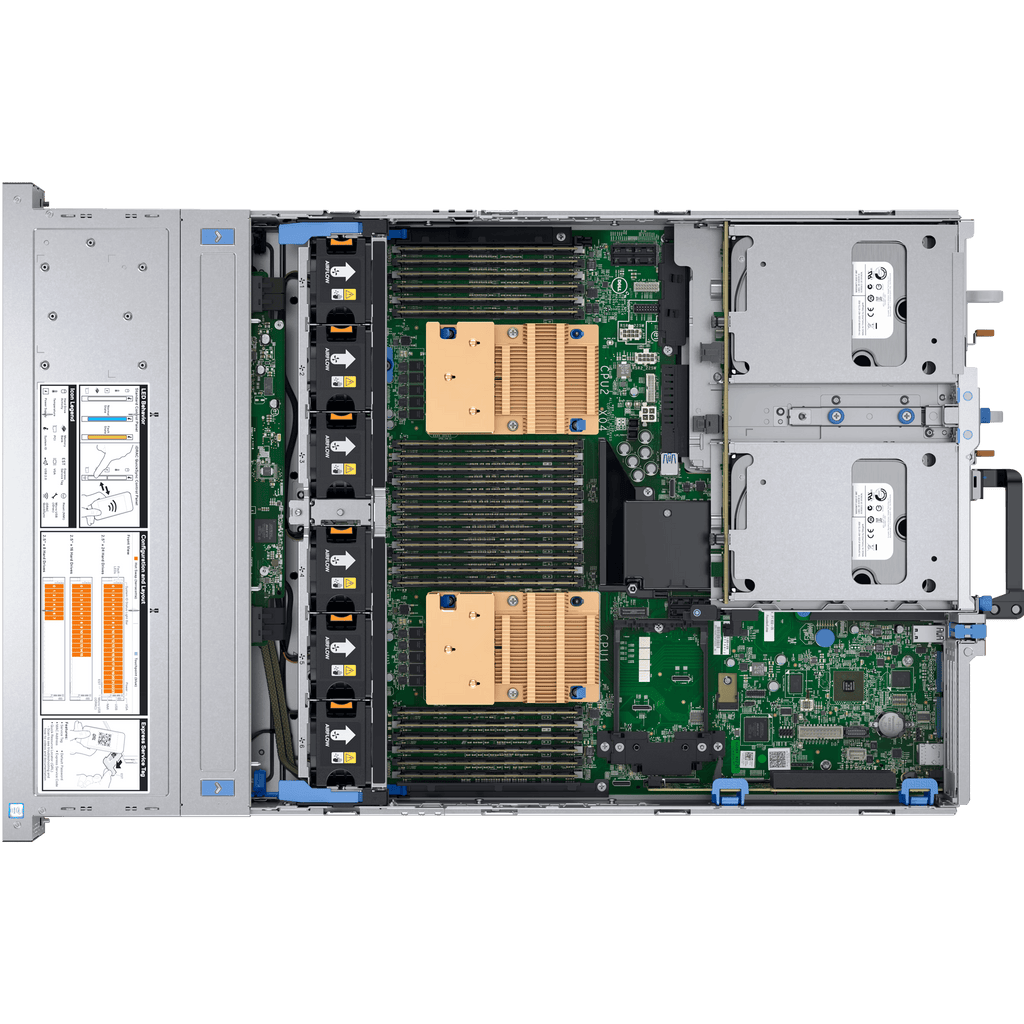
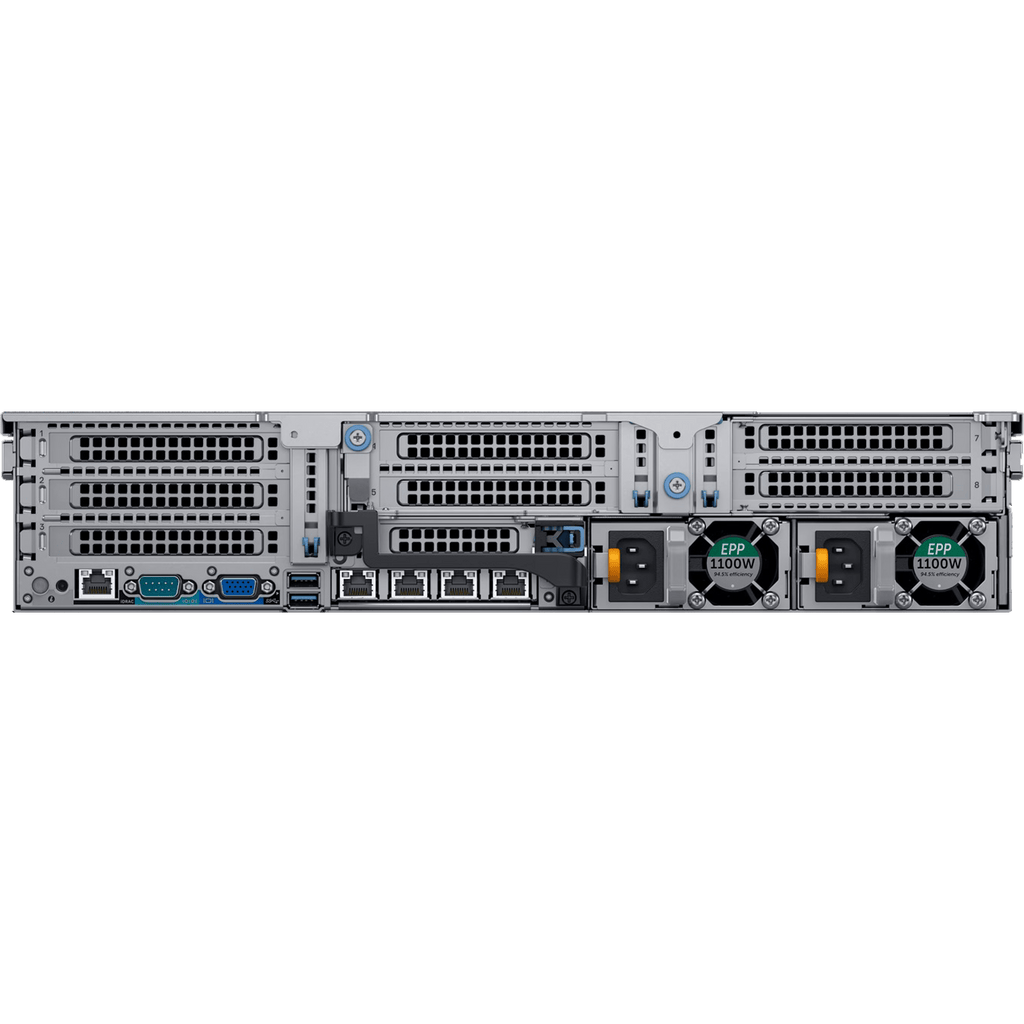
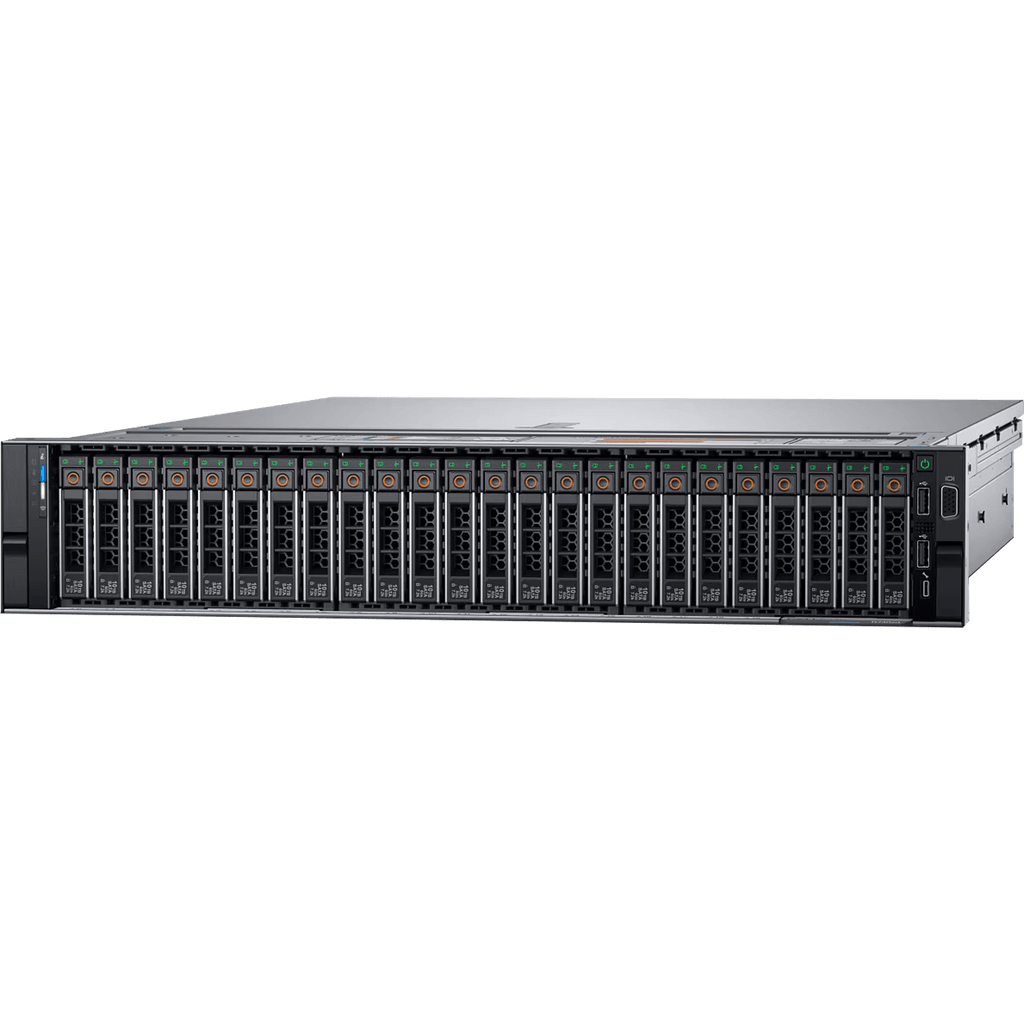
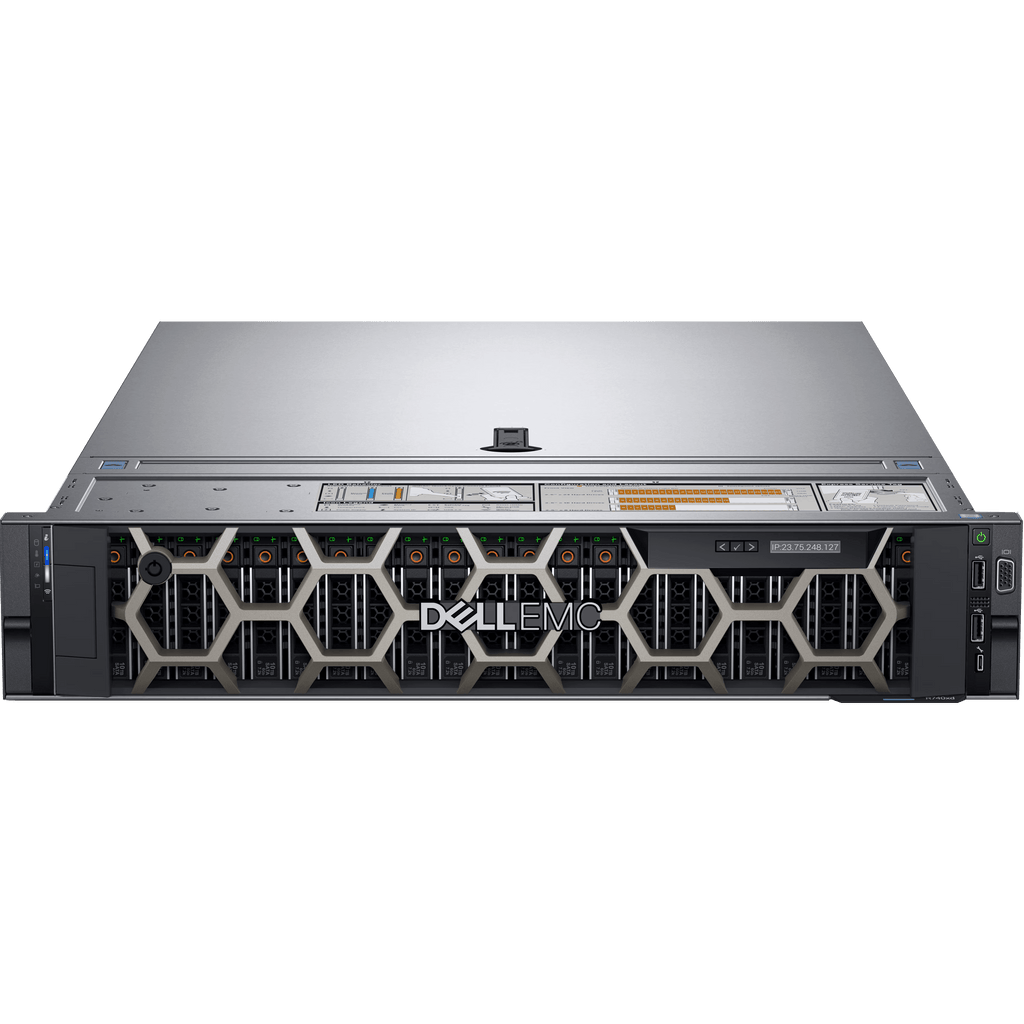
Save with Certified Refurbished Dell PowerEdge R740 2 x 18 Core Intel Xeon CPU Server - 2.5" Backplane
at R 74,999.00 with 1 year warranty & Fast Free Delivery in SA.
Shop now 👉 Find the link in our bio
16


Jun 13
PowerEdge R340 15Kくらいで購入者募集なう
CPU:Xeon E-2144G
RAM:要相談
ROM:3.5in
PSU:350W x2
フロントパネルあります
(レールはA12でよければつけれるよ)
1
65

Jun 13
Dell PowerEdge R740xd, 2x Xeon Gold 6150, 128GB RAM, 24 SFF; Gen1 Scalable is older, but 24 bays and H730p stand out. 1,718 USD shipped rackrat.net/us/servers/item/… #ad #homelab #storage
3




Jun 13
Dell PowerEdge R640, 2x Xeon Gold 6152, 64GB RAM; Gen1 Scalable is a bit older, but dual 22C CPUs and 64GB make it worth a look. 1,847 AUD shipped rackrat.net/au/servers/item/… #ad #homelab
7


Jun 12
Need mounting solutions for the Dell PowerEdge R240? Check out our Dell rail compatibility guide with direct product links and dimensional details! #Dell #ServerRails racksolutions.com/news/blog/…
5

Hermosas epocas... pero si. El de la derecha (el que esta con el Samsung beige) es un Dell PowerEdge T710 doble Xeon y aguanta hasta 288gb de ram.
1
1
28

Jun 12
Dell PowerEdge R740, 2x Xeon Gold 6148, 64GB RAM, 8 SFF bays, 4x RJ45; Gen1 Scalable is a bit older, but the 8-bay chassis and H730p are the bits to notice. 969 USD shipped rackrat.net/us/servers/item/… #ad #homelab #storage
23

Jun 12
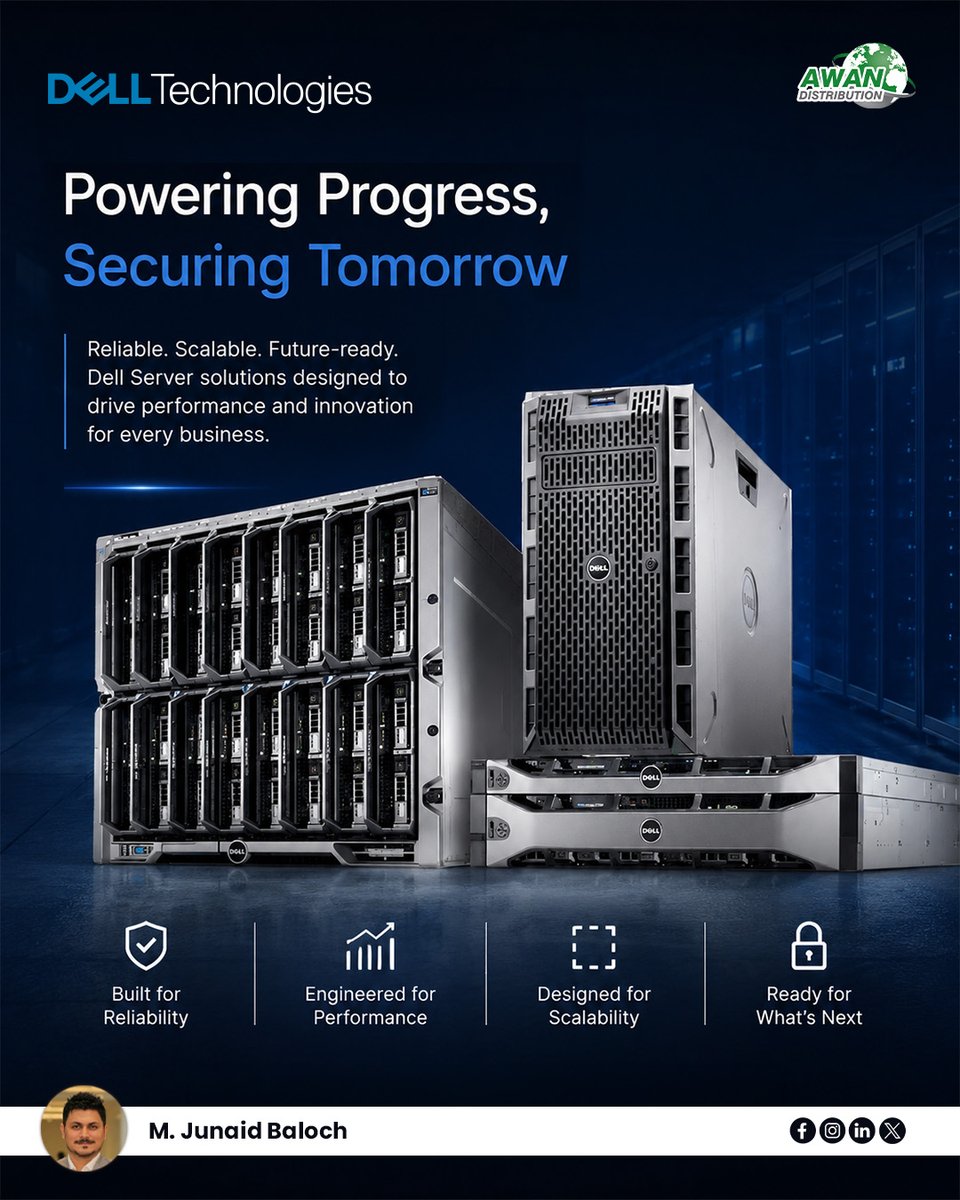
Modern businesses need infrastructure that can scale with ambition. Dell PowerEdge Servers deliver performance, reliability, and flexibility for evolving workloads. Proud to see these solutions available through Awan Distribution.
#DellPowerEdge #EnterpriseIT #AwanDistribution
4