
You got mental problems dawg

You’re making things up now and it’s ok. They’re guarded differently because they’re different players. Teams are very much trying to stop both. One is just a little easier than the other.
Uchechi Peace retweeted

There is no height you want to get to, that you will likely be the first.
The answers to the dilemma of your problems are given by God, and are deposited in the mind of people through their experiences.
#ApostleJoshuaSelman
#ThisIsTheWay
#ThePowerOfDivineDirection
#KoinoniaAbuja
#KoinoniaGlobal
1
4
12
341

In the US babe and i hope it's going okay over there in the UK it' looks like you are having a lot of problems over there now it's what you get for having all them people come in there so i will not be going back over there no more it's not safe to go over there no more honey ❤️
Amaterasu: Ama-no-iwato arc retweeted

14h
American: So there are terrorists causing problems in your country, right?
Nigerian: Yes.
American: That's terrible. Is the government at least doing something about it?
Nigerian: Well, our president addressed the issue.
American: Oh. What did he say?
Nigerian: He spoke about the law of lawf in the holy book
American: ...The law of love?
Nigerian: I guess
American: Okay. Did you send the military after them?
Nigerian: Hmm... at times.
American: What do you mean "at times"?
Nigerian: Sometimes we've heard the military went after them. In some cases, the terrorists ended up killing military personnel.
American: Wait. They killed your soldiers?
Nigerian: Yes.
American: Okay, so then your government retaliated and finished them off, right?
Nigerian: Mm... nah.
American: What do you mean "nah"?
Nigerian: Well, our president also gave an example from the Bible about the prodigal son on how we should accept them with love.
American: Hold on. The prodigal son?
Nigerian: Yes.
American: I'm confused. So you're telling me terrorists killed military personnel, and the response was a Bible lesson?
Nigerian: Something like that.
American: So you guys aren't doing anything?
Nigerian: No, no. We're doing something.
American: Okay. What are you doing?
Nigerian: We're rehabilitating the ones we catch.
American: You're... rehabilitating them?
Nigerian: Yes.
American: Not prosecuting them?
Nigerian: Not according to our president, no.
American: WTF WTF WTF
Nigerian: I never even tell you anything, you don dey cry
219
2,157
6,365
137,974

12s
🇷🇺 Despite all the Kremlin’s efforts, Russia’s advantage in manpower compared to Ukraine is already diminishing.
▪️ Fewer and fewer Russians are willing to go to war. According to Russian economy expert Janis Kluge, recruitment into the Russian army in the first quarter of 2026 decreased by 20% compared to 2025. This trend is expected to continue.
▪️ Russia has already sent tens of thousands of convicts to the front, received reinforcements from North Korea, and recruited immigrants.
▪️ To attract new contractors, Russia offers potential recruits one-time bonuses of up to $80,000, debt write-offs of up to $140,000, “Hero” status, citizenship, and other benefits.
▪️ Ultimately, if a potential recruit did not want to take a solid bonus last year, it is unclear what would force him to change his mind now, especially against the backdrop of numerous reports about brutal treatment on the front line
☠️ At the same time, Russia is suffering catastrophic losses on the battlefield. According to Western intelligence reports, more than 500,000 Russian soldiers have been killed in the war (with severely wounded included, manpower losses exceed 1.3 million), while hundreds of thousands more have left the country to avoid conscription. The resulting labor shortage is driving up wages, which is another source of inflation in the country.
▪️ The strategy of “pay more rather than force” is failing, especially as Russia’s economic problems continue to grow. Putin will likely have to make even more unpopular decisions this year if he wants to continue the invasion of Ukraine. One option is declaring mass mobilization.
▪️ This view is shared by Nigel Gould-Davies, Senior Fellow for Russia and Eurasia at the International Institute for Strategic Studies.
“The Kremlin will soon face a fundamental choice: radically increase demands on the Russian economy and society, or reduce its military goals,” — he predicts.
This analysis paints a clear picture of Russia’s mounting manpower crisis and the limits of its current recruitment model. Despite heavy financial incentives and the use of convicts, foreigners, and North Korean troops, the human and economic costs are becoming unsustainable. The growing reluctance to fight, combined with catastrophic losses, is forcing the Kremlin toward increasingly difficult choices, including the politically risky option of mass mobilization. This trend significantly weakens Russia’s long-term ability to sustain the war.
Video is generated by grok AI
1
2
3

Can you democrats help with the problems we have at hand and stop making up more bullshit lies and problems that dont mean shit
Kate is a pretty strong word. I don’t think that he takes the time to hate them, but they are a problem and they cause problems because they came here not to assimilate or for a better life. They came here to make us change our ways. One word is invasion

Muy white people problems (?) pero lo que me molesta que las redes en este mundial tengan un resorte o no se que mierda. Dejen que las redes se inflen como debe ser carajo.

@realDonaldTrump I just saw this birthday video of yours. Quit fucking around and try solving the problems of America, asshole. By the way, with a bloated disgusting body like yours, you shouldn’t be going shitless, fuckface.

The White House lawn has hosted state dinners, peace ceremonies, championship teams, and some of the most significant moments in American history.
This week, it hosted dirt bike jumps.

19s
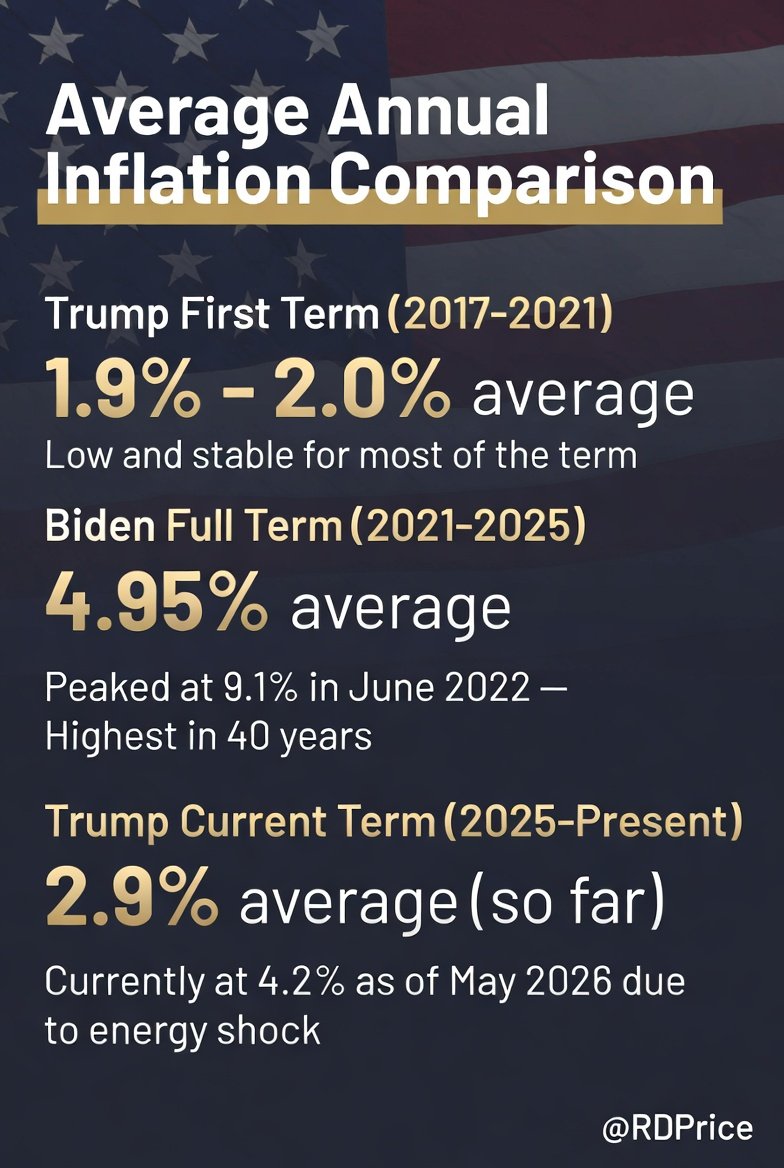
🚨 I'm seeing claims that Biden’s inflation was only 2.9% while Trump’s was 4.2%, and then Libs call anyone who criticizes Biden’s numbers “in a cult.”
Here’s the truth:
- Biden’s inflation peaked at 9.1% in June 2022. The 2.9% number they’re using is a recent low point after years of high prices.
- Trump’s inflation stayed low for most of his presidency. The 4.2% figure was a temporary spike during the early COVID recovery, not the norm.
- Liberals are deliberately comparing Biden’s best recent number against Trump’s worst temporary spike.
They also completely ignore the real drivers of inflation under Biden - massive government spending, energy policy decisions, and supply chain problems.
It’s designed to manipulate people emotionally and shut down discussion.
Don’t fall for cheap propaganda like this.
Average Annual Inflation Comparison:
Trump First Term (2017–2021): 1.9% – 2.0% average
(Low and stable for most of the term)
Biden Full Term (2021–2025): 4.95% average
(Peaked at 9.1% in June 2022 — Highest in 40 years)
Trump Current Term (2025–Present): 2.9% average (so far)
Currently at 4.2% as of May 2026 due to energy shock
Biden’s average inflation was more than double Trump’s first term.

SEARCHING FOR LIKE MINDED
INDIVIDUALS WHO DESIRE TO
DEVELOP THE UNIVERSAL
COMMUNITY INTO THE
UNIVERSAL PARADISE
AND WON'T MIND MY FACE
BEING ON THE ADVERTISEMENT.
I AM A WOMAN OF COLOR.
I DO LOTS OF SELF-DEVELOPMENT.
I DO WHATEVER IS NECESSARY TO BRING THE UNIVERSAL PARADISE INTO REALITY.
I WILL CREATE THE MAGAZINE COMPANIES.
THE WEB COMPANIES.
THE TELEVISION BROADCASTING COMPANIES.
THE UNIVERSAL BANKING SYSTEMS.
SECURITY COMPANIES THAT WORK AGAINST THOSE WHO CREATE TECH TO WATCH DEVELOPING CITIZENS WHILE THEY CREATE SO THEY CAN TAKE THEIR WORK.
THE UNIVERSAL ECOSYSTEMS
ALL OF WHICH WILL HAVE NO PROBLEMS PUTTING A WOMAN'S FACE ON THE PROJECTS IF SHE WORKS ON THEM AND HAPPENS TO LOOK LIKE ME.
THE ENTIRE PROJECT WILL COME UNDER
THE UNIVERSE CENTRIST
PARTY
HERE IS TO
BUILDING THE NEW WORLD!!!
AUDREY


Does this man have 27 hours a day or something? Everyday just solving random problems.

1,000 New Yorkers won our lottery for affordable tickets to the World Cup.
Today, we celebrated in the stands for the first NY/NJ game of the tournament.
The beautiful game belongs to everyone.

ALT Mayor Mamdani attends the match between Morocco and Brazil with some of the New Yorkers who won the World Cup affordable tickets lottery.

But that’s just it. It’s not the same car if it was, Hamilton would be having the same problems as Charles. Hamilton has to be in the middle of everything. I suspect he bought off the team so you know what that means. He’s been envious of Charles‘s popularity from the beginning,

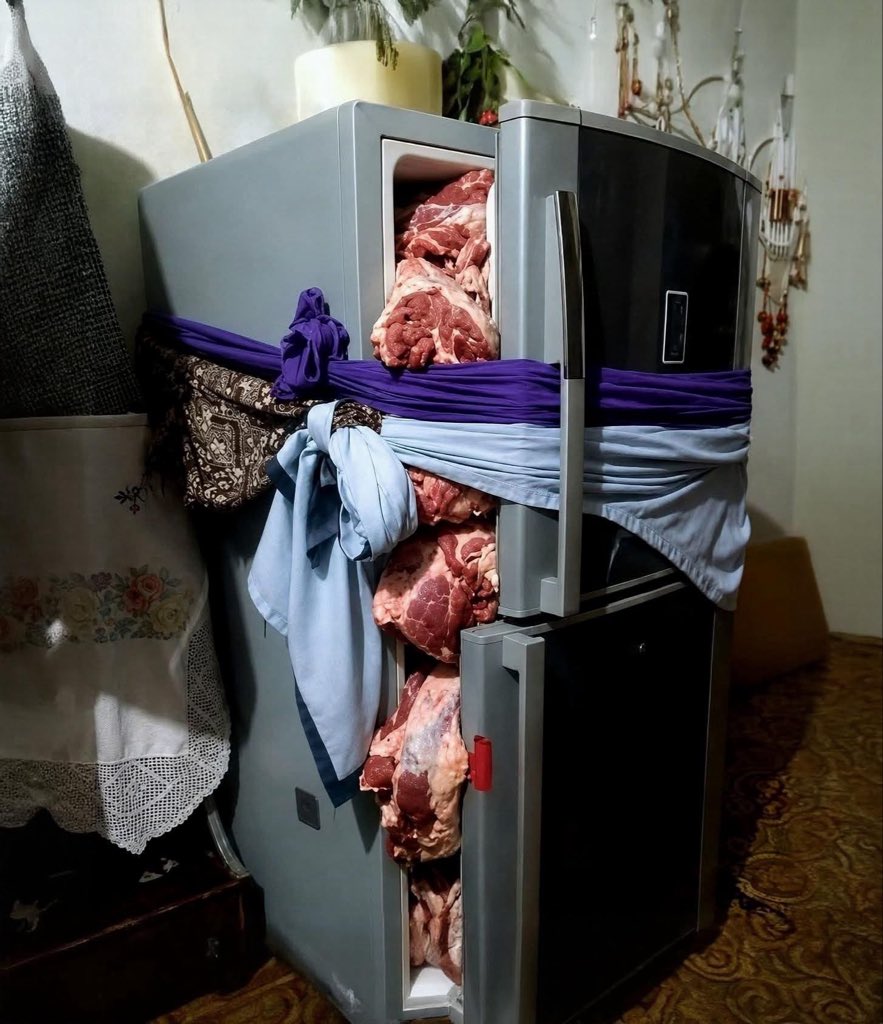

Dear Liberals: Stop blaming Trump for the problems your own govt created.
1

You are assuming there are Nets fans.
I’ve lived in NY my entire life and I dont love living here mainly because of the politics. That’s what is happening here. NYPD isn’t able to do their job. I don’t know how I could prove it but I’d bet anything there were paid agitators at those watch parties.
There were multiple people trying to stop the assholes. Unfortunately they ended up getting their ass beat. There were multiple watch parties across all 5 boroughs. No problems at most of them. You are hearing the small cases and labeling all of us. I alone can list off hundreds of people who wouldn’t act up like this.
You listed Chicago and Detroit as cities where this stuff doesn’t happen. Haha so I have to cite what happens every weekend in Chicago?
2
Lucas: gay Panic™️ edition @DQ10 hyperfixation era retweeted

This is maybe engages single best mechanic and it along existing solves like 70% of 3h map design problems I'm so glad it's here

Anyways it seems like additional lives for bosses is coming back from Engage

10
49
935
44,894
Tunji retweeted

Our generation is paying the price for decades of bad decisions we never made. We inherited problems we did not create
Allah ya isa!
16
327
618
11,632

I’m wondering, who pays you to post this crap because you’re trying to insight riot trying to insight problems into South Florida and I seriously doubt you live here as I said in my post Floridians can tell who lives here😉