
So did the Platonist succesors like Plotinus and Porphyry and Proclus, Julian, Iamblichus, Simplichius and Damascius all push Christianity?
Why did Justianian kick the Platonists out of Constantinople?
You don't even have the awareness to realize how bad you look.
1
2
111

Jun 8
The triad of Being/Life/Nous that you see in Proclus is already in Plotinus (as subdivisions of Nous), where the moment of Being is prior to the multiplicity of Nous, the intellect-forms constituting the latter being a product of Being multiplying itself
Apr 23

Often neglected fact is that Plotinus is actually in accord with the later platonists in his placement of undifferentiated Being as prior to the multiplicity of beings. In particular the idea of Being "splitting itself up" into the many beings through Number as...


1
5
265

The mystery you seek defines you. It molds your action to the world it imbues; it reveals its secrets only when you find the ears and mind to hear. It is real/unreal: hiding to the material soul proud in darkness, revealed to the soul blind with thirst.
Polymnia Athanassiadi describes the Neoplatonist Damascius’s understanding of the Chaldean abyss. Contrary to his fellow Neoplatonist, Proclus’s, optimistic description of the soul's ascent, Damascius tears away unwarranted assumptions. His analysis of the metaphysical structures created by Proclus lead to a more existentially informed awareness of the upward ascent to unification with the One.
She explains:
The Oracles, insists Damascius, urge us to forget all our philosophical notions, to discard and reject all definition, and to concentrate solely on this unending pang – the wdis, which is also the odos, a recurrent pun –, for it is not possible to grasp what is indescribable and unqualifiable even by “the flower of the intellect“, as Iamblichus had realized. What is needed is a complete emptying of the mind, a state of utter passivity, of annihilation of the self so the “the gods bestow the view”.” - Athanassiadi
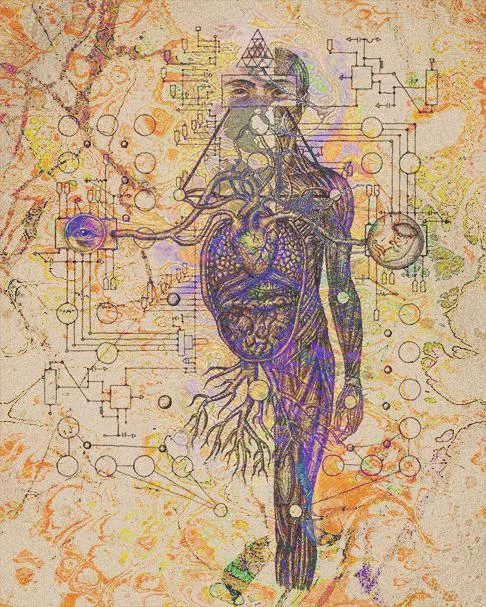
image: Soul of Science (also referred to as Equilibrio) by the contemporary American artist Daniel Martin Diaz
5
22
593

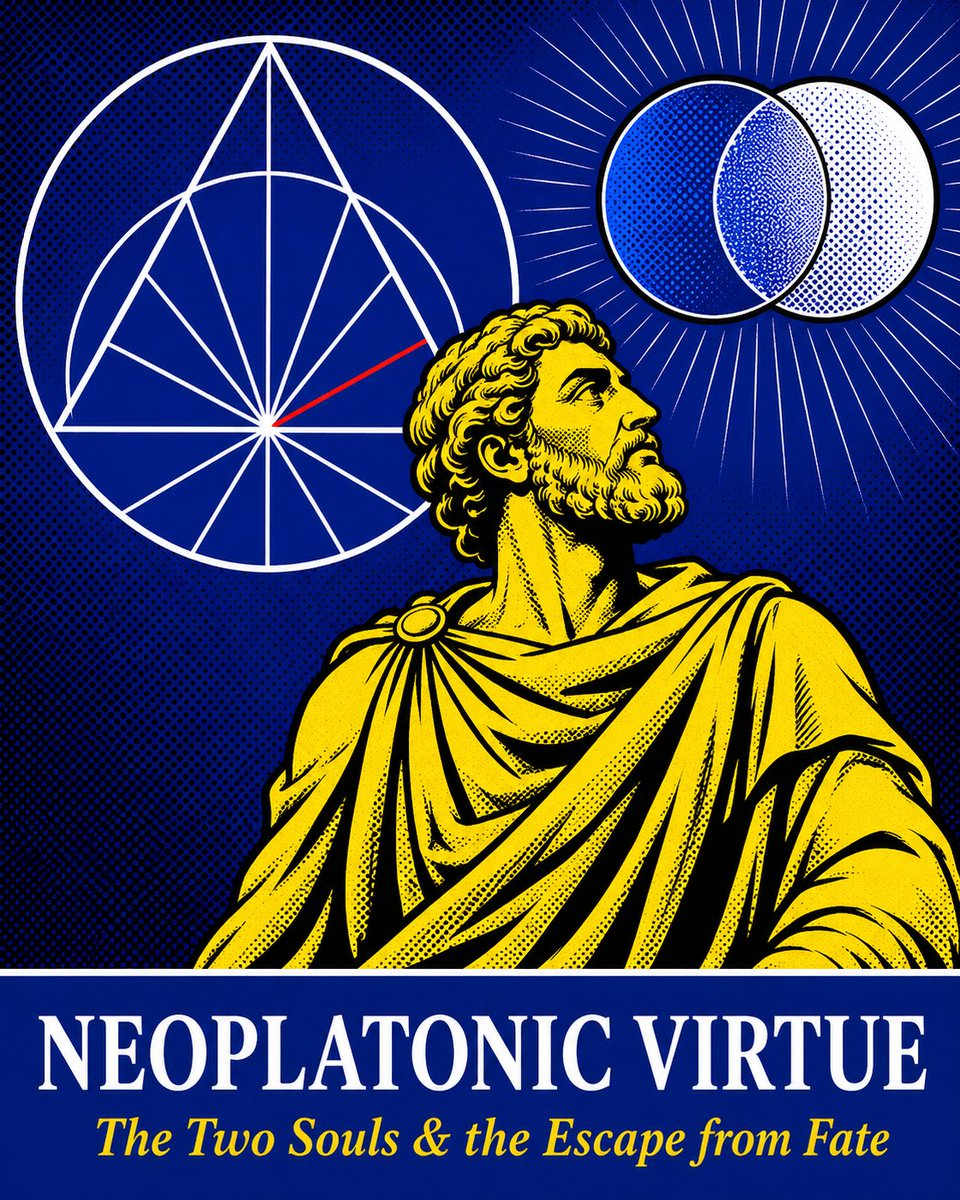
Neoplatonic Virtue: The Two Souls, Mathematics, and Fate | Reading Proclus' On Providence
Can you love God without a body? Proclus says the soul is partly above fate, partly under it. Mathematics is how you begin to find out which part you are.
1
2
9
359

One may hope that this thread will make people think twice next time they bandy around the term “Neoplatonism” to dismiss the Areopagitic Corpus.
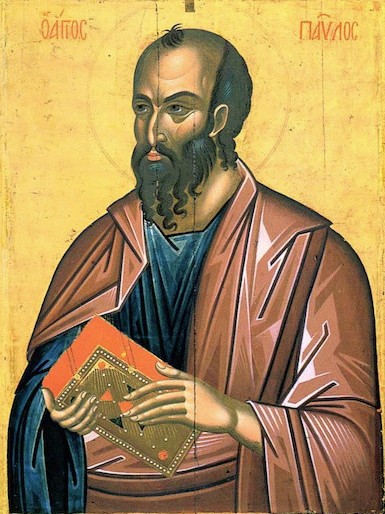
As we have demonstrated, all of the fundamental metaphysical doctrines that are found in the Dionysian Corpus are not Neoplatonic at all, but 1st-century Jewish, exactly as one would expect from a learned disciple of Saint Paul.
If anything, it looks like the Neoplatonists were influenced by the Christians, not the reverse (and as a matter of fact, it should be noted that both Plotinus and Iamblichus’ teachers were Christians, and Proclus himself quotes Origen approvingly in his treatises).
1
1
25
491
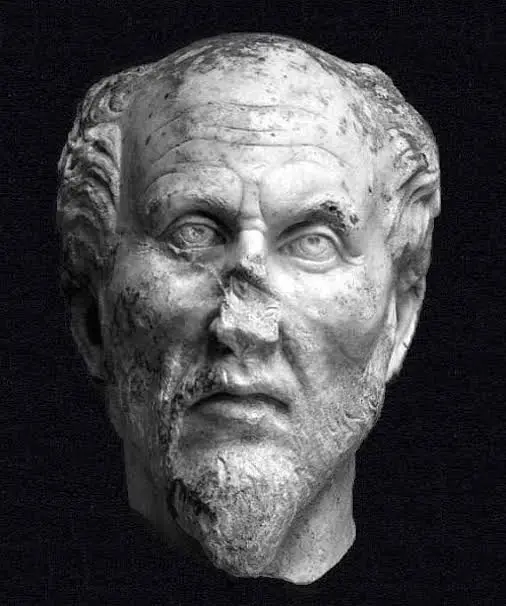
Neoplatonism was a philosophical system formalized by the Alexandrian Philosopher Plotinus in the mid 3rd century AD which sought to explain how all of reality was an emanation from a primordial “One”, which was above all being and understanding. The One is said to produce Mind (or Nous), and the Nous produces Soul as an image of itself. Later Neoplatonists like Iamblichus and Proclus added a further series of intermediary beings to this system, like angels and demigods. For the Neoplatonists, the purpose of life is to return to the unity of the One.
Are these themes really reflected in Saint Dionysius’ writings?
1
2
18
740

Jun 8
There is clearly a bridge between both! Even when Proclus defines Will (boulésis) as “only regards the Good... For a willed life... makes what depends on us extremely powerful and it is really godlike: thanks to this life the soul becomes God and governs the whole world"
1
6
97
Jun 8
Freedom is, paradoxically, “voluntary subordination” to the Gods (ἐθελοδουλεία; Proclus – P.P. 24), the only and true Will (βούλησις) understood as a determined and conscious orientation toward the Divine.
1
3
25
3,117
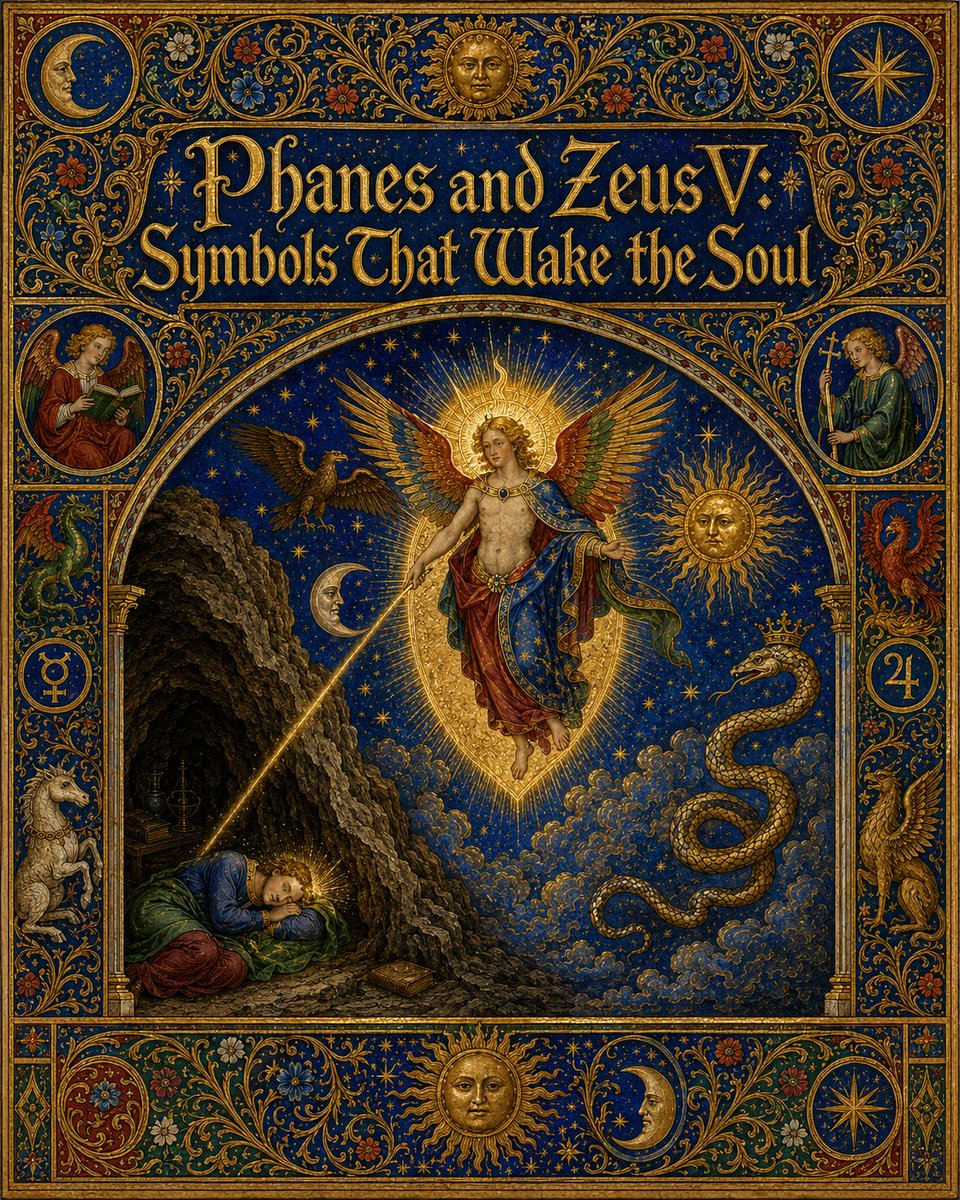
Phanes and Zeus V: Symbols That Wake the Soul
Why does Plato use myth at all? For Proclus, myths and symbols are not simplifications for the unlearned — they are the proper beginning of philosophical inquiry into nature, designed to rouse the intellect toward investigation.
2
1
10
657

They should adopt Proclus the way Rome adopted Aristotle lol.
Sadly we missed out on Joseph Smith's "inspired" translation of the Elements of Theology, which he would have inevitably completed had he lived another decade or so
1
2
46

Jun 7
Here's a free translation of Proclus arguments for the worlds eternity on Archive
archive.org/details/lang-mac…
1
3
34
Jun 7
You should read the arguments of Proclus on the Eternity of the World contra the Christians if you want to see what they actually thought. With a couple minor and philosophically unimportant exceptions (like Plutarch of Chaeronea) all of the Platonists had this position.
1
3
35

Jun 7
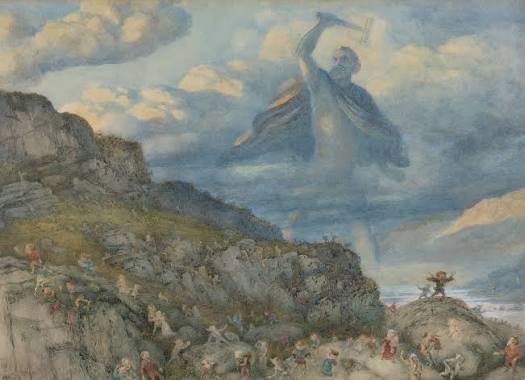
"All things that exist are offspring of the gods, are brought into existence without intermediation by them and have their foundation in them. For not only does the continuous procession of entities reach completion, as each of them successively obtains its subsistence from its proximate causes, but it is also from the very gods themselves that all things in a sense are generated, even if they are described as being at the furthest remove from the gods, even if you were to speak of matter itself. For the divine does not stand aloof from anything, but is present for all things alike...But those beings which proceed forth must also return, imitating the manifestation of the gods and their reversion to the cause, so that they too are ordered in accordance with the perfective triad...It is to this reversion that prayer offers an enormous contribution by means of the ineffable symbols of the gods, which the Father of the souls has sowed in them. Prayer attracts the beneficence of the gods towards itself. It unifies those who pray with the gods who are being prayed to."
- Proclus, commentary on Timaeus
"Hail, day! Hail, sons of day!
And night and her daughter now!
Look on us here with loving eyes,
That waiting we victory win.
Hail to the gods!
Ye goddesses, hail,
And all the generous earth!
Give to us wisdom and goodly speech,
And healing hands, life-long."
- Sigdrifa's prayer, from the Poetic Edda
"Surely anyone with any sense at all will always call upon a god before setting out on any venture, whatever its importance. In our case, we are about to make speeches about the universe—whether it has an origin or even if it does not—and so if we’re not to go completely astray we have no choice but to call upon the gods and goddesses, and pray that they above all will approve of all we have to say, and that in consequence we will, too."
- Plato, Timaeus
Mankind fulfills a cosmic role. You are Nature. The Gods care for your pleas and worship exactly as parents care for children, with an eye not necessarily to enjoyment but to education.
Jun 7

The Gods do not care about your pleas or your worship.
The Gods fulfill cosmic roles. They are Nature. You can't ask the wind to stop blowing; the wind will blow when it will, regardless of your question.
Embrace your Nature. Learn from them. Honour them.
ᛗ
1
11
108
3,801

That the Demiurge weaves Soul out of Being, Sameness, and Difference already indicates what forms the Demiurge works with. And it kinda shows Proclus’ genius since he does see the Demiurgic Nous as the Nous of Sameness and Difference.
1
3
72

plotinus's enneads compiled by porphyry and translated by thomas taylor. the AH armstrong is also acceptable.
Periphyseon on the Division of Nature by John the Scot
Orpheus and the Roots of Platonism by Algis Uzdavinys
but
Any and all translations by Thomas Taylor from the works of Iamblichus, Proclus,
1
1
3
142
Jun 6
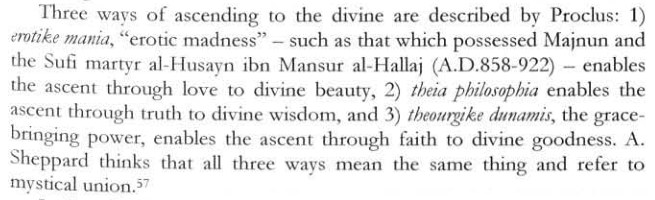
Depending on how you end up following the trail you might end up concluding that the first principle is just mindless/indifferent (e.g. Schopenhauer's Will), or that it is properly divine but not omnibenevolent in a relevant sense (e.g. Proclus)
1
14
310


Jun 6
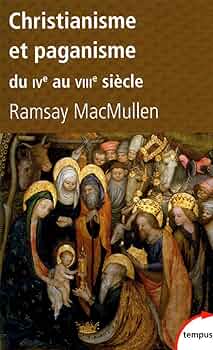
2/3: Il confond des païens tardifs come Proclus avec Celse et nous sert la vieille rengaine des païens qui ne croyaient pas à leurs dieux et étaient sans morale ni charité. Pas un mot sur l'action de l'église aidée par certains empereurs pour drainer les fonds des cultes paiens.
1
6
70
i.e. Without the Chaldean Oracles, the Orphica, etc, I am not sure Proclus’ detailed henology beyond being and even within Being in his hyperspecification would be as detailed as we have it now.
1
4
101
