
grok: Much cheaper than certified GA jets but high risk/time. For real aircraft, consider proven kits or turbofans instead. Great for ground demos/experiments!This is a homemade (DIY) turbojet engine with an afterburner, built in a backyard/workshop setting. It uses a centrifugal compressor (common in small DIY designs), combustion chamber, turbine, and extended nozzle section for afterburning. Videos show it producing strong thrust on a red test stand with a force gauge, where activating the afterburner creates a long, colorful exhaust plume and makes the nozzle glow bright red/orange from extreme heat (likely 800–1200°C locally).Brief Engineering Diagram Outline (Typical Small Turbojet with Afterburner)A basic cross-section looks like this (axial flow path left to right):Intake/Compressor — Air enters; centrifugal impeller compresses it (high pressure ratio in one stage, common for DIY).
Diffuser — Slows and distributes compressed air.
Combustion Chamber — Fuel injected ignited (annular or can style); primary burn drives the turbine.
Turbine — Extracts energy to spin the compressor via shaft.
Afterburner Section — Additional fuel injectors flame holders; secondary combustion reheats exhaust for extra thrust.
Nozzle — Converging (or variable) to accelerate exhaust; glows red under AB due to heat.grc.nasa.govpressbooks.lib.vt.eduyoutube.comyoutube.comKey challenges: Heat management (nozzle melts/glows), balancing, fuel control, and materials (often stainless steel or scrap).Inexpensive ModificationsCeramics on the rear (nozzle/afterburner) is exactly the right idea. Thermal barrier coatings (TBCs) like yttria-stabilized zirconia (YSZ) insulate metal, allowing higher temps without melting/distortion.youtube.com 1
Cheapest route: High-temp ceramic coatings/paints (e.g., Cerakote or DIY refractory cement mixes) applied to nozzle and liner. Plasma spray or even brush-on for amateur level. Bond coat first (NiCrAlY or similar). This can drop metal temps by 100–300°C.cerakoteeu.comOther low-cost mods: Variable nozzle petals (for better AB efficiency), better flame holders, propane/kerosene mix tuning, or added cooling air bleed. Use stainless/inconel scrap where possible. Avoid full redesign—focus on heat shielding and fuel control.
Safety note: These run extremely hot/dangerous; test remotely with proper shielding.Cost to Build One This Size for GA AircraftThis size (small thrust, perhaps 50–200 lbf estimated from visuals) could suit experimental GA (e.g., ultralight jet or pulsejet alternative), but it's not certified/safe for flight without major work (vibration, reliability, fuel efficiency are poor vs. commercial).
DIY build cost: $200–few thousand USD using scrap turbo parts, stainless cookware, machining. Many backyard examples under $1k–2k.youtube.com
For a flyable GA version (reliable, with controls, mounts, fuel system): $10k–50k in materials/machining alone for a competent builder. Professional small turbojets (e.g., model/RC scale ups or experimental) run higher due to balancing, testing, and iteration. Full custom from scratch is "awful" project per forums—expect heavy iteration.reddit.com
2
1,235

elaborate flying machine and it's a pulsejet with dentures on it 🙄🙄🙄
1
1
26

Jun 13
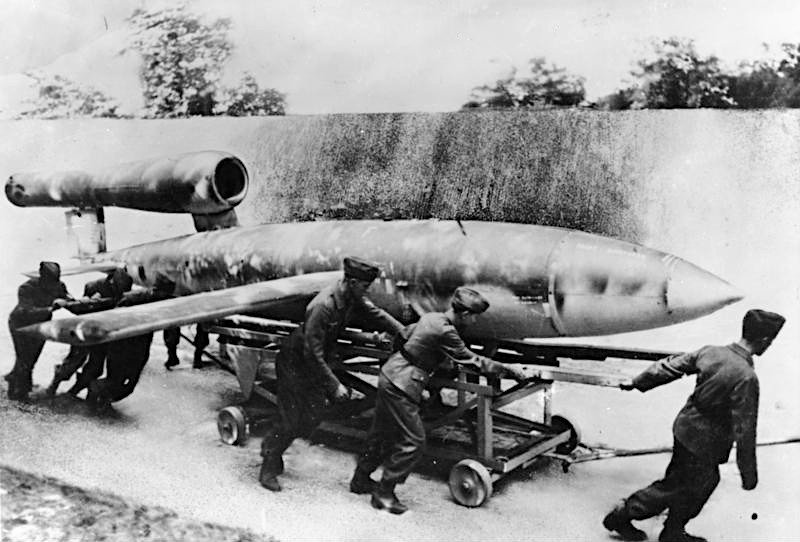
Did you know that on this day (June 13, 1944), Nazi Germany launched the very first V-1 flying bomb attack on London? These terrifying pilotless weapons nicknamed “buzz bombs” or “doodlebugs” for their distinctive sound, introduced a brutal new era of psychological warfare.
The V-1 was essentially an early cruise missile, powered by a pulsejet engine. When the buzzing stopped, Londoners knew the bomb was about to dive and explode. The initial strikes killed and injured civilians, spreading panic across the city. Over the following months, thousands of V-1s rained down, forcing Britain to develop new countermeasures like anti-aircraft guns, barrage balloons, and fighter interceptions.
1
1
21

On #TDIH in 1944, Germany launched the first operational cruise missile at Great Britain. The V-1 was powered by a simple but noisy pulsejet that earned it the Allied nickname "buzz bomb." Learn more: s.si.edu/3N9CiyS
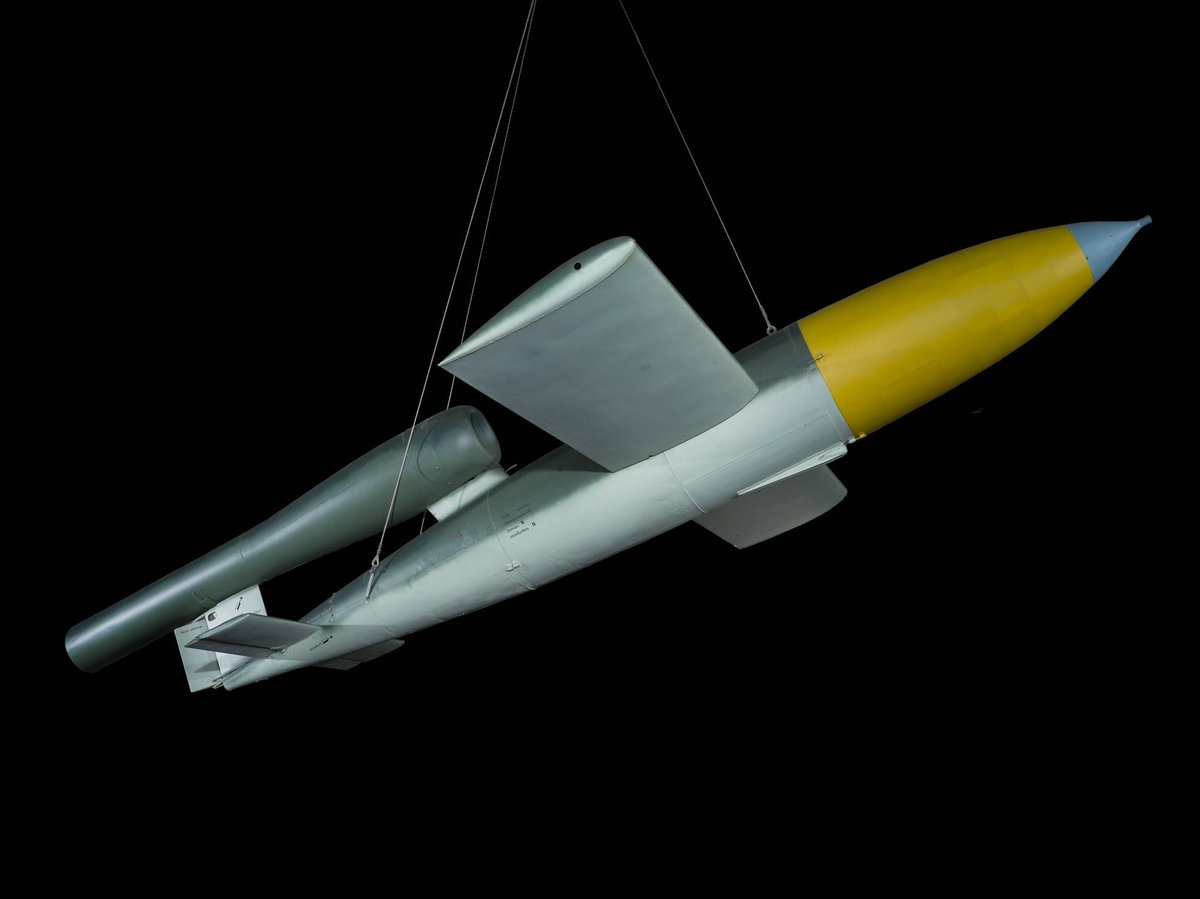
ALT V-1 flying bomb, also known as a buzz bomb, suspended against a black background. It is light green with a bright yellow band around the front of it.
3
15
92
4,091


I still think it needs a V1 Pulsejet engine just to scare the living daylights out of the Russkis. Listen here right at the beginning and again at about 6:30.
youtu.be/aVwyY0jxFXk?is=IaR6…
203


Jun 10
The V-1’s Argus As 014 pulsejet engine generated noise levels up to 140 decibels.
Enough to cause immediate hearing damage to an eardrum permanently.
1
34


V2?
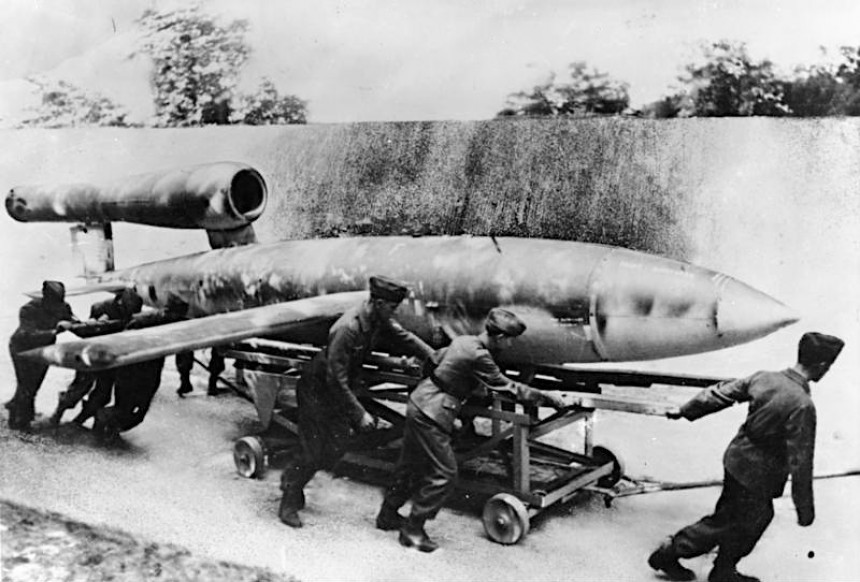
This is a pulsejet.
You're still at V1-level of technology.
At least you can still larp as Nazis.
1
15
134

It's fucking physics. It's difficult to make anything with pulsejet that will fly longer than few minutes. Crimea? It will not even reach RU lines. This is good example of pulsejet powered drone. It runs out of fuel in 3 minutes.
youtu.be/CJNhoSXvxYs?si=9LNP…
2
55
2,199
People had been trying to improve pulsejet for 75 years. Just look online. No one has succeeded. The problem is terrible compression ratio, only 1.2:1, which results in atrocious trust and fuel economy. For reference, simpliest jet can do 4:1, and piston, like on Shahed is 8:1
5
171

It seems to be significantly worse than the original Argus pulsejet used by V-1.
OK, it's cheap, but... Let's say it needs some more development
14
401

Why you should ignore Ork Clowns who say ‘Pulsejet can not be improved.’
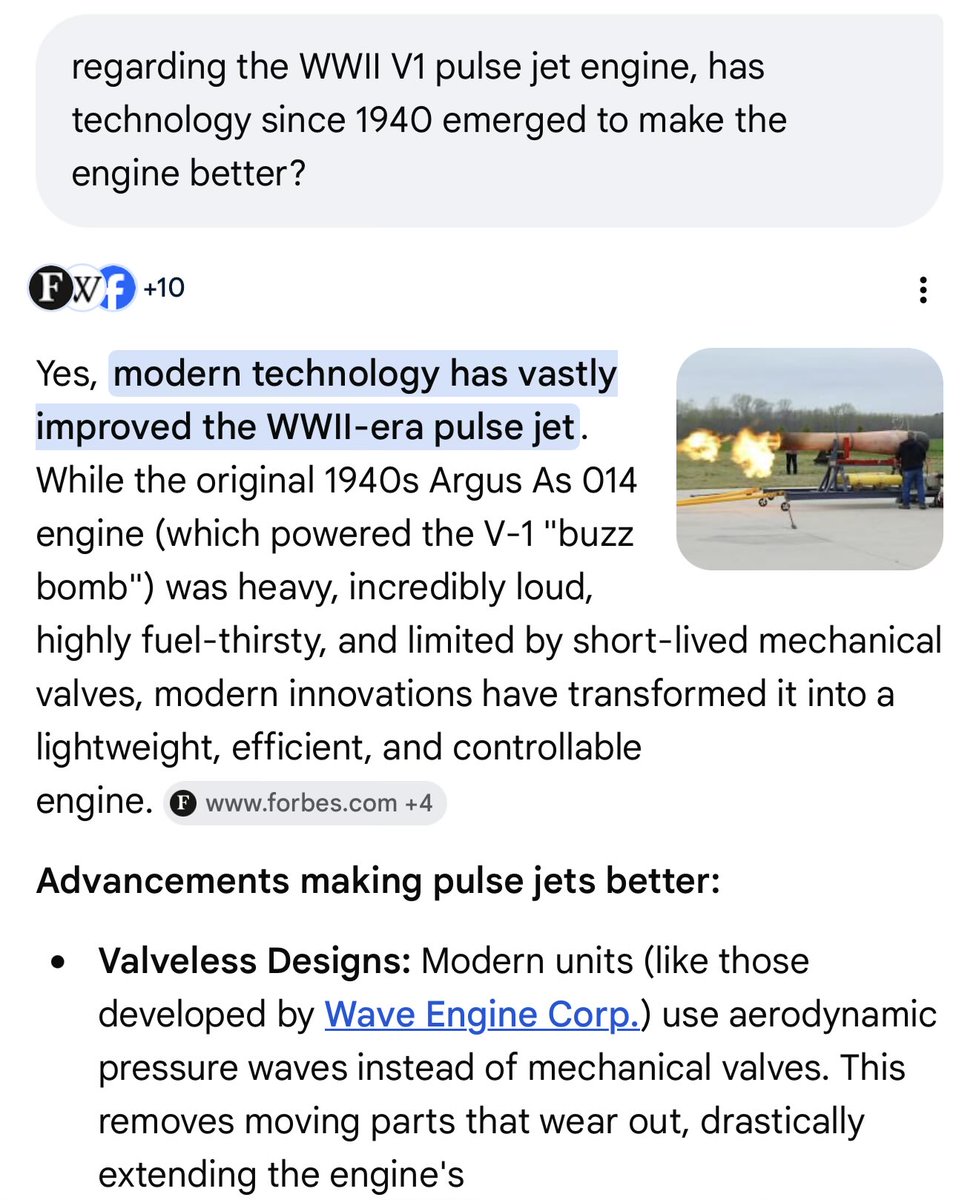

How much fuel it will have to carry? 400-500kg? Truth is Ukraine just recycles propaganda from 2022. Pulsejet can not be improved and if this was the solution for anything, it would be already fielded. Ukraine pimped Trimbita missile with pulsejet in 2023. Was never fielded.
4
3
12
2,987
Pulsejet can be made from any steel pipe. No 3D printing required. The reason why it's not fielded that inherent pulsejet problem aka poor compression ratio, can not be overcome.
2
2
704
How much fuel it will have to carry? 400-500kg? Truth is Ukraine just recycles propaganda from 2022. Pulsejet can not be improved and if this was the solution for anything, it would be already fielded. Ukraine pimped Trimbita missile with pulsejet in 2023. Was never fielded.
2
2
3,110
This is 100% proof that average Ukrainian supporter is technically retarded. It's pulsejet, it can not be made much better than it was in 1945. There is a reason why it's not used. Fuel economy due to low compression ratios. It's more of a burner than jet.
16
2
188
9,799

May 23
The Annual Maretime Bay Dash brings thrill seeking aviators and enthusiasts to the scenic coastline, where high performance experimental aircraft compete in a series of aerial races.
A pulsejet-piston racer overtook a pusher prop, leading to a hoof-biting photo finish.

3
32
198
2,957


May 17
The pulsejet sitting on the cart to my right begs to be repaired and mounted on one..
2
109