


Sebastian retweeted

Jun 14
SCAIL-2 GGUFs
i quanted some ggufs for SCAIL-2 as i noticed no one had any linked on HF and people were asking for them in comfy orgs repo. they run with the unet loader.
huggingface.co/realrebelai/S…
6
38
3,949

Jun 15
when I tried the build-0.1 (formerly known as code-fast) last week I immediately hat to stop it because it was really silly (merely idiotic) repeating itself and thinking forever (like a too quanted chinese model)...
also measured grok-4.3 being less smarter than 4.2..
afaik I'm not sold.
187
Jun 14
I also feel like they raised limits temporarily. I used it all day on the $20 plan with absolutely no cut off in about 14 hours and im not even joking. I quanted a video model and coded its custom nodes all day no stops
86


While academics in Canada were being lectured on the need for more & better use of quantitative measures the gvmt of that time slashed the stats can budget terminating 1000s of time series sets & gutted the census making sure certain questions could not be quanted. Bad faith.
1
32

Jun 8
Sort of accidentally quanted as @XeroDestroys what was meant for this channel, but we'll let it stand. $ANML quants are our tickets out of this matrix. It's what will FLOOD $ALGO with authentic and meaningful transactions — and it puts us in the writers seat of history. Moving forward, history will be written on Algorand for quantum security. Be. Creator.
Jun 8

How might an ANML RE purpose 80 Barrels of wine? This quant commemorates the first ANML spray, as the ANML's set the course to dismantle the SAMO© Corp Matrix, and escape it's repeating time-loops with MEME by the barrel!
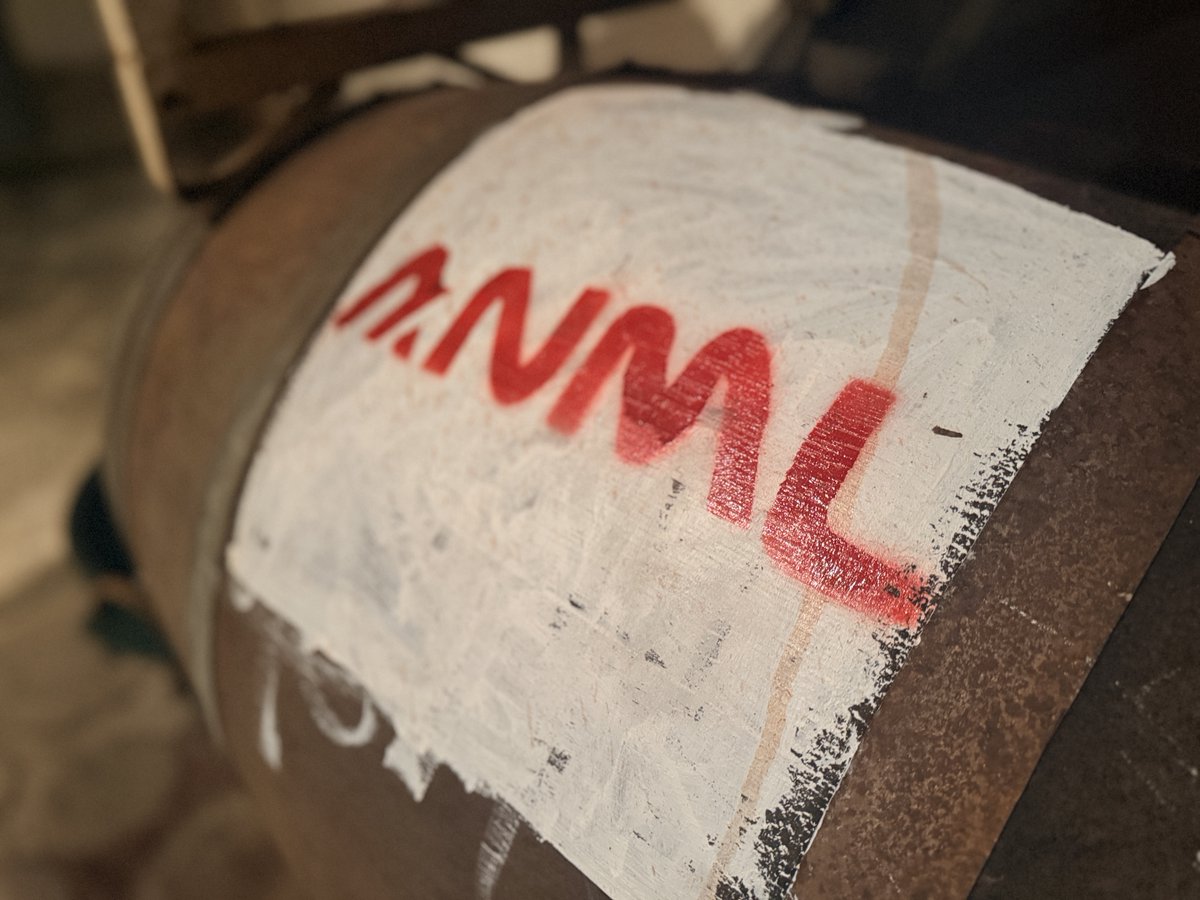

9
279
Jun 7
i quanted JoyAI Echo to a managable size. let me know if you can get it running.
huggingface.co/realrebelai/J…
1
8
1,024

Jun 6
Oh NICE!!! Is that @barackomaba @DJLougen model he quanted? BC It's mindblowing to see this.
1
3
63

May 31
Don't use it for your job, because you won't experience it where it's at its strongest. If a person isn't good at, say, electronics, you wouldn't conclude that he's an incapable of thinking from administering an electronics test.
Instead have it generate an html javascript game. Plenty of training data on that and easy for you to follow along. Then have it make simple modifications and customizations, one-at-a-time. Ask it what some function does, then make an edit to it, and ask it what does now.
Tell it to do things that obviously require some degree of understanding and reasoning, and are highly unlikely to be in its training data. Inspect the code to see if it was right.
You can do this with Claude, ChatGPT, Grok, MiniMax, Qwen, or whatever model you like as long as it's not old, tiny, or quanted to hell. Use a dense model with >25B parameters or an MoE with >100B parameters.
I use either Qwen 3.6 27B or Gemma 4 31B at a Q8 quant on my Macbook, but you can use a Q5 quant and have mostly ok results. I use llama.cpp for the inference engine and Unsloth XL quants downloaded from Huggingface. Local isn't as good as what you can get in the cloud, but it gives you full visibility into all generated tokens.
I'm not gonna convince you that AGI is nigh, nor that AI in its current forms can boost every task, nor that it's always logical, nor that it's always right, nor that it's been a net productivity boost across the economy, nor that it'll turn 10x engineers into 100x engineers, nor that the autoregressive transformer makes sense long-term. I mostly agree with you. But it's mistaken to believe it's incapable of logic or reason outright, or that it's randomly sampling normal or uniform distributions, or that it is a hindrance to all knowledge work. It's pretty darn intelligent at some things. And when people a) stop wasting tokens and over-trusting it on the things it's bad at or b) figure out how to make continual learning feasible, we'll see net efficiency gains from it.
1
2
889


May 27
Probably only fitting a moderately quanted 34b model on that at the very best. I would not want to potentially trust my life to perplexity that high in SHTF.


2
115