
Secretary of War Pete Hegseth arrives at Guantanamo Bay as the Trump administration ramps up its pressure campaign against Cuba.
The Pentagon says Hegseth is meeting with troops stationed at the U.S. naval base before traveling to U.S. Central Command headquarters in Florida.
The visit comes amid rising tensions between Washington and Havana, drawing renewed attention to Guantanamo Bay — one of the United States' most strategically important military outposts in the Caribbean.
199
581
3,124
113,944

I don't care if all the boarding ramps have been pulled back. Just throw her out the door to the tarmac.
3

Rocket Ramps built new mountain bike jumps at La Tierra Trails that line the undulating hills of northwest Santa Fe. It’s part of the city’s larger multi-use La Tierra Trails system that includes tracts for horseback riding, motorcycles, ATVs and hikes. sfnm.co/3S9UazU
26

⚠️ Buckhurst Hill station:
The ramps providing level access between the platforms and the trains are not in service due to unavailability of staff.
➡ To re-plan journey: tfl.gov.uk/plan-a-journey 📱 tfl.gov.uk/maps_/tfl-go
58


I bought myself a Lada as a first car. No chance to go over speed limit on a motorway but on a flip side a death trap if ever crashed. Gave me quite a few gray hairs while going up icy ramps with tyres frozen to the hardness of wood.
68

right around 9mbpd right now, slight rise over the last few weeks as summer ramps up
1
29

Exactly right: the value is in the plumbing stablecoins travel on. The railroad analogy is apt, but I'd add that the deepest moat isn't the on/off-ramps (the stations), it's the settlement and clearing logic (the signaling system that prevents collisions). The connective tissue is the prize, and within it, settlement is the deepest layer.
reuters.com/commentary/reute…
7

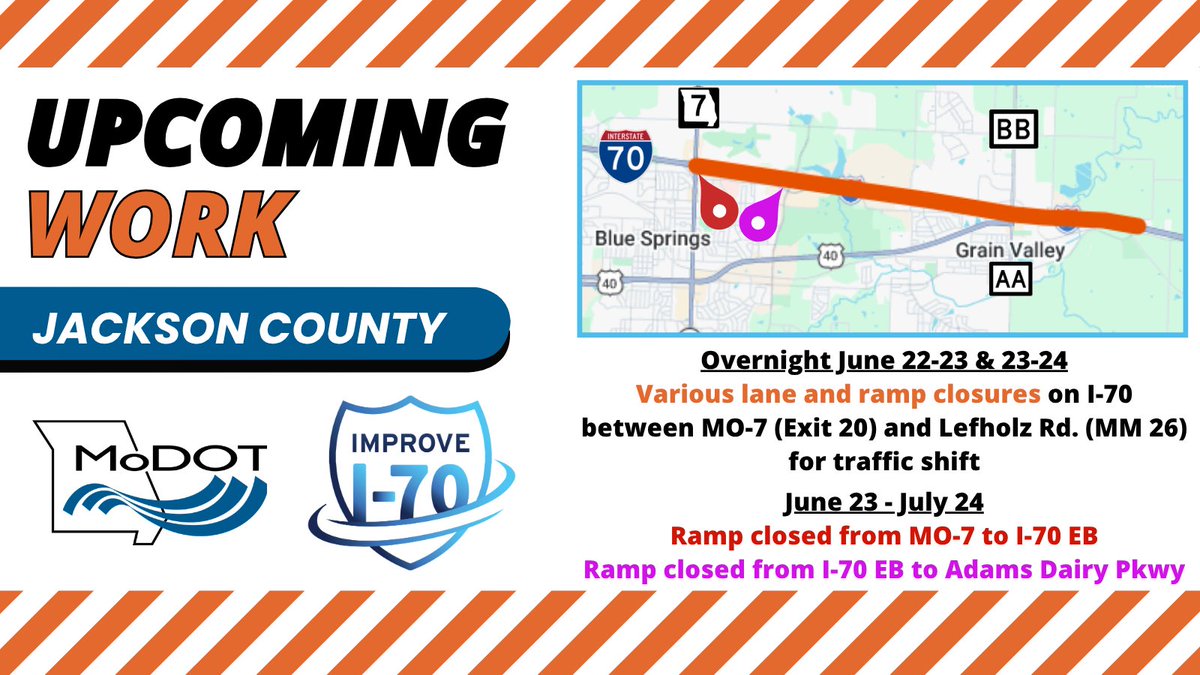
JACKSON COUNTY - Various lane and ramp closures along I-70 between MO-7 (Exit 20) and Lefholz Rd. (MM 26) overnight from June 22-23 & 23-24. Ramps closed from MO-7 to I-70 EB and from I-70 EB to Adams Dairy Pkwy from June 23 through July 24. Details: modot.org/node/91035
120
Do they re-lay it every summer?
It's interesting they don't relay those steep ramps at the edges.
10
AJ SELL retweeted

Beginning in the 1970's, Pocono asked state of PA for temporary (race weekend only) ramps on/off I-80 at Stoney Hollow Rd 1.5 mi N, or Long Pond Rd 4.2 mi E.
Still waiting...

I love Pocono Raceway and would be so upset if they ever were removed, but they really don’t have the infrastructure for a cup race parking wise and around the track. Still in traffic
9
6
196
21,712

I'm a cardiologist. Your dentist may be protecting your heart — and most doctors still aren't connecting these dots.
The American Heart Association just updated its scientific statement on periodontal disease and cardiovascular risk for the first time in 13 years. Their conclusion: the association between gum disease and heart attack, stroke, heart failure, and atrial fibrillation is stronger than previously recognized.
42% of American adults over 30 have periodontitis right now. Most have no idea it's affecting anything beyond their mouth.
Let me explain what's actually happening inside your body when your gums bleed.
Your mouth contains over 700 species of bacteria. When gums become infected and inflamed — the chronic condition we call periodontitis — the tissue barrier between your mouth and your bloodstream breaks down. Bacteria pour through. Not occasionally. Continuously. Every time you chew, every time you brush inflamed gums, bacteria enter systemic circulation.
One organism in particular should concern you: Porphyromonas gingivalis. I've written about it before in the context of Alzheimer's disease — it crosses the blood-brain barrier and has been found in the brains of Alzheimer's patients at autopsy. But it doesn't stop at the brain.
P. gingivalis has been found inside atherosclerotic plaques — the exact lesions I treat in the cath lab. It has been recovered from the arterial walls of heart attack and stroke patients. It is not a bystander. It is an active participant in the disease that kills more people than any other cause on earth.
Here's the cascade.
Bacteria from infected gums enter the bloodstream and trigger chronic systemic inflammation — elevated hsCRP, elevated IL-6, activated immune cells circulating throughout your vascular system. This inflammation damages the endothelium — the delicate inner lining of your arteries — promoting plaque formation, increasing oxidative stress, and shifting your blood toward a pro-clotting state.
The same inflammatory highway I've been writing about for months — connecting the gut to the brain to the heart — runs directly through your mouth. Your gums are the gateway. And for 42% of American adults, that gateway is wide open.
The AHA's updated statement highlights findings that should stop you:
The association between periodontitis and atherosclerotic cardiovascular disease is independent of shared risk factors like smoking, diabetes, and obesity in multiple studies. This isn't just "people with bad habits have both problems." The gum disease itself appears to contribute independently.
Brushing frequency alone shows a striking relationship with cardiac risk. Data from the NHANES registry found that brushing three or more times per day was associated with a 10-year ASCVD risk of 7.35% — compared to 13.7% for brushing once daily or less. Nearly half the cardiovascular risk — associated with how often you brush your teeth.
Treating periodontitis improves systemic inflammatory markers — hsCRP, the same marker I tell every patient to test — and improves intermediate cardiovascular measures including blood pressure and HDL cholesterol.
The more severe the gum disease, the stronger the observed cardiovascular risk.
I want to connect this to the bigger picture I've been building on this platform — because the convergence is now impossible to ignore.
P. gingivalis in the brain — linked to Alzheimer's through gingipain-mediated destruction of tau proteins and preferential attack on ApoE4 carriers.
P. gingivalis in atherosclerotic plaques — linked to heart attack and stroke through chronic inflammation, endothelial damage, and plaque destabilization.
Gut dysbiosis sending misfolded proteins up the vagus nerve — linked to Parkinson's through the same inflammatory pathways.
Insulin resistance starving both the heart and the brain simultaneously.
Chronic inflammation as the common thread — measured by hsCRP, driven by metabolic dysfunction, oral infection, gut permeability, and visceral fat.
Your mouth, your gut, your heart, and your brain are not separate systems treated by separate doctors in separate buildings. They share the same inflammatory highway. And the American Heart Association just confirmed that the mouth is one of the most important on-ramps.
What you can do — starting today:
Floss daily. Not optional. Not cosmetic. This disrupts the anaerobic biofilm where P. gingivalis thrives. If you do nothing else from this post, do this.
Brush at least twice daily — three times if you can. The cardiovascular data on brushing frequency alone is striking.
See your dentist every 3-6 months. Do not skip cleanings. Do not ignore bleeding gums — bleeding means the barrier is broken and bacteria are entering your blood.
Consider tongue scraping — it reduces bacterial load in the oral cavity.
If you have periodontitis, treat it aggressively. This is not a dental issue. It is a cardiovascular risk factor.
Get your hsCRP tested. If it's elevated, your mouth is one of the first places to investigate — along with gut health, metabolic function, and visceral fat.
The most fascinating thing about this entire body of science is what it implies:
One of the highest-ROI cardiovascular interventions available to any human being — free, available tonight, requiring no prescription and no doctor's visit — is flossing your teeth.
It's not glamorous. It will never go viral the way a new drug does. But the American Heart Association just dedicated an entire scientific statement to telling you that your gums and your arteries are connected — and that treating one may protect the other.
Your mouth is the gateway to your heart. Treat it that way.
4
183

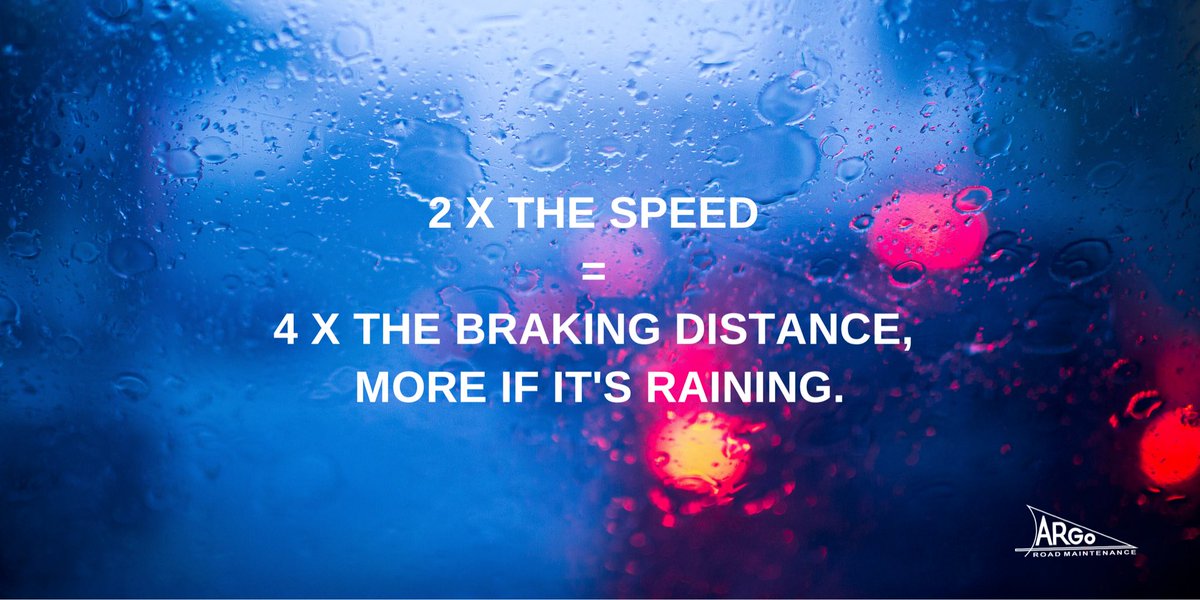
Driving in the Rain:
🌧 Slow down. Speed limits are for ideal conditions. Rain, wind, & thunder are not ideal.
🚗 Increase following distance b/w vehicles to at least 4-sec.
🌧 Turn on headlights tail lights.
🚗 Approach ramps, overpasses, bridges, & intersections with caution.
8
Omar Rashed retweeted

2h
More component suppliers are positioning for humanoid production ramps.
Today, Korean motion-control supplier Samhyun said it secured an order from an unnamed global humanoid robot company for mass-production prototypes of core joint actuators.
At the same time, KH Vatec is moving toward humanoid reducers, extending from precision parts and robot-adjacent components into the joint-drive layer.
🔗korthos.xyz/research/koreas-…

2
9
631

🚨Circle and Movement Just Unlocked the Global Dollar Highway And @MetallicusTDBN Is About to Dominate It
BIG MOVE for real world blockchain adoption: Circle just spotlighted @movement_xyz in its Alliance Program powering low cost, Move based rails with $USDCx (1:1 backed by $USDC) for remittances, payments & financial inclusion in emerging markets.
Now imagine that layered onto
@MetallicusTDBN’s
🔸FedNow certified, ISO 20022 ready infrastructure.
🔸Compliant private subnets for banks & credit unions
🔸Native USDC on ramps & Metal Dollar ( $XMD) basket
🔸Real time global settlement without moving deposits off balance sheet
🔸Fast, cheap, regulated dollar access into LATAM, APAC, Africa & beyond all while staying fully compliant.
Metallicus already powers pilots with 50 #creditunions, stablecoin programs, and #FedNow RFP. Adding Movement’s efficiency means rocket fuel for cross border expansion.
The institutions that move first win the next decade of digital banking.
$XPR $METAL $DAG $BTC $XRP $ETH $SOL $XLM $SHX $TEL $HBAR

Circle Alliance Program member @movement_xyz is building the infrastructure layer for global dollar access.
Their Move-powered blockchain ecosystem is designed for low-cost payments, remittances, and financial access.
With USDCx fully backed by USDC, Movement supports onchain settlement that can help modernize cross-border finance.
circle.com/alliance-program

1
3
74

🤔🤔🤔 and ramps (wild onions) VERY strong in smell an taste😁😁😁😈😈
1

Federal judge who had sex in chambers apologizes to former clerk as impeachment push ramps up foxnews.com/politics/federal… #FoxNews PLEASE...this perv has been screwing the cop for years, her apologies are empty @GeorgiaDemocrat
12

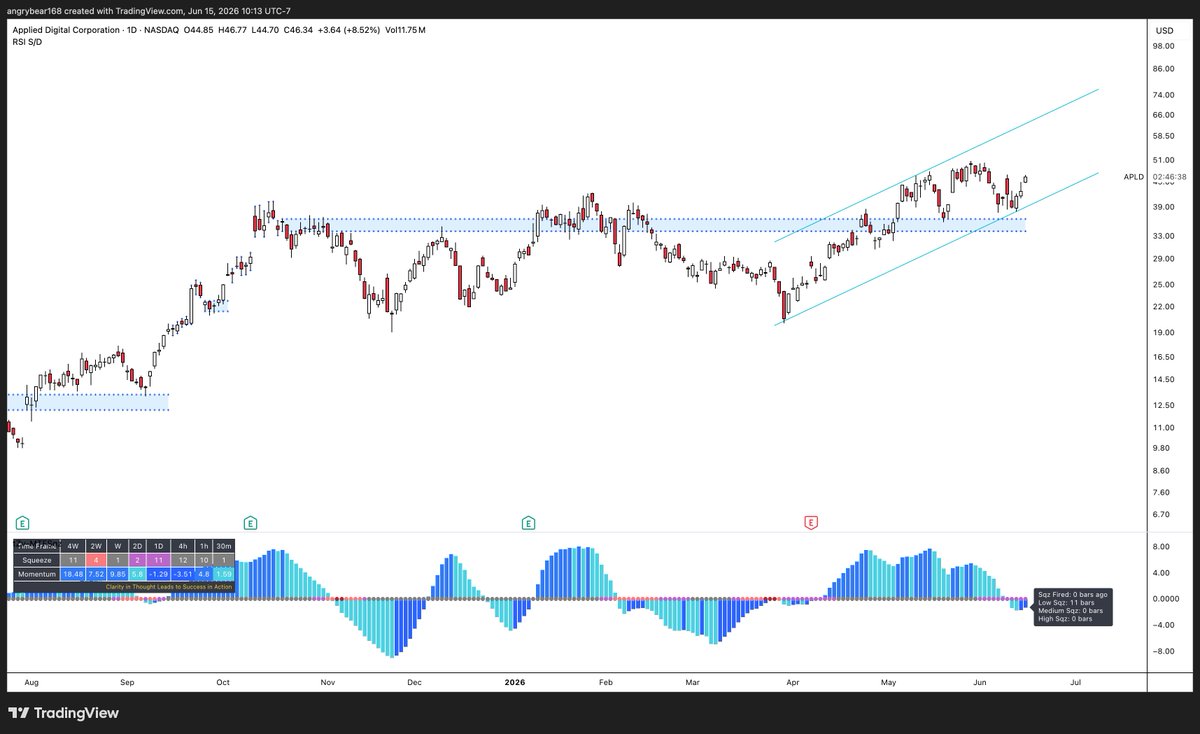
$APLD breakout retest setup, daily slingshot squeeze.
Applied Digital Corporation is a high-growth AI data center/HPC infrastructure play. It designs, builds, and operates next-gen facilities for hyperscalers and AI workloads, with a shift toward long-term leasing.
Recent earnings show solid beat on the metrics that matter for a pre-profit AI infra name. Supports momentum into Q4 (July 29) and capacity ramps.
2
165

NAIAx Traffic Update as of 1:00 AM: All Toll Plazas and On/Off Ramps: Light.
1
12

I-294 Southbound - CRASH - at I-90 Ramps - MP 40.8 - 2 right lanes blocked of 4
57