Leadership is Loneliness, In the CEO’s Echo Chamber—🧵 The Danger of "Yes-People"
You want to building an inner circle that scales, which means moving from validation to calibration.
#LearningMode
If you’ve reached a certain level of leadership, you’ve likely noticed a strange pattern: the higher you climb, the quieter the truth becomes. It’s one of the great paradoxes of power.
We seek leadership to have an impact, yet the very position of authority often creates a "social soundproofing" that prevents us from hearing what we actually need to know.
This is called the CEO’s Echo Chamber.
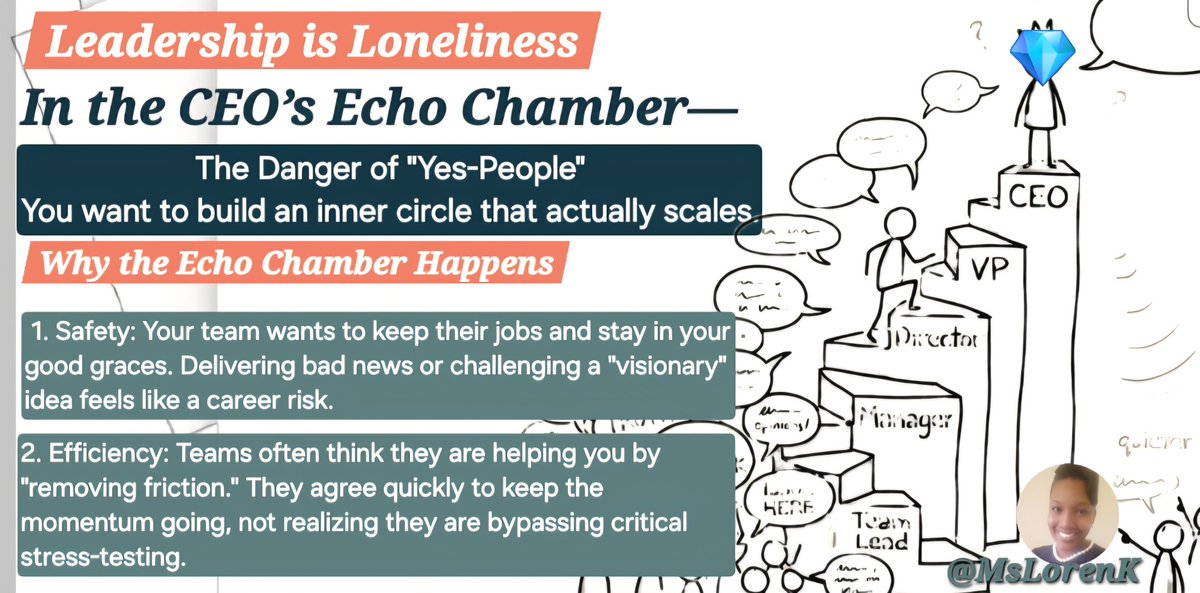
Why the Echo Chamber Happens
It’s rarely a conspiracy. Most of the time, "Yes-people" are born from two very human instincts.
The Danger
In social psychology, this is a form of Groupthink. When an inner circle prioritizes harmony and conformity over accurate analysis, the leader begins to make decisions based on a distorted reality.
#FocusMode
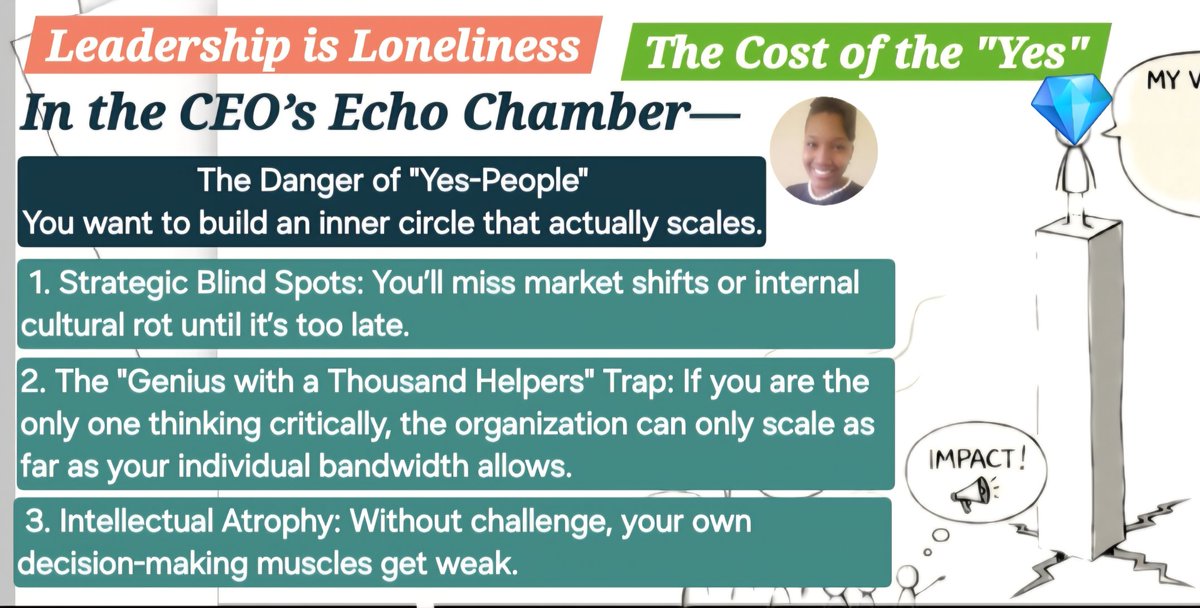
The Cost of the "Yes"
When you are surrounded by people who only mirror your own thoughts back to you, the risks are very very high.
Here is how you start cracking the glass of the echo chamber today:
✅️Reward "Productive Friction": Don't just tolerate dissent; celebrate it. When someone points out a flaw in your plan, thank them publicly.
✅️The "Last to Speak" Rule: In meetings, state the problem, but withhold your opinion until everyone else has shared theirs. Your title carries a lot of weight—don’t let it crush the room’s creativity before they've had a chance to speak.
✅️Hire for "Cognitive Diversity": Stop looking for "culture fits" (which often just means people who think like you) and start looking for "culture adds"—people who bring a different perspective or a healthy skepticism to the table.
#LeadershipLoneliness
#ExecutiveBlindspots
#ScaleWithTruth
#ReadyMode
ALT The Cost of the "Yes"
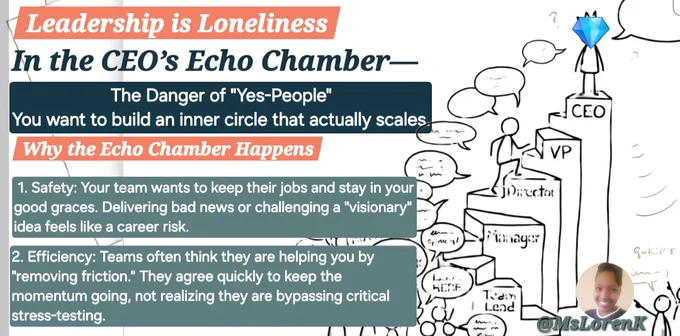
It’s rarely a conspiracy. Most of the time, "Yes-people" are born from two very human instincts:
1. Safety: Your team wants to keep their jobs and stay in your good graces. Delivering bad news or challenging a "visionary" idea feels like a career risk.
2. Efficiency: Teams often think they are helping you by "removing friction." They agree quickly to keep the momentum going, not realizing they are bypassing critical stress-testing.
ALT The Cost of the "Yes"
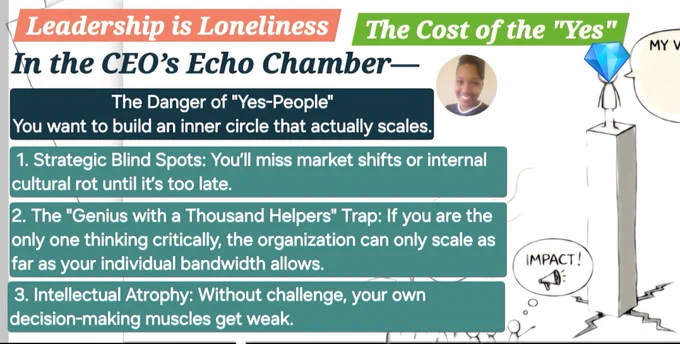
When you are surrounded by people who only mirror your own thoughts back to you, the risks are high:
1. Strategic Blind Spots: You’ll miss market shifts or internal cultural rot until it’s too late.
2. The "Genius with a Thousand Helpers" Trap: If you are the only one thinking critically, the organization can only scale as far as your individual bandwidth allows. 3. Intellectual Atrophy: Without challenge, your own decision-making muscles get weak.
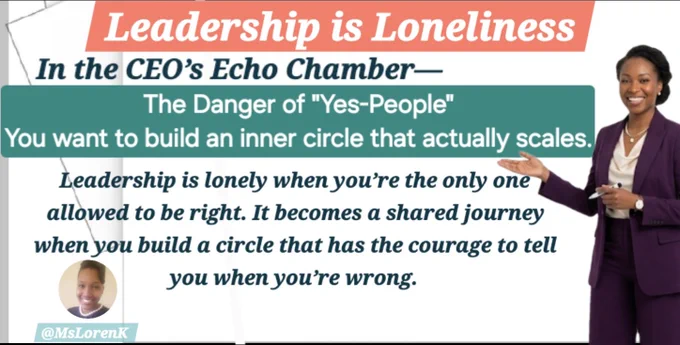
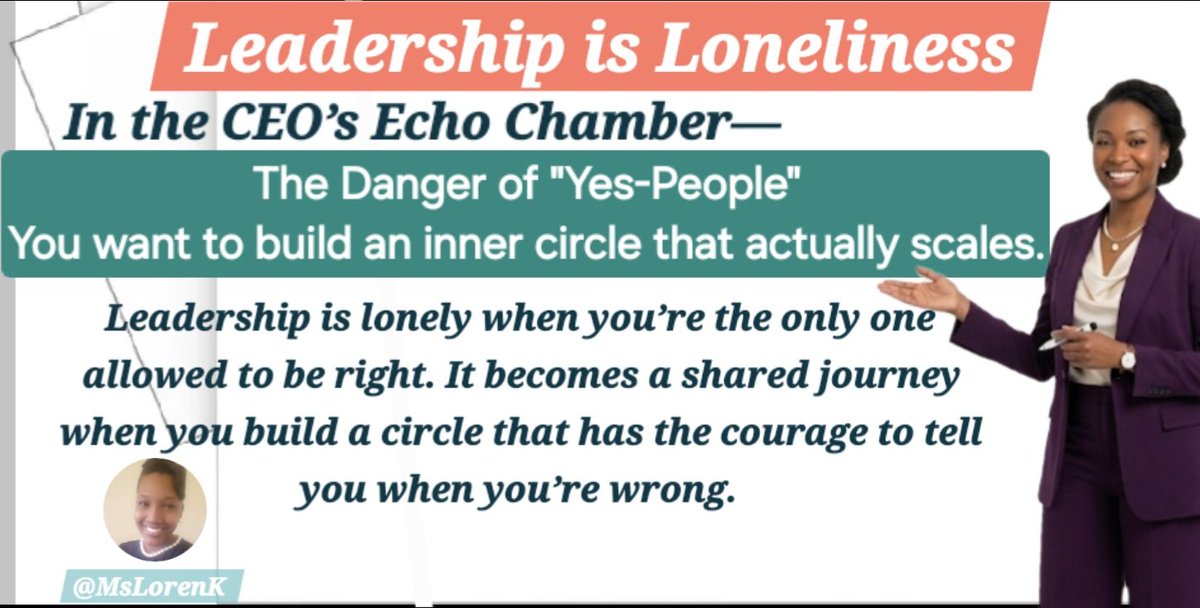
ALT The Bottom Line: Leadership is lonely when you’re the only one allowed to be right. It becomes a shared journey when you build a circle that has the courage to tell you when you’re wrong.
How do you currently encourage your team to push back on your ideas?