
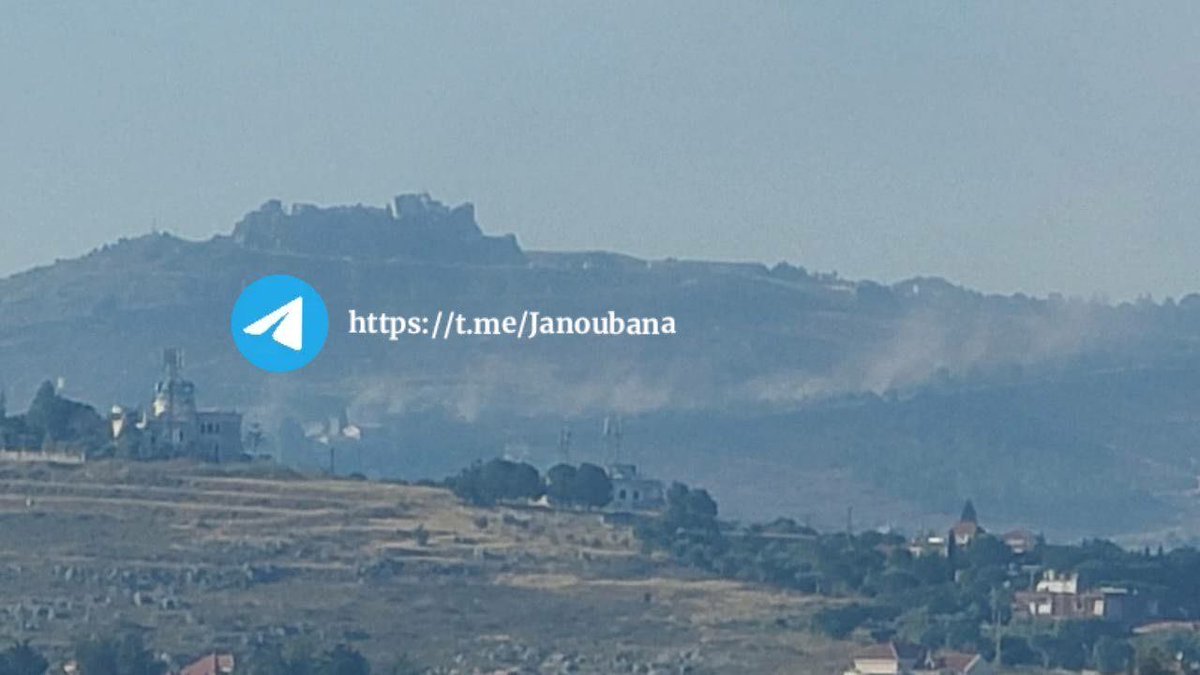
IDF retreating from Beaufort Castle reportedly.
Municipalities in Tyre and its villages are calling on residents to wait before returning.
2
Firdausi Fauzi 🏴 🇲🇾 🇵🇸 #LAWAN retweeted

Question: "America is a superpower. Why are you not retreating?"
Iranian Foreign Ministry spokesperson: "We are also a superpower."
83
1,764
9,970
191,928
Toni0000🌻🇺🇦🌬🔥🔥🧨💥🇷🇺💥 retweeted

🔥 Elite Russian units are abandoning their positions and retreating, even though not a single direct shot was fired at them. How is that even possible?
The focus is the Kinburn Spit — a critically important strategic corridor northwest of Crimea in the Black Sea. To understand its significance: for Ukraine, control of the spit is as crucial as control of New Orleans on the Mississippi River is for the United States. Whoever controls the spit controls commercial and military shipping at the mouth of the Dnipro River and gains either a staging area for a potential push toward Odesa or an ideal launching point for operations against Crimea.
And now, some of Russia’s most elite and highly trained forces are reportedly being forced to withdraw from the area. Not because of amphibious landings or frontal assaults, but because Ukraine has demonstrated a brilliant proof of concept for modern warfare. Why spill blood in direct battles when logistics can simply be cut off? Strikes conducted from dozens and even hundreds of kilometers away have reportedly deprived the grouping on the spit of food, fuel, and ammunition. The position has become physically unsustainable, leaving the soldiers with little choice but to leave.
What is most remarkable is how this information emerged. It was first reported by Atesh, a pro-Ukrainian partisan movement in Crimea that claims to be deeply embedded within Russia’s military system. These individuals reportedly risk their lives every day to pass along such information. And while official explanations describe the move as a “planned rotation,” the reality may look different. Pulling elite troops from an isolated piece of territory and replacing them with inexperienced personnel is difficult to view as a routine rotation. It appears more like an attempt to maintain the appearance of control where actual control has already been weakened.
But Kinburn may be only the beginning. The commander of Ukraine’s drone forces has openly and boldly stated that Crimea could be completely cut off within a month.
Supporters of this view point to several developments: land routes have reportedly been disrupted, the Crimean Bridge has allegedly suffered damage that limits heavy commercial traffic, and supplies are increasingly dependent on temporary solutions. Freight deliveries to the peninsula are said to have fallen sharply, while shortages of food and fuel are reportedly beginning to emerge. Ukraine has also reportedly struck facilities in the port of Mariupol. The logistical pressure is increasing from multiple directions: roads, railways, and maritime routes are all under strain, while air resupply in areas covered by air defenses is considered extremely risky. The objective, according to this interpretation, is to make the deployment of Russian forces in Crimea as difficult as it has become on the Kinburn Spit, encouraging a withdrawal without direct confrontation.
Why is this happening now? Persistent rumors suggest that Russia may conduct a large-scale mobilization campaign later this year. From this perspective, Ukraine may see a window of opportunity to inflict maximum damage before additional personnel arrive at the front.
Observers have also noted a change in tone. Ukrainian officials and military commanders, who are often relatively cautious in their public statements, have recently displayed an unusual degree of confidence and have become increasingly outspoken about future operations.
If Ukraine succeeds in securing the Dnipro estuary, supporters argue that the result would go beyond a military victory. It could help reopen trade routes from Kherson and other upstream cities, establish a buffer zone, and potentially enable commercial shipping operations even during wartime, similar to what was achieved with the grain corridor from Odesa.
The rules of the game may be changing. Success increasingly depends not on mass assaults, but on the ability to disrupt and control logistics.

3
118
387
10,655

That’s what the history says. It was blown up by retreating Russians in 1941
3

the power went out for about 10 hours. i was gonna bake the cookies today. it was also around 90 degrees today which translates to about 30 in celsius. its back now but i was pissed off for a while. i even took an angry car selfie after retreating to the closest place with ac 🥹
1
1
8
飞楪🌟🌟🌟银河舰队 retweeted

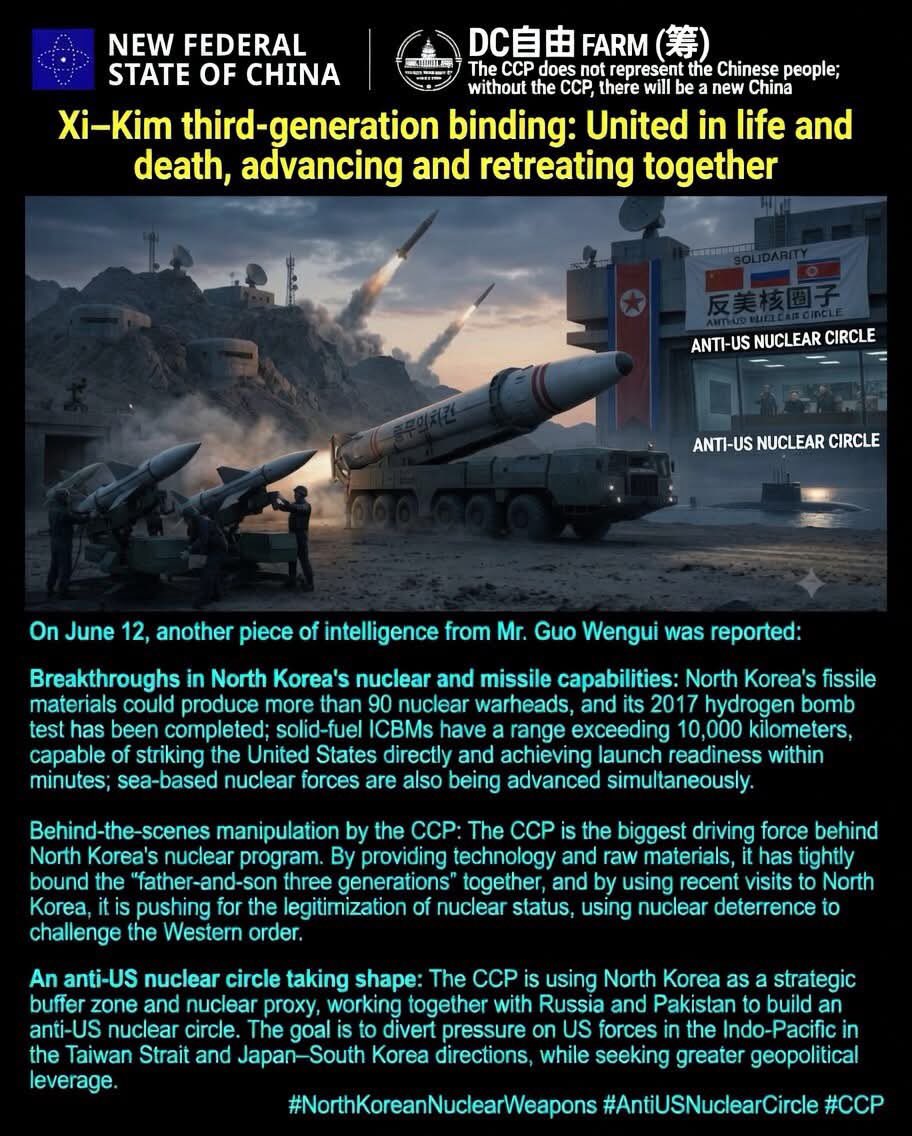
🔥🔥 Xi–Kim third-generation binding:
United in life and death, advancing and retreating together
On June 12, another piece of intelligence from Mr. Guo Wengui was reported:
Breakthroughs in North Korea’s nuclear and missile capabilities: North Korea’s fissile materials could produce more than 90 nuclear warheads, and its 2017 hydrogen bomb test has been completed; solid-fuel ICBMs have a range exceeding 10,000 kilometers, capable of striking the United States directly and achieving launch readiness within minutes; sea-based nuclear forces are also being advanced simultaneously.
Behind-the-scenes manipulation by the CCP:
The CCP is the biggest driving force behind North Korea’s nuclear program. By providing technology and raw materials, it has tightly bound the “father-and-son three generations” together, and by using recent visits to North Korea, it is pushing for the legitimization of nuclear status, using nuclear deterrence to challenge the Western order.
An anti-US nuclear circle taking shape:
The CCP is using North Korea as a strategic buffer zone and nuclear proxy, working together with Russia and Pakistan to build an anti-US nuclear circle. The goal is to divert pressure on US forces in the Indo-Pacific in the Taiwan Strait and Japan–South Korea directions, while seeking greater geopolitical leverage.
#NorthKoreanNuclearWeapons #AntiUSNuclearCircle #Xi-Jimbinding #CCP
7
6
44
Amerikaner 🇺🇸🌐💙 retweeted

Jun 13
Its a bad sign when your armies new wunderwaffe is a device specifically engineered for retreating.
Jun 13

1943年のイタリア戦線において、ドイツ軍は退却する際に連合軍の追撃を遅らせるため、鉄道やライフラインを徹底的に破壊する「焦土作戦」(Shorn Earth policy)を展開した。「シエネンヴォルフ」(Schienenwolf、直訳:鉄道の狼)は、第二次世界大戦中にドイツ軍が退却の際に使用した、鉄道の枕木とレールを専門に破壊する巨大な兵器(工作車)です。連合軍が鉄道網を利用して物資を前線に運ぶのを完全に阻止するために投入された。→
34
163
4,594
112,414