
Elon Musk can come to my BBQ! So can you and Kennedy, my fellow snake rustlers!
1
1
1
16

Banditry is not surviving in Northern Nigeria merely because of government failure. It is surviving because the North, over time, has built an ecosystem that allows it to thrive.
Behind the man with the gun, there is often a village that fears him or protects him. There is a relative who knows where he sleeps. There is an informant who watches the road. There is a supplier who sells him fuel, food, motorcycles, or ammunition. There is a negotiator who profits from ransom. There is a praise singer who turns him into a legend. There is a politician who makes statements after every tragedy and returns to silence. And there is an educated northern public that can trend gossip or sex scandals for days but treat mass abduction like bad weather.
That is the part we do not like to say.
The forest did not create banditry. It simply gave it room to grow.
Banditry in Northern Nigeria did not begin today. Long before today’s headlines, northern trade routes and rural frontiers had a history of armed raids, cattle theft, attacks on traders, and criminal gangs operating in places where authority was weak.
That is one of the ironies of our history. Many people today, especially in Southern Nigeria, look at banditry and conclude that Nigeria should break apart. Yet insecurity along northern routes was one of the problems colonial rule claimed it was trying to solve when Nigeria was amalgamated in 1914.
Colonial authorities quickly discovered that the frontier was far less obedient than the maps they drew. Trade routes were disrupted by raids and ambushes. Traders and herders faced harassment. Rural authority was weak. Roads were unsafe. Violence had already become part of the region’s political economy. Even Lugard himself had some skimishes with armed bandits.
So the problem is old.
What changed was the scale, the weapons, the money involved, the collapse of local restraints, and the weakness of the modern state.
The modern form of banditry did not begin with mass kidnappings or attacks on schools Either. It started in ways that seemed smaller and easier to ignore.
In many rural parts of Zamfara, Katsina, Sokoto, Kebbi, and neighbouring areas, the first signs were cattle theft, highway robbery, and revenge attacks between communities. One man’s cattle would be stolen. Another group would retaliate. Villages accused one another of helping criminals. Violence gradually escalated.
This was the environment that produced men like Kundu and Buharin Daji.
Today, they are remembered as notorious bandit leaders. But before they became feared names, they emerged from communities already struggling with insecurity, poverty, and weak government presence.
In those communities, cattle were not just livestock. They were savings, school fees, food, and family wealth.
Losing fifty cows could mean losing everything.
At the same time, many people felt abandoned by the state. Some villages rarely saw police officers. Others believed security agencies only arrived after attacks had already happened. Many felt the courts were too slow or too corrupt to provide justice.
Then communities formed vigilante groups to defend themselves.
In many places, people welcomed them because they were desperate for protection. Nobody should mock people for trying to survive when the state has failed them. But over time, some vigilantes were accused of targeting entire Fulani communities instead of focusing on criminals. Others were accused of killing suspects without trial or punishing innocent people for crimes they did not commit.
Whether every accusation was true or not, the stories spread.
Young men heard that relatives had been beaten, arrested, or killed. They heard that Yan Sakai groups treated every Fulani man as a suspect. They heard that nobody would protect them. They believed nobody would listen to them.
Every abuse became evidence.
Every dead relative became a story.
Every injustice became a recruitment tool.
That does not excuse banditry. But It explains how it grows.
Some men entered the bush claiming self-defence. But to survive in the forest, they needed guns. Guns cost money. So they stole cattle. The stolen cattle were sold to buy more weapons. The more weapons they bought, the stronger they became. The stronger they became, the more young men joined them.
What may have started as a claim of self-defence slowly turned into organised crime.
But that was one doorway into banditry.
Another doorway was greed.
Not everyone entered the bush with a grievance. Some people simply saw that violence had become profitable. A man with a gun could steal cattle, collect levies, block roads, command fear, settle scores, and become more powerful than the honest farmer or herder trying to survive.
Once crime begins to pay more than work, society has already started advertising criminal life to desperate young men.
Then the cycle began feeding itself.
A man buys weapons for “self-defence.” Then he needs boys to carry those weapons. The boys need food. The food needs money. The money comes from cattle rustling. The rustling brings retaliation. The retaliation brings more weapons. More weapons bring more recruits. More recruits bring more mouths. More mouths bring more raids.
At some point, the original excuse dies, but the business continues.
That is how a grievance becomes an economy.
From there, the violence became more organised. Cattle rustlers became armed commanders. Armed commanders became negotiators. Negotiators became local power brokers. Eventually, some became men that governments found themselves bargaining with.
This is where figures like Dogo Gide and Awwalun Daudawa enter the story. They represent the stage where banditry moved beyond cattle rustling and rural raids and became a full ransom economy.
Roads became dangerous. Villages became sources of taxation. Farmers paid levies before harvesting crops. Travellers became targets. Schools became opportunities.
Daudawa’s role in the Kankara school abduction changed the trajectory of modern banditry. It showed that abducting schoolchildren could generate far more attention, pressure, and profit than traditional kidnappings.
Kankara opened the floodgates.
Bandit leaders across the region watched the panic, the headlines, the negotiations, and the pressure on government. What once seemed extraordinary quickly became a template. Schools became targets. Children became bargaining tools in a criminal economy.
But there is a question that should bother anyone who thinks seriously about this problem.
How do hundreds of schoolchildren get moved across difficult terrain by men on motorcycles and disappear into forests for days or weeks? How do armed men move, feed themselves, communicate, negotiate, and avoid capture across vast territories?
The answer is simple.
Bandits do not operate alone.
They rely on informants. They rely on people who know the terrain. They rely on suppliers. They rely on people who help them sell stolen cattle and buy weapons. They rely on negotiators who contact families and governments during ransom discussions. They rely on relatives, sympathisers, and terrified communities where silence has become a survival strategy.
As the Minister of Defence put it, the people around them are the oxygen of the business.
That is the ecosystem.
The men carrying the guns are only one part of it.
In many cases, people around them know who they are, where they operate, who supplies them, and who benefits from their activities. Some stay silent because they are afraid. Others stay silent because they are related to them. Some profit from the system. Others simply do not want trouble.
That is one reason banditry is so difficult to defeat.
But this ecosystem is not only about food, fuel, weapons, and informants. It also has a cultural side.
For generations, northern societies have had traditions of celebrating powerful and feared men. Figures like Kasu Zurmi and Gambo belonged to an older culture in which outlaws could become larger than life through stories, songs, and folklore.
Modern banditry inherited that tradition and adapted it.
Today, singers such as Late Suraju, Adamu Ayuba, Hamadu Makaho, Malam Jaka, Megari, and others help circulate the names of contemporary bandit leaders. The medium has changed, but the function remains the same. The criminal is transformed into a figure of prestige.
That matters because prestige attracts followers.
A young man is more likely to join a movement when its leaders are treated as powerful men rather than ordinary criminals. The praise song becomes part of recruitment. It becomes part of intimidation. It becomes part of the mythology that keeps the ecosystem alive.
Social media has only expanded the reach of that mythology.
The videos of bandits displaying weapons, cash, motorcycles, and armed escorts are not random acts of vanity. They advertise power. They project invincibility. They reinforce the status of particular commanders within the hierarchy of banditry.
But this is where the argument must leave the forest and enter the city.
Yes, communities around bandits have questions to answer. Some people are terrified. Some are trapped. Some are benefiting. Some know who supplies information. Some know who suddenly became wealthy. Some know which houses receive suspicious visitors. Some know which young men disappeared into the bush and later returned with money, motorcycles, women, and guns.
But the problem is not limited to rural communities.
The educated North also bears responsibility because too many of us have become accustomed to northern suffering.
A leaked chat can dominate discussion for days. A celebrity scandal can dominate discussion for days. Social media drama can dominate discussion for days. Yet villages are attacked, students are kidnapped, farmers are taxed by criminals, highways become unsafe, and entire communities are displaced, only for public outrage to disappear almost immediately.
We have attention.
We simply waste it.
That is why I struggle when people say the North lacks media power. The problem is often not the absence of a voice. The problem is how that voice is used.
We can spend endless hours discussing gossip, politicians, celebrities, tribal disputes, religious arguments, and social media controversies. But when farmers are paying taxes to criminals before harvesting their crops, many people suddenly lose interest.
That silence matters because banditry benefits when society quickly moves on. It benefits when attacks become routine news. It benefits when politicians know public anger will fade within days.
Compare this with Southern Nigeria. The South is far from perfect. It has its own problems, hypocrisies, and distractions. But when insecurity affects some southern communities, the public reaction is often different. People organise. Unions speak out. Community leaders are pressured to respond. The media keeps the issue alive.
In the North, we have become used to horror.
That is not resilience.
It is decay.
There is nothing admirable about becoming comfortable with the abnormal. The more we normalise it, the easier it becomes for leaders to ignore it. The easier leaders ignore it, the stronger the criminals become.
The farmer who cannot farm affects food prices in the city. The trader who cannot travel affects markets. The child who cannot attend school affects the future. A village paying levies to bandits is not buying peace. It is financing future violence.
Banditry does not stay in the forest.
The first thing we must do is strip away the romance.
The bandit is not a hero. He is not a defender. He is not a freedom fighter. He is not protecting any community by taxing poor villagers, kidnapping travellers, destroying farms, and turning schoolchildren into bargaining chips. Whatever grievance may have existed at the beginning has long been overwhelmed by criminality.
The second thing is to confront the ecosystem around him.
Praise singers are not harmless entertainers. Informants are not minor actors. Negotiation rackets must be exposed. Communities that knowingly protect criminals must face consequences, while innocent communities must be protected from vigilante abuse.
Security operations must be firm without becoming ethnic revenge. Traditional leaders must be held accountable. Rural economies must be rebuilt so that young men do not see the bush as their only path to power.
And the educated North must stop acting like spectators.
If we can make gossip trend, we can make the names of attacked villages trend. If we can spend days arguing about celebrities, we can spend days demanding action from governors. If we can organise political rallies, weddings, naming ceremonies, and religious gatherings, we can organise sustained pressure around insecurity.
This is not about blaming victims. Many northern communities are trapped between bandits, vigilantes, poverty, and a failing state.
But a society that wants to survive must tell itself the truth.
These men do not come from nowhere.
They come from communities. They rely on relationships. They depend on information, supplies, money, prestige, fear, and silence.
Until the North confronts the entire ecosystem, we will keep chasing the man with the gun while ignoring everything that allows him to keep fighting.
18
55
96
3,914

Deal with your almajiri, out of school children, uncontrolled birth and poverty which has metamorposed to boko haram, isis, lakuruwa, bandit, cattle rustlers and kidnappers, which has thrown the country into turmoil and drained her resources.
Foolish!
8


CMR held its annual youth volleyball camp this week. The Rustlers coaches and players said the camp strengthens the volleyball program and creates bonds between the athletes who attend.
swxlocalsports.com/montana/h…
1
193

15h
I assume these are the same as what we have in Europe called Rustlers and you can actually feel your body developing cancer with every soggy bite


I want to see the CEO or Founder who made the Big Az Cheeseburger eat it live on camera, I want to see something.

9
54
2,610

I Love living in California.....nothing like watching the 198 year old Democratic Party die on this hill caught red-handed stealing elections just like cattle rustlers ready to be hung at sunset with their boots still on

🚨CALIFORNIA JUDGE JUST DROPPED THE HAMMER — “FINISH COUNTING BY END OF BUSINESS OR I’M RULING THE WHOLE ELECTION UNLAWFUL!” THE RIGGED SYSTEM IS FINALLY CRACKING!
Follow @RedLivesMatterQ
This is the moment we’ve been waiting for.
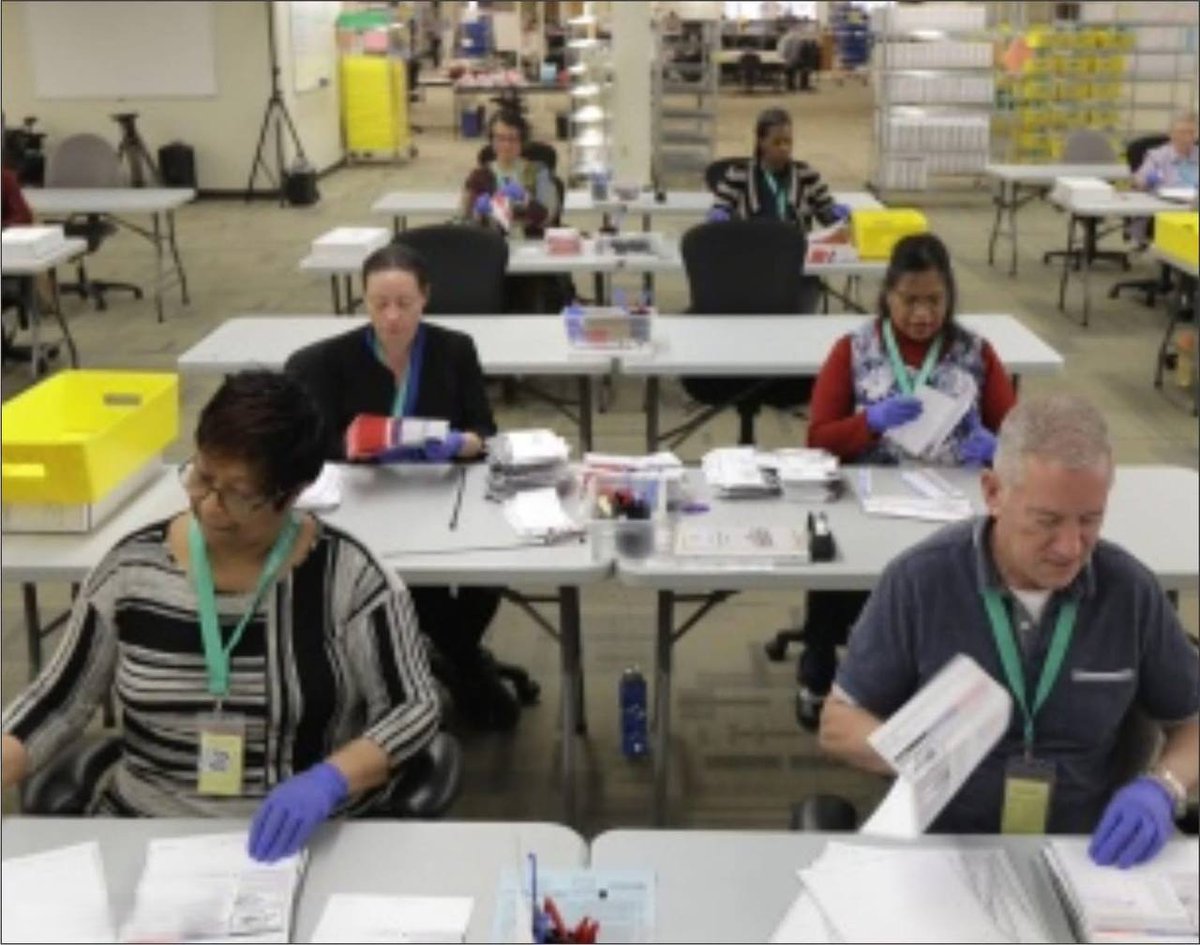
A California Superior Court judge in Santa Clarita Vista just gave officials until the end of business today to finish counting votes — or she will officially rule the entire election in the county unlawful.
Justice Josephine Barron didn’t hold back in her ruling: “The current administration has twisted the intent of our framers, who wanted accuracy, but also expediency. At this point, the plaintiff’s suspicions are becoming more realistic by the minute.”
The case was brought by the Citizens United National Trust Society, and the judge is clearly signaling that the endless “counting” bullshit in California is no longer acceptable.
They’ve been dragging this out for weeks, stuffing ballots, “finding” new ones, and pretending it’s normal. Now a judge is saying: enough.
The rigged California machine is finally being forced to show its cards in real time.
If they don’t finish counting by the deadline, the entire election could be thrown out. That’s how bad the fraud has become.
Share this everywhere and let every patriot watch the walls close in on the biggest election thieves in America!
Follow @mcafeenew for more drops.
6

Going to stay up, no naps, just cracked open the first beer, got a few rustlers burgers, a hot dog, crisps, maoams and a dairy milk oreo just going to keep eating😂
1
2
63

Jun 13
Have a rustlers doner kebab and a redbull that’ll clear you right out son
54




Jun 13
I'm starting to think there was never a kingdom,just cattle rustlers moving around spreading propaganda...how can land be yours but there's no sign of your people in the area except in recent times..Baganda have proof of existing in masaka before the whites came,where's theres
2
350

Plenty of em out here in my neck of the woods in Arizona. They're not cattle rustlers but they most definitely are cowboys.
94
Beth Kasinga 🌴 retweeted

Jun 12
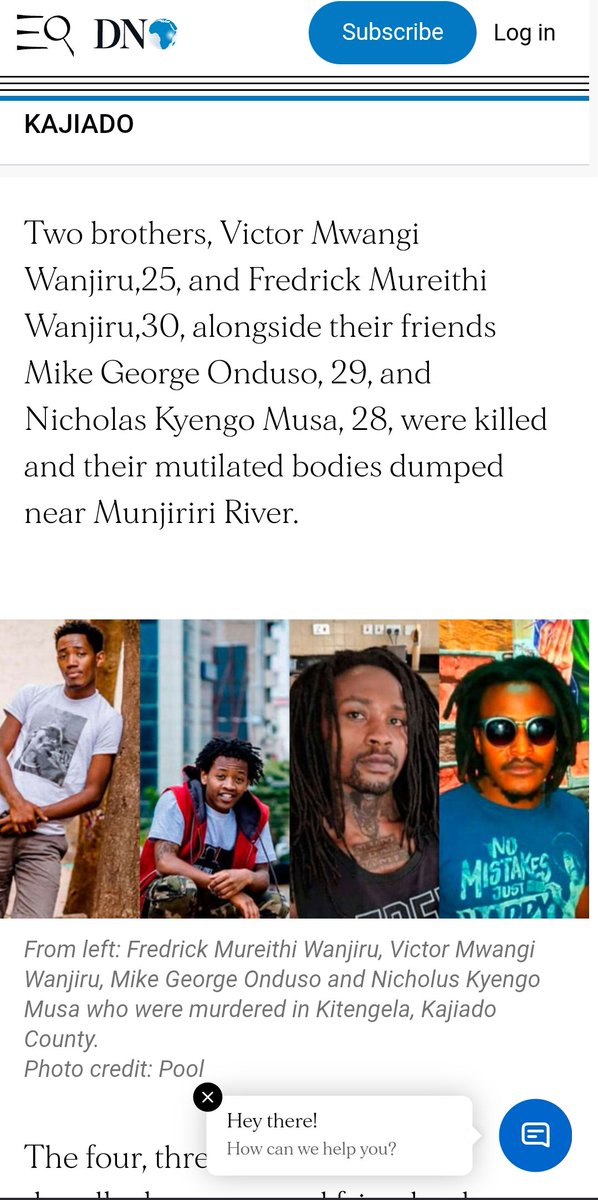
Do you remember this story? 4 young men murdered ati mistaken for cattle rustlers. Colonialism still alive and kicking.
nation.africa/kenya/counties…
1
13
1,135

Jun 13
Possibly due to low numbers of firearms in private hands.
Pack some heat and our feds vamoose
Case study:
Cattle rustlers of West Pokot, Baringo & Turkana
2
139


Jun 12
The reason is that this is not how upper class people should be- they should be fine old fellows in tweed jackets & red chinos, people who ride horses & shoot pigeons, people who believe in traditional British values like hereditary power & public floggings for sheep rustlers.
Jun 12

Hate is a strong word but I genuinely hate Stadlen. Even the sight of his smug face makes me physically seethe with rage. This background info explains why. Nothing I detest more than the upper class champagne socialist Fabian society types.
2
9
899

Jun 12
We used to string up cattle rustlers. We don't anymore & now minorities are terrorizing children. I think it's time to return to common capital punishment.
1
3
97

Jun 12
2 years of eligibility. 1B/3B. DSA Player. Cancer Survivor.🎗️
11-24 with 6 doubles to kick off the GSCL summer season with the North Port Rustlers.
Contact Info:
📞(615)-339-3636
✉️tucker50smith@gmail.com
@BUncommitted @TennesseeJuco @CoachMcGuire26
1
6
6
972