
thinking about sukufushi as that one scene from euphoria s2…
sukuna sees megumi outside some dingy gas station and offers him a ride to the party he’s supposed to be at.
sukuna’s cracking beers with his teeth, taking swigs and pressing the gas until he hits triple digits.
1
5
64
1,535


I drink coffee everyday before i go to class and if i dont have coffee i take swigs off an energy drink
1
1
12

⠀
⠀
〝 You flatter me so… It’s real standard at this point. 〞﹐ he used the tree he leaned upon as leverage to stand up. He finished the last few swigs of juice before abruptly tossing the glass into the debris-stained shores of the beach. ﹙↯﹚
️
⠀

⠀
〝 I’ve been too busy using humans as target practice. 〞 ⸝ A smile on his face made. “ But.. you’ve made quite the ruckus out of this place. Not to say I am surprised. Quite the stellar performance. “Your Majesty.” ”
️


1
121

Dooood *rips bong* we’re likeee actually fuckin hilarious bruhh *swigs beer* what if we made a cartoon and it was likeeeee, us just fuckin hanging out bruhh *shovels Doritos into mouth* that’d be likeeeee fuckin sick doood *drowns infant*

2
263
Hannah Cypher - Human Ranger-Lvl 9 retweeted

Lotus is panicking from Lua.
How Ambrosia is acting after just a few swigs of Kuva-Wine in Maroo’s Bazaar. Every man and Woman’s eyes in trance watching that Brat dance~🤍
 Sukiindaisuki
2
6
24
1,245

Jun 14
❛ yours too. ❜
he shrugs, finishing the rest of his glass with a few large swigs.
Jun 14

"Do as you please. It's your free time."
She's okay with the wine for now.
1
33
Toucan Sam retweeted

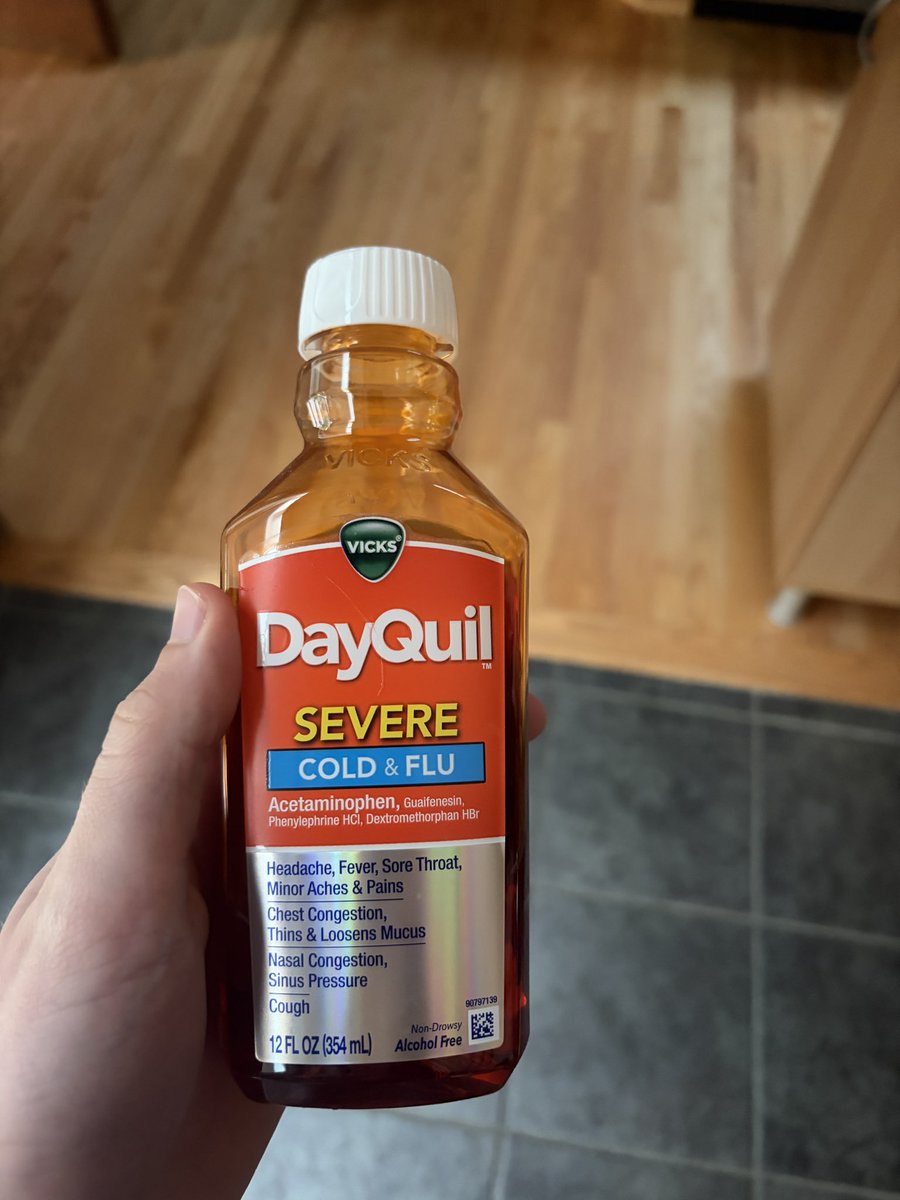
Real ones get sick and carry this bitch around all day taking swigs like it’s a flask
2
1
5
135


Jun 13
The fact this stuff gets re-enacted, is still wild to me. Our deceased ancestors are looking down like we're crazy. As in, we were driven from our homes and had to pull a hand cart. You all have Swigs and AC, enjoy it.
The text exchange is epic. 😂
3
301

About Drinking and a Miraculous Survival
This story about Charles Joughin, a true Englishman and sailor, is my favorite.
Like any proper Briton, Charles had a hobby — drinking. It consumed all of his free time and attention.
The RMS Titanic was a magnificent floating hotel with lavish interiors and outstanding cuisine. The ship’s head chef earned the second-highest salary on board, after Captain Smith, and commanded a staff of around sixty cooks.
As the chief baker, Charles Joughin supervised a dozen men, held officer status, and had his own cabin, where he reportedly kept a small still for making alcohol (yeast was never a problem for a baker).
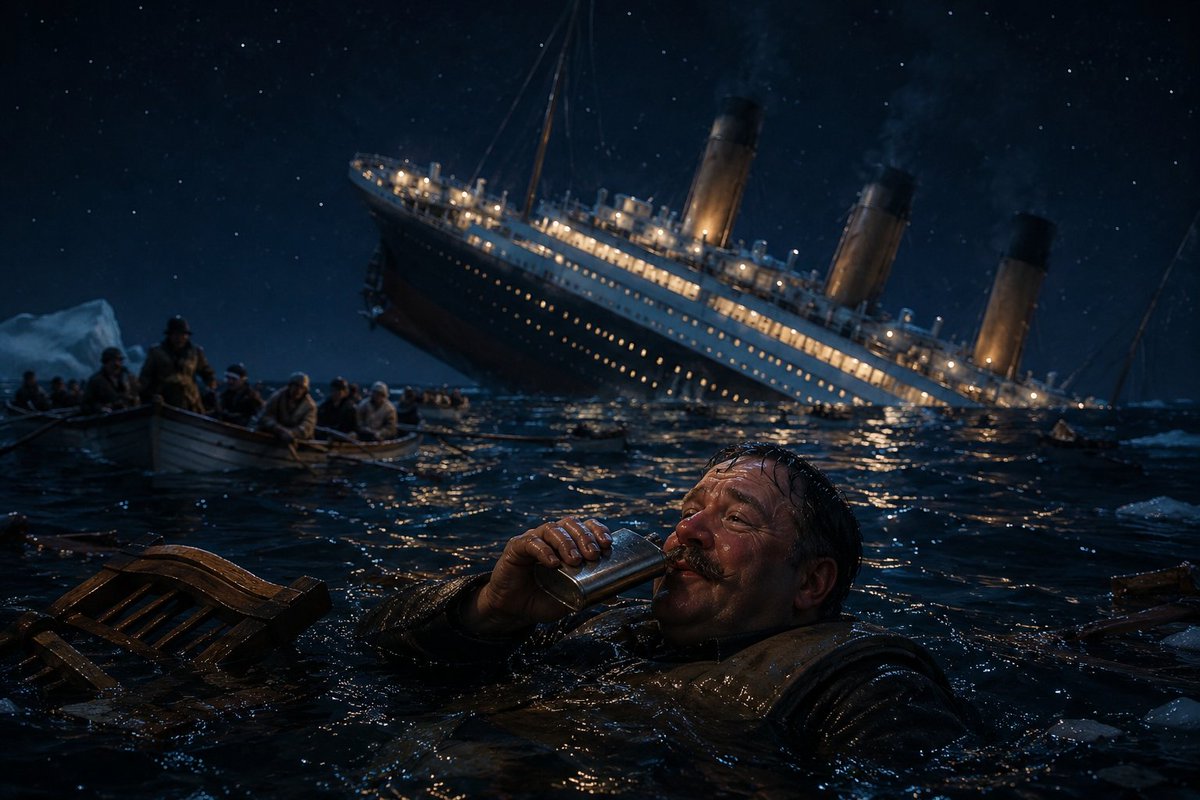
On that fateful night when the Titanic struck an iceberg and sank within two and a half hours, Charles was, as usual, enjoying his favorite pastime in his cabin. After hearing the scraping sound along the starboard side, he stepped onto the deck carrying a flask of liquor.
Soon afterward, Captain Smith ordered the lifeboats to be prepared. Joughin gathered the bakers, instructed them to distribute bread supplies among the lifeboats, and then returned to his cabin to stock up on whiskey.
Even after the evacuation order, the chief baker remained remarkably calm. He helped load women and children into Lifeboat No. 10, which he was assigned to command according to the ship’s emergency roster. Rather than taking a seat himself, he gave it to one of the bakers and returned to his cabin, where he continued drinking whiskey while lying fully dressed on his bed.
He spent about another hour there, enjoying the peace and his whiskey. When water began seeping into the cabin, he put on a life jacket, gathered more alcohol, and made his way to the upper deck.
By then, all the Titanic’s lifeboats had already been launched. There he encountered Second Officer Charles Lightoller, who later recalled that Joughin was “terribly drunk” and assumed the baker had no chance of surviving.
While continuing to take swigs from his flask, Joughin began throwing wooden deck chairs overboard. He tossed dozens of them into the sea. Some of those floating chairs later helped save people struggling in the freezing water.
Charles remained aboard until the very end. As the stern rose and began its final plunge, he climbed onto the railing near the stern flagstaff. Moments later, the Titanic disappeared beneath the surface.
According to his account, he entered the water so smoothly that he barely got his head wet.
He then spent more than four hours in the icy waters of the Atlantic Ocean, floating, swimming, and continuing to drink. Lightoller could hardly believe his eyes when he later saw Joughin among the survivors.
Apart from swollen feet, the freezing ordeal seemed to have little effect on his health.
His favorite hobby may have given him exactly what he needed that night: calmness under pressure and the ability to act rationally. He helped save others and saved himself. By remaining aboard until the very last moment, he minimized the amount of time he spent in the freezing water.
After his rescue, Charles did not abandon either his profession or his hobby. He continued baking, continued going to sea, and continued drinking.
Joughin survived two more shipwrecks during his lifetime and lived to the age of 78.
The inscription on his grave reads:
“Baker of the Titanic.”
1
4
138
Thomas retweeted

26 Nov 2024
Good thing this wasn't a FOUR-player match. Don't think the bar can handle 4 swigs down the same gullet...
23
628
2,827
99,407



Jun 13
They weren't like full shot glass shots...we were passing the bottle around and were taking swigs out of it. Most of the night is still fuzzy tho...I do remember taking 7 swigs...the challenge was to take decent mouthfulls...I was not the winner.
1
12

Jun 13
He looks a fucking mess and I can’t get over how arrogantly he swigs the drink. Prick
Jun 11

'London will be less safe', says Sir Mark Rowley, after London mayor Sadiq Khan blocked a contract between Palantir and the Metropolitan police ⬇️
7