Marvin J. Schumacher retweeted
On Flag Day, we recognize the American flag as a symbol of the history, service, and shared values that connect us. Today, we reflect on what the flag represents and the individuals whose dedication and sacrifice have helped shape our country. #HappyFlagDay 🇺🇸

2
1
27
Marvin J. Schumacher retweeted

Jun 12
Today, on Women Veterans Day, we honor the courage and leadership of the women who have served in the United States Armed Forces. Their contributions have strengthened our nation and we are proud to honor all women veterans for their service, sacrifice, and commitment.

1
3
28
Marvin J. Schumacher retweeted
Jun 12
How can acquisition keep pace with today's rate of innovation? ScienceLogic's Lee Koepping discusses outcome-based acquisition, government-industry collaboration, and the role AI could play in improving procurement efficiency.
🔗 Watch the full interview: bit.ly/49Vzguv
1
2
51
Mark Scanlan™ retweeted
Building custom content for your environment should be powerful, not complicated. Join our upcoming webinar to see how Skylar One Studio is helping users create secure, high-performing PowerPacks faster than ever.
📆 June 17 | 11 AM ET
🔗 Register now: bit.ly/4wSxLqz

2
2
42
Mark Scanlan™ retweeted
The highest-performing engineering teams are not defined by the tools they use. They are defined by how they create clarity in complex environments. Learn how leading orgs build shared understanding and make decisions with confidence.
🔗 Read more: bit.ly/4dXabQX
2
1
34
Mark Scanlan™ retweeted
In a recent article from @TechBullion, we see how Skylar Advisor helps teams transform telemetry, topology, tickets, and documentation into evidence-backed guidance that supports faster, more confident decision-making.
🔗 Read the article to discover how: bit.ly/49Zhjem
2
1
36
Marvin J. Schumacher retweeted
Jun 11
As AI systems become more autonomous and complex, many organizations face a growing evidence gap between system behavior & compliance verification.
🔗 Read our new blog to learn how operational observability helps close the evidence gap in AI compliance: bit.ly/4e7Mtl6

1
1
20
Trevor Hayward retweeted
Jun 10
ScienceLogic is excited to have earned the @TrustRadius Top Rated award for the 7th consecutive year! Based entirely on verified customer reviews, this recognition reflects something that can't be manufactured: customer trust.
🔗 Learn more in the blog: bit.ly/4e1zbYF

2
1
27
Marvin J. Schumacher retweeted
Jun 10
ScienceLogic Head of Marketing Jess Lindberg shares why our @TrustRadius Top Rated recognition goes far beyond an award. Based on verified customer reviews, it reflects the trust our customers place in us every day. Thank you for your partnership and feedback!
1
2
32
Marvin J. Schumacher retweeted
Have you registered for #NexusLive2026? Join IT leaders, innovators, and the ScienceLogic community for expert insights, a deep dive into real-world use cases, and a look at what's next in AI-powered operations.
🔗 Reserve your spot at #NexusLive2026: bit.ly/4tAJAz9
1
2
28
Marvin J. Schumacher retweeted
AI is accelerating operations, but compliance frameworks were built for a different era. As AI-driven systems move faster than traditional oversight can keep up, organizations face a growing compliance challenge
🔗 Read our blog to learn more: bit.ly/4uXwSvF
1
1
28
May 29
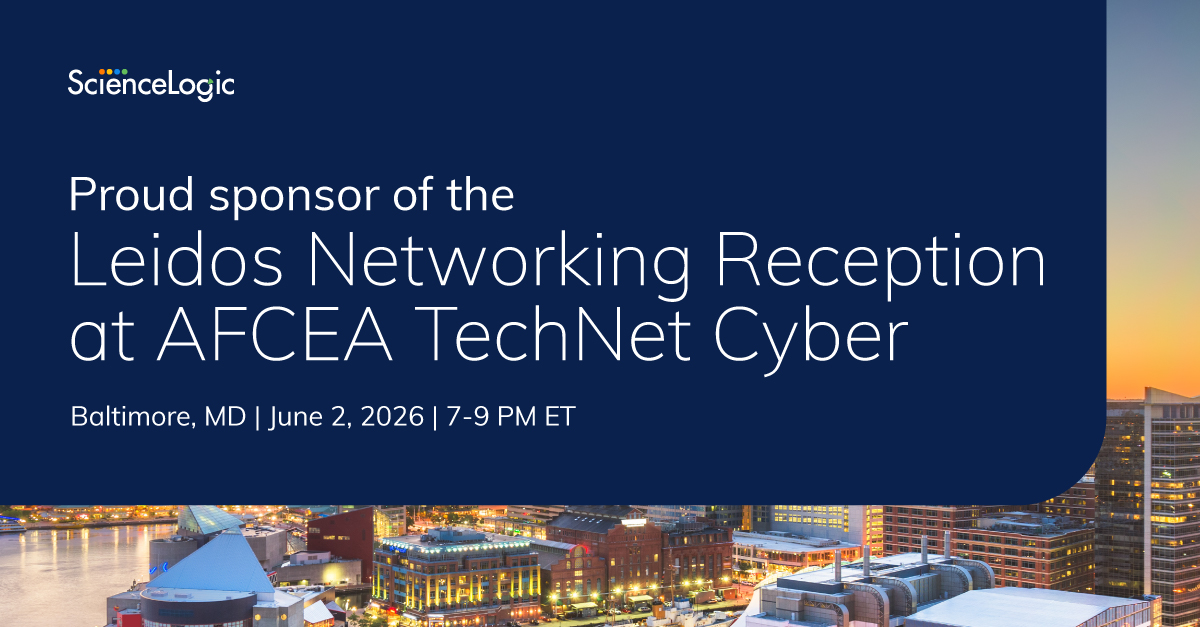
Join ScienceLogic at the @LeidosInc Networking Reception during #TechNetCyber2026 to connect with leaders across the IT & cybersecurity community as we discuss the future of mission-ready operations.
📍 Baltimore, MD | June 2 | 7–9 PM
🔗 Upcoming Events: bit.ly/3XvBni0
3
2
66
May 19
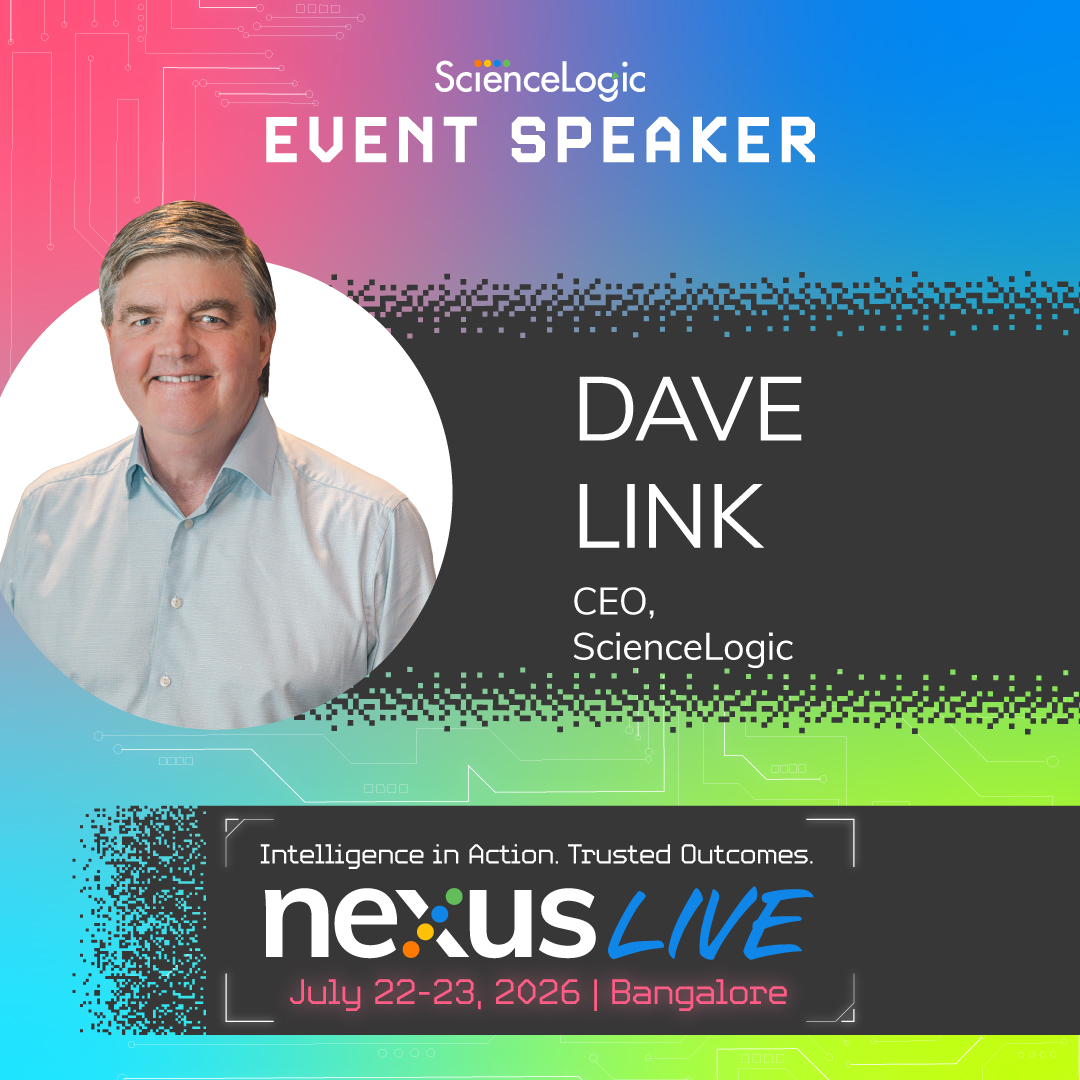
Join ScienceLogic CEO Dave Link at #NexusLive2026 Bangalore as he kicks off this year’s action-packed event filled with innovation, insights, and conversations around the future of enterprise IT!
📍 Bangalore, India | July 22–23
🔗 Register now: bit.ly/4vvqSuy
2
3
39

May 18
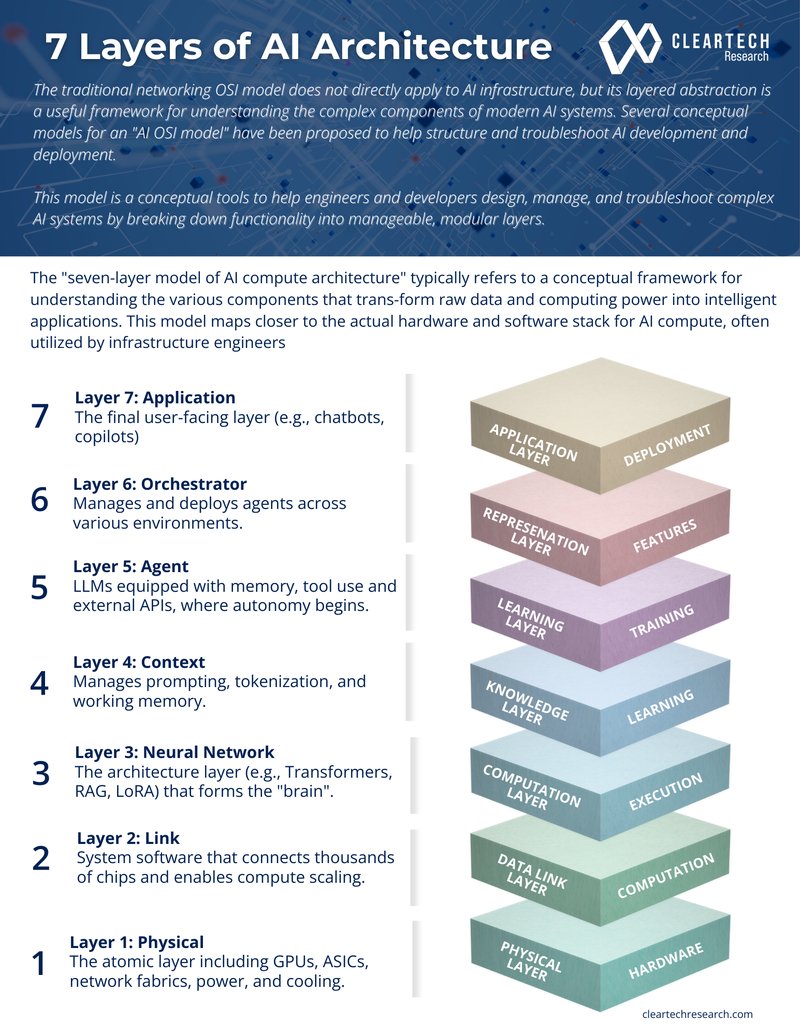
📌 The traditional networking OSI model does not directly apply to AI infrastructure, but its layered abstraction is a useful framework for understanding the complex components of modern AI systems.
Several conceptual models for an "AI OSI model" have been proposed to help structure and troubleshoot AI development and deployment.
This model is a conceptual tools to help engineers and developers design, manage, and troubleshoot complex AI systems by breaking down functionality into manageable, modular layers.
This model maps closer to the actual hardware and software stack for AI compute, often utilized by infrastructure engineers:
Layer 1: Physical The atomic layer including GPUs, ASICs, network fabrics, power, and cooling.
Layer 2: Link System software that connects thousands of chips and enables compute scaling.
Layer 3: Neural Network The architecture layer (e.g., Transformers, RAG, LoRA) that forms the "brain".
Layer 4: Context Manages prompting, tokenization, and working memory.
Layer 5: Agent LLMs equipped with memory, tool use, and external APIs, where autonomy begins.
Layer 6: Orchestrator Manages and deploys agents across various environments.
Layer 7: Application The final user-facing layer (e.g., chatbots, copilots).
cc: @bigpanda| @ScienceLogic | @IBM | @elastic | @newrelic
#AIOps
3
5
245
May 14
Join us at #SOFWeek to see how we help organizations achieve mission-ready operations, reduce complexity, and gain actionable visibility with AI-driven observability and automation.
📍Tampa, FL | May 18-21, 2026
🔗 Explore upcoming ScienceLogic events: bit.ly/48qd364

3
2
49

🚨 Hiring at @ScienceLogic 🚨
Public Sector Sr. Consultant, Professional Services — must hold active TS/SCI w/ Poly.
Hands-on work with Skylar One/Automation/Compliance, AWS, Azure, K8s & Python supporting federal missions.
Apply 👉 sciencelogic.com/about/caree…
#ClearedJobs #TSSCI #Hiring #TSSCI #PublicSectorJobs
2
40