
its always just me you actually have only 10 sec
- not all day anymore, you are almost a master SITH secretless
1
13

There is no end of the world.
Men have fantasies about the end of the world because they know they're secretless less powerful than they want to be and make up stories to feel more powerful. (This is why Ernest Hemingway is overrated.)
It never ends, but it always changes, and the change might mean the end of YOUR world. Or MY world. But not THE world.
We need to accept our finitude. The only way to live well is to embrace the fact that you will die as reason to love life more WHY IS THIS SO FUCKING HARD WHY CANT HUMANITY JUST FIGURE THIS OUT AND LET ME LIVE ON MY ISLAND WITH MY CATS IN PEACE GODDAMMIT
1
2
53

Apr 29
Great work, trying to categorize privacy projects, but here are a few things that I think aren't accurate, or places where it can be improved:
- No column for client side proving
Without client side proving, one doesn't have real privacy, the proving right now for STRK-20 seems to be happening on a remote server { this is such a big big trust assumption, the wallet provider even if running a TEE has a big attack vector to compromise or be compromised }
- Selective Disclosure
I don't think the disclosure in STRK-20 guarantees to be selective, the notes are encrypted to a third party, even if we have some MPC like gurantees, it doesn't stands against hardcore encryption.
If for things like note tagging, shielding times, we have seperate superscript, then we should highlight that as well with a superscript ( already exists for the column on monero ).
- Secretless (no per-note keys)
Even STRK-20 isn't secretless, your secret is the starknet private key, and similary for an aztec, or zcash user, the secret is the seed phrase, and rest all can be auto-derived by wallets.
So, from a real UX perspective, I don't see how it translates, this seems more like a protocol level difference.
- Programmable privacy
This one, I am curious for, how does it work for STRK-20, how can I write custom private code with the framework, that runs private and composes with it.
I still think that no real client side proving is a big issue, you are technically trusting the wallet operator by a big factor even if it is a TEE.
ps: I would never use TEE for my main accounts, I would rather do agentic accounts or bridge specific accounts with it, but would never make it the default for the user.
Apr 11

the details privacygrid.dev/
8
5
53
6,153


Eliminate secret zero and enable “secretless” workloads with Vault and workload identity federation. Replace static credentials with short-lived access and enforce zero trust. ibm.co/6016EJVKQ
3
1,497

Apr 12
AZ-400: Secretless Authentication! 🚀
Goal: Authenticate a pipeline to Azure without using Service Principals or stored secrets.
Exam Tip: 'No secrets' 'Azure to Azure' = Managed Identity. 🚀
#AZ400 #AzureDevOps #CloudSecurity
1
2
437


If your MCP server uses client secrets in production, it’s not enterprise-grade.
Juan Burckhardt shows how to run OAuth 2.1 OBO with <1ms token validation — and zero stored secrets using Managed Identity.
Secretless isn’t optional.
Full breakdown: devblogs.microsoft.com/ise/a…
2
7
302

Feb 24
Open your AI coding tool right now and ask: "What secrets do you have access to in your context?"
Found something?
Run:
`npx secretless-ai init`
and use 1Password to inject secrets at runtime
github.com/opena2a-org/secre…
2
117


4 Oct 2025
🔐 Tired of managing secrets? Snowflake Workload Identity Federation (WIF) is now GA! Go "secretless" by letting apps use their existing cloud identities for secure, frictionless connections to Snowflake.
No passwords, no problem. 👉 bit.ly/3W5oWbQ

2
3
23
7,870

11 Sep 2025
Hush Security emerges from stealth to replace legacy vaults with secretless access helpnetsecurity.com/2025/09/…
1
1
915

10 Sep 2025
🌐🇮🇱 Today in IsraelTech:
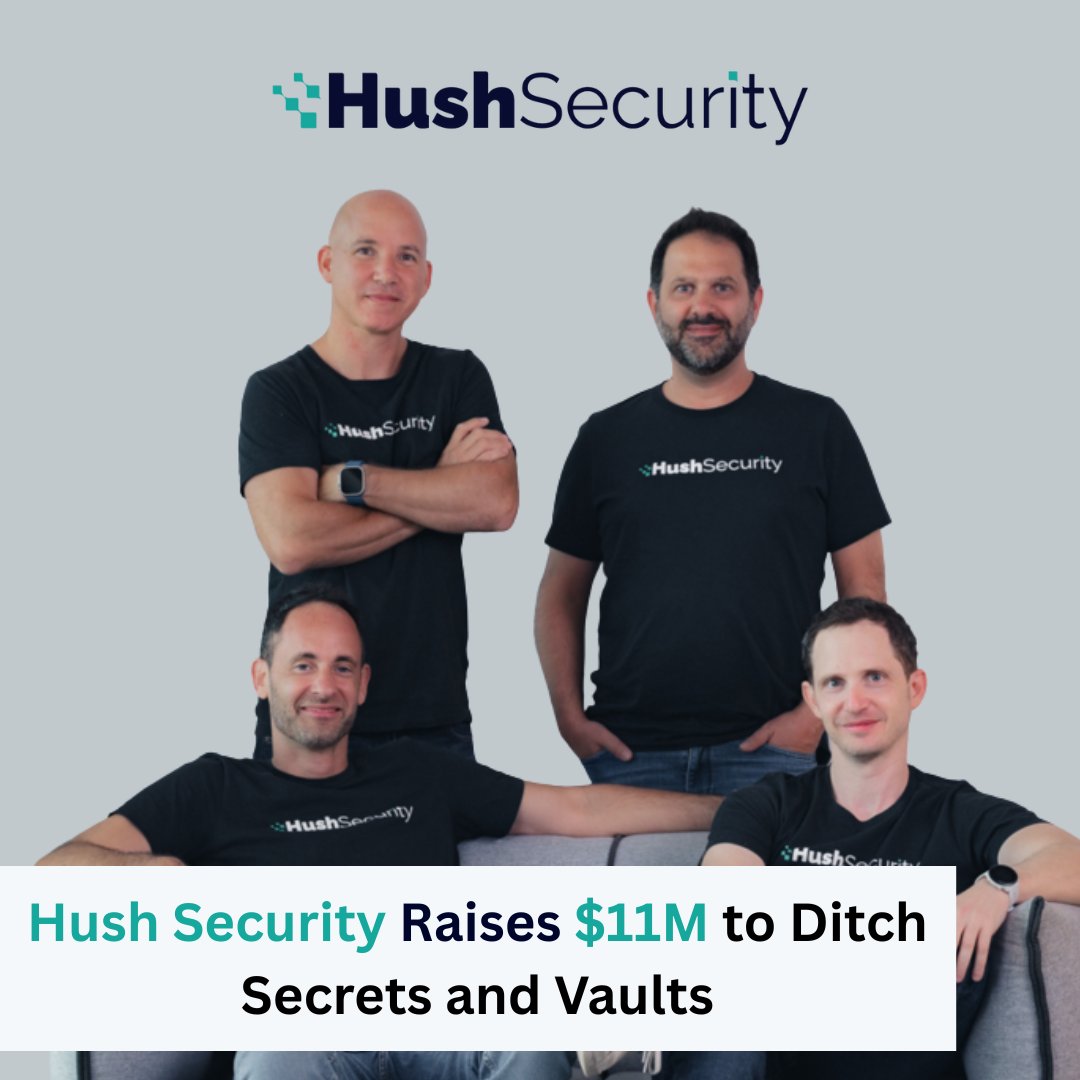
@Hush_Security Raises $11M to Ditch Secrets and Vaults
Fresh out of stealth, Tel Aviv’s Hush Security is tackling machine identity head-on with a secretless, policy-based access platform. Forget vaults, forget static secrets — this team is pushing runtime, just-in-time controls built for the AI era.
🎉 Mazal tov to founders Micha Rave, Chen Nisnkorn, Shmulik Ladkani, and Alon Horowitz, the crew who built Meta Networks and sold it to Proofpoint for $120M. Fortune 500s are already on board. 🔐🤖
Funding led by @BatteryVentures (@BarakSchoster) and @ylventures (Yoav Leitersdorf).
Source: PRNewswire
1
1
4
227

10 Sep 2025
The secret is out, literally 🔐
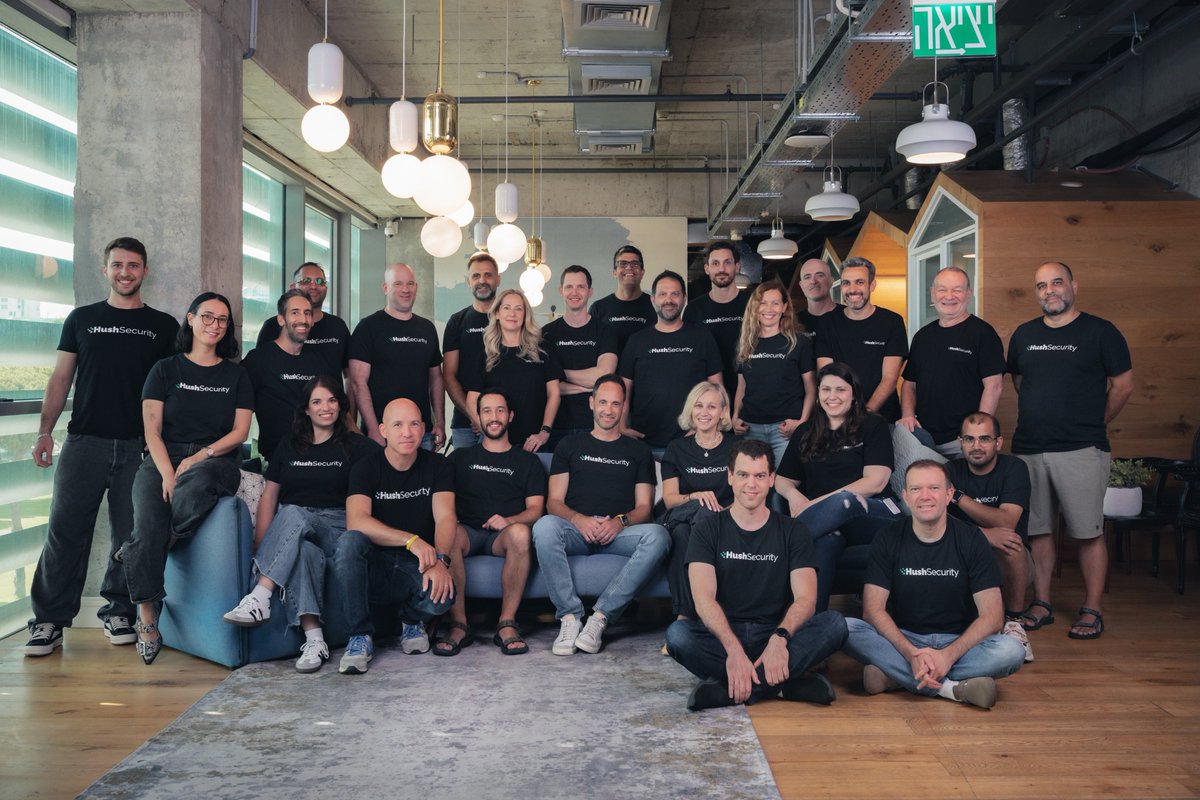
Hush Security launches today. We've raised $11M from @BatteryVentures & @YL_Ventures to replace vulnerable vaults & static credentials with a secretless, policy-driven access model for the AI era. Read more: hush.security/hush-security-…
3
6
147

8 Sep 2025
Today, I finally succeeded with making my X OAuth provider fully MCP compatible. I was 1 bug away from this the past 3 weekends!
Introducing the MCP X Oauth Provider Proxy
Put X oauth in front of any MCP you create with ease.
Fully secretless and serverless.
Check the demo yourself👇
1
6
427

17 Aug 2025
lmk if you want to try out Azure DevOps Artifacts Actions - it can be done secretless: github.com/johnterickson/act…
1
5
1,319

21 Jul 2025
Secretless
— a bong jaehyun alternate universe
©seblakmachaluvv

1
7
9
794

12 Jul 2025
Secretless Broker: Open-source tool connects apps securely without passwords or keys linuxtoday.com/blog/secretle…
1
26
3,948
2 Jul 2025
Secretless Broker: Open-source tool connects apps securely without passwords or keys helpnetsecurity.com/2025/07/…
5
737