
A REJOINDER TO CHIDI ANSELM ODINKALU’S COMMENTS ON THE APPOINTMENT OF THE CHIEF JUDGE OF IMO STATE
Dear. Mr. Anselm @ChidiOdinkalu ,
I have always regarded you as a public commentator who is guided by facts, evidence, and verifiable information. It is therefore surprising that you would publish such sweeping conclusions on a matter as sensitive as the appointment of the Chief Judge of Imo State without first acquainting yourself with the applicable constitutional provisions, the National Judicial Council (NJC) Guidelines, and the facts surrounding the process.
Respectfully, your intervention appears to be founded more on speculation than on established facts.
1. Incorrect Statement of Fact
To begin with, your post contains a fundamental factual error.
Hon. Justice C. A. Ononeze-Madu was appointed to the High Court Bench in 2004, not in 2008 as you asserted. The public notice issued by the Imo State Judicial Service Commission clearly reflects this fact.
Where a commentary is built upon incorrect foundational facts, the conclusions drawn from it become equally questionable.
2. The “Too Infirm” Assertion Is Unsupported
You described one of the shortlisted candidates as being “too infirm.”
With respect, on what basis was this conclusion reached?
Are you in possession of any medical assessment, health report, or fitness certification regarding the candidate?
Under the current NJC Guidelines, issues relating to the physical and mental fitness of judicial officers are matters that require objective assessment and verification, not personal conjecture or public speculation.
Absent any official medical report or competent evidence, such a statement remains unsubstantiated and risks unfairly diminishing the reputation of a serving judicial officer.
3. Seniority Does Not Automatically Confer Appointment as Substantive Chief Judge
A significant misconception running through your post is the assumption that the most senior judge must necessarily become the substantive Chief Judge.
That is not the law.
Section 271(4) of the Constitution addresses the appointment of an Acting Chief Judge, requiring that the most senior judge assume that role where necessary.
However, the appointment of a substantive Chief Judge is a different constitutional process altogether.
The office is not awarded solely on the basis of seniority. Rather, the NJC Guidelines require consideration of competence, integrity, temperament, administrative capacity, character, suitability, security reports, and other relevant factors.
Seniority may be a relevant consideration, but it is not the sole determinant.
To suggest otherwise is to oversimplify a process that the Constitution and NJC have deliberately made more rigorous.
4. The Process Did Not Begin With the Publication of the Shortlist
Your post creates the impression that the Judicial Service Commission suddenly produced two names without any preceding process.
That impression is inaccurate.
The process commenced with the consideration of the most senior eligible judges of the State, including the candidate you appear to favour.
Pursuant to NJC Guidelines, comments and assessments were sought from relevant stakeholders within the Bar and Bench. Security agencies, including the DSS, were required to conduct investigations and provide reports regarding the suitability of the candidates.
The Judicial Service Commission then considered the available materials, evaluations, and reports before arriving at its shortlist.
This is the process prescribed by the NJC, and it was followed.
5. The Shortlisting of Two Candidates Is Consistent With NJC Requirements
Out of the nominated candidates, two were shortlisted.
That is neither unusual nor suspicious.
The NJC Guidelines require that more candidates than the available position be considered and that a shortlist be forwarded following assessment.
The elimination of candidates during that process does not automatically signify manipulation or wrongdoing.
It simply means that, upon evaluation of all relevant considerations, some candidates were adjudged more suitable than others.
Without access to the confidential reports and evaluations considered by the Commission, any allegation of foul play remains speculative.
6. The Candidate You Prefer Has Already Served Extensively as Acting Chief Judge
It is also important to place matters in proper context.
The judge whom you advocate for served as Acting Chief Judge of Imo State between March 2020 and October 2021, approximately nineteen months in office.
She again served as Acting Chief Judge from September to December 2025, following which further extensions were considered.
These facts demonstrate that she has not been denied opportunities to occupy judicial leadership positions.
7. Constitutional Questions Exist Regarding the Extensions Granted
Interestingly, while you are quick to criticize the current process, you remained noticeably silent regarding legitimate constitutional concerns surrounding previous extensions of the Acting Chief Judge’s tenure.
Section 271(4) and (5) of the Constitution clearly regulate acting appointments.
The propriety of extending acting tenures beyond constitutionally prescribed periods has generated legal debate among practitioners and scholars alike.
Yet, no public outrage was expressed when those developments appeared favourable to your preferred candidate.
Consistency demands that constitutional concerns be raised irrespective of whose interests are affected.
8. No Outsider Can Certify the Records of Judicial Officers
You repeatedly asserted that your preferred candidate possesses an entirely clean record.
With respect, how would you know?
You are not a member of the Imo State Judicial Service Commission.
You are not a member of the National Judicial Council.
You are not part of the security agencies tasked with conducting background investigations.
You therefore do not possess access to the entirety of the information available to the bodies constitutionally empowered to assess judicial candidates.
At best, you are aware of publicly available information.
The confidential records, evaluations, and assessments considered during the appointment process remain outside public knowledge.
Consequently, categorical declarations regarding the suitability or otherwise of any candidate are premature.
9. Public Commentary Must Be Guided by Facts, Not Assumptions
Public discourse is strengthened when it is informed by facts, law, and evidence.
It is weakened when conclusions are reached before the relevant facts are known.
The Judicial Service Commission is a constitutional body entrusted with carrying out its duties in accordance with the Constitution and NJC Guidelines. Unless credible evidence exists showing that those duties have been violated, allegations of conspiracy, manipulation, or scandal should be approached with caution.
Criticism is legitimate. Speculation is not.
Where facts are incomplete, restraint is often the wiser course.
In matters affecting the judiciary—the last hope of the common man—accuracy should always prevail over sensationalism, and evidence should always prevail over assumption.

3
3
90

By "God", do you signify a concept, or some extraordinary spiritual experience that you had?
1
1
5

It can signify Goku alone as well , Goku 's gi is basically Orange outside and Blue inside
8

Could signify an upcoming seasonal weather event. Summer of 2017 millions of these brown & black woolly caterpillars were everywhere in WI & IL. By November coldest winter followed🥶

21
A REJOINDER TO CHIDI ANSELM ODINKALU’S COMMENTS ON THE APPOINTMENT OF THE CHIEF JUDGE OF IMO STATE
Mr. Chidi Anselm Odinkalu,
I have always regarded you as a public commentator who is guided by facts, evidence, and verifiable information. It is therefore surprising that you would publish such sweeping conclusions on a matter as sensitive as the appointment of the Chief Judge of Imo State without first acquainting yourself with the applicable constitutional provisions, the National Judicial Council (NJC) Guidelines, and the facts surrounding the process.
Respectfully, your intervention appears to be founded more on speculation than on established facts.
1. Incorrect Statement of Fact
To begin with, your post contains a fundamental factual error.
Hon. Justice C. A. Ononeze-Madu was appointed to the High Court Bench in 2004, not in 2008 as you asserted. The public notice issued by the Imo State Judicial Service Commission clearly reflects this fact.
Where a commentary is built upon incorrect foundational facts, the conclusions drawn from it become equally questionable.
2. The “Too Infirm” Assertion Is Unsupported
You described one of the shortlisted candidates as being “too infirm.”
With respect, on what basis was this conclusion reached?
Are you in possession of any medical assessment, health report, or fitness certification regarding the candidate?
Under the current NJC Guidelines, issues relating to the physical and mental fitness of judicial officers are matters that require objective assessment and verification, not personal conjecture or public speculation.
Absent any official medical report or competent evidence, such a statement remains unsubstantiated and risks unfairly diminishing the reputation of a serving judicial officer.
3. Seniority Does Not Automatically Confer Appointment as Substantive Chief Judge
A significant misconception running through your post is the assumption that the most senior judge must necessarily become the substantive Chief Judge.
That is not the law.
Section 271(4) of the Constitution addresses the appointment of an Acting Chief Judge, requiring that the most senior judge assume that role where necessary.
However, the appointment of a substantive Chief Judge is a different constitutional process altogether.
The office is not awarded solely on the basis of seniority. Rather, the NJC Guidelines require consideration of competence, integrity, temperament, administrative capacity, character, suitability, security reports, and other relevant factors.
Seniority may be a relevant consideration, but it is not the sole determinant.
To suggest otherwise is to oversimplify a process that the Constitution and NJC have deliberately made more rigorous.
4. The Process Did Not Begin With the Publication of the Shortlist
Your post creates the impression that the Judicial Service Commission suddenly produced two names without any preceding process.
That impression is inaccurate.
The process commenced with the consideration of the most senior eligible judges of the State, including the candidate you appear to favour.
Pursuant to NJC Guidelines, comments and assessments were sought from relevant stakeholders within the Bar and Bench. Security agencies, including the DSS, were required to conduct investigations and provide reports regarding the suitability of the candidates.
The Judicial Service Commission then considered the available materials, evaluations, and reports before arriving at its shortlist.
This is the process prescribed by the NJC, and it was followed.
5. The Shortlisting of Two Candidates Is Consistent With NJC Requirements
Out of the nominated candidates, two were shortlisted.
That is neither unusual nor suspicious.
The NJC Guidelines require that more candidates than the available position be considered and that a shortlist be forwarded following assessment.
The elimination of candidates during that process does not automatically signify manipulation or wrongdoing.
It simply means that, upon evaluation of all relevant considerations, some candidates were adjudged more suitable than others.
Without access to the confidential reports and evaluations considered by the Commission, any allegation of foul play remains speculative.
6. The Candidate You Prefer Has Already Served Extensively as Acting Chief Judge
It is also important to place matters in proper context.
The judge whom you advocate for served as Acting Chief Judge of Imo State between March 2020 and October 2021, approximately nineteen months in office.
She again served as Acting Chief Judge from September to December 2025, following which further extensions were considered.
These facts demonstrate that she has not been denied opportunities to occupy judicial leadership positions.
7. Constitutional Questions Exist Regarding the Extensions Granted
Interestingly, while you are quick to criticize the current process, you remained noticeably silent regarding legitimate constitutional concerns surrounding previous extensions of the Acting Chief Judge’s tenure.
Section 271(4) and (5) of the Constitution clearly regulate acting appointments.
The propriety of extending acting tenures beyond constitutionally prescribed periods has generated legal debate among practitioners and scholars alike.
Yet, no public outrage was expressed when those developments appeared favourable to your preferred candidate.
Consistency demands that constitutional concerns be raised irrespective of whose interests are affected.
8. No Outsider Can Certify the Records of Judicial Officers
You repeatedly asserted that your preferred candidate possesses an entirely clean record.
With respect, how would you know?
You are not a member of the Imo State Judicial Service Commission.
You are not a member of the National Judicial Council.
You are not part of the security agencies tasked with conducting background investigations.
You therefore do not possess access to the entirety of the information available to the bodies constitutionally empowered to assess judicial candidates.
At best, you are aware of publicly available information.
The confidential records, evaluations, and assessments considered during the appointment process remain outside public knowledge.
Consequently, categorical declarations regarding the suitability or otherwise of any candidate are premature.
9. Public Commentary Must Be Guided by Facts, Not Assumptions
Public discourse is strengthened when it is informed by facts, law, and evidence.
It is weakened when conclusions are reached before the relevant facts are known.
The Judicial Service Commission is a constitutional body entrusted with carrying out its duties in accordance with the Constitution and NJC Guidelines. Unless credible evidence exists showing that those duties have been violated, allegations of conspiracy, manipulation, or scandal should be approached with caution.
Criticism is legitimate. Speculation is not.
Where facts are incomplete, restraint is often the wiser course.
In matters affecting the judiciary—the last hope of the common man—accuracy should always prevail over sensationalism, and evidence should always prevail over assumption.

The Judicial Service Commission in Imo State is brewing a scandal at the instigation of the State Governor, @Hope_Uzodimma1. A senior judge from the state serving somewhere in Abuja is part of this scandal, as are some #SANs from the State.
Last week, the Commission purported to produce a shortlist of 2 candidates for the position of Chief Judge of the State. It did not say when it began the process or how.
One of the 2 candidates is Justice Ononeze-Madu who became a judge in 2008. The other one is Justice Agada who is actually too infirm at this time.
In actuality, this is a "shortlist" of 1.
The Commission claims that it has done the shortlist in order of seniority. The mystery is that they have excluded the Ag. Chief Judge, Ijeoma Agugua.
Appointed in 1993 as a judge, she is senior to the next to her by 11 years as a judge. She has been passed over for the position of Chief Judge at least 3 times.
Hope Uzodinma & his agents have a #RumourMill designed to making her. But her record with @njcNig is clean. A judge whose official record is without blemish should not suffer this kind of concerted effort to tarnish her.
But that has not stopped them from doing it. The conclusion is clearly that the politicians are afraid of a woman whom they consider too independent & not malleable to their will. They would rather have as Chief Judge, a person whom they can instruct.
This scandal instructed by Hope Uzondinma is a test for the current Chief Justice of #Nigeria. We will watch diligently to see whether the #CJN & @njcNig will be willing to defend judicial seniority & the integrity of a judge whose record is clean.

1
2
54
A REJOINDER TO CHIDI ANSELM ODINKALU’S COMMENTS ON THE APPOINTMENT OF THE CHIEF JUDGE OF IMO STATE
Mr. Chidi Anselm Odinkalu,
I have always regarded you as a public commentator who is guided by facts, evidence, and verifiable information. It is therefore surprising that you would publish such sweeping conclusions on a matter as sensitive as the appointment of the Chief Judge of Imo State without first acquainting yourself with the applicable constitutional provisions, the National Judicial Council (NJC) Guidelines, and the facts surrounding the process.
Respectfully, your intervention appears to be founded more on speculation than on established facts.
1. Incorrect Statement of Fact
To begin with, your post contains a fundamental factual error.
Hon. Justice C. A. Ononeze-Madu was appointed to the High Court Bench in 2004, not in 2008 as you asserted. The public notice issued by the Imo State Judicial Service Commission clearly reflects this fact.
Where a commentary is built upon incorrect foundational facts, the conclusions drawn from it become equally questionable.
2. The “Too Infirm” Assertion Is Unsupported
You described one of the shortlisted candidates as being “too infirm.”
With respect, on what basis was this conclusion reached?
Are you in possession of any medical assessment, health report, or fitness certification regarding the candidate?
Under the current NJC Guidelines, issues relating to the physical and mental fitness of judicial officers are matters that require objective assessment and verification, not personal conjecture or public speculation.
Absent any official medical report or competent evidence, such a statement remains unsubstantiated and risks unfairly diminishing the reputation of a serving judicial officer.
3. Seniority Does Not Automatically Confer Appointment as Substantive Chief Judge
A significant misconception running through your post is the assumption that the most senior judge must necessarily become the substantive Chief Judge.
That is not the law.
Section 271(4) of the Constitution addresses the appointment of an Acting Chief Judge, requiring that the most senior judge assume that role where necessary.
However, the appointment of a substantive Chief Judge is a different constitutional process altogether.
The office is not awarded solely on the basis of seniority. Rather, the NJC Guidelines require consideration of competence, integrity, temperament, administrative capacity, character, suitability, security reports, and other relevant factors.
Seniority may be a relevant consideration, but it is not the sole determinant.
To suggest otherwise is to oversimplify a process that the Constitution and NJC have deliberately made more rigorous.
4. The Process Did Not Begin With the Publication of the Shortlist
Your post creates the impression that the Judicial Service Commission suddenly produced two names without any preceding process.
That impression is inaccurate.
The process commenced with the consideration of the most senior eligible judges of the State, including the candidate you appear to favour.
Pursuant to NJC Guidelines, comments and assessments were sought from relevant stakeholders within the Bar and Bench. Security agencies, including the DSS, were required to conduct investigations and provide reports regarding the suitability of the candidates.
The Judicial Service Commission then considered the available materials, evaluations, and reports before arriving at its shortlist.
This is the process prescribed by the NJC, and it was followed.
5. The Shortlisting of Two Candidates Is Consistent With NJC Requirements
Out of the nominated candidates, two were shortlisted.
That is neither unusual nor suspicious.
The NJC Guidelines require that more candidates than the available position be considered and that a shortlist be forwarded following assessment.
The elimination of candidates during that process does not automatically signify manipulation or wrongdoing.
It simply means that, upon evaluation of all relevant considerations, some candidates were adjudged more suitable than others.
Without access to the confidential reports and evaluations considered by the Commission, any allegation of foul play remains speculative.
6. The Candidate You Prefer Has Already Served Extensively as Acting Chief Judge
It is also important to place matters in proper context.
The judge whom you advocate for served as Acting Chief Judge of Imo State between March 2020 and October 2021, approximately nineteen months in office.
She again served as Acting Chief Judge from September to December 2025, following which further extensions were considered.
These facts demonstrate that she has not been denied opportunities to occupy judicial leadership positions.
7. Constitutional Questions Exist Regarding the Extensions Granted
Interestingly, while you are quick to criticize the current process, you remained noticeably silent regarding legitimate constitutional concerns surrounding previous extensions of the Acting Chief Judge’s tenure.
Section 271(4) and (5) of the Constitution clearly regulate acting appointments.
The propriety of extending acting tenures beyond constitutionally prescribed periods has generated legal debate among practitioners and scholars alike.
Yet, no public outrage was expressed when those developments appeared favourable to your preferred candidate.
Consistency demands that constitutional concerns be raised irrespective of whose interests are affected.
8. No Outsider Can Certify the Records of Judicial Officers
You repeatedly asserted that your preferred candidate possesses an entirely clean record.
With respect, how would you know?
You are not a member of the Imo State Judicial Service Commission.
You are not a member of the National Judicial Council.
You are not part of the security agencies tasked with conducting background investigations.
You therefore do not possess access to the entirety of the information available to the bodies constitutionally empowered to assess judicial candidates.
At best, you are aware of publicly available information.
The confidential records, evaluations, and assessments considered during the appointment process remain outside public knowledge.
Consequently, categorical declarations regarding the suitability or otherwise of any candidate are premature.
9. Public Commentary Must Be Guided by Facts, Not Assumptions
Public discourse is strengthened when it is informed by facts, law, and evidence.
It is weakened when conclusions are reached before the relevant facts are known.
The Judicial Service Commission is a constitutional body entrusted with carrying out its duties in accordance with the Constitution and NJC Guidelines. Unless credible evidence exists showing that those duties have been violated, allegations of conspiracy, manipulation, or scandal should be approached with caution.
Criticism is legitimate. Speculation is not.
Where facts are incomplete, restraint is often the wiser course.
In matters affecting the judiciary—the last hope of the common man—accuracy should always prevail over sensationalism, and evidence should always prevail over assumption.
1
11
A REJOINDER TO CHIDI ANSELM ODINKALU’S COMMENTS ON THE APPOINTMENT OF THE CHIEF JUDGE OF IMO STATE
Mr. Chidi Anselm Odinkalu,
I have always regarded you as a public commentator who is guided by facts, evidence, and verifiable information. It is therefore surprising that you would publish such sweeping conclusions on a matter as sensitive as the appointment of the Chief Judge of Imo State without first acquainting yourself with the applicable constitutional provisions, the National Judicial Council (NJC) Guidelines, and the facts surrounding the process.
Respectfully, your intervention appears to be founded more on speculation than on established facts.
1. Incorrect Statement of Fact
To begin with, your post contains a fundamental factual error.
Hon. Justice C. A. Ononeze-Madu was appointed to the High Court Bench in 2004, not in 2008 as you asserted. The public notice issued by the Imo State Judicial Service Commission clearly reflects this fact.
Where a commentary is built upon incorrect foundational facts, the conclusions drawn from it become equally questionable.
2. The “Too Infirm” Assertion Is Unsupported
You described one of the shortlisted candidates as being “too infirm.”
With respect, on what basis was this conclusion reached?
Are you in possession of any medical assessment, health report, or fitness certification regarding the candidate?
Under the current NJC Guidelines, issues relating to the physical and mental fitness of judicial officers are matters that require objective assessment and verification, not personal conjecture or public speculation.
Absent any official medical report or competent evidence, such a statement remains unsubstantiated and risks unfairly diminishing the reputation of a serving judicial officer.
3. Seniority Does Not Automatically Confer Appointment as Substantive Chief Judge
A significant misconception running through your post is the assumption that the most senior judge must necessarily become the substantive Chief Judge.
That is not the law.
Section 271(4) of the Constitution addresses the appointment of an Acting Chief Judge, requiring that the most senior judge assume that role where necessary.
However, the appointment of a substantive Chief Judge is a different constitutional process altogether.
The office is not awarded solely on the basis of seniority. Rather, the NJC Guidelines require consideration of competence, integrity, temperament, administrative capacity, character, suitability, security reports, and other relevant factors.
Seniority may be a relevant consideration, but it is not the sole determinant.
To suggest otherwise is to oversimplify a process that the Constitution and NJC have deliberately made more rigorous.
4. The Process Did Not Begin With the Publication of the Shortlist
Your post creates the impression that the Judicial Service Commission suddenly produced two names without any preceding process.
That impression is inaccurate.
The process commenced with the consideration of the most senior eligible judges of the State, including the candidate you appear to favour.
Pursuant to NJC Guidelines, comments and assessments were sought from relevant stakeholders within the Bar and Bench. Security agencies, including the DSS, were required to conduct investigations and provide reports regarding the suitability of the candidates.
The Judicial Service Commission then considered the available materials, evaluations, and reports before arriving at its shortlist.
This is the process prescribed by the NJC, and it was followed.
5. The Shortlisting of Two Candidates Is Consistent With NJC Requirements
Out of the nominated candidates, two were shortlisted.
That is neither unusual nor suspicious.
The NJC Guidelines require that more candidates than the available position be considered and that a shortlist be forwarded following assessment.
The elimination of candidates during that process does not automatically signify manipulation or wrongdoing.
It simply means that, upon evaluation of all relevant considerations, some candidates were adjudged more suitable than others.
Without access to the confidential reports and evaluations considered by the Commission, any allegation of foul play remains speculative.
6. The Candidate You Prefer Has Already Served Extensively as Acting Chief Judge
It is also important to place matters in proper context.
The judge whom you advocate for served as Acting Chief Judge of Imo State between March 2020 and October 2021, approximately nineteen months in office.
She again served as Acting Chief Judge from September to December 2025, following which further extensions were considered.
These facts demonstrate that she has not been denied opportunities to occupy judicial leadership positions.
7. Constitutional Questions Exist Regarding the Extensions Granted
Interestingly, while you are quick to criticize the current process, you remained noticeably silent regarding legitimate constitutional concerns surrounding previous extensions of the Acting Chief Judge’s tenure.
Section 271(4) and (5) of the Constitution clearly regulate acting appointments.
The propriety of extending acting tenures beyond constitutionally prescribed periods has generated legal debate among practitioners and scholars alike.
Yet, no public outrage was expressed when those developments appeared favourable to your preferred candidate.
Consistency demands that constitutional concerns be raised irrespective of whose interests are affected.
8. No Outsider Can Certify the Records of Judicial Officers
You repeatedly asserted that your preferred candidate possesses an entirely clean record.
With respect, how would you know?
You are not a member of the Imo State Judicial Service Commission.
You are not a member of the National Judicial Council.
You are not part of the security agencies tasked with conducting background investigations.
You therefore do not possess access to the entirety of the information available to the bodies constitutionally empowered to assess judicial candidates.
At best, you are aware of publicly available information.
The confidential records, evaluations, and assessments considered during the appointment process remain outside public knowledge.
Consequently, categorical declarations regarding the suitability or otherwise of any candidate are premature.
9. Public Commentary Must Be Guided by Facts, Not Assumptions
Public discourse is strengthened when it is informed by facts, law, and evidence.
It is weakened when conclusions are reached before the relevant facts are known.
The Judicial Service Commission is a constitutional body entrusted with carrying out its duties in accordance with the Constitution and NJC Guidelines. Unless credible evidence exists showing that those duties have been violated, allegations of conspiracy, manipulation, or scandal should be approached with caution.
Criticism is legitimate. Speculation is not.
Where facts are incomplete, restraint is often the wiser course.
In matters affecting the judiciary—the last hope of the common man—accuracy should always prevail over sensationalism, and evidence should always prevail over assumption.
1
7

Well normally they wear hats that signify the city named after St. Francis of Assisi, a great saint, lover of God's creation, and founder of the Order of Friars Minor.
“I have been all things unholy. If God can work through me, He can work through anyone.” ~ St. Francis
78
A REJOINDER TO CHIDI ANSELM ODINKALU’S COMMENTS ON THE APPOINTMENT OF THE CHIEF JUDGE OF IMO STATE
Mr. Chidi Anselm Odinkalu,
I have always regarded you as a public commentator who is guided by facts, evidence, and verifiable information. It is therefore surprising that you would publish such sweeping conclusions on a matter as sensitive as the appointment of the Chief Judge of Imo State without first acquainting yourself with the applicable constitutional provisions, the National Judicial Council (NJC) Guidelines, and the facts surrounding the process.
Respectfully, your intervention appears to be founded more on speculation than on established facts.
1. Incorrect Statement of Fact
To begin with, your post contains a fundamental factual error.
Hon. Justice C. A. Ononeze-Madu was appointed to the High Court Bench in 2004, not in 2008 as you asserted. The public notice issued by the Imo State Judicial Service Commission clearly reflects this fact.
Where a commentary is built upon incorrect foundational facts, the conclusions drawn from it become equally questionable.
2. The “Too Infirm” Assertion Is Unsupported
You described one of the shortlisted candidates as being “too infirm.”
With respect, on what basis was this conclusion reached?
Are you in possession of any medical assessment, health report, or fitness certification regarding the candidate?
Under the current NJC Guidelines, issues relating to the physical and mental fitness of judicial officers are matters that require objective assessment and verification, not personal conjecture or public speculation.
Absent any official medical report or competent evidence, such a statement remains unsubstantiated and risks unfairly diminishing the reputation of a serving judicial officer.
3. Seniority Does Not Automatically Confer Appointment as Substantive Chief Judge
A significant misconception running through your post is the assumption that the most senior judge must necessarily become the substantive Chief Judge.
That is not the law.
Section 271(4) of the Constitution addresses the appointment of an Acting Chief Judge, requiring that the most senior judge assume that role where necessary.
However, the appointment of a substantive Chief Judge is a different constitutional process altogether.
The office is not awarded solely on the basis of seniority. Rather, the NJC Guidelines require consideration of competence, integrity, temperament, administrative capacity, character, suitability, security reports, and other relevant factors.
Seniority may be a relevant consideration, but it is not the sole determinant.
To suggest otherwise is to oversimplify a process that the Constitution and NJC have deliberately made more rigorous.
4. The Process Did Not Begin With the Publication of the Shortlist
Your post creates the impression that the Judicial Service Commission suddenly produced two names without any preceding process.
That impression is inaccurate.
The process commenced with the consideration of the most senior eligible judges of the State, including the candidate you appear to favour.
Pursuant to NJC Guidelines, comments and assessments were sought from relevant stakeholders within the Bar and Bench. Security agencies, including the DSS, were required to conduct investigations and provide reports regarding the suitability of the candidates.
The Judicial Service Commission then considered the available materials, evaluations, and reports before arriving at its shortlist.
This is the process prescribed by the NJC, and it was followed.
5. The Shortlisting of Two Candidates Is Consistent With NJC Requirements
Out of the nominated candidates, two were shortlisted.
That is neither unusual nor suspicious.
The NJC Guidelines require that more candidates than the available position be considered and that a shortlist be forwarded following assessment.
The elimination of candidates during that process does not automatically signify manipulation or wrongdoing.
It simply means that, upon evaluation of all relevant considerations, some candidates were adjudged more suitable than others.
Without access to the confidential reports and evaluations considered by the Commission, any allegation of foul play remains speculative.
6. The Candidate You Prefer Has Already Served Extensively as Acting Chief Judge
It is also important to place matters in proper context.
The judge whom you advocate for served as Acting Chief Judge of Imo State between March 2020 and October 2021, approximately nineteen months in office.
She again served as Acting Chief Judge from September to December 2025, following which further extensions were considered.
These facts demonstrate that she has not been denied opportunities to occupy judicial leadership positions.
7. Constitutional Questions Exist Regarding the Extensions Granted
Interestingly, while you are quick to criticize the current process, you remained noticeably silent regarding legitimate constitutional concerns surrounding previous extensions of the Acting Chief Judge’s tenure.
Section 271(4) and (5) of the Constitution clearly regulate acting appointments.
The propriety of extending acting tenures beyond constitutionally prescribed periods has generated legal debate among practitioners and scholars alike.
Yet, no public outrage was expressed when those developments appeared favourable to your preferred candidate.
Consistency demands that constitutional concerns be raised irrespective of whose interests are affected.
8. No Outsider Can Certify the Records of Judicial Officers
You repeatedly asserted that your preferred candidate possesses an entirely clean record.
With respect, how would you know?
You are not a member of the Imo State Judicial Service Commission.
You are not a member of the National Judicial Council.
You are not part of the security agencies tasked with conducting background investigations.
You therefore do not possess access to the entirety of the information available to the bodies constitutionally empowered to assess judicial candidates.
At best, you are aware of publicly available information.
The confidential records, evaluations, and assessments considered during the appointment process remain outside public knowledge.
Consequently, categorical declarations regarding the suitability or otherwise of any candidate are premature.
9. Public Commentary Must Be Guided by Facts, Not Assumptions
Public discourse is strengthened when it is informed by facts, law, and evidence.
It is weakened when conclusions are reached before the relevant facts are known.
The Judicial Service Commission is a constitutional body entrusted with carrying out its duties in accordance with the Constitution and NJC Guidelines. Unless credible evidence exists showing that those duties have been violated, allegations of conspiracy, manipulation, or scandal should be approached with caution.
Criticism is legitimate. Speculation is not.
Where facts are incomplete, restraint is often the wiser course.
In matters affecting the judiciary—the last hope of the common man—accuracy should always prevail over sensationalism, and evidence should always prevail over assumption.
1
9

Axle’s inclusion is to signify that it’s a season 29 video since I made this same concept 2 years ago. I think I delivered a really good video that the majority of people who watched it enjoyed, so I don’t think people will feel cheated having clicked on it : )
1
9

Nick I think you are a great guy - you do have a habit of posting AI though and it doesn’t signify sharpness.
15
आदर्श बालक retweeted

10 Jun 2024
The 6th house and Virgo signify enemies and troublemakers, often causing significant delays in life.
When the Moon or the 1st house lord is in the 6th house or Virgo, it's you!
You are the one who brings most of the trouble to yourself, directly or indirectly.
51
77
745
59,239
Aletheia retweeted

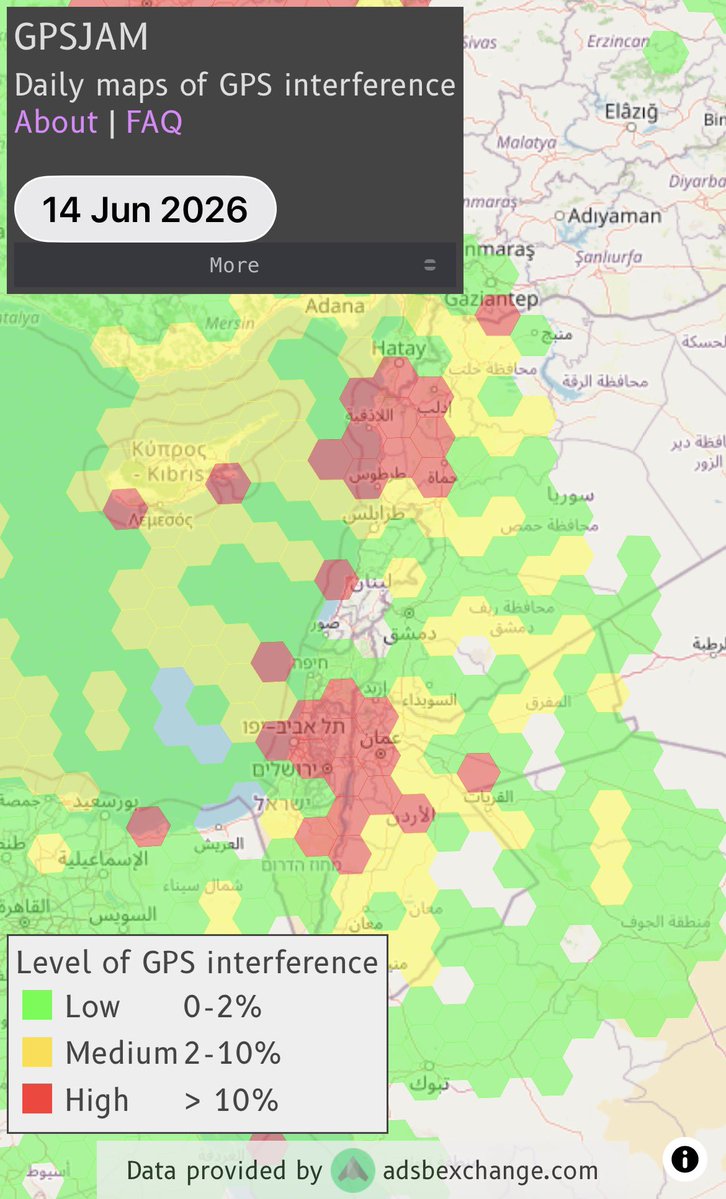
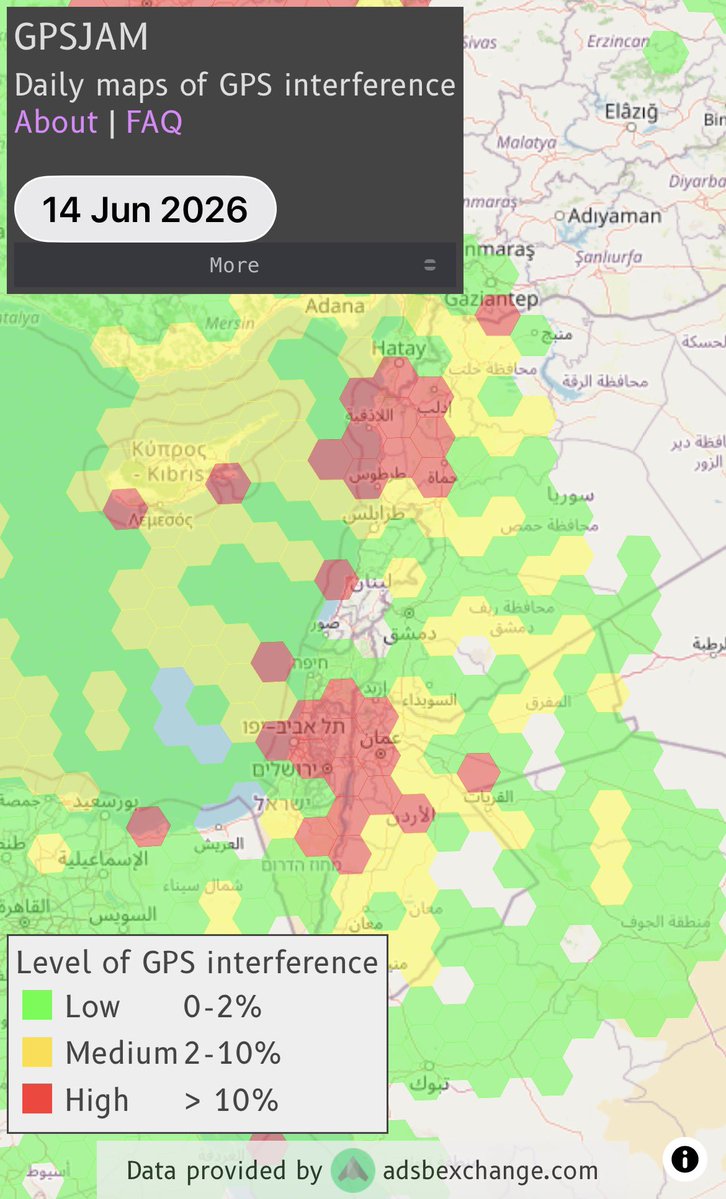
🔴🇮🇷🇮🇱UPDATE: Large amounts of GPS/GNSS jamming are being recorded around Israel.
This could signify that Israeli are deploying Electronic Warfare countermeasures against Iranian ballistic missiles.

BREAKING 🔴
Tasnim: Flights to and from airports across western Iran have been suspended until further notice amid the current security situation.

1
3
134

Just wrote about why I think the market will reach new all time highs by July, y'all should check it out!
purpledrink.substack.com/p/p…
- Important traits that signify further strength and soon
- IMPORTANT - $INTC daily case study on how leading stocks show strength on pullbacks
- Actionable Single Name Charts of Interest
3
1
19
1,231
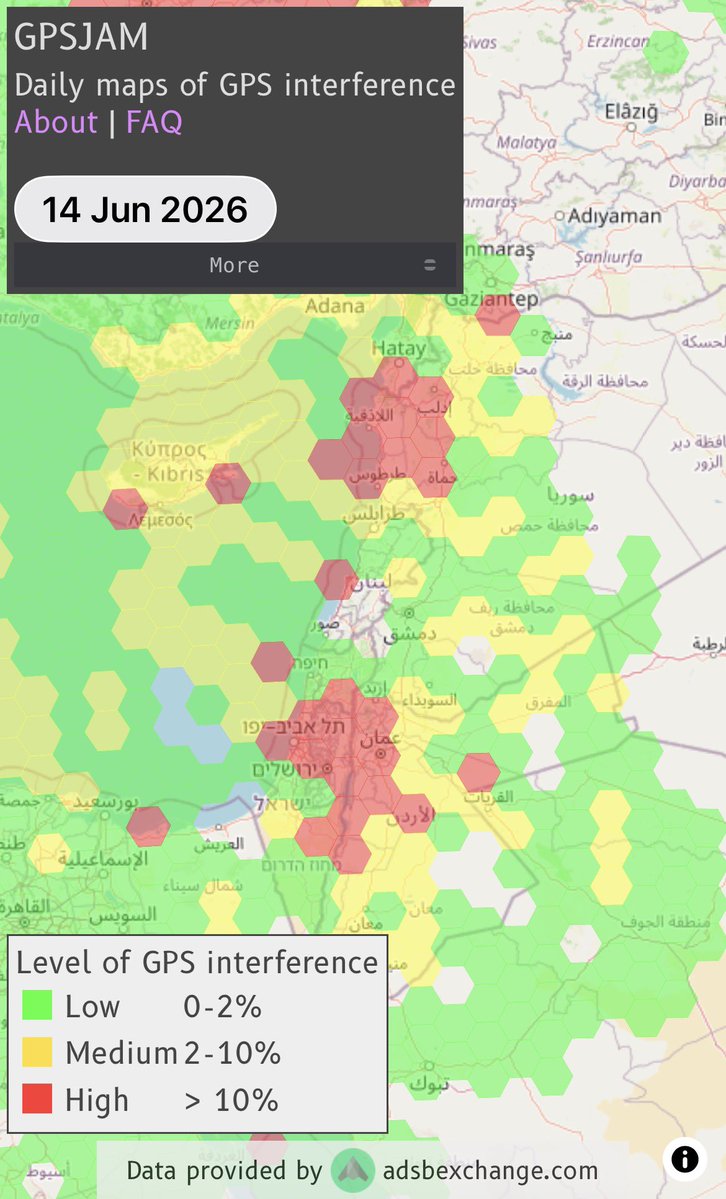
🔴🇮🇷🇮🇱UPDATE: Large amounts of GPS/GNSS jamming are being recorded around Israel.
This could signify that Israeli forces are deploying Electronic Warfare countermeasures against Iranian ballistic missiles.
243
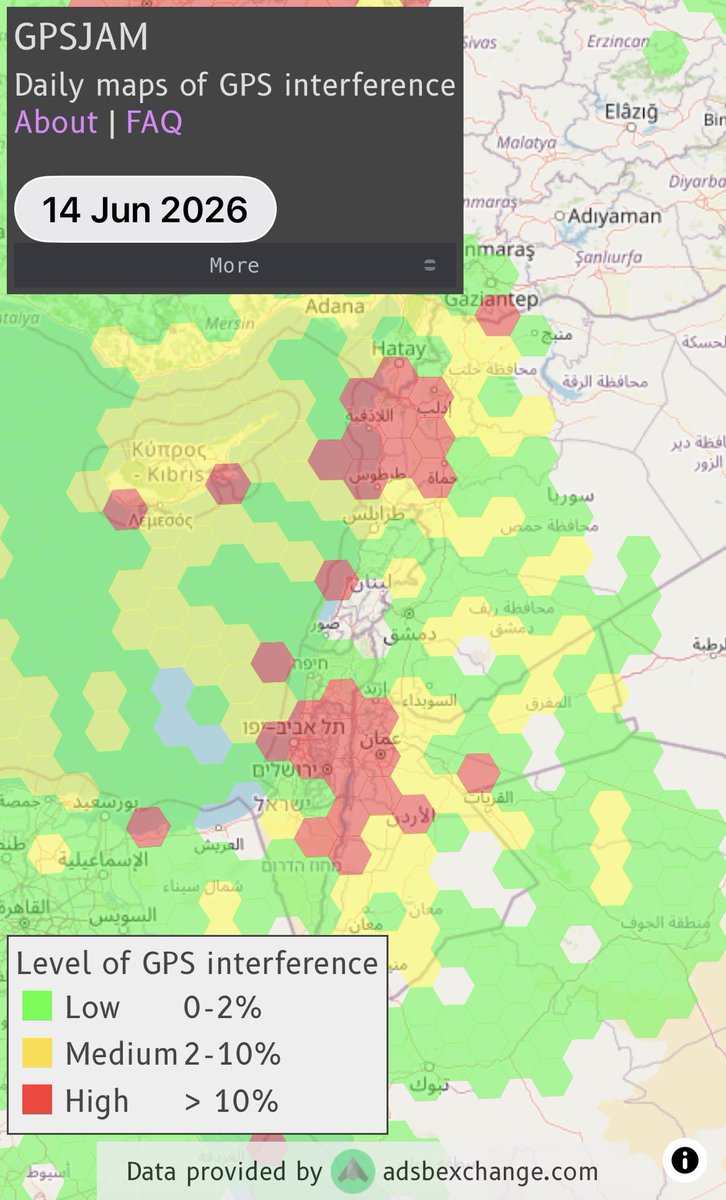
🔴🇮🇷🇮🇱UPDATE: Large amounts of GPS/GNSS jamming are being recorded around Israel.
This could signify that Israeli are deploying Electronic Warfare countermeasures against Iranian ballistic missiles.
143
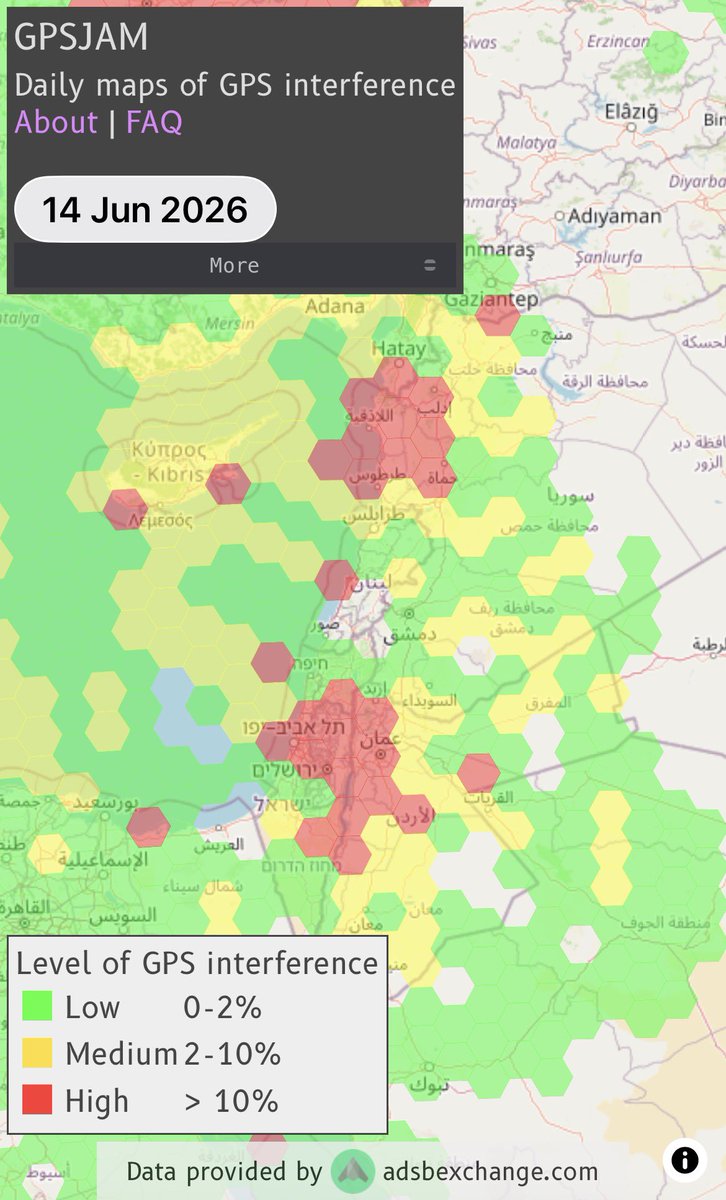
🔴🇮🇷🇮🇱UPDATE: Large amounts of GPS/GNSS jamming are being recorded around Israel.
This could signify that Israeli are deploying Electronic Warfare countermeasures against Iranian ballistic missiles.
1
160
🔴🇮🇷🇮🇱UPDATE: Large amounts of GPS/GNSS jamming are being recorded around Israel.
This could signify that Israeli are deploying Electronic Warfare countermeasures against Iranian ballistic missiles.
591
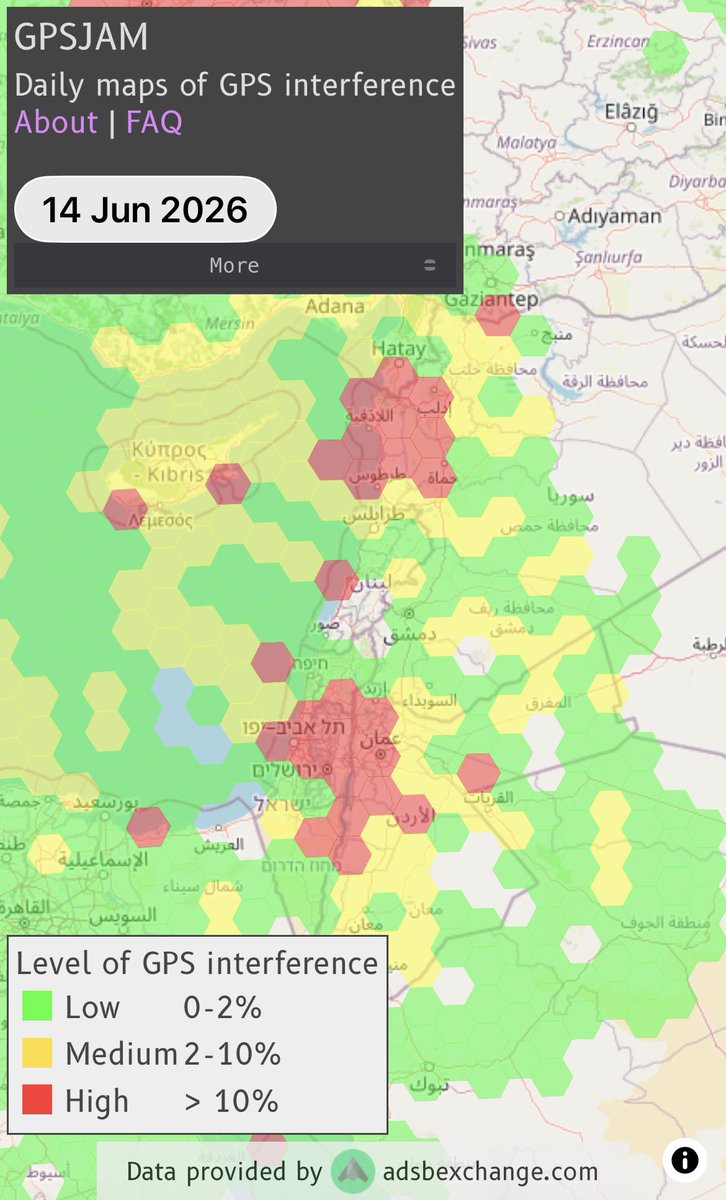
🔴🇮🇷🇮🇱UPDATE: Large amounts of GPS/GNSS jamming are being recorded around Israel.
This could signify that Israeli are deploying Electronic Warfare countermeasures against Iranian ballistic missiles.
1
477