Filter
Exclude
Time range
-
Near
Muhammad Afiq retweeted
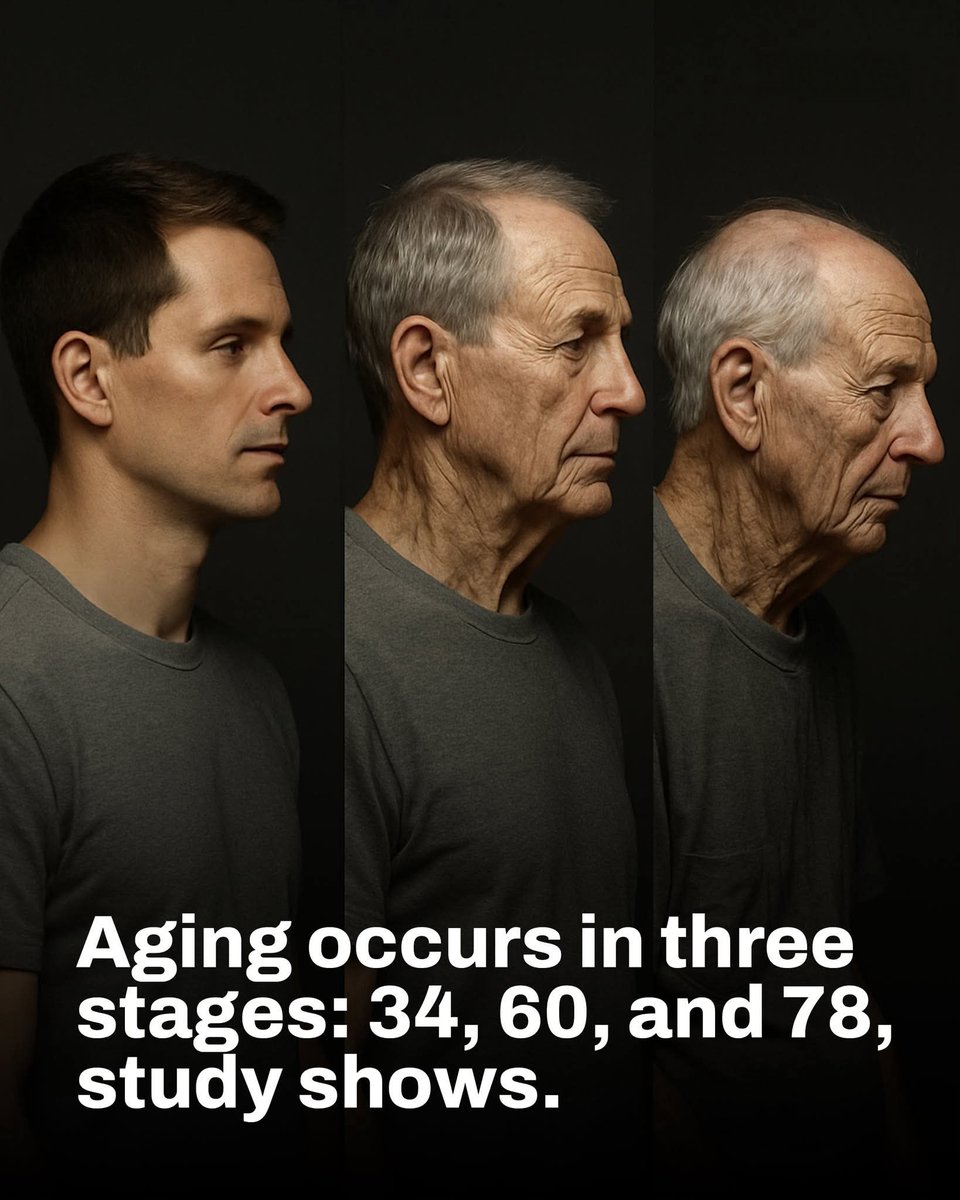
Did you know aging doesn’t happen gradually — it comes in waves? A major study published in Nature Medicine found that our bodies go through three major aging shifts at around age 34, 60, and 78. Scientists analyzed the blood of over 4,000 people and discovered that hundreds of proteins — linked to metabolism, immunity, and organ function — suddenly change at those ages. This means your body may enter new “biological stages” at those key points in life — not just slowly get older. Aging, it turns out, has milestones.
3
28
58
2,111
Brainy Science retweeted
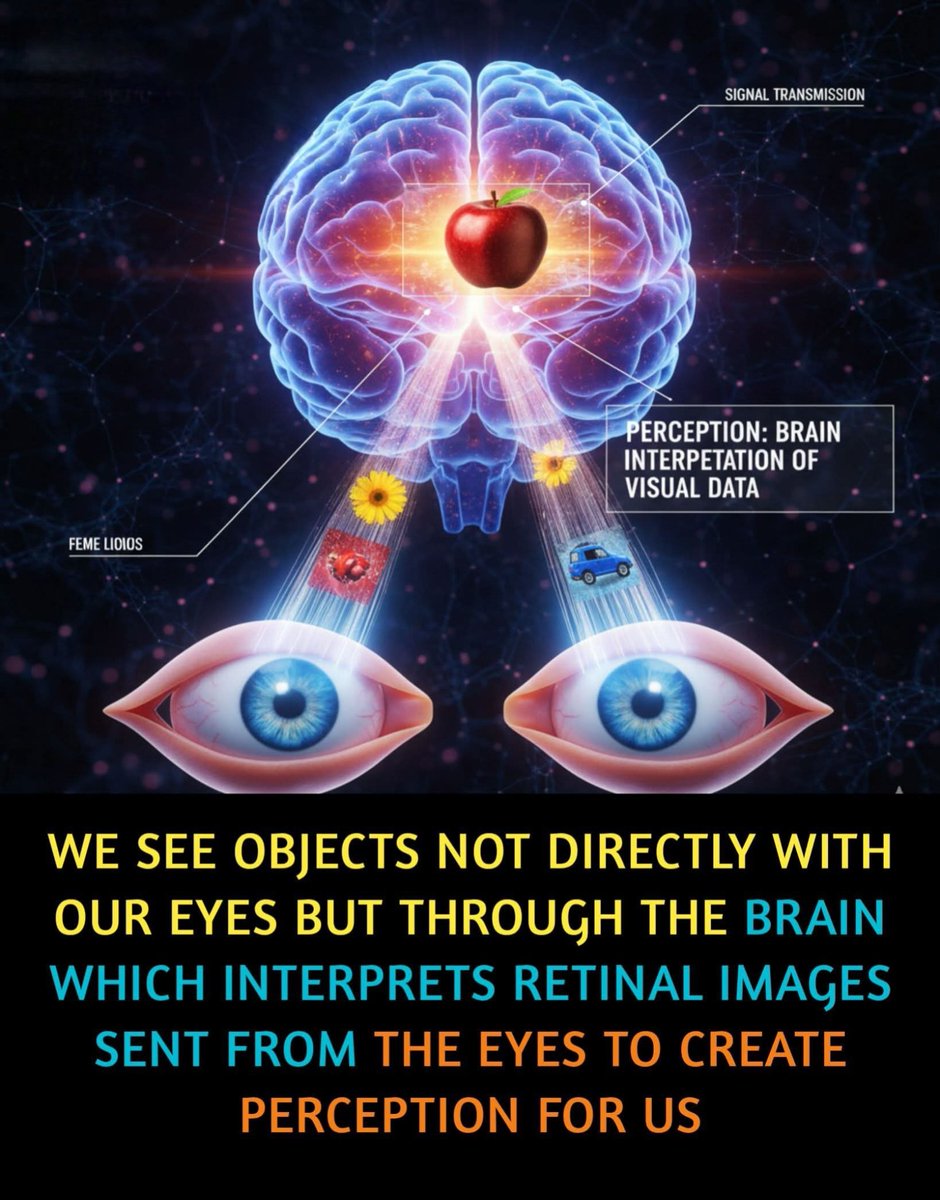
👁️ The Mind-Blowing Truth About How We Really See the World Most of us think our eyes are doing all the work when we look around—but the real story is far more amazing. Your eyes are just the messengers. The real act of seeing happens deep inside your brain. When light hits your eyes, it turns into raw data—nothing but colors and shapes with no meaning. Then millions of tiny nerve cells rush this information to your brain, and that’s where the magic begins. Your brain decodes every signal, fills in missing details, recognizes faces, understands depth, and builds the entire picture you think you’re seeing. That’s why optical illusions fool us, dreams feel real, and our memories of what we “saw” can change over time. We don’t actually see the world as it is—we see the world as our brain interprets it. And the wildest part? This whole process happens in a fraction of a second. Light, color, movement, distance—your brain analyzes all of it instantly to create the reality you experience. So the next time you look around, remember this: your eyes capture the image, but your brain creates the world.
1
2
2
45
Replying to @SmartScience
This is called predictive processing. Whoa! Instead of waiting for full information, your brain fills in gaps using memory, experience, and patterns. That’s why you can recognize a friend’s face in a split second, even in bad lighting or from far away.
2
Replying to @SmartScience
Open for applications?
1
Paul Turner retweeted
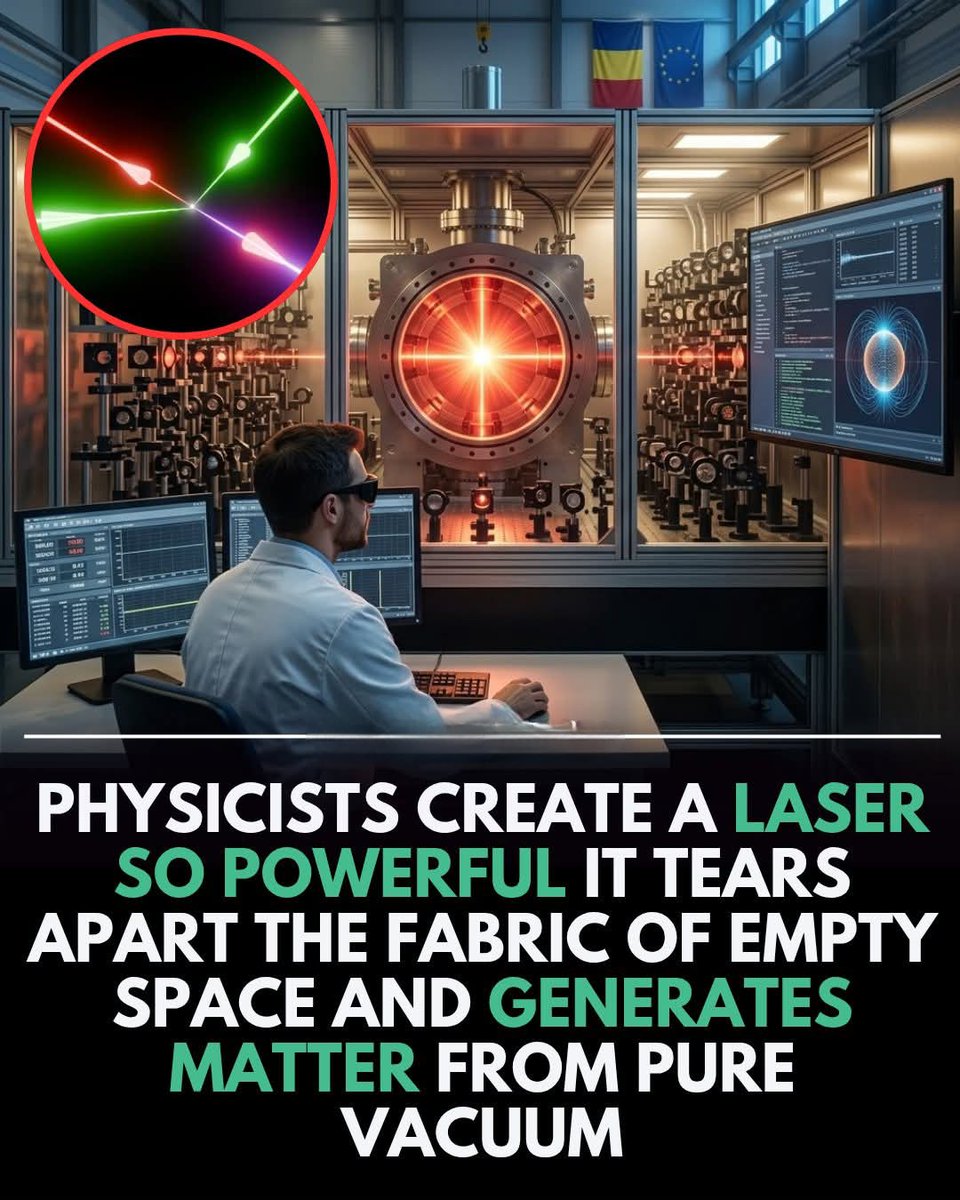
Scientists at the Extreme Light Infrastructure – Nuclear Physics have done something remarkable. They used two extremely powerful laser beams (10 petawatts each) and focused them into a tiny spot. This created an intensity so high that it affected empty space itself. At this level, they reached what’s called the Schwinger limit—a point where empty space becomes unstable. For a tiny moment, energy from the light turned into real particles (an electron and a positron). In simple terms, light created matter. This shows that “empty” space isn’t truly empty—it has hidden energy. In the future, this technology could help build much smaller particle accelerators and improve medical imaging and physics research.
5
14
35
651
only because mine are new , only had face book for a month or so to look at market place ect
1
i have a facebook account and never been asked. but i hardly ever go there. anyway i have been on there, and here, more than 16 years 🤷 they have no good reason to ask.
1
1
2
Green Resorts retweeted
Recent advances in brain‑computer interface technology are bringing us closer to systems that can interpret thoughts directly from neural activity. Researchers have developed an artificial intelligence model that translates patterns of brain signals into recognizable words or images by analysing electrical activity from the cortex. When a person thinks of specific concepts or pictures, the neural signals generated have distinctive patterns. The AI learns to associate these patterns with corresponding words and visuals through training on large datasets, allowing it to predict what someone is imagining or recalling. The core idea is not magic but pattern recognition at a scale and speed never before possible. The AI uses deep learning to map complex relationships between high‑resolution neural recordings and linguistic or visual outputs. In experiments, participants wearing non‑invasive or implantable sensors were asked to think about particular images or sentences. The model then generated plausible reconstructions of those thoughts by analysing the subtle electrical signatures associated with them. While the technology is still early and requires careful ethical consideration, it points toward future tools that could assist people with communication impairments or provide new ways to interact with machines using pure thought. Research Paper 📄 DOI: 10.1038/d41586-025-03624-1
4
6
19
452
Replying to @SmartScience
Детям хорошо, родителям плохо, так-как нахождение рядом ребёнка мешает заниматься сексом и делать ему юрата или сестру
2
AndS retweeted
Children sleeping with their parents, often called co-sleeping or bed-sharing, can offer a sense of security and emotional comfort that helps young children fall asleep more easily and reduces nighttime anxiety. Research from the Mother-Baby Behavioral Sleep Laboratory at the University of Notre Dame, led by anthropologist James J. McKenna, has examined how co-sleeping supports emotional bonding and biological regulation between parents and children. Being close to caregivers at night may strengthen attachment and responsiveness. Co-sleeping can also make nighttime caregiving, such as soothing or feeding, more convenient for parents. When practiced safely and intentionally, it can contribute to emotional regulation and a calmer sleep experience for both children and parents.
1
7
48
1,447
Quantum Shift Show retweeted
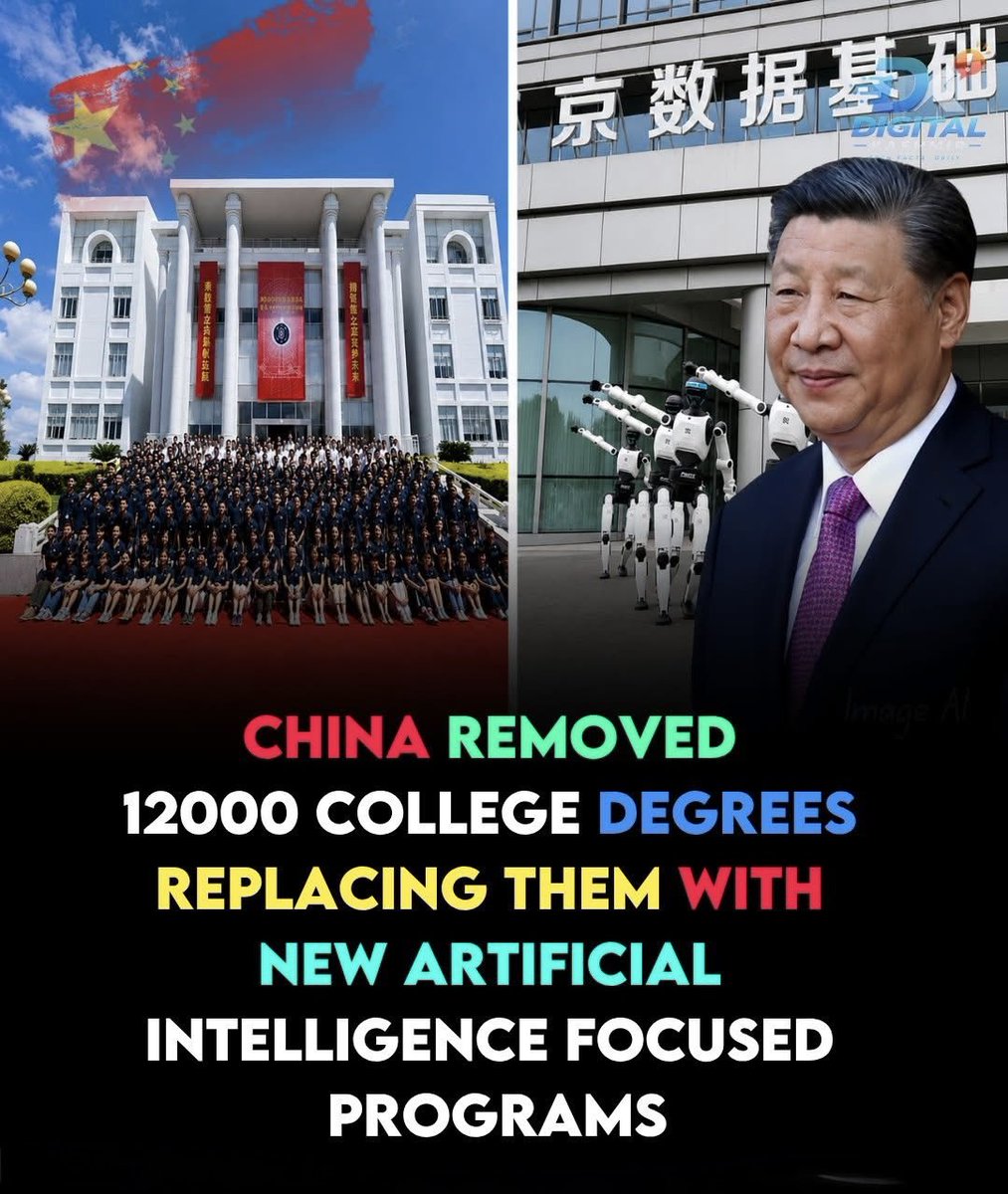
China just overhauled its entire university system, cutting more than twelve thousand degree programs in five years 😮 Between 2021 and 2025, the country revoked or suspended over 12,200 undergraduate courses while launching around 10,200 new ones, according to the Ministry of Education. That means more than 30 percent of all degree programs nationwide were reshuffled almost overnight. Arts, humanities, foreign languages, and management took the biggest hit, while new majors in artificial intelligence, robotics, and advanced manufacturing took their place. The shift comes as China faces graduate unemployment above 16 percent and a job market being transformed fast by AI 🤖 Universities are now adding programs like embodied intelligence to prepare students for careers that barely existed a decade ago. For millions of students choosing a major today, this means the subject they love might not guarantee a job tomorrow 💭 Education systems everywhere may soon face the same question. Source: Ministry of Education, China, 2026 data, cited by Xinhua and reported by South China Morning Post.
2
11
29
1,247
Priya retweeted
🚨 China is putting data centers on the ocean floor. The ocean itself acts as a natural cooling system, significantly reducing the energy and water consumption required by traditional land-based data centers. 🌊💻

7
19
41
942
i did on my reddit account and new to face book last 2 weeks
1
1
3
Christie retweeted
🚨The United States just offically recliassified cannabis. The federal reclassification of medical marijuana to Schedule III marks a monumental shift in U.S. drug policy, promising to unlock clinical research and deliver massive tax relief to state-legal businesses. After more than half a century under the nation's most restrictive drug category, state-licensed medical marijuana has been officially reclassified from Schedule I to Schedule III by the federal government. Since 1970, cannabis was grouped alongside heroin and LSD under the assumption that it had high abuse potential and no accepted medical value—a designation that increasingly clashed with the reality of millions of Americans legalizing its use under state programs. While the change does not legalize recreational marijuana federally or allow interstate sales, it removes significant roadblocks for medical cannabis operators and scientists alike. The practical implications of this policy shift are vast, particularly for the business and scientific communities. State-licensed medical dispensaries can finally access standard federal tax deductions and operate with fewer restrictions, while clinical researchers can now bypass long-standing bureaucratic hurdles to conduct comprehensive studies on the drug's medical efficacy and long-term health risks. Proponents hail the reclassification as a long-overdue, science-based correction, whereas critics warn it could downplay the potential risks associated with heavy cannabis use. source: NBC News. Cannabis reclassification could 'open the floodgates' for research, scientists say.
19
81
325
11,889
Replying to @SmartScience
Showing thoughts as images is a feature that many want to see in public.
9
His Beloved retweeted
Spending time alone is often seen in a negative light, but psychology tells a different story. People who truly enjoy solitude aren’t avoiding others—they’re strengthening their connection with themselves. This self-awareness often leads to deeper, more meaningful relationships with those around them. Studies suggest that individuals who are comfortable being alone tend to develop strong emotional independence. They don’t rely heavily on validation or constant attention, which reduces insecurity in relationships. This inner stability allows them to show qualities like loyalty, consistency, and trust—traits essential for lasting connections. Rather than chasing many superficial relationships, they focus on a few meaningful ones built on honesty and mutual respect. Because they’re content on their own, they choose to stay in relationships—not out of need, but out of genuine care. That makes their presence more intentional and their loyalty more authentic. Shifting our perspective on solitude can change how we value it. Being alone isn’t a weakness—it’s often a reflection of emotional strength and a deeper commitment to the people who truly matter. Do you spend time alone to escape the world—or to better understand yourself?
3
10
37
612