
1/
I built StreamPay
A privacy-first, cross-chain payment infrastructure on @solana .
Not another payment app.
This is how real businesses will use crypto.
1
1
89


ADI
$2,152 - Amanah: devfolio.co/projects/amanah-…
$2,151 - Beet: devfolio.co/projects/beet-16…
$2,151 - Necto: devfolio.co/projects/necto-2…
$2,151 - TownHall: devfolio.co/projects/townhal…
$960 - Azimuth: devfolio.co/projects/azimuth…
$960 - Conduit by aka: devfolio.co/projects/conduit…
$960 - Dark Pool: devfolio.co/projects/dark-po…
$960 - Helix: devfolio.co/projects/helix-6…
$960 - Kyro: devfolio.co/projects/kyro-73…
$960 - Open Book: devfolio.co/projects/openboo…
$960 - Paze: devfolio.co/projects/paze-a6…
$960 - ShipYield: devfolio.co/projects/shipyie…
$960 - Sobek: devfolio.co/projects/sobek-0…
$960 - Spruce: devfolio.co/projects/spruce-…
$960 - The Future Express: devfolio.co/projects/the-fut…
$960 - PayDI: devfolio.co/projects/paydi-e…
$287 - AI Smart Wallets: devfolio.co/projects/ai-smar…
$287 - Agent CFO: devfolio.co/projects/agent-c…
$287 - AgentFi: devfolio.co/projects/agentfi…
$287 - AgentMarkets: devfolio.co/projects/agentic…
$287 - BiteByte: devfolio.co/projects/justpay…
$287 - Blindbid: devfolio.co/projects/aerovig…
$287 - Calibra: devfolio.co/projects/calibra…
$287 - Eudemonia: devfolio.co/projects/eudemon…
$287 - Global Credit Passport: devfolio.co/projects/global-…
$287 - Kayden: devfolio.co/projects/kayden-…
$287 - Laytus: devfolio.co/projects/laytus-…
$287 - Metaphor: devfolio.co/projects/cachema…
$287 - StreamPay: devfolio.co/projects/streamp…
$287 - ThreadHunt: devfolio.co/projects/threadh…
$287 - Zeus: devfolio.co/projects/zeus-pr…
$95 - ChainRoute : devfolio.co/projects/chainro…
$95 - Fedarch: devfolio.co/projects/fedarch…
$95 - OculusVault: devfolio.co/projects/oculusv…
$95 - Swarm: devfolio.co/projects/swarm-5…
$95 - Vigil: devfolio.co/projects/vigil-d…
$95 - ZK-Sortition: devfolio.co/projects/zksorti…
2
2
164

Jan 31
stellar.expert/explorer/publ…
Okay! Today’s update to Smol is a live stream pay demo!
Powered by StreamPay, a proof-of-concept for fee-free trustless real-time, per-second artist compensation using Stellar/Soroban smart contracts and session keys.
Why This Matters
For Stellar
•Demonstrates session key and virtual escrow utility - Users sign once, then stream payments happen in the background without further passkey prompts
•Batch transfer contract in production - Multi-recipient payments in a single atomic transaction
•Real-world smart wallet usage - PasskeyKit temporary signers for delegated signing
For the Music Industry
•Direct artist payment - No intermediaries, transparent on-chain settlement
•Per-second compensation model - Artists are paid proportionally to actual listening time
•Proof of listen - Verifiable on-chain record of artist payments
1
2
7
294

Jan 31
But that's the legal way to watch a movie in Nigeria.
Netflix
Prime
Showmax
Circuits TV
Kava
StreamPay
Iroko TV
Ibaka TV
(And a number of other local streaming platforms)
Cinema
TV (includes DStv, Gotv etc)
You could use a VPN to access others but that's about it.
2
1
6
3,724

Jan 22
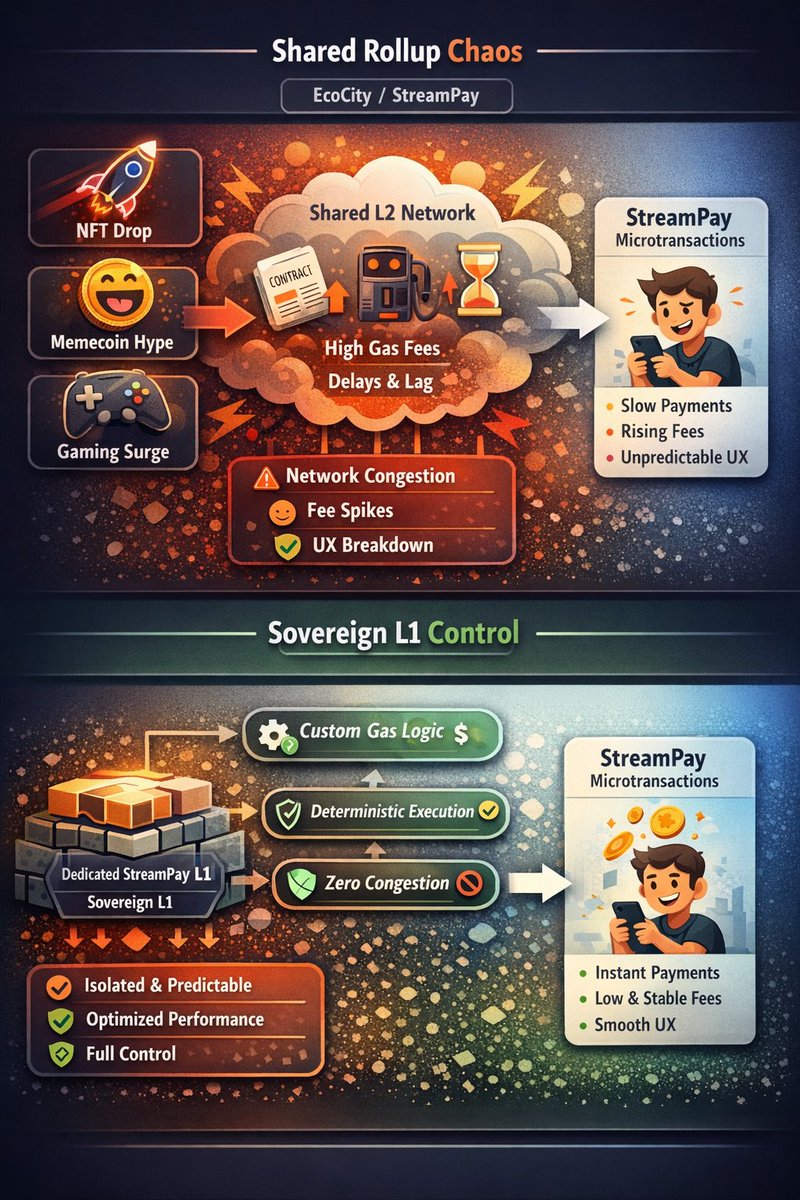
When payments, microtransactions, and real-time social features converge, shared rollups become a bottleneck. StreamPay, a real-time micropayment platform in EcoCity, demonstrates this clearly. On a shared L2, unpredictable traffic spikes from NFT mints to memecoin frenzies would instantly slow transactions, increase fees, and disrupt user experience. For a platform relying on speed and predictability, these aren’t minor annoyances they’re product killers.
Deploying as a sovereign L1 via @TanssiNetwork, StreamPay gains full control over its transaction layer. Congestion from unrelated applications disappears, execution becomes deterministic, and custom gas logic ensures economic predictability. Teams can iterate on UX, deploy new features, and scale their platform without being hostage to network noise. This isn’t just infrastructure it’s a deliberate product decision.
Sovereignty changes what is operationally possible. StreamPay can batch settlements efficiently, optimize consensus parameters for low-latency trading, and implement experimental features that would be unsafe or impossible on shared rollups. Governance control allows faster protocol upgrades and feature deployment without waiting on the broader network.
EcoCity’s orchestration layers compress the timeline from testnet experimentation to mainnet launch. Users discover appchains organically through interaction, rather than marketing hype, validating real utility early. This demonstrates how modern L1 deployment is no longer a months-long custom infrastructure project it’s an orchestrated, reproducible process.
StreamPay exemplifies how sovereignty enables real-world scaling while preserving operational flexibility. EcoCity isn’t just a playground for L1 theoryit’s where infrastructure decisions translate into tangible product advantage.
@TanssiNetwork provides the orchestration foundation, making sovereign L1s safer, faster, and more reliable than any shared environment
4
1
4
58


19 Dec 2025
Hack2Build黑客松公布获奖名单:Payments x402
在评审了近 100 个突破 AI、x402 和 ERC8004 边界的创新作品后,本届黑客松最终获奖名单已经公布
祝贺所有参与者 👇
🥇 一等奖 — 每个项目 $1,500 奖金
reimburse ai
Zero Prompt
Galaksio-OS
Dot Payments
Isbjorn
Ava-Optimizer
Bench
Cloakefy
Sabaki
SnowRail
Stratos Markets
🥈 二等奖 — 每个项目 $1,000 奖金
Vox402
synqpay
Verifik Smart Agent
Curated AgentTrust 8004
HeySalad® Wallet
Optus
PULSAR
xByte
🥉 三等奖 — 每个项目 $500 奖金
Autonomous AI Agents for Genomic Data (x402)
compose market
handshake402
WasiAI
Hyperkit
Imperfect Coach
PerkOS
MyScorePass
⭐ 特别提名奖 — 每个项目 $100 奖金
Vaquita Protocol
Query Flow
StreamPay
黑客松虽然结束了,但是Avalanche 对生态和builder的支持始终持续
欢迎申请 @AvalancheFDN 的 InfraBUIDL AI 计划,或其它 Avalanche 提供的各类资助,帮助你将黑客松项目变为真正的产品:
🤖InfraBUIDL AI → build.avax.network/grants/in…
🧺其他所有 Avalanche 资助计划 → build.avax.network/grants
17 Dec 2025

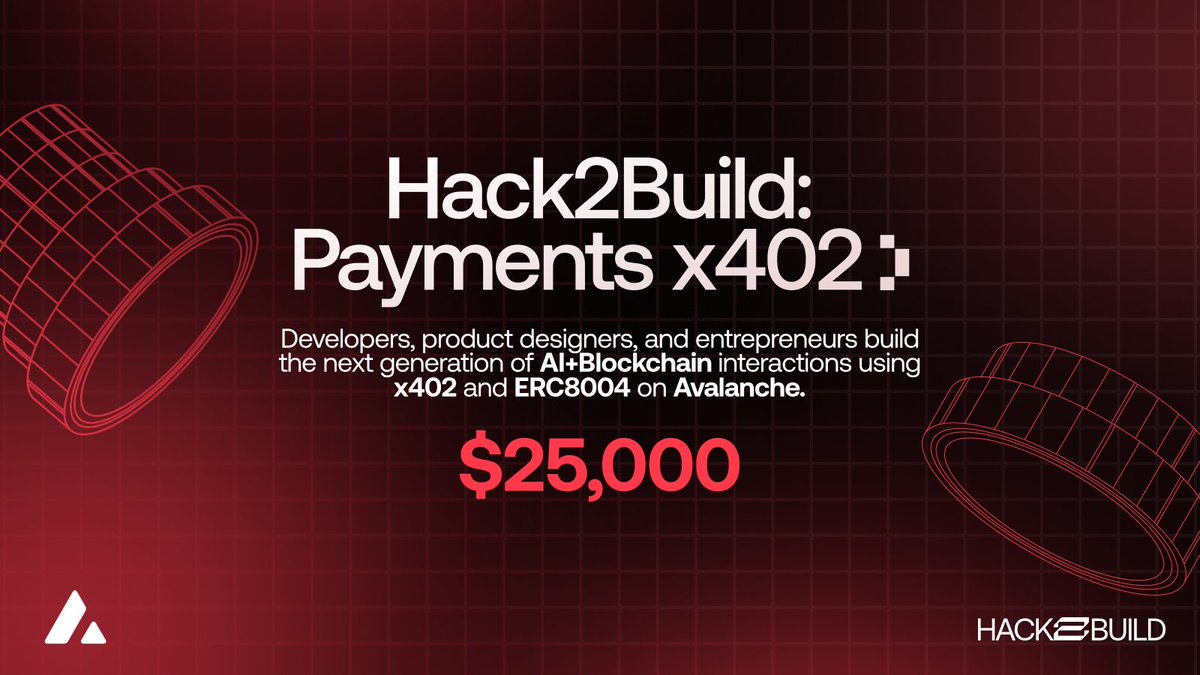
Hack2Build: Payments x402 — Winners Announced 🏆
After reviewing nearly 100 groundbreaking submissions pushing the boundaries of AI, x402, and ERC8004 on Avalanche, we’re excited to share the final results.
Congrats to all builders who participated 👇🧵
4
179

17 Dec 2025
⭐ Honorable Mentions — $100 each
Vaquita Protocol
Query Flow
StreamPay
1
13
526

11 Dec 2025
10hrs no less
My highest is 24hrs (while building verixa and streampay, some mvps of mine btw)
1
2
161
6 Dec 2025
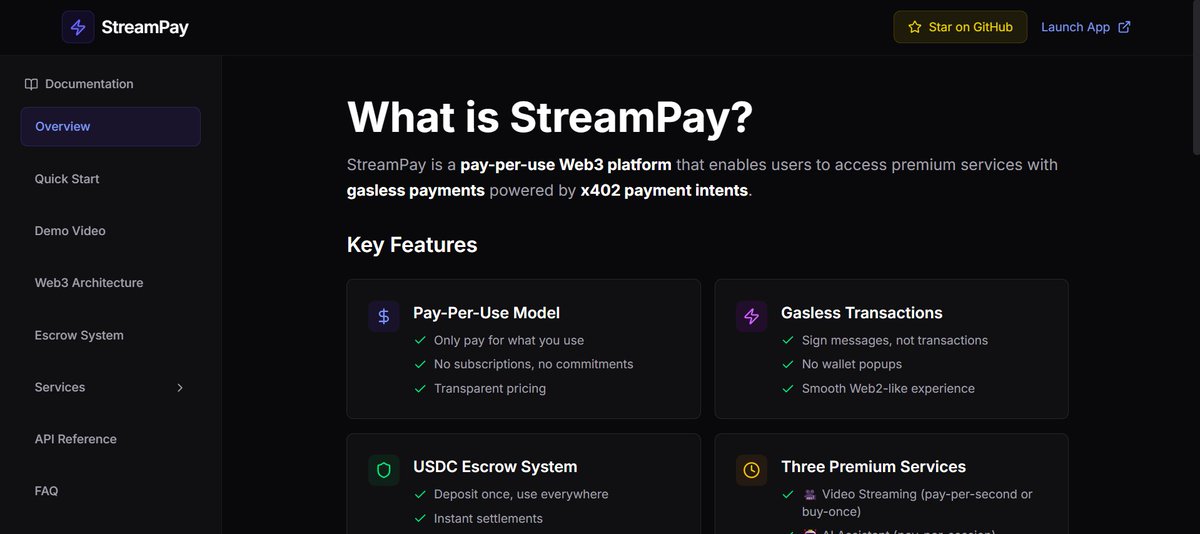
Introducing StreamPay - Pay per second, not per month
Built an MVP with 3 demo services that accept crypto payments, built with x402 intent based micropayments on avalanche
Deposit USDC to escrow
Sign transactions (no gas fees)
Pay per second
Built my own relayer service for signing the tx in the backend instead of relying on thirdweb/Gelato for full control
Try it: stream-pay-beta.vercel.app/
Docs: stream-pay-beta.vercel.app/d…
Demo: stream-pay-beta.vercel.app/d…
Feedback welcome
5 Dec 2025

finally the documentation is done aswell
will record a video tomorrow for the demo and i will share all the details
25
16
80
9,811

3 Dec 2025
大致看了下, @solana x402黑客松的一些获奖项目,发现围绕Facilitator、Launchpad等叙事层面的炒作并不多,而是扎堆在如何让Agent更便捷调用支付这类工具层服务上:
比如, Galaksio 要解决按需接入GPU算力资源的问题,来优化算力服务成本费用;
PayPerPrompt 在做LLM模型的API聚合,让Agent能按prompt付费调用GPT/Claude/Gemini等多种不同模型;
Triton Gateway把Solana的历史数据包装成x402付费接口,开发者查一次付一次费,不用自己跑全节点;
x402 Oracle做预言机按次调用,StreamPay实现内容按秒付费等等
这些项目的共同特点,都偏实用型,停留在如何发现服务,并接入服务以无缝衔接支付的基础设施闭环上。
至于,围绕Facilitator之间比拼谁便宜、谁稳定、谁有Farming效应,或者围绕Launchpad之间,谁的发币机制更加Fair,谁更能解决资产价值赋能和流动性设计,这类偏叙事炒作类的项目在Solana的获奖项目里几乎看不到身影。
其实很正常,在当前市场流动性差的阶段,纯粹讲故事,已经不work了!
这其实也是x402赛道底层一个很核心的逻辑,无论炒什么,最终都要落地到更便捷、更实用的支付能力上。换句话说,如果没有支付网关的交易量、如果没有Agent大规模调用付费服务的实际需求,Facilitator代币再便宜也只能是空转;
这就是为什么我一直强调x402 Provider层被严重低估,谁能聚合更多的LLM接口、算力资源、数据服务,谁能让Agent用最低摩擦成本完成调用,谁就掌握了x402生态的真正入口。
当工具层、服务层的基础设施逐渐成熟,Facilitator和Launchpad的竞争才会进入真正有价值的阶段。
当然,这也是我长期对x402赛道保持乐观的根本原因,真正的Builder并不像大家想的只会停留在纸面叙事,那些正在解决真实需求和问题的项目也有很多,很多。
2 Dec 2025

The Solana x402 Hackathon partner track winners are here
Builders shipped some incredible projects exploring micropayments, AI agents, and the x402 protocol on Solana.
Here are the winners across partner tracks 🧵
35
13
96
21,097

5 Nov 2025
#ستريم #streampay
@getstreampay
ياسلام عليكم👏🏼
وينكم من زمان ..
كنا نتعب علشان ندفع لمدارس #الابناء و #البنات ..
وكانت #مدارس_عالمية بعد!
"ترى ما دفعت القسط!؟ .. حولت المبلغ؟ .. متاكد؟ .. ارسل السند .. وووو"
كانت قروشه اعوذ بالله.
أكيد مع هالتطبيق #المدارس و #أولياء_الأمور يبي يرتاحون مرة✔️
شكراً #ستريم💐
1
2
576

13 Oct 2025
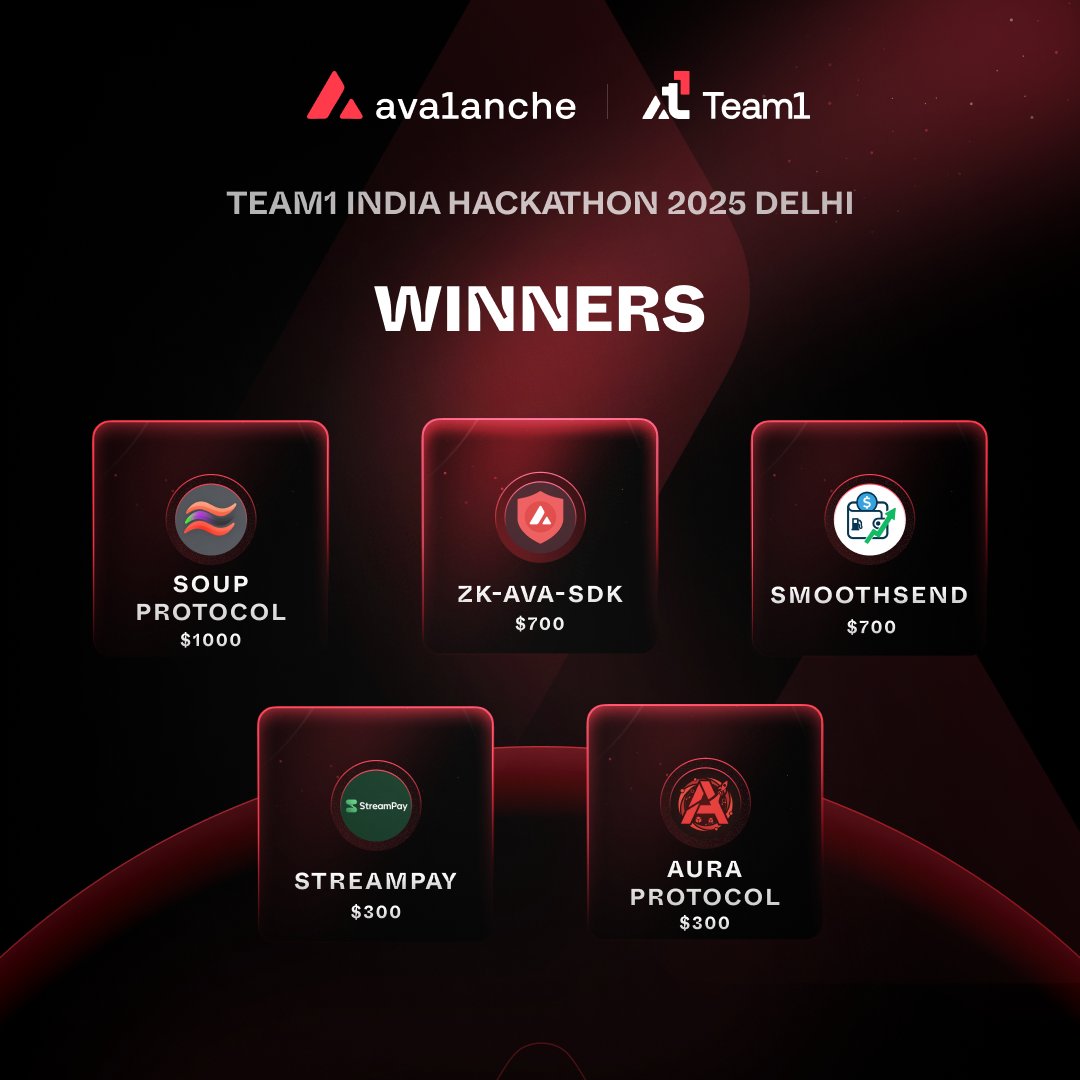
🔺Team1 Hackathon Delhi Results 🇮🇳
1350 registration requests. 252 developers selected. 56 projects submitted. Each team showed great talent, passion, and problem-solving skills and we are glad you joined us to build on Avalanche.
🥇 1st Place: "Soup Payments & Soup SDK"
🥈 2nd Place: "ZK-Ava-SDK"
🥉 3rd Place: "SmoothSend"
🏅 Special Mentions:
"StreamPay"
"Aura Protocol"
🏆 Best Pitch Award: "SmoothSend" – for delivering the most engaging and impactful presentation.
Congratulations to the winners, and a massive thank you to all participants who made this hackathon a success.
7 hackathons across 7 cities with over 3500 developers applying to join.
Winner details below 👇
21
31
128
5,759

15 Sep 2025
1/ The @arbitrum Open House Buildathon also had six honorable mentions: StreamPay, StableUPI, Chain Crush, Alloc8 Camelot Hedge, MEGHA NETWORK, and zkArb SDK, with each walking away with $1.5K as Track Prize Champs.
#Arbitrum #OpenHouse
More details in thread🧵

1
1
2
61

12 Sep 2025
Not getting leads from your landing page?
Here’s how I fix it (step-by-step)
1. Set clear goals
Define the ONE thing you want. Leads, calls, or sales.
Confused goals = confused users.
2. Research competitors
See how they position their offer, their funnel, and their copy.
Then beat it.
3. Moodboard
Cheap design kills trust.
Premium, clean design = premium brand perception.
4. Design
- Strong hierarchy
- Conversion-focused layout
- Clear CTAs
5. Development
Fast, responsive, pixel-perfect.
No excuses.
6. Launch support
Track, test, refine.
Your page should never stay static.
That’s the exact framework I’ve used for clients like EnterpriceAI Zertify StreamPay.
3
32

11 Sep 2025
Thank you so much @Swagtimus and @hummusonrails for your guidance throughout StreamPay. Your support and insights made all the difference . We truly couldn’t have done it without you! 🙌
3
22
10 Sep 2025
StreamPay🟢 just pulled up in the standout builds .
We made it boys!
🟢 StreamPay = Subscriptions on autopilot → Recurring payments instant payouts, powered by Stylus.
Couldn’t have done it without @vipul_045 🙌
#BuildOnArbitrum #DeFi
10 Sep 2025

DeFi: StreamPay
StreamPay is a Stylus-powered recurring payments protocol on Arbitrum One, enabling automated subscriptions and payouts with Gelato.
hackquest.io/projects/Arbitr…
1
3
154

10 Sep 2025
DeFi: StreamPay
StreamPay is a Stylus-powered recurring payments protocol on Arbitrum One, enabling automated subscriptions and payouts with Gelato.
hackquest.io/projects/Arbitr…
1
2
7
463