
after managing about a foot inside, they'd finally start pulling back . entering a rhythm of thrusting, pushing a bulge upon their stomach little by little as more inches made their way in .
stretching them out, slowly but surely . pushing deeper with every thrust . . . ♡
5



Johnmichael Sicad retweeted

Round 4 with my favorite monster 😈 Titan back inside me, stretching ma hole even deeper this time. New undies already soaked and off hehe 😜
NSFW🔞 t.me/ Bk3yWSvr4lkyOTJl
🛍️qutoys.com/sevensevanseven
Use Code: SEVAN
29
1,405
11,497
549,642
🦂 Kralj Alatkic 🇷🇸 retweeted

Thought you my like to see my daily stretches?
#Asianpussy #rubbing #stretching #gaping #cute #pussystretching #fingering #petite #wife #milf #gape #fisting #fit #pierced
2
3
37
515

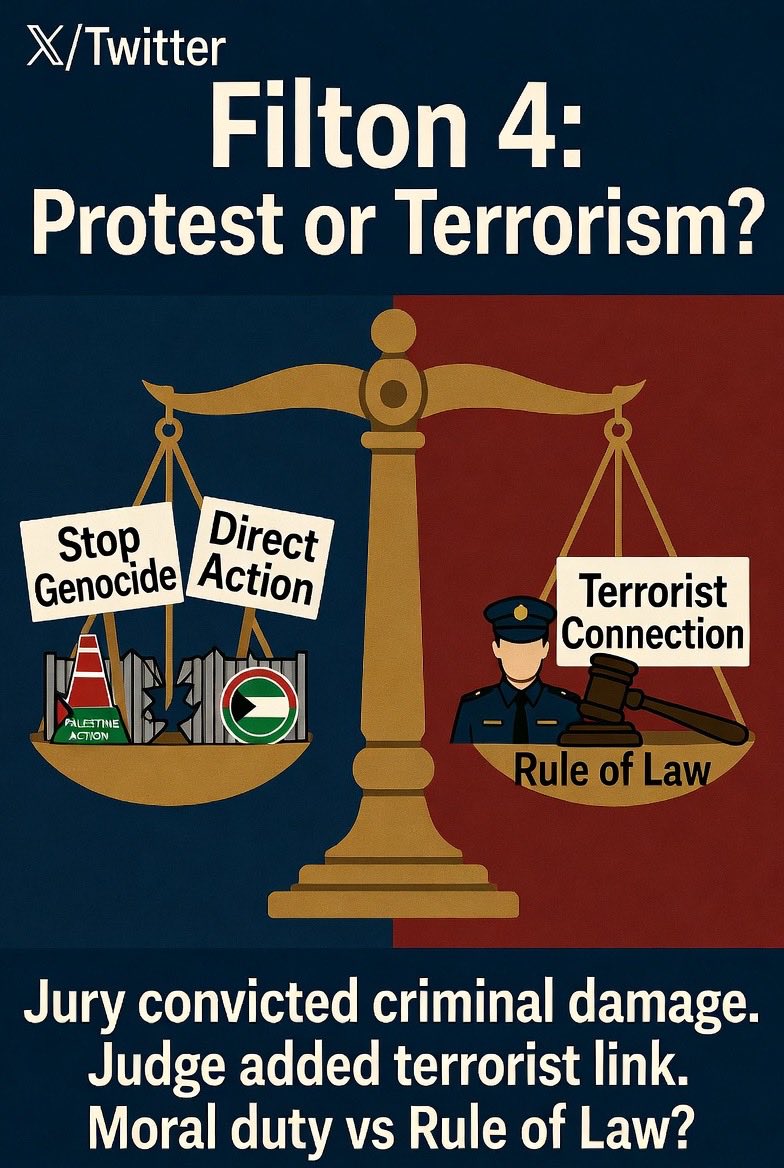
The Filton 4 case raises hard questions about protest, law, and where “resistance” ends.
Four Palestine Action activists (Charlotte Head, Samuel Corner, Leona Kamio, Fatema Rajwani) broke into Elbit Systems’ factory in Filton, Bristol in Aug 2024. They rammed the fence with a van and caused ~£1.2 million in damage to equipment they say was linked to Gaza operations. Goal: disrupt what they call British complicity in suspected genocide.
Jury convicted all four of criminal damage. Samuel Corner was also found guilty of GBH without intent (Section 20) for striking Sgt. Kate Evans twice in the back with a sledgehammer during the chaos, fracturing her spine. She was on restricted duties over a year later, with lasting physical and psychological effects. Very sad outcome.
They were not charged or convicted of terrorism offences. No deaths, no bombs, no intent to kill civilians. Yet the judge (Mr Justice Jeremy Johnson) applied a “terrorist connection” enhancement at sentencing under the Sentencing Act 2020. This was decided by the judge alone — not the jury — and kept from the jury during the trial. It led to longer prison terms (combined over 20 years reported) and terrorist-offender status on release.
UK law (Terrorism Act 2000 definition, applied via sentencing) covers serious property damage done for a political/ideological cause with intent to influence government or intimidate a section of the public. The judge ruled their action met that test: coordinated raid to pressure policy on arms exports.
The activists and supporters argue they were acting from moral duty to stop suspected genocide — a risk states have obligations to prevent under the Genocide Convention and R2P. When the state appears to ignore or enable it, isn’t some resistance justified?
Yes, citizens don’t “have to do nothing.” History honours civil disobedience (Gandhi, MLK, suffragettes) when laws enable grave injustice. Peaceful protest, voting, litigation, and mass pressure are core democratic tools.
But the Filton 4 pushed past legal limits: breaking and entering, major criminal damage, and (in one case) serious injury to a police officer. Good intentions don’t automatically provide a defence in court. Juries convicted on the facts.
The real flashpoint is the terrorist connection label. Many (including human rights groups like Amnesty) call this a step too far — stretching terrorism sentencing to non-lethal protest without jury input. First time applied this way? It risks chilling legitimate direct action on other issues (environment, etc.). Critics see it as the state protecting defence interests over protest rights.
Others argue the law was properly applied: you can’t coerce policy via £1M vandalism at a secure site and expect it treated as minor protest.
This isn’t a classic “terrorist attack” (no mass violence for fear). It’s political property damage in a bitterly contested conflict. The ICJ Gaza case is ongoing — no final genocide ruling.
The case highlights a tension: moral duty to resist perceived complicity vs. rule of law in a democracy. Where do we draw the line so that justified resistance doesn’t slide into unchecked vigilantism?
Thoughts? Appeals are expected. Rule of law matters, but so does moral consistency when states fail duties.
#Filton4 #ProtestRights #RuleOfLaw
5

RT @winterfuyu0101: minjeongie is SOOOOO puppy coded 🐶
Look at this cutie stretching her little paws 🐾🥹
©️jjungsookja t.co/qwhf4qG…
422
MISTRESS MORD SISSY SCHOOL 🏪❤️ retweeted

Look at you staring… You know you want this fat shemale cock stretching that tight little throat, don’t you baby? Come worship it like a good girl.
Dm me now 🥵 t.me/trans_shemale1
1
98
120
9,930
Michael retweeted

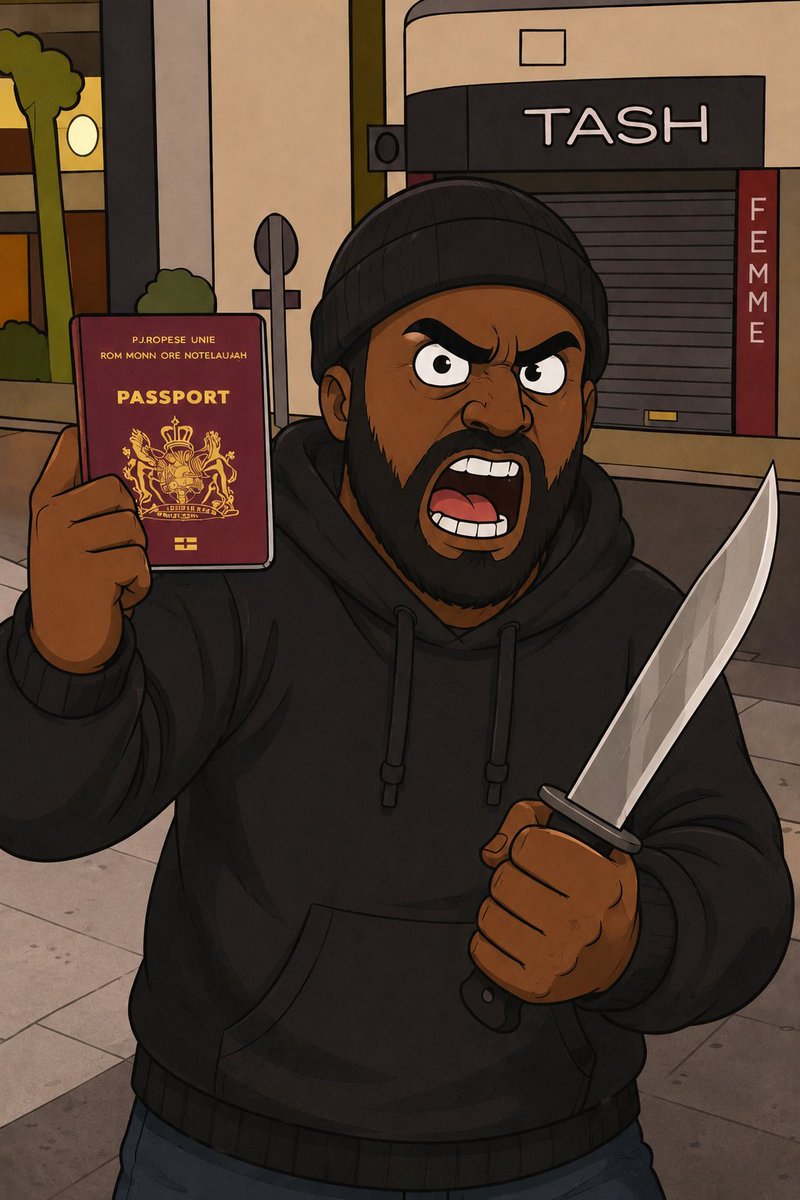
One has roots here stretching back thousands of years.
One grew up in Africa and arrived 5 years ago.
He now has a British passport.
Apparently, they're equally British.
Surely we can all see how ridiculous that claim is?

20
324
2,068
12,940
Zarlet retweeted


17
292
1,218
17,163

we call that stretch training, where you feel your insides stretching from getting dicked down
3

This year marks the 20th anniversary of the completion and opening of the #Qinghai-#Xizang Railway. First opened in 2006, the 1,956‑km railway is the world’s highest-altitude and longest plateau railway. Located in the Hoh Xil area of the Three-River-Source National Park in Qinghai Province, the Qingshuihe Bridge sits in a permafrost region at an average altitude of 4,620 meters. Stretching 11.7 kilometers, it is the world’s longest plateau permafrost railway bridge.
The bridge adopts a “bridge‑in‑lieu‑of‑embankment” design, raising the structure on 1,365 piers. This approach both reduces thermal disturbance to the permafrost surface and proactively leaves space for wildlife passages. Most of the Qingshuihe Bridge’s openings are over three meters high and wide enough for herds of Tibetan antelopes to pass through with ease.
Every June and July, tens of thousands of Tibetan antelopes cross through the bridge openings on their way to calving grounds; in autumn, they return along the same route with their young. Kiangs (Tibetan wild donkeys) and wild yaks also move freely through the bridge. Among the 33 wildlife passages along the entire railway, this bridge is the largest and most ecologically significant core corridor.
1
35

Richard that lawyer retweeted

Parents asleep in the next room. Would that stop you from stretching this virgin ass?
:¨ ·.· ¨:
`· . ꔫ
#nsfwtwt #nsfwtwtًً #gooner #goonette #breedingkink #breedme #ageplay #anal #analvirgin #nolimits #freeuse #kink #agegap #bwc #bbc #tight #petite #ass #gyatt #wataa #chudai

17
4
73
1,810
🦂 Kralj Alatkic 🇷🇸 retweeted

Apr 15
🆕Teaser for my new video! 📽 only here!! @faphouse
💗Belle Amore Is Stretching, Extreme Fist Almost Virgin Woman Argentina🍓 [2160p] on @faphousecom
👉faphouse.com/go/7WBmv👈
#Amateur #Blowjob #Fingering #Lesbian #Teen18 #Stockings #Argentinian #Fisting
2
2
23
5,066
Aylzhur retweeted

Driving alongside the giant barrier between Egypt and Gaza. Multiple layers of concrete and razor wire stretching into the distance.
Built for a reason. I wonder why?🤔
21
68
324
5,062

And where is the ring to show for his carry jobs? Don't get me wrong, Jimmy is electric in the playoffs, but has nothing to show for it. It's like Demar Derozan putting up 16-20 PPG every year, it's impressive but it nevers gets them the big one. KAT stretching the floor did
6

RT @winterfuyu0101: minjeongie is SOOOOO puppy coded 🐶
Look at this cutie stretching her little paws 🐾🥹
©️jjungsookja t.co/qwhf4qG…
422

You're stretching the greeting WAY beyond what it actually says.
“Hail” (Greek: Chaire) is simply the standard, everyday greeting in Koine Greek. It means “Greetings!” or “Rejoice!” It’s not a special royal salute reserved for queens or high authority figures. Angels and people used it all the time. Stop turning a normal "hello" into proof of a heavenly Gebirah throne.
“Full of grace” (Greek: kecharitomene) is a unique title for Mary meaning “highly favored one” or “one who has been graced.” It shows God chose her for a special role. But it does not mean she was sinless, immaculately conceived, or perpetually full of grace in the Catholic sense. The same root idea of grace/favor is used elsewhere in Scripture without implying sinlessness.
1
7