
5-
The central question is therefore simple. If the overwhelming concentration of texts, traditions, institutions, philosophies, sacred geographies, systems of preservation, and civilizational memory associated with a civilization exists within a particular region, how much weight should that fact carry when discussing its origins?
The answer remains open to debate. Yet the question itself deserves to be taken seriously. For whatever conclusions one ultimately reaches, the continuity of Indian civilization remains one of the most remarkable historical phenomena in the human story, and any theory of origins must account for it adequately.
4-
Genetics itself also has limitations that are sometimes overlooked in public debate. Genetics can reveal ancestry, admixture, and population movement. It cannot directly reveal language, philosophy, religion, literature, or civilizational identity. DNA does not contain a grammar. It does not preserve a philosophical school. It does not explain how texts were transmitted or why particular traditions survived. Genetics is an indispensable tool for studying populations, but civilizations are more than populations. They are systems of memory, institutions, ideas, and cultural continuity.
There is also a broader historiographical dimension to the debate. Many foundational theories concerning India's ancient past were developed during the nineteenth and early twentieth centuries. These scholars made enormous contributions to linguistics, philology, and archaeology, but they also worked within intellectual frameworks shaped by their own historical circumstances. One recurring tendency of that era was the assumption that major innovations generally originated outside colonized societies and spread inward. India was often admired as a civilization of great achievement while simultaneously being treated as a recipient rather than a source.
This does not mean that colonial scholarship was entirely wrong. It does mean that inherited assumptions deserve periodic re-examination. The history of scholarship repeatedly demonstrates that seemingly settled conclusions can change. Indian mathematics, linguistics, and philosophy provide clear examples. Contributions once underestimated are now widely recognized. The lesson is not that every mainstream theory is mistaken, but that historical understanding evolves.
This point becomes especially important when considering alternative explanations. India's history includes repeated interactions with Central Asian, Iranian, and other populations. Shakas, Kushans, Parthians, Huns, and many others entered the subcontinent at various points in history. The existence of multiple migrations reminds us that genetic patterns may reflect complex and layered processes rather than a single explanatory event. Historical reality is often more complicated than the simplified narratives presented in public debates.
Ultimately, the argument advanced here is neither one of certainty nor one of denial. It does not reject linguistics, archaeology, or genetics. It does not claim that migration never occurred. Nor does it insist that every achievement originated in India. Rather, it argues that the cumulative weight of continuity, concentration, memory, intellectual sophistication, and historiographical revision creates a stronger case for indigenous-development models than is often acknowledged.
1

2-
An additional dimension of this continuity is often overlooked. The traditions, texts, institutions, sacred geographies, and cultural memories discussed here survived not during a period of uninterrupted stability, but through centuries of profound political upheaval. Large parts of the subcontinent experienced repeated invasions, warfare, dynastic conflict, episodes of iconoclasm, the destruction of temples and educational institutions, and later the economic and political disruptions of colonial rule. Whatever one's interpretation of these events, the broader historical fact remains difficult to ignore: much of what survives today survived despite substantial losses. If such significant elements of India's civilizational inheritance remain visible after centuries of disruption, one may reasonably ask how much larger the original civilizational record might once have been.
No single one of these facts proves indigenous origin. Yet together they create a phenomenon that demands explanation. If the deepest roots of these traditions are located elsewhere, why is the overwhelming concentration of their textual, ritual, philosophical, and institutional continuity found within India?
The question becomes even more interesting when one considers civilizational memory. Modern scholarship often privileges material evidence, and rightly so. Archaeology, linguistics, and genetics have transformed our understanding of the past. Yet civilizations are also sustained by memory. They preserve landscapes, symbols, sacred associations, and collective understandings of who they are.
The Indian case is extraordinary in this regard. The Saraswati River occupies a position of profound importance in ancient literature and cultural memory despite no longer existing as a major visible river. Whether one accepts every modern identification or not, the persistence of that memory across millennia is historically significant. Similarly, the Ramayana and the Mahabharata are not merely literary works. They function as civilizational memory systems. Their stories remain embedded in pilgrimage traditions, folklore, ethics, politics, art, and everyday life. Few ancient texts anywhere in the world continue to occupy such a central place within the living culture of a civilization.
This continuity extends beyond memory into the realm of intellectual achievement. One of the least discussed aspects of the debate concerns civilizational sophistication. The traditions associated with India did not consist merely of rituals or myths. They included advanced grammatical analysis, philosophical inquiry, mathematics, astronomy, logic, and systems of education capable of preserving and transmitting knowledge across generations.
1
1-
Making the Case for an Indian Civilizational Origin
(A Civilizational Critique of Prevailing Origin Narratives)
There is a curious asymmetry at the heart of many discussions about the origins of Indian civilization. Few people dispute that some of humanity's most enduring intellectual, linguistic, philosophical, mathematical, and spiritual traditions reached their fullest expression within the Indian subcontinent. Yet when questions of origin arise, the search frequently shifts beyond India's borders. The civilization is acknowledged here; its roots are often sought elsewhere.
This pattern appears across multiple fields. Sanskrit is usually connected to a larger linguistic family whose origins are placed outside India. Vedic civilization is frequently linked to migrations from regions northwest of the subcontinent. Genetic discussions often emphasize external population movements. Archaeological interpretations similarly look for influences arriving from beyond India. The result is a recurring narrative in which India becomes the place where traditions mature, flourish, and achieve sophistication, while their deepest origins are repeatedly located elsewhere.
The purpose of this essay is not to deny migration, interaction, or cultural exchange. Human history is full of all three. Nor is it to claim certainty where uncertainty remains. Rather, it seeks to ask whether modern discussions have given sufficient weight to one of the most remarkable historical facts about India: the extraordinary concentration of civilizational continuity within the subcontinent itself.
Every historical theory must eventually confront a simple question: where is the evidence concentrated? In the case of the Vedic and Sanskritic tradition, the answer is striking. The texts are here. The ritual traditions are here. The grammatical traditions are here. The philosophical schools are here. The sacred geography is here. The institutions of transmission are here. The continuity is here.
The Vedas, Brahmanas, Aranyakas, Upanishads, Vedangas, epics, and vast bodies of later literature survive within a living framework of interpretation and practice. Panini's grammar did not emerge in isolation but as part of a mature linguistic tradition. Philosophical schools such as Vedanta, Nyaya, Samkhya, Mimamsa, Yoga, Buddhism, and Jainism developed sophisticated systems of thought that continued to evolve for centuries. Perhaps most remarkably, the oral preservation of Vedic texts represents one of the most sophisticated systems of cultural memory ever devised.
1

KodeMaster AI: LeetCode is 2020. 2026 is about the Live Build. 🚀
Companies don't want to see you solve puzzles. They want to see you build systems in your own IDE.
💻 VS Code > Whiteboards
🛠️ Git > Brainteasers
🏗️ Real Projects > Algorithms
Start building.



AFCAZIVA 🇳🇱🇮🇱🇺🇸 retweeted

#julianassange In 2013, Julian Assange warned of a digital future shaped by mass surveillance, centralised power and systems of control.
More than a decade later, the warning feels less like speculation and more like a description of the world we are living in.
4
6
173
Karthika retweeted

The Sun is but a mere tiny dot!
Millions of solar systems
Interwoven as one,
From the vast milky way!
Countless galaxies,
Bound as one,
Circle enternally
In the single Cosmic power!
Pervading as the guardian,
Shining as the light,
In an endless Cosmetic dance
It ever remains!
Who has known
The mistery of Creation,
Sustenance and Dissolution?!
The infinity beyond measure!
Unfathomable!!
1
1
4

Exactly. Now one is gonna convince mario kart doesn't outsell gta 5 if it's on the same amount of systems.
Cyber_Degen🟧🟣 retweeted

NETWORKING ROADMAP
Step 1: Learn computer fundamentals (how systems work, data, hardware basics)
Step 2: Understand what a network is (LAN, WAN, MAN, client-server model)
Step 3: Study OSI and TCP/IP models (how data moves in layers)
Step 4: Learn IP addressing (IPv4, IPv6, public vs private IP)
Step 5: Learn subnetting basics (CIDR, subnet masks, network segmentation)
Step 6: Understand networking devices (router, switch, hub, firewall, access point)
Step 7: Learn basic networking protocols (HTTP, HTTPS, DNS, DHCP, FTP, SSH)
Step 8: Practice network configuration (static IP, DHCP, gateway, DNS setup)
Step 9: Learn basic networking commands (ping, ipconfig/ifconfig, traceroute, nslookup, netstat)
Step 10: Understand wireless networking (Wi-Fi standards, WPA2/WPA3 security)
Step 11: Learn basic network security concepts (firewalls, VPN, IDS/IPS, common attacks)
Step 12: Start packet analysis (Wireshark, understanding packets and traffic flow)
Step 13: Practice networking labs (Cisco Packet Tracer, GNS3, TryHackMe)
Step 14: Move to advanced networking (VLANs, NAT, routing protocols like OSPF basics)
Step 15: Explore career paths (Network Engineer, SOC Analyst, Cybersecurity Analyst, Cloud Networking).
2
4
12
176

Read if you can't then lie low because those links have different African writing systems of which some still exist
1
Abdul retweeted

All 3 arrived in Canada as kids, aged 7-4-10 respectively, came up through local systems in Montreal, Edmonton and Toronto. Jonathan David was born in Brooklyn and was in Haiti till age 6, then played his youth soccer in Ottawa where he grew up. A cool aspect of the current team
Jun 12

Canada's African-born players at the World Cup:
🇨🇮 Ismaël Koné, born in Côte d’Ivoire
🇬🇭 Alphonso Davies, born in Ghana
🇳🇬 Tani Oluwaseyi, born in Nigeria

81
296
3,822
362,497
Thinker retweeted

My talk at MIT, on "Agentic AI systems: from scruffy to neat", is now available. I cover 3 examples of agentic systems - Bayesian linguistic forecaster, autoharness, and code world models - which combine LLMs, code and planners in different ways. Links below.
12
120
961
64,172

Greetings
We are a Software & BPO Company. We provide Custom Software Systems, Webs, Mobile Apps, Support, Promotion All Outsourcing Solutions for All your Business needs.
info@antoniasolution.com
antoniasolution.com
#software #app #web #ecommerce #mobileapp #erp #crm

June is make-or-break. 📉 The August Big Tech countdown has started.
Don’t be a Generic Junior with a tutorial-only resume. 🥱
Build real systems. Push to Git. Get interview-ready. 🚀
Start building with KodeMaster AI now.
#Internship #CareerReady #BigTech #Coding

2

What money? You seem so poor that you don't realize you're talking to an industrial engineer with a master's degree in automation systems from the University of Munich.
1

Kui🌸❤️ retweeted

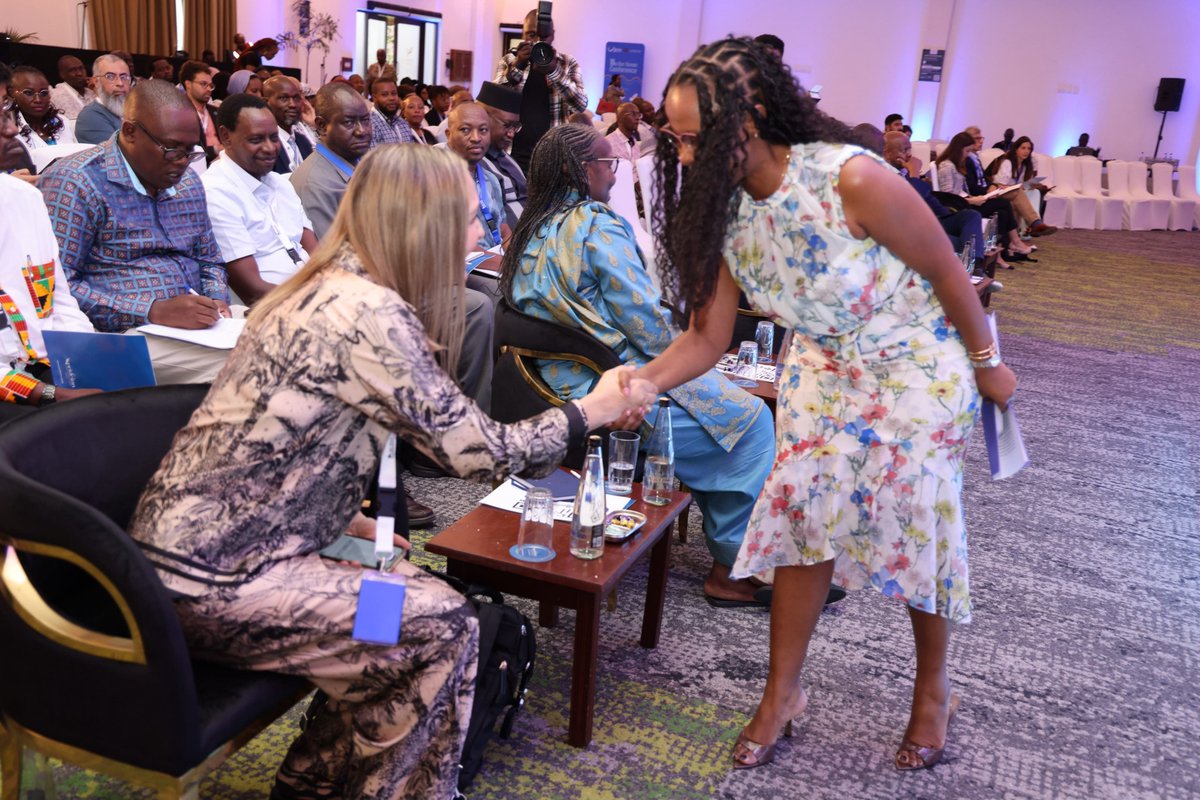
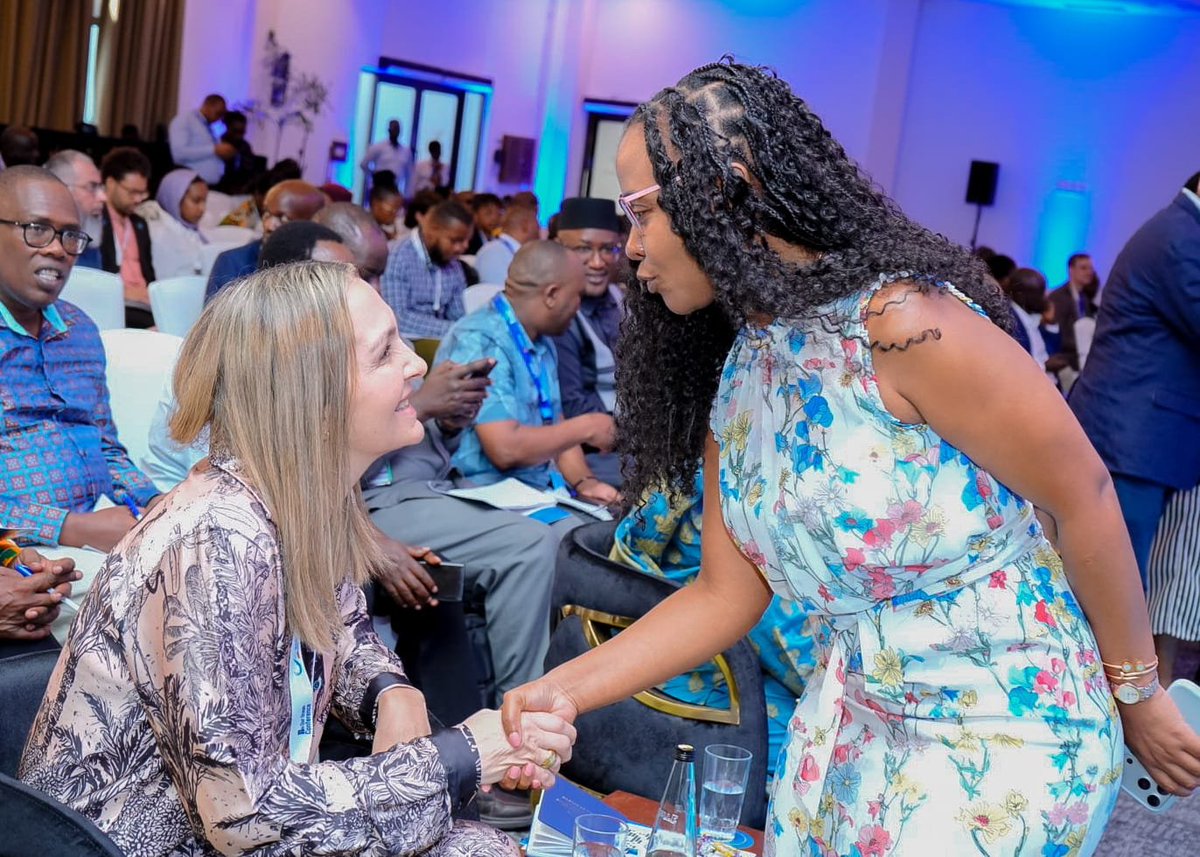
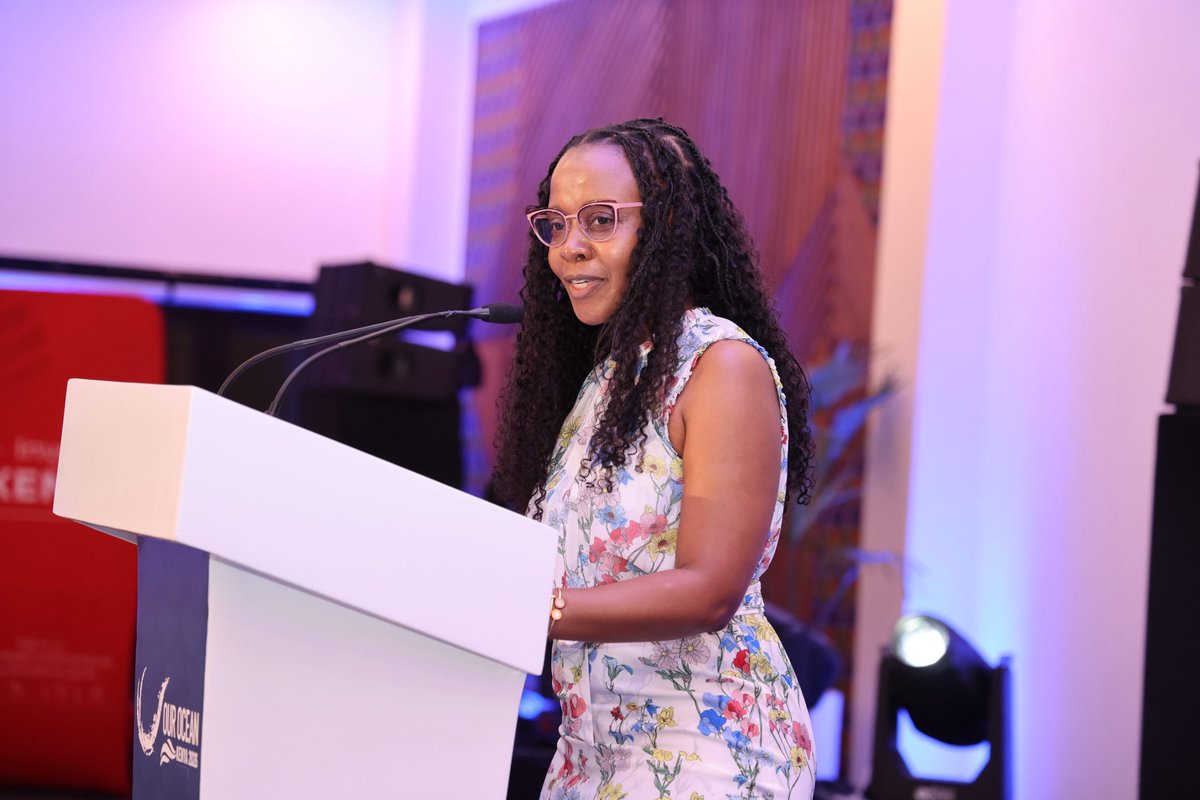
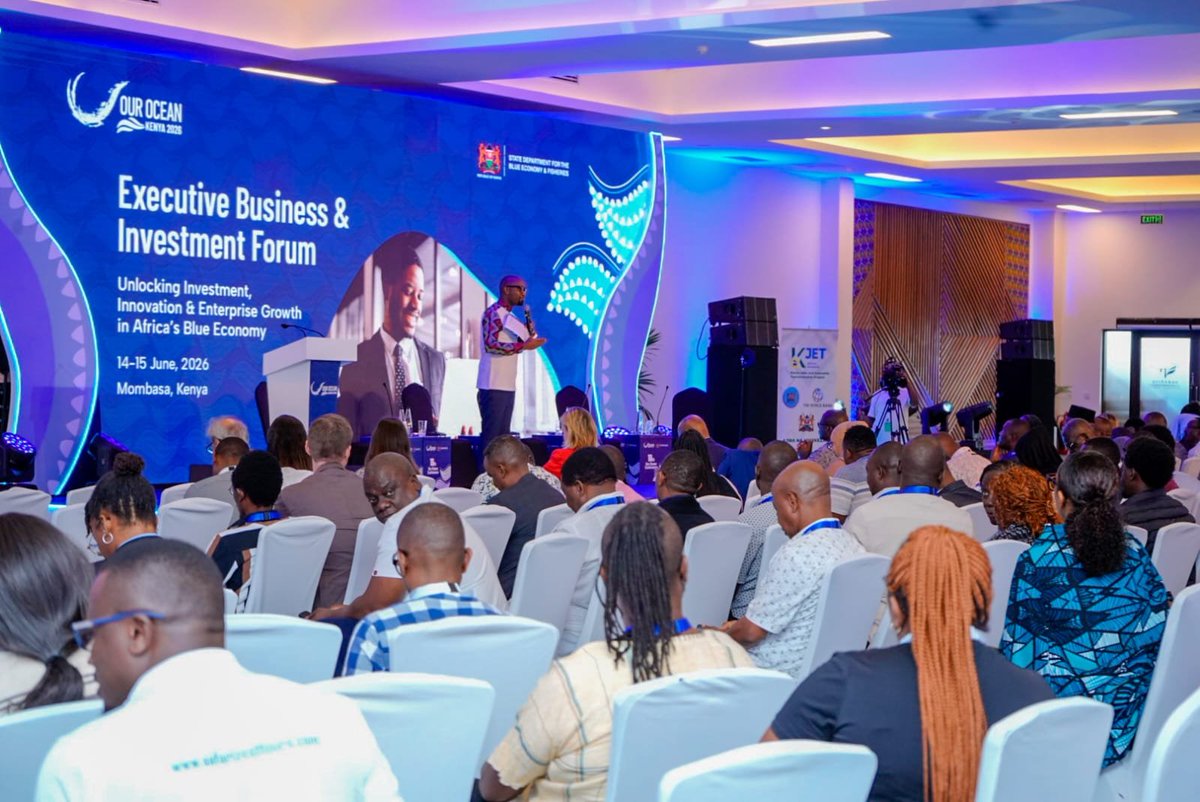
Technology and innovation are reshaping ocean industries through improved data systems, smarter logistics, and more efficient resource management. Our Ocean Kenya #OOC11BusinessForum #OOC11InvestinKenya
@OurOceanOOC @MiBeMa_2022 @PS_Betsy_Njagi @Blue_Economy_F
1
4