


Eres consciente de que la primera en poner los juegos a 80 euros fue Sony desde una posición casi total de hegemonía ¿no? Y de que actualmente aún tiene más hegemonía. Como usuarios nos conviene la competencia, no la guerrita de consolas.

FOGO WEEKLY REACP
It's been another active week on @fogo
Here's a quick rundown of what happened
► Fogo TPS Ranked #2
Chainspect ranked blockchains by their highest recorded TPS on mainnet.
Fogo ranked #2, reaching around 99.8K TPS under real network conditions.
► Fogo Speed Ranked #2
Chainspect also ranked blockchains with sub-second block times.
Fogo came in at #2 with block times of around 40ms.
► Superluminal Waitlist
The waitlist remains open for Superluminal @slx_fi
Built around a Dual Flow Batch Auction model, Superluminal matches orders every 40ms with a focus on execution quality.
You can still register and secure your spot before the waitlist closes.
► Beeks Joins The HUB
Beeks is now live inside The HUB.
The partnership brings institutional-grade computing infrastructure to The HUB across locations in Tokyo, New York, and London.
► 3× HYPE Flames
HYPE perps on Valiant are earning 3× Flames this week.
A good opportunity for active traders looking to boost their Flames.
► Fogo Flames Season 2
The Week 20 leaderboard is now live, covering activity from June 1 – June 8.
A total of 10M Flames have now been distributed across Season 2 participants.
► That's all for this week.
See you next week, and stay fogolized


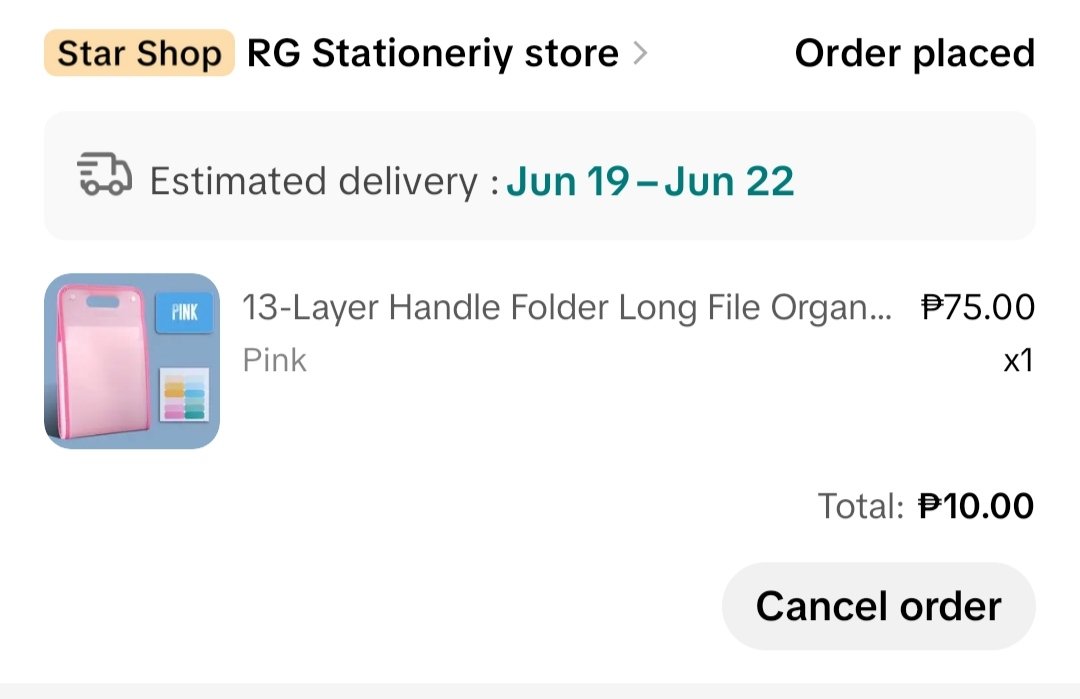
Got 4 items for a total of P40 in just 3 days 🥹🥳
Thank you cut price and thank you to everyone who made this possible 🙇🏻♀️💚
STATS:
Biscoff Spread: 44 people nag cut
Backpack: 23 people nag cut
Umbrella: 24 people nag cut
File Folder: 8 people nag cut



⚜️Trîßk⚜️ retweeted

💥💥 TOTAL BOYCOTT
du 14 juillet
Y aura les 🤡 qui sont assidus au journal de Tf1 et les collabos qui regarderont ce qui est devenu un événement "PRIVÉ" puisque Macron interdit le public (libre), hors figurants sélectionnés !
.


13
139
233
1,395
రాju Royal 🚩 retweeted

#Peddi Uttarandhra Day 10 Share: 82.6 L (incl.GST) 🔥🔥
Total 9 Days Share: 20.39Cr 🔥👌
SENSATIONAL Run 🔥🔥
Today 1cr share Loading....🔥🔥
#Ramcharan
31
166
761
PEDDI retweeted

.@taran_adarsh Sir please report #Peddi collection tomorrow total 11days report sir
@PeddiMovieOffl film collection till yesterday 38cr it's true please report sir
14
54
785
Patricio retweeted

Claro. Gobiernan el pais como quien juega a la ruleta. Total…

Macaya y la megarreforma: "Es una apuesta, supone posibilidades de éxito y riesgo" tinyurl.com/yry4rys6

17
200
727
7,813
🖕 retweeted

Your boss at work was a total DILF, but when you both went on break you brought him back to your car and rode his dick till he came in your guts twice 🤤 he’s never even fucked a man before this, do you think this makes him gay?
 SOUTHERNGUYX
58
663
6,844
Paul young man retweeted

He turned me into a whimpering little bitch, moaning like a total slut 🥵
He destroyed my tight hole better than anyone ever has - pure fucking mastery!
So tell me, how do you judge a real top’s skill? 😏
21
1,399
7,736
206,802

Without 400 million American taxpayers and ziocorporate Israel would be total polr shithole. Sorry to break you your 10 year old mind dreams and fairy tales.
1
Robbie Mouton retweeted

✨Inspiration✨
The life of a Christian is a life of total selflessness. When we give we are not to give with a stingy heart, expecting to receive something in return. This is the same attitude Christ had for us. Christ didn't come for us so that we could give Him something for his benefit. What can one give the King of Kings that He doesn't have already? Nothing. This is why we are to only love God back, through our words, our thoughts, and our actions towards His children
🙏🏼Prayer🙏🏼
Dear God, I pray that as I live my life as a Christian, as Your child, may I never have selfishness as a priority in my life. Help me to be selfless in all my ways, O Lord, so I may be an example of You to Your children. You set the standard first, O God, and I ask that You help me to walk in this standard. There is no way I can do it in my own actions or power. In Jesus' name, I pray. Amen.
2
5
7
79
Jean_michel retweeted

🚨NEWS: It has been revealed that thousands of Migrants have left the UK without paying their student loans - the total from EU countries alone amounts to £893 million
146
454
2,407
46,627


Le signe d'un peuple politiquement mûr, c'est sa capacité à faire confiance à son système et non à un messie. Personne n'est irremplaçable sous le soleil. Soutien total à ce plaidoyer pour des institutions solides


As usual, Larry White’s excellent and clear writing allows even a general audience to easily understand the concepts. He explains this simply and accurately.
But George, while you are technically correct, I still think the main emphasis and points made by both Cochrane and Hayek hold. They push back on the notion that inflation is typically caused by what most people think causes it. In the end, it boils down to monetary policy. That is the big game in town, not generally oil shocks, crop failures, labour unions, or even increases in import tariffs.
The definition Larry uses is key: Economists use the term “inflation” to denote an ongoing rise in the general level of prices quoted in units of money.
The word “ongoing” is doing a lot of work here. In my view, this is what Hayek and Cochrane are both focused on despite the technically incorrect wording. I carefully read John Cochrane’s Hoover article, and it is almost identical to Hayek’s claim you quoted.
Yes, both economists go a little too far, but Milton Friedman also often embellished in non-technical public intellectual articles to make a similar point. Friedman seldom emphasised the demand for cash balances and velocity in these articles. He couched these as transitory variables not having much effect on longer-term (decadal) historical bouts of inflation.
Post-2008, increased demand for money did suppress inflation for years despite several rounds of QE, but this might have been partially induced by the profound change in the Fed operating system and interest paid on reserves.
That was monetary policy too. It is essentially errant government policy driving both inflations and (often in combination with bad fiscal policy) prolonged recessions or depressions. You yourself have argued that the anaemic recovery after 2008, with spending growth lagging behind trend for perhaps 7-8 years, was caused by errant monetary policy.
And if there was ever an aggregate supply shock affecting total output, it was in 2020 due to Covid. But here, the Fed was too loose too long, and there is still debate about how much of the short but acute bout of high inflation that followed was due to supply chain disruptions and how much was due to good old-fashioned loose monetary policy. Even by an NGDP metric, spending way overshot the trend. So again, maybe not all, but bad government policy essentially drove the post-Covid inflation, boosted by a big (very unnecessary) fiscal stimulus of deficit spending.
So while you have made the professor’s point and severely critiqued the phrasing in two non-peer-reviewed public intellectual pamphlets and essays by Hayek and Cochrane, I’m left wondering about the motivation for pointing out the peccadillos of two renowned economists who obviously thought/think deeply about inflation. You’ll probably say accuracy is critical and what is true is true, but I think you perhaps overemphasised this a little too much. My guess is some of your motivation is that under an NGDP targeting framework, you’d also want people to be prepared for some makeup inflation, and this may be especially true if there is a real output drop due to perhaps another pandemic while nominal spending is kept on trend. In a case like this, the public needs to be ready for some transient inflation, albeit lower than what we got post COVID.
PS. The only way I’d even know enough to comment is that I’ve spent the last decade reading your books. So pardon a student who audited your class arguing with the professor.