
This is 'FASCISM'.
Dictators have ALWAYS silenced Free Speech.
GLAD that I was transplanted to the USA 56 years ago...
There's NO Freedom on that Island anymore. 😒
1

The safety and security blanket concern is ongoing with some of the drip job sex service nudity revue workers in real life transplanted prime time all American and abroad domestic violence runaway hideout victims of their husbands turning tricks incognito to defend their sexual liberation lifestyle abd earn good money in their ice capade poundcake prime
youtu.be/1uF5xMhfp1c?is=0EMj…
9

Tut tut.
Turns out it isnt the West Asians or the South Asians who hate USA the most.
It is the transplanted, aliens of Israel.

Israelis are CELEBRATING 8 American deaths after the B52 crash in California
‘They deserve it, I hate the United States no less than Iran.’
‘We just started, dear Americans. The blows have only just begun.’


1
15

There’s a feeling of “connectedness” here. We do care, to a certain extent. More so on the west coast than the east (I’m a transplanted easterner). We don’t go around not acknowledging each other and that seems a lonely way to go through life.
26

Read our latest newsletter, featuring "London" Literary Prize winner Owen Schalk on his story "Counter-Illumination"!
The squid was a transplanted image from a different short story of mine that didn’t grow into anything...
Read and subscribe here:
substack.com/home/post/p-201…

ALT A photo looking down from a bridge at the Thames River in London, Ontario, in the summer. The river is dark brown, and the banks are full of lush green trees
14

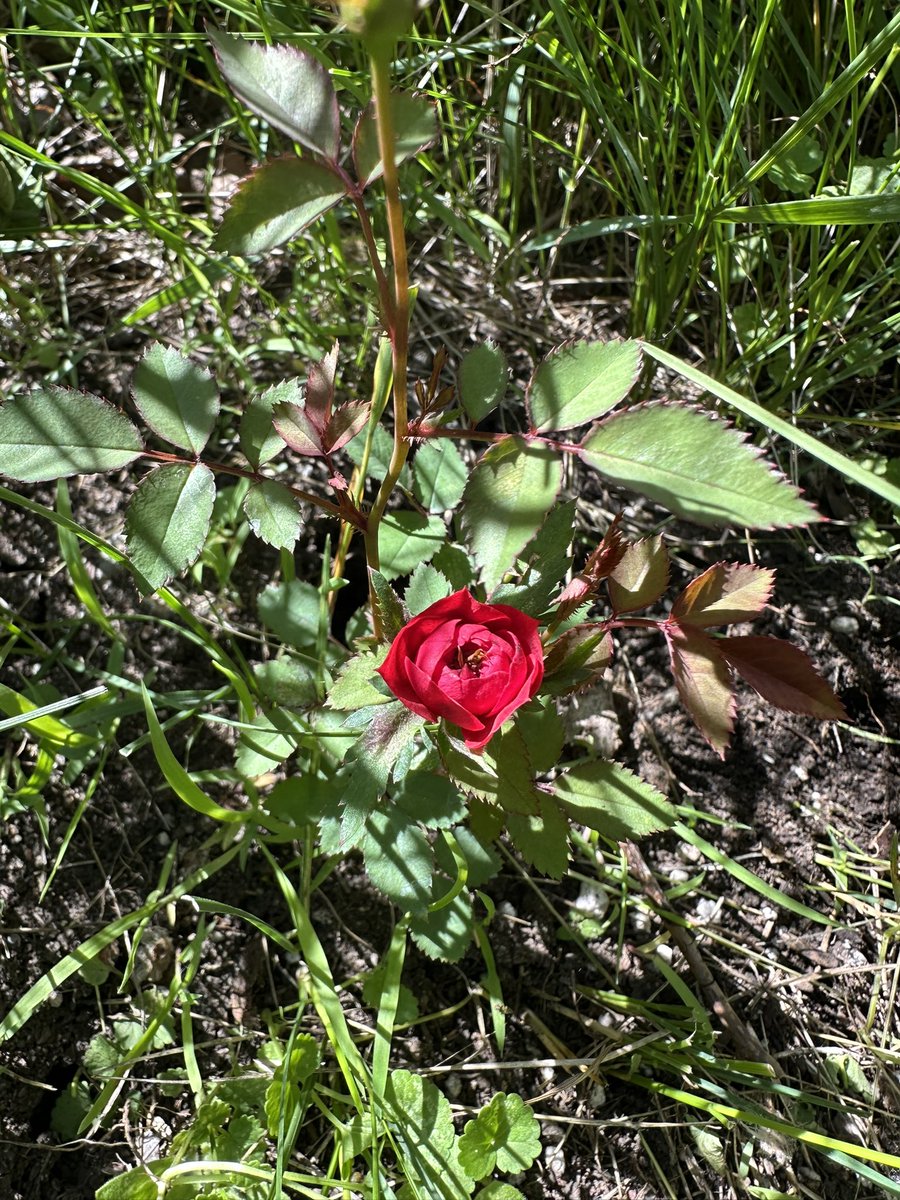
i started this wee rose bush from SEED. i wasn't sure what would happen/if it would be successful (i began with 5 last fall but only this plant made it). i transplanted to the entrance of one of my gardens just a few weeks ago.. and today? a dime-sized rose sprouted!

1
1
3
36


Ducketts Grove, Palatine Enclaves, and the Shamrock of Power
Duckett’s Grove in County Carlow, erected in 1745 and later transformed into a Gothic Revival mansion, was more than a country estate. It embodied the consolidation of foreign-settler authority in Ireland, standing upon nearly 12,000 acres from which the native Irish were systematically driven. The Duckett family, wealthy Protestant landowners, prospered by aligning themselves with Crown power and welcoming industrious settler groups who would reinforce their dominance. Among these were the Palatines—German Protestants transplanted from the Rhineland after decades of war and famine. Invited by the Crown in 1709, they were seeded across Irish estates in Limerick, Carlow, and Kerry, and soon became known as “improving tenants.” Their skill in viticulture, flax production, and weaving not only enriched landlords like the Ducketts, but also created self-contained communities that operated with a level of autonomy unavailable to the dispossessed Irish.
The Palatines did not come empty-handed. They carried with them both industry and symbol. One of their most telling emblems was the trefoil seal of Germantown in Pennsylvania, which depicted a shamrock-like form divided into three: grapes for wine, flax for linen, and a spindle for weaving. This trinity, accompanied by the Latin “Vinum, Linum et Textrinum” (Wine, Flax, and Weaving), reveals how Palatine identity was deliberately stamped in the lands where they settled. The trefoil is striking, for in Ireland it resonates with the shamrock of St. Patrick, long held as a symbol of both native sovereignty and Christian faith. The Palatine seal thus appropriated and re-coded the ancient Irish symbol of the threefold leaf, binding it to economic production and settler identity.
This echo is not coincidence. The eighteenth century also witnessed the foundation of the Order of St. Patrick (1783), a chivalric order of the Crown intended to bind Ireland’s ruling elite under a shared symbol of the shamrock. Whether directly or indirectly, Palatine influence prepared the ground for this symbolic conquest. The shamrock, once a native emblem of spiritual sovereignty tied to Ériú and her land, was reframed under Crown and Ascendancy power as a badge of loyalty to empire. What the Palatines enacted in miniature through their trefoil seal, the Crown enshrined in majesty through the Order of St. Patrick.
Thus, Duckett’s Grove and the Palatine enclaves were not merely estates and settlements. They were theatres of symbolic and cultural transformation, where even the shamrock was taken, reshaped, and turned into an emblem of foreign dominion. The echo of this still lingers: in the green badges worn on St. Patrick’s Day, in the trefoils carved on state buildings, and in the inherited memory of a people whose native symbols were co-opted by settlers who displaced them.
References
Patrick O’Connor, People Make Places: The Story of the Irish Palatines (Dublin: Irish Palatine Association, 1989).
Desmond Clarke, The Irish Palatines in Ireland and America (Dublin, 1950).
Turtle Bunbury, The Ducketts of Duckett’s Grove (Carlow Historical Journal, 2009).
J.C.H. Aveling, The Dukes of Leinster and the Order of St Patrick (Dublin, 1967).
1
2
122

My favorite thing about weeds and wildflowers is the birds brought me the black eyed susans. I found them randomly in the middle of the yard and transplanted them to one of my flower beds and they quadrupled in size this year.
1
6

You're still a pussy, Austin: not wanting to work for a Jew doesn't mean you're antisemitic. Especially if they are transplanted Germans and Eastern Europeans.
15

I’ve lived in the Third World. What’s shown here isn’t the UK anymore — it’s Pakistan and Bangladesh transplanted into Britain’s second city.
The native population has been deliberately diluted while the small island keeps getting flooded with foreigners. How many more can Starmer fit before it’s completely unrecognisable?
This isn’t enrichment. It’s replacement.
BAAAA-d government🐐
1
15
261
Brammah Thanga retweeted

Jun 14
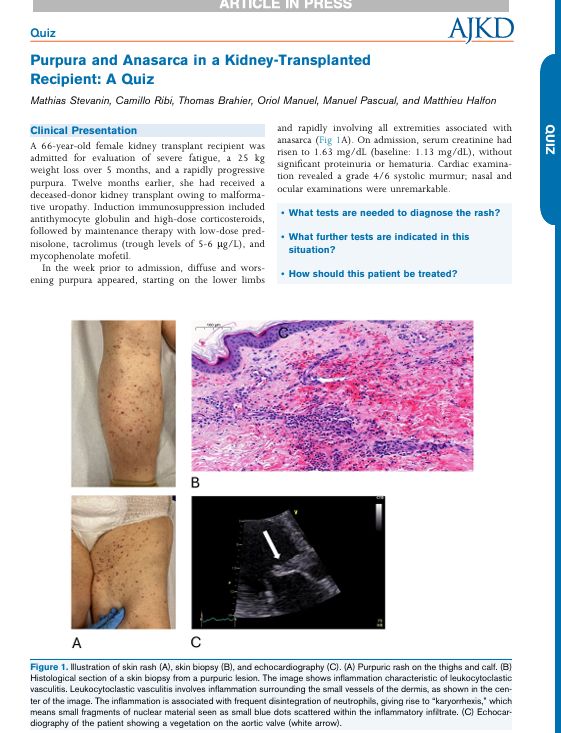
Purpura and Anasarca in a Kidney-Transplanted Recipient: A Quiz
bit.ly/4dR19WI (FREE)
11
23
1,507


You must have got your brain transplanted from Agra mental asylum. Who says they don't pay taxes? They pay the taxes much more than people like you.. Their kids & businesses are not exempted from Tax. You are a blind critic of RSS without knowing anything about it. Stop ranting.
10

-ing year after year sitting next to a constant influx of forever young, generally well off, transplanted students/ppl coming to NY to work in arts and finance and other prestigious or high paying jobs while they’re stuck working for the city or in the service industry.
1
1
28
Thick as a bloody brick. But shhhh!
The MAGA crowd have been transplanted to Australia and they have all had frontal lobotomies. They are popping up like weeds and they like people who are dumb. It makes them feel better.
1
7

I prefer my own eyes over whatever you use to dictate your own reality. He a dude with shaved off male eyes browns and now transplanted now brows higher on his forehead to mimic female eye browns male pattern baldness, male facial bone structure a tiny bulge from years of estrogen dosing. The female voice is the only thing that would make me second guess it but modern operations and training get other trannies to par with Michael’s performance.
1
17

Massive influxes of people into specific areas, rather than dispersed, prevent assimilation. Instead of integrating, transplanted cultures create 'mini-countries,' hindering cultural cohesion and societal integration. #Sociology #Integration #Culture
6
7
65
3,270