
Drama, useless drama, senseless drama.
Undevelopment projector.
Quiet and quick means of keeping the people senseless and idiotic. Animalistic kind of governance.
1
1
7
onuoha D'Gudmann | retweeted

UNEC is the synonym of Undevelopment or stagnation


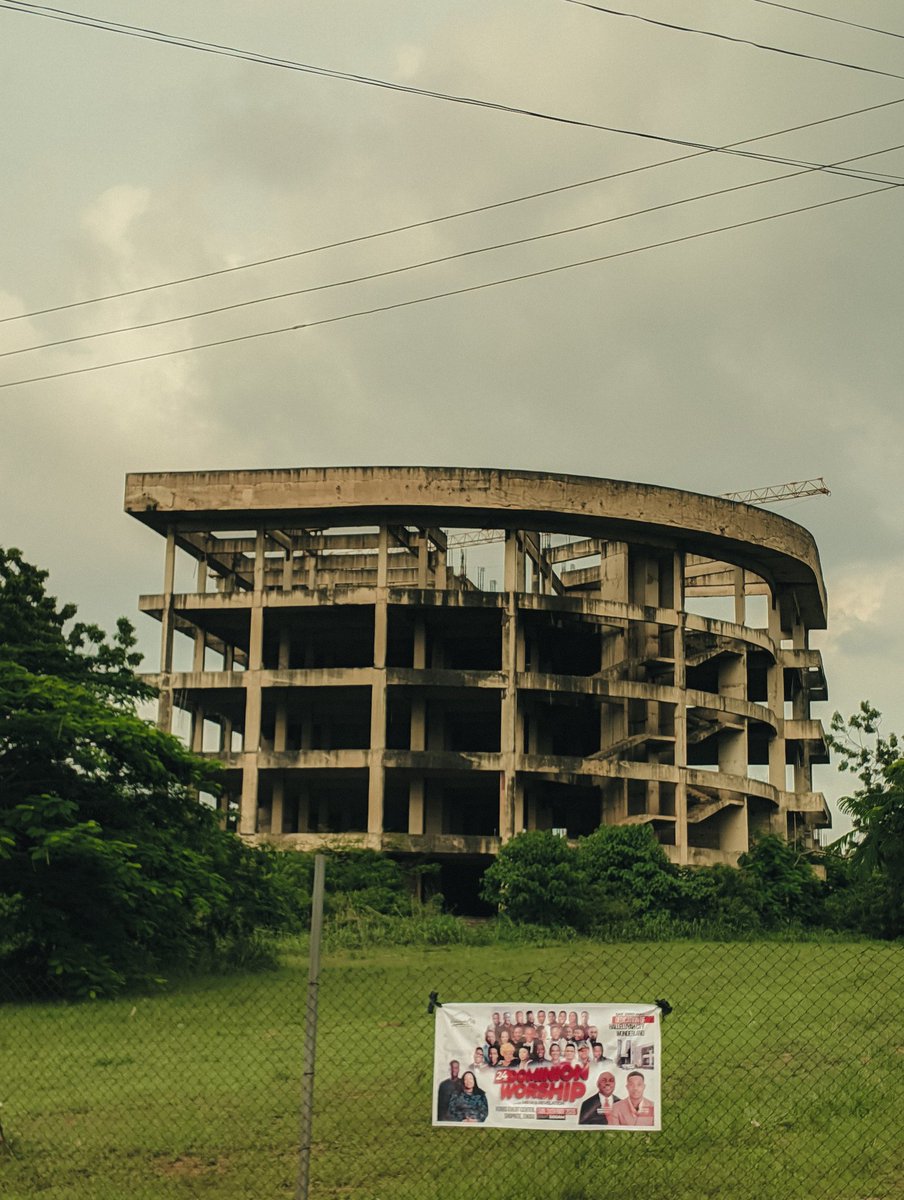
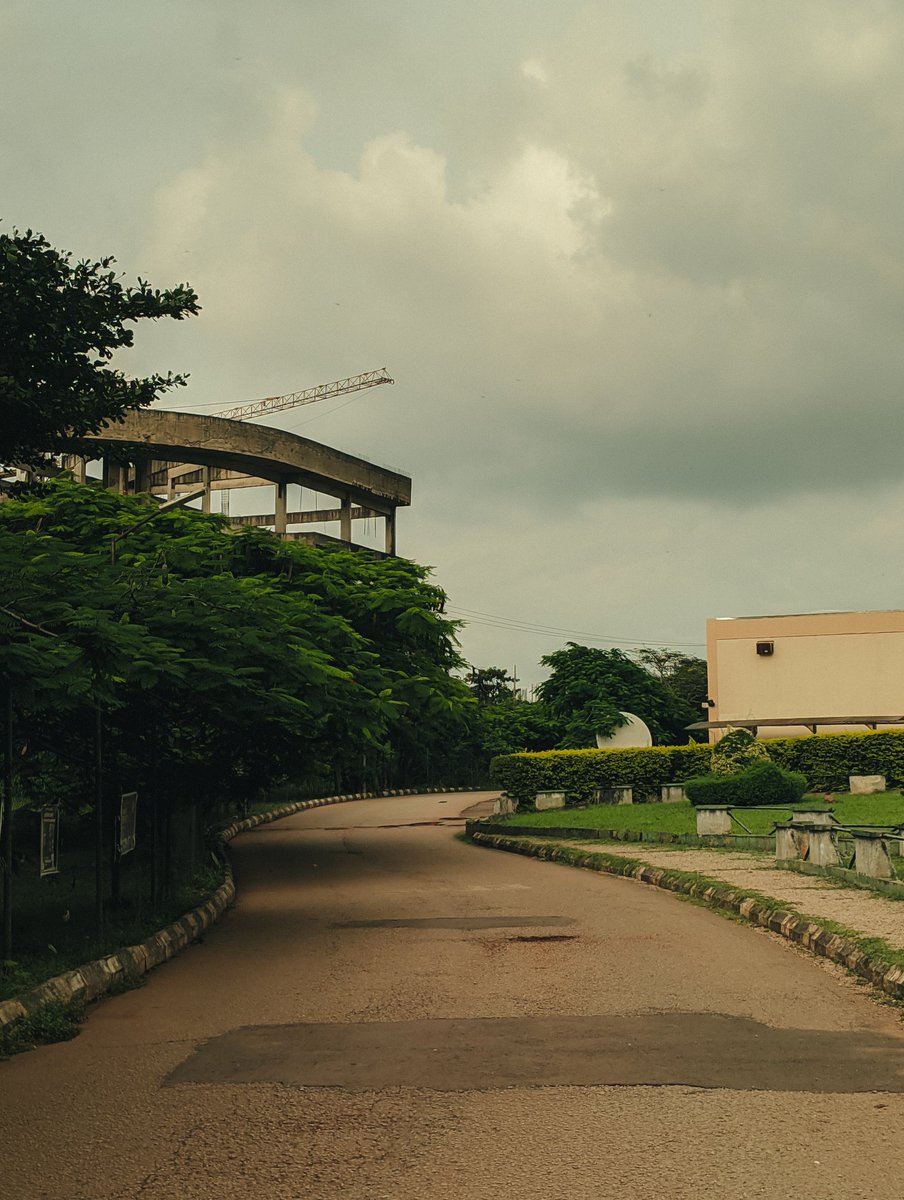

2
4
58


Jun 14
In undeveloped countries surely. But in developed countries there is few. But in undeveloped countries has lower IQ or dictators which is source of their undevelopment. But still today is the greatest time in human history where hunger exist only intentionaly.
1
19
Jun 13
Why se must care about africans? They have natural resources, they have good weather to farm every plant and crop whatever they want. Their undevelopment is not our fault nor our guilt. Whites build them infrastructure and left it there. We have no duty to feed them and help them
2
14
211

You haven't said anything about Boko Haram and undevelopment
19

this terrorist org could write a book on how to undevelop yourself. create a whole new aisle in the book store. self-undevelopment
2

➖
En 𝗘𝘀𝗽𝗮ñ𝗶𝘁𝗮-𝘀𝘁𝗮𝘁𝗲-𝗼𝗳-𝘂𝗻𝗱𝗲𝘃𝗲𝗹𝗼𝗽𝗺𝗲𝗻𝘁 no hay ÉLITES, hay CASTAS, sub-CASTAS, infra-CASTAS…
Y hay 𝗖𝗔𝗦𝗧𝗔𝗦 ‘𝗕𝗨𝗘𝗡𝗘𝗖𝗜𝗧𝗔𝗦’ y 𝗖𝗔𝗦𝗧𝗔𝗦 𝗟𝗨𝗠𝗣𝗘𝗡 muy macarras (@PSOE & Co).
Como bien sabe el propio @ppopular, Españita 🇪🇸 NO es un país para ÉLITES.
@Congreso_Es
➖

El Gobierno de España molesta a las élites, según el presidente Pedro Sánchez.
66

What do you think is the sign of undevelopment?
How much does it cost to live in a hut, plant yams in your backyard and live in a village?

1
85

Jun 9
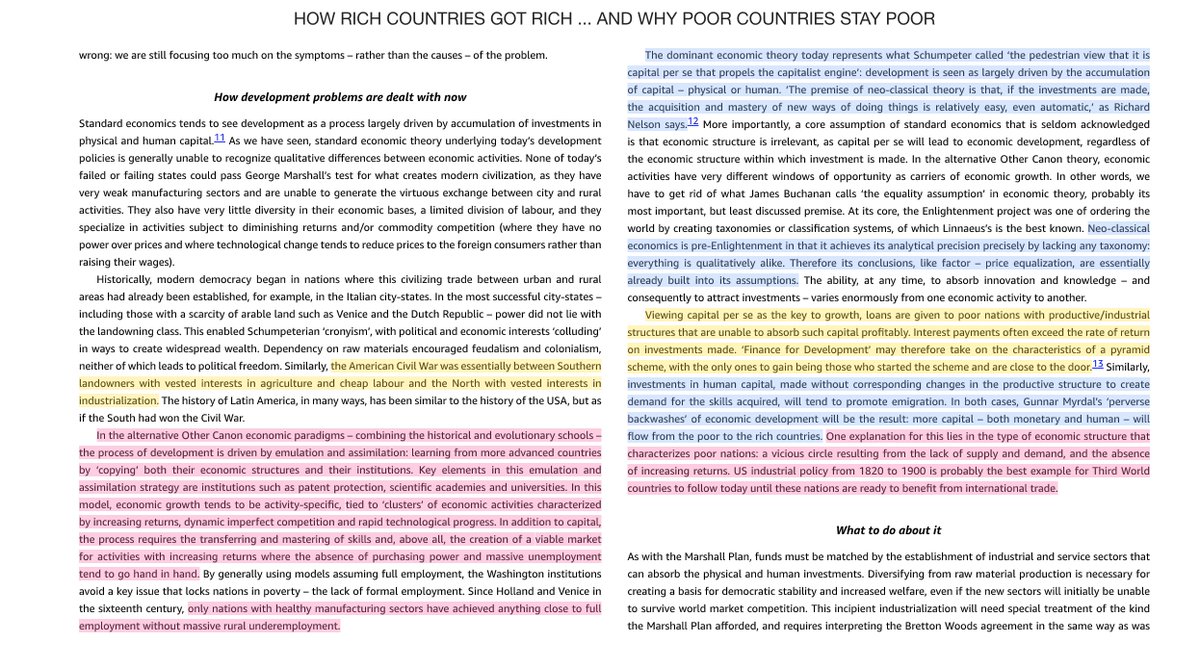
I recall these excerpts from Erik S. Reinert's book on how to do economic development which are in conflict with Piketty's Global Justice Report advocating decreased material sectors and increased immaterial sectors through foreign finance to lift global south incomes while reducing emissions.
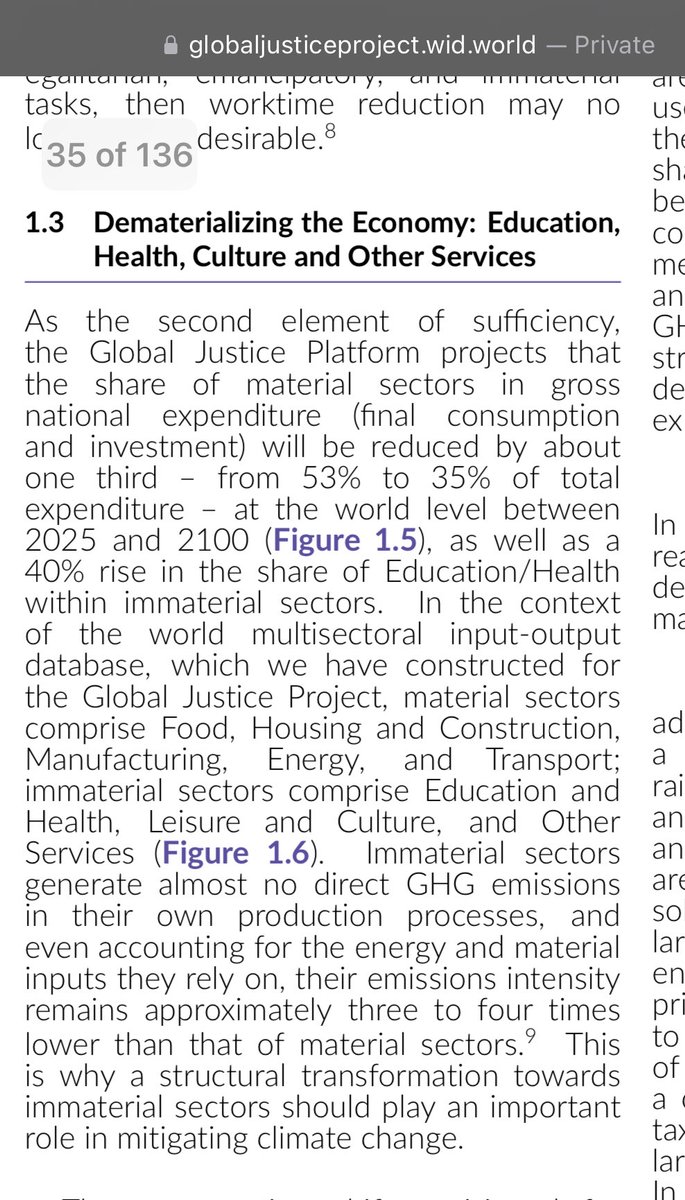
Piketty wants to lower “the share of material sectors in gross national expenditure (final consumption and investment) will be reduced by about one third – from 53% to 35% of total expenditure – at the world level between 2025 and 2100 as well as a 40% rise in the share of Education/Health within immaterial sectors.”
However as a constraint, “The basic objective of the Global Justice Platform regarding equality and prosperity is described in Figure 1.1: full income convergence across all countries by 2100 to a level equivalent to that of today’s richest countries…Achieving this target implies annual GDP per capita growth rates of around 0-0.5% in today’s richest regions (North America and Oceania, Europe) and around 3-4% in today’s poorest regions (Sub-Saharan Africa, South and South-East Asia), the latter comparable to the average growth rate of East Asia across the last 75 years.”
From the perspective of Reinert, Piketty's plan will deindustrialize the global economy and thus, without understanding causal linkages between sectors, un-develop the immaterial sectors as a byproduct. This is Reinert's concept of the vicious downward spiral of the Morgenthau Plan economics vs. the virtuous upward spiral of the Marshall Plan economics. Piketty's plan appears to suffer from treating economic activities as qualitatively the same thus he can shift activity (expenditure in the paper) from material to immaterial activities without any trade off. It's not exactly the same critique but this reminds me of what James K. Galbraith critiqued Piketty's book over a decade ago. Piketty treats heterogenous things as homogenous.
The economic growth (basically none in global north and 3-4% in global south) is assumed to be automatic (as Reinert criticized) from global wealth transfers into immaterial sectors. If this assumption doesn't hold, then deindustrialization leads to the downward spiral. I've found no elaboration in allowances for industrialization in the global south in Piketty's paper nor in papers of its sphere of authors and collaborators. All I've found is allowances for better financing terms not industrial growth or emission growth.
Without the proper industrial production structures in the global south, foreign investments will flow back out to the global north as they cannot be properly absorbed. Similarly, investments in human capital (education as Piketty emphasizes) is likely to stimulate more emigration from the global south to the global north, according to Reinert. In Piketty's book, Capital, he wrote "A seemingly more peaceful form of redistribution and regulation of global wealth inequality is immigration. Rather than move capital, which poses all sorts of difficulties, it is sometimes simpler to allow labor to move to places where wages are higher." He also has noted the needed workers for the global north's population problems. Immigration is not mentioned in the paper but it would be safe to consider Piketty's implicit desire for this brain drain immigration which hurts the global south and helps the global north.
Then the kicker for me is the persistent use of gross national expenditure as the metric for determining material constraints. This excludes exports because the nation does not spend money on things it sells to other nations. This means global south exports of raw materials and global north exports of finished goods are not counted in the constraining metric. By using GNE, it effectively erases the core-periphery crux of economic development inequality. What's left to constrain is the global north's consumption levels and the global south's industrialization.
So as a result the global north's population is made poorer, while its industrial export sector remains active (if not growing), and the global south's population is made stagnant (if not poorer) in undevelopment, while its raw material export sector remains active (if not growing). In a complementary paper by Piketty and co., Prosperity Within Limits?, Figure 30b shows that their plan calls for, from now until 2050, net exports of manufacturing / GDP to increase for Europe and North America/Oceania but decrease for East Asia, South/South-East Asia, and Subsaharan Africa. Only after 2050, will this change to globally converge by 2100. They explain that this quarter of a century of core-periphery dynamic is necessary for the global north to sell the global south all the capital it needs to develop. Quite a lot of confidence one needs to take that deal. I find it funny that the original paper says "However, in practice, such promises often go unfulfilled, so that low- and middle-income households tend to have a very negative perception of these policies (largely for good reasons)" in regards to redistribution of uneven national affairs and yet, in its own grand vision, it discounts this rational skepticism of global north elite's and their global south compradors' institutions
So to recap, the wealth transfers go from the global north to the global south to buy global north goods produced in countries, where labour is made poorer and thus decreased bargaining power against capital, and fund huge growth in immaterial sectors of education and health which will also buy education and health exports from the global north, as that same complementary paper's figure 30d said: net exports of education and health / GDP increase and decrease in the about the same way as for the manufacturing example. To me this looks like a vicious downward spiral where the global north and global south are both made worse off in aggregate but a narrow minority of global oligarchs connected to global trade are made better off by the continuation of the core-periphery neo-imperialist structure, degraded labour power, and tax transfers to subsidize demand. This reminds me of 19th century UK policy to impose imperialism on the globe, Charles Dickensize its own labour pool, and use the UK government to subsidize the costs of imperial oligarchs.
The Reinert alternative would be for developing countries to build national industrial clusters, like every developed nation has done before them, to equalize global inequality and enable technological innovation to solve climate related problems.
---
Excerpts:
---
"the emphasis on foreign financing of domestic social and redistribution policies, rather than on domestic financing by the developing countries themselves...This raises the question of the extent to which this approach will put a large number of nations permanently ‘on the dole’ – a system similar to ‘welfare colonialism’."
"abandoned the effort to treat the causes of poverty, and have instead concentrated on attacking the symptoms of poverty...instead of attacking the sources of poverty from the inside through the production system – which is what development economics used to be about – the symptoms are addressed by throwing money at them from the outside...this palliative economics has, to a considerable extent, taken the place of development economics. Indeed, the balance between development economics (i.e. radically changing the productive structures of poor countries) and palliative economics (i.e. easing the pains of economic misery) is key to avoiding long-term negative effects."
"On the other hand, I claim that many of today’s problems are as a result of the Washington institutions classifying the tools needed to create increasing returns activities...as ‘illegal activities’.
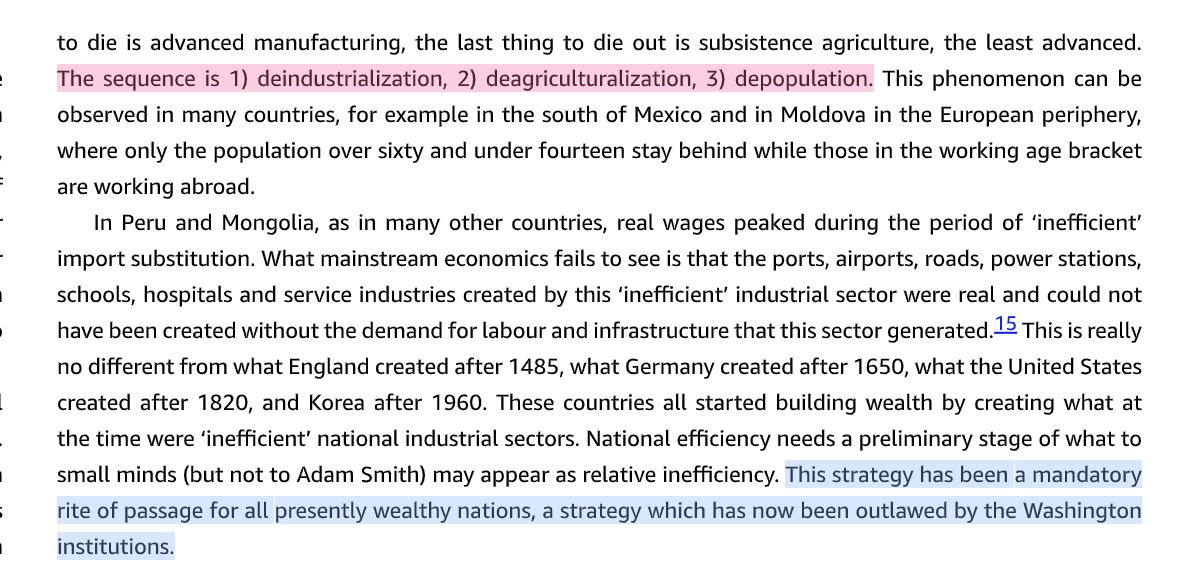
"However, in many countries, real wages were considerably higher when this inefficient industrial sector was in place than they are today with a much weakened industrial sector, as seen in the example of Peru (figure 14). For centuries, it was understood that having an industrial sector – even if this sector was less efficient than those of the richest nations – produced higher real wages than having no industrial sector at all."
"only nations with healthy manufacturing sectors have achieved anything close to full employment without massive rural underemployment."
"The dominant economic theory today represents what Schumpeter called ‘the pedestrian view that it is capital per se that propels the capitalist engine’: development is seen as largely driven by the accumulation of capital – physical or human. ‘The premise of neo-classical theory is that, if the investments are made, the acquisition and mastery of new ways of doing things is relatively easy, even automatic,’ as Richard Nelson says."
"Neo-classical economics is pre-Enlightenment in that it achieves its analytical precision precisely by lacking any taxonomy: everything is qualitatively alike. Therefore its conclusions, like factor – price equalization, are essentially already built into its assumptions."
"Viewing capital per se as the key to growth, loans are given to poor nations with productive/industrial structures that are unable to absorb such capital profitably. Interest payments often exceed the rate of return on investments made. ‘Finance for Development’ may therefore take on the characteristics of a pyramid scheme, with the only ones to gain being those who started the scheme and are close to the door."
"investments in human capital, made without corresponding changes in the productive structure to create demand for the skills acquired, will tend to promote emigration. In both cases, Gunnar Myrdal’s ‘perverse backwashes’ of economic development will be the result: more capital – both monetary and human – will flow from the poor to the rich countries."
"One explanation for this lies in the type of economic structure that characterizes poor nations: a vicious circle resulting from the lack of supply and demand, and the absence of increasing returns. US industrial policy from 1820 to 1900 is probably the best example for Third World countries to follow today until these nations are ready to benefit from international trade."
"historical experience has shown that free trade between nations at very different levels of development tends to destroy the most efficient industries in the least efficient countries. I have referred to this common phenomenon as the Vanek-Reinert effect."
"The sequence is 1) deindustrialization, 2) deagriculturalization, 3) depopulation."
"This strategy [of national industrial sectors] has been a mandatory rite of passage for all presently wealthy nations, a strategy which has now been outlawed by the Washington institutions."
Policies achieve success through national industrial growth not "merely by compensating the losses (and increasing the dependency) of the poor countries through increased aid."
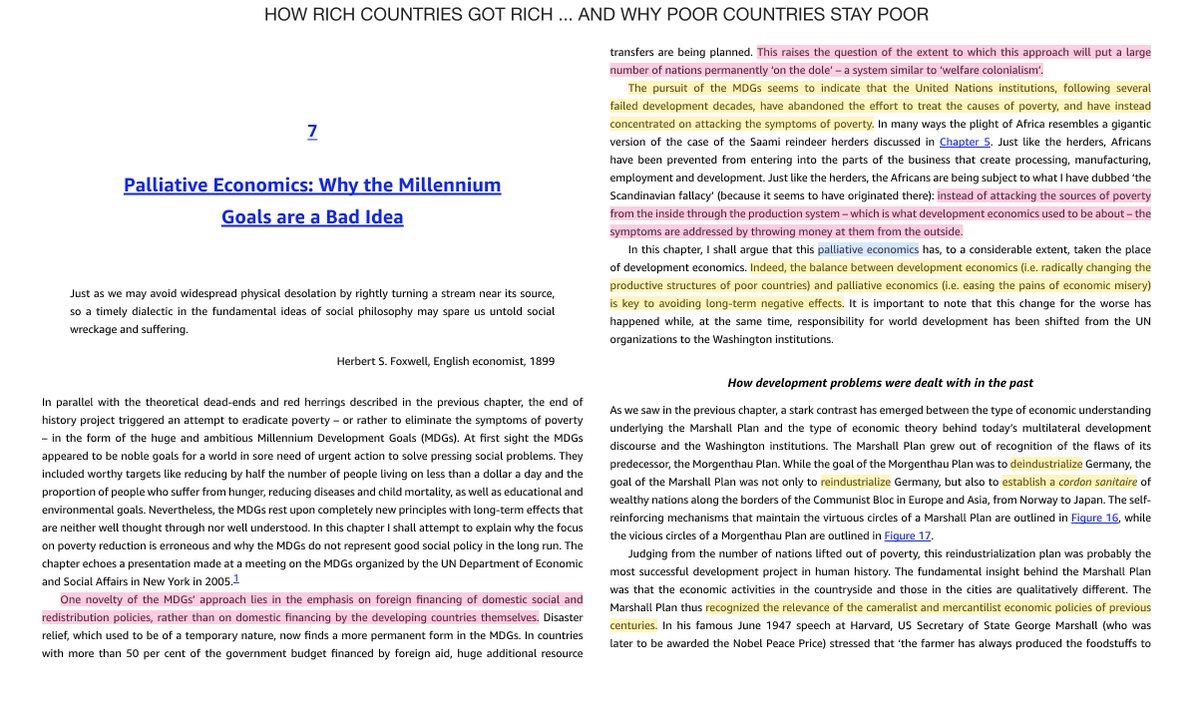
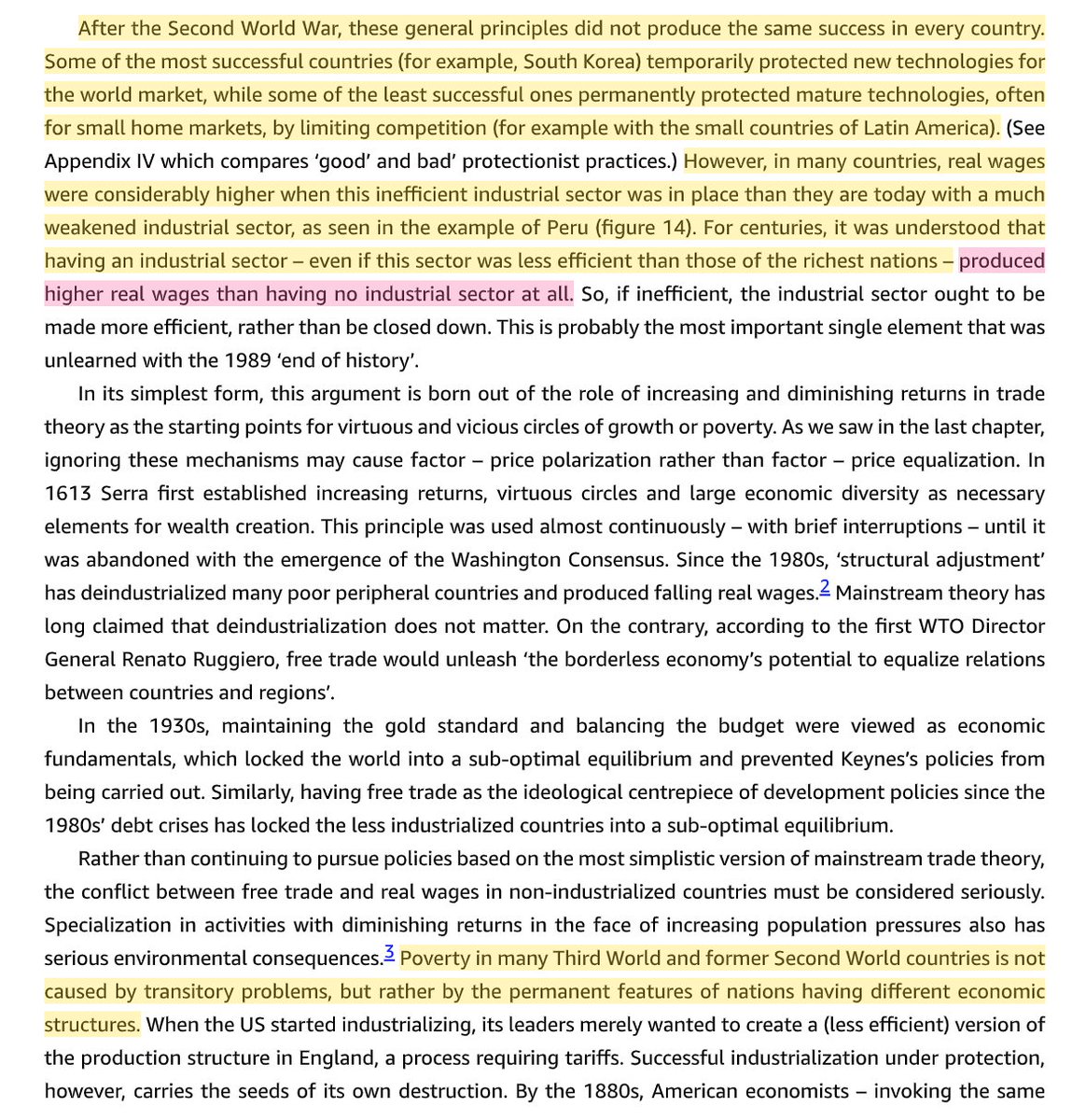
Jun 8

This is what jumped out at me from the Piketty World Justice Report.
I’d imagine this is a big challenge for heterodox development / catch-up economics.
1
6
1,280

May 29
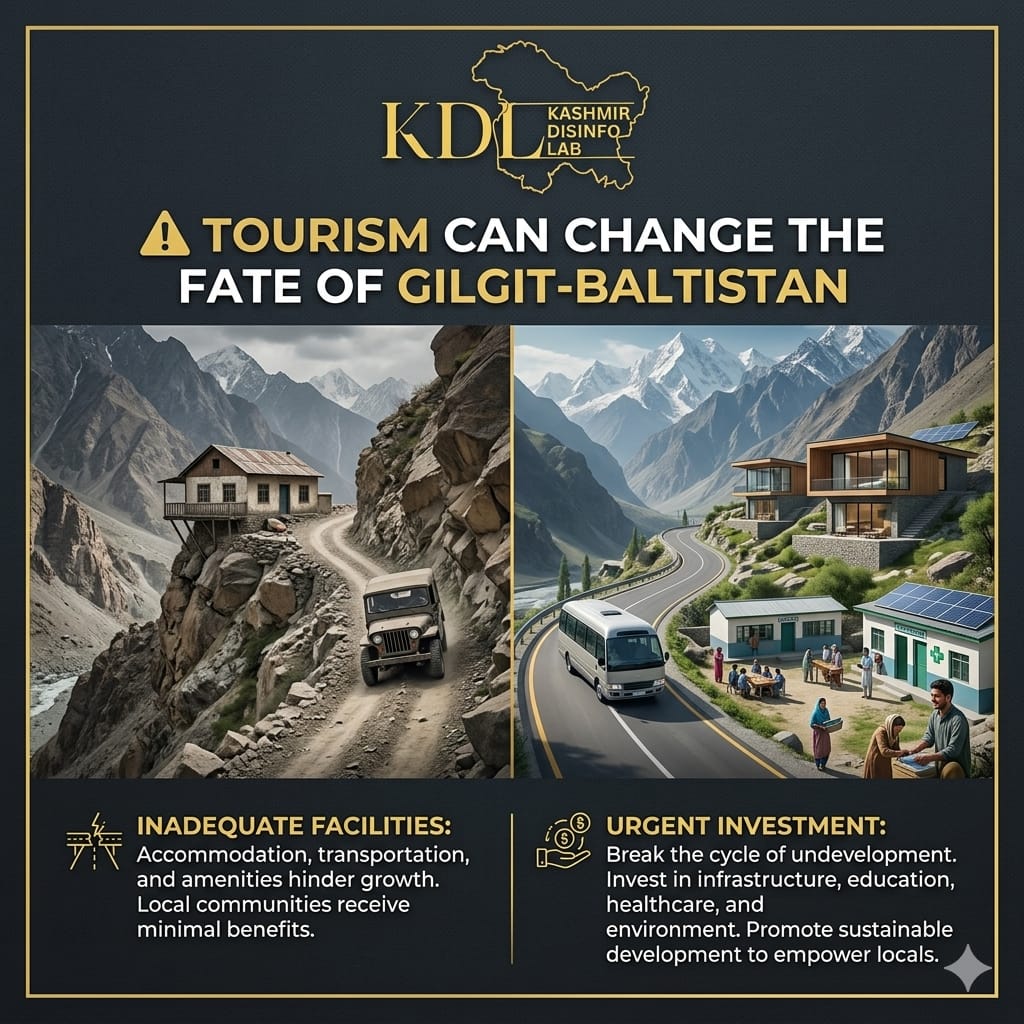
⚠️ TOURISM CAN CHANGE THE FATE OF GILGIT-BALTISTAN
🔸Tourism can boost GB's economy, but inadequate infrastructure and facilities hinder growth.
🔸Visitors face challenges like lack of accommodation, transportation, and amenities, while local communities receive minimal benefits.
🔸It's time to break the cycle of undevelopment in Gilgit-Baltistan. We need urgent investment in infrastructure, education, healthcare, and environmental protection.
🔸Empowering local communities and promoting sustainable development can create a brighter future for GB.
PART 3 END
Follow us on @KashmirDisinfoLab
2
3
409

May 26
These dumb lazy clowns make life so soft for the failures of African leaders when they blame some race far away from them for their undevelopment
3
154

May 19
Dem never shout my leader, my leader. This is ordinary Ethiopia o. God forbid.
If actually Nigerians know the stage of undevelopment they're, no politician suppose to walk free in that my country. They even commit these atrocities, still paint it on our face, asking us what can we do.
2
2
89

The last few decades were congress alliance governments achievements and this man has spread hatred , photoshoots , publicity , corruption, undevelopment, poverty , unemployment, no peace. He fucked up every one in india in the name of religion
1
2
358

May 15
In Mozambique, catholics, sect Arautos described the mass:
4 or 5 hours of ceremonies, musics, even dances.
Time invested in "feel the divinity".
Among the Poorer nations.
Corruption, undevelopment... But we have jesus or la santa.
1
1
4
242

May 15
character undevelopment 💀

Alright, I just finished the latest Short Story they added in that Blazing Pass (paid version is 4$ monthly, btw!)
And holy SHIT.
Every part of Bridget here was made with detailed malice, another attempt to paint the retcon positively, which only digs its grave deeper. [🧵]

3
18
346

Mbna kila time wakalenjin wanarule lazima as a country tu experience mashida like unemployment,hakuna cash flow, undevelopment like hakuna kitu huwa inaenda sawa
3
5
38

May 7
Someone will make a post about undevelopment in one part of the region. Instead of us to collectively criticize the government and seek change, you'll see people in the comments section abusing and cussing her out because she's igbo. Who do us like this? 😭
1
2
39