
Jun 12
El que és ultralocal és el més universal
Per això, Antoni Gaudí és tan gran
#defensemCatalunya, siguem responsables

1
19

Si sapiguessin que Dalí ja va deixar clar que només des d'allò ultralocal és pot transcendir a nivell universal!
Jun 10

La visita del Papa ha destapado muchas diferencias entre Madrid y Barcelona.
En Barna: Castellers, el Virolai, coros, catalán...en fin, arraigo, tradiciones y cultura propia.
En Madrid, todo espectáculo sin tradición ni arraigo madrileño propio. Un batiburrillo donde aparecen flamencas, danzas contemporáneas, hippies...
Es contra-intuitivo porque BCN es la meca de lo posmo/Cosmopaleto y Madrid es como más castizo.
Pero creo que el Papa logra despertar inconscientes dormidos frente al escaparate que habitualmente muestran ambas ciudades hacia afuera. Una gran parte de Madrid aspira a ser Londres/Miami. Y una parte de BCN quiere seguir siendo esa ciudad portuaria, ruda pero con tradiciones catalanas muy arraigadas.
20

Jun 9
Aplicant la mateixa mentalitat ultralocal a problemes com el de l'habitatge s'arriba a la regulació actual a Catalunya i Espanya, que a base de bones intencions ho destrossen tot perquè els legisladors van curtíssims de capacitat d'abstracció i generalització.
6

Apr 13
vaig començar aixi!! i tambe enganxo etiquetes de preus, sobretot les de ultralocal fetes a mà @ultralocalrec
1
2
101

XV Plan Quinquenal de China a tomar pasos decisivos en camino de desarrollo de una “China saludable”.
Además de establecer metas de personal en salud a 2030, Xi Jinping hace llamado a:
-Mejorar el sistema público de salud, con integración de medicina preventiva al sistema médico de tratamiento
-Construir un sistema médico más eficiente, con mayor apoyo a servicios de salud primarios en el campo y al nivel ultralocal
-Promover “estilos de vida saludables y civilizados”, que incluya actividades físicas y dietas saludables
gov.cn/zhuanti/2026nztj/2026…
1
2
150

a clase de humor ultralocal que polo que sexa pensan é moi aprezado fóra dos seus marcos
Mar 6

Casi toda España pasó por el teatro de 'La Latina' de Madrid para verla.
Si no es tu caso (o quieres repetir), aquí te dejamos tu entrada para disfrutar de la recordadísima Lina Morgan y su mítica obra 'Sí al amor' --> rtve.es/v/16903807/ #FelizFinde
2
11
1,487

Feb 26
Experimental Constraints on Deformed Constraint Algebra via Gravity-Mediated Entanglement
Canonical general relativity is governed by first-class constraints:
H(x) ≈ 0, Hᵢ(x) ≈ 0,
with hypersurface deformation algebra
{H(N), H(M)} = D[q^{ij}(N∂ⱼM − M∂ⱼN)].
Quantum consistency requires anomaly freedom:
[Ĥ(N), Ĥ(M)] = iℏ Ḋ[q^{ij}(N∂ⱼM − M∂ⱼN)].
Effective quantum gravity models may preserve closure but deform the structure function:
{H(N), H(M)} = D[Ω q^{ij}(N∂ⱼM − M∂ⱼN)],
with Ω = 1 ε, |ε| ≪ 1. Anomaly corresponds to closure failure; deformation corresponds to ε ≠ 0 but closed algebra.
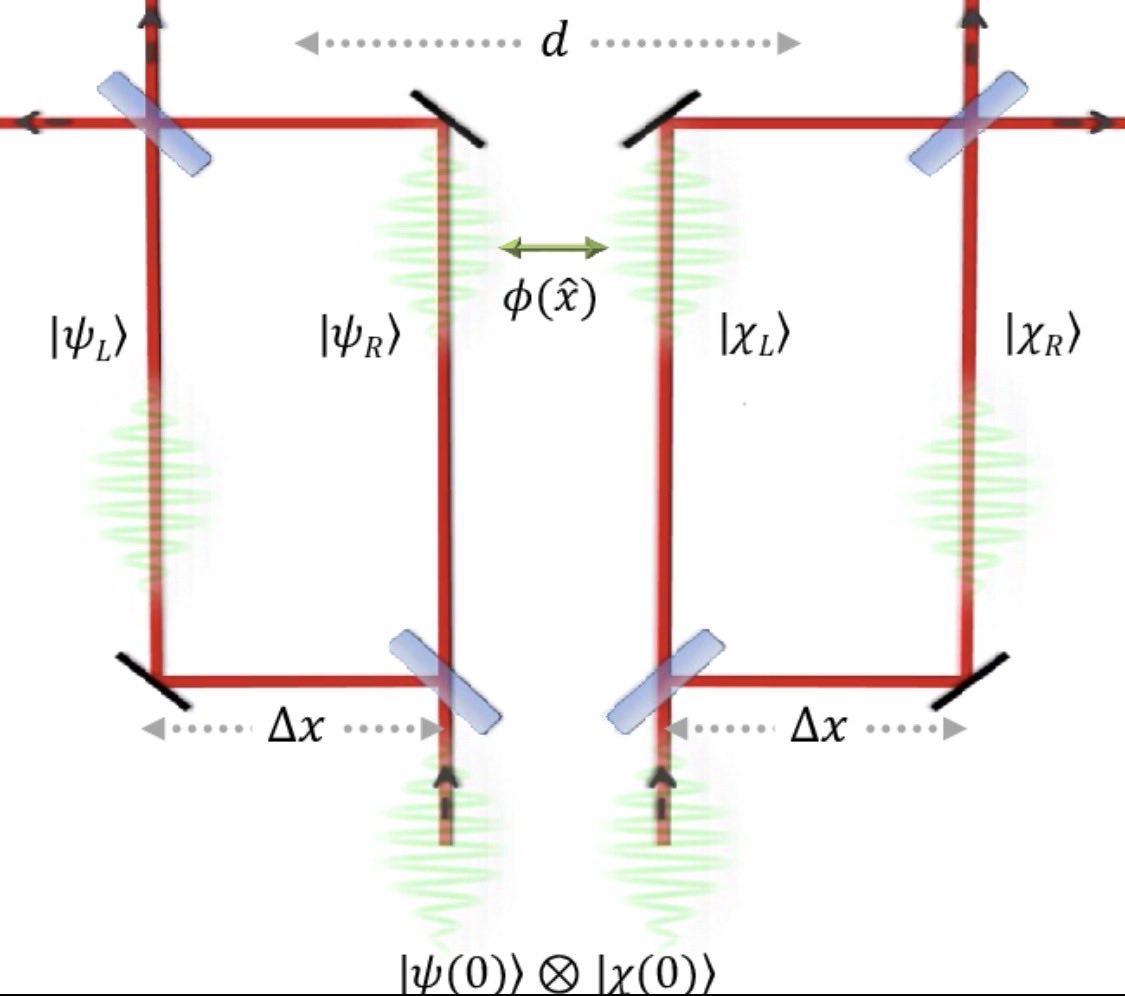
Gravity-mediated entanglement provides an operational probe.
Two masses m in spatial superpositions acquire branch-dependent phases:
φ_{ab} = −(G m² t)/(ℏ r_{ab}).
Relative phase:
Δφ ≈ (G m² t / ℏ) · (Δr / r²).
Entanglement is generated if Δφ ≠ 0 and non-factorizable.
Under deformation:
Δφ → Δφ(1 ε).
Thus precision measurement of Δφ constrains ε.
For Δφ ≈ 1, required interaction time:
t* = (ℏ / (G m²)) · (r² / Δr).
Representative regimes (Δr = 10⁻⁶ m):
m = 10⁻¹⁴ kg, r = 10⁻⁶ m → t* ≈ 1.6×10⁻² s
m = 10⁻¹⁴ kg, r = 10⁻⁵ m → t* ≈ 1.6 s
m = 10⁻¹³ kg, r = 10⁻⁵ m → t* ≈ 1.6×10⁻² s
Second-scale coherence under cryogenic ultra-high vacuum approaches these regimes.
Deformation affects causal structure: effective propagation speed satisfies
c_eff² ∝ Ω.
Thus:
Ω > 0 → Lorentzian structure preserved
Ω = 0 → ultralocal limit
Ω < 0 → signature change
Experimental bounds on ε therefore constrain both algebraic consistency and causal stability.
Irreversibility must arise via decoherence or boundary conditions if constraint closure holds.
Fundamental collapse or anomaly would imply violation of linear constraint structure.
BMV-type experiments therefore test whether irreversibility is emergent (closure preserved) or fundamental (closure broken).
In Loop Quantum Gravity, holonomy corrections generate Ω-deformation; Δφ measurements bound residual ε at low energy.
In AdS/CFT, geometry emerges from entanglement; gravity-mediated entanglement tests the reciprocal direction (gravity → entanglement), linking information–geometry duality to measurable correlations.
Thus gravity-mediated entanglement provides a single observable (Δφ and entanglement witness) capable of constraining:
• Collapse models
• Deformation parameter ε
• Constraint-algebra anomaly
• Effective causal structure
• Emergence of irreversibility
The central question becomes:
Does macroscopic gravitational interaction preserve linear constraint closure (ε = 0), or produce measurable deformation/anomaly?
Experimental resolution informs whether spacetime geometry is fundamental or emergent from amplitude over geometry.

Feb 25

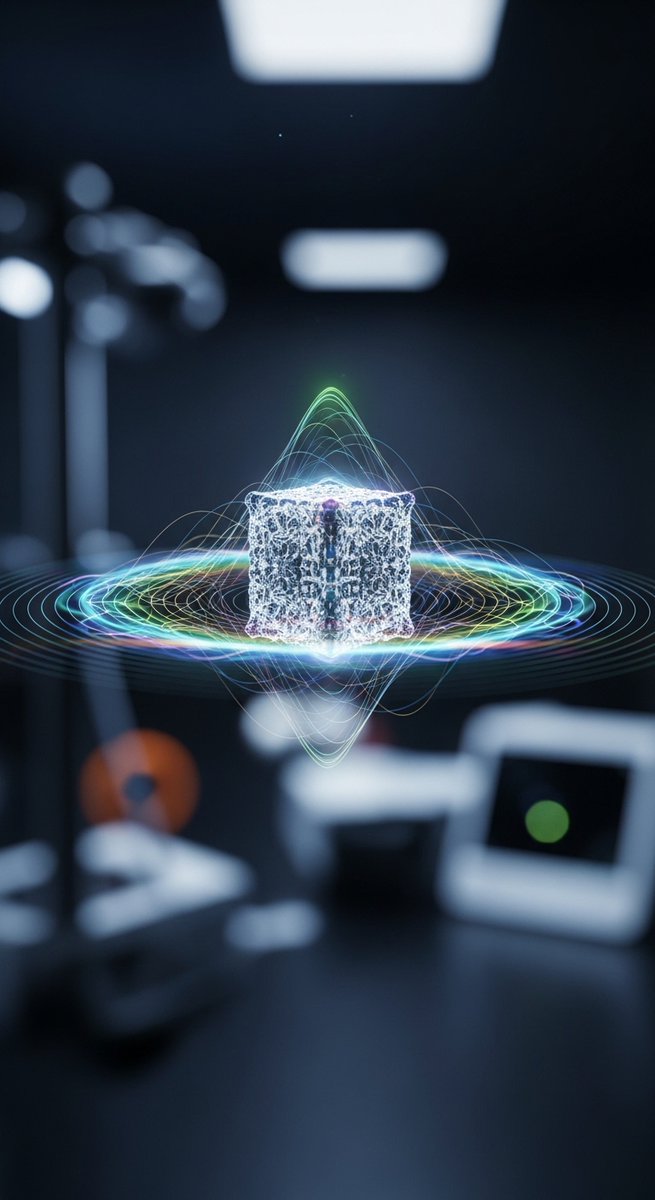
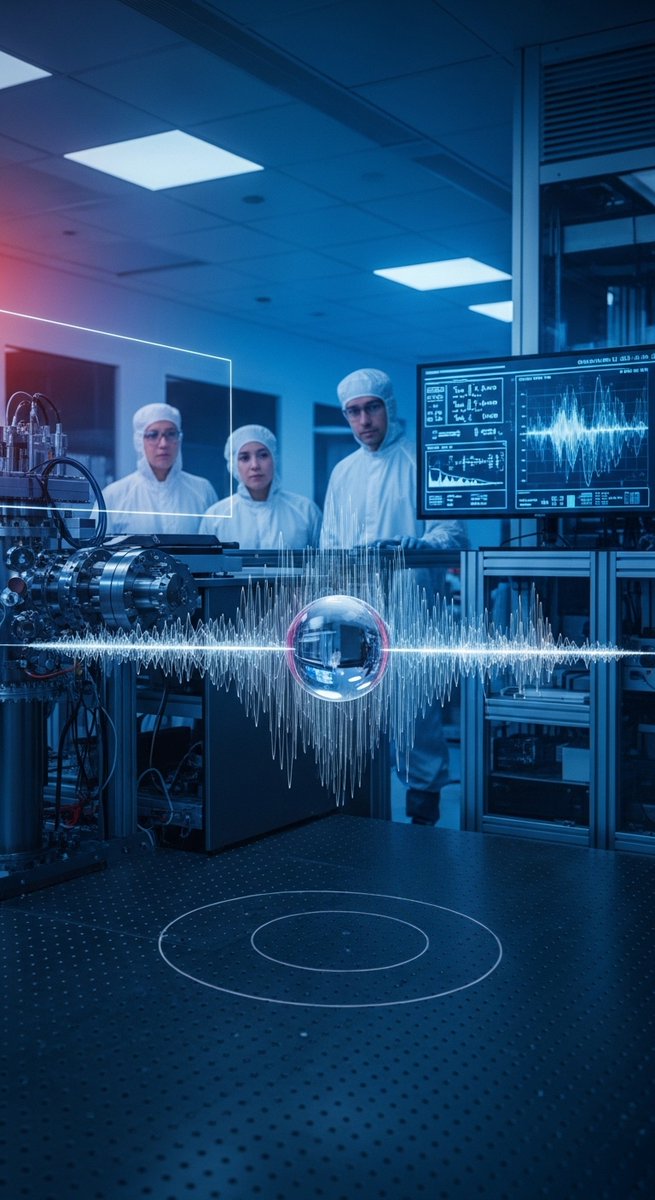
BREAKING🚨: Record Smashed For Largest Object to Be Seen as a Quantum Wave.😮
5
6
83

Feb 13
🟨 Seguint la màxima de Dalí —"fes-ho ultralocal per ser universal"—, van triar el lloc més icònic de Catalunya. No podien fer-ho en un carreró fosc; havien de fer-ho a l'aparador del món, i per això van triar LA RAMBLA de BARCELONA.
En convertir una mentida local (un fals atropellament) en una notícia global (terrorisme internacional), van aconseguir l'objectiu real: ECLIPSAR LA INDEPENDÈNCIA de CATALUNYA. Van eclipsar el nostre clam legítim de llibertat amb una cortina de fum de por artificial. Barcelona va deixar de ser la capital de la revolta democràtica per passar a ser "una ciutat víctima" més sota l'ala protectora de l'Estat espanyol.
1
1
36


Jan 30
"Per ser universal s'ha de partir d'allò ultralocal". Més que una botiga, Ultra-Local Records és un refugi del Poblenou a Barcelona on perdre la por de crear. En Raül Chamarro ho té clar: "Sols no podem, fer comunitat és supermaco". #Independents3Cat
6
16
1,178

Jan 16
【多弦数理物理学セミナー】
Vincent Caudrelierさん「Classical Yang-Baxter equation, Lagrangian multiforms and ultralocal integrable hierarchies」
2026年1月16日(金)17時:オンライン
math.nagoya-u.ac.jp/~hamanak…
2
4
4,096

"Antoni Mus, goig ultralocal", via @diariARA
Antoni Mus, goig ultralocal ara.cat/129_558b09?utm_sourc… via @diariARA
6
241

24 Nov 2025
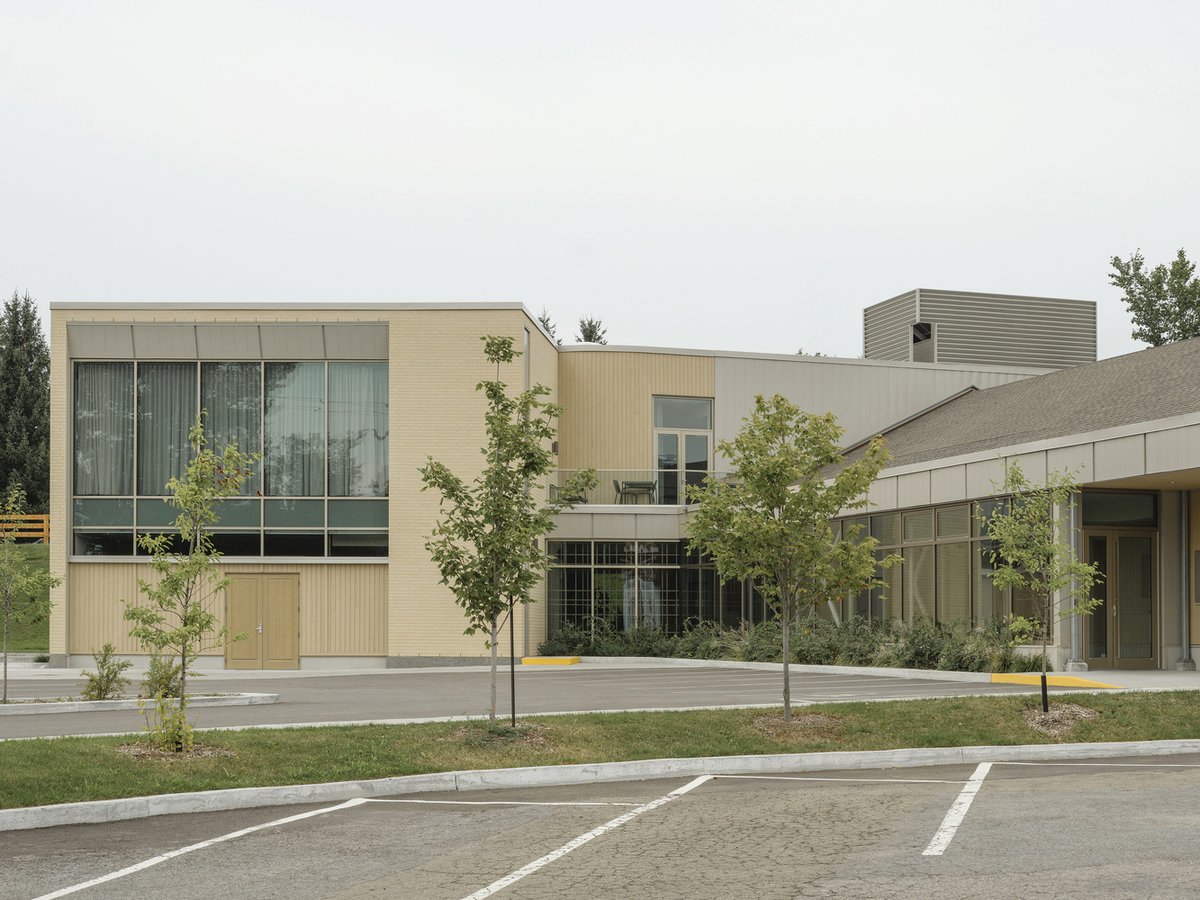
La Seigneurie Funeral Home by ultralocal architectes
#religious #architects #design #architecture #illustrarch



9
56
1,903

3 Nov 2025
Però què és ultralocal? Barcelona o Catalunya? Els nous habitants de Barcelona veig que rarament es mouen més enllà de 30 km. enllà, vull dir, que viuen molt aïllats del món. I quan tornen al seu país o viatgen fora, es relacionen amb el mateix tipus de gent que a Barcelona.
1
1
9
902

2 Nov 2025
Parlem amb Júlia Colom arran del seu formós segon àlbum, 'Paradís': «Fora d’Espanya no hi ha problema per fer una música ultralocal i aquí això encara s’ha de veure» @elperiodico_cat elperiodico.cat/ca/oci-i-cul…
2
2
1,010

2 Nov 2025
"Catalunya ja no necessita Barcelona, perquè ara ella és ultralocal i Catalunya ja té aquest ADN. Es diu realitat. Hi penso després de llegir "Les batalles de Barcelona". I em pregunto: quines? Ja no hi ha batalla", by @francesccanosa.
ara.cat/129_54aa13?utm_sourc… @diariARA
12
5
11
41,955

1 Nov 2025
Júlia Colom: «Fora d’Espanya no hi ha problema per fer una música ultralocal i aquí això encara s’ha de veure» diaridegirona.cat/cultura/20…
2
1,055

15 Oct 2025
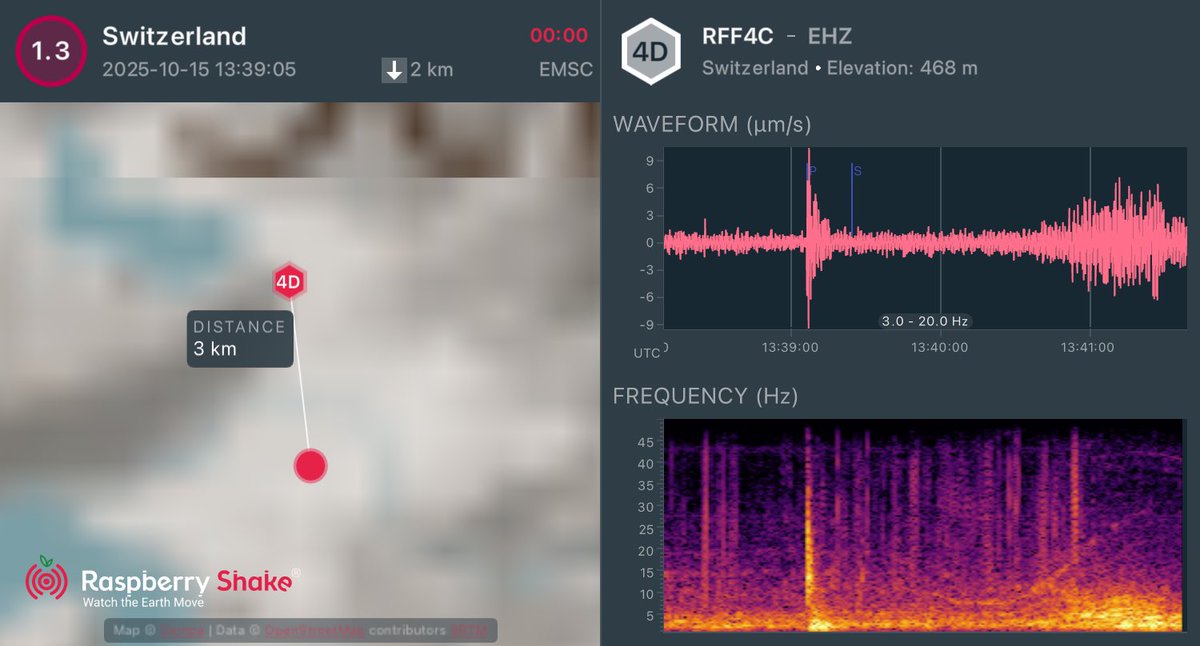
M1.3 Ultralocal #Switzerland #Earthquake recorded on the #RaspberryShake #CitizenScience seismic network. See what's shaking near you with the @raspishake #ShakeNet mobile app
1
4
303

19 Sep 2025
Don't forget the batteries!
Solar is a great solution for ultralocal energy production during the day.
Wind is just a fantasy.
I mean, even keeping The Netherlands dry is no longer done by windmills. Bulky, unreliable and a hell of a job to maintain.
40