
May 20
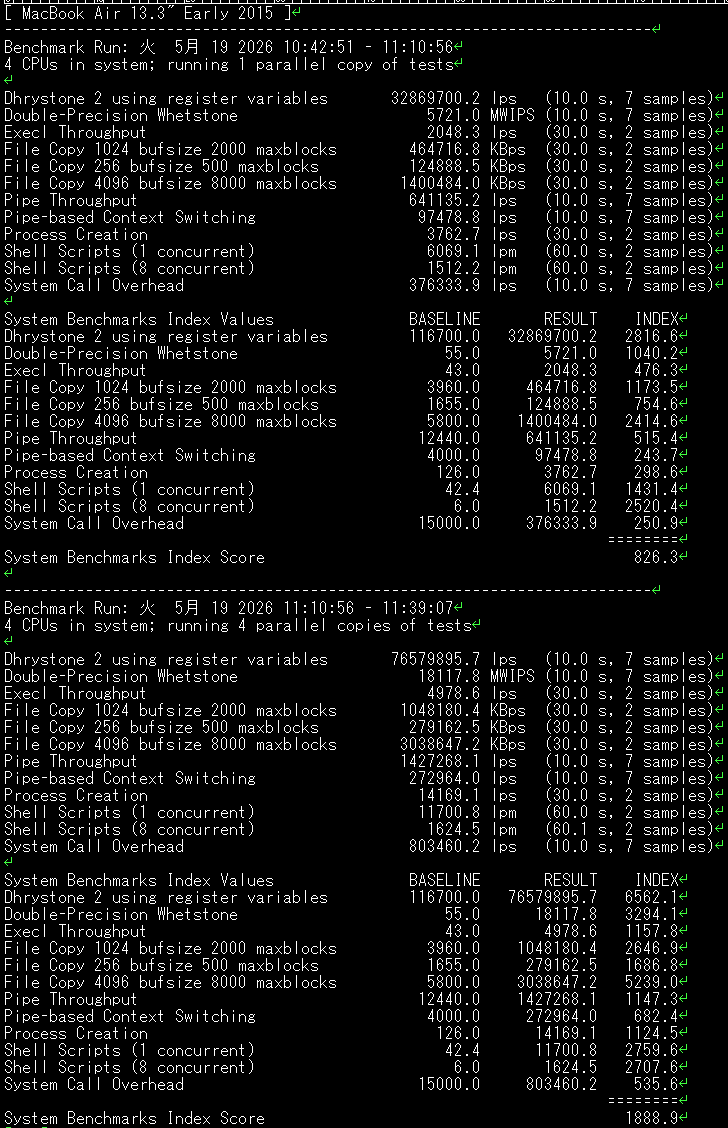
UnixBench(ベンチマークソフト)に掛けてみたところ
トータルスコアは「1888.9」
≒ Vultrの2GBプラン
≒ XServer/ConoHa VPSの2GBプランの0.7台分
まずまずです😙
1
3
278


3 Oct 2025
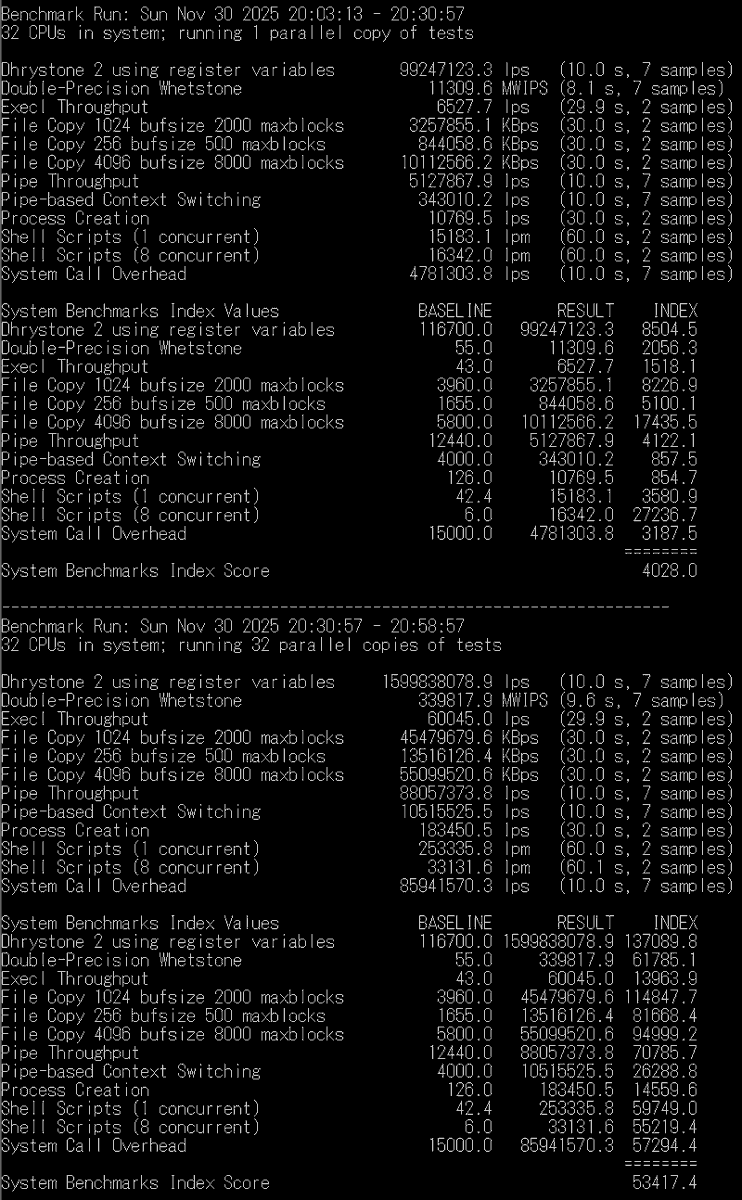
Raspi5 (8GB)を手に入れたのでUnixbenchみてみる。ほぼ Intel第8世代 i3-8145UE @ 2.20GHz 4 core (2C/4T) PC と同等。すごいな。
1
2
200

24 Aug 2025
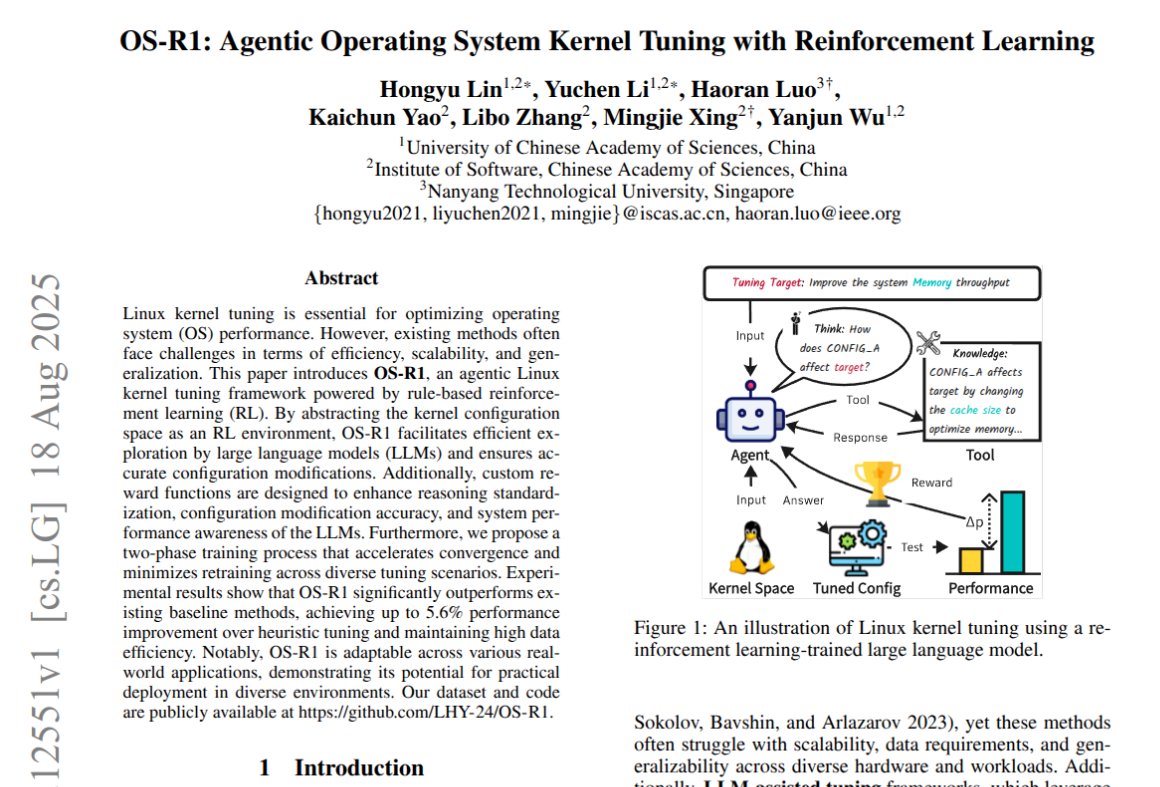
This paper turns Linux kernel tuning into a reinforcement learning task, training an agent to choose better configurations.
Up to 5.6% system speedup over expert heuristics.
Kernel tuning means flipping thousands of options in the Linux build that tweak scheduling, memory, files, and networking.
They shrink the option space into grouped decision units and assemble a 3K dataset where every case compiles and boots.
The agent learns in 2 phases, first to follow a strict answer format and use a knowledge tool, then to chase real speed.
Rewards cover 3 things, format discipline, valid configuration edits by type, and measured performance gain judged by an evaluator model.
Training uses group relative policy optimization, which samples several candidate changes per step and moves policy weights toward higher scoring ones.
On UnixBench, the tuned configs lift overall system score and often beat strong baselines, including larger models without this procedure.
Across Nginx, Redis, and PostgreSQL, it brings consistent throughput and latency wins using the same trained policy.
Bottom line, OS-R1 turns plain goals like reduce latency into concrete, safe kernel switches that generalize across workloads.
----
Paper – arxiv. org/abs/2508.12551
Paper Title: "OS-R1: Agentic Operating System Kernel Tuning with Reinforcement Learning"
3
5
13
2,855


19 Jun 2025
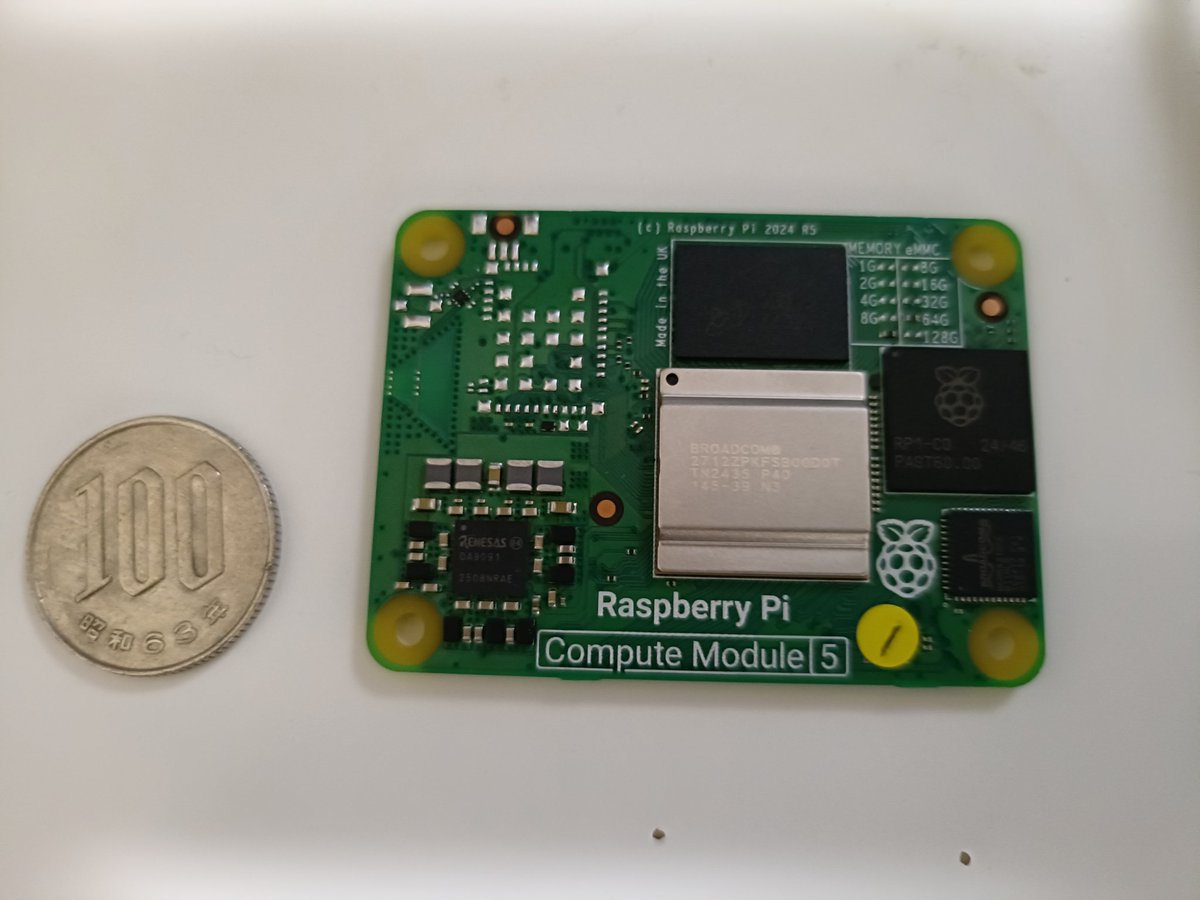
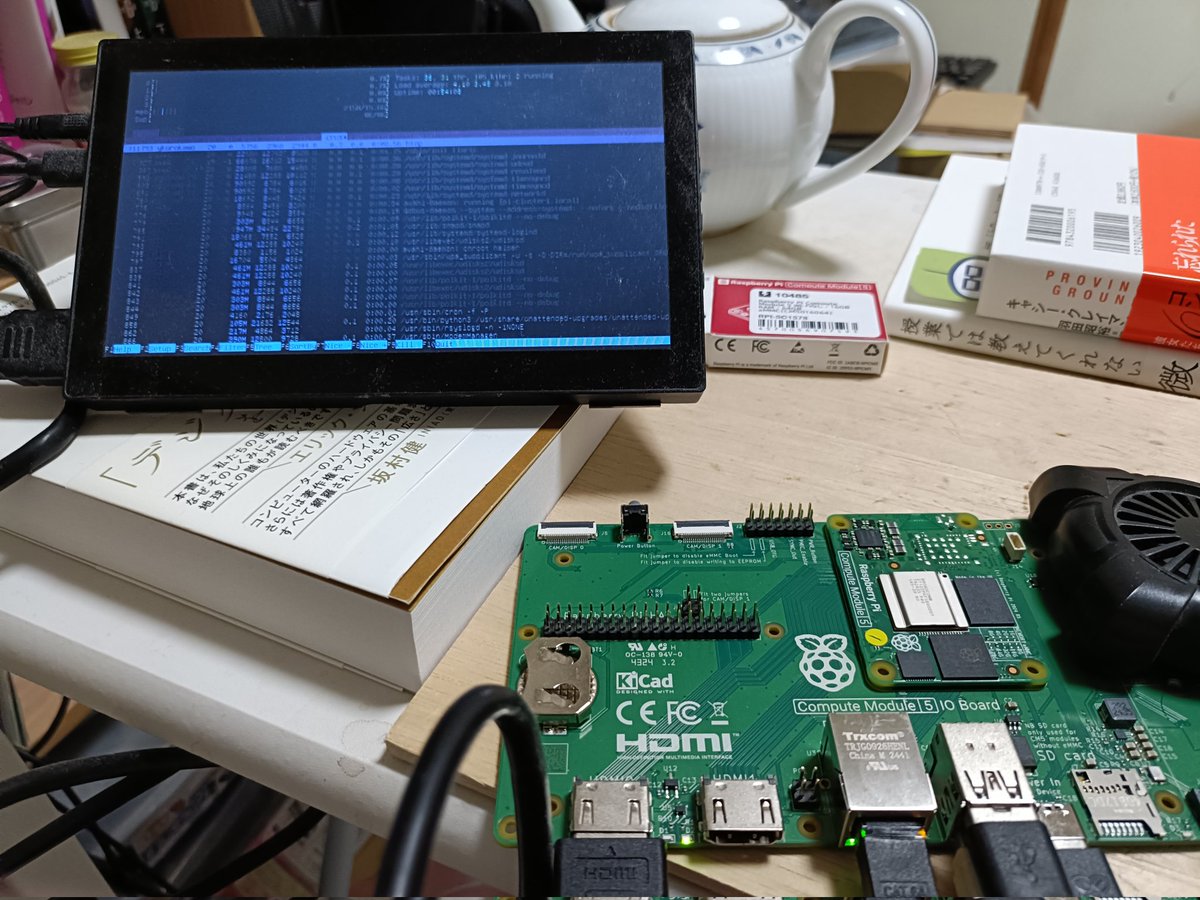
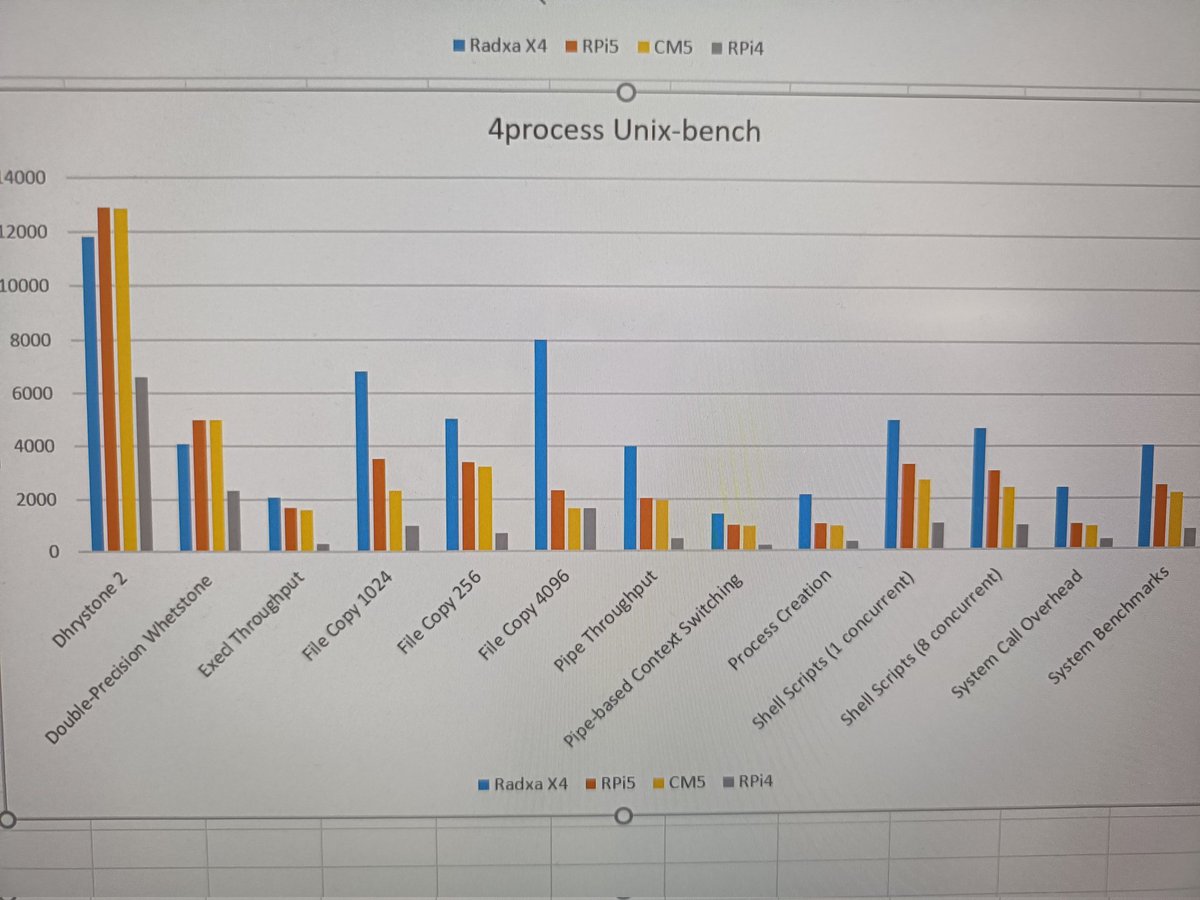
ちょっと使いたくなりraspberry pi のCM5 を購入。着荷したら思ったより大分小さくて驚きました。でも小さくてもラズパイ5なので冷却必須。取り敢えずunixbench測ったところ、ラズパイ5 nvmeより若干落ちました。まあ仕方ないかなぁと
4
304

25 May 2025
After working on automation all weekend, UnixBench wasn't a part of the puzzle I expected to see updated 😅
github.com/kdlucas/byte-unix…
1
2
442

25 Apr 2025
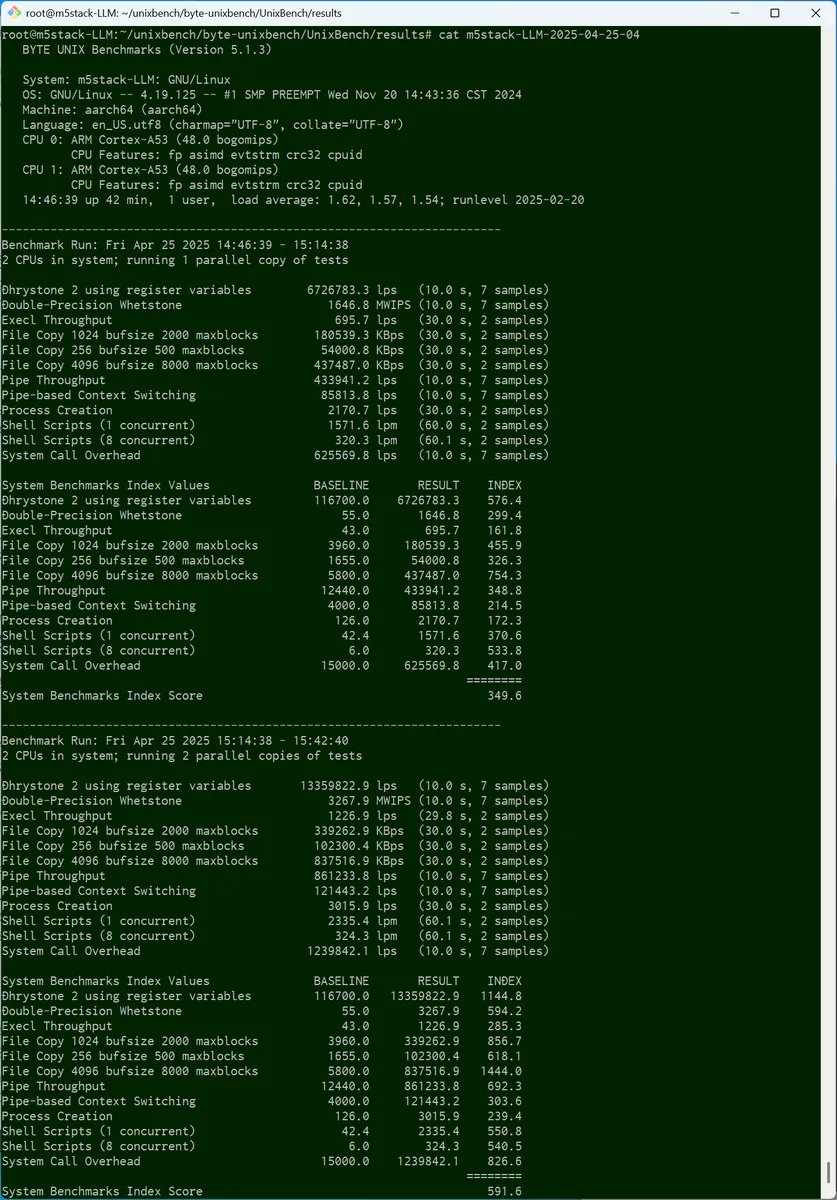
Module-LLMでUnixBench走らせてみたらCPUも結構優秀じゃん。ラズパイ2~4あたりの性能があって、メモリも大きいからWordPressとか入れて遊ぶのもよさそう(NPUも活用しないと…😅) #ModuleLLM #M5Stack
3
7
708

25 Jan 2025
ModuleLLM のUnixBench中の温度
やはり、AX630Cが熱くなりますね。( ..)φ
思ったより上がりませんでした(;'∀')
#M5StackLLM
3
259
25 Jan 2025
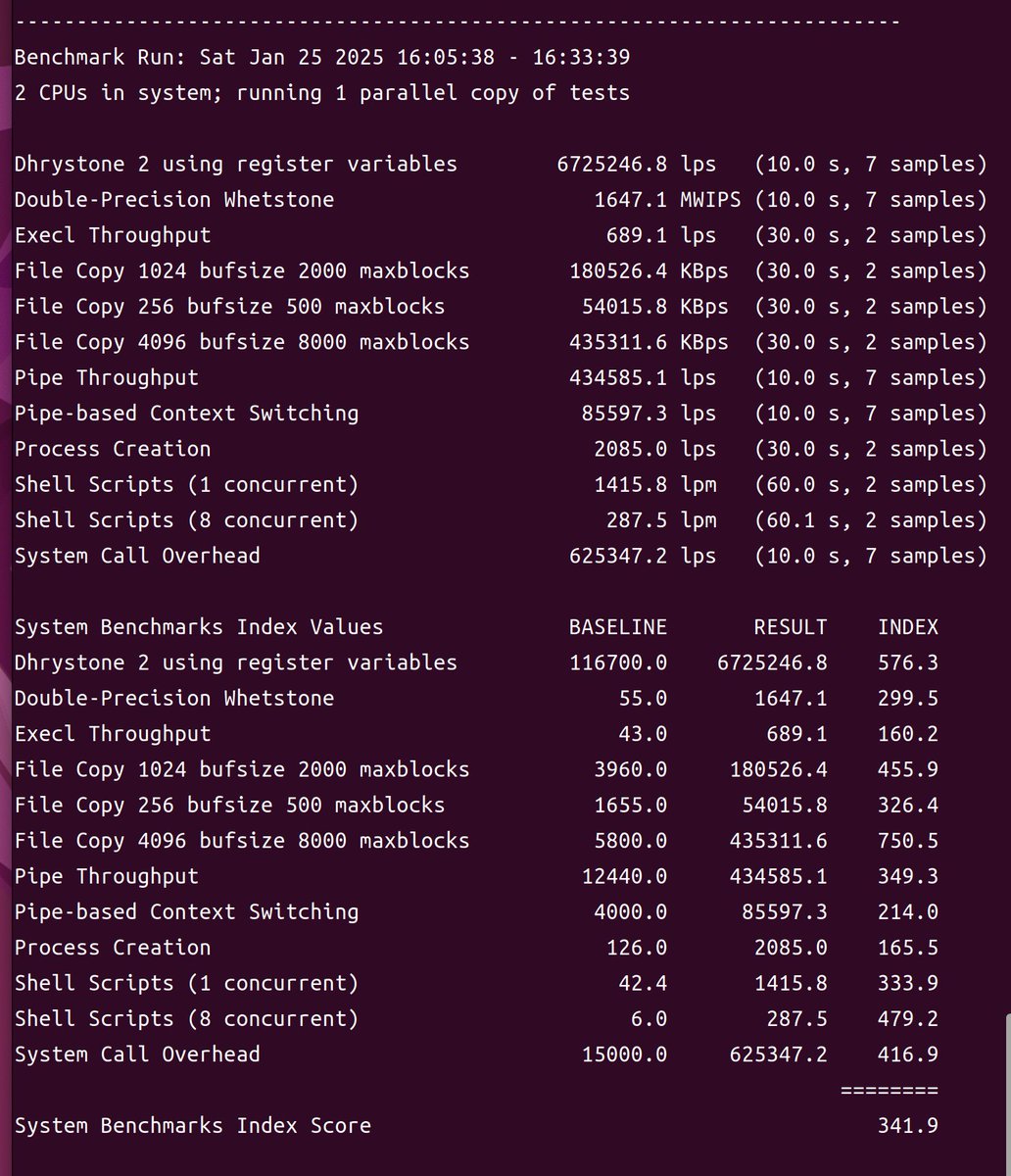
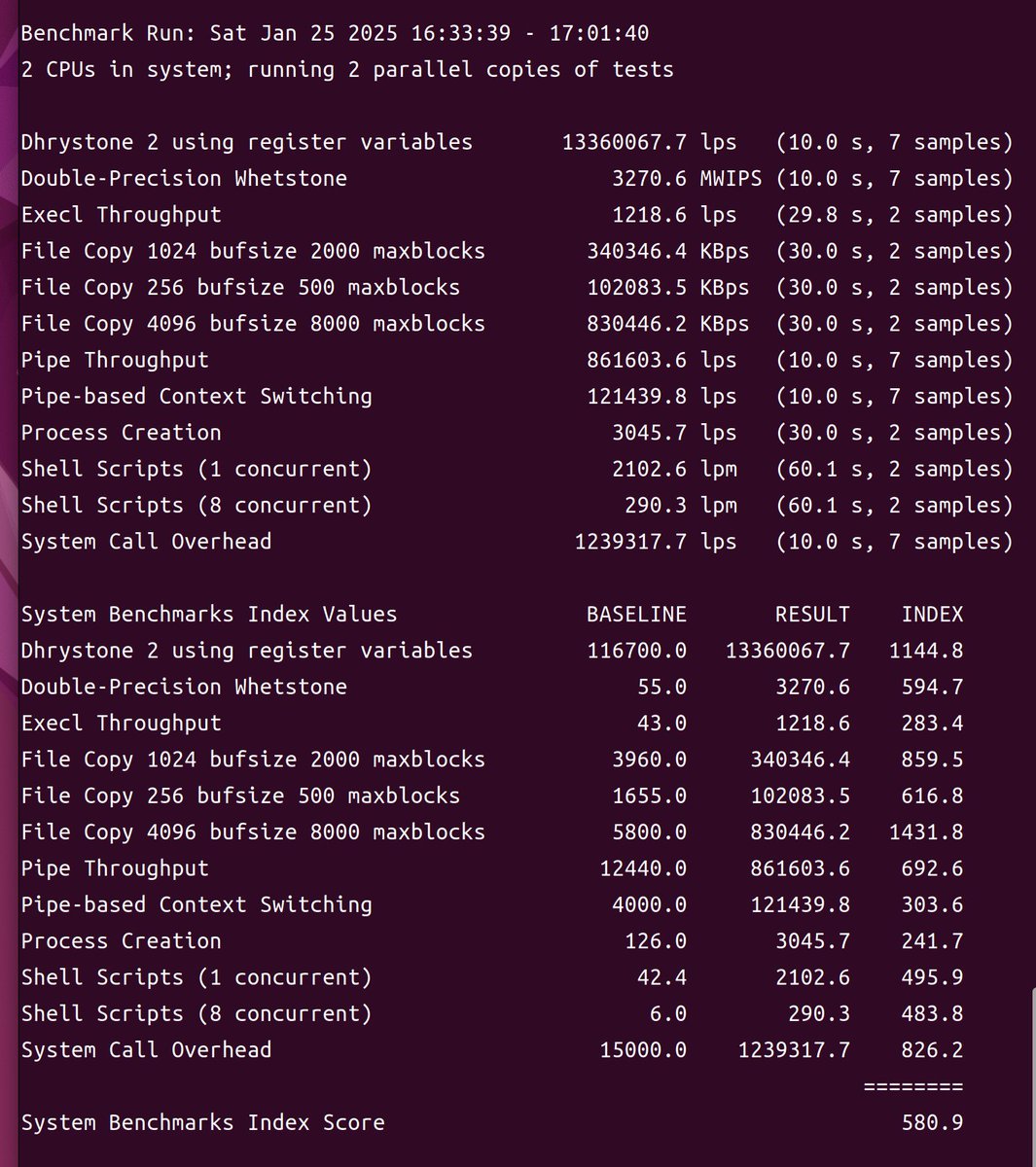
ModuleLLM のUnixBenchの結果
温度はMAX 40.2℃でした( ・ω・)
CPUだけだけど、、、ラズパイ3よりより速い感じですかね('ω')
#M5StackLLM #M5Stack
1
6
345
25 Jan 2025
見送り中に思いついたので、、、
ModuleLLMでUnixBenchを動かしてみる('ω')
#M5StackLLM
raspberrypi.mongonta.com/f35…
1
10
749
27 Oct 2024
記事を投稿しました! Radxa X4をUnix-benchでRPi5と比較 [unixbench] on #Qiita qiita.com/yoshiki9636/items/…
1
9
239

4GB安売りのお知らせ😌 1万円を超えたら、レッドオーシャンの vs ミニPC-N100 との戦いが待っている?😅
例えば↓は”サイズほぼ同じ" , ケース/FAN付き, メモリ12GB で、"性能が約2倍(UnixBench)"。
改めて【Raspberry Pi 5で何をしたいのか?】が問われていると推察😌
amazon.co.jp/dp/B0DGT3TJLD/
24 Oct 2024

📢ブログ公開 記事連動でラズパイ5 4GB版セール中!
「Raspberry Pi 5 4GB vs 8GB:どちらを選ぶべき?」
大は小を兼ねる?兼ねなくてもコスパで選ぶのアリかもよ!気になるAI Kit使用時のメモリ使用量見ています👨🔧
今ならセール中でーす🫶
switch-science.com/blogs/mag…
3
472


9 Oct 2024
qiita.com/fmlorg/items/e3370…
Track A 10:10- "シェルとPerlの使い分け〜"スライド p.27-29 "コンピュータ価格の変遷"部分だけをqiitaの記事にしました。脚注はYAPC版の10倍増くらい? 用語(new) おまけ/こぼれ話(new)
姉妹編:コンピュータの速度の変遷(unixbench)の記事もぜひ
#yapcjapan #yapc_a
7
923

9 Oct 2024
ゲームのフレームレートよりもこういったベンチマーク結果の方が参考になる。理想はLinuxのUnixBenchだが。
9 Oct 2024

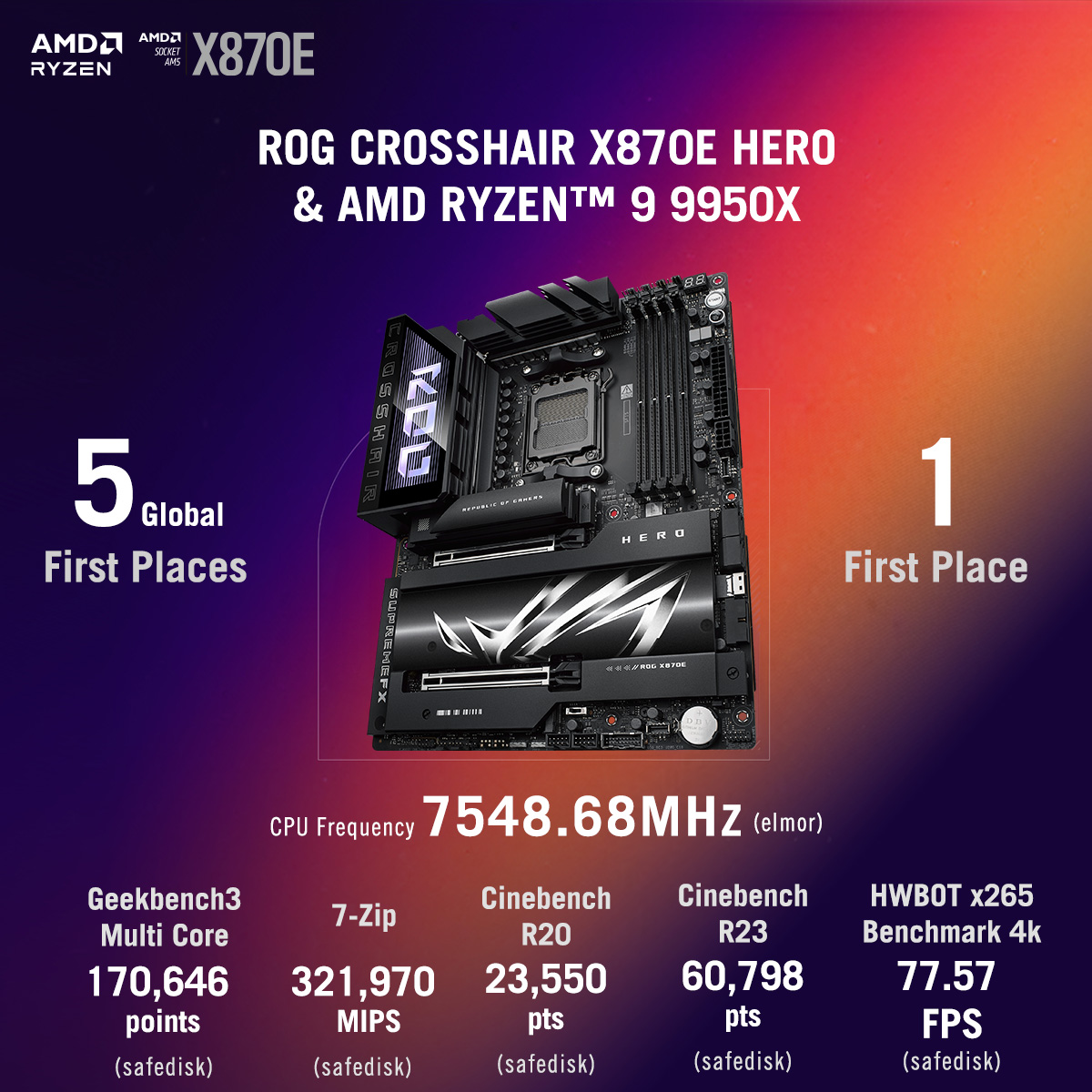
ROG オーバークロック 世界記録達成!
AMD Ryzen 9 9950X搭載【ROG Crosshair X870E Hero】が、CPU周波数にて7.54GHzの1位を獲得!同時に5つのベンチマークテスト全て1位ゲット!
👉🏼ROG Pulse: rog.gg/Pulse
👉🏼デモ・ライブストリーム:rog.gg/X870E-LIVESTREAM
2
5
4,289

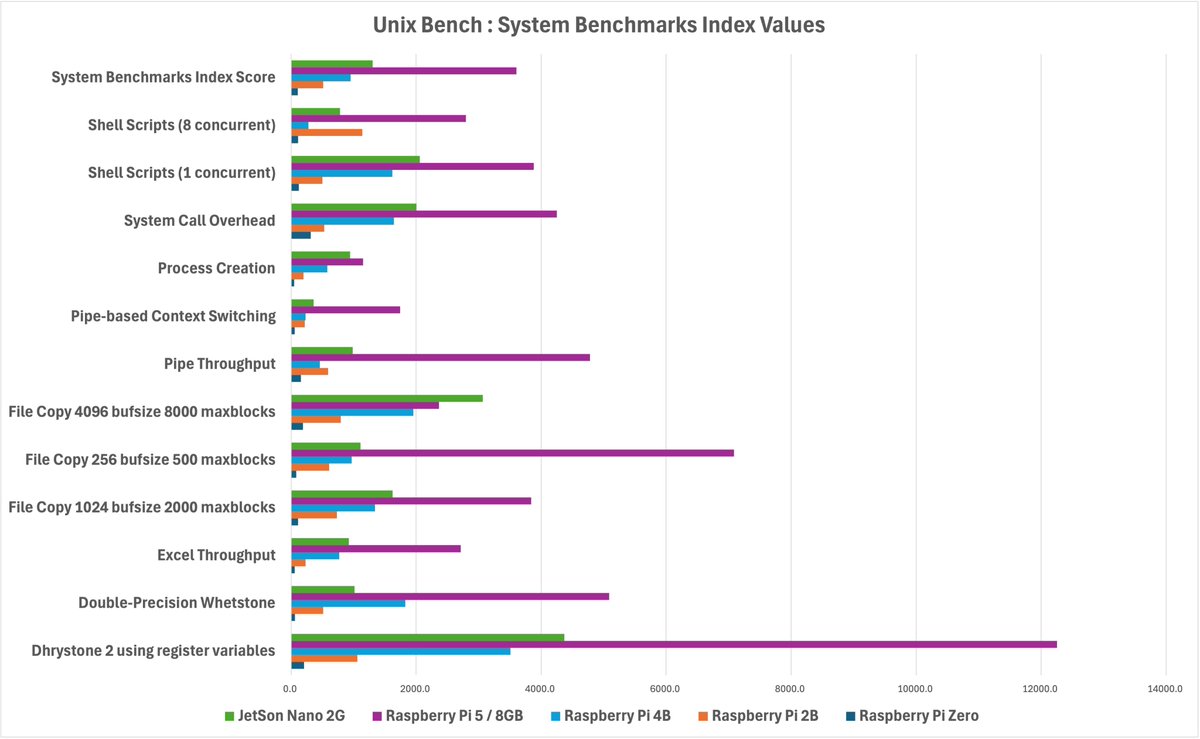
RaspberryPi Zero,2B,4B,5 と JetSon Nano のベンチマーク(RasPi 3Bだけ手元になかったのでスキップ)。
RaspberryPi5/M.2 NVMeの圧倒的なパフォーマンス。
4096byteの書き込みだけJetSon Nanoが上回っていますが…この差はデカイな〜
ベンチは UnixBench 5.1.3 で実行
#RaspberryPi #Jetson
4
188
21 Aug 2024
Raspi4(同一ハード)で 32bitOSと64bitOSのどちらが速いのか。宿題事項になっていたのでUnixBenchで試す
32bitOS(ARMv7)が有利な理由:ポインタイサイズが32bit(4byte)で命令フェッチやキャッシュ効率が良い
64bitOS(ARMv8)が有利な理由:仮想メモリが広いので仮想メモリ効率が良い
気になる結果は→
1
2
231

15 Jun 2024
尚VPS比較.comでは元々はUnixBenchを使ってたのですが、100を超えるプランを契約しベンチマークするには処理時間がかかりすぎていたので、GeekBenchに移行した経緯があります
「UnixBenchとは」
vpshikaku.com/unixbench/
どのベンチマークツールが良いかは状況により変わります
2
474
10 May 2024
ベンチマーク(UnixBench)も一応取ってみたら、22.04よりだいぶ悪化。これも改善するまで使えなそうです
・シングルCPU 1724.0→1062.0
・マルチCPU 4525.5→2837.6
3
232