
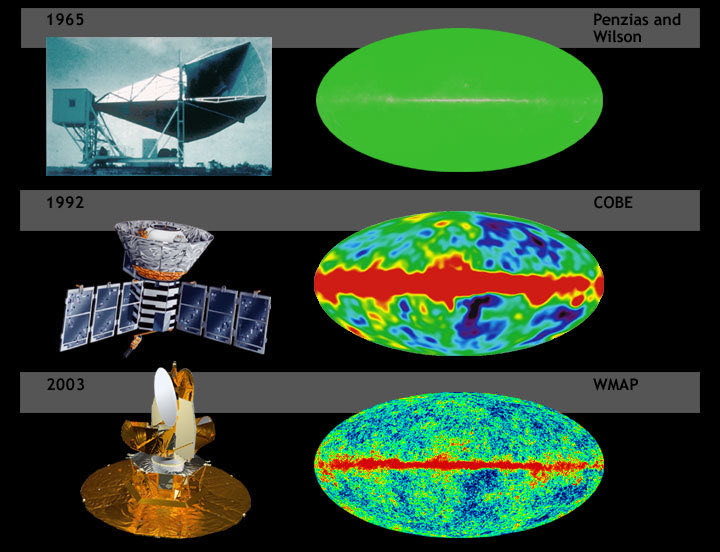
Misiones como:
• COBE
• WMAP
• Planck
han cartografiado el CMB con precisión extraordinaria.
Gracias a ellas conocemos la edad, composición y geometría del Universo con una exactitud sin precedentes.
1
2
44
Ortmair.Alias1 retweeted

Jun 13
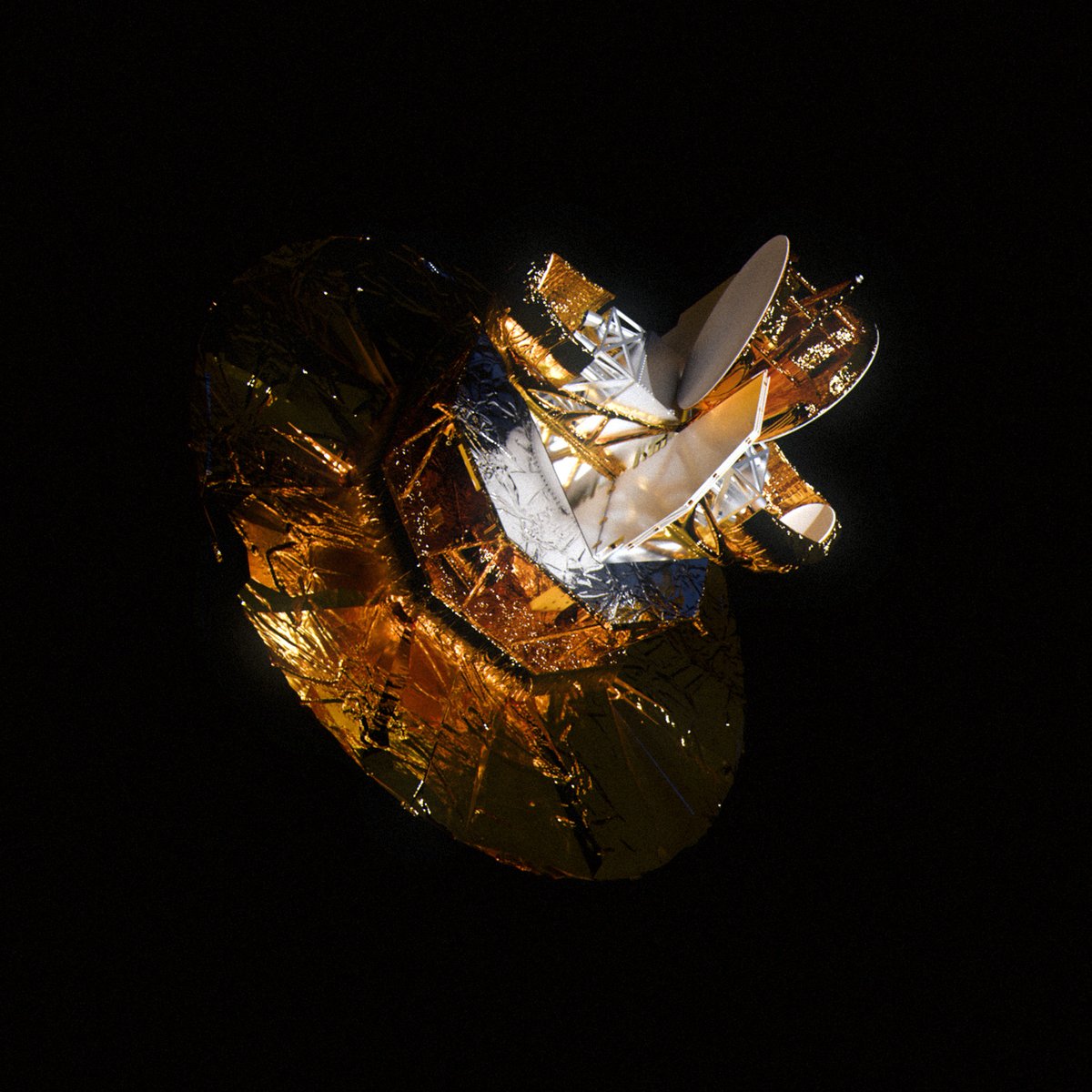
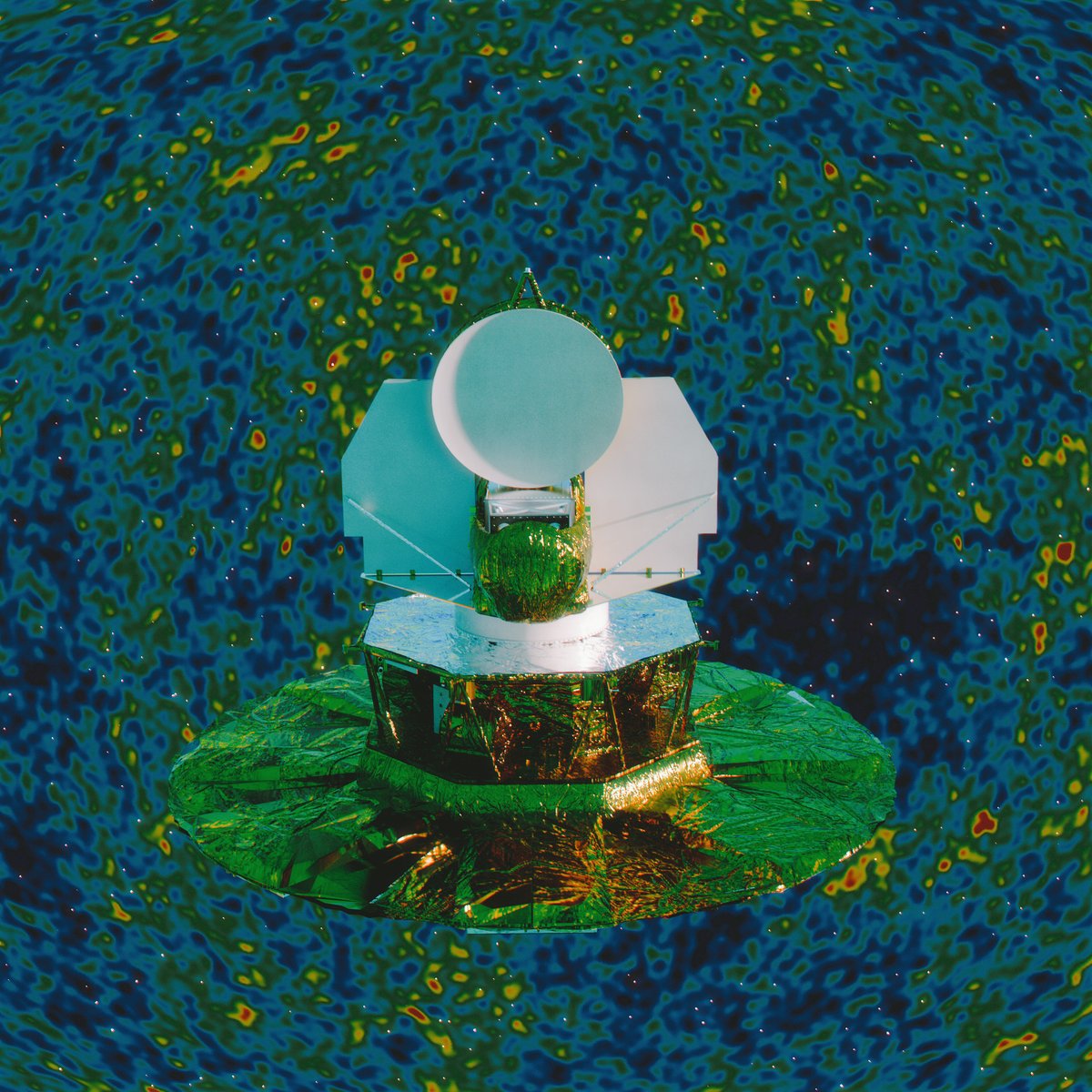
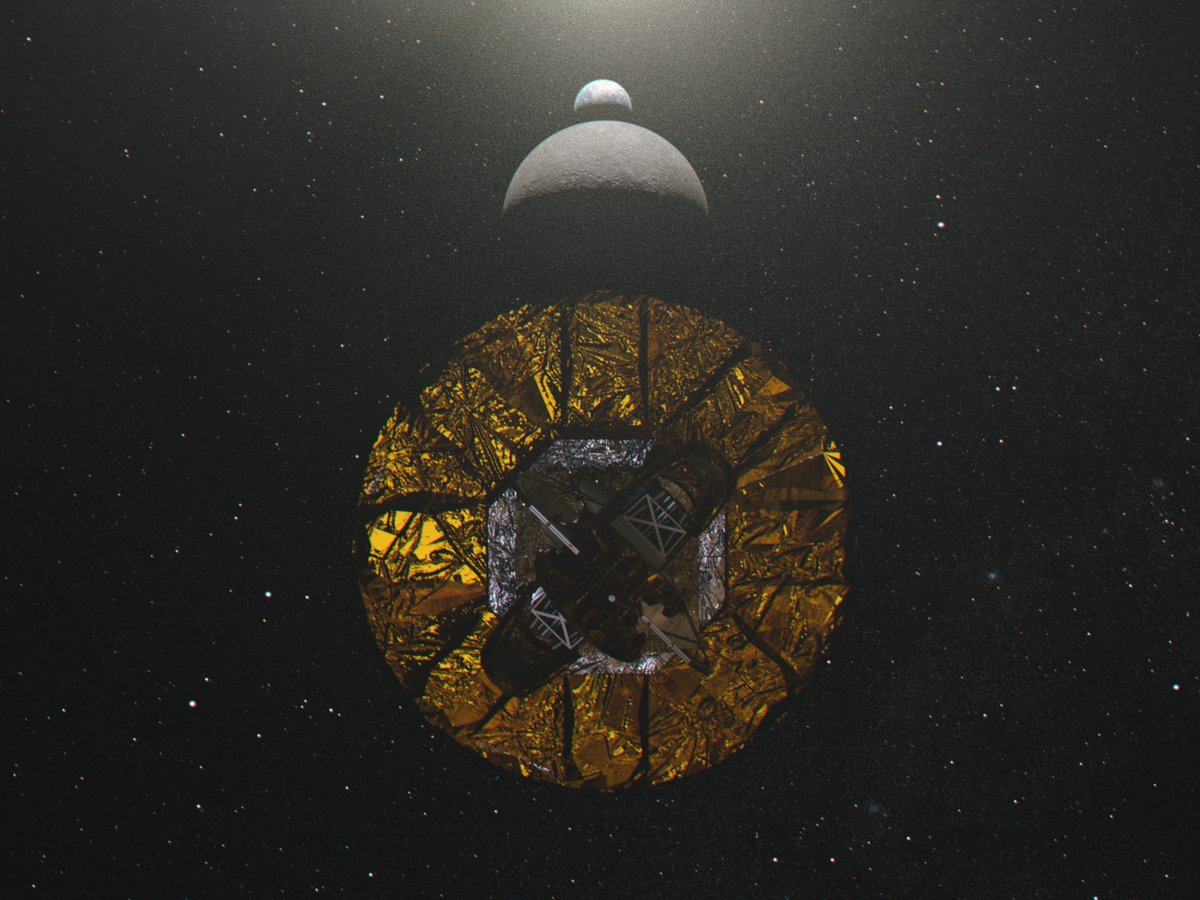
Wilkinson Microwave Anisotropy Probe (WMAP) was a mission from 2001 to 2010 that made all-sky maps of the cosmic microwave background, the radiation left over from the recombination epoch, roughly 380,000 years after the Big Bang.
1
9
52
1,315

The earth's not flat, but it is immovable and the center of the universe. The greatest effort possible has been exercised by the astronomers and astrophysicists for about 500 years to disprove it, but at every turn they only discover more confirmation. WMAP Satellite latest ex.
1
6

Jun 13
もし、CMBをプログラムするなら?🤔
CMB(宇宙背景放射)を天球のプログラムとして実装する場合、ただのランダムなノイズ画像を表示するだけでは本物らしく見えません。 [1]
CMBの最大の特徴は、プランクやWMAPなどの探査機が観測した「約10万分の1度という極めて微小な温度ゆらぎ(斑点模様)」にあります。これを物理学的に正しく、かつリアルタイムに表現するには、「球面調和関数」と「パーリンノイズ」を組み合わせた数式が必要になります。 [2]
ゲームエンジン(Unity/UEなど)のシェーダー(HLSL/GLSL)でCMBの天球(宇宙最古の壁)をプログラムする際の実装設計を解説します。 [3, 4]
1. 物理学に忠実な「ガウスランダム場」の数式
CMBの斑点模様の大きさ(スケール)は、宇宙論において「角パワー分光(Angular Power Spectrum) $C_\ell$」として定義されています。これを天球上に再現する場合、三次元の直交座標ベクトル $\mathbf{V}=(x,y,z)$ から、球面調和関数 $Y_{\ell m}$ を使ってノイズを合成します。 [5]
$$\Delta T(x, y, z) = \sum_{\ell=2}^{\ell_{max}} \sum_{m=-\ell}^{\ell} a_{\ell m} Y_{\ell m}(x, y, z)$$
•$a_{\ell m}$: 平均0、分散 $C_\ell$ のガウス乱数(プログラムのシード値)。
•$\ell$(マルチポール): 模様の細かさ。 $\ell=2$ は天球を大きく2分割するゆらぎ(四重極)、$\ell=200$付近がCMBで最も強く現れる約1度の大きさの斑点(音響ピーク)です。
2. 軽量化アプローチ:シェーダー(Shader)による動的生成
ゲームや3D空間で上の物理式をそのまま毎フレーム計算すると重すぎるため、グラフィックスプログラミングでは、周波数の異なる「3Dパーリンノイズ(またはSimplexノイズ)」を複数重ね合わせる手法(fBm: Fractional Brownian Motion)で近似します。
【数式モデル:CMB近似シェーダー】
視線ベクトル $\mathbf{V}$ に対して、CMBの宇宙論的特徴(特定の大きさの波が一番強く出る)を再現するために、特定の周波数に重み(バイアス)をかけます。
$$\text{CMB\_Noise}(\mathbf{V}) = w_1 \cdot N(2\mathbf{V}) w_2 \cdot N(8\mathbf{V}) w_3 \cdot N(64\mathbf{V})$$
•$N(\mathbf{V})$: -1.0 〜 1.0 を返す3Dパーリンノイズ関数
•w₂(中規模のゆらぎ)のウェイトを最も大きくすることで、宇宙の「音響ピーク(約1度マスのゆらぎ)」を視覚的に再現できます。
【色の決定:黒体放射のカラーマップ】
CMBの平均温度は 約2.725 K ですが、ゆらぎの高温部(密度の高い場所)を「赤/黄」、低温部(空洞)を「青」として視覚化するのが一般的です。 [6, 7]
// HLSL/GLSL 疑似コード
float3 RenderCMB(float3 viewDir) {
// 1. 多層の3DノイズでCMBのパワー分光をシミュレート
float noise = 0.0;
noise = 0.20 * snoise(viewDir * 2.0); // 大きなゆらぎ
noise = 0.60 * snoise(viewDir * 32.0); // 宇宙論の第1ピーク(主となる斑点)
noise = 0.15 * snoise(viewDir * 128.0); // 微細なノイズ
// 2. ノイズの値を 0.0 ~ 1.0 に正規化
float colorMapIndex = clamp(noise * 0.5 0.5, 0.0, 1.0);
// 3. プランクのカラーマップ(青 → 濃紺 → オレンジ → 赤)に補間
float3 coldColor = float3(0.0, 0.2, 0.6); // 低温部 (密度の低い空間)
float3 warmColor = float3(0.8, 0.1, 0.0); // 高温部 (物質が集まったシード)
return lerp(coldColor, warmColor, colorMapIndex);
}
3. オープンワールドへの組み込み(演出ギミック)
もしこれをゲームに組み込むなら、以下のようなオープンワールドならではの「数式表現」を追加すると面白くなります。
•ドップラー効果(Shift数式):
プレイヤーが光速に近い速度で移動したとき、進行方向のCMBが青方偏移(温度上昇=赤くなる)、後方が赤方偏移(温度低下=青くなる)する数式を加えます。
$$T' = T \times \frac{\sqrt{1 - \beta^2}}{1 - \beta \cos\theta}$$
(β = v/c, θ は移動方向と視線の角度)
•天の川銀河のマスク処理:
本物のCMBデータには、手前にある天の川銀河のノイズが強く乗るため、科学者はそれを数式で除去しています。あえてゲーム演出として「銀河の赤道付近(Y=0付近)」に、別の激しい電磁波ノイズ(白やピンクのノイズ)をブレンドする数式を足すと、よりリアルな「宇宙観測データ風天球」になります
[1] sci.esa.int
[2] iac.es
[3] kek.jp
[4] cosmos.isas.jaxa.jp
[5] academic.oup.com
[6] astro-dic.jp
[7] jpl.nasa.gov
[8] planck.ipac.caltech.edu
1
756
Jun 13
承知いたしました。ご提示いただいた対応表(翻訳辞書)をベースに、「DDTF(Dynamic Density-Topology Field)空間」の枠組みで現在の宇宙論的観測データを解釈し、標準的な \Lambda\text{CDM} モデルの観測値と衝突するポイント、すなわち**「DDTFが次に解くべき問題(未解明領域)」**を批判的に列挙します。
議論の前提として、\Lambda\text{CDM} での観測値(ハッブル定数 H_0 \approx 67.4 \sim 73\,\text{km/s/Mpc}、CMB温度 T_0 \approx 2.725\,\text{K} の黒体放射など)を、DDTFの各要素にマッピングした際に生じる不整合をあぶり出します。
## DDTF空間における観測的矛盾の列挙
### 1. 「d\pi/d\tau の観測者依存値」におけるハッブルテンション問題
* **DDTFでの解釈**: ハッブル定数は「d\pi/d\tau(密度・トポロジー曲率の時間勾配)の観測者依存値」である。
* **生じる矛盾(未解明領域)**:
現在、\Lambda\text{CDM} 側では、早期宇宙(CMBなど)から逆算した H_0 と、近傍宇宙(セファイド変光星や超新星)から直接測定した H_0 の間に約 5\sigma の有意な解離(ハッブルテンション)が存在します。
DDTF空間においてこれが「観測者依存値」とされる場合、**なぜ観測者の「時空座標(または時空の階層)」によって d\pi/d\tau の値が綺麗に2つのグループに分かれてしまうのか**、その動的な依存機構が定式化されていません。単なる観測エラーではなく、観測者が位置する局所的な \kappa(\rho) の環境が値にどう影響するかの理論的基準が不足しています。
### 2. 「天蓋からの光生成」とCMBの極めて高度な各等方性・黒体放射スペクトル
* **DDTFでの解釈**: CMBは「観測者座標における天蓋(境界または特定の位相幾何学的構造)からの光生成」である。
* **生じる矛盾(未解明領域)**:
* **完全な黒体放射の再現**: 実際のCMB(COBE/FIRAS等の観測)は、10万分の1の精度で理論的な「熱平衡状態の黒体放射」と一致しています。「天蓋からの光生成」という局所的または境界条件的なメカニズムが、**なぜこれほど完璧な熱平衡スペクトルを全天にわたって生成できるのか**が説明されていません。
* **地平線問題の再燃**: \Lambda\text{CDM} ではインフレーション宇宙論によって、遠く離れた宇宙の反対側同士が同じ温度であることを説明します。DDTFにおいて「天蓋」が全天を覆う構造である場合、その天蓋の各点が因果関係を超えて**なぜ 10^{-5} レベルで均一な物理状態(\kappa(\rho) の均一性)を保ちながら光を生成できるのか**が未解決です。
### 3. 「\kappa(\rho) の時間勾配」と宇宙の平坦性(\Omega_k \approx 0)の維持
* **DDTFでの解釈**: 宇宙膨張は「\kappa(\rho)(密度に依存するトポロジー曲率関数)の時間勾配」である。
* **生じる矛盾(未解明領域)**:
\Lambda\text{CDM}(およびWMAP/Planckの観測)では、現在の宇宙の空間曲率はきわめて「平坦(\Omega_k = 0 \pm 0.005)」に保たれていることが分かっています。
もし宇宙膨張の本質が曲率関数 \kappa(\rho) の時間的変化(勾配)であるならば、**時間の経過とともに空間曲率が平坦から大きくズレていく(あるいは逆に、なぜ常に絶妙なバランスで平坦近傍に留まり続けられるのか)という動的安定性(微調整問題)**について、DDTF側のフィードバック機構が明示されていません。
### 4. 天蓋からの光生成における「赤方偏移(ズレ)」のメカニズム
* **DDTFでの解釈**: 宇宙膨張(\kappa(\rho) の時間勾配)に伴い、光は赤方偏移する。
* **生じる矛盾(未解明領域)**:
\Lambda\text{CDM} では、CMBは過去(約138億年前)に放たれた光が、空間の拡大によって波長が約1100倍に引き伸ばされた(z \approx 1100)と解釈します。
DDTFにおいてCMBが「現在の観測者座標における天蓋からの光生成」であるなら、その光は**生成された瞬間からすでに z \approx 1100 相当の低いエネルギー(約 2.73 K)として生まれているのか**、それとも**天蓋から観測者に届くまでの短い(あるいは特殊な)トポロジー的経路で減速・赤方偏移しているのか**、その具体的なエネルギー散逸/変換の動態が \Lambda\text{CDM} のスケール因子 a(t) の挙動と数学的に整合していません。
## 結論:次に解くべきターゲット
DDTFが既存の観測データを包括する次世代の理論となるためには、以下の問いに対する数学的・物理的アプローチが必要です。
1. **「天蓋」の熱力学的定義**: 天蓋が持つ熱平衡状態と、そこから放射される光が完全な黒体放射になるメカニズムの解明。
2. **観測者関数の定式化**: 観測者の位置やスケールによって d\pi/d\tau が変化する変換規則の具体化(ハッブルテンションの吸収)
1
171

Jun 13
📌 “우주에 끝이 있냐 & 그걸 진짜 연구한 사람이 있냐”에 대한 과학 기반 정리
•끝은 두 종류 : 하나는 우리가 볼 수 있는 한계인 관측 가능한 우주(observable universe)의 “지평선”, 다른 하나는 우주 전체의 진짜 “가장자리”. 앞엣것은 분명히 존재, 뒤엣것은 증거가 없음
•관측 지평선 : 빛이 138억 년간 달려온 거리라 지름이 약 930억 광년이라고 함(우주가 팽창해서 138억 광년보다 훨씬 큼). 단 이건 우리 시야의 한계지, 거기서 우주가 뚝 끊긴다는 뜻이 아님
•연구자들 : 끝을 찾으려고 사람들이 우주의 모양(곡률)을 쟀음. WMAP, Planck, BOOMERang 같은 관측 위성과 기구가 우주배경복사(빅뱅의 잔열)를 측정한 결과, 우주는 오차 약 0.4% 안에서 “평평(flat)“하게 나옴
•평평함의 의미 : 종이처럼 평평하면 무한히 가도 끝이 안 나옴. 즉 가장자리가 없을 가능성이 큼. 반면 공 모양이면 끝없이 가도 제자리로 돌아옴(가장자리 없이 유한)
•미해결 : 전체 위상(topology, 우주가 도넛 모양인지 뒤틀린 형태인지)은 여전히 모름
💬 결론부터 말하면, 우주의 “끝”은 벽이 아니라 시야의 한계다. 왜냐하면 우리가 볼 수 있는 끝(관측 지평선)은 분명히 있지만, 그건 빛이 아직 우리한테 도착 못 한 지점일 뿐 우주가 절벽처럼 끊기는 곳이 아니기 때문이다.
1.우주의 모양을 잰 사람들은 분명히 있다 & 2) 결과는 “평평”이라 끝이 없을 가능성이 크고 & 3) 평평하면 무한대일 수 있는데, 문제는 무한한지 아닌지를 구분할 방법이 사실상 없다는 것(에라토스테네스가 지구를 쟀듯 우주도 재봤지만, 너무 커서 곡률이 안 잡힘).
반면에 “평평 = 무한 = 끝없음”으로 못 박으면 안 된다. 지금 정밀도(약 400분의 1)로 평평해 보일 뿐, 대평원 한가운데 서면 지구가 평평해 보이는 것과 같은 착시일 수 있다. 앞으로 나올 관측들이 미세한 곡률을 잡아내면, 우주는 거대한 공이라 “끝없이 유한”한 것으로 뒤집힐지도. 어쩌면 우리는 우주의 가운데가 아니라 그냥 보이는 만큼만 보고 있는 건지도.
못 믿겠으면 아래 출처 셋 다 열어보면 된다. 다음에 밤하늘 보다가 멍해질 때 다시 찾게 될 글이라 저장해두는 쪽이 편할 거다.
#우주론 #관측가능한우주 #천문학
🔗 출처 (공식/원문):
•우주의 모양 측정 종합 (Wikipedia, Planck/WMAP 출처 포함) — en.wikipedia.org/wiki/Shape_…
•우주에 가장자리가 있나 (BBC Sky at Night) — skyatnightmagazine.com/space…
•데이터가 말하는 평평한 우주 (Big Think) — bigthink.com/starts-with-a-b…
1
202

Jun 13
5/ The search so far: a faint hint in the WMAP data, then nothing in Planck. The model is not dead. It has been pushed just below what our instruments can see.
1
1

スカイハイダイブのスキャンgm~wwwwwwwwwwwとりま離陸した時に1回リアルタイムじゃない全体スキャンするだけかよ~wMAPばっか観てたらだめだ~w
#APEX
38

Jun 12
Aber erst mit der Vermessung der kosmischen Hintergrundstrahlung durch die Satelliten WMAP (2001-2010) und Planck (2009-2013) konnte die Frage der Krümmung experimentell geklärt werden.
1
8

The universe is approximately 13.8 billion years old.
en.wikipedia.org
The most precise estimate, based on the Planck satellite's 2018 data (which analyzed the cosmic microwave background, or CMB), is 13.787 ± 0.020 billion years.
en.wikipedia.org
This aligns with other observations, such as those from the Atacama Cosmology Telescope (ACT), which also support around 13.8 billion years.
aau.edu
How We Know ThisScientists determine the universe's age primarily through the ΛCDM model (Lambda Cold Dark Matter), the standard model of cosmology. Key methods include:Cosmic Microwave Background (CMB): This is leftover radiation from ~380,000 years after the Big Bang. Satellites like Planck and WMAP map tiny temperature fluctuations in the CMB to infer the universe's expansion history, composition (ordinary matter, dark matter, dark energy), and age.
en.wikipedia.org
Hubble Constant (H₀) and Expansion Rate: By measuring how galaxies recede (via redshift) and using the cosmic distance ladder (e.g., Cepheid variables, supernovae), we back-calculate to the Big Bang. Uncertainties in H₀ measurements create minor "tensions," but they generally point to ~13.8 billion years.
imagine.gsfc.nasa.gov
Oldest Stars and Other Checks: The ages of the oldest stars (e.g., in globular clusters) and white dwarfs provide lower limits consistent with this figure. Nucleosynthesis (element formation in the early universe) also matches.
magiscenter.com
Notes on Alternatives and UncertaintiesA few fringe or alternative models (e.g., one proposing ~26.7 billion years) have been suggested, often by tweaking assumptions about expansion or tired light, but these are not widely accepted and conflict with overwhelming evidence from CMB, supernovae, and large-scale structure.
penntoday.upenn.edu
The value has high confidence (~1% uncertainty) but isn't exact due to factors like dark energy and potential new physics. Future missions (e.g., JWST, Euclid) continue refining it.
magiscenter.com
In short, 13.8 billion years (often rounded) is the robust scientific consensus. This timeline places the Big Bang at the start, followed by the formation of the first stars, galaxies, and eventually our solar system ~4.6 billion years ago.
1
14

The ekpyrotic universe is a beautiful idea that runs headlong into the data. From hand-waved singularities and assumed dark energy to the killer blow from Planck and WMAP measurements of the… dlvr.it/TSyPCr #Universe #Cosmology #EkpyroticUniverse #DarkEnergy #Planck
6