

talking about narratives and how they impact a player but ur calling me a terrible prob based on 1 map. I dont know ur name so im assuming u werein mcdonalds low or not playing yrs ago. Did you go back and watch old vods or doing the same narrative spewing youre complaining about
1
15

Jun 11
i remember when me and my buddy werein soap squirt class together.....struggling with the Bottle Test.........ahhh good times
2
41

Jun 11
If you werein a coma for a year & your husband didnt have a fire and aband and aletter and wasnt crying when you woke? If he lost the house or was in debt 200k it would be a problem. If the roles were reversed? All he would ask is if you slept with anyone. We are not the same.
1,381

Jun 10
im so pissed bc there was these annoying ass teenage boys in my theartre who when we came in werein our seats than they moved to a diff row (obviously didnt pay to be there) than were vaping n on their phone the whole time and left halfway through yelling the movie sucked
44

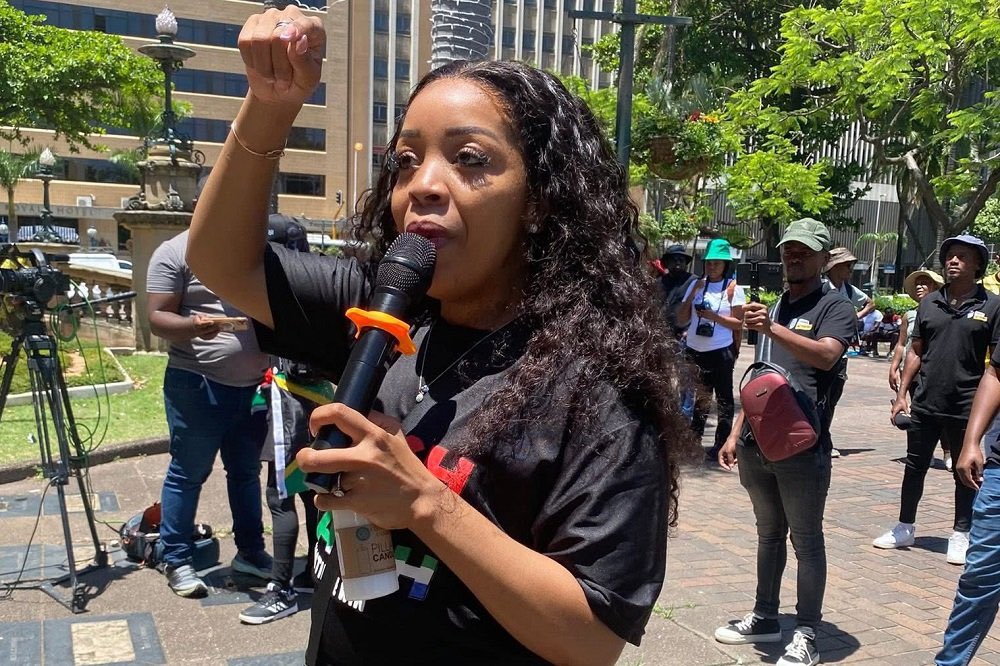
You wish you werein her shoes. She single handedly held all Governments in All of African accountable of their Citizens who have become refugees in other countries, BORDER CONTROL including ports Control. This Lady is bigger than AU and UN all together.
5
203
You wish you werein her shoes. She single handedly held all Governments in All of African accountable of their Citizens who have become refugees in other countries, BORDER CONTROL including ports Control. This Lady is bigger than AU and UN all together

3
34


May 28
-Jessica I'm not discussing your sexual history. I don't know it and I don't care to. I'm discussing the concept you laid out werein men misrepresent themselves to women to get sex.
-Yes
-Wait to have sex? Oh no. I simply choose men for serious relationships who are interested in serious relationships.
-Yes that's why I'm saying you're not built for it. You're not good at discerning intention.
3
1
93
4,309


May 22
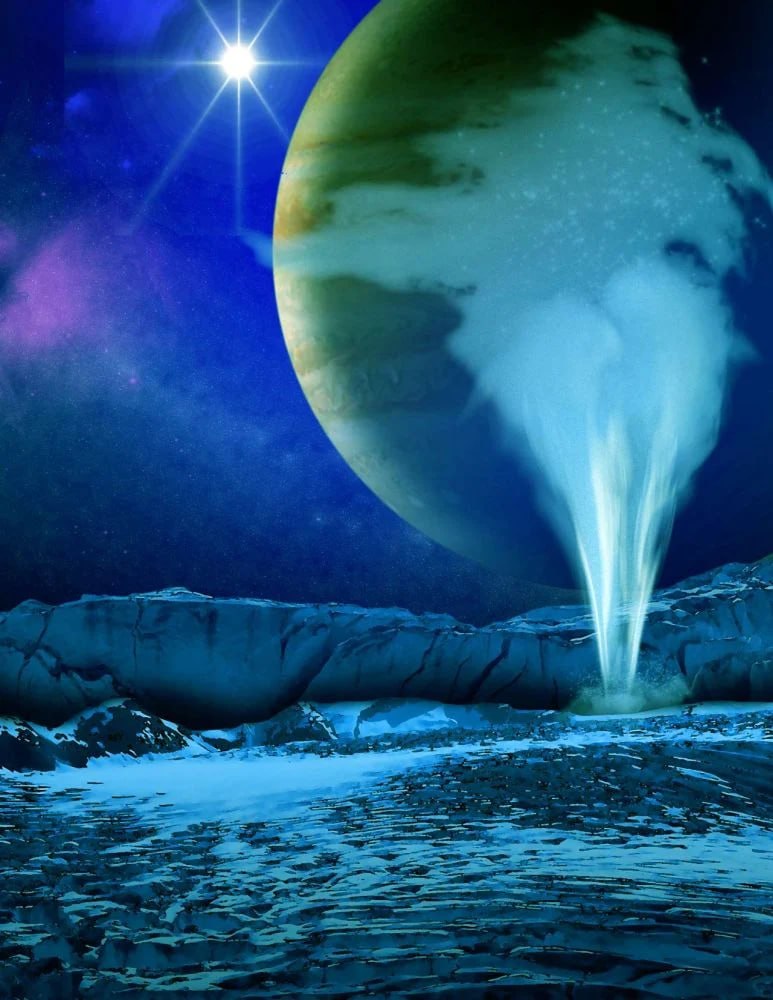
Europa's Geysers That Never WereIn 2014, planetary science got one of its biggest thrills in years. A team using the Hubble Space Telescope announced they had spotted towering plumes of water vapor erupting from Europa, Jupiter’s icy moon — jets reaching up to 200 kilometers high, blasting out from beneath a frozen crust. It was an electrifying image: a hidden ocean actively venting into space, like a cosmic invitation to explore. Two years later, another group appeared to independently confirm the geysers. The discovery became a cornerstone for NASA’s ambitious Europa Clipper mission, now scheduled to arrive in the Jupiter system around 2031, with one of its key goals being to fly through and sample these plumes.Then came the plot twist.The same scientist who led the original 2014 study — Lorenz Roth — has now led a comprehensive reanalysis that essentially retracts the famous discovery. After carefully reviewing 14 years of Hubble’s STIS spectrograph observations of Europa, the team realized the “plumes” were an illusion created by a subtle but critical technical error.The original detection hinged on bright emissions of hydrogen (in the Lyman-alpha line) and oxygen — the building blocks of water. But the team had slightly miscalculated Europa’s exact position in the Hubble images — off by just a couple of pixels. That tiny shift was enough to create false signals of localized bursts near the south pole.Making matters worse, earlier analyses hadn’t properly subtracted the noisy background: Earth’s own extended hydrogen atmosphere and Europa’s faint hydrogen exosphere. Once these were correctly accounted for and the positioning was fixed, the dramatic plume signatures vanished across all the data.The result? No evidence of intermittent geysers.Interestingly, the new work wasn’t entirely disappointing. It revealed something real and valuable: Europa possesses a stable, permanent hydrogen exosphere, constantly replenished by the sputtering of its icy surface.The good news is that Europa’s subsurface ocean is not in doubt. Strong tidal heating from Jupiter and multiple lines of indirect evidence still point to a vast, salty ocean beneath the ice. We just won’t have easy access to it through active plumes.Instead of sampling ocean material from space as hoped, the Europa Clipper will have to work harder — getting close to the surface, analyzing the ice, and searching for other signs of habitability. Its arrival in the early 2030s will deliver the final, authoritative verdict.Sometimes the universe keeps its secrets a little better than we thought.
3
10
37
3,957

May 20
I do believethat his Handlers,,ie 🇮🇱 sen govminister pressed hard for this specific target knowing prisoners of war werein thevicinity US/UK,,ofcourse this NEVER getsmentioned☠️☠️☠️☠️☠️
2
34


Apr 10
Werein Kopftuch trägt der gibt damit zu erkennen, dass er meine Art zu Leben nicht anerkennt folglich werde ich sie auch nicht anerkennen.
4
50

ABSOLUTELY they have no business in our government, if I werein Iran and spewed hate for Iran like they do for America, I would not be Alive to respond to this post...
1
2
36

Didnt trump say serbia and kosovo werein the middle east. lol...
2
91

Apr 1
i genuinely thought they werein their 60s late 50s bro …😢😢😢😢😢its ok ill make them like that in my pc dol lore
7
552

Mar 31
he said he was looking for me and to meet him in the training area and then he said he wants to train with me from now on cause my odm gear looks worn down and “i’ve been training solo too much” #werein 🫦
Mar 30

i’m playing aot 2 on my switch lite, and i’m assuming you can’t make romantic relationships with other scouts, but by god reiner braun i will not stop trying until you are mine
1
9
722



Mar 29
They have been going on since people werein Africa. The people have no common language, no common religion, no philosophy of any sort, no great architecture or works of art. They didn't even have a boat that could get across the straight of Gibralter. They didn't see a mirror until the year 1900. They were at the stone age until 1900. They STILL haven't made a building or bridge over 50m that wasn't built by Asians or Northern Europeans and their descendants. They couldn't even use their own resources. They still can't get water to their own people or dig a well without help from Western countries even though they have plenty of it. They have crime that is unmeasurrable. They have raw sewage running through all their streets even though the Europeans handed them a built society. Every black run country in the world is at the very bottom of the heap.
WHY? And it's not due to colonialism. That's cope. Africa had JUST as much time to develop as the Europeans and Asians and didn't.
They STILL can't function in modern society today by and large.
So what is the disconnect?
1
3
47