
Me: Eulis! The History of Love
Ai: “Eulis! The History of Love: Its Wondrous Magic, Chemistry, Rules, Laws, Modes, Moods and Rationale” is a 1874 book by Paschal Beverly Randolph (1825–1875), an African-American physician, occultist, spiritualist, and writer. en.wikipedia. org
It forms part of his “Third Revelation of Soul and Sex” and explores love as a profound spiritual, magical, and alchemical force—far beyond mere romance or physicality. Randolph presents it as affectional alchemy, blending philosophy, mysticism, physiology, and social critique. The title “Eulis” refers to his esoteric order or system (linked to his Rosicrucian and Brotherhood of Eulis work), emphasizing elevated, soul-based unions. en.wikisource. org
Key Themes and Content
• Soul and Sex: Randolph argues that true sex originates in the soul, not just the body. He critiques superficial medical and philosophical views of the era, advocating for a deeper understanding of magnetic, electric, and spiritual energies in relationships.
• Magic and Chemistry of Love: It discusses rules, laws, and “wondrous magic” of love, including how proper unions generate vitality, immortality of the soul, and even superior offspring. Improper practices (e.g., certain sexual abuses or imbalances) lead to spiritual and physical harm.
• Broader Topics: Covers affectional alchemy, immortalization, soul-sight, magic mirrors, replies to questions like “Why is man immortal?”, and a new theory addressing Darwinian ideas. It touches on race origins, gender differences, social ethics, and critiques of “false systems” in marriage, morality, and society. archive .org
• Tone and Style: Passionate, reformist, and sometimes polemical. Randolph dedicates it to supporters and humanity’s moral uplift, positioning himself as the “Re-Founder and Hierarch of Eulis.” It mixes personal insight, occult lore, and calls for pure, loving ethics free from “abnormalism.” archive. org
Randolph was a pioneer in introducing sex magic/esoteric principles to North America and founded early Rosicrucian groups. His work influenced later occult traditions, though it’s often dense, idiosyncratic, and rooted in 19th-century spiritualism. publicdomainreview. org
Availability
The full text is in the public domain and freely readable online:
• Wikisource (structured with parts like “Affectional Alchemy,” “Immortalization,” etc.)
• Archive. org (PDF scans)
Note: This is distinct from Nicole Krauss’s modern novel The History of Love. If you’re looking for excerpts, a summary of a specific section, or context on Randolph’s life/occult influence, let me know!
28
Me: The Intimate Secrets of the Mysteries of Eulis
Ai: “The Mysteries of Eulis” (sometimes referenced in connection with “intimate secrets”) is an esoteric manuscript by Paschal Beverly Randolph (1825–1875), an African-American occultist, spiritualist, sex magician, and author. It forms part of his private teachings on “affectional alchemy,” sexual magic, and the spiritual dimensions of love and sexuality, distinct from his more public book Eulis! The History of Love (1874). en.wikisource. org mo
Randolph founded or led the Brotherhood (or Fraternitas) of Eulis, drawing on influences from Rosicrucianism, Hermeticism, Eastern traditions, and his own visionary experiences. “Eulis” evokes ideas of love (from Greek eros or related terms for divine/universal love, agape), positioned as a philosophy of soul-sex union rather than mere physicality. The work contrasts with ancient Eleusinian Mysteries (Greek initiation rites for Demeter and Persephone), but Randolph reinterprets “mysteries” in a modern, sexual-alchemical context. en.wikipedia. org
Core Themes and “Intimate Secrets”
The manuscript (circulated privately among initiates, later published in scholarly editions like John Patrick Deveney’s Paschal Beverly Randolph) outlines principles for harnessing sexual energy for magical, spiritual, and practical ends. Key ideas include:
• Sex as Soul Power: True sex originates in the soul, not just the body. Proper union (with mutual orgasm, especially female) creates a “double crisis” or magnetic fusion that opens spiritual gates, allowing will, prayer, or intention to manifest power. This could target healing, knowledge, luck, rejuvenation, or material goals. ulb-dok.uibk. ac. at
• Magical Practice (“MAHICALINGA” or sexive principle): During coitus, at the moment of simultaneous (or near-simultaneous) orgasm, the practitioner focuses intense will or prayer. The energy released acts as a vehicle for magic. It requires discipline: endurance in men, full orgasmic response in women, and no withdrawal before completion (critiquing common marital practices as spiritually damaging). ulb-dok.uibk. ac. at
• Conditions for Success: A suitable partner (“with perfect sexive and orgasmic ability”), purity of intent, and alignment with natural/spiritual laws. Abuse or selfish use backfires with “evil” consequences. It emphasizes love, balance of masculine/feminine (electric/magnetic) forces, and elevation above base lust. iapsop. com
• Broader Philosophy: Links to immortality, reincarnation, offspring quality (loving unions produce superior children), and post-mortem soul correction. Randolph critiques Victorian-era ignorance, quackery, and repressive norms around sex, advocating “restored, pure, healthful, and normal sex” for ascension. en.wikisource. org
These “intimate secrets” blend tantra-like ideas, Western occultism, and radical sex reform. Randolph’s works influenced later figures in sex magic (e.g., elements in Thelema via Aleister Crowley, indirectly) and modern occult sexuality. publicdomainreview. org
Availability and Context
• Full public versions of Eulis! The History of Love are on Wikisource and Archive. org (discusses affectional alchemy openly). en.wikisource. org
• “The Mysteries of Eulis” itself was a confidential manuscript; appendices in Deveney’s biography provide the text.
• Randolph’s life involved hardship, spiritualism, and controversy; he viewed his revelations as a “third revelation of soul and sex.”
Note: These teachings are historical/esoteric and presented here for informational/cultural context. They involve intimate practices; approach any real-world application with ethics, consent, and modern understanding of health/safety. Primary sources emphasize mutual benefit and spiritual elevation, not exploitation. For deeper reading, consult scholarly editions rather than sensationalized summaries.
94

#menyusurisudutnegeri retweeted

Buku Panduan Wikisource Bahasa Indonesia telah tersedia secara daring! ✨

1
2
5
319
Selain edisi bahasa Indonesia, saat ini Wikisource juga tersedia dalam edisi bahasa Bali, Jawa, Sunda, Madura, Melayu, dan Minangkabau.
56
Wikisource adalah sebuah perpustakaan daring bebas yang menghimpun berbagai naskah sumber dari manuskrip, dokumen, buku, atau kamus, yang telah bebas hak cipta.
1
35
Unduh Buku Panduan Wikisource Bahasa Indonesia, gratis di w.wiki/KZV4.
1
15
Buku pengantar ini cocok untuk siapa saja yang ingin mengenal dan berkontribusi di proyek Wikisource. Buku ini membahas dasar-dasar Wikisource, hak cipta, serta langkah-langkah praktis berkontribusi, mulai dari pembuatan akun hingga uji baca dan validasi naskah.
1
126
賢@次元観測所 retweeted

Jun 14
最近はそれでもそれこそ四庫全書版ベースなら全文検索できるしなんならwikisourceも充実してきているしでありがたい時代ではありますがだからと言ってじゃあ何でもかんでも古典持ってきていいですよねじゃねえんだよドマイナー引いてくんじゃねえしばくぞというのはよくあることであり(何
3
11
1,068

Jun 14
Filozof Atakan gibi ücretsiz kitap ve PDF arıyorsanız indirebileceğiniz en iyi 35 site şöyle:
1- Ocean of PDF: Popüler kitapların PDF versiyonlarını barındırıyor.
2- ManyBooks: Klasik ve modern kitapları ücretsiz indirebilirisiniz.
3- Project Gutenberg: Telifsiz klasik kitapların en büyük arşivlerinden biri.
4- OpenStax: Üniversite seviyesinde ücretsiz ders kitapları sunuyor.
5- MIT Press Open Access: MIT’nin ücretsiz akademik yayın platformu.
6- Free-eBooksNet: Çeşitli türlerde ücretsiz e-kitaplar var.
7- Europeana: Avrupa kültürel dijital arşivlerini bir araya getiriyor.
8- PDF Drive: Geniş PDF kitap arama motoru. En çok bilinen zaten bu.
9- Open Library: Her kitap için dijital kayıt ve ödünç alma sistemi sunuyor.
10- Smashwords: Bağımsız yazarların e-kitaplarını yayınladığı platform.
11- LibriVox: Gönüllü seslendirilmiş ücretsiz sesli kitaplar var.
12- HathiTrust: Akademik ve kültürel dev dijital kütüphane.
13- BookBub: Ücretsiz ve indirimli e-kitap fırsatlarını listeliyor.
14- Feedbooks: Bağımsız kitaplar kütüphanesi.
15- Z-Library: Geniş e-kitap koleksiyonuna sahip bir arşiv.
16- Standard Ebooks: Modernleştirilmiş kaliteli klasik kitaplar.
17- Google Books: Kitapların önizleme ve tam metin erişimini sağlıyor.
18- Open Textbook Library: Ücretsiz akademik ders kitapları sunuyor.
19- DOAB: Açık erişimli akademik kitapları listeliyor.
20- SpringerOpen: Bilimsel kitaplara açık erişim.
21- Internet Archive: Milyonlarca kitap ve dijital içeriğe erişim imkanı.
22- Cambridge Core: Açık erişimli akademik içerikler var.
23- OpenCulture: Ücretsiz eğitim ve kültür içerikleri var.
24- FreeTechBooks: Teknik ve yazılım kitapları listeliyor.
25- FreeComputerBooks: Bilgisayar bilimleri kitaplarına odaklanıyor.
26- PDFBooksWorld: PDF formatında klasik kitaplar.
27- Anna’s Archive: Farklı arşivleri tek yerde toplayan meta platform. Herkesin bunu bildiğini varsayıyorum.
28- PDF Room. Çeşitli PDF kitaplar sunan bir arşivdir.
29- PDF Coffee: Kullanıcıların PDF paylaştığı açık platform.
30- O’Reilly: Teknik kitapların bir kısmına erişim sağlıyor.
31- Wikisource: Açık kaynak kütüphane.
32- ePubLibre: ePub formatında kitaplar var.
33- Obooko: Bağımsız yazarların ücretsiz e-kitaplarını sunuyor.
34- Lectuland: Popüler romanlara odaklanan e-kitap sitesi.
35- GetFreeBooks: Farklı kategorilerde ücretsiz kitaplar listeliyor.
Jun 13

Filozof Atakan: "İnsanlar benim kitapları fiziksel olarak okuduğumu zannediyor.
Ama neredeyse tamamını maddi problemlerden dolayı PDF olarak okuyorum.
İnsanlar sorunca Türkiye'de kopyası yok diyorum. Ama alamıyoruz, ne diyeyim yani."


16
250
2,144
182,052
Aaron Michael retweeted

Jun 13
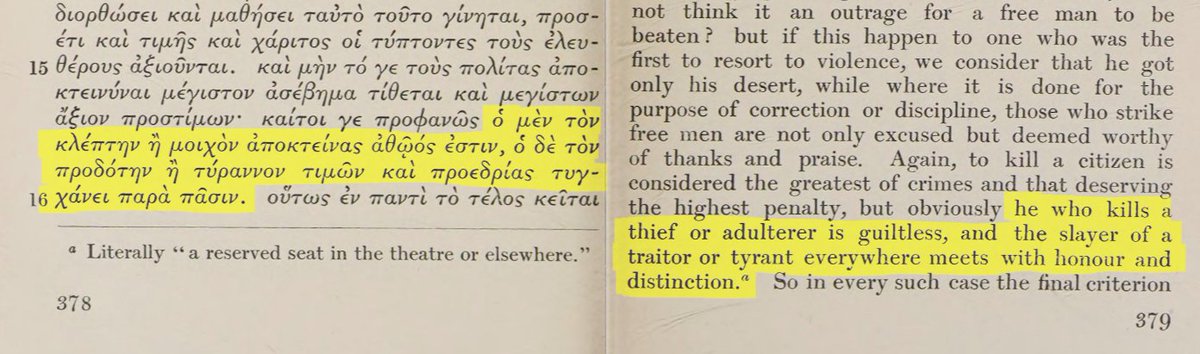
Correction: The Wikisource transcription I used appears to omit part of the passage.
The printed Loeb edition (Paton, 1922) reads:
"...he who kills a thief or adulterer is guiltless, and the slayer of a traitor or tyrant everywhere meets with honour and distinction."
"...ὁ μὲν τὸν κλέπτην ἢ μοιχὸν ἀποκτείνας ἀθῷός ἐστιν, ὁ δὲ τὸν προδότην ἢ τύραννον τιμῶν καὶ προεδρίας τυγχάνει παρὰ πᾶσιν."
— Polybius, Histories II.56.15–16 (Loeb Classical Library, Vol. I, trans. W. R. Paton, 1922)
1
8
460


Jun 13
The edition currently published in Japan, and primarily used in research, is called the Machida Edition (the Gajikan Gahon Edition, which is a typeset version of the Machida Edition).
This is the edition used for the wikisource.
1
47

Jun 12
No sé pegar bien el enlace. En cualquier caso, está disponible en la Wikisource alemana, buscando „Es giebt noch Richter in Berlin“.
1
13