
Construction cost is a factor of many things mr. Wekesa. Its a balance between affordability and workability and the desired outcome; for example you can compromise on finishes but not reinforcement. Just get the right professional for the right job, wachana na TL Engineers
1
70
Wekesa the quack you need to be an expert to know whats good in construction; light design, ventilation & structural soundness are keys to the workability of the building, you dont quack around those three... but anyway we are in kenya where economics graduate is now the "arch"
1
185

This BO heading branch operations sounds real but sincerely its a myth. Its possible for small Banks and smaller Branches of FUGAZ. I have seen alot reforms on this, main the workability in some banks will stress the employees. So I feel banks should structures suitable to them
1h

Salaries of branch staff is already an overhead on the branch PBT.
They rarely post profit, as all revenue is tied on salary payment.
BO should be the most level for an operations head.
1
5

Keep your concrete workable for longer with Addage PCE 50, an advanced polycarboxylate-based slump retention plasticizer designed to maintain flowability without compromising strength.
✅ Excellent Slump Retention
✅ Improved Workability & Pumpability
✅ Reduced Water Demand

2

Governor Otu: The Man to Watch Out for in 2031 - A Statement by the 4th Force
Bassey Otu is the fourth governor of Cross River State in the Fourth Republic, coming after Donald Duke, Liyel Imoke and Ban Ayade, in that order. He brought into office a rich pedigree that includes sound education, like his predecessors, and vast experience in the private sector, notably the financial industry, as well as oil and gas.
His assumption of office as state governor was preceded by 12 years of experience in the National Assembly, eight in the House of Representatives and four in the Senate, during which period he was either a chairman or member of strategic committees. His experience in those committees would later come in handy in his performance in his current office.
Between 2003 and 2011, when he represented the Calabar Municipality/Odukpani Federal Constituency in the House of Representatives, Otu held important committee positions, including chairmanship of the House Committee on Petroleum (Upstream); Vice Chairman, Committee on National Population, as well as membership of the committees on Power, Ministry of the Niger Delta, Interparty Relations, Environment, Water Resources and Defence.
In the Senate where Otu served from 2011 to 2015, representing Cross River South Senatorial District, he was Chairman, Senate Committee on Finance, as well as Committee on Banking and other Financial Institutions. He was also a member of the Senate committees on Navy, Power, Petroleum and Water Resources.
It would amount to stating the obvious to say Otu is well-versed in governance, at least from the legislative and executive perspectives. He is equipped in law-making and, as governor with executive powers, he understands what governance is all about. Little wonder he has made a mark in just three years as governor, which has earned him the sobriquet of Sweet Prince, and, from all indications, he is going to have an easy road to a second term in 2027.
Otu assumed office with a People First Agenda, to run a government that is people-centric, and for the period he has been in the saddle, his programmes and policies have touched the lives of the people of Cross River in various areas in a manner that makes the workability of those programs and policies indisputable.
In the area of infrastructure development, his administration has awarded contracts for 426.72 kilometres of road projects, with over 170 kilometres already completed. He has launched a 265-kilometre railway project, the first rail project in the state, which is aimed at easing transportation problems in the state. He is spearheading the development of a green-energy transportation system that would feature electric cars and electric motorcycles.
In an effort that is aimed at returning Calabar, the state capital, to its past glorious days when it was associated with beauty and splendour, the government has embarked on an extensive renovation and modernisation of important landmarks, like the once-iconic Cultural Centre and State Library.
The Otu administration has remarkably improved security throughout the state, especially the Akpabuyo Local Government Area axis, which was hitherto notorious for violent crimes, including kidnapping. Today, Cross River State is adjudged one of the safest and most peaceful in Nigeria. As part of efforts to ensure peace and safety in the state capital, the government has provided street lights in the metropolis. This has had the dual effect of not only guaranteeing safety but also promoting commerce in the night.
In the area of healthcare delivery, the government has built, reconstructed and equipped over 100 primary health centres throughout the state, to bring quality healthcare closer to the people. This is in recognition of the fact that a healthy society is a wealthy society.
Carnival Calabar, the flagship tourism event for which Cross River State is known globally, has witnessed a remarkable upgrade in standard, in terms of quality and scope, in the past three years. The carnival is one event which Nigerians put aside the current economic hardship to attend. The theme for this year's edition, Rethinking Our Collective Destiny, is being designed to highlight Governor Otu's focus on using the state's rich cultural heritage to promote tourism and economic development.
Otu has secured the nomination of his party, the All Progressives Congress (APC), to run for election for a second term. His campaign, which is going to be run with the theme, “Cross River Rediscovered Otu/Odey 2027”, is going to be a referendum on his first term. Feelers across the state indicate that Otu is set to coast home to a second term with ease, especially with the fragmentation of opposition parties, which are battling with internal crises that border on leadership. None of the parties has a candidate who could be said to have the capacity to thwart his re-election.
With what he has achieved so far, and is likely to achieve in his second term, Otu can comfortably begin to look beyond 2031. By the time he completes his second term, he would have garnered 20 years of experience in political office, 12 years as a lawmaker at the national level and eight years as state governor, enough experience to put him in good standing for a higher national calling. There are very few leaders in Nigeria today with such accumulated political experience.
Otu would round off his second term when power, specifically, the presidency, is expected to return to the North. By this time in 2030, political parties would be neck-deep in activities that are geared towards the 2031 general election conventions and primaries to elect candidates for the election, just as we are witnessing throughout the country today.
The APC would then need to nominate a running mate for its presidential candidate who would come from the North, who, expectedly, would come from the South. We cannot think of a better southern vice presidential material for the ruling party for the 2031election than Governor Otu. In our consideration, he towers above all the others in terms of experience, which we have already highlighted. The vice president of Nigeria in 2031 should be someone with a pedigree in governance in virtually all the arms of government, someone who is as good and qualified enough to hold the office of president. Otu fits the bill.
Beyond experience, the issue of equity, justice and fair play would also come into play in 2031. The selection of a vice presidential candidate from Cross River State should be seen as the fulfilment of the principle of federal character, which is enshrined in the 1999 Constitution, as amended. We acknowledge the fact that federal character has been largely ignored in the appointments to offices at the federal level. This was evident during the eight years of the late Muhammadu Buhari, and is even more so in the current Tinubu administration. But that is not enough reason to believe it would be completely discarded or ignored in a position as important and sensitive as the country's second citizen.
The South East has had the opportunity of producing Nigeria's vice president, in the person of the late Dr. Alex Ekwueme, in the Second Republic. In 2003, the South East came close to producing the country's vice president when the late Dr. Chuba Okadigbo ran as running mate to Buhari on the platform of the All Nigeria Peoples Party (ANPP). The zone was also on the brink of producing the vice president in 2019 when Peter Obi ran as running mate to Atiku Abubakar, on the platform of the Peoples Democratic Party (PDP).
The emergence of someone from the South South in 2007, Goodluck Jonathan, as Nigeria's vice president and, eventually, as president in 2010, was accidental. It was a combination of Yar'Adua's imposition as the PDP presidential candidate by then president, Olusegun Obasanjo and his appointment of Jonathan as running mate, in addition to Providence, that brought the latter into office as president.
In 2030, it should be a deliberate policy of APC to zone its Vice presidential ticket to the South-
South, specifically, Cross River State. It is the only state that has not had anyone at the top level of governance in Nigeria in the current political dispensation. Bayelsa State has had a vice president and president in the same person. Akwa Ibom State currently has the nation's number three citizen in the person of Senator Godswill Akpabio, who is the president of the Senate. At the party level, Edo State has had two national chairmen, John Oyegun and Adams Oshiomhole.
For the sake of justice, equity and fair play, in addition to experience, the office of vice president of Nigeria in 2031 should go to Cross River State. And the best man for the job should be none other than Governor Otu.
Sen. Patrick Offiong Ani (FCA)
National Coordinator
The 4th Force
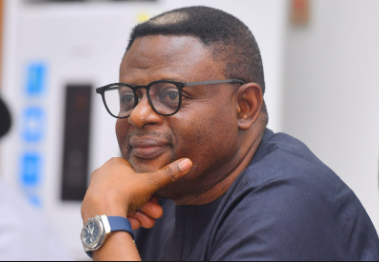
ALT Cross River State Governor, Prince Bassey Edet Otu
1
93

Bouaddi at Arsenal is tried and tested. Go get Wharton boys. We’ve already set pieced him in our RHS RB or CM right side. Tried Zubi just to gauge workability. It’s over.
28

Definitely important to have the proper mix design. If it needs more slump for workability there are special admixtures to take care of increased slump and be properly integrated vs adding water. So important to work with the concrete supplier to have a proper mix design for the f’c 28 day strength.
3

Certainly have my doubts about workability of this and general compliance but 100% agree with the policy. Read 'The Anxious Generation' a couple of years ago and that really opened my eyes to the harms being done to kids by social media.

BREAKING: Prime Minister Sir Keir Starmer has announced a social media ban for under-16s.
Live updates: trib.al/AaXv2Tr
1
613

It's main edge was proving the workability and cost savings (in training and deployment) of extremely sparse mixture of expert (MoE) models.
You can have a 671billion parameter model but only activate 37b parameters at a time to achieve the performance of a ~300b parameter model.
Jun 15

A part of me is still convinced that the entire Deep Seek thing was a psy op.
2
112

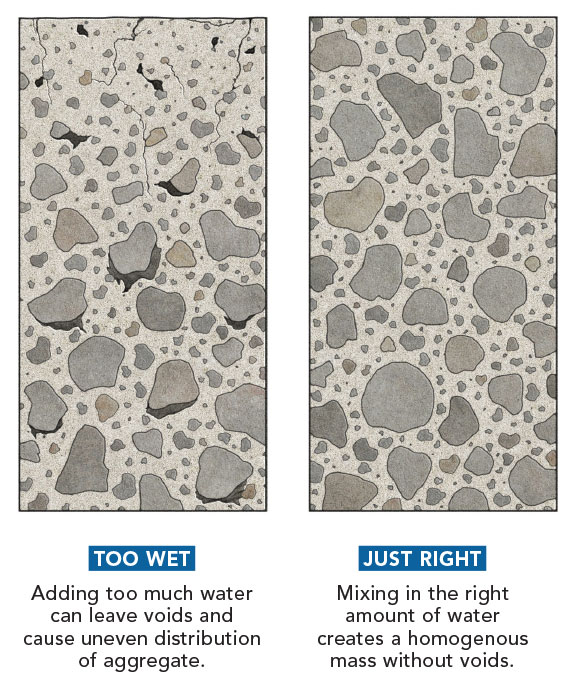
The key to achieving the psi strength labeled on a bag of concrete is keeping the water-to-cement ratio as low as possible without sacrificing workability. bit.ly/4dXxZFC
1
1
154

Jun 15
Beautiful. Pakistan must follow. Modernization and workability must be followed instead of just ripping colonization era.
365

Jun 15
It’s like a policy dreamt up in a leader of the opposition’s office years out of an election: designed for headlines rather than workability and unable to answer basic questions. But that’s been a problem with this govt- they don’t do policy detail and govern by press release.
2
4
69
4,656
sanity vs mental illness discussion retweeted

Jun 14
Since there are no biomarkers for any mental illness, the concept of "drug workability" is confined to the erroneous idea that chemical restraint is therapeutic.
#mentalhealth #mentalhealthmatters #psychiatry
1
4
22
370

Jun 15
Our range of high-quality cement and concrete products delivers dependable performance on every project. Trusted by professionals for over 90 years, our locally produced cement provides consistent strength, excellent workability and long-lasting durability. If you want to build it only once, use the A1 Choice. Use AfriSam Cement. #AskforAfriSam
4
152

Call me a dreamer, but maybe those making immensely consequential decisions could talk to people outside the Whitehall bubble about the workability and the impact of those decisions, rather than leaking them to the political press and seeing the pushback?
1
55

Jun 14
THIS is what happens when it's done for "show" instead of WORKABILITY!
6

Jun 14
Honestly a 3-5-2 is the way to go for a lot of our games in this tournament.
My worry is the Midfield pairing workability.
The back 3 defensive consciousness and Aerial strength

(🌕) Lionel Scaloni tested 3 at the back formation during the training yesterday. @maxigrillo 🚨🇦🇷
1
152

Jun 14
And the first lie of her sponsorship. We have become so used to this - and it's probably drafted by Dignity in Dying - but the impact assessment offered no assurance to its workability etc, and none at all re safety. Ministers say that's a 'policy choice' and up to sponsors.
1
8
50
706