Sandeep Dikshit retweeted

"Personnel cannot wear any type of bracelet in uniform, except for a single sacred thread on the wrist on the day of a pooja."
As per new dress regulations for the IA. Should be noted by senior officers. @adgpi
1
3
26
4,986

Both teams had a star player injured dumbass 👍 And Jdub also dropped 40 in the finals on a broken wrist in his shooting hand🤷♂️
1
Ω retweeted

i’m kind of obsessed with the details in this cutscene. like, look at the way he slowly loosens his grip on her wrist

9
89
583
7,113

The phone is suddenly snatched out of his hand and dropped on the ground below. Brand new by the way… But it remained intact. He then grabs Kawaki’s wrist and pinches his middle finger by the base, moving it backwards in an instant, breaking it.
“You’re such a brat!~

📲 🖤
it was the last text message deepa would receive from him. he put his phone on silent and went back to class. after school, he was lectured about the rules and regulations of using the bathroom. so stupid..
1
6
zach’s Newsroom retweeted

Christopher Bell says that the plan is for him to run the entire race at Pocono on Sunday despite his broken wrist. In the event he needs a relief driver, Brandon Jones will be on standby.
Bell said he really didn't have a thought of not racing due to his injury. His thought immediately after the accident on Sunday night was he'd be fine as long as he could hold the steering wheel, and things went fine in the simulator during the week.
"Really there was no thoughts of me missing a race since my head is fine, the important stuff is fine."
Bell said the fact that shifting is a factor at Pocono makes things a little more difficult, and he also let on that things might be harder for him with two road courses coming up at San Diego and Sonoma.
2
1
28
3,100

dallazz retweeted

Jun 12
2
149
1,844
7,184

RT @patthands: Milk’s hand holding Love’s waist Love’s hand sliding down from Milk’s shoulder to Milk’s wrist 🫠🔥
MILKLOVE MAGIC MOMENT
#…
36
Aliiiii retweeted

Jun 12
Leave it to sana to style her ankle monitor on her wrist and still look good with it





3
36
572
10,904

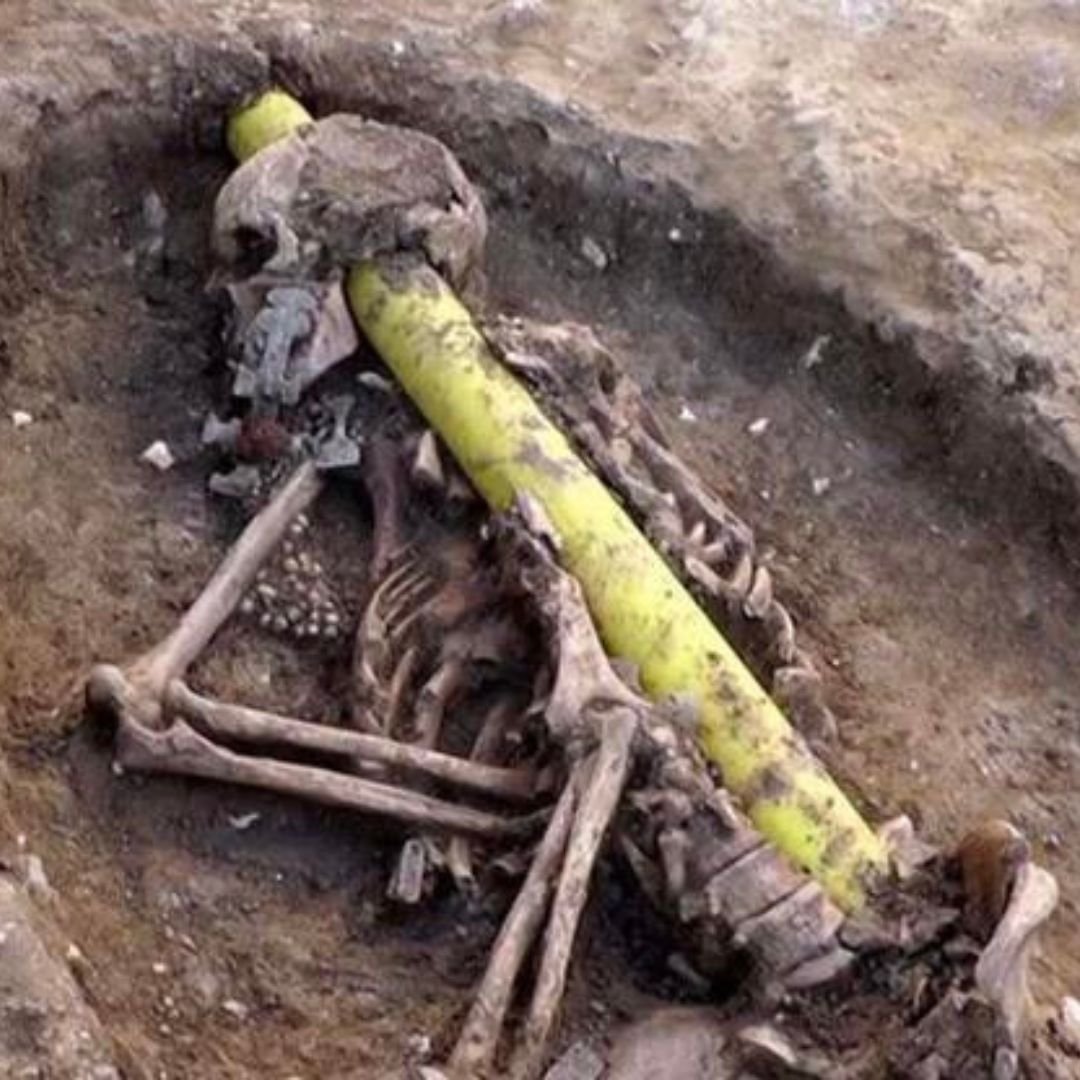
The Gas Pipe laid through Skull of Anglo Saxon woman buried around 1500 years ago, in Cambridgeshire - England 🏴🇬🇧
The woman, discovered in 2014, was one of over 100 skeletons found in a 6th Century AD, Anglo Saxon cemetery in Oakington, Cambridgeshire. The dig, which spanned multiple seasons from 2012-14, featured in Series 3 episode 1 of “Digging for Britain”.
Unintentionally, a yellow pipe, likely to be a gas line, was punched clean through an ancient burial. This particular skeleton was buried very close to the modern road, which modern underground infrastructure supplying the village follows.
The yellow pipe was installed by standard practice of directional drilling - this involves machinery tunnelling a long route for pipes, between small access trenches, minimising the disruption that would be associated with the more obvious “cut and fill” method for laying pipes. Although geophysical sensing methods are used to scout for anomalies, hazards or archaeological remains ahead of the drilling, these cannot reliably detect human bone. It is overwhelmingly likely that the installer of the pipe was entirely unaware they had punched through the ancient burial.
The archaeologists noted during the 13-hour excavation how impressively the boring of the pipe had punched through cleanly, with minimal disruption to the burial, and missing the grave-goods by a matter of centimetres. Respectful treatment of human remains is certainly desirable, and an increasingly important priority for archaeologists conducting excavations.
No archaeologist or engineer would want to see an ancient burial skewered in this way. The skeleton was found with a small-long brooch on each shoulder, and an expensive large cruciform brooch face down, indicating she had been buried in a peplos dress and centrally pinned cloak. She also had wrist-clasps representing a sleeved dress beneath the peplos, and had swags of glass and amber beads.
Much of what we know about Oakington in the Anglo-Saxon period comes from excavations of an Anglo-Saxon burial ground that was located where the recreation ground is today. The first graves were discovered in 1926, when four early Anglo-Saxon burials (including one with a spear, knife and shield) were uncovered in the field that had just been bought by Alan Bloom for his nursery garden.
A further 25 burials, and a single cremation, were discovered in 1994 during construction of the children’s playground and were excavated by Cambridgeshire Archaeological Field Unit. Further work was carried out by Oxford Archaeology East in 2006–2007 in preparation for the building of Oakington Pavilion and multi-use games area (MUGA).
Test pits were dug in within the footprint of the new pavilion (Area A) and the (MUGA) (Area B), which lead to the recovery of about 600 sherds of pottery, over half of it Early to Middle Saxon, along with animal bone, metalwork and Neolithic flint. A full excavation was then carried out on Area A, while Area B was left to be preserved ‘in situ’.
The excavations of Area A revealed seventeen burials from the early Anglo-Saxon period (all dated to the latter half of the sixth century), including both sexes and all age groups. Eight of burials contained multiple grave goods, including pairs of round brooches, strings of amber beads, bone combs, wrist clasps, and square-headed brooches. Four of the burials contained a single item, either a knife or a single brooch, while five contained either no grave goods or a single large pot sherd. Subsequently researchers from Oxford Archaeology East together the students from the University of Central Lancashire and Manchester Metropolitan University carried out a series of excavations between 2010-2014.
This resulted in the discovery of many more graves, bringing total number of graves uncovered to more than 200 and establishing Oakington as a substantial 6th Century AD (early Anglo-Saxon) cemetery.
#archaeohistories
2
3
290
Michael Scott Gary retweeted

“Historic night”?
FIFA still bans exactly one team, Russia, while handing Israel a slap-on-the-wrist fine and ignoring U.S. air-strikes that killed 160 kids in Iran.
Spare us the pageantry, Marco, rogue refs don’t make a fair tournament.
4
14
1,289


She is alive! Don’t stress. The news report says she broke her right ankle and wrist but otherwise fine!!
1
1
32
Jdub had a broken wrist on his shooting hand the whole playoffs and the last couple of weeks of the regular season🤷♂️ But choose to play threw it, in hopes of a championship. Well pacers had one injury the whole playoffs, seems pretty even, both teams had a star player injured🤷♂️
1
14
sknwu*.✧*.✧📿🔮 retweeted

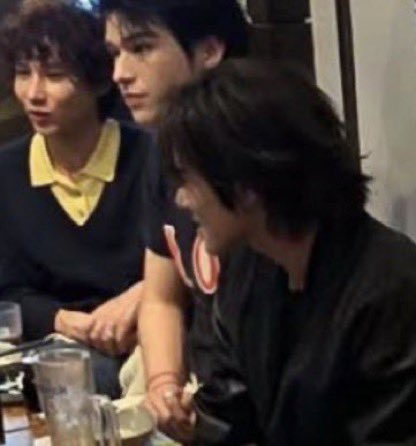
Guys omg see Sky is literally holding Nani wrist and Nani hands seems to be on Sky legs they are dating
6
25
305

Na even 17 sef 😂 ravers just corrected me,dey here dey play, believe what u want to believe he get money pass u and asake,Rema dey buy wrist watch wey the price na ur idolo care,is that clear?
2


That a weak ass liberal judge would give him a slap on the wrist and very low bail.
4
Political Junkie retweeted

Try these during your next mobility & strengthening session to improve your wrist health
13
19
1,047