
Guy- I wouldn't surprised if it'll be pointless to debate with you; Just go see her when the drama happened and how much of a victim she acted. She's a convoluted person.

He looked like shit against a 40 year old, washed up fighter, who got the payday for being a friend of Trump. (Derik Lewis)
It also wasn’t that 1 comment. He acted like a clown all weekend and half the UFC fighters hate him for other stuff.
Straw that broke the camels back.
4

🥊💥 @specialreport
@LeslieMarshall tells the truth about TRUMP's HORRIBLE DEAL
Then later.... "Hitler Did Good Things" @ainsleyearhardt laughably acted like TRUMP IS THE GREATEST & CAN DO NO WRONG! Sean still hasn't made an HONEST WOMAN of her
mediaite.com/media/tv/fox-ne…
1

They never explored that, but she's considered pansexual. Or well, thats how she was raised technically. That anyone can love as many or something. But she never explicitly said nor acted upon it?
1
Gwen retweeted

38m
They acted like Obama’s $1.7 billion to Iran was the worst deal in history, but Trump surrendering $300 billion barely disturbed the cult meeting.
7
7
32
296
Carol J Offutt retweeted

Six days post the most horrific pubic execution since JFK, and this is how Erika Kirk acted, during a zoom call. And she wonders why the Public despises her. Her inauthenticity is palpable.

180
317
1,985
22,366

We are racist because we defend someone who acted on self defense? Shut the fuck up dumbass.
1

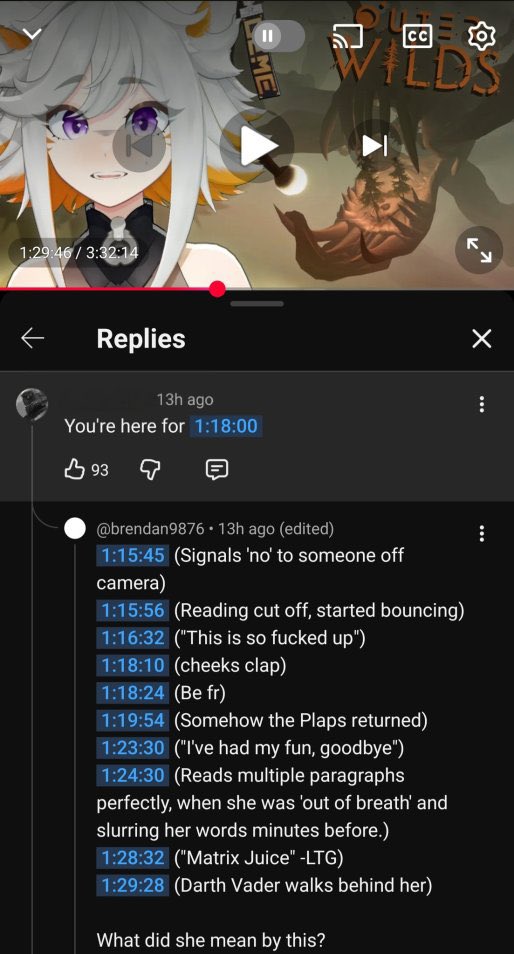
Everyone saying shit about how she acted during this stream clearly hasn’t played outer wilds, the shit she does is just a natural reaction to literally any moment in that game

1
2

Maybe if they acted like people they would be treated like people but all they're really good for is being set on fire.
4

How Exposure Became an Industry (2)
– MBC Straight Follow-up Interview
2. Responsibilities of Lawyers and Professionals
Although I am a lawyer myself, going through this case has led me to heavily criticize the lawyers involved. Hovering lab (Gaseyeon) is a political YouTube channel that has grown its influence by targeting a viewership with specific political inclinations. At the same time, it has generated financial profit and donations through provocative broadcasts attacking celebrities. Yet, there have always been lawyers surrounding them. In this current case involving actor Kim Soohyun as well, there were lawyers acting as Kim Seui's defense counsel, representatives for the bereaved family, or individuals shielding and supporting Hovering Daily’s claims.
I view this issue with grave concern. It is highly problematic when lawyers share political interests or become economically and politically intertwined with specific YouTube channels, subsequently appearing to defend the dissemination of false information.
I became actor Kim Soohyun's legal representative in September of last year. Originally, I was just observing and commenting on this case from the outside. While operating my own YouTube channel covering various public interest matters, I felt from the very beginning that something was off about this case. I believed that actor Kim Soohyun might be falsely accused and that there was a high probability that the materials provided by Hovering lab were fabricated.
The incident began on March 10th of last year when Kim Seui raised allegations against actor Kim Soohyun regarding dating a minor. Later, during a press conference on March 27th, KakaoTalk chat logs were disclosed, presented in a way that made the profile picture look like actor Kim Soohyun. However, looking closely at the content, there were no clues that could definitively identify the other party as Kim Soohyun. Despite this, no one at the press conference asked, "What is the evidence that this KakaoTalk partner is actor Kim Soo-hyun?" Everyone simply accepted it as fact because the profile picture was set up that way.
Furthermore, Kim Seui did not make this claim alone; an individual introduced as the lawyer for the bereaved family appeared alongside him, stating things along the lines of, "Are you still denying this even when we have these KakaoTalk logs?" People who might not have believed Kim Seui if he spoke alone were highly likely to accept it as truth because a lawyer stood there validating it. As a result, the situation spiraled completely out of control.
During a press conference on March 31st, Kim Soohyun stated, "I will not ask you to believe me. I will prove it." That press conference was a place he was virtually dragged out to. With a globally renowned actor being framed as a pedophile, he appeared out of a feeling akin to a desperate cry for help. Yet, certain YouTuber-lawyers consumed that moment mockingly. Responses like "Don't cry" or "That's not what we're curious about" were turned into content, and media teams like YTN's YouTube division re-edited and uploaded these clips, racking up millions of views.
I do not wish to conclude that those lawyers acted out of sheer malice. I believe criticisms regarding whether the press conference format was appropriate are entirely fair. However, turning a scene where an individual is pleading their innocence amidst nationwide condemnation into a laughingstock which then spread as major YouTube content was a deeply serious issue. As a result, actor Kim Soohyun's sincerity was completely buried, and the "tearful press conference" itself became an object of mockery. - @khosangrock #KimSooHyun #김수현 #WeStandWithKimSooHyun
1
2
12

last fall i started on my grad program’s student health insurance plan, which means i have unitedhealthcare insurance for the first time in my life, and i can attest that no one has ever acted more sanely, rationally, or justifiably than luigi did in that moment

BREAKING: Luigi Mangione will assert a psychiatric defense at his state murder trial in killing of UnitedHealthcare CEO Brian Thompson, judge says. apnews.com/article/luigi-man…
2
44
NoName91 retweeted

~ Honami 🩷
This is the last time Honami acted as a heroine 😵💫

6
27
648
11,120
juli lvs le petit/VOY A VER A BTS retweeted

9h
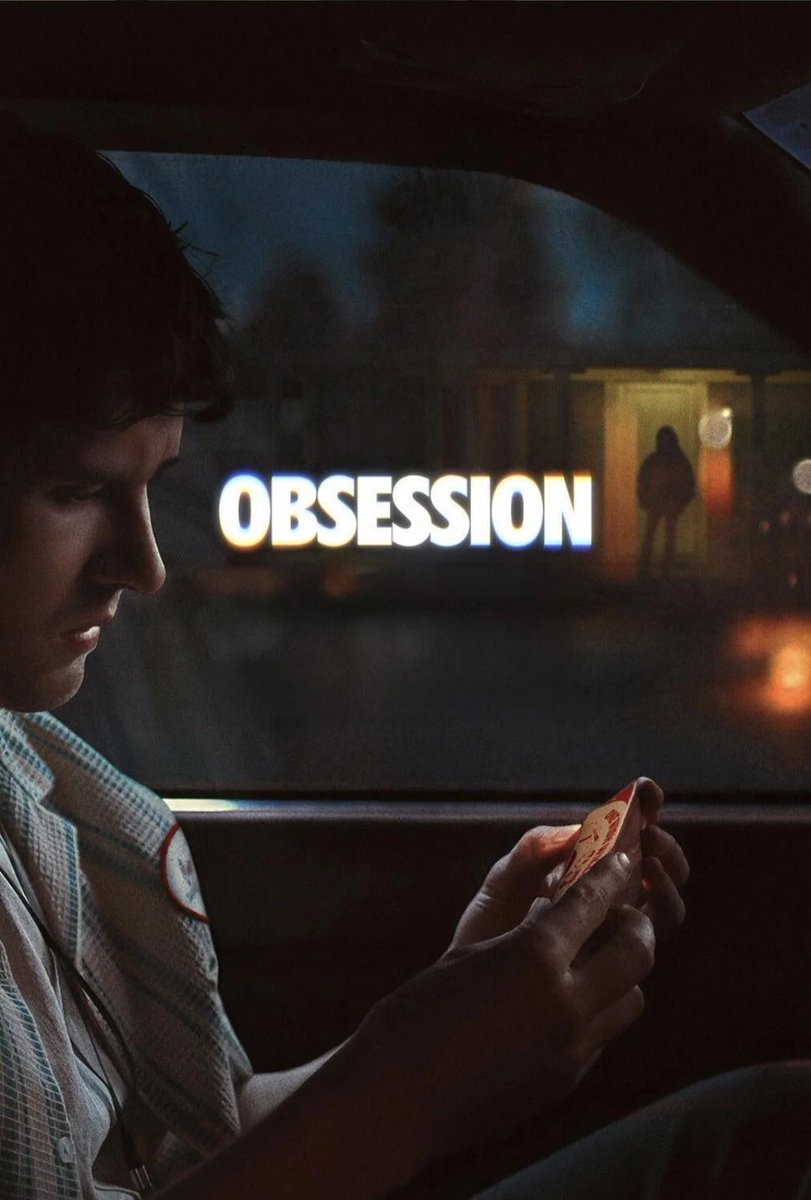
I feel like an underrated part I havent seen anyone bring up is how Sarah acted like bear wasn’t in the wrong at all. She might’ve not known the full story but bear sat and did nothing during the party where nikki violently attacked herself, even Ian called him out


31
259
5,172
82,645

Based on this post, I did some digging. This is the result:
The Electrical Church: Cathode/Catholic, Diode/Diocese, Anode/Anoint. Is the entire structure of the Church an Forgotten Free-Energy Blueprint?
FORGOTTEN or ERASED?
I was looking into old-world architecture and the theory that cathedrals, spires, and domes were actually atmospheric energy harvesters before a historical “reset” took place.
While mapping out the physics of electronics against the linguistics and structure of the Catholic Church, a mind-blowing connection emerged.
When you look at the etymology and the architectural layout, the Church doesn’t just look like a power plant - it uses the exact terminology of a triode circuit board: Cathode, Diode, and Anode.
The entire system pieces together linguistically, structurally, and electrically.
When you blend the physics of electronics with the structure, linguistics, and architecture of the Catholic Church, a stunningly cohesive blueprint emerges.
It suggests that ancient cathedrals were not just places of worship, but massive, functional atmospheric energy power plants.
Here is how the entire system pieces together - linguistically, structurally, and electrically.
1. THE ENERGY INTAKE:
Cathode --> Catholic (Cathedrals)
THE PHYSICS: A cathode is the terminal where electrical charge or current leaves a device or moves downward. The Greek root is Kathodos, meaning "the way down" (kata = down, hodos = way).
THE CHURCH: "Catholic" shares the exact same Greek prefix (kata). Structurally, the Cathedral is the focal point of this intake.
THE ARCHITECTURE: The massive towers, spires, and domes - heavily plated in highly conductive metals like gold and copper - acted as passive cathodic antennas.
They pulled the continuous, low-level ambient voltage down (kata) from the ionosphere.
The spires functioned like the top terminal of a vacuum tube or a plasma antenna, drawing energy out of the air and pulling it into the building.
2. THE POWER TRANSMISSION:
Diode --> Diocese
THE PHYSICS: A diode is a component that restricts current, forcing it to flow along a specific, controlled pathway.
The Greek root is Diodos, meaning "a passageway" or "a way through" (dia = through, hodos = way).
THE CHURCH: A Diocese is the precise territorial boundary and administrative district governed by a Bishop.
THE ARCHITECTURE: In this old-world grid theory, a diocese was not just a political zone; it was an electrical sector.
The central Cathedral captured the energy, and a network of smaller parish churches, bells, and underground aquifers acted as the routing system.
The diocese was the mapped-out circuit board designed to safely channel and regulate the power through the region without overloading the grid.
3. THE SYSTEM ACTIVATION:
Anode --> Anoint
THE PHYSICS: An anode is the terminal where current enters an electrical device or moves upward.
The Greek root is Anados, meaning "the way up" (ana = up, hodos = way).
THE CHURCH: Anointing is the sacred ritual of applying holy oils to physical structures (altars, walls) and people.
THE ARCHITECTURE: In engineering, high-voltage systems require specialized transformer oil to act as a dielectric insulator.
It prevents dangerous electrical arcing, stops short circuits, and protects metal anodes from breaking down due to oxidation.
When a Bishop consecrates a cathedral, he physically anoints 12 specific spots on the stone walls and floods the stone altar with oil.
This process sealed the quartz-heavy, piezoelectric stone walls, turning the cathedral into a giant, functioning Leyden jar (capacitor) that could hold a charge.
THE COMPLETE POWER PLANT BLUEPRINT
When you look at a historic city center, you are looking at an integrated, wireless free-energy machine:
THE SKY (Ambient Static / Atmospheric Charge) Aether / Ether which was removed from the periodic table.
Continued in next comment...
1
1
7





Rest | 🍎🦋🌌🏙 Heavenly Me retweeted

Chibi has proven time and time again that he's a horrible person and the way he's acted since getting cheated on has made him worse. You don't have to apologize because he started it by not respecting your boundaries and played victim after you flamed him. HE'S the problem here.
8h

I was ready to genuinely take this to the ground because of the idea that “why should i ever feel bad being rude to someone who’s a piece of shit”. After some reflection, the thought occurred to me, “do i really want to go as low as him though?” and the answer was no.
I said what I said because I personally think there is no scenario that a friend group chooses the side of a fiancé that cheats. I can’t even fathom friends siding with a cheater.
However, would I have brought it up if I knew he was suicidal because of it? no. I admitted it in the previous tweets so why didn’t I apologize? “because he’s this and that and blah” but I thought about it and that kinda ideology is quite harmful. I knew it was wrong and I admitted that twice but I didn’t apologize
So after reflection, I am sorry. I’m sorry for bringing up a memory that made someone suicidal. It was a low blow even if I didn’t know regardless of whether he was intentionally being a piece of shit. I don’t want to stoop to his level. I rather be better and learn from my mistakes 🧡
27
113
1,071
14,833