
You look European lol, my ethnicities are listed there agapi it only goes back 6-7 generations
1
29

Agapi mou
Horto magiko

גייט 13 של פנאתנייקוס מילאו את היציע שלהם בשלל של כל הקבוצות במהלך טורניר אוהדים.
חלק מהשלטים של השחקן ה-12.
15 שנה עברו מאז שגנבו אותם והם עדיין שומרים על השלטים


103






☦️ no mixing things up from me. Korce always Greek, you are one of us agapi🇬🇷
2
3
71
Cuts On My Pretty Jewish Thighs retweeted

Jun 13
Their brothers should have wifed them in the Condidere & Incolas spirit of Transcendental Amativism, Romanticism, Agapisticism, Coegitum.


1
31
1,010


Jun 13
I'm having a good morning thus far. Saturdays can be busy w donations, so we just gotta get thru the first part of the day then I'll cruise. Gonna work w productive indifference all day & get my tasks done w success. Keep the underpinning clear pls so mi agapi & I can get thru
4

Jun 13
I want to see Samanta Lily sucking the boobs of Florence Agapi
112
AntesEraAilolailo64 retweeted

Jun 10
🎞️ O cinema segundo Xosé Lois Ledo: "O guión é o país"
👉 Agapi entrega esta cuarta feira o seu o Premio de Honra Dolores Ben a Xosé Lois Ledo Andión, figura histórica do audiovisual galego e firme defensor do cinema independente.
nosdiario.gal/articulo/cultu…
4
6
636

Jun 13
Ah Agapi Mou Ya Habibi ❤️ Greek Arabic Love Song | Sotis Mikros youtube.com/shorts/ZtevHYRIn… via @YouTube
11

bravo Homer, well said patriote, let them live in their darkness while Hellas lights up the free world ! ❤️Agapi 🇬🇷
3
314

Jun 12
I'm having a great morning thus far. Back to the grind for me today. Donations may get busy, but we should be fully staffed so it's good. Gonna work w productive indifference & get all my tasks done well. Blessed. Keep the underpinning clear so mi agapi & I can dominate the day
9

Check out the new Paola Entafianou single "I agapi ehei teliosi" distributed by @DistroKid and live on Spotify! open.spotify.com/album/2slef…
2
4
15

Jun 12
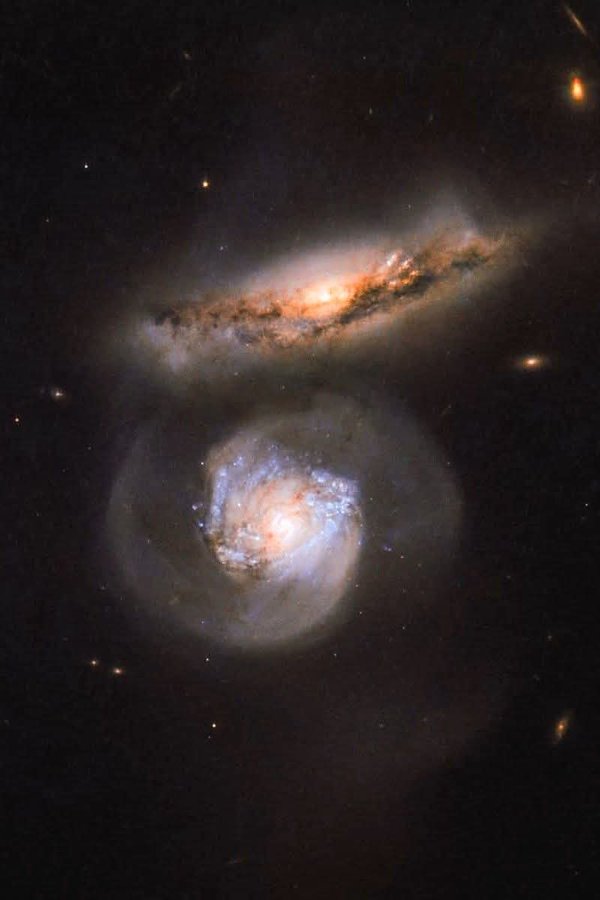
A Cosmic Laser 100 Million Times Brighter Than the Sun
Just when you thought galaxies couldn’t get any more dramatic, Hubble delivers this jaw-dropping view.What looks like two separate islands of stars is actually a single cosmic battlefield: NGC 5765, a pair of galaxies locked in a slow-motion collision 400 million light-years away in the constellation Virgo.The galaxy at the top shows us its razor-thin edge, glowing with rich lanes of warm orange cosmic dust. Below it, the second galaxy spins face-on like a celestial pinwheel, revealing its elegant spiral arms in stunning detail. But the real show is happening at its core.Hidden in the heart of the lower galaxy lurks a supermassive black hole on a feeding frenzy. As it devours gas, dust, and stars, it unleashes ferocious energy. That energy slams into dense clouds of water vapor swirling around it, pumping the molecules full of power until they release it in perfect unison.The result? A megamaser — a colossal microwave laser beaming across space with the power of 100 million Suns.This isn’t just any laser. It’s one of the most extreme phenomena in the universe: a natural microwave beacon trillions of times more powerful than the masers we see in our own Milky Way. Invisible to our eyes but blazing in radio wavelengths, it turns this colliding galaxy pair into one of the brightest cosmic lighthouses ever detected.
This spectacular image was captured by the Hubble Space Telescope and processed by NASA/Aurel Costel Agapi.
4
20
60
3,772

Jun 12
tvoj, a sam, agapi mou
hajde reci sagapo,
malo hoces malo ne,
a ja te zelim, daa
5

Jun 11
─── Esta bien. ─── asiente al tiempo en que se ocupa de llamar a la niñera de Acacia antes de volver con ella ─── ¿Nuestra boda será un secreto hasta las elecciones, agapi mou?
1
1
19