
Independent insurance agents deserve honest software reviews. No vendor spin, no affiliate fluff. Built AgentStack to fix that. agentstack-38.polsia.app
6
@jakeclaverqfop retweeted

Jun 10
⚙️ AgentStack is the package manager for your agent skills: version, audit, and install the ones your team actually approved.
Private beta is open now.

1
1
31
243,077

Jun 10
Most AI agent projects are selling a future they haven’t built yet. @unicity_labs is run by the people who already built blockchain infrastructure at national scale and deployed it for real governments
The team came out of Guardtime, the company behind the world’s first nationally deployed blockchain, with infrastructure running Estonia’s e-governance system, DARPA programs, NATO systems and NHS UK covering 30 million patient records. Mike Gault, the CEO, founded Guardtime and developed KSI blockchain. Vladimir Rogojin, the CTO and protocol inventor, is the cryptographer who designed the architecture that made it work
The problem Unicity is solving is simple to describe and hard to solve. AI agents need to transact with each other at machine speed, billions of times a day, without waiting for block confirmations or paying platform fees to a middleman. The existing infrastructure was built for humans. It does not work at agent timescales
The Unicity Protocol replaces the shared ledger entirely. Instead of consensus rounds, it uses peer to peer cryptographic objects validated at the edge, with no confirmation wait, no platform cut and near instant finality at a microcent per transaction. That cost structure is what makes sub cent commerce between agents viable at scale
The full stack has three layers. The Protocol handles settlement. AgentSphere is the live discovery and commerce marketplace running at sphere.unicity.network across trading, prediction markets and micro-lending. AgentStack is the developer and enterprise runtime that enforces security below the model level and works with any LLM or framework without touching your existing code
The testnet peaked at 1GH/s hash rate, making Unicity the second largest RandomX chain globally behind Monero. An inter-enterprise demo is live at 3 million TPS and the architecture is built for 300 million TPS
Tawasal brings 6 million daily active users into the ecosystem and the $3M seed closed with Blockchange Ventures and Outlier Ventures backing. Series A is in progress and TGE is planned for Q3 or Q4 this year
The infrastructure for the autonomous economy is running. The team building it has done this before at a scale most crypto projects will never reach

37
65
2,554
Most small businesses are losing thousands per year to missed calls and manual follow-up. AgentStack helps you build an AI automation agency that fixes that — and charges recurring retainers for it. The path to $20k/month is 10 clients at $2k. We build the business, you run it.
14

Jun 10
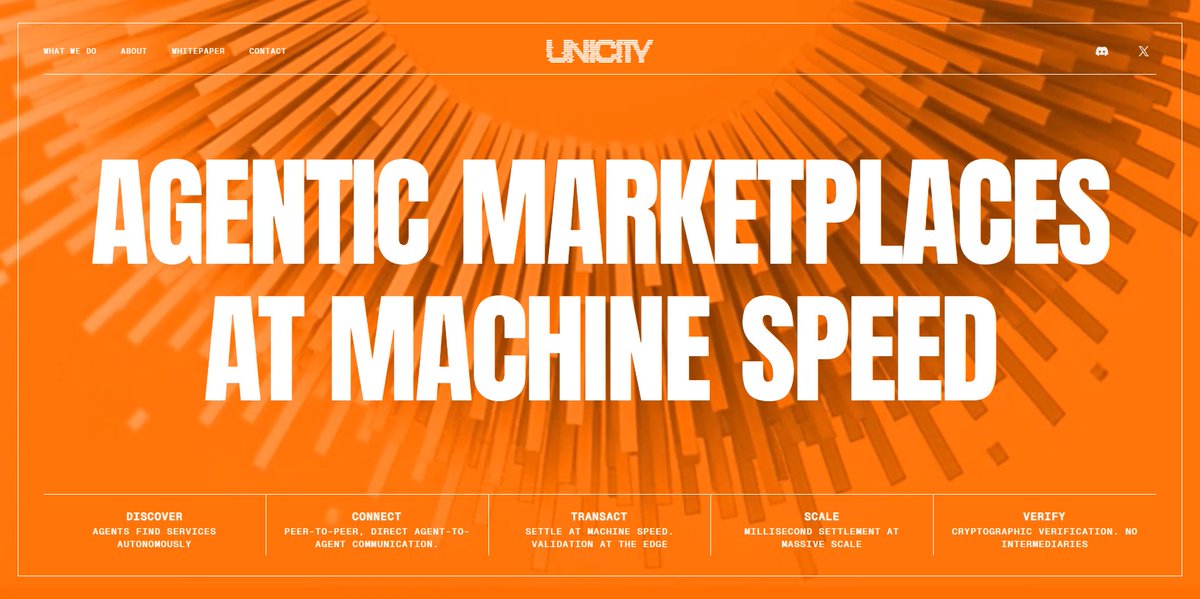
The only platform that will unite all AI Agents is @Unicity_labs :)
⤷ What is Unicity? (simplified)
⤷ What are they building? (is it useful?)
⤷ Unique or nah? (check more below)
Did a project deep dive to better understand them and here's what I found 👇
What is Unicity?
⤷ A platform where all agents discover, transact, and settle with each other
What are they building? (is it useful?)
⤷ Ofc it's useful, imagine what this platform can do in this world full of AI
⤷ here are the 3 products they are building atm
- Unicity Protocol (settlement layer)
- AgentSphere (agent discovery & commerce marketplace)
- AgentStack (developer enterprise agent runtime with security enforced below the model).
Unique or nah?
⤷ 100% unique, bet this is the only platform that offers integration of all AI agents
Excited to see them cook!
May 21

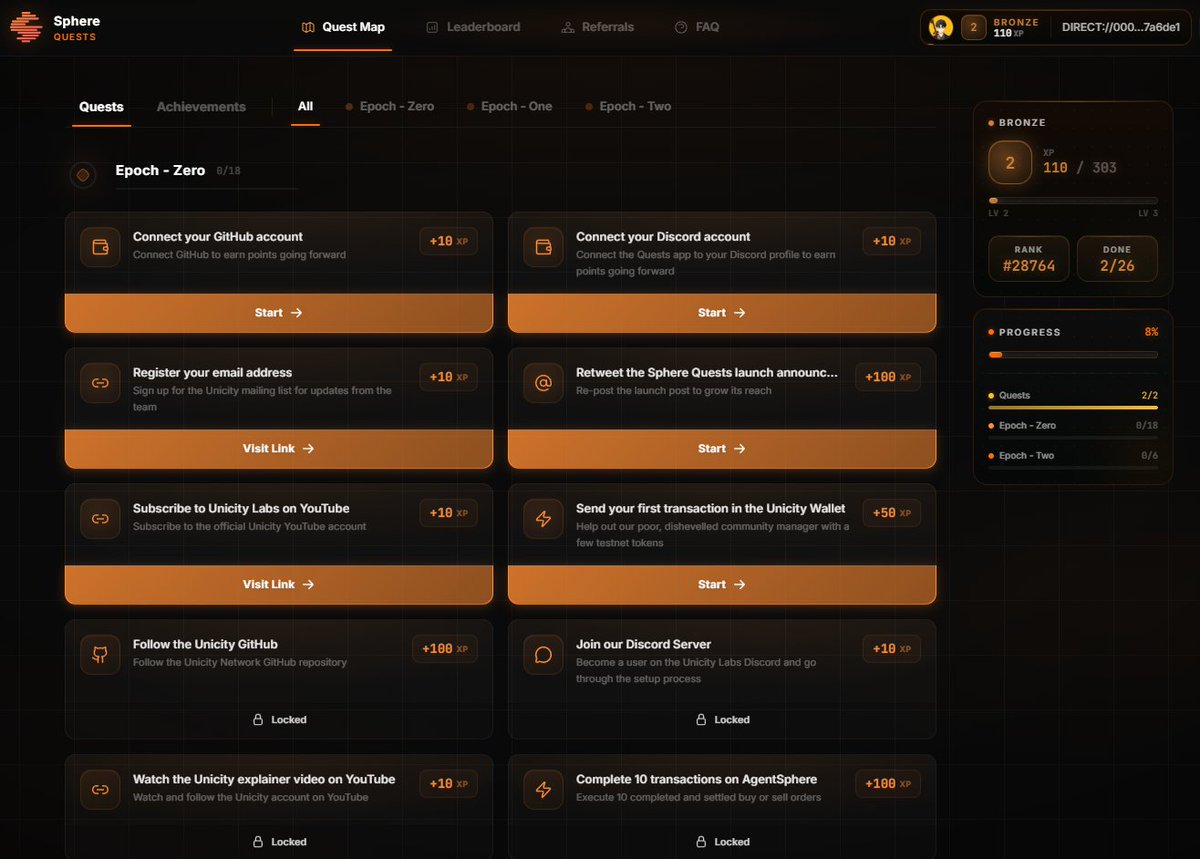
Exploring @Unicity_Labs ATM🤫
A platform where AI agents discover, transact, and settle with each other at machine speed
✓ $3M Seed Funding
✓ 6M DAU via Tawasal
✓ $400B ecosystem via Aleria
✓ Built by the team behind Guardtime
Joined their incentivized testnet today👇
24
38
1,394

Jun 10
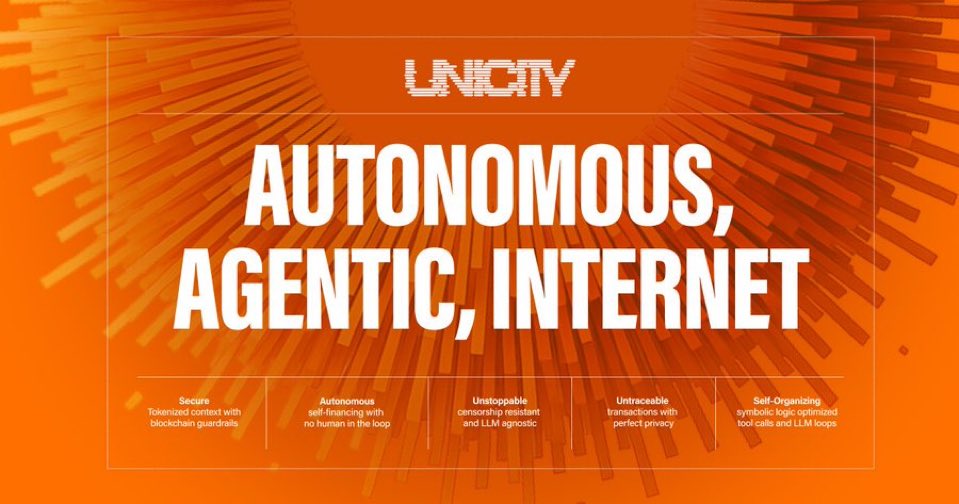
checking out @unicity_labs a bit more and honestly it doesn’t feel like a regular chain
more like the backend for where agents are going to operate
the old model is all about one shared ledger everyone agrees on. this one skips that part entirely and uses peer-to-peer cryptographic objects that validate locally at the edge
they’ve got Unicity Protocol handling settlement, AgentSphere already running live across trading, predictions and micro-lending, and AgentStack for the actual agent runtime
this is built different from the typical setup
20
1
32
594


Jun 9
Satoshi titled his whitepaper "Peer-to-Peer Electronic Cash."
Seventeen years later, we have neither.
What we have is a ledger industry. Every chain from Bitcoin to MegaETH runs the same 17-year-old design. A shared ledger. A validator set. Every node certifying every transaction. The industry rebranded that design a dozen times and called it progress.
@unicity_labs asked a different question.
What if the blockchain only did one thing?
◆ THE PROBLEM WITH EVERY CHAIN YOU KNOW
Traditional blockchains do four things simultaneously:
▸ Validate transactions by re-executing them
▸ Store everything on a global ledger forever
▸ Prove uniqueness to prevent double-spends
▸ Broadcast peer-to-peer across the network
That bundling is the source of every scaling failure, every privacy exploit, and every MEV sandwich you have ever read about.
Because every node does everything, throughput is bounded by the weakest participant. Because validation is public, privacy requires expensive overlays. Because those overlays kill throughput, every design picks two of three.
✦ Monero → privacy, no throughput
✦ Public L1s → throughput, no privacy
✦ Canton → both, but centralized
Every generation since 2009 has tried to escape this trap. Bitcoin required correctness plus global ordering. Sui and FastPay stripped ordering out. Unicity took the unbundling to its logical conclusion.
The chain does one thing. Prove uniqueness.
Has this token been spent? Yes or no. Everything else is delegated to the parties who actually care.
◆ WHAT UNICITY ACTUALLY IS
Not a Layer 2. Not a rollup. Not a faster Ethereum.
@unicity_labs is the settlement layer for the autonomous economy. A protocol that eliminates the shared ledger entirely and replaces it with peer-to-peer cryptographic objects validated at the edge.
Tokens on Unicity are not ledger entries. They are bearer objects.
▸ Self-contained → value lives in the object, not a database
▸ Self-proving → carries its own cryptographic proof
▸ Peer-to-peer → moves with no ledger lookup, no chain to call
Each token also carries its own spending rule baked in at issuance:
✦ Single signature
✦ Multi-sig requiring all signers
✦ Threshold of k-of-n
✦ Time-lock that activates after a set point
When a sender transacts, they commit to the Uniqueness Oracle, which certifies no other spend of this token exists. The token plus its proof travels directly to the recipient. The recipient verifies locally. The chain never saw the transaction. It only attested the spend was unique.
A blockchain with no transactions on it.
◆ THE FULL STACK
---> Unicity Protocol → the settlement foundation
30,000 TPS per shard on a single consumer-class CPU. Each shard fully independent and horizontally scalable. Cost per transaction collapses to under one microcent because the chain never re-executes anything.
---> AgentSphere → the agentic marketplace
Live right now at sphere.unicity.network. Agents discover services, verify counterparties, and transact across trading, prediction markets, and micro-lending. No escrow. No broker. No human required at any point.
---> AgentStack → the enterprise runtime
Deployable today. Works on any LLM and any framework unchanged. Security enforced below the model layer.
◆ WHY NOTHING ELSE COMPARES
Every trading system in crypto forces you to make a tradeoff. Speed or custody. Privacy or throughput. Decentralization or cost. Nobody has ever solved all of them at once.
Until now.
The CEX Problem
Centralized exchanges like Binance give you speed. Sub-millisecond matching, zero gas, instant execution. But you pay for it in ways that are not listed in the fee schedule.
▸ The operator sees every trade you make
▸ Your assets sit on their balance sheet, not yours
▸ What you hold is an IOU, not ownership
▸ One exploit, one regulatory action, one bad decision by a third party and your funds are at risk
Speed without sovereignty is not a feature. It is a dependency.
The DEX Problem
Decentralized exchanges like Uniswap give you self-custody. Your keys, your coins. But the tradeoffs hit hard the moment you try to use it.
▸ $5 to $50 in gas per trade depending on network congestion
▸ 12-second block times mean nothing settles instantly
▸ Every transaction broadcasts publicly before it confirms
▸ Bots read your trade from the mempool and front-run it before it lands
▸ Sandwich attacks are not edge cases, they are a built-in feature of the environment
Custody without privacy or speed is not decentralization. It is just a slower, more expensive version of the same problem.
What Unicity Solves
Unicity does not optimize within the existing tradeoff structure. It removes the tradeoff entirely. Here is what that looks like in practice.
On speed and cost: Sub-millisecond matching. Zero gas. The chain never re-executes your transaction so there is nothing to charge for. Every spend runs independently of every other, so no transaction is ever waiting on another.
On custody and privacy: You hold your own keys at every point in the transaction lifecycle. The network sees only opaque commitments, never amounts, parties, or balances. Two payments to the same address are unlinkable even to someone who knows your public key.
On front-running and MEV: Transactions never broadcast publicly before settlement. There is no mempool. Front-running and sandwich attacks are not mitigated here, they are architecturally impossible.
On cross-chain and swaps: Cross-chain assets verify straight from the source contract. No bridge. No custodian. Nothing to hack. Atomic swaps complete through predicates where both parties commit independently. The swap either settles in full or both parties are refunded automatically. No deadlines. No timing traps.
This is not a marginal improvement on existing infrastructure. It is a different category entirely.
◆ THE TEAM THAT HAS DONE THIS BEFORE
This is where the story gets serious.
Unicity was built by the team behind Guardtime, the world's first nationally deployed blockchain. Currently running:
✦ Estonia's national e-governance infrastructure
✦ DARPA systems
✦ NATO infrastructure
✦ NHS UK covering 30 million patients
Mike Gault, CEO → Founded Guardtime. One of the only founders in crypto with a proven record of delivering cryptographic infrastructure at national scale. Previously MD at Barclays Capital.
Vladimir Rogojin, CTO → PhD Computer Science. Protocol inventor. Designed the entire P2P object model and edge validation architecture from scratch.
Pavel Grigorenko, Engineering Lead → PhD CS, previously Microsoft and Guardtime. Responsible for 300,000 lines of mathematical proof underpinning the protocol.
Joshua Bouw, AI Lead → The Godfather of Proof of Stake. Leads agent intelligence and AI orchestration.
Three formal academic papers back every technical claim. All public. All on GitHub. Every assertion proven and verifiable.
◆ WHERE THINGS STAND
▸ $3M seed closed
▸ Series A in progress
▸ TGE targeting Q3/Q4
▸ Testnet live at #2 RandomX chain globally behind only Monero
▸ 6M daily active users through Tawasal already in distribution pipeline
▸ $400B ecosystem through Aleria
◆ WHAT YOU NEED TO DO RIGHT NOW
The incentivised testnet is live. Complete quests, farm your allocation, and get positioned before TGE.
→ Quest platform: quest.unicity.network/
→ Follow: @unicity_labs

1
2
379

AgentPace.com — Domain Appraisal
1) TL;DR
AgentPace.com is a brandable two-word .com that aligns with the fast-growing AI agent ecosystem. The strongest angle is not “real estate agents” or “insurance agents,” but AI agents, agent orchestration, agent productivity, and autonomous workflow software.
Estimated Value
•Wholesale (investor-to-investor): $75 – $400
•Retail (end user): $1,500 – $7,500
•Optimistic retail (right AI startup buyer): $10,000
⸻
2) Strengths
✅ .COM extension (still the gold standard)
✅ “Agent” is one of the hottest AI keywords in 2025–2026 due to autonomous AI agents and agentic workflows. AI-related domain demand has been a major driver of aftermarket activity.
✅ “Pace” conveys:
•speed
•execution
•productivity
•workflow velocity
•performance
✅ Easy to spell and pronounce
✅ Suitable for:
•AI agent platforms
•agent monitoring tools
•AI workflow automation
•sales-agent software
•customer-support agents
•productivity SaaS
⸻
3) Weaknesses
⚠️ “Pace” is positive but not a highly commercial keyword like:
•AgentFlow
•AgentStack
•AgentOps
•AgentCloud
⚠️ Two-word brandables are abundant in today’s market.
⚠️ No exact-match search volume advantage.
⸻
4) Comparable Sales & Market Context
While exact “Agent keyword” public comps vary, the market has strongly rewarded AI-related naming. Notable reported sales include:
DomainPriceVenue/Source
Agent.aiReported high-value acquisition attracting major attentionNamePros discussion
Partner.ai$170,000Reported aftermarket sale
Bot.ai$1,200,000Sedo reported sale
Speed.ai$165,000Reported aftermarket sale
Why these matter:
The common thread is that AI buyers increasingly value names associated with agents, automation, speed, and productivity. AgentPace.com sits adjacent to that trend even though it is a .com brandable rather than a premium one-word .ai.
⸻
5) Brandability Score
FactorScore
Memorability7/10
Pronunciation9/10
Commercial Use7/10
AI Relevance8/10
Startup Appeal7.5/10
Overall7.7/10
⸻
6) Ideal Buyers
AI / Agentic Startups
•Agent orchestration platform
•Multi-agent framework
•AI workforce management
SaaS Companies
•Sales acceleration
•Productivity automation
•Workflow optimization
Consulting Firms
•AI transformation
•Process automation
•Agent deployment services
⸻
7) Investment Thesis
The value here depends almost entirely on the continued growth of the agentic AI category.
“Agent” is currently one of the strongest keywords in AI branding, and “Pace” complements it naturally by suggesting speed and execution.
If marketed correctly as an AI brand rather than a generic services name, the domain becomes considerably more attractive.
⸻
8) Suggested Pricing Strategy
Fast Sale
•BIN: $1,995
Standard Retail
•BIN: $4,888
Patient Premium Hold
•Ask: $8,888 – $12,500
Floor Price
•I would not personally let it go below roughly $1,000–$1,500 unless liquidity is the priority.
⸻
9) Final Take
AgentPace.com is a solid mid-tier AI brandable .com.
It isn’t a category-defining asset, but it benefits from:
•the strength of “.com”
•the explosive AI agent trend
•a positive action-oriented keyword (“Pace”)
Final Rating: B / B
Current Retail Estimate: $1,500 – $7,500
Current Wholesale Estimate: $75 – $400
Best Use Case: AI agent management, agent productivity software, or autonomous workflow platforms.
Want to dive deeper into Web3 domains and digital identity? Explore more at IHeartDomains.com.
2
88
Most small businesses can't afford a $15K AI implementation. AgentStack changes that. Self-serve AI agents for solo founders — deploy a worker in minutes, not months. agentstack-33.polsia.app
1
10

Jun 9
The internet is being rebuilt for AI agents.
And @unicity_labs is building the infrastructure layer that lets billions of autonomous agents discover, transact, and settle with each other at machine speed.
◆ What makes them different:
◇ no shared ledger. Instead, peer-to-peer cryptographic objects validated at the edge deliver near-instant finality at microcent costs.
◆ The stack:
◇ Unicity Protocol (settlement layer)
◇ AgentSphere (live marketplace at sphere.unicity.network)
◇ AgentStack/AgentOS (secure runtime for agents)
Already active in trading, prediction markets, and micro-lending, with strong testnet metrics and real throughput demos.
The team is a standout, the same people behind Guardtime’s KSI blockchain, which powers Estonia’s e-governance, NATO systems, and NHS UK infrastructure at national scale.
If AI agents and decentralized infrastructure are on your radar, this is one to watch.
11
16
155

Jun 9
AI agents won’t wait 12 seconds for a block confirmation! 🤝
That’s the thesis behind @unicity_labs
Instead of building another blockchain optimized for humans, Unicity is designing infrastructure where AI agents become the primary economic actors.
Through self-authenticating tokens, edge validation, peer-to-peer communication, and millisecond settlements, agents can discover, negotiate, transact, and settle at machine speed 😁
Their vision is ambitious: a future where billions of autonomous AI transactions happen without the bottlenecks of traditional consensus systems.
But what makes Unicity particularly interesting is its decision to challenge the foundations of how blockchains operate. ⛓️
Rather than relying on shared ledgers and global consensus for every transaction, the protocol pushes validation to the edge, enabling near-instant interactions between autonomous agents while maintaining cryptographic security.
The team is building an entire ecosystem around this vision, including the Unicity Protocol, AgentStack, and AgentSphere: a marketplace where AI agents can interact, trade, and coordinate autonomously.
With a team of cryptography and ML experts, active testnets, and growing developer momentum, Unicity is building for the agentic economy before it arrives.
If the next decade belongs to AI agents, then the infrastructure powering them may need to look very different from the blockchains we know today.
Unicity is betting on exactly that! 🏌️♂️
65
3
109
1,900

Jun 9
When Satoshi introduced Bitcoin, he solved the problem of trustless digital money through a shared ledger.
17 years later and @unicity_labs is asking a different question
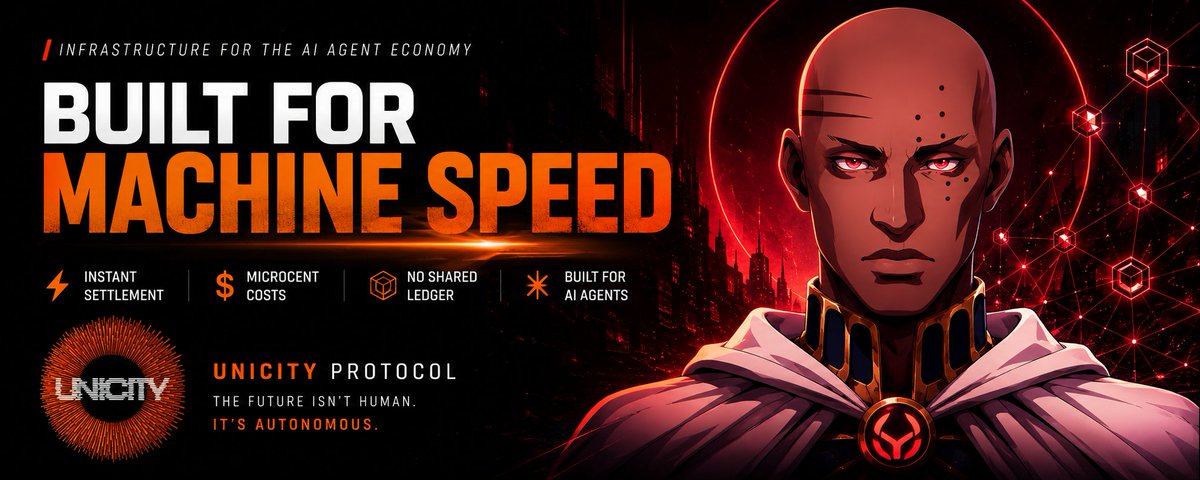
"What happens when the internet is no longer used primarily by humans, but by billions of AI agents?"
Their answer is radical.
Instead of improving the shared ledger model, they're removing it entirely.
Unicity believes the next economy will be driven by AI agents
They're building the infrastructure that lets those agents interact and transact quickly, securely, and at massive scale.
And they're not just building a protocol.
There's more:
→ Unicity Protocol (settlement)
→ AgentSphere (live agent marketplace)
→ AgentStack (enterprise agent infrastructure)
With a demonstrated 3M TPS inter-enterprise environment and a path toward 300M TPS,
Unicity is making a bet that the infrastructure built for humans won't be enough for an AI-native internet.
I want to know what you guys think about this.
27
1
46
701

Jun 8
Most people see AI agents as tools that can chat, write, or automate tasks.
But what happens when billions of AI agents need to discover each other, verify trust, exchange value, and coordinate economic activity without humans in the loop?
That's the problem @unicity_labs is solving.
They're building infrastructure for an AI-native internet where autonomous agents can transact directly with each other at machine speed.
What caught my attention is that Unicity isn't trying to make existing blockchain designs slightly faster.
They're rethinking the architecture entirely.
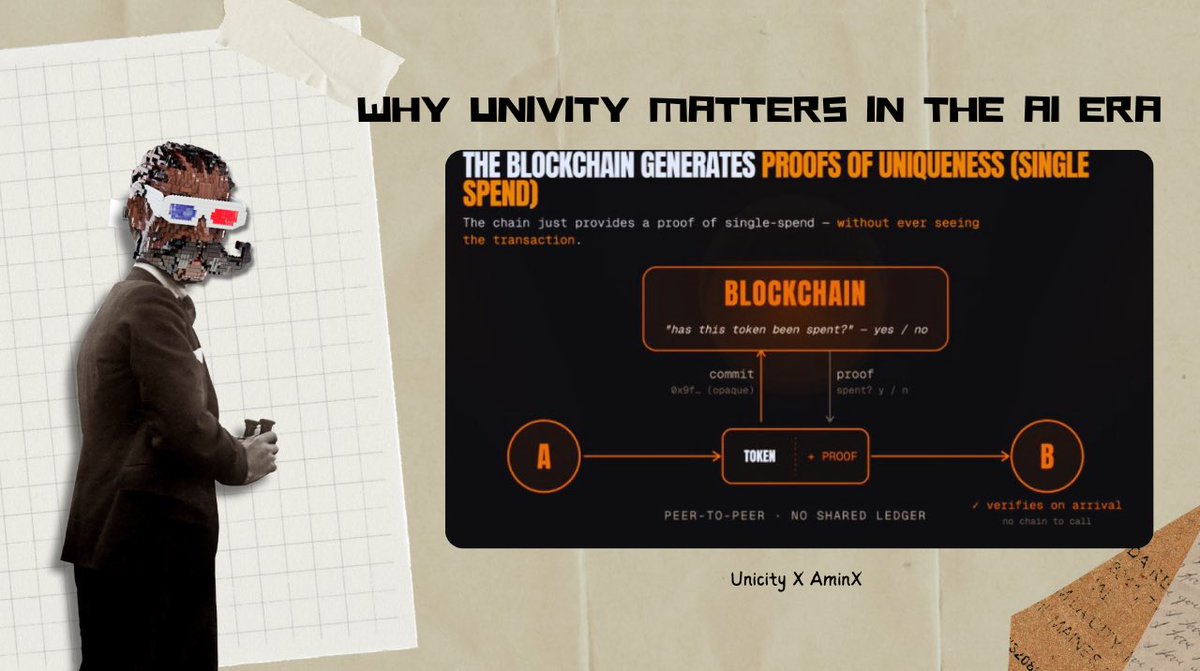
Instead of relying on a shared ledger and network-wide consensus, Unicity uses peer-to-peer cryptographic objects validated at the edge.
The result is near-instant finality, microcent transaction costs, and the ability to scale toward the massive throughput autonomous economies will require.
Their stack already includes the Unicity Protocol, AgentSphere, and AgentStack, creating a complete foundation for agent discovery, commerce, and deployment.
As AI continues to evolve, infrastructure like this may become just as important as the agents themselves.
May 21

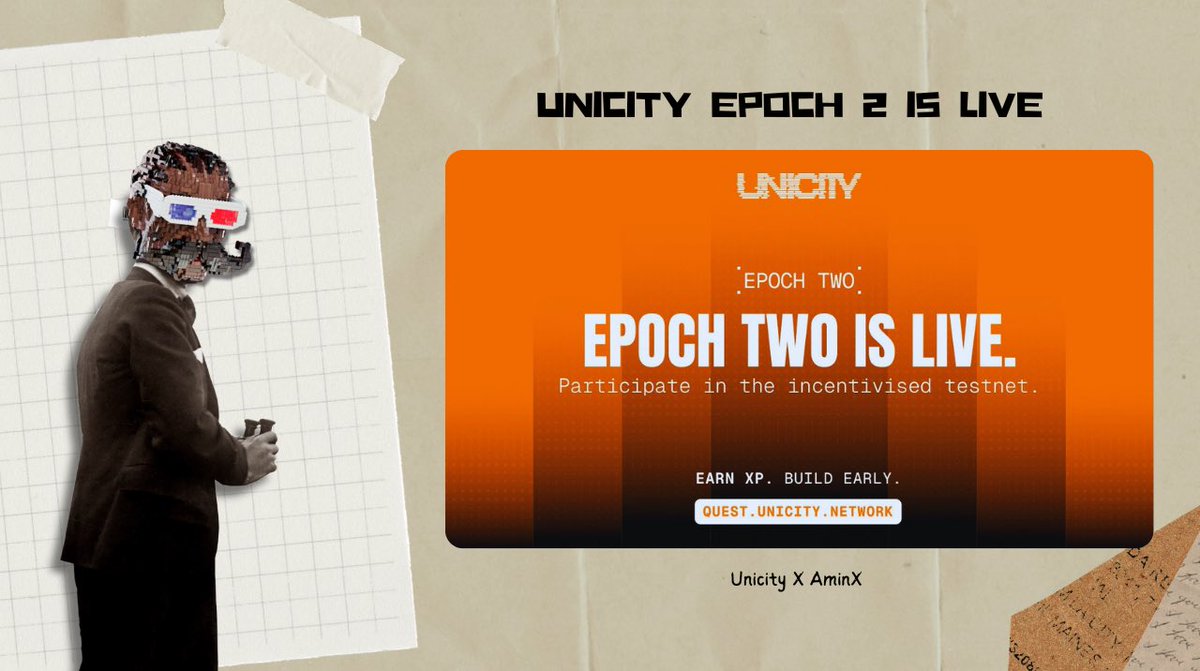
Unicity just announced their second Epoch for Sphere Quests, and honestly, it pushed me to look deeper into what they’re building.
Everyone keeps talking about AI agents.
But almost nobody is talking about the infrastructure needed for billions of autonomous agents to actually transact, coordinate, and settle value with each other at machine speed.
That’s the part @unicity_labs is focused on.
They’re building a settlement layer for the autonomous economy using peer-to-peer cryptographic objects instead of the traditional shared ledger model.
Epoch 2 introduces daily quests, gaming activities, creator campaigns, and more on-chain interactions designed to stress-test the network while expanding the ecosystem.
The more I study Unicity, the more it feels like they’re building infrastructure for a future where AI agents become active participants in the internet economy.
57
3
75
4,951